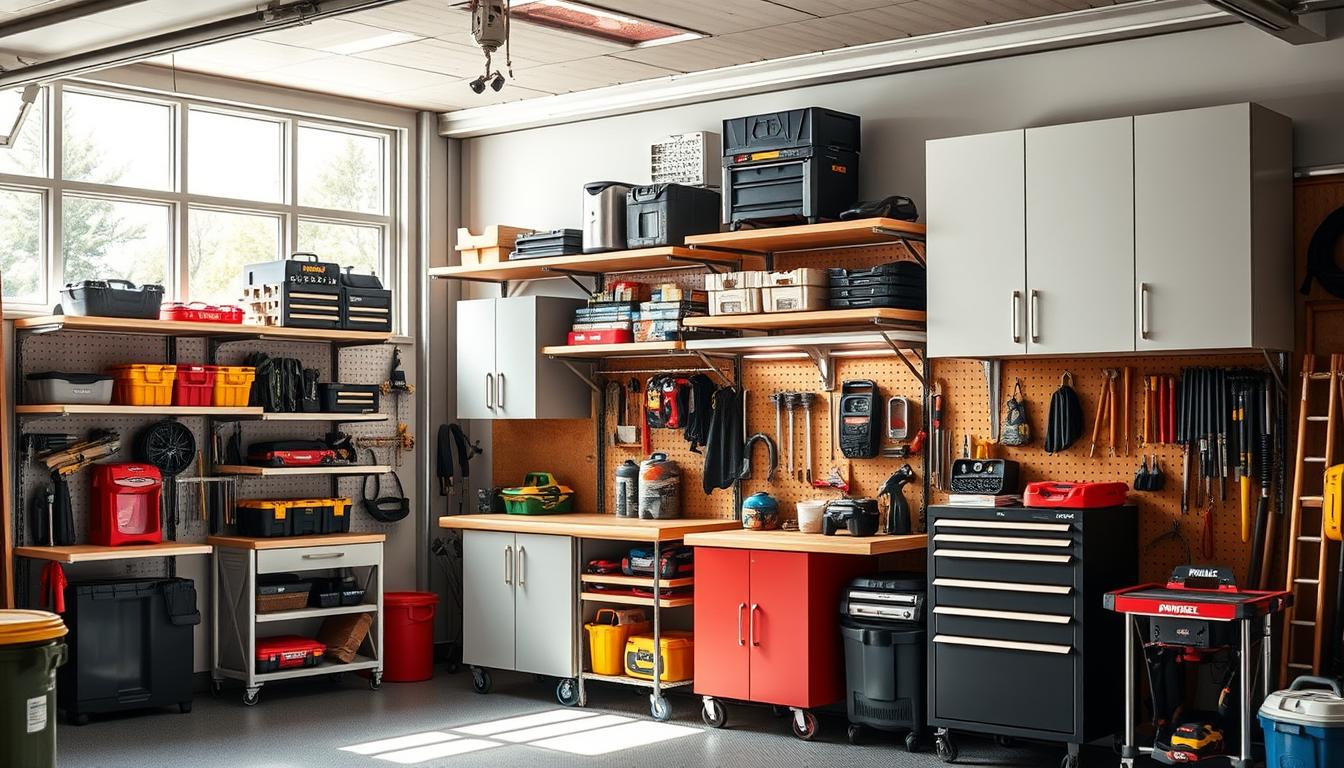
Have you ever opened your garage door and felt like the clutter had a life of its own? It starts the same way each season: rakes, bins, bikes, and tools crowd the floor. Reclaiming that floor takes a clear plan and a few smart moves.
Start by zoning what you keep and moving items off the ground with hooks, shelves, and wall systems. Use vertical space first—pegboards and wall racks turn chaos into an easy-to-scan layout. Favor modular, durable pieces so your setup adapts as projects change.
Think of quick wins: clear bins, heavy-duty hooks, metal pegboards, and overhead racks. These give big gains with little hassle at home. For bikes, floor stands and wall mounts save room and stop knockovers.
Keep the shed footprint slim and match choices to what you store most. Add premium upgrades—custom cabinets or overhead racks—after the plan is working. This is a practical way to free walkable floor, cut search time, and keep tools ready for the next season.
Key Takeaways
- Zone first: Define areas so walkable floor returns quickly.
- Use vertical space: Wall racks and pegboards are high-impact fixes.
- Choose modular gear: It adapts to changing projects and seasons.
- Start simple: Clear bins and hooks deliver fast organization wins.
- Match storage to items: Pick mounts and racks that fit what you use most.
What Makes a Great Storage Setup in Tight Sheds and Garages
Maximize vertical capacity and plan for easy access. Use walls and overhead space to lift items off the floor. That protects gear from dirt and moisture and keeps walking lanes clear.
Pro organizer Ashley La Fond advises adding hooks, shelves, or a full wall organization system to reclaim floor space. These quick fixes free room for projects and make items simple to reach.

“Think vertical first: mounts and rails give the most gain per square foot,” said Lindsey Dyer, designer.
Consider custom cabinets with rods, shelves, and lockers to hide dust and lift design. Use laminate or powder-coated steel so finishes won’t warp with temperature swings.
- Group like items for better garage organization and place daily gear at arm’s reach.
- Mix closed cabinets for messy items with open racks for fast-grab tools.
- Reserve stud locations and plan ventilation around chargers and chemicals so expansion is easy later.
Small changes—labels, rails you can add to, and a clear plan—make lasting, scalable ideas that keep the garage tidy and ready.
Declutter, Zone, and Measure Before You Buy
Clear first, measure next.Empty the area, sort items into like groups, and note exact measurements so new racks and shelves fit without surprises.
Sort by task:
How should I sort gardening, tools, sports, and seasonal gear?
Pull everything out and group it. Make piles for gardening, tools, sports, and seasonal supplies. Fewer items means simpler decisions. Count long-handled tools like shovels so mounts match what you own.
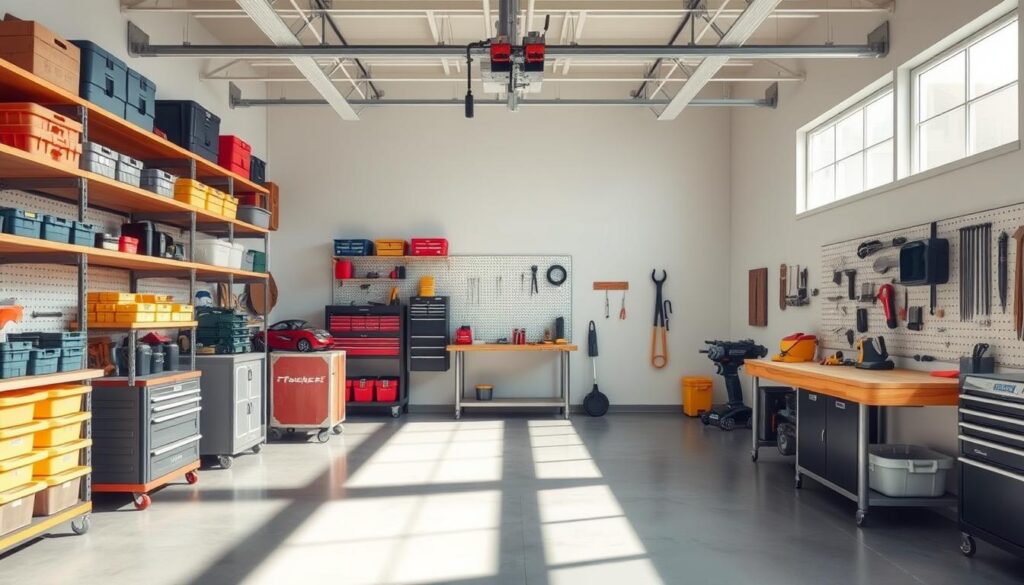
What measurements matter?
Measure stud spacing (often 16″ on center) to map mounting points on the wall. Record ceiling height and door tracks to size overhead racks. Confirm floor clearance for bikes or rolling carts so doors and cars won’t interfere.
- Log outlet locations and charger footprints to plan safe cord and extension cord routes.
- Sketch a layout, test aisle widths, and mark where heavy items will sit low and anchored.
| Measurement | What to Record | Action | Why it matters |
|---|---|---|---|
| Stud spacing | Distance between studs (inches) | Pick mounts that align with studs | Prevents weak wall anchors |
| Ceiling height | Clearance to door tracks | Size overhead racks safely | Avoids collisions with doors |
| Floor clearance | Space for carts/bikes | Set shelf heights and wheel paths | Keeps traffic flowing |
For more layout ideas, see this quick guide on garage organization tips.
Wall Space Wins: Hooks, Pegboards, and Adjustable Racks
Treat the wall as a toolbench: hang heavy hooks, rail systems, and adjustable arms to lift gear off the floor and free walking space. A planned wall gives quick access and a cleaner sightline.
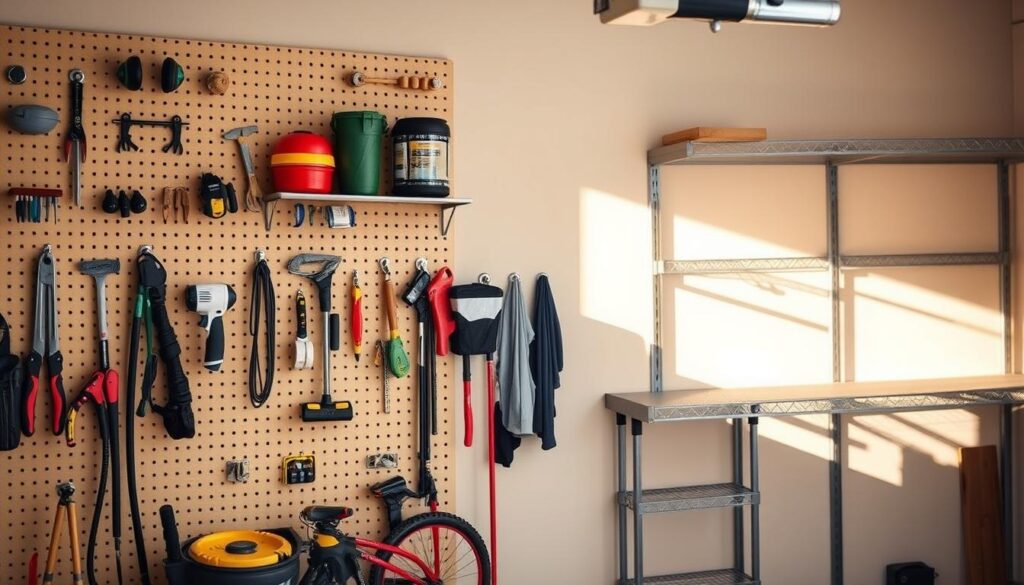
Use rated hooks for real loads. The Bedrock Garage Wall Hook holds up to 50 lbs, perfect for shovels, ladders, and power tools. For lighter items like aprons and bags, Crozet multipurpose hooks work well.
How do pegboards and rails help?
Metal pegboards and rail systems keep hand tools and supplies visible. Wall Control panels make it simple to rearrange hooks and bins so you see what you have at a glance.
What about odd-shaped gear and cords?
Choose adjustable rack arms and the G-Chair system for folding chairs and bulky items. Use Luray utility straps to secure hoses and extension cords neatly to hooks.
- Place heavy racks low and pegboard at mid-height for hand tools.
- Label zones—gardening, painting, bike—for faster grab-and-go and better garage organization.
- Mount sharp items inward and keep daily tools at elbow height.
| Wall Type | Best Use | Feature |
|---|---|---|
| Stud-mounted hooks | Shovels, ladders, power tools | High weight capacity (e.g., 50 lbs) |
| Metal pegboard | Hand tools and small supplies | Visible, reconfigurable layout |
| Adjustable racks | Chairs, hoses, odd gear | Modular arms, locking pins for stability |
Shelving That Works: Wire, Heavy-Duty Metal, and Modular Units
Which shelving types give you the most reliable, flexible garage setup? Use matching racks to keep lines tidy, mix heavy-duty frames for bulk items, and add dividers or sliding tracks where access is tight. These choices make daily tasks faster and keep tools safe.
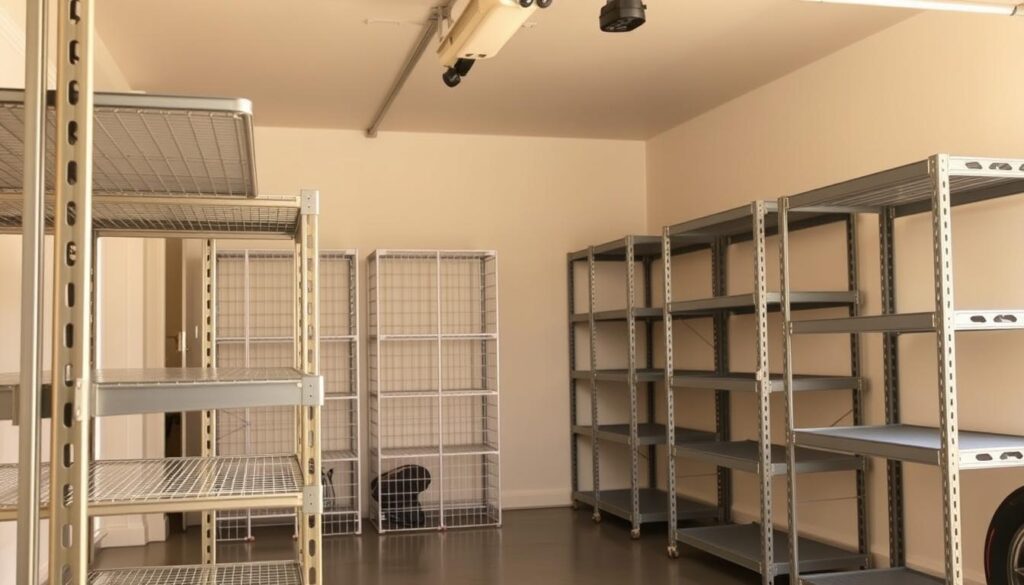
Uniform wire shelving is rugged, affordable, and modular. Standard black wire units let add-on dividers snap in to group like items and keep dust moving through, not trapping it.
Heavy-duty metal shelves handle paint cans, lumber, and bulky tools. Brands like Husky make 5-tier frames that hold weight without sagging. Anchor tall units to studs for safety.
Add sliding tracks in tight alcoves so deep rows stay reachable without unloading the whole unit. Wall-mount options such as Bristol 1′ x 4′ shelves support 200 lbs each (400 lbs total) and include hooks for quick grabs.
- Go uniform: matching wire shelving creates clean sightlines for quick scans.
- Group small parts: snap-in dividers keep hand tools and fasteners tidy.
- Load smart: heavy to light, bottom to top, and anchor tall units.
| Shelf Type | Ideal Use | Weight/Feature |
|---|---|---|
| Wire shelving | Bins, labeled totes, light tools | Modular; good airflow; dividers available |
| Heavy-duty metal | Paint cans, lumber, bulky tools | High load capacity; anchor to studs |
| Wall-mount shelves | Frequently used cans and hand tools | Example: Bristol 200 lbs per shelf; hooks included |
“Match shelf type to the items you keep; uniform lines cut search time and help you return things fast.”
Bins, Baskets, and Labels: The Small-Item System
How can you make tiny supplies simple to find? Use clear, stackable containers and wall baskets to keep things visible and reachable. A short map and consistent names stop the hunt for gloves, fasteners, and chargers.
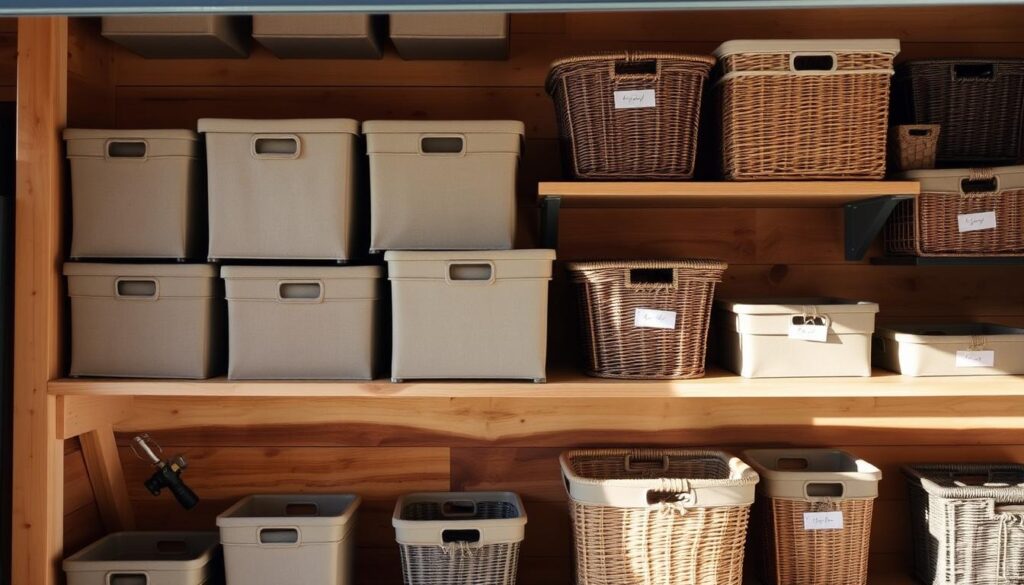
Pick clear, weather-tight bins like Iris WeatherPro so you can see contents at a glance. For damp corners, choose Rubbermaid Brute totes and label opaque tubs boldly.
- Keep visible: clear bins show items fast without digging.
- Wall baskets: G-Basket open-top wire baskets hold gloves, twine, and small supplies near your potting bench.
- Label consistently: a Brother P-touch Cube Plus speeds neat names. Label every side and update when categories change.
- Stack smart: heavy boxes low, frequent-use at eye level; standardize sizes so shelves fit tightly.
Keep a small tool organizer for bits and a spares place for batteries. Limit each bin to one or two categories to keep tool storage tidy and the storage system stress-free for your garage or shed.
Overhead and Floor Solutions: Ceiling Racks, Bike Storage, and Stands
Can ceiling and floor gear free up your workspace? Yes — smart overhead racks and the right bike options lift bulky items off the ground and open clear lanes for projects.
Lift bulky gear overhead to free prime walking lanes and keep the floor clear.
Ceiling racks are ideal for kayaks, paddles, and seasonal things like snow shovels. Mount across joists and spread weight so the joists take the load. Confirm your joist limits before filling a ceiling system.
How can I store bikes without wasting floor area?
Pick the option that fits your routine. A wall-mounted Steadyrack saves width. The Delta Cycle Michelangelo Gravity Stand needs no drilling and holds multiple bikes vertically. For heavy e-bikes, use a roll-in floor stand like the CycleStand Pro.
CycleStand Pro supports up to 65 lbs and wide tires. Its no-lift roll-in design and non-slip feet protect the floor from scuffs. Note: it may not fit bikes with full fenders.
- Use ceiling racks to clear bulky seasonal things and free prime floor lanes.
- Hang snow shovels off-season and rotate gear by season.
- Add high hooks for ladders and long lumber; keep headroom clear of door openers.
- Where drilling isn’t ideal, a gravity rack or freestanding system keeps finishes intact and saves space.
- Route chargers safely along beams; add an extension only if rated and avoid pinch points near tracks.
- Stagger bikes by height so handlebars and pedals don’t clash and park a foam bumper to prevent dings near garage storage zones.
Power Tool and Garden Tool Organizers That Streamline Your Space
Group chargers, drills, and long-handled gear into dedicated zones to speed projects and cut clutter. This keeps power tools ready, protects batteries, and makes daily tasks smoother.
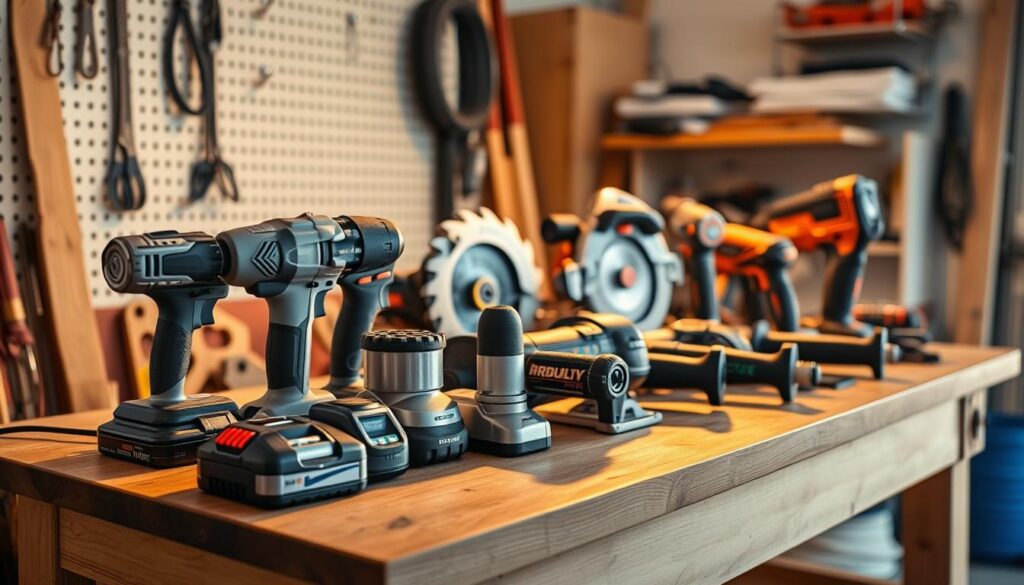
Pair shelves with slotted racks to give drills, chargers, and hand tools a clear home. The Clifton Power Tool Organizer adds two shelves and a slotted lower rack for neat charging and quick reach.
Combined shelves and slotted racks for drills, chargers, and hand tools
Mount BLAT Tool Storage Rack or the Bedrock Tool Organizer to 16″ studs. Their deep slots stop tip-outs and each unit holds high loads for serious equipment.
Rolling or wall-mounted tool organizers to keep long-handled tools in place
Use the Shovel Shuttle rolling organizer for mobile projects. It offers over 60 slots, six hooks, 14 elastic loops, locking casters, and supports 120 lbs.
- Pair shelves with slotted tool organizer racks so drills and chargers stay labeled and charged.
- Mount racks to studs for vertical strength; keep the heaviest items low on the wall.
- Map outlets and route cords safely; add small hooks for safety glasses and tape.
- For mixed-use storage, dedicate a bay for power tools and another for rakes and shovels in the garage or shed.
Custom Cabinets, Modular Systems, and the best storage solutions small sheds or garages
A thoughtful cabinet run hides dust, creates clear purpose for each place, and makes daily tasks quicker. Add modular panels so the system grows with your needs.
A tidy row of lockers and rods turns a cluttered wall into a neat, usable zone. Use rods for coats and jackets, and lockers with shelves and hooks for sports gear. Laminate fronts resist seasonal expansion and keep seams tight.
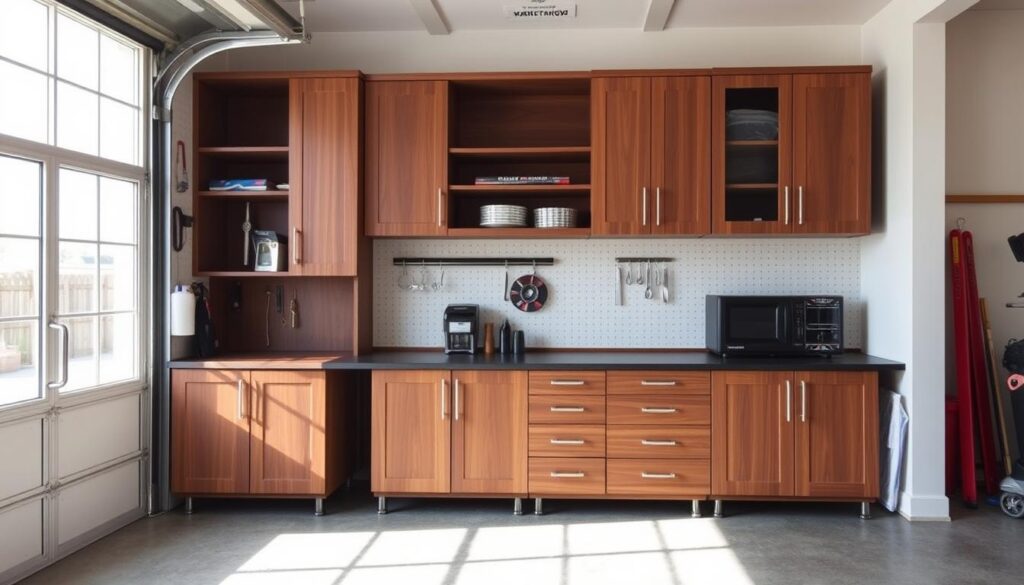
Add a modular wall system for tools and seasonal items you want visible. The Infinity Stud System works on varied stud layouts. The G-Chair Adjustable Wall Storage System holds up to 300 lbs and locks in place with a 3D Pin—handy for folding chairs and bulky pieces.
- Scale capacity with Multi-Use Adjustable racks: 32″ (300 lbs), 48″ (450 lbs), 64″ (600 lbs).
- Split bays—closed cabinets for chemicals, open arms for daily-use tools and power tools.
- Plan depth so totes fit without blocking doors and leave stud access for future panels.
| Feature | When to Use | Benefit |
|---|---|---|
| Lockers + rods | Coats, sports gear | Hides dust; neat appearance |
| Modular wall system | Tools, seasonal gear | Scales with needs; strong mount options |
| G-Chair system | Folding chairs, bulky items | High load capacity; secure locking |
Budget-Savvy Strategy: Second-Hand Finds and Smart Upgrades
Can buying used and adding a few upgrades give you reliable, tidy results without breaking the bank?
Yes. Look local first: resale finds often give you matching shelving and clear bins for much less. Uniform pieces make a big visual difference at home and speed up garage organization.
Where should I hunt for matching shelves and bins?
Check community resale groups, flea markets, and Habitat ReStore listings. Many sellers list matching wire shelving runs and clear Iris WeatherPro tubs that snap together well.
When is it smarter to buy new?
Buy new when you face a deadline, need exact measurements, or require lifetime-grade units. Heavy-duty shelves like Husky five-tier frames handle paint cans and bulky tools safely.
- Use snap-in dividers to group small things; it’s a low-cost upgrade with big payoff.
- Install sliding tracks to reach deep corners and unlock tight storage areas.
- Hunt toolboxes and tool storage inserts second-hand, then clean and relabel for your tools.
Conclusion
Start with one wall, one shelf, and one labeled bin—then build from there. A focused plan using vertical space and a few reliable pieces makes the whole garage feel larger and calmer.
Use the wall and ceiling first to lift items off the floor and keep lanes clear. Combine sturdy shelves, labeled bins, and a modular panel or rack so daily tools sit front and center and seasonal things ride overhead.
Match capacity to load and anchor into studs for safety. Revisit labels each season and add one panel or shelf at a time. For quick inspiration, see these real-life shed organization ideas to spark simple, lasting changes that make your home project-ready.
FAQ
How do I start organizing a tight shed or garage?
Begin by decluttering and zoning. Sort items by task—gardening, tools, sports, and seasonal gear—then measure wall studs, ceiling height, and floor clearance so shelving and racks fit precisely. This prevents wasted purchases and creates clear zones for everyday reach.
What wall-mounted options work best for lifting tools off the floor?
Use heavy-duty wall hooks, metal pegboards, and rail systems. Hooks hold shovels, rakes, ladders, and extension cords; pegboards keep hand tools visible and accessible; adjustable rails let you rearrange as your needs change.
Which shelving types suit mixed garage items like paint cans and totes?
Choose a mix: uniform wire shelving for adaptable storage and airflow, and heavy-duty metal shelves for paint, lumber, and bulky tools. Add sliding tracks and dividers to maximize vertical space and pair shelves with bins and stacked totes for neat categories.
How can I keep small supplies tidy and easy to find?
Use clear, weather-tight bins so contents are visible, plus wire baskets on walls for gloves, twine, and seed packets. Consistent labels from a label maker prevent rummaging. Stack heavier items low and keep frequently used items at eye level.
What are good overhead and bike storage ideas for limited floor space?
Install ceiling racks for seasonal gear and large items, and use hanging hooks, wall-mounted bike racks, or roll-in floor stands for bicycles. For electric bikes, choose non-slip feet and confirm weight ratings to protect floors and gear.
How do I organize power tools and garden tools so chargers and hand tools are always ready?
Combine shelves with slotted racks for drills, chargers, and small tools. Rolling tool organizers or wall-mounted tool boards keep long-handled garden tools upright and easy to grab, saving time and reducing wear on tools.
Are custom cabinets worth the investment in a small garage?
Yes—cabinetry with rods, shelves, and lockers hides dust, creates a cleaner look, and protects fragile items. Modular wall systems offer a scalable option if you expect gear to change over time and need flexible weight capacity.
How can I save money while still getting durable units?
Shop local resale and thrift stores for matching shelving, bins, and metal racks to cut costs. Buy new for items that need exact measurements or long-term reliability—think heavy-duty shelving and quality tool organizers.
What safety tips should I follow when installing garage systems?
Anchor heavy shelves and hooks into studs or masonry, check weight ratings before loading, keep flammable cans in ventilated, labeled metal cabinets, and route extension cords safely to avoid trips and electrical hazards.
How do I maintain an organized garage over time?
Schedule quick seasonal reviews. Return items to designated zones after use, relabel if categories shift, and rotate seasonal gear to overhead racks. Small, regular tidy-ups prevent big overhauls later.