
Have you ever wondered if a small, simple garden could boost daily health and joy without extra strain?
Growing edible plants at home links directly to better eating habits and steady routines. A recent study shows people who tend plants are more likely to meet U.S. dietary guidelines for fruits and vegetables.
Start with a clear, small goal: pick 3–5 culinary herbs that you use often and place them where care is easy—raised beds, containers, or a sunny windowsill. This approach keeps tasks short, safe, and rewarding.
Rely on trusted guides from botanical experts to build confidence and avoid guesswork. For practical starter ideas and step-by-step guidance, see a helpful resource on creating a simple medicinal garden here.
Keep expectations modest this season and plan quick wins, like fragrant basil or chives, so you enjoy fast results and steady motivation.
Key Takeaways
- Small, focused gardens support better eating and daily routine.
- Choose 3–5 easy plants and place them for quick, comfortable care.
- Short, regular sessions beat long, tiring chores.
- Trusted resources reduce guesswork and boost confidence.
- Prioritize safety with reachable heights and light tools.
- Track plant dates and harvests to make next year easier.
Why herb gardening supports seniors’ health, independence, and joy
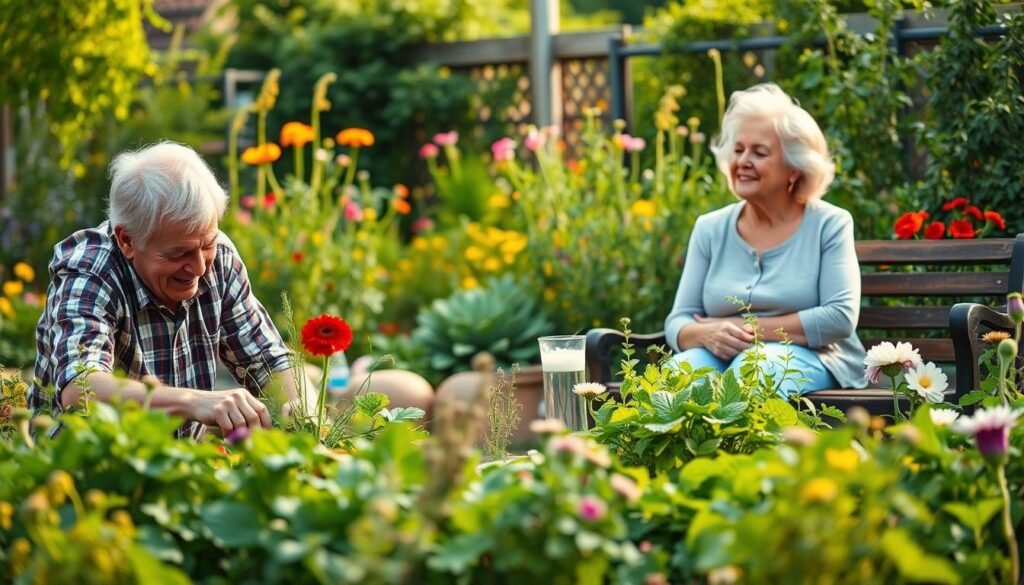
Tending a few pots or a raised bed combines light physical activity with meaningful routine. Small daily tasks bring clear health benefits, steady purpose, and pleasant social moments.
Physical movement and fresh air work together. Light tasks such as digging, pruning, or watering improve circulation and mobility without high strain. These short bursts of activity support heart health and joint comfort.
Time outdoors also eases stress. Gentle exercise and sensory time in nature boost mood chemicals that calm the mind. Regular care creates a simple rhythm that feels rewarding and reduces daily tension.
How care improves body and mind
- Support physical health: brief planting and pruning help strength and balance.
- Encourage healthier eating: harvesting fresh vegetables and herbs makes meals more appealing.
- Reduce stress: hands-on tasks and natural settings promote relaxation.
- Build connection: gardens provide places to meet neighbors and share work.
| Benefit | What it does | Example activity |
|---|---|---|
| Physical health | Improves circulation and mobility | Light digging, potting, pruning |
| Mental wellness | Reduces stress and lifts mood | Short outdoor sessions, sensory focus |
| Social connection | Less isolation, shared joy | Family harvests, neighborhood swaps |
| Routine & purpose | Daily structure and small wins | Watering schedule, seasonal planting |
Herb gardening seniors accessible, low-maintenance tips
Pick a handful of plants you actually use and keep care quick and predictable. This approach reduces strain and makes daily tasks feel rewarding.

Keep it simple: start small and grow what you’ll use
Begin with 3–5 kitchen favorites you harvest weekly. Small numbers prevent overwhelm and let you practice routines that fit your time.
Short sessions win: plan 10–20 minute care windows, three or four days a week, so chores stay light and steady.
Match methods to mobility, time, and space
Choose a setup that fits how you move. Table-height planters and container groupings save steps and simplify watering.
Group plants by sun and water needs to cut repeated work. Label each pot with a waterproof marker and jot dates in a small journal.
Reduce bending, kneeling, and strain with a smart setup
Use lightweight, easy-grip tools and a folding bench or cushioned kneeler to support joints. Elevate pots on sturdy stands to limit bending.
Keep a simple caddy with gloves, pruners, and labels so all tools stay within reach. Clear pathways and stable footing make movement safer and more pleasant.
Plan your space: raised garden beds, containers, and indoor windowsills
Map your sun and steps first, then choose the best beds or containers for each plant. Simple planning saves time and reduces bending while keeping plants healthy through the season.

Raised beds lower the work and improve drainage. Use beds 24–30 inches high to limit bending and make harvesting easier. Pick sturdy garden beds with wide edges so you can lean and set tools down comfortably.
Which container setups work in tight areas?
Choose containers with drainage holes and group pots by sun needs. Place pots on rolling caddies to move them into better light or shelter during heat spells.
How can indoor windowsills keep plants within reach?
Position pots on bright windowsills and rotate them weekly for even growth. Lemon balm and peppermint thrive in kitchen pots, while oregano, dill, and basil pair well with vegetables in shared beds.
- Match space to routine: closer plants get more care.
- Keep a small tool set nearby: a hand trowel, snips, and labels speed tasks.
- Plan for changing light: note shade from trees or structures each season.
Add one element at a time. Start with a compact bed or a few containers, then expand once care feels effortless. This planning approach keeps chores short and rewarding, and helps gardens thrive all year.
Choosing low-maintenance herbs that thrive with minimal care
Pick forgiving plants that match your light, space, and weekly meals.
Start small so growth feels steady and harvests come fast.

Outdoor options often handle heat and need little water once settled. Rosemary and thyme prefer sun and well-drained soil. Lavender adds fragrance and drought tolerance.
Easy outdoor choices
Chives and mint are hardy and productive. Give mint its own pot to prevent spread. Let Mediterranean types dry slightly between waterings to avoid root rot.
Best indoor starters
Basil and parsley do well in bright windows; chives and mint tolerate partial sun and frequent snips. Try small amounts as tea or in cooking before planting to confirm favorites.
| Type | Light | Notes |
|---|---|---|
| Rosemary/Thyme | Full sun | Well-drained soil; sparse water |
| Chives/Mint | Partial–full sun | Mint in containers; harvest often |
| Basil/Parsley | Bright light | Rotate for even growth; start from transplants |
“Choose flavors you’ll use weekly—simple wins keep care short and rewarding.”
For a deep dive on a standout choice, read about the best garden herb and how it may fit your areas and containers.
Ergonomic tools and accessible gear that reduce strain
Choose lightweight, well-shaped equipment to make routine tasks easier and safer. Good gear cuts fatigue, protects joints, and keeps care comfortable day after day.
Choose tools that fit your hands and save steps, so every chore feels simpler. Use lightweight hand tools with cushioned grips to protect wrists and fingers. Long-handled cultivators and weeders help you work soil without deep bending.
Lightweight, easy-grip, and long-handled tools
Pick bypass pruners for clean cuts and ratcheting pruners if grip strength is limited. Keep blades sharp so cuts take less force. Store a compact tool caddy near beds to reduce extra trips.

Kneelers, benches, and seating to support comfort
Alternate seating and brief standing tasks to ease pressure on back and knees. A padded bench or folding seat offers restful breaks. For more support, see a comfortable kneeler like this comfortable kneeler.
Labels, waterproof markers, and simple tracking habits
Label pots with waterproof markers and jot planting dates in a small notebook. Tracking harvests makes next season easier and reduces guesswork.
“The right tools make daily work lighter—invest once and your routine stays calm and safe.”
| Item | Benefit | Quick use |
|---|---|---|
| Light hand trowel | Less wrist stress | Potting, transplanting |
| Long-handled weeder | Limits bending | Remove deep roots |
| Padded kneeler/bench | Protects knees and back | Seated planting, weeding |
| Waterproof marker | Clear labels | Record dates, names |
- Summary: The right tools make the garden easier on hands, back, and knees.
- Wear gloves with good dexterity for precise work.
- Store tools at reachable height to avoid lifting heavy bins.
Soil, watering, and stress-free maintenance routines
Set soil and watering on autopilot so your garden stays healthy with less effort. Good drainage and simple irrigation prevent overwatering and cut routine strain.

Start with the right soil mix. Use a loose, well-draining potting mix in containers and amend raised beds with compost and coarse sand or perlite. This prevents waterlogging and helps roots breathe for steady growth.
Well-draining mixes for beds and containers
Choose a commercial potting mix labeled for containers or blend your own: one part compost, one part peat or coco coir, and one part perlite. In beds, add compost and coarse material to improve structure and root health.
Self-watering pots and drip irrigation to save time
Self-watering pots and simple drip lines take guesswork out of water schedules. A basic drip system on a timer gives consistent moisture and frees up time. For indoor pots, self-watering containers keep soil evenly damp without daily watering.
Pruning and harvesting for continued growth
Prune and harvest regularly to encourage new growth. Snip basil and chives above a leaf node to promote branching. Removing spent stems keeps plants productive and reduces stress.
| Focus | What to do | Why it helps |
|---|---|---|
| Soil mix | Loose, well-draining potting mix | Prevents waterlogging; supports healthy roots |
| Watering method | Self-watering pots or drip irrigation on a timer | Consistent moisture; fewer watering tasks |
| Maintenance routine | 10-minute check-ins; prune and label | Spot problems early; stimulates growth |
Quick checklist: water deeply but less often, let the top inch dry for many plants, use a narrow-spout can for indoor pots, and keep snips and a moisture meter close at hand to reduce strain.
Track results in a small journal and adjust timing by plant response. Small notes on soil moisture and harvests make future care simpler. For more ideas on bringing plants indoors and keeping routines gentle, see a practical guide on indoor planting and care.
Seasonal planning: start times and what to plant now
Plan the season around simple, achievable steps to spread work and boost results. Good planning helps you time starts, reduce losses, and enjoy steady growth.
Spring is your chance for early wins. Start cool-season vegetables like spinach, peas, and radishes with early herb plantings. Check your local last-frost date and plan starts just as frost risk fades.
Spring timing for herbs and cool-season companions
Begin seeds for basil, dill, calendula, and yarrow when soil warms. Sow these after frost or under quick cloches. Pair them with spinach or peas to use beds efficiently and extend harvests.
Seeds versus transplants: choosing the easier path
Use transplants for trickier choices such as lavender, peppermint, and echinacea. They establish faster and save time for caregivers and beginners.
- Choose containers when nights stay cool; pots warm faster than ground soil.
- Stagger planting to spread harvests and steady the workload.
- Monitor watering more during warm, windy weeks for consistent growth.
“Match your start to the season and schedule—small planning steps make big rewards.”
For a practical how-to on starting plants, see how to grow an herb plant.
Safe, enjoyable gardening: sun protection, hydration, and pacing
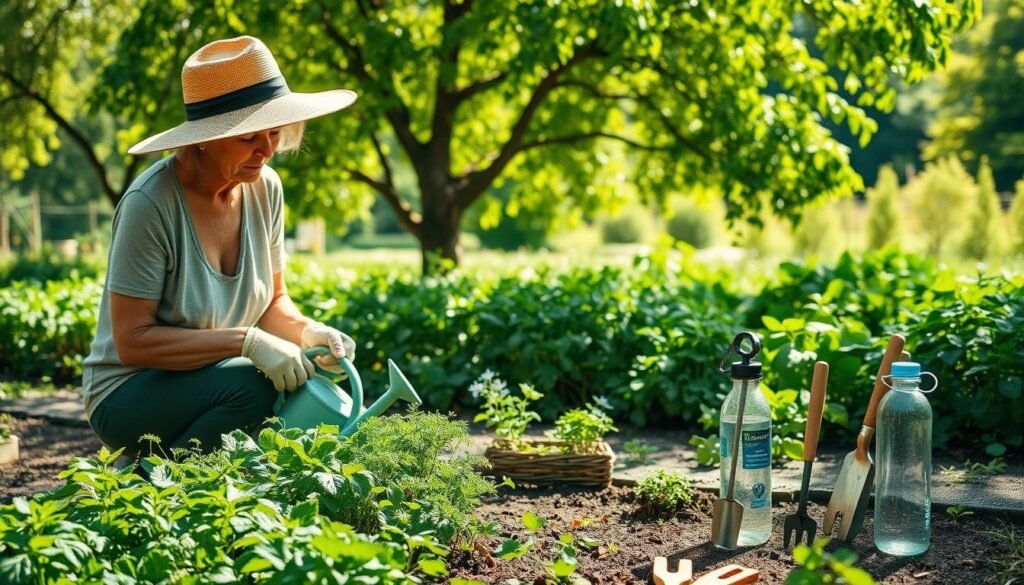
Work with the weather, not against it. Short morning sessions with shade, water, and regular breaks keep outdoor activity steady, safe, and pleasant. Simple habits—a hat, a bottle, and planned rests—cut strain and support long-term health.
When to work and how to break tasks into short sessions
Schedule work for mornings or early evenings to avoid peak heat and sun glare. Ten- to fifteen-minute bursts feel manageable and reduce fatigue.
Break chores into small steps and rest between them. Alternate standing and seated tasks to protect knees and back.
Protective clothing, sunscreen, and constant hydration
Wear a wide-brimmed hat, lightweight breathable layers, and SPF on exposed skin. Keep a water bottle within reach and sip often to prevent dehydration.
Store sunscreen, gloves, and a bottle in a small caddy so safety items stay handy during every session.
Seating, shade, and listening to your body
Add supportive seating or a padded kneeler to reduce bending and pressure on joints. Create shade with an umbrella or canopy for longer chores.
- Summary: Work with the weather, not against it—short morning sessions with shade, water, and breaks keep care safe and steady.
- Plan activity for cooler parts of the day and pace tasks into 10–15 minute chunks.
- Stop at the first sign of dizziness, lightheadedness, or unusual fatigue.
“Short, steady sessions with shade, water, and seating make the garden a safe place to enjoy nature and better health.”
Community and companionship: making gardening social and meaningful
Shared spaces and friendly routines turn solo work into steady social moments. Simple group activities add motivation, local know-how, and small celebrations that keep care on track.
Sharing a plot or a pot turns solo tasks into lively moments and steady routines. It invites conversation, skill exchange, and a reliable schedule that helps plants and people thrive.
Where to find shared plots and local clubs
Explore nearby community gardens to meet neighbors and swap practical ideas. These areas often host seed swaps, workshops, and seasonal planting days.
Join a local club for planned activities and short events. Group projects make chores feel lighter and create regular chances to learn from others.
How companions and caregivers support daily care
Invite family or friends for brief planting sessions; small tasks build momentum and joy. Ask caregivers to help with watering, labeling, and pruning so routines stay steady.
- Summary: Gardens grow friendships—sharing space and harvests turns a hobby into a meaningful routine.
- Choose areas close to home or transit for easy, frequent visits.
- Celebrate milestones together: first sprouts, harvests, and favorite recipes from the plot.
- Share surplus produce to strengthen local bonds and reduce waste.
- Reflect on the season with your group to plan a better experience next year.
“Social time plus light activity lifts mood and helps keep care consistent.”
Conclusion
Simple planning, the right tools, and short routines make care easy and rewarding. Small choices—reachable planters, labels, and comfortable seats—deliver steady benefits you’ll notice every day.
Keep your plan small. Start with a few favorite plants and expand only if care stays easy. Use ergonomic gear and a short journal to track dates and harvests.
Set brief, regular sessions and ask a friend or caregiver for help when needed. These practical gardening tips build routine, fresh flavor, and daily purpose.
Take one step today: pick a raised bed, a container, or a sunny sill and plant what you will actually use.