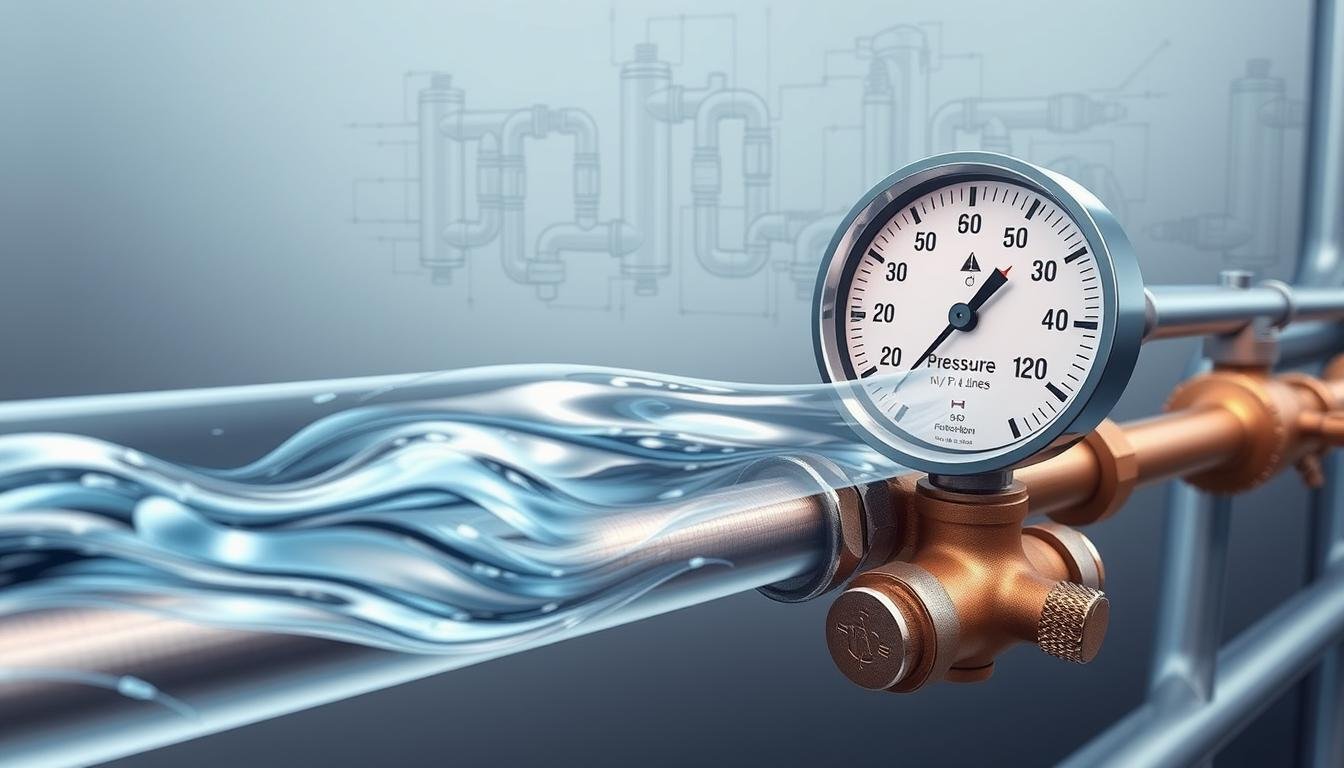
If the first plants on your drip line get water but the far end looks weak, the problem is often the layout, not one bad part. Long 1/4-inch tubing loses usable pressure quickly when distance, emitter load, fittings, clogs, and small leaks start stacking up.
Before replacing the whole line, check the system while it is running. A drip line can look fine when it is off, then lose flow once the filter, regulator, branch tubing, emitters, and fittings are all under watering pressure.
Quick answer
A long 1/4-inch drip line usually loses pressure because the tubing is too narrow for the distance or the number of emitters attached to it. Other common causes include clogged filters, blocked emitters, kinked tubing, too many small fittings, loose barbed connections, and leaks that only show up while the system is running.
The best first move is to test and inspect before buying new tubing. If the supply pressure is normal but the far end is weak, the fix may be a shorter 1/4-inch branch, a larger mainline, fewer emitters per branch, a cleaned filter, or a small repair at a fitting.
Key takeaways
- Long 1/4-inch drip lines are sensitive to pressure loss because the small inside diameter creates more friction.
- Weak flow at the far end can come from line length, too many emitters, clogged filters, tight bends, small fittings, or leaks.
- Check the system while water is flowing, not only when the line is turned off.
- Do not raise pressure blindly. Too much pressure can pop fittings, damage emitters, or create new leaks.
- For longer runs, a larger mainline with shorter 1/4-inch branches is often more reliable than one long 1/4-inch line.
Helpful products at a glance
These support products fit different parts of the troubleshooting process: testing pressure, controlling pressure, and repairing small drip-line problems. They are not automatic fixes for every weak line, but they can make diagnosis and repair easier when they match your setup.
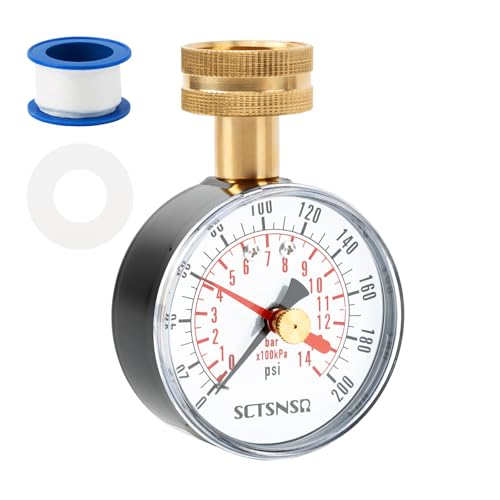
Best for confirming pressure loss because it connects to a standard garden hose thread
- Universal Compatibility: This water pressure gauge is ideal for water pumps, drip irrigation pressure regulators, RV tanks, pipe testers, outdoor spigots, hose faucets, garden hoses, regulator valves, washing machine outlets, RO systems, sprinklers, and more.
- "Lazy Hand" Peak Pressure Memory: Equipped with a red max pointer to capture and display the highest pressure recorded, making it easy to track maximum pressure levels.
Best for pressure control because it is listed for 25 PSI drip and low-pressure irrigation use
- Ideal for installations requiring lower flows such as solid set, drip line, soaker hose and other low pressure agriculture, residential and commercial irrigation. This PRLG (Pressure Regulator Landscape Grade) maintains a constant outlet pressure of 25 PSI (1.72 bar) with a flow range between 0.5 - 7 GPM (114 - 1590 L/hr).
- 100% water tested for accuracy. Senninger pressure regulators are built to rigorous quality standards and are known worldwide for their reliable performance.

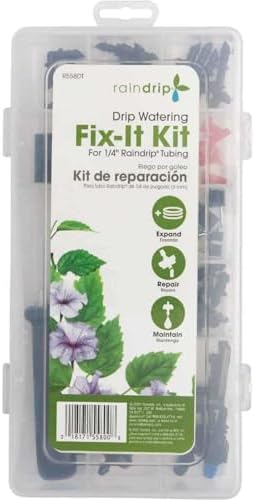
Best for small drip repairs because it includes common fittings, plugs, clamps, and emitters
- Repair, change, expand, and maintain your drip system with popular components available at your fingertips; Portable kit contains components that work in various areas of your drip system
- Components connect to various parts of the drip system; Pressure Compensating Drippers have a ½, 1, and 2 GPH flow rate; Use with ½ in., 5/8 in., or 0.710 in. Supply Tubing to transport water to plants
Why pressure loss happens in long 1/4-inch lines
Pressure loss is the drop in usable water pressure as water moves through tubing. In a short branch line, the loss may be small enough that you never notice it. In a long 1/4-inch run, the narrow opening makes the water work harder, so the far end can become weak.
The problem gets worse when the line has many emitters, elbows, tees, sharp bends, or older fittings. Every extra part adds a little resistance. On a small tube, those small restrictions can add up quickly.
Why small tubing is so sensitive
A 1/4-inch line is usually better as a short branch from a larger supply line than as the main route across a long bed or row of containers. When you ask it to carry water too far, the last emitters may only get what is left after friction and demand take their share.
Small tubing is useful near plants, but it is not always the right tubing for distance. If the run is long or the number of emitters keeps growing, the layout may need to change instead of just replacing one fitting.
Good drip troubleshooting starts with finding where the pressure is lost, not guessing which part looks easiest to replace.
Confirm the pressure drop before changing the system
Start by checking whether the weak flow is coming from the water supply, the timer, the filter, the regulator, the mainline, or the 1/4-inch branch itself. A line that looks underpowered at the far end may actually be restricted much earlier.
Where to check first
Begin at the hose bib, faucet, or irrigation supply. Then check after the timer, pressure regulator, and filter. Next, check where the 1/4-inch tubing branches off from the larger supply line. Finally, compare that with the farthest emitter or outlet.
If you want to confirm the issue before changing tubing, a hose-thread water pressure gauge can help you compare pressure at the supply and after the drip-system parts. The SCTSNSR water pressure test gauge on Amazon is one option that connects to a standard 3/4-inch garden hose thread and measures pressure, but it does not measure emitter flow.
Test under the same conditions that create the problem. If the line only struggles when several emitters or zones are running, a test with just one small section open may not show the real issue.
- Universal Compatibility: This water pressure gauge is ideal for water pumps, drip irrigation pressure regulators, RV tanks, pipe testers, outdoor spigots, hose faucets, garden hoses, regulator valves, washing machine outlets, RO systems, sprinklers, and more.
- "Lazy Hand" Peak Pressure Memory: Equipped with a red max pointer to capture and display the highest pressure recorded, making it easy to track maximum pressure levels.
- Durable & Tough: Built with a robust black steel case and brass connect fittings, ensuring long-lasting performance and resistance to everyday wear.
- Quick & Easy Installation: The 3/4-inch female hose thread ensures hassle-free connections to garden hoses and other compatible accessories without extra adapters.
What causes pressure loss in long 1/4-inch drip lines?
Most weak-end drip problems come from a short list of causes. Work through them in order before deciding whether the tubing needs to be replaced or the layout needs to be rebuilt.
Line length and small bore
The longer the 1/4-inch line, the more friction it creates. If the line is carrying water across a long bed, around a patio, or through several containers, the far end may lose flow even if the water source is strong.
Too many emitters on one branch
Each emitter uses part of the available flow. When one small line feeds too many outlets, the first plants may water normally while the last plants stay dry or get only a slow drip.
Friction and internal buildup
Dirt, mineral deposits, algae, and debris can narrow the path through tubing, filters, and emitters. If a line worked well at first and slowly became weaker, start by checking for clogs.
Fittings, bends, and transitions
Every elbow, tee, connector, tight bend, and transition adds resistance. A few fittings are normal. A long route with many small parts can become restrictive, especially after repairs or add-ons.
Leaks under watering pressure
Small leaks are easy to miss when the system is off. Once the zone runs, loose barbed fittings, cracked tubing, open punch holes, or missing plugs can steal water before it reaches the far end.
Walk the full line while it is running. Look for wet spots, bubbling around fittings, spraying pinholes, or soil that gets soaked in one place while the far end stays dry. If the problem is a small hole or loose connection, a Raindrip Fix-It Kit on Amazon may be useful because it includes common drip repair parts, but it will not solve a layout that is too long or overloaded.
| Likely cause | What you may notice | First fix to try |
|---|---|---|
| 1/4-inch line is too long | Far-end emitters are weak or dry | Shorten the branch or feed it from a larger mainline |
| Too many emitters | Plants near the start water better than plants near the end | Split the run or reduce the emitter load |
| Dirty filter or clogged emitter | Flow slowly gets worse over time | Clean the filter and check the emitters |
| Kinked tubing or tight bends | Flow drops after a bend, pinch, or connector | Straighten the line and remove sharp turns |
| Loose fitting or open hole | Wet spots, bubbling, spraying, or uneven watering | Reseat the fitting, plug the hole, or replace the damaged section |
Use simple checks before doing advanced calculations
You do not need complicated math to solve most home drip-line problems. Start with four practical questions: how long the 1/4-inch run is, how many emitters it feeds, whether the filter or regulator is restricting flow, and whether the far end improves when parts are cleaned or removed.
If the line is long and has always been weak at the end, one new connector probably will not change much. The better fix may be to move the larger supply tubing closer to the plants and use shorter 1/4-inch branches from there.
When tubing size matters more than part swaps
A larger mainline can carry water farther with less loss than a long 1/4-inch branch. That does not mean every small system needs a redesign, but it does mean long narrow runs have limits.
If you keep adding plants to the same 1/4-inch line, watch for the point where the last emitters stop matching the first ones. That is usually a sign to split the run, reduce the load, or bring a larger line closer to the planting area.
Layout problems that make pressure loss worse
A drip system can lose pressure even when every part is connected correctly. The route matters. Long one-way runs, extra tees, tight corners, dead-end extensions, and low spots where debris collects can all make the far end weaker.
Layout habits that usually help
- Use 1/4-inch tubing mainly for short branches near plants.
- Run larger supply tubing closer to long beds, rows, or container groups.
- Reduce unnecessary elbows, tees, and sharp bends.
- Remove old dead-end sections that no longer water anything.
- Flush the line and clean the filter when flow starts to decline.
Looping or splitting a line can sometimes improve evenness, but it is not a cure for every system. The right fix depends on the water source, pressure control, tubing size, emitter demand, slope, and how the bed is laid out.
Practical troubleshooting workflow
Move from the water source toward the farthest emitter. This keeps you from replacing the end of the line when the real restriction is at the filter, regulator, or supply connection.
Step 1: Check the water source
Make sure the faucet, hose, timer, or valve is fully open and working normally. If the supply is weak before the drip system begins, the 1/4-inch tubing is not the main problem.
Step 2: Check the pressure regulator and filter
A clogged filter can starve the whole line. A mismatched regulator can also leave the system outside the range your drip parts need. Clean the filter, inspect the regulator, and confirm that the parts match your system before changing the tubing.
Step 3: Inspect the 1/4-inch line
Look for kinks, crushed tubing, cracked sections, loose barbed fittings, and open holes. Pay close attention to areas near sharp bends, old repairs, foot traffic, mulch edges, or spots exposed to strong sun.
If your pressure-loss check reveals open holes, loose fittings, or damaged 1/4-inch connections, a drip repair kit can keep the most common small parts in one place. Match the parts to your existing tubing size, then run the system again before leaving it unattended.
- Repair, change, expand, and maintain your drip system with popular components available at your fingertips; Portable kit contains components that work in various areas of your drip system
- Components connect to various parts of the drip system; Pressure Compensating Drippers have a ½, 1, and 2 GPH flow rate; Use with ½ in., 5/8 in., or 0.710 in. Supply Tubing to transport water to plants
- Kit contains a hole punch tool that works anywhere along your supply tubing; emitters to connect to tubing and risers; fittings to connect tubing together; washers for adapters; stakes and clamps to position tubing, goof plugs to seal openings; Add or replace parts as needed; compartments can be filled with your most often used components
- Portable kit keeps components on hand to fix, expand, and maintain your drip system; Diagrams and descriptions on inside label; Compartments keeps components neat and organized
Step 4: Test emitters and end flow
Check the last emitter first, then compare it with one near the start of the branch. If flow improves after cleaning or replacing a blocked emitter, the problem may be a clog rather than a tubing-size issue.
Step 5: Do not raise pressure as the first fix
More pressure is not always safer or better. Too much pressure can pop fittings, cause small leaks, or push emitters outside the range they are meant to handle.
If the incoming pressure is too high or inconsistent before the drip line, a matched 25 PSI drip regulator can help keep the setup within a more appropriate operating range. Check thread compatibility and the current listing details before buying; the Senninger 25 PSI pressure regulator on Amazon is listed for drip and low-pressure irrigation use, but it will not increase pressure in a weak supply or fix clogged emitters.
Step 6: Split or redesign the line if needed
If the line is simply too long or feeding too many emitters, repair parts may not be enough. Split the run into shorter branches or bring a larger mainline closer to the plants.
- Ideal for installations requiring lower flows such as solid set, drip line, soaker hose and other low pressure agriculture, residential and commercial irrigation. This PRLG (Pressure Regulator Landscape Grade) maintains a constant outlet pressure of 25 PSI (1.72 bar) with a flow range between 0.5 - 7 GPM (114 - 1590 L/hr).
- 100% water tested for accuracy. Senninger pressure regulators are built to rigorous quality standards and are known worldwide for their reliable performance.
- Proper use of this low flow water regulator maintains sprinkler or droplet flow, distribution uniformity, and the overall efficiency of an irrigation system. It also helps conserve water and energy and extend sprinkler and drip system life in your garden or nursery. Works with any standard 3/4" outdoor faucet, hose bib, garden hose, water hose, sprinkler manifold, garden soaker hose or home irrigation system.
- Made in the USA of engineering-grade thermoplastics. This sturdy inline plastic water regulator can be installed above or below ground. No external metal parts for excellent corrosion resistance.
| Item to check | What it can tell you | Practical action |
|---|---|---|
| Water source | Whether the weakness starts before the drip system | Check the faucet, hose, timer, and valve position |
| Filter | Whether debris is starving the whole line | Clean it and retest under normal watering conditions |
| Pressure regulator | Whether the system has suitable pressure control | Confirm the regulator matches the drip setup and thread type |
| 1/4-inch tubing | Whether length, kinks, cracks, or old repairs are causing loss | Repair damage, shorten the branch, or reroute the line |
| Emitters and fittings | Whether clogs, loose parts, or open holes are stealing flow | Clean, reseat, plug, or replace the affected parts |
After each repair, run the system again and compare the start of the branch with the far end. A good fix should make the flow more even without forcing the system beyond what the tubing, fittings, regulator, and emitters can handle.
FAQ
Why does pressure drop along a long 1/4-inch drip line?
Pressure drops because water loses energy as it moves through narrow tubing. The longer the run and the more emitters or fittings it feeds, the more noticeable the loss can become.
Can too many emitters make the end of the line weak?
Yes. Every emitter uses part of the available flow. If one small branch feeds too many emitters, the first plants may water better than the last plants.
Should I raise the water pressure to fix weak drip flow?
Not as the first fix. Check the filter, regulator, leaks, tubing length, and emitter load first because too much pressure can create new problems.
When should I use a larger mainline?
Use a larger mainline when water needs to travel a longer distance or feed several branches. Then use 1/4-inch tubing for shorter runs from the mainline to individual plants or small groups.
How can I tell if the issue is a clog instead of line length?
If the system worked well before and slowly got weaker, suspect a dirty filter, blocked emitter, or debris in the line. If the far end has always been weak, the branch may be too long or overloaded.
What should I check first on a weak drip line?
Start with the water source, filter, pressure regulator, kinks, leaks, and the farthest emitter. These checks often show the problem before you need to redesign the layout.
Final verdict
Pressure loss in a long 1/4-inch drip line usually comes from asking small tubing to carry water too far, feeding too many emitters from one branch, or letting small restrictions build up through clogs, fittings, kinks, and leaks.
The most reliable fix is to diagnose first, clean or repair the simple issues, and then decide whether the layout needs shorter 1/4-inch branches or a larger mainline. If the same weak-end problem keeps returning, the tubing layout is probably more important than any single replacement part.