
I remember standing at the kitchen sink, watching the stream falter and surge like a garden hose with a twist. That small, everyday annoyance can feel larger—wet socks from a burst in the yard or weak shower spray on a slow morning.
This introduction lays out a clear, practical path for US homeowners and gardeners dealing with unstable water delivery around a 15 psi setting. We’ll describe what the issue looks like at faucets, showers, and spigots, and why the pressure device or supply upstream often bears the blame.
Expect a concise troubleshooting plan: quick fixture checks, gauge testing, safe adjustment, and guidelines for when a cleanup, repair, or replacement is the smart choice. A regulator is mechanical; debris, wear, or stressed installation can create that stop‑start watering feel.
When inlet pressure tops safe limits, pipes and fixtures risk damage. If you want a technical reference as you work through the steps, see this useful pressure regulator guide for testing and installation tips.
Key Takeaways
- Uneven delivery at fixtures often signals a failing pressure control device or upstream supply changes.
- Start with simple checks, then measure inlet and outlet with a gauge before adjusting settings.
- Debris and wear inside the device commonly cause intermittent delivery problems.
- High inlet pressure can harm plumbing—call a pro for sustained overpressure or corroded fittings.
- This short workflow helps decide between cleaning, adjusting, or replacing the device.
Uneven Flow Basics: What a 15 PSI Regulator Does in Your Water System
Think of the device after your main shutoff as a steady hand for household water. It sits on the main water line just after the shutoff valve, usually a brass, dome-shaped body with an adjustment screw. This placement protects the plumbing system from wild swings in inlet pressure.

A spring-loaded diaphragm inside that device senses upstream changes and narrows or opens the passage to hold downstream water pressure steady. When the diaphragm sticks or the seat wears, the system can hunt — faucets surge, showers soften, and hose bibbs pulse.
Common diagnostic targets: many sources list an ideal range near 40–60 psi for comfortable fixtures. Other guides note 65–85 psi as typical, but pressures over 80 psi can harm pipes and fixtures. A very low setting like 15 psi is often used for drip irrigation and specialty lines rather than whole-house supply.
- Observe taps: rising and falling spray hints at a failing device.
- Check the body: brass dome near the main shutoff is the usual location.
- Know the risks: sustained high pressure damages valves, joints, and appliances.
For irrigation specifics, see a practical drip irrigation pressure guide and a useful small‑pot drip setup for low-psi watering examples.
Common Signs Your Pressure Regulator Is Causing Water Flow Problems
Look and listen for patterns that point at the main control device rather than a single clogged fixture. Whole-house symptoms usually mean the device or the main line is acting up. A lone faulty faucet more often means that fixture itself.

Fluctuating water pressure at faucets and showers
Surging, pulsing, or sudden drops at multiple faucets feel like one moment of strong spray and then weak. That pattern often means internal parts stick or debris jams the seat. Watch several fixtures at once; coordinated pulsing points at the control device.
Low water pressure across the house vs. a single fixture issue
If every faucet and outdoor hose shows low water pressure, the device or the main supply is likely the issue. When only one faucet underperforms, clean the aerator or supply line first before blaming the control valve.
Water hammer and other noises linked to pressure spikes
Banging or hammering sounds in pipes signal rapid pressure spikes. These shocks stress pipes and fittings and often appear when springs or diaphragms fail to cushion pressure changes.
Leaks, moisture, rust, or corrosion around the regulator body
Visible damp, rust, or corrosion near the device body hints at a leak or seal failure. Small wet patches near the main shutoff or damp soil under the line are clear signs that the unit needs attention.
- Whole-house symptoms usually point at the device; single-fixture problems usually do not.
- Hot-only low pressure can indicate the water heater, not the device.
- Regulators can last many years, but declining performance shows as inconsistent output.
Quick Checks Before You Touch the Regulator Valve
Start with a few quick checks that often solve the problem without touching the main control valve. These are low-cost, low-risk steps you can do in minutes to rule out common causes.
First, inspect faucet aerators and showerheads. Mineral deposits and trapped debris often choke a single fixture. Remove screens, rinse, and soak in vinegar for heavy buildup.
One clogged faucet can feel like a system problem even when the house has normal water supply. Test several faucets at once to see if the symptom is local or widespread.

Is the problem hot only?
Run both hot and cold at the same fixture. Low hot pressure often points at the water heater or its valves, not the regulator.
Look for hidden leaks
Check for running toilets, damp cabinets, and stains on ceilings. Small leaks steal flow and can mimic pressure issues in the plumbing system.
Note timing and supply changes
Record when the symptom appears. Morning peak use or municipal supply changes can reveal an underlying weak regulator or external pressure swings.
If multiple fixtures show low pressure and quick cleaning or leak checks don’t help, move to gauge testing as the next step.
How to Measure and Confirm the Problem With a Pressure Gauge
Measuring pressure with a gauge gives a clear snapshot of your water supply behavior. This simple test tells you whether the system is steady, low, or dangerously high so you can plan safe repairs or call a pro.
Where to attach the gauge:
- Use an outdoor hose bibb or any threaded faucet connection for the most reliable reading.
- If possible, test both upstream and downstream of the control device to compare main water and house line values.
Testing steps for an accurate read:
- Turn off all fixtures and pause appliances like the dishwasher and washing machine.
- Attach the pressure gauge, open the tap fully, and wait for the needle to stabilize before noting the value.
- Repeat the test at different times of day to catch supply swings.
What the numbers mean
Ideal residential range: 40–60 psi for normal household performance. Readings above 80 psi are a danger and can damage pipes and appliances.
Low readings suggest low supply, a blocked line, or a device set too low. Fluctuating readings often point at inconsistent control, debris at the valve seat, or upstream supply changes that the unit cannot smooth out.
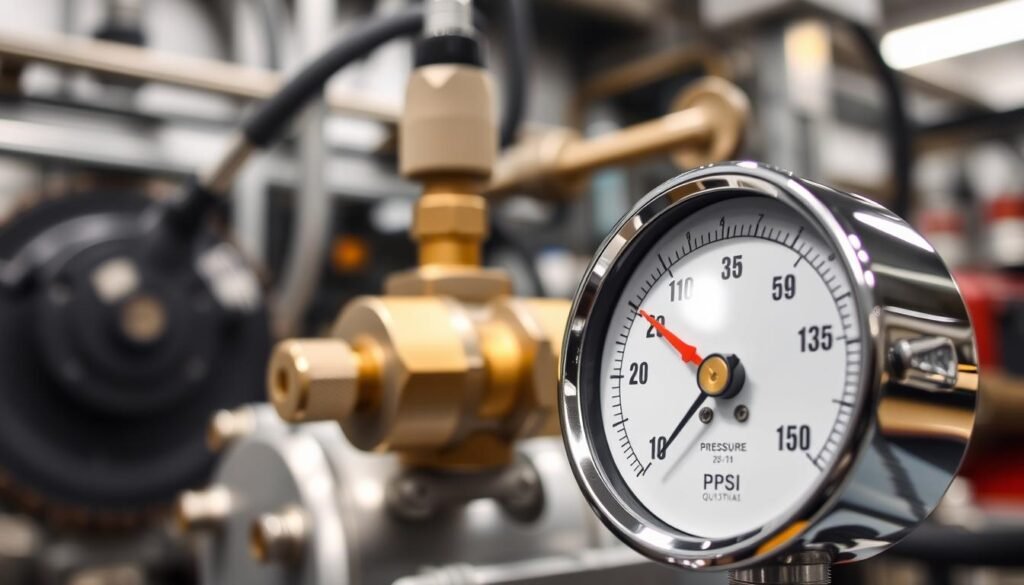
| Reading (psi) | Likely Cause | Action |
|---|---|---|
| Below 30 | Low supply or closed valve | Check main shutoff and supply; inspect pipes |
| 40–60 | Normal household range | No action; monitor periodically |
| 61–80 | High but often tolerable | Consider adjustment or set a service check |
| Above 80 | Dangerous pressure | Stop use and address immediately; call a plumber |
One final step: if readings bounce or climb, document them and consult a guide on common gauge failures for further diagnostics. See this concise resource on pressure gauge issues at pressure gauge failure causes.
How to Fix Uneven Flow With 15 PSI Regulator [Troubleshooting]
Start small and steady: make tiny adjustments, then watch what the gauge and taps tell you. This calm approach protects pipes and gives clear clues about the device’s health.
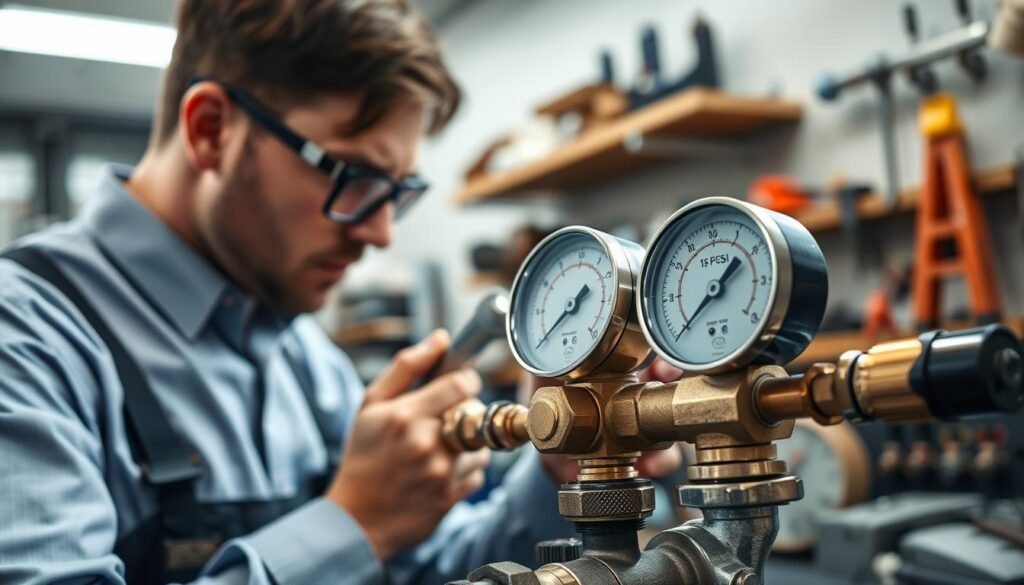
Step 1: Adjust the screw safely. Turn the adjustment screw a little at a time (clockwise raises pressure; counterclockwise lowers it). Do not exceed one full revolution before re-testing with a gauge. Secure the lock nut if present.
Inspect installation and connections
Check orientation, misalignment, and stressed unions on the water line. A twisted or cramped fitting can cause erratic performance and pulsing at several fixtures.
Flush and clean internal components
Debris and sediment often jam the seat or diaphragm. Isolate the valve, open downstream taps briefly, and flush until water runs clear. Remove and rinse screens if your model has them.
Know when parts have failed
If adjustments don’t hold, a worn diaphragm or failed seat likely causes loss of sealing. Another sign is “creep”: contaminants pass the seat, a tiny gap forms, and downstream pressure slowly rises even though the setting stayed the same.
- Small turns, repeat tests: tiny changes, gauge check, fixture test.
- Watch for creep: documented rises after flushing suggest internal wear.
- Decision point: suspect internal damage? Plan repair or replacement to protect plumbing and irrigation timers.
For a related part that can simplify outdoor hose connections, see the hose adapter guide.
Repair vs. Replace: Choosing the Right Fix for Long-Term Performance
Decide with clear signs: a brief service can restore steady output, or a new unit may give years of trouble-free service. Use age, visible wear, and gauge readings to pick the most cost-effective path.

A quick inspection and a gauge reading often reveal whether cleaning is enough. If sediment clogs screens and the unit holds a set, cleaning and minor repair extend life.
When cleaning or minor service makes sense
If there is no rust, seals look intact, and fluctuations started recently, a careful flush and screen clean are worth a try.
Small parts and seals can be replaced, restoring normal pressure and saving the cost of full replacement.
Age and wear: what “too old” looks like
Many pressure regulators and similar devices last roughly 10–15 years. But if the unit leaks, will not hold adjustment, or shows corrosion, it is past useful life.
When to call a licensed plumber
Call a U.S. licensed plumber when you see corroded fittings, persistent leaks at unions, or when pipe cutting and new installation are needed.
A pro protects pipes and fixtures and ensures safe installation, preventing bigger water damage.
- Decision rule: Age + symptoms + gauge = clean, part repair, or replacement.
- Ignore chronic high pressure and you risk stressed pipes, worn seals, and appliance damage.
- Regular maintenance—periodic checks and cleaning—keeps units lasting longer.
Conclusion
Close the loop by confirming symptoms with a gauge, ruling out clogged aerators, making tiny adjustments, and then choosing the long-term fix. Keep the goal clear: steady, predictable water flow for daily chores and the garden.
Document readings and symptoms over several days; patterns reveal whether the root issue is the device, supply swings, or a hidden leak.
Protect your pipes and appliances by keeping values in a safe range and treating visible leaks or corrosion as urgent signs. If the unit will not hold settings or shows heavy rust, call a licensed plumber for a lasting repair or replacement.
For a practical next read, see our home water pressure repair guide for common causes and service options.