Can a yard look lush and still be kind to your sinuses? That question matters if you or loved ones flare up every spring. A smart mix of plants, careful landscaping, and simple mowing habits can cut airborne pollen and keep outdoor time enjoyable.
Not all turf releases the same pollen. Some varieties send tiny grains into the air that travel far. Choosing the right turf, trimming it to about two inches, and shrinking turf areas with patios or rock features reduces exposure for allergy sufferers.
We’ll walk through practical gardening moves, safer ground covers, and quick care steps—so you can shape a healthier outdoor space without losing curb appeal.
Key Takeaways
- Pick turf and plants that release less pollen to lower allergy triggers.
- Mow shorter (around 2 inches) and time yardwork after rain to limit airborne pollen.
- Reduce turf area with hardscapes or water features to create cleaner space.
- Replace wet mulch with gravel or living ground covers to cut mold risk.
- Control weeds and choose female street trees to shrink local pollen loads.
Why Low-Pollen Lawns Matter for Allergy Sufferers in the U.S. Right Now
High pollen counts are arriving early and often this year. Small yard changes cut daily exposure and help ease symptoms for sensitive people.
With pollen counts spiking early, simple garden changes can ease daily sniffles. Experts report very high pollen warnings in many areas, and that matters for overall health and comfort.
Airborne pollen from many turf varieties and male dioecious trees travels on the wind. When pollen fills the air, hay fever and related symptoms rise for allergy sufferers.
Keep turf shorter, reduce exposed soil dust, and place flowering plants away from paths and patios. These moves lower the pollen you and your family meet on busy days.
Time yardwork for calm or post-rain periods to limit pollen in the air. Design sheltered zones and choose pollinator-friendly species that do not primarily produce pollen on the wind.
Researched Best Low-Pollen Grass Types Sneeze-Free Backyard
Choose turf and surfaces that limit airborne pollen, match your climate, and reduce overall lawn area.These choices cut daily exposure while keeping the garden inviting.
Pick St. Augustine for a living lawn that releases less airborne pollen than many cool-season options. It tolerates warm, humid U.S. climates and makes a dense, shady carpet that needs less constant seed production.
Female Buffalo cultivars like Legacy and UC Verde offer soft texture and color with minimal pollen impact because of their plant biology. They suit dry, hot regions and pair well with water-wise gardening plans.
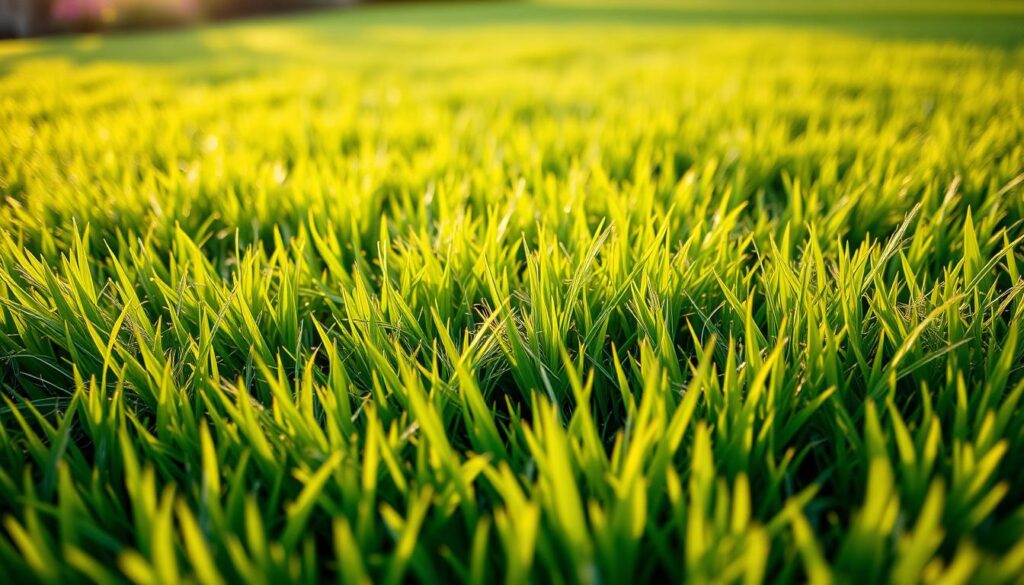
Artificial turf removes pollen entirely and keeps a tidy look for play zones, dog runs, and narrow strips. It also cuts mowing time and mud, freeing you to enjoy the garden more.
- Start small: convert a test patch and compare weekly comfort and upkeep.
- Mix surfaces: use hardscapes and low-pollen borders to reduce lawn area.
- Match region: align plant choices and maintenance with your sun and climate.
For a practical planning guide, consider this helpful resource on designing a low-pollen garden: planning a low-pollen garden.
Mowing and Maintenance Tips to Reduce Pollen in the Air
Keep your mowing routine short and smart to lower airborne pollen and protect sensitive noses. Small habits—like mowing to about two inches and wearing protective gear—deliver big relief during gardening.
Keep Lawn Height Around Two Inches to Limit Pollen Release
Aim to mow at about two inches. This height helps limit grass pollen release into the air and keeps the lawn dense and healthy.
Schedule work on calm or post-rain days to reduce dust and drifting pollen. Edge and trim before you mow so the mower does most of the work in one pass.
- Wear gloves, eye protection, and a well-fitted NIOSH mask to cut exposure and ease symptoms.
- Keep windows closed during and for a few hours after mowing to stop pollen entering the home.
- Leave garden tools outside, rinse them after use, and bag clippings if you notice irritation.
| Action | Why it Helps | Quick Result |
|---|---|---|
| Mow to ~2 inches | Limits seed head formation and airborne pollen | Less pollen in air that day |
| Work post-rain or calm | Humidity and still air cut dust and drift | Smoother, cleaner mowing sessions |
| Protective gear & post-shower | Reduces transfer of pollen from skin and hair | Fewer indoor flares after gardening |
Keep mower blades sharp and clear debris first. Clean cuts stress plants less and speed recovery while stirring up less pollen.
Finish with a quick shower and clean clothes. It’s a small routine that cuts pollen tracked indoors and helps everyone enjoy the garden more.
Designing an Allergy-Friendly Lawn: Less Grass, Smarter Spaces
Make your garden calmer for summer by shifting activity to patios, rock beds, and water features.
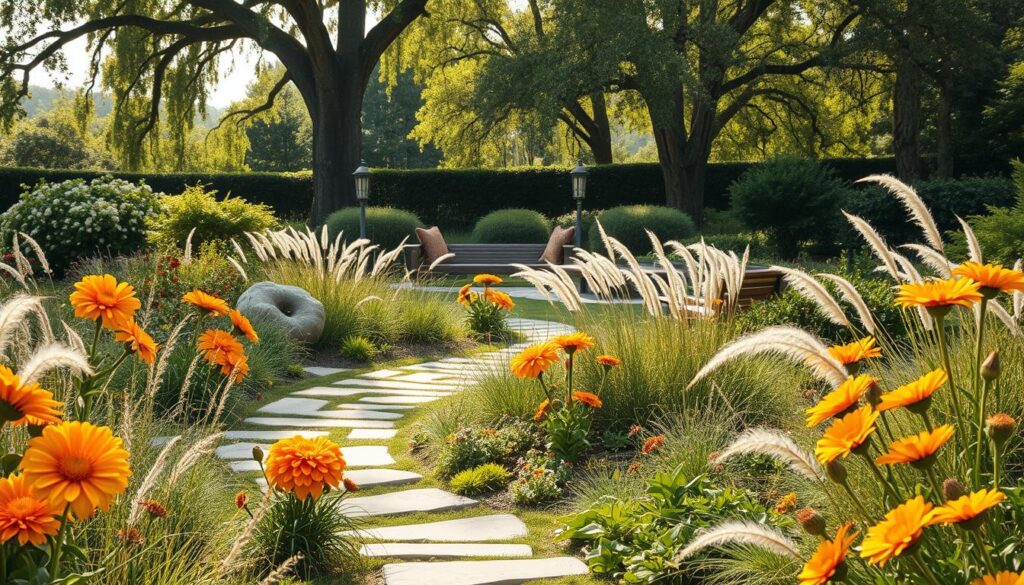
A clever layout shifts activity away from seedheads and toward patios, water features, and shaded seating. This reduces airborne pollen and keeps social spaces cleaner.
How can swapping turf for hardscapes help?
Hard surfaces like patios and stone paths cut lawn area and limit leaves and seedheads that brush against people. Outdoor kitchens and small water features create durable gathering zones.
Conifer hedges make good windbreaks. They add privacy while slowing wind that carries pollen across gardens.
Why choose ground covers over mulch?
Mulch can hold moisture and raise mold risk. Replace it with stone or living ground covers to lower soil dust and weeds near seating areas.
Raised beds keep soil in place for herbs and vegetables. They are easier to maintain and reduce the need to walk on turf.
“Shrink the lawn footprint and expand hardscape areas to create clearer, cleaner outdoor rooms that are easier to enjoy.”
- Place flowering plants away from doors and dining spots to keep blooms pleasant, not overpowering.
- Tuck benches and grills on the leeward side of hedges to temper wind-driven pollen.
- Layer beds with clean edges to contain creeping covers and simplify gardening tasks.
| Design Move | Allergy Benefit | Quick Result |
|---|---|---|
| Replace lawn with patio/rock garden | Less pollen-producing surface area | Cleaner air near seating in days |
| Use living ground covers or stone | Lower mold and soil dust | Fewer indoor flares after use |
| Plant conifer hedges as windbreaks | Reduces pollen drift across the yard | More protected dining and play areas |
Smarter Mulch Alternatives That Won’t Trigger Allergies
Swap moisture-holding mulch for cleaner surfaces or living ground covers to cut mold risk and keep beds tidy. These simple moves lower dust, suppress weeds, and reduce time spent on routine gardening.
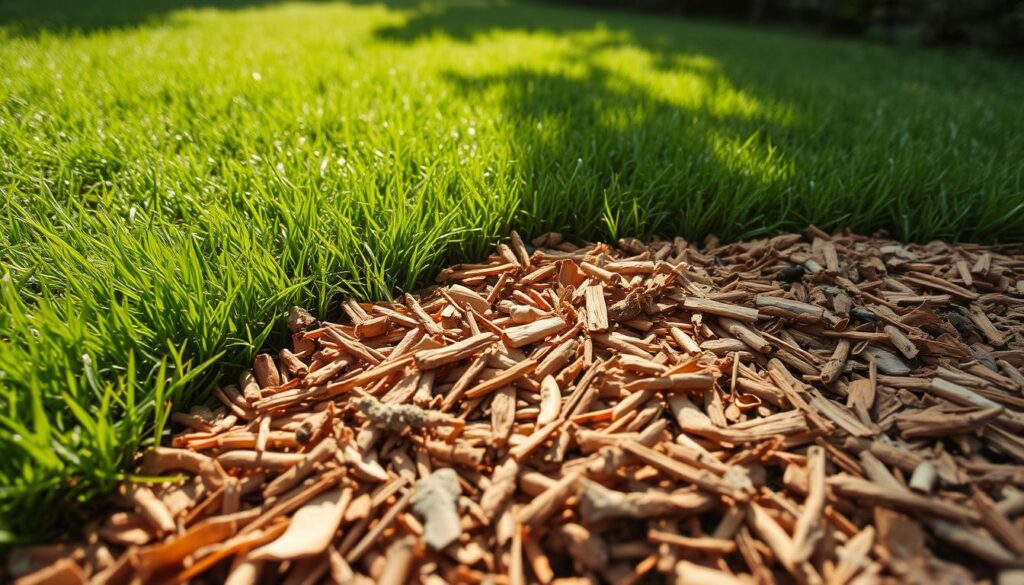
What works for clean, low-allergen beds?
Traditional mulch can hold moisture and feed mold, which worsens symptoms for people with allergies or asthma. Choose gravel, river rocks, or oyster shell as a durable, low-maintenance option.
Stone bands near paths are a smart addition. They trap less soil and cut the seeds and debris tracked into the house after gardening.
Which living carpets keep beds soft and tidy?
Plant low-growing covers like creeping thyme, Corsican mint, ajuga, pachysandra, phlox, or vinca. These plants suppress weeds, reduce airborne seeds, and come in appealing varieties that cool the ground.
- Mix stone near edges with living covers inside for better drainage and comfort underfoot.
- In sunny spots, pick drought-tolerant covers to cut watering needs and upkeep.
- When removing old mulch, wear gloves and a mask, then bag it promptly to limit airborne mold.
- Rinse stones occasionally to refresh beds and keep them bright through the season.
Tree Choices That Tame Pollen: Choose Female Trees and Strategic Placement
Pick tree sex and siting to cut pollen where your household spends time. Choosing the right trees lessens airborne triggers and keeps patios and paths cleaner.
Pick female trees for dioecious species when available. Male trees are common in city plantings because they avoid fruit drop, but male specimens cause many allergy issues. Male trees produce copious pollen, while female flowers do not, so the source is reduced at the root.
Ask nurseries to label tree sex before you buy. Plant away from main paths and patios so daily activity does not stir seeds and debris into living areas.
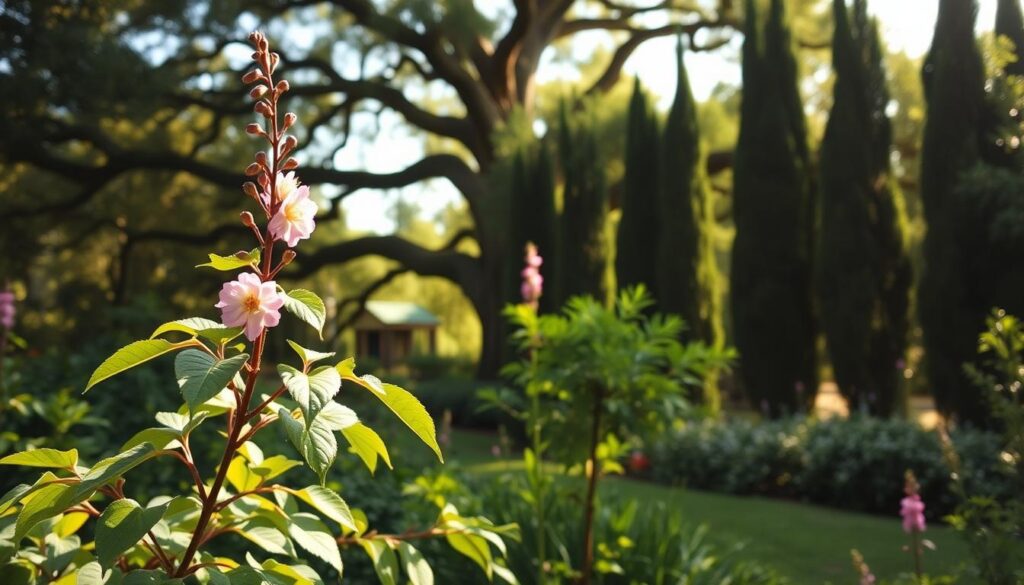
- Use conifer hedges—cedar, fir, juniper—as windbreaks to slow pollen on breezy days.
- Choose compact cultivars for tight areas to keep branches off seating spots.
- Underplant with insect-pollinated plants to lower overall airborne pollen.
| Action | Why it Helps | Quick Result |
|---|---|---|
| Plant female trees | Stops many airborne pollen sources | Less pollen near home within seasons |
| Place trees away from patios | Reduces pollen transfer into living zones | Cleaner outdoor seating and fewer flares |
| Install conifer hedges | Blocks wind-driven pollen and adds privacy | Calmer air and protected dining areas |
| Prune and water regularly | Maintains airflow and reduces debris | Lower buildup of allergy-triggering material |
A well-placed tree plan supports an allergy-friendly garden without losing shade or seasonal interest. Small choices today make outdoor life easier tomorrow.
Weeds and Grasses to Avoid if You Have Hay Fever
Pick removals that cut pollen at the source. Avoid known offenders and add simple controls to limit seeds and airborne triggers.
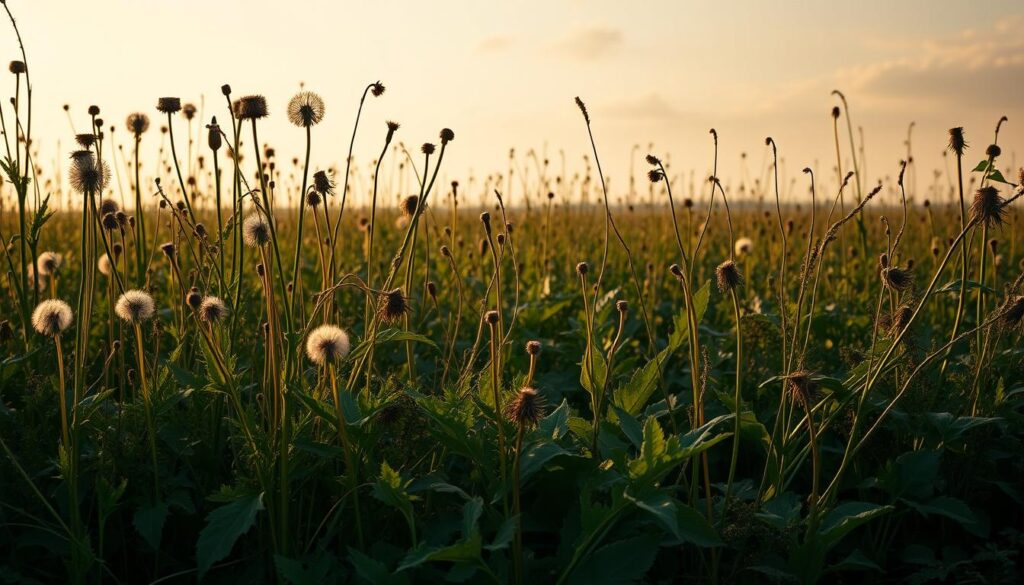
Which high-pollen turf to skip?
Skip Bermuda, rye, and fescue. These grass varieties produce abundant pollen and can worsen hay fever for sensitive people.
Which wild plants cause the worst flare-ups?
Watch for ragweed, sagebrush, pigweed, and Russian thistle. These weeds spread fast, drop irritating seeds, and make pollen problems worse in summer.
What simple controls help most?
- Fill cracks between pavers with sand or gravel so weeds have fewer places to root.
- Clear dead leaves and brush often; tidy beds remove hiding spots that help weeds surge.
- Use the right tools and pull young shoots after rain—roots release easier then.
- Spot-treat small patches with focused herbicide and plant dense ground covers on bare soil.
- Consider artificial grass in narrow strips where weeding is constant.
Quick routine: do a weekly scan, remove fresh growth, and bag debris safely. These small steps keep gardening time short and reduce future work and allergy flares.
Allergy-Friendly Plants to Pair with Low-Pollen Lawns
Pick shrubs and flowers that add color and habitat while keeping airborne pollen low.
Choose shrubs like hydrangea, azalea, viburnum, and hibiscus to form reliable structure and long bloom periods. These shrubs offer big leaves and showy blooms that attract pollinators, not wind pollen.
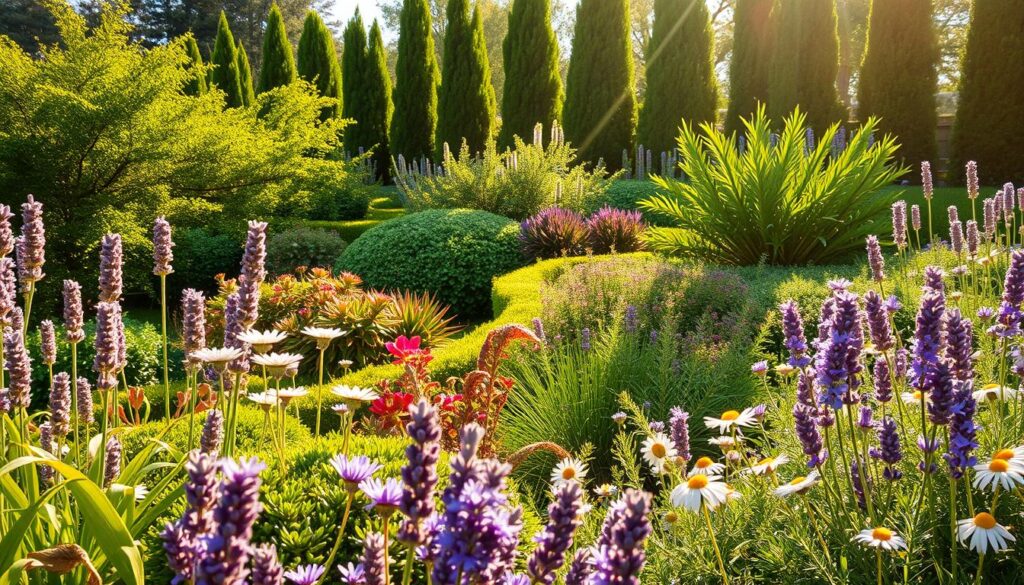
Which perennials invite pollinators but spare your sinuses?
Add insect-pollinated perennials such as butterfly weed, blue false indigo, purple coneflower, and cardinal flower. They bring summer color and life without huge airborne pollen loads.
How do I get bright color with low risk?
Use geraniums and snapdragons in borders and pots for reliable summer blooms. Plant magnolias for dramatic spring flowers and a gentle canopy that is friendlier to sensitive noses than many wind-pollinated trees.
- Mix several varieties with staggered bloom times for steady color.
- Group similar water needs—use seeds and starts wisely to simplify care.
- Place these plants near patios, but keep heavier pollen sources farther from doors.
- Favor insect-pollinated flowers; showier forms often mean less airborne pollen.
| Plant Group | Benefits | Season |
|---|---|---|
| Shrubs (hydrangea, azalea, viburnum) | Structure, long blooms, low wind pollen | Spring–Summer |
| Perennials (coneflower, butterfly weed) | Attract pollinators, summer color | Summer |
| Color (geraniums, snapdragons) | Border accents, pots, low airborne pollen | Spring–Summer |
Practical Gardening Tips to Reduce Allergy Symptoms
Timing and small habits cut exposure fast. Work when the air is calm or just after rain to lower pollen and dust. These simple choices ease symptoms and make gardening more pleasant.
When should I plan tasks to avoid pollen and wind?
Pick cloudy, windless hours or the hour after a shower. Pollen and dust fall when air is still, so your time outside stirs up less material.
Tip: face away from the wind when pruning or sowing seeds to avoid direct exposure.
What protective gear and habits help most?
Wear a well-fitted NIOSH mask, hat, glasses, and gloves. These items protect eyes, skin, and lungs from irritants while you work.
After yardwork, shower and change clothes right away. Rinse gear and leave tools outside so allergens stay out of the house.
How do I limit pollen inside after mowing or gardening?
Keep windows closed during and for a few hours after mowing to stop pollen drifting indoors.
Stage tools neatly outside and rinse them after use. Store gear in a dry spot to cut mold growth and prolong life.
- Plan tasks for calm or post-rain windows to cut airborne pollen and dust.
- Face away from wind while trimming to reduce direct exposure to pollen.
- Wear gloves, glasses, and a mask; rinse tools and line-dry gear when possible.
- Batch chores—weed, mow, then clear paths—for shorter, controlled exposure.
- Hydrate, take breaks, and keep a small kit by the door for quick outings.
| Action | Why it Helps | Quick Result |
|---|---|---|
| Work after rain or on calm days | Lower airborne pollen and dust | Less irritation during the session |
| Wear mask, gloves, and eye protection | Blocks particles from lungs, skin, and eyes | Fewer immediate symptoms |
| Keep windows closed and clean tools | Prevents pollen transfer indoors and removes allergens from handles | Cleaner home air after gardening |
Conclusion
Small, deliberate choices to planting, mowing, and layout give big relief for hay fever while keeping a beautiful outdoor space.
A few clear choices about lawn, trees, and flowers will cut pollen and keep the garden lovely. Choose comfort-forward turf, plant female trees where possible, and place blooms like geraniums and snapdragons away from doors and seating.
Keep mowing near two inches, time chores for calm days, and clean up leaves to lower summer triggers. Replace wet mulch with stone or living covers and control weeds early for long-term benefit.
Use this checklist as your way to design an allergy-friendly garden that fits your space. Learn more about durable lawn choices like Zoysia grass as an addition to your plan.
FAQ
What makes a lawn low in pollen and better for allergy sufferers?
A low-pollen lawn relies on species or solutions that produce little airborne pollen (or none). Warm-season, broad-bladed grasses like St. Augustine release less pollen than many fine-bladed turf varieties. Choosing female trees, using ground covers, or installing artificial turf further cuts airborne pollen. Proper mowing, watering, and removing weeds also lower pollen and mold in the yard.
Is St. Augustine grass a good choice for people with hay fever?
Yes. St. Augustine is often recommended because it spreads by stolons and is mainly insect- or vegetatively pollinated, which reduces airborne pollen. It tolerates heat and shade and creates a dense turf that crowds out many weeds that cause allergy symptoms.
What are “female” buffalo grass varieties and why do they help?
Female or seedless buffalo grass cultivars like Legacy and UC Verde set little to no pollen because they don’t produce pollen-bearing flowers. That lowers airborne allergen load while giving a soft, drought-tolerant turf that needs less mowing and irrigation.
Will switching to artificial turf eliminate allergy problems?
Artificial turf eliminates plant pollen from the lawn, which can dramatically reduce outdoor exposure. However, it can trap dust, pet dander, and heat. Regular cleaning, infill selection, and good drainage help keep it allergy-friendly and comfortable.
How should I mow to reduce pollen in the air?
Mow when winds are calm and after rain if possible. Keep turf height around two inches to reduce flowering and seed-head formation. Use a well-tuned mower with a bagger to collect clippings, or rake clippings promptly to prevent drying and pollen release.
Are there ground covers that are good alternatives to mulch for allergy sufferers?
Yes. Low-allergen ground covers include creeping thyme, Corsican mint, ajuga, pachysandra, phlox, and vinca. They reduce bare soil, curb dust and mold, and often produce little airborne pollen compared with weedy or grassy patches.
Which mulch alternatives are least likely to trigger allergies?
Inorganic options such as gravel, decorative rock, and crushed oyster shell are low-allergen choices because they don’t harbor mold or produce pollen. They also improve drainage and reduce maintenance compared with organic mulches.
How can tree selection reduce pollen around my home?
Prefer female varieties of dioecious trees (those with separate male and female plants) because females don’t release pollen. Plant trees away from patios and entryways and use conifer hedges or windbreaks to intercept airborne pollen before it reaches living spaces.
Which common turfgrasses and weeds should people with allergies avoid?
Avoid high-pollen turf types such as Bermuda, perennial ryegrass, and some fescues if pollen is a concern. Watch for allergenic weeds like ragweed, sagebrush, pigweed, and Russian thistle. Controlling cracks, clearing debris, and spot-treating young weeds help reduce their spread.
What allergy-friendly ornamental plants provide color without lots of pollen?
Choose showy, insect-pollinated plants such as geraniums, snapdragons, hydrangeas, azaleas, viburnum, hibiscus, and many magnolias. Pollinator-friendly perennials like butterfly weed, blue false indigo, purple coneflower, and cardinal flower attract pollinators but generally produce heavier, less airborne pollen.
When is the best time to work in the garden to minimize symptoms?
Garden on calm, post-rain days when pollen counts are lower. Avoid windy mornings and late afternoons when many plants shed pollen. Check local pollen forecasts and plan tasks like mowing, weeding, or pruning for low-count hours.
What protective gear and routines reduce exposure while gardening?
Wear a fitted mask (N95 or similar), safety glasses, and gloves while working. Shower and change clothes right after gardening, launder work clothes separately, and rinse tools and shoes to remove pollen. Keep windows closed during and after mowing to prevent pollen entry.
Can landscape design help people with severe pollen allergies?
Absolutely. Design strategies include reducing turf area, adding patios, rock gardens, water features, and planted beds with low-allergen species. Placing high-pollen plants downwind or far from living spaces and using hedges as windbreaks also lowers exposure.
How often should I water or irrigate to minimize pollen and mold?
Water deeply in the morning to support healthy turf and plants while reducing surface moisture that encourages mold. Avoid evening watering, which can raise humidity and mold risk. Proper irrigation keeps plants vigorous so they resist weeds that might increase pollen loads.
Where can I find certified seeds, cultivars, or products for allergy-friendly landscaping?
Look to university extension services, the USDA plant databases, reputable nurseries, and brands like Scotts, Pennington, and Miracle-Gro for labeled cultivars. Local cooperative extension offices can recommend region-appropriate varieties and verified female tree cultivars.