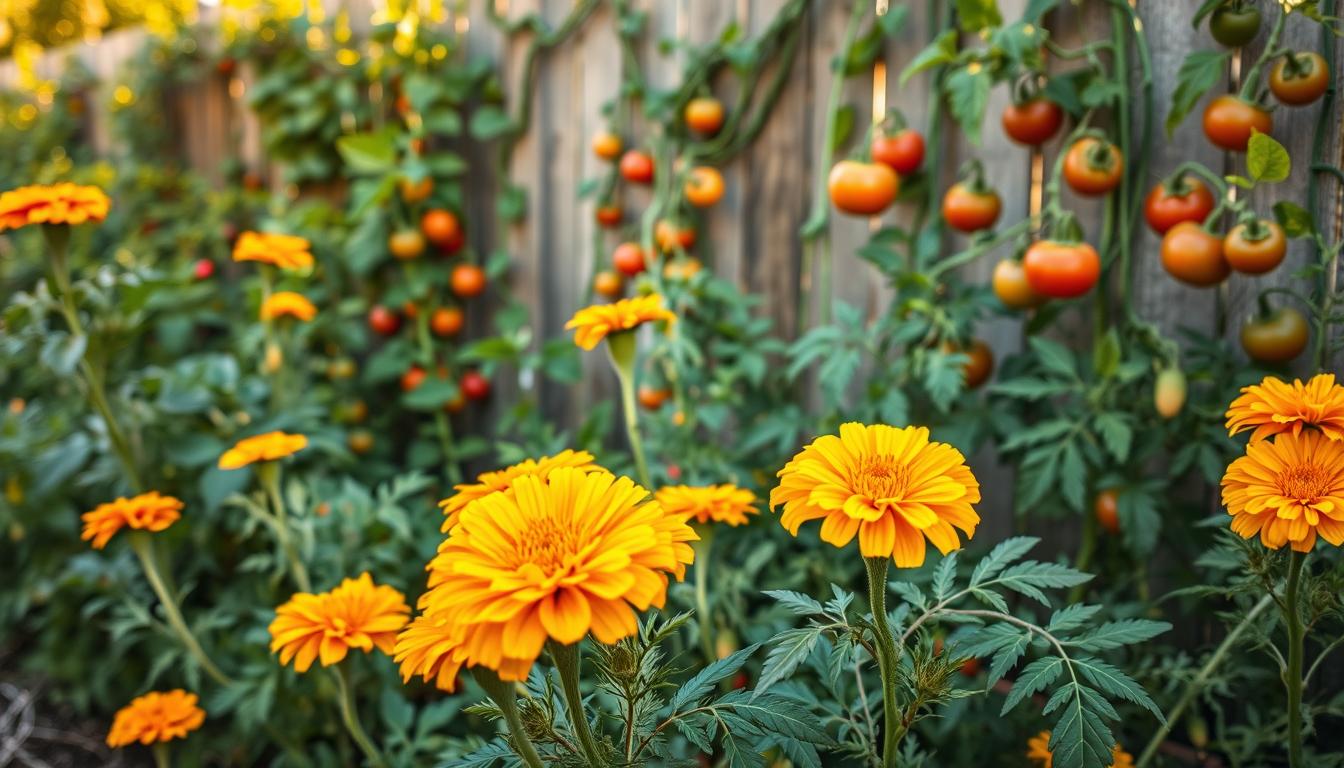
Can a strip of bright flowers change the fate of a struggling tomato bed? That question drives this guide. We test garden lore against real science so you can plant with purpose.
Research and practice both matter. A Newcastle University study found French marigolds planted alongside tomato plants from the season’s start slowed whitefly growth by emitting airborne limonene. That points to a scent-based effect, not magic.
This introduction shows what to expect: clear evidence, practical planting tips, and when to trust companion planting. You’ll learn how certain marigold types attract helpful insects, how to space them 10–18 inches from stems, and why late additions may fail while limonene dispensers can work midseason.
Want hands-on proof? We’ll give a simple backyard trial you can run side-by-side to judge benefits for your garden.
Key Takeaways
- Evidence-based results: French marigold scent reduced whitefly buildup when planted early.
- Timing matters: Plant after frost and start marigolds at the season’s start for best pest effects.
- Practical spacing: Keep marigold blooms 10–18 inches from tomato stems to avoid crowding.
- Attracts allies: These flowers draw ladybugs, lacewings, and parasitic wasps that help control pests.
- Not a cure-all: Some pests resist this approach; use it as part of a broader plan. See the research summary on marigold pest interactions.
Does sowing marigolds with tomatoes really deter pests?
The Newcastle trial showed a clear benefit when planted early. French marigolds reduced glasshouse whitefly growth by releasing a scent that whiteflies avoid.
A clear experiment shows how certain flowers change insect behavior in tomato beds. Planting the flowers and tomato plants together at the start of the season slowed whitefly buildup. Adding the flowers later failed to cut infestations, though limonene dispensers still worked.

What research says: French marigolds, limonene, and whitefly control
The key mechanism was airborne limonene. The study tied reduced whitefly growth to this volatile compound. In short, marigolds contain a compound that whiteflies avoid, so early co‑planting matters.
From lore to science: intercropping vs. “companion planting”
Researchers found that swapping some flowers for non‑host plants like basil and nasturtium still cut whiteflies. That points to associational resistance—an intercropping effect, not mystical companion planting claims.
“Plan layout early: shared space all season gave measurable pest reduction.”
| Method | When to use | Primary effect |
|---|---|---|
| French marigolds (co‑planted) | Season start | Slows whitefly buildup via limonene |
| Non‑host intercropping (basil, nasturtium) | Season start | Associational resistance; fewer whiteflies |
| Limonene dispensers | Midseason emergency | Can reduce active infestations |
Use early planning and intercropping as part of integrated pest management. For more on companion options and benefits companion planting, see this practical guide.
How this method works: scent signals, beneficial insects, and associational resistance
Plants use scent and shelter to change insect choices. When fragrant flowers and crops share space, chemical cues and visiting predators combine to lower pest pressure.
Scent is the first mechanism. French marigolds release limonene, a volatile compound that whiteflies avoid. When these flowers are co‑grown early, whitefly populations grow more slowly around tomato plants.
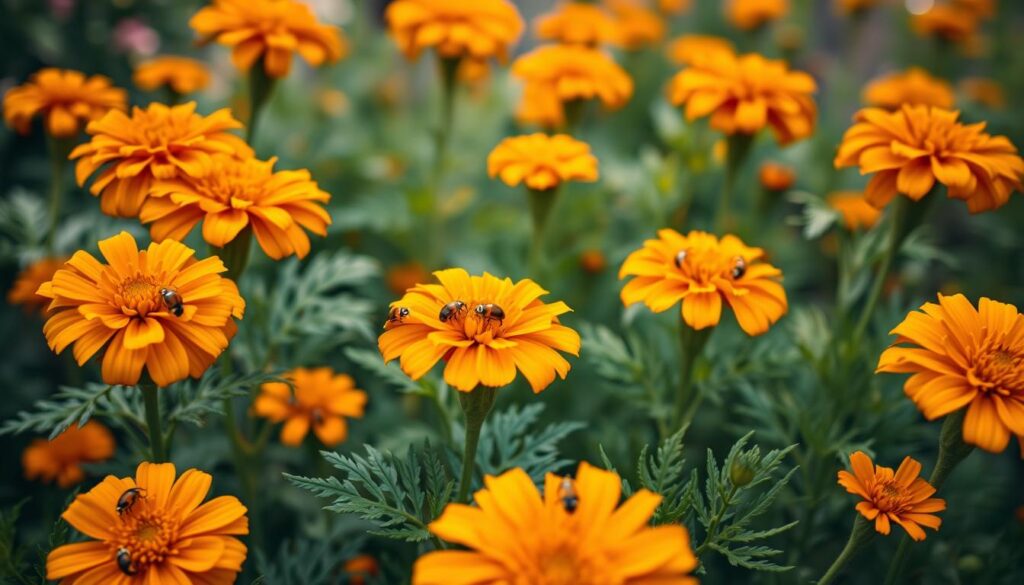
How do beneficial allies arrive?
A continuous bloom gives food and shelter that attract ladybugs, lacewings, and parasitic wasps. These insects hunt aphids and whiteflies and will patrol nearby tomato foliage.
What can and can’t be solved by these plantings?
Marigold root chemistry can suppress some nematodes when used intensively or as a cover crop, but results vary by species. Marigolds also help control tomato hornworms indirectly by supporting parasitic wasps.
“Blend scent signals and predator support for the best protection.”
| Effect | How it works | Best use | Limit |
|---|---|---|---|
| Limonene repels whiteflies | Airborne scent alters insect behavior | Co‑plant at season start | Less effective midseason |
| Attracts predators | Nectar and shelter draw ladybugs and lacewings | Continuous blooms, deadhead often | Needs diverse plants nearby |
| Nematode suppression | Root compounds in intensive plantings | Cover crops or season‑long beds | Species and density dependent |
The deterrent effect hinges on chemistry and ecology. Use these flowers as one layer in integrated care—monitor, plan early, and keep blooms coming.
Plan your plot: sun, soil, spacing, and layout for tomatoes and marigolds
Choose a sunny, well-drained site and space plants so air and light move freely. Proper placement reduces disease, boosts blooms, and keeps fruiting plants productive.
How much sun and what soil should you pick?
Choose a location with at least six to eight hours of full sun. That helps tomatoes set fruit and keeps blooms open for beneficial insects.
Prioritize well‑drained soil. Amend heavy ground with compost or grit so roots don’t sit wet. Mulch to hold moisture and lower disease risk.
What spacing works best?
Space marigolds 10–12 inches for compact French types, or up to 18 inches for larger varieties. Keep this range clear around tomato stems for airflow and easy care.
How should beds and containers be arranged?
Use marigolds planted as a border or stagger them near each tomato to form an even scent and flower corridor. In containers, allow at least a 5‑gallon pot per tomato plant; go larger if combining plants.
| Site | Recommendation | Why it matters |
|---|---|---|
| Sun | 6–8 hours full sun | Fruit set and continuous blooms |
| Spacing | 10–18 inches around tomato stems | Airflow and disease prevention |
| Water & care | About 1 inch per week; deadhead and midsummer cutback | Keeps flowers coming and soil stable |
Give both crops full sun and good drainage, then space marigolds 10–12 to 18 inches from tomato stems for airflow and easy care. A simple, airy layout helps your vegetable bed thrive and lets scent and flowers support natural enemies.

Choose the right types: French vs. African marigolds and helpful companions
Which varieties suit your bed and pest goals? Pick compact bloomers for steady scent or larger types for show. Match mature size to avoid shading your tomato plants and keep airflow strong.
Why choose French varieties?
French marigolds stay bushy and bloom long. They were central to the Newcastle study linking limonene emission to whitefly control. Plant these close, about 10–12 inches from stems in tight beds.
When African types fit your plan
African marigolds give big, double blooms and bold colors. Use them when you have space and can keep good airflow. Place them farther out so fruiting trusses stay sunlit.
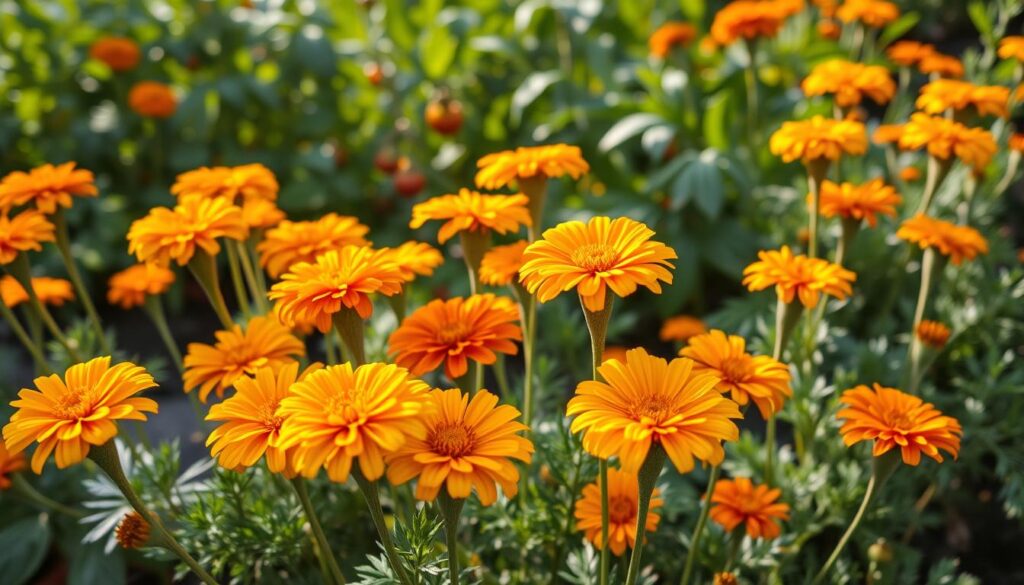
Which companion plants add value?
Mix in basil, nasturtium, and Chinese cabbage. These companion plants planted together create associational resistance and also offer flavor and edible blooms. All thrive in full sun and warm weather.
| Type | Best use | Key benefit |
|---|---|---|
| French marigolds | Close borders, tight beds | Long bloom; limonene-linked whitefly reduction |
| African marigolds | Open beds, larger spaces | Large blooms, bold colors |
| Companion plants | Intercrop rows or patches | Adds associational resistance and habitat |
Choose French marigolds for season‑long pest benefits and African marigolds for visual impact. Combine these plants and companion plants so your marigolds garden stays vibrant, functional, and easy to maintain.
Step-by-step: planting marigolds with tomatoes for best results
Start after the last frost and aim for a sunny, steady setup. Planting at the same time helps scent and shelter build together so beneficial insects arrive early.
When should I plant?
Start by picking a frost-free week so both plants and flowers take root together. Transplant tomato plants and sow planting marigolds the same week so they establish simultaneously in warm soil.
Where do I place them?
Place marigolds as borders or stagger them 10–12 to 18 inches around tomato stems. This layout spreads blooms and scent evenly across the bed and keeps airflow open.
Seeds vs. starts, water, and mulch
Decide on seeds or nursery starts: seeds save money, starts give quick color and nectar. Water deeply to supply about one inch weekly and mulch 2–3 inches to hold moisture and cool soil.
- Plant after frost in full sun, spacing marigolds 10–12 to 18 inches from stems. Start from seeds or starts, water ~1 inch per week, and mulch to lock in moisture.
- Stake or cage tomatoes so foliage won’t shade flowers.
- Deadhead often; cut back midsummer if plants fade.

Troubleshooting and care: keeping flowers blooming and pests at bay
Keep a simple routine to extend bloom and cut pest pressure. Deadheading and a midsummer trim revive tired beds and support helpful insects. Gardeners who follow a few habits see steadier color and fewer surprises.
A few weekly chores keep flowers lively and reduce pressure from unwanted insects.
Deadheading and midsummer cutbacks for nonstop color
Snip spent blooms weekly. Removing faded flowers sends energy into new buds. This keeps nectar coming for pollinators and predatory insects.
If beds lag in July, shear back by about one‑third. Fertilize lightly and resume deep watering to restart growth. Marigolds also respond well to this treatment and often rebloom by late summer.

What to do if whiteflies or hornworms show up midseason
Scout weekly. Inspect undersides of leaves for whitefly clusters and watch for hornworm frass on the soil.
- Whiteflies: Remove infested leaves and set sticky traps to catch adults. Late planting will not reverse heavy outbreaks, so combine sanitation and monitoring.
- Hornworms: Handpick large caterpillars at dusk. Leave any with white cocoons; those are parasitized and will help cut populations.
| Issue | Action | Why it helps |
|---|---|---|
| Faded blooms | Deadhead weekly; midsummer shear | Encourages new flowers and steady nectar |
| Whitefly buildup | Remove clusters; use sticky traps | Reduces adults and breaks breeding cycle |
| Hornworm presence | Handpick; protect parasitized caterpillars | Immediate removal and natural control |
| High humidity | Improve airflow; refresh mulch | Lowers disease that attracts secondary pests |
Keep blooms coming with deadheading and a midsummer cutback. If pests surge midseason, act fast—scout, remove, and support natural enemies rather than relying on late planting alone.
Run your own backyard trial: a simple garden experiment
Want proof in your own plot? A small, controlled test will show how planted mixes affect pests and yield.
Set two equal beds at the season start. Keep sun, soil prep, and watering the same so comparisons focus on the plant mix.
Side-by-side beds, what to observe, and what success looks like
Set one bed with tomatoes and a ring of marigolds planted together, and a second bed that interplants companion plants (basil, nasturtium, Chinese cabbage). Track whitefly counts, plant vigor, and harvest weight to see clear benefits in your garden.
Use a simple weekly log. Note adult whiteflies on undersides of leaves, any beneficial insects visiting blooms, and overall growth. Photograph both beds each week to capture canopy density and bloom continuity.
Keep interventions the same in both beds—hand removal or sticky traps—so results remain fair. Record fruit set and harvest weight to measure real vegetable benefits, not only pest levels.
| Trial element | Bed A (marigolds) | Bed B (diverse mix) |
|---|---|---|
| Layout | Tomato plants surrounded by marigolds planted together | Tomato plants interplanted with basil, nasturtium, Chinese cabbage |
| Observations | Weekly whitefly counts, bloom continuity, beneficial insects | Weekly whitefly counts, bloom continuity, beneficial insects |
| Measurements | Fruit set count, harvest weight, vigor notes | Fruit set count, harvest weight, vigor notes |
| Duration | 6–8 weeks during peak whitefly season | 6–8 weeks during peak whitefly season |

Conclusion
Early, planned plantings give scent and shelter time to work for your vegetable bed. Evidence shows French marigolds cut whitefly growth when the plants share space from the season’s start. That limonene effect matters most when blooms and tomato foliage establish together.
planting marigolds tomatoes alongside tomato plants from day one helps slow tomato pests and supports a healthier, more diverse bed. Pair french marigolds and intercropping (basil, nasturtium, Chinese cabbage) to add resilience and color.
Plant marigolds in full sun, water about one inch per week, and deadhead often. Choose types marigolds thoughtfully: french marigolds for tight beds and african marigolds for larger layouts. Save seeds from dry heads to expand borders next season.
In short: plan early, care steadily, and use companion planting and intercropping as practical layers. Small choices at planting time make your tomato harvest sweeter and your garden more vibrant.
FAQ
Does planting marigolds near tomato plants reduce pests?
Research and garden trials show marigolds can help reduce some pests around tomato plants, especially whiteflies and certain nematodes, but results vary. Planting French marigolds (Tagetes patula) near tomato rows can release volatile compounds such as limonene that confuse or repel small insects. Use them as one tool in an integrated approach rather than a guaranteed solution.
What does research say about French marigolds, limonene, and whitefly control?
Studies indicate French marigolds emit volatile compounds that can lower whitefly pressure in nearby crops. Limonene and related terpenes act as repellents or disrupt insect host-finding. Effects depend on plant density, timing, and local pest pressure; solid scientific support exists but outcomes are modest in many home gardens.
Is this traditional companion planting the same as scientific intercropping?
No. Companion planting is a folk practice of pairing species for mutual benefit. Intercropping is a formal, studied approach that tests crop combinations, spacing, and yields. Use companion pairs like tomatoes and marigold as practical, low-risk intercropping, but expect variable results compared to controlled agricultural trials.
How do marigolds work—scent, beneficial insects, or associational resistance?
Marigolds help three ways: their scent masks tomato cues for pests, they attract predators and pollinators like ladybugs and lacewings, and they can create associational resistance by diluting pest targets. Combine these effects by planting a mix of flowers and herbs to boost helpful insect populations.
Which compounds in marigolds repel whiteflies?
Marigolds release terpenes such as limonene and ocimene. These volatiles can interfere with whitefly host-finding and reduce settling. Concentrations matter—dense flowering borders or interplants yield stronger localized effects than a few scattered plants.
Will marigolds attract beneficial insects to my tomato patch?
Yes. Bright blooms and accessible nectar draw bees for pollination and natural enemies like lady beetles, lacewings, and parasitic wasps. These allies feed on eggs and larvae of tomato pests, reinforcing pest control when you provide continuous bloom and pesticide-free habitat.
Can marigolds deter tomato hornworms and other caterpillars?
Marigolds have limited direct effect on large caterpillars such as tomato hornworms. They may reduce small sucking pests but will not reliably stop adult moths or their larvae. For hornworms, hand-picking, Bt (Bacillus thuringiensis), or encouraging parasitic wasps are more effective.
What growing conditions do both plants need—sun, soil, and spacing?
Tomatoes and most tagetes prefer full sun and well-drained soil. Keep tomatoes spaced according to variety, and place marigolds about 10–18 inches apart around plants or along borders so they don’t shade seedlings. Good air circulation reduces disease risk for both.
How far from a tomato do I plant marigolds for the best effect?
Plant marigolds in tight borders or clusters 6–18 inches from tomato stems. A denser band near plant bases and between rows gives stronger scent and visual attraction for beneficials. Avoid crowding that casts shade or competes for water and nutrients.
Which types are best—French, African, or others?
French marigolds (Tagetes patula) are often recommended for pest-repelling interplanting because they bloom prolifically and emit useful volatiles. African marigolds (Tagetes erecta) are taller and showier but sometimes less effective for whitefly suppression. Use French tagetes for close interplanting and African types as decorative borders.
What companion plants complement marigolds and tomatoes?
Useful companions include basil (improves flavor and attracts pollinators), nasturtium (trap crop for aphids), and Chinese cabbage in mixed beds. These plants add diversity, attract beneficial insects, and can divert some pests away from tomatoes.
When should I sow or transplant marigold seed relative to tomato planting?
Start marigolds indoors or sow directly after the last frost so they bloom early in the season. Transplant bare-root or started marigolds near tomatoes once seedlings are established and daytime temperatures are reliably warm.
Should I use seeds or nursery starts, and how much water and mulch do they need?
Nursery starts give faster bloom and earlier pest benefits; seed is cheaper for larger plantings. Water both to provide about an inch per week, adjusting for heat. Mulch conserves moisture, moderates soil temperature, and suppresses weeds—use organic mulch kept a few inches from stems.
How do I keep marigolds blooming all season?
Deadhead spent blooms regularly and perform a midsummer trim to encourage new flowers. Feed lightly with balanced fertilizer if growth is slow. Continuous bloom keeps tasty nectar available for predators and pollinators.
What if I find whiteflies or hornworms despite planting flowers?
Monitor plants and act early. For whiteflies use yellow sticky traps, insecticidal soap, or encourage parasitic wasps. For hornworms pick them off by hand, apply Bt for caterpillars, or foster parasitic braconid wasps. Combine cultural controls, biologicals, and targeted treatments.
How can I run a simple backyard experiment to test effectiveness?
Set two side-by-side beds or rows—one with tomatoes only and one interplanted with several French tagetes. Keep watering and care identical. Record pest counts, beneficial insect visits, and yield weekly. After a season you’ll see whether the flower border reduced pest pressure in your conditions.