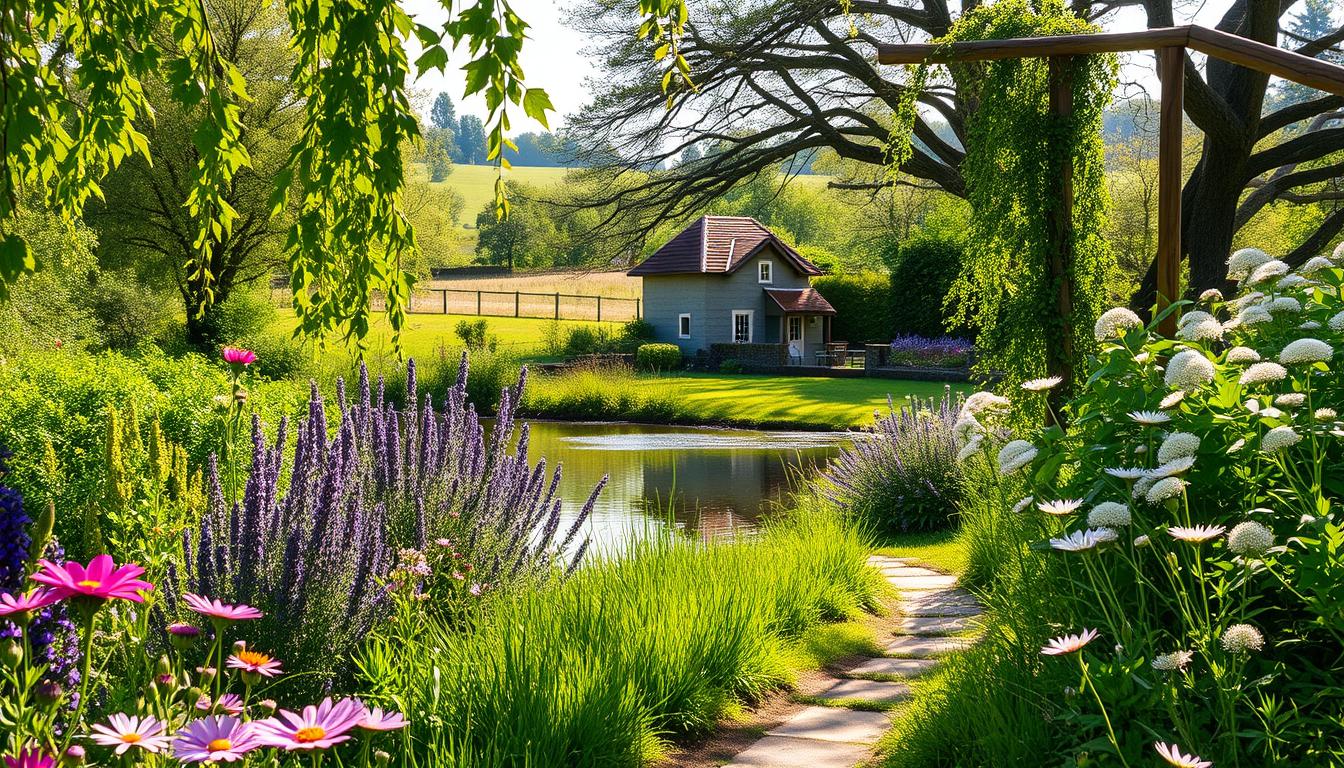
Want a garden that feels lived-in, cozy, and full of quiet beauty? This intro will show how simple choices—colors, textures, and thrifted pieces—can turn a patch of yard into a warm outdoor room.
Imagine a small tea corner or a reading bench tucked among herbs and wildflowers. That sense of comfort and charm is what guides this how-to guide. We blend slow living values—simplicity and self-sufficiency—with practical steps you can follow over time.
The plan previews five core ideas: an informal layout, seasonal palette and textures, useful beauty with herbs, vintage materials for patina-rich charm, and human-centered comfort for daily living. Follow site-reading, then paths and edges, then layers of plants and pieces.
Key Takeaways
- Start by reading your site: sun, soil, and microclimates shape choices.
- Use a seasonal palette of soft creams, sage green, and faded rose with moody accents.
- Mix herbs and wildflowers for useful beauty and everyday use.
- Thrift vintage furniture and found pieces to add patina and charm.
- Plan simple maintenance: resilient plants, mulch, and easy watering.
What Cottagecore Gardening Means Today
A contemporary cottage garden invites small pleasures—tea, tending, and quiet mornings—into your yard. It blends simplicity, self-sufficiency, and a deep love of home into outdoor routines you can actually keep.
Core values turn into real tasks and small rituals that feel joyful instead of taxing.
Core values: simplicity, self-sufficiency, and love of home
Define this style as moving the comforts of home outside: herbs for the kitchen, a bench for reading, and easy borders that don’t demand constant care.
Keep plant choices low-fuss, grow a few edibles, and upcycle jars and baskets as planters to support sustainability and thrift.
Translating slow living into outdoor spaces
Make routines visible: gather dew-damp herbs in the morning, hang laundry in sun, or sit with a cup of tea as pollinators visit.
Share progress, swap cuttings, and celebrate small wins with online groups. For quick inspiration, explore gardening moments on community pages like gardening moments.
“Simplicity isn’t empty—it’s a choice to focus on things that bring real pleasure.”
- Practical beauty: herbs, cut flowers, and breathable textiles that match your home’s colors.
- Sense of place: frame views, repeat plant shapes, and add vintage furniture for patina and warmth.
- Small commitments: five-minute tasks add up to a calm, sustainable life outdoors.
5 design principles used create natural, “cottagecore”
These guiding ideas tie practical habits and soft aesthetics into a single, livable garden plan. They mix simple routines, textured planting, and well-chosen finds to shape a warm outdoor space.
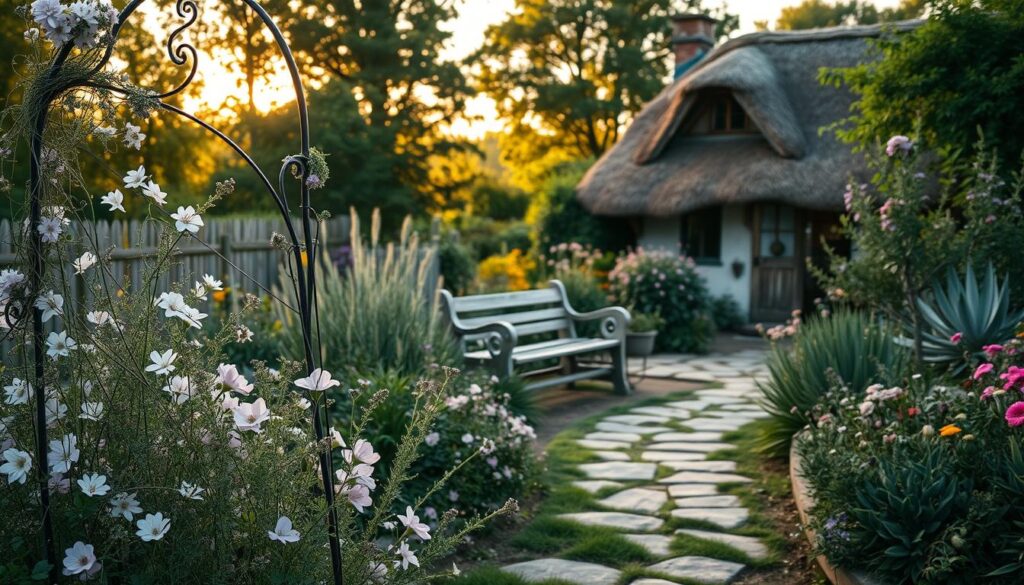
Start with a quick site read, then build paths and edges, layer plants, and finish with vintage accents and lighting.
- Informal structure: soft paths and rooms frame how you move and sit.
- Seasonal palette: repeat colors and textures to knit spaces together.
- Useful beauty: herbs and wildflowers give daily purpose.
- Vintage materials: weathered wood or brass add patina without clutter.
- Human comfort: seating, lighting, and handy tool storage invite use.
Repeat one or two signature elements—like sage-green accents or wicker baskets—to unify style from the patio to the border. Small adaptations make these ideas work in any space, from a full yard to balcony planters.
| Core Pillar | What it adds | Easy example | Seasonal benefit |
|---|---|---|---|
| Informal structure | Flow and privacy | Meandering path | Spring bulbs line routes |
| Seasonal palette | Visual continuity | Sage accents, faded rose | Color balance all year |
| Useful plantings | Food and habitat | Herb spiral | Summer blooms, fall seed heads |
| Vintage thread | Patina and warmth | Thrifted bench | Ages gracefully |
Quick ideas to try: a meandering path, herb spiral, wildflower border, painted trellis, or a thrifted bench. Plan for spring bulbs, summer blooms, fall seed heads, and winter silhouettes to keep interest through the seasons.
Principle One: Let Nature Lead with Informal Structure
Soft curves and winding paths give a garden the relaxed rhythm of a country lane. Embrace gentle lines, layered edges, and small outdoor rooms that invite daily use.
Informal paths and layered planting echo romantic countryside imagery.
Soft lines, meandering paths, and garden “rooms”
Use curved beds and meandering paths to mimic the land’s natural contours. Choose materials that weather well—wood chips, crushed gravel, or reclaimed brick—for paths that feel soft underfoot.
Define a room with low hedges, an arbor, or a woven twig panel. A single bench or a small table turns that room into a ritual spot for tea or reading.
Borrowed views and layered edges that feel organic
Layer edges: groundcovers at the front, mounding perennials mid-layer, and airy shrubs at the back. This adds depth and charm while keeping maintenance simple.
Frame distant trees or neighboring green with sightlines so a tiny space looks larger. Add a painted wood sign or a repurposed gate as a vintage wayfinding element.
“Let the land show you where paths want to go—observe wind, water, and sun, then place seating where the site already feels right.”
- Weave textures through foliage: fine ferns, medium salvias, bold hostas.
- Keep shapes steady: pick plants that hold form with little pruning.
- Ensure accessibility: wider paths near the home and benches at natural pauses invite living outdoors.
| Feature | Why it helps | Quick example |
|---|---|---|
| Curved beds | Softens sightlines and guides movement | Plant a curved herb border near a patio |
| Layered edges | Adds depth and year-round interest | Groundcover, perennials, small shrub row |
| Weathered materials | Creates lived-in charm and durability | Reclaimed brick path or wood-chip lane |
For more practical layouts and a step-by-step approach, consult this garden guide to help shape your outdoor spaces.
Principle Two: Celebrate Seasons, Textures, and Color Palettes
Seasonal shifts and layered textures give a garden its memory and mood. Pick a restrained palette and repeat two anchor hues to link plants, cushions, and painted accents back to your home.
Think of the yard as a living room that changes with the weather.
Build a year-round palette: spring pastels like cream and blush, summer rose and sage, fall russets, and winter moody accents. Repeat two anchor colors to unify plantings, textiles, and pots so the space reads as one coherent room.
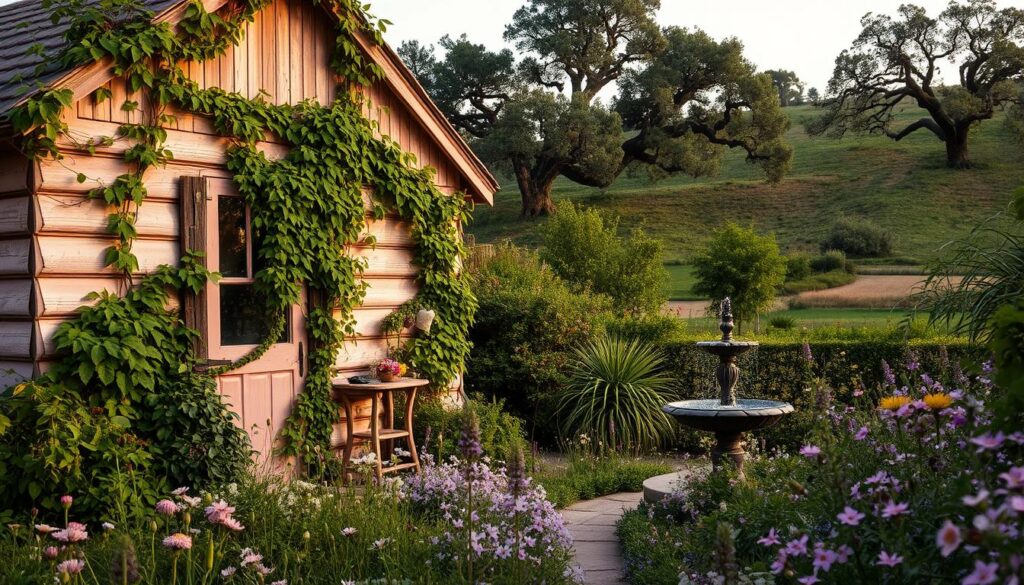
Sage, soft creams, faded roses, and moody notes
Introduce deep greens, charcoal pots, or antique brass lanterns to ground sweet florals. These moody accents give depth without stealing warmth.
Mixing leaf and petal textures
Combine lacey ferns, velvety roses, papery strawflowers, and rustic wood planters for tactile richness. Plant for successive blooms so colors shift gently through the year.
Botanical prints and scaled patterns
Pair a large botanical print pillow with smaller table linens for visual rhythm. Echo rose tones in runners and sage foliage in painted trellis accents to tie decor to planting.
“Layer texture and repeat color; small, seasonal swaps keep the space feeling fresh.”
- Quick ideas: test swatches outside, rotate ribbons on stakes, and keep washable textiles on benches for easy comfort.
Principle Three: Grow Useful Beauty with Herbs, Wildflowers, and Kitchen Plants
Let your yard work for you: plant food, charm, and habitat in the same small space. These choices turn everyday chores into joyful rituals that bring life and color to your home.
Start with a narrow wildflower strip or a few pots by the door. Small moves deliver big rewards: cut stems, pollinators, and herbs for the table.
Wildflower meadows and pollinator-friendly borders
Choose region-appropriate seed mixes and let a sinuous mowing path give the patch intent and charm.
- Plant a narrow wildflowers border along a fence to feed pollinators and supply cut flowers.
- Stagger bloom times—spring natives, summer cosmos, fall asters—so nectar is always available.
- Save seed from easy annuals like calendula and cosmos to replant next year.
Herb spirals and cottage kitchen beds near the door
Build an herb spiral: put thyme and rosemary on the dry upper tiers, parsley and chives lower where it’s moister.
Use half-barrels and window boxes for lettuce, cherry tomatoes, and calendula when space is tight.
“Hang a basket and snips by the back door—daily harvesting becomes fast, fresh, and delightfully ordinary.”
Dry herbs on a shaded porch and hang bundles on vintage hooks for useful decor and year-round flavor.
Principle Four: Layer Vintage Charm with Natural Materials
Bring weathered surfaces, heirloom pieces, and practical finds together to give your yard an authentic, lived-in feel. Choose materials that age with grace so the garden gains story and texture over time.
Start small: one bench, one lantern, one upcycled planter can set the tone.
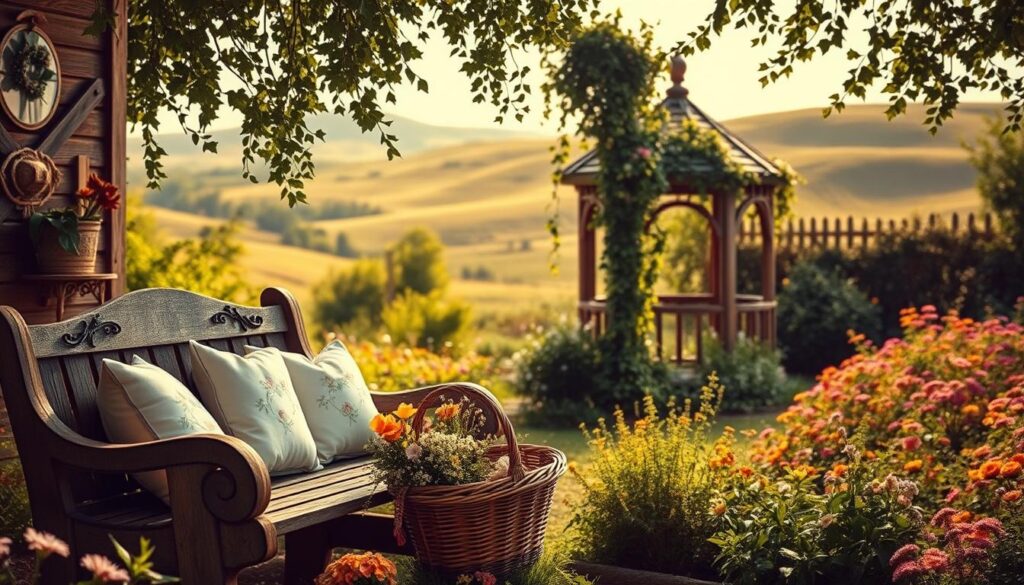
Weathered wood, stone, and warm brass accents
Pick materials that patina outdoors: a weathered wood bench, rough stone pavers, and an antique brass lantern add warmth and history.
Refresh a thrifted bench with a breathable exterior stain so the wood weathers well instead of sealing it in plastic shine.
Upcycled planters, wicker storage, and heirloom finds
Turn old enamel bowls, buckets, or crates into planters. Drill drainage holes and line with burlap for function and a soft edge.
Use wicker baskets to hold tools or harvests and tuck them beneath a potting bench for a tidy, welcoming spot.
- Repeat materials across a gate, bench, and planter to create cohesion.
- Introduce heirloom pieces sparingly—a wrought-iron chair or an old gate anchors a view.
- Keep items practical: choose benches, lanterns, and pots you’ll touch often so the look stays lived-in.
“A few honest, well-loved objects make a garden feel like home rather than a showroom.”
| Element | Why it helps | Easy action |
|---|---|---|
| Weathered wood | Adds warmth and age | Seal with breathable stain; avoid heavy varnish |
| Stone pavers | Grounds paths and beds | Lay irregularly for charm and drainage |
| Antique brass | Gives soft, moody highlights | Use lanterns or hooks where touch is rare |
| Upcycled planters | Affordable, unique decor | Drill holes; line with burlap for drainage |
For thrifted finds and project ideas, explore a guide to rustic home touches or browse handmade market finds for inspiration at rustic charm tips and a curated collection of market treasures at craft market inspirations.
Principle Five: Design for Comfort, Warmth, and Everyday Moments
Make cozy corners that invite slow moments and small rituals every day. Think of each seating spot as a tiny room that supports tea, reading, or quiet company.
Cozy seating, soft lighting, and intimate nooks
Start with a seat you will use daily—comfort beats trend every time.
Place a cushioned bench under dappled shade or a bistro set near the kitchen door for morning coffee. Layer washable textiles—seat pads and throws—to echo garden textures and colors.
Use warm-string lights, lanterns with LED candles, and low solar path lights. These lighting choices flatter faces and plants and extend living into evening hours.
Simple rituals: tea corners, reading benches, and breakfast patios
Anchor small habits with a side table for tea, a shelf for a few books, or a tray for herb syrups. Prioritize ergonomic height so sitting feels natural and unforced.
Create intimate nooks with screens, tall planters, or trellises that define a room without closing it. Place seating to catch breezes and late light; avoid wind tunnels and damp patches.
“A single well-placed bench and soft light turn moments into memories.”
| Action | Why it helps | Quick example |
|---|---|---|
| Seating you’ll use | Encourages daily living outdoors | Cushioned bench by the back door |
| Layered textiles | Adds comfort and durable color | Washable seat pads and throws |
| Flattering lighting | Extends time outside; sets mood | Warm string lights, lanterns |
| Named nooks | Makes the space feel personal | “Rose Corner” for evening tea |
Small, thoughtful touches—a pressed-flower tray, a woven runner, or a tiny vase of stems—make a cozy cottage spot feel like home. Build sensory layers with lavender scent, soft light, and cushioned seats to invite lingering and quiet living.
Site Reading and Layout: Sun, Soil, and Microclimates
Observe light, wind, and moisture first so your garden fits the site. Small, practical moves—mapped paths, placed seats, and grouped beds—make a cozy, usable space.
Observe where the day pauses—hot walls, cool corners, and sheltered pockets—then plan around those cues.
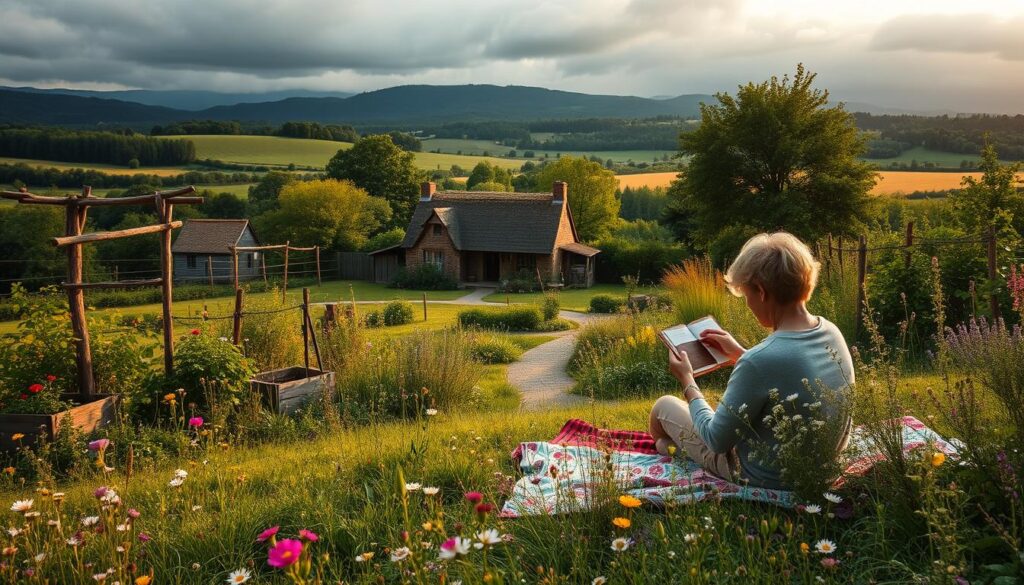
Walk the yard at three times: morning, midday, and late afternoon. Note hot spots, reflective heat from walls, and shaded nooks.
- Test drainage after rain; place moisture-loving plants where water stays.
- Track wind corridors; add trellises or hedges to slow gusts and protect people.
- Use south-facing walls for sun lovers and north beds for shade-loving textures.
Size paths for real use—wider near seating—and keep perennials where they can settle. Keep annuals and herbs close to the door for quick harvests and daily living.
“Begin small: shape one functional room, then expand as the site teaches you.”
Reuse vintage pieces—a wooden screen, salvaged window, or worn bench—to tweak light and wind. Respect the world beyond your fence by framing views with arching branches or an open trellis.
Planting the Cottage Palette: Flowers, Colors, and Fragrance
Layering scent, form, and repeatable hues makes beds feel like outdoor rooms you’ll use every day. Start with long-lived perennials, then add fleeting annuals to keep the display lively.
Perennial backbone with annual “sprinkles”
Build structure first. Plant roses, peonies, salvias, and catmint as a reliable framework. These plants set the season’s tone and return each year.
Add annuals—cosmos, sweet peas, snapdragons—in pockets to extend color and keep the beds surprising.
Fragrant layers: roses, lavender, and sweet peas
Layer fragrance at nose level: lavender along paths, sweet peas on trellises, and roses near seating for everyday delight.
- Repeat colors: sage foliage and cream blooms as anchors; thread deeper accents (burgundy dahlias) for contrast.
- Plant by need: sun lovers up front, ferns and hosta in dappled shade.
- Cutting strip: zinnias and strawflower keep bouquets coming without hollowing main beds.
“Echo indoor finishes—antique brass planters or a vintage tuteur—to connect the garden to your home.”
For herb layouts and planting ideas, see our guide to herb garden designs and layouts.
Dried Flowers, Pressed Botanicals, and Everlasting Decor
Turning blooms into dried art lets seasonal color live on through every room. Simple drying and pressing methods yield lasting pieces that match a cozy, handmade aesthetic.
Choose plants with sturdy petals and predictable color retention to get the best results.
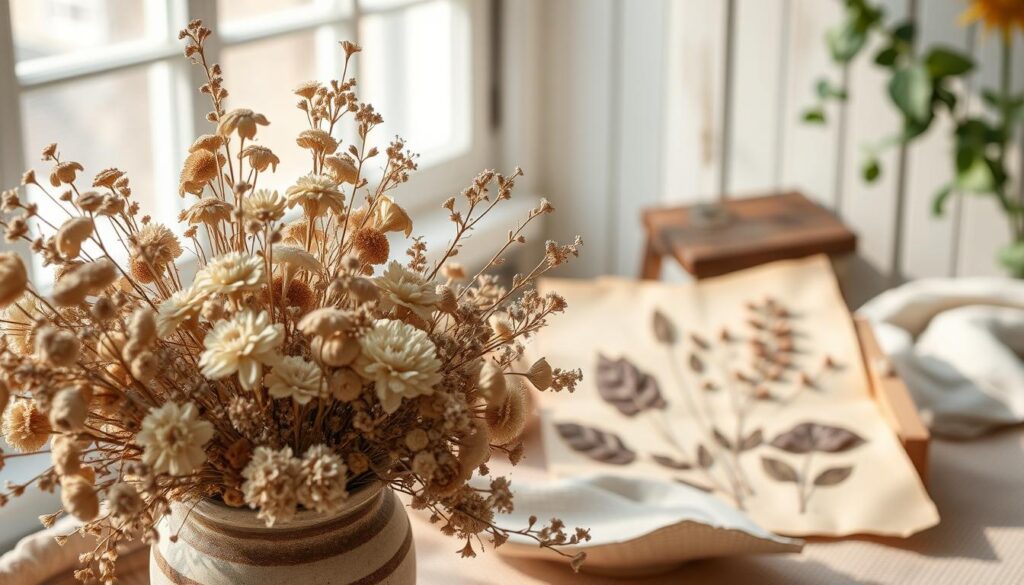
What to grow for drying
Plant strawflower, statice, hydrangea, celosia, and ammobium for reliable stems. Add wildflowers like yarrow and larkspur for airy texture and varied shape.
Drying, pressing, and styling techniques
Cut stems in dry weather, mid-morning after dew. Hang small bundles upside down in a dark, airy room to preserve color and form.
- Press petals between absorbent paper and heavy books for one to three weeks for framed art.
- Style dried flowers in vintage pitchers, apothecary jars, or wicker baskets for lasting decor.
- Make simple DIY projects: a grapevine wreath with strawflower clusters or pressed-flower trays.
“Label bundles with twine tags noting variety and date to track color retention.”
Rotate displays to avoid sun-bleaching and dust gently with a soft brush. Tie arrangements back to your cottagecore home palette so each piece feels sewn into daily life and beauty.
Lighting the Garden: From Golden Hour to Candlelit Evenings
Layered light turns a simple yard into a welcoming evening refuge. Use soft, warm sources to extend time outside and give each nook its own mood.
Evening light should feel tactile—soft on skin, flattering to plants, and safe around wood furniture.
Fairy lights, lanterns, and safe candle alternatives
Mix three types of light for depth: ambient string lights, task lanterns for tables, and low uplighting for specimen shrubs. Choose warm-white bulbs (2700–3000K) to flatter faces and plant colors.
- Use LED candles in lanterns to mimic flicker without fire risk near textiles and wood.
- Place solar path markers along curves to guide feet and keep night charm.
- Hang fairy lights through arbors or along pergola beams to frame outdoor rooms after dusk.
- Add woven shades or linen runners to soften glare and layer textures around light.
- Automate with smart plugs or dusk-to-dawn timers for effortless routines.
“Test each nook at dusk; move a lantern until the space feels safe, warm, and inviting.”
| Lighting Type | Where to use | Quick tip |
|---|---|---|
| Ambient (strings) | Arbors, pergolas | Warm-white bulbs; hang high to reduce glare |
| Task (table lanterns) | Seating, dining spots | LED candles for flicker near textiles |
| Accent (uplights) | Small trees, focal plants | Aim low; reflect off pale pots to brighten corners |
| Path markers | Curved routes | Solar markers guide footsteps and save energy |
Pick fixtures that match your style—vintage-look brass lanterns or matte-black cages keep decor cohesive with wood benches and pale colors. Sit in each nook at dusk to finalize placement.
Dark Cottagecore Garden Vibes: Moody Tones and Woodland Mystery
A darker take on cottage charm brings forest moods, rich textures, and antique accents together for cozy mystery. Use shadow, weighty colors, and layered light to give a small garden the drama of an old woodland glade.
Deep hues make pale flowers read as luminous details rather than the whole story.
Shift the palette toward forest greens, burgundy accents, and charcoal containers to ground airy blooms. Add antique brass lanterns and wrought-iron trellises for subtle gothic flair and vintage charm.
Layer textures—mossy pots, rough wood, glossy leaves—so light and shadow play across surfaces. Place shade lovers like ferns and hellebores near paths; they seem to glow in low light and add depth to each turn.

Balance dense planting with open gravel pockets to prevent heaviness and to let focal pieces—a charcoal bench or dark-stained arbor—stand out. Repeat one dark tone across planters, textiles, and a gate to unify the space.
“Selective uplighting on trunks or trelliswork sculpts nighttime structure and keeps mystery readable after dusk.”
Textures that balance light and shadow
- Use weathered wood, wrought iron, and aged mirrors to reflect and layer the view.
- Select gloss-finish leaves and matte pots so highlights and shadow meet naturally.
- Add nature art—pressed leaves in dark frames or vintage botanical prints—on a sheltered porch wall.
| Element | Why it helps | Quick action |
|---|---|---|
| Forest greens | Grounds airy florals and ties beds together | Choose shrubs and foliage repeats across borders |
| Charcoal furnishings | Creates bold focal points and contrast | Paint a bench or stain an arbor dark |
| Antique brass | Adds warm highlights and vintage authority | Use lanterns or hooks at entries |
| Selective uplighting | Sculpts night shapes without glare | Place low uplights at trunks and trellis bases |
For a deeper guide to a moody, historic house and garden approach, see this dark cottagecore house guide for ideas that link interior and outdoor palettes.
DIY Projects to Deepen the Cottagecore Aesthetic
Simple, handmade projects bring warmth and personality to your garden while staying low-waste and budget friendly. Pick one weekend piece—a trellis, a bench cushion, or a painted sign—and finish it so the yard feels more like home.
Communities that value thrift and craft celebrate small acts of making—crochet, simple carpentry, and upcycling that add memory to every corner.
Handmade trellises, rustic signs, and woven fences
Build a hazel or willow trellis by lashing flexible branches with natural twine. It supports sweet peas and beans and looks charming as it ages.
Weave a low wattle fence to edge beds and keep paths tidy. Hand-paint a rustic sign with weatherproof paint for herb labels or a garden name.
Crocheted touches for outdoor coziness
Crochet washable seat pads or a light throw using quick-drying fibers for a bench you’ll actually use. Choose outdoor-rated yarns where possible.
Upcycle pallets into a potting bench: sand edges, add a shelf, and seal lightly. Make a movable tea tray with vintage handles and reclaimed wood for easy serving.
- Weekend-friendly projects: simple obelisk from three stakes, leaf-pressed stepping stones, or a small pallet shelf.
- Practical tips: list tools before you start, cut boards to size first, and photograph steps to share with friends.
- Sustainability: favor reclaimed wood and natural twine to match a lived-in, vintage home aesthetic.
“Handmade pieces tell a story; even small projects change how you move through and enjoy your garden.”
Thrifting, Upcycling, and Budget-Friendly Garden Ideas
Build cozy outdoor rooms without a big spend by choosing durable finds and small, smart upgrades. Simple fixes — paint, fabric, and a few hardware swaps — give old pieces new life and lasting charm.
A small budget and a keen eye turn secondhand finds into practical garden decor and functional furniture. Hunt for solid wood tables, clay pots, and lanterns that polish up well.
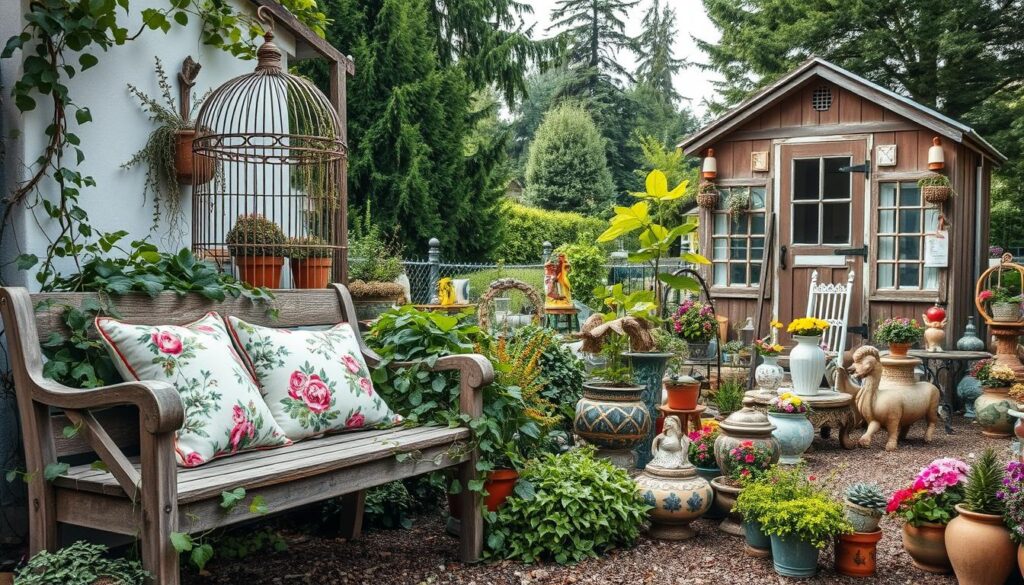
Flea market finds: furniture, pots, and lighting
Target estate sales for sturdy wood furniture and clay pots. Look for lanterns and brass pieces that clean easily and age gracefully.
- Check joints and surface rot before buying.
- Off-season sales often drop prices on planters and bulbs.
- Sturdy kitchen items—enameled bowls, cutting boards—double as garden organizers.
Simple upgrades with paint, fabric, and hardware
Refresh thrifted pieces with exterior paint in your palette and swap knobs for antique-look pulls. Sew cushion covers from floral or gingham prints to lift a bench fast.
“Start with seating, then lighting, then finishing touches—protect wood with breathable sealer to keep vintage character.”
| Find | How to refresh | Cost tip | Where to hunt |
|---|---|---|---|
| Solid-wood table | Sand, breathable stain | Split cost with partner projects | Estate sales, flea market |
| Clay pots | Wash, add liner | Buy mixed lots for deals | Garden swaps, thrift shops |
| Lanterns & brass | Polish; LED candles | Replace bulbs off-season | Antique fairs, online listings |
| Crates & plates | Line for planters; shelf decor | Use mismatched sets for low cost | Curbside finds, yard sales |
For kitchen-to-garden integration and small herb ideas, see this best kitchen with herb garden guide for practical inspiration.
Wildlife Welcome: Pollinators, Birds, and a Living Ecosystem
Invite birds, bees, and small wildlife in with simple features that feed and shelter them all season. These gentle moves deepen your garden’s connection to the wider world and add everyday joy.
Plant layered native trees, shrubs, and perennials to offer nectar, seeds, and shelter through spring, summer, and winter.
Keep a shallow water source—stones in a dish—for butterflies and bees, and refresh it daily in hot weather.
Leave some seed heads and a patch of leaf litter over winter. Birds and beneficial insects use them for food and cover.
- Install a small birdhouse or tuck a brush pile into a quiet corner.
- Plant a wildflowers strip or pollinator border near seating so you can watch visits up close.
- Choose pesticide-free care and encourage predators like lady beetles to keep pests in check.
- Use logs and stones to make microhabitats that add texture and shelter.
“Celebrate the small wins: a returning monarch, a finch on seed heads, or mason bees nesting in old stems.”
Convert one project area into habitat each season—little steps make a rich, living patchwork that supports food and foraging while enhancing the home garden’s beauty.
Conclusion
Choose one path, one plant, and one thrifted piece to begin your garden story. Slow, steady steps turn a yard into a lived-in, cozy cottage space.
Revisit the five core ideas: informal structure, seasonal palettes and textures, useful beauty, vintage materials, and daily comfort work together to shape a warm home life.
Try a phased approach: map sun, set a curved edge, or plant a small herb bed by the door this weekend. Pick one weekend diy project—a trellis, a painted sign, or a pressed-flower frame—to add art and momentum.
Repeat a vintage thread like weathered wood or antique brass across furniture and decor. Mulch, water deeply, and choose resilient flowers and herbs you love.
Share progress with neighbors and online; trust your sense of place and enjoy the comfort and warmth you grow.