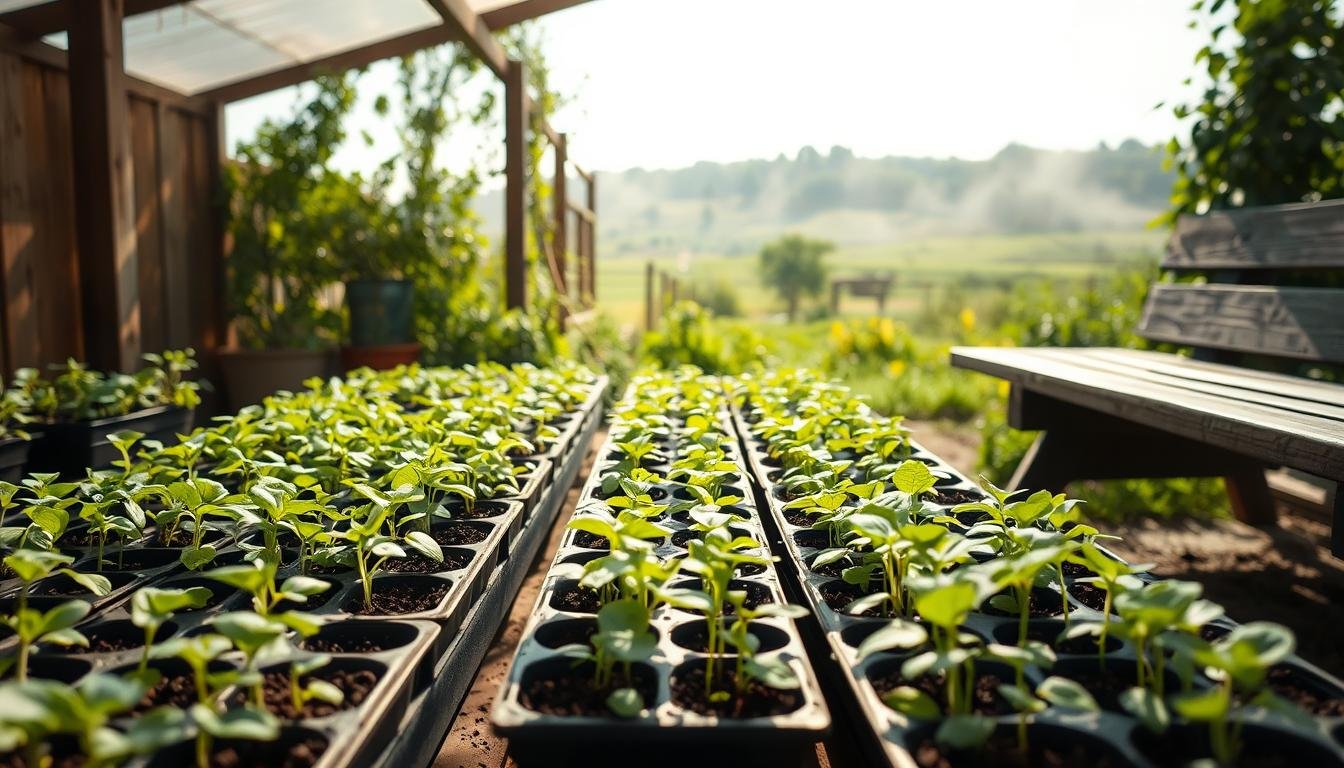
Could a rushed move to the garden be the reason fragile starters fail? Many indoor-grown plants live in soft, sheltered conditions. Sudden sun, wind, and cool nights can shock tender leaves and stems.
Hardening off is a simple 7–14 day routine that helps young plants toughen up. Gradual outdoor time builds stronger stems, fuller leaves, and better survival after transplant.
This short guide promises a clear, step-by-step plan for U.S. gardeners that uses local last frost dates and current forecasts. Expect day-by-day light exposure tips, safe temperature ranges, wind acclimation moves, watering and feeding notes, and clear transplant signals.
The payoff is big: sturdier transplants, fewer losses, faster recovery, and earlier harvests. The method fits into busy schedules and suits beginners. Common pitfalls—moving too fast, sunscald on day one, or missing cold snaps—are easy to avoid with the right timing and routine.
For a deeper how-to timeline and personal tips, see this hardening-off timeline.
Key Takeaways
- Hardening off is a gentle 7–14 day step to toughen young plants for outdoors.
- Start with short, sheltered outdoor sessions and increase sun and wind exposure.
- Watch temperature thresholds and use local last frost dates to time moves.
- Keep plants watered, avoid sudden full sun, and bring them in during cold snaps.
- Most common garden varieties benefit and recover faster after proper hardening off.
Are you killing your seedlings when you move them outside? Understand what goes wrong
A sudden shift from gentle indoor light to harsh midday sun can ruin tender starters fast. Indoor setups offer steady warmth, soft light, and calm air. Outdoors delivers bright sun, gusts, and swings of 20–30°F that young plants did not face.
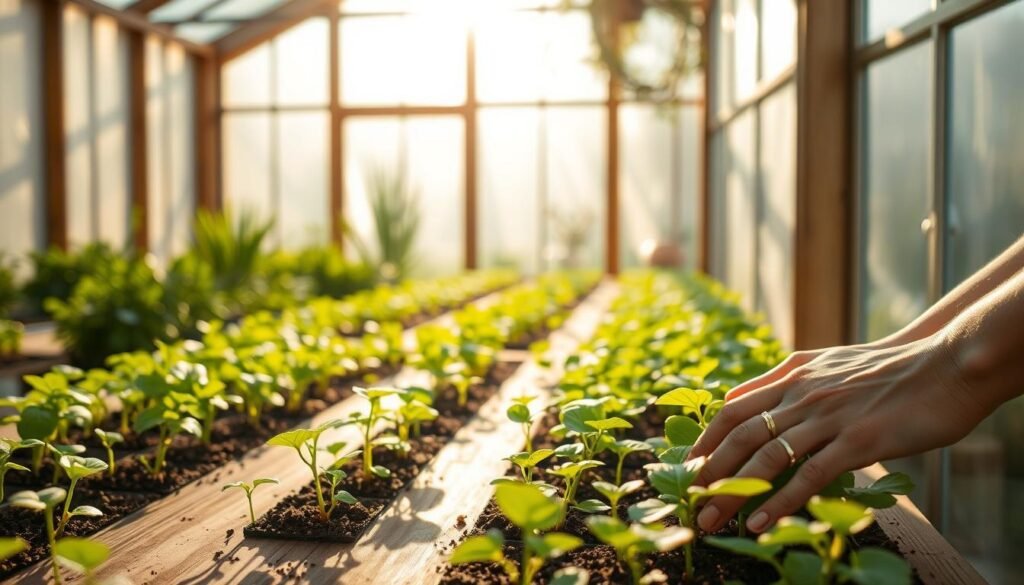
Why tender indoor seedlings can’t handle full sun, wind, and temperature swings
Grow lights and windows give filtered, constant light. Leaves grown there lack thicker cuticles and protective pigments found in outdoor-hardened foliage.
How sunscald, transplant shock, and moisture stress damage young plants
Sunscald shows as white, papery, or bronze patches where unacclimated leaves burn under direct midday sun.
Transplant shock happens when root disturbance leaves water uptake too slow for leaf demand. Leaves wilt, growth stalls, and lower foliage may drop as roots re-establish.
Moisture stress follows from higher wind-driven evaporation and faster-drying containers. Both under- and overwatering worsen stress during transition.
Timing tips for the United States: last frost dates and current weather patterns
Begin hardening off 1–2 weeks before the planned planting date, which should be after the local last frost. Check ZIP-specific data via cooperative extension sites or gardening apps, and monitor a 7–10 day forecast for late frosts or heat spikes.
Pause or protect if overnight lows drop below 45–50°F for warmth-loving crops, or if daytime highs top ~85°F for tender starts.
Choosing the right candidates to harden off
Warm-season vegetables (tomato, pepper, eggplant, squash), herbs (basil, cilantro, dill, parsley), and flowers (zinnia, marigold, cosmos) need careful hardening. Cooler-season brassicas tolerate chill better but still benefit from gradual exposure.
Step-by-step hardening-off plan for a safe outdoor transition
Follow a gentle ten-day rhythm to shift plants from shaded trays to open beds. This plan moves seedlings from bright shade to longer morning sun while building wind tolerance and stable roots.
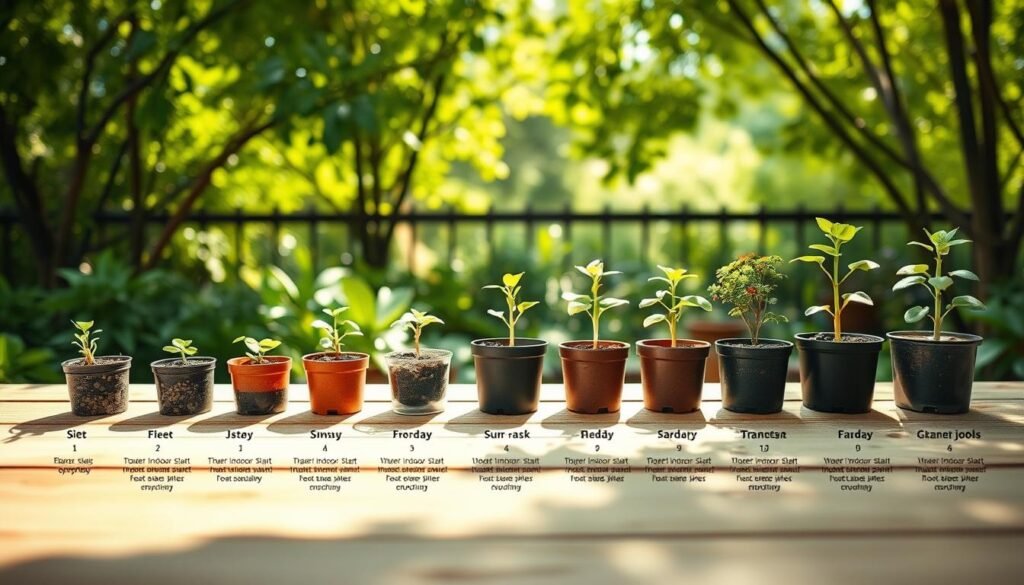
Day-by-day exposure schedule: shade to dappled light to morning sun
Days 1–2: 1–2 hours in bright shade. Use a porch or north fence side.
Days 3–4: 3–4 hours in dappled light or under light shade cloth.
Days 5–6: Add 1–2 hours of gentle morning sun.
Days 7–8: Increase to half a day of morning sun.
Days 9–10: Nearly a full day outside, avoiding hot midafternoon sun for tender crops.
Managing temperature and wind acclimation
Temperature rules: Bring containers in if overnight lows near 45–50°F for warm-season plants. Aim daytime hardening at 55–75°F. Move to shade or provide cloth if temps exceed ~85°F.
Wind: Start in a sheltered corner. Use a fan indoors for 30–60 minutes daily before day one, then shift to breezier spots so stems thicken without snapping.
Watering, feeding, spacing, and transplant timing
Check soil before and after sessions. Water thoroughly until runoff, then let excess drain. Avoid saucers that hold water outdoors.
Feed lightly once or twice with a diluted balanced liquid fertilizer (¼–½ strength). Space pots so leaves dry fast and disease risk drops.
Transplant: Move plants after they tolerate a full day outside without wilting and soil has warmed. Plant late afternoon or on an overcast day. Water an hour before planting, set depth correctly, firm soil gently, and mulch to retain moisture.
| Day Range | Exposure | Ideal Temp | Quick Tip |
|---|---|---|---|
| 1–2 | 1–2 hrs bright shade | 55–75°F | Use trays for easy moves |
| 3–4 | 3–4 hrs dappled light | 55–75°F | Check soil moisture twice daily |
| 5–6 | 1–2 hrs morning sun | 60–75°F | Introduce gentle breeze |
| 7–8 | Half day morning sun | 60–80°F | Feed lightly once |
| 9–10 | Nearly full day, avoid midafternoon | 65–80°F | Transplant on cool, cloudy afternoon |
Common mistakes to avoid and quick fixes if seedlings start to fail
Small errors during hardening off can turn hopeful starts into limp, scorched plants. Catching trouble early makes recovery simple. Read signs, pause the schedule, and use a quick reset to bring plants back.
How to spot stress and pause safely
Early signs: leaves droop at midday and don’t recover by evening, edges crisp or bleach, growth stalls, or stems look windburned and dry.
- If these signs appear, move trays to bright indoor light or full outdoor shade for 1–2 days.
- Keep soil evenly moist and resume at the last step that showed no stress.
Preventing sunscald and wind burn
Never jump straight to full sun or an exposed ledge. Use 30–40% shade cloth, a patio umbrella, or a building shadow. Introduce direct sun only in the morning until foliage toughens.
Wind fixes: stake leggy stems, rotate trays so stems strengthen evenly, and avoid high, windy decks early on.
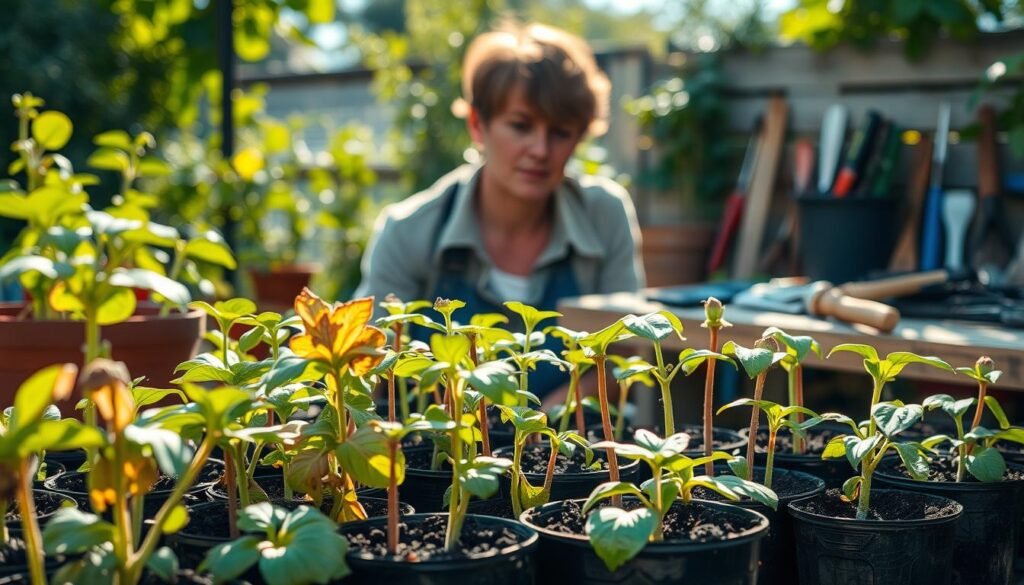
“Even one harsh afternoon can leave permanent damage; quick correction gives seedlings their best chance to rebound.”
| Problem | Quick Fix | When to Act |
|---|---|---|
| Midday wilting | Move to shade, water lightly | Same day |
| Leaf bleach / sunscald | Trim damaged leaves, add shade cloth | Within 48 hours |
| Wind-burned stems | Stake and shelter, resume gentler breeze | Next morning |
Heat & cold triage: bring plants indoors or use frost cloth during cold snaps; in heat spikes, shade and water early so pots start the day hydrated.
For related indoor-start mistakes and fixes, see this guide on mistakes starting seeds indoors.
Conclusion
Treat the move outdoors as training: short, daily sessions build toughness and steady growth. A gentle 7–14 day hardening-off plan prevents shock and strengthens stems and leaves.
Quick recap: start in bright shade, add short windows of morning sun, protect from cold nights and heat spikes, increase airflow, water deeply but wisely, and transplant on a mild day. Use the local last frost date and a 7–10 day forecast to pick the safest week.
Pre-transplant checklist: firm stems, no fresh sunscald, steady growth, and a full day outside without distress. Prepare beds with compost, water-in transplants, and add mulch to hold moisture and steady soil temps.
Confidence note: follow these small steps each day and tomatoes, peppers, basil, marigolds, and other starts will establish faster and recover quickly after transplant.