
Can a small backyard become a hopeful blueprint for a fairer, energy-wise future? This guide starts with that question and shows how practical steps bring a bold vision into everyday life.
Solarpunk blends renewable systems with social values to make places that are resilient, equitable, and lively. You’ll see how simple choices—water-wise tactics, composting, right-sized solar, and layered plantings—turn a modest plot into a productive, welcoming place.
We focus on real examples that work in the world today, from vertical planting to community energy projects. Expect clear, actionable steps you can try this week, plus tips that balance beauty and function so your space supports people and the environment.
Key Takeaways
- Practical path: Start small with weekly tasks that add up.
- Dual purpose: Make the space both useful and welcoming.
- Energy-aware choices: Use right-sized systems and fair access.
- Community focus: Design for shared learning and resilience.
- Real-world models: Draw inspiration from proven projects and sources.
What Is Solarpunk? Roots of a Hopeful Movement in the Present
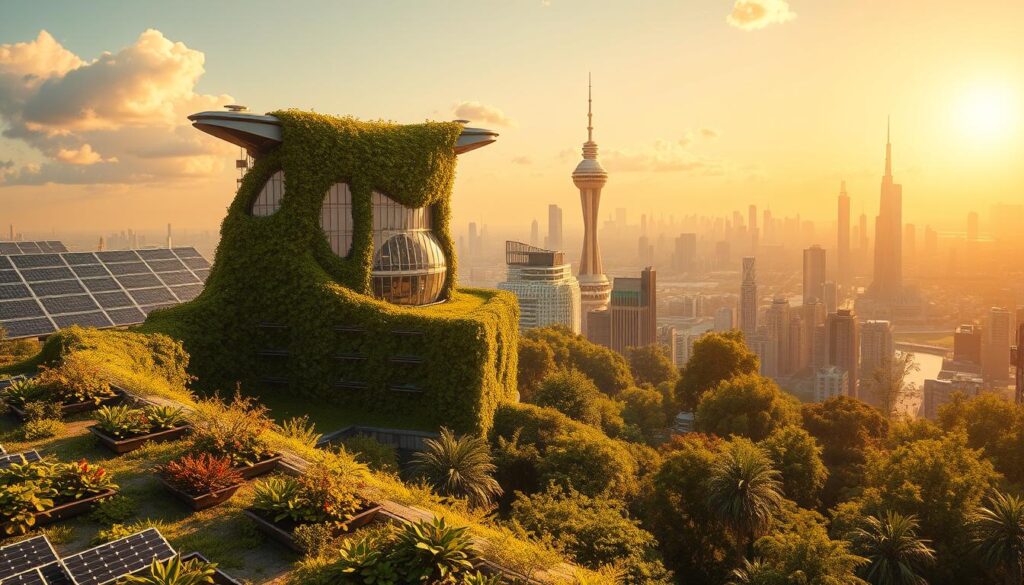
Solarpunk began as an online idea in 2008 and has grown into a practical, community-centered ethos. It favors steady, repairable systems and local action over flashy or top-down fixes.
An online idea from 2008 is now a living practice, turning shared values into tangible neighborhood projects.
From online aesthetic to actionable ideology
The term describes both a genre and a social movement that imagines cooperative futures where technology and nature work together.
Influences range from Art Nouveau visuals to zines like Optopia and small community projects that prove the idea in the real world.
Community, DIY, and socio-ecological enlightenment
The DIY spirit matters. Seed libraries, shared tool sheds, and repair cafés show how neighbors meet real needs without waiting for big institutions.
“What does a sustainable civilization look like, and how can we get there?”
The movement champions decentralization, accessibility, and long-lived materials. It resists greenwashing and favors equitable renewable energy.
- Practical steps: small acts scale—share seeds, store tools, teach skills.
- Local examples: community projects turn stories into reality and inspire wider adoption.
See a nearby model of shared plant and herb care in this herb-and-flower haven to spark ideas for your own plot and community touchpoints.
How Solarpunk Differs from Cyberpunk, Steampunk, and Ecopunk
Here we map how a people-centered, green-forward outlook stands apart from other speculative genres. The focus is on shared benefit, durable materials, and practical systems that help households and neighborhoods adapt to climate change.
Solarpunk counters cyberpunk’s “high-tech, low-life” framing by centering community well-being over corporate power. Where cyberpunk shows isolation and control, this movement highlights collaboration and local agency.
Optimism, collectivism, and green tech versus dystopia
Compare steampunk’s industrial nostalgia with a nature-forward ethos that favors low-impact materials and living systems. Choose reclaimed wood, rain gardens, and solar path lights that aid pollinators and safety instead of flashy, short-lived gadgets.
Unlike ecopunk, this approach explicitly blends appropriate technology with ecology to support resilience at household and neighborhood scales.
“A lush rendering without people or practical systems is pretty—but not useful.”
Practical shifts to try:
- Prioritize a rain garden and pollinator-friendly paths over costly single-use devices.
- Favor repairable fixtures and community-shared tools to extend life cycles.
- Design for comfort and access so neighbors can share harvests and skills.
| Aspect | Cyberpunk | Steampunk | Solarpunk |
|---|---|---|---|
| Core mood | Dystopia, corporate control | Industrial nostalgia | Optimism, community care |
| Approach to tech | High, often privatized | Mechanical spectacle | Appropriate, repairable |
| Environmental focus | Often absent or extractive | Retro, aesthetic-driven | Ecological resilience |
| People & place | Alienated individuals | Romantic machines | Shared benefit, safe public spaces |
Core Principles for a Solarpunk Garden
Start with living patterns that reduce work and increase resilience.Prioritize soil, closed loops, and community tools that help neighbors replicate success.
How biomimicry shapes usable forms
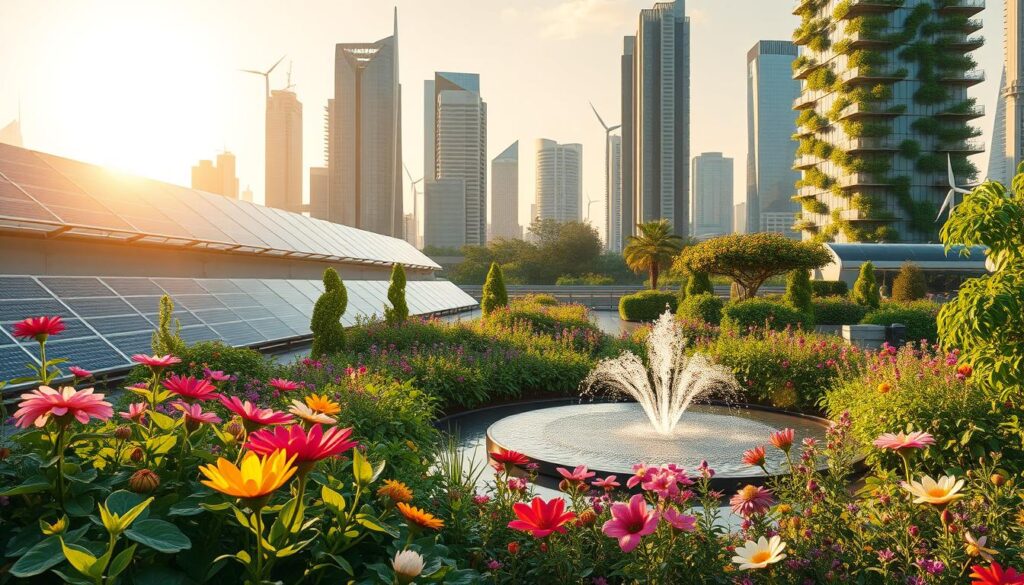
Copy nature’s arrangements. Curved beds, wind-sheltering hedges, and layered plantings mimic how ecosystems organize life. These forms slow wind, direct water, and create microclimates.
That means less pruning, fewer sprays, and more reliable harvests. Use rounded paths and staggered heights so maintenance is easier and the plot feels welcoming.
Soil-first and regenerative systems
Build living soil. Compost kitchen scraps, mulch beds, and avoid foot compaction to feed microbes that support plants.
Closed loops keep resources local: kitchen waste to compost, compost to beds, beds to harvest and seed-saving. This lowers waste and strengthens the environment over time.
Decentralization and community-scale resilience
Share seeds, swap tools, and adopt open-source planners so neighbors can copy what works. Favor materials you can repair with basic tools and parts you can replace.
Design features that serve people directly—shady seating, accessible paths, and water points—to make the space useful every day.
- Drought-tolerant palettes and smart watering lower stress in dry seasons.
- Repairable systems lengthen lifecycles and reduce waste.
- Community stewardship turns small plots into neighborhood assets.
For practical community examples and ways to connect local projects to larger systems, learn more about community practices.
“solarpunk” garden design merging nature technology
Match tools and systems to your scale and skills so daily care becomes easier and more reliable. Choose durable, repairable gear and right-sized renewable power to lower costs and waste over time.
Start simple, then layer in smarter systems.
What low- and high-tech tools work best?
Low-tech items—hand pruners, scythes, rain gauges—keep tasks tactile and repairable. They need little power and often last decades.
Thoughtful high-tech options—drip timers, soil moisture sensors, and timed pumps—reduce routine work when placed carefully. Use them only where they replace repetitive labor, not to show off.
How can renewable energy integrate without fuss?
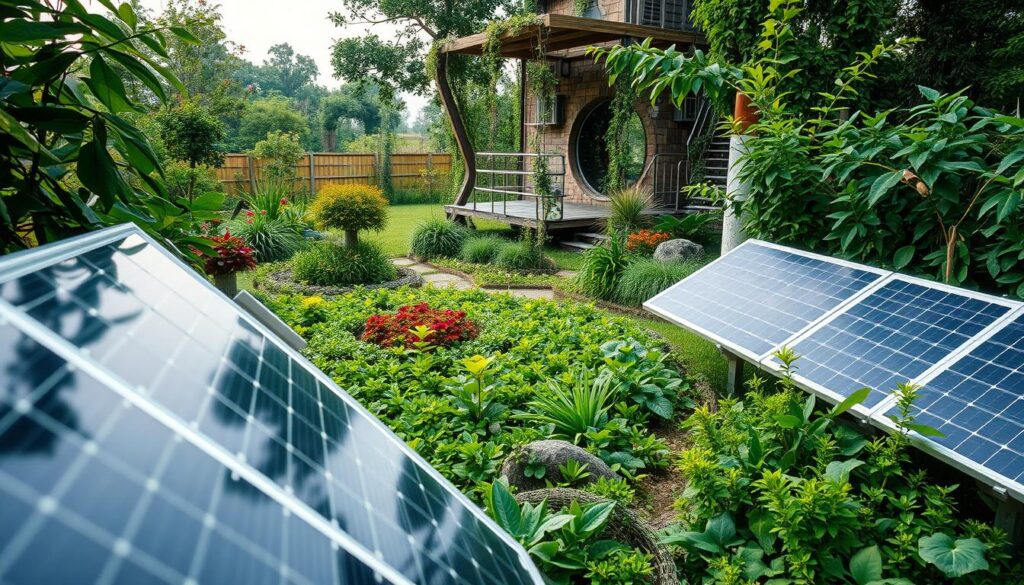
Small solar arrays can run path lights, fountain pumps, or a tool-charger. Tidy cable runs and weatherproof housings make installations last. In windy sites, micro wind units add modest power but require secure mounting and vibration control.
How to design for maintainability, repairability, and local sourcing?
Favor reclaimed brick, recycled steel edging, or FSC wood to cut resources used and lengthen service life. Use standard fasteners and modular parts so replacements are simple.
- Start with rain capture and mulch.
- Add solar lighting next.
- Finish with a sensor-controlled drip if needed.
“Appropriate technologies fit the place, support daily work, and avoid oversizing that wastes power and budget.”
Materials and Systems: Sustainable Building Blocks for Your Garden
Choose low-impact materials and clear systems so the space lasts with less effort. Durable choices and simple installations save resources and lower long-term production impacts.
Start by picking materials with low embodied carbon and easy repair paths. Favor reclaimed wood, recycled steel, and fast-growing bamboo. Check finishes for garden contact and prefer mechanical joins over permanent adhesives so repairs are simple.
How should you plan the base and fasteners?
Build a solid sub-base and good drainage to reduce future work. Use stainless or galvanized fasteners and allow for movement so decks and raised beds last. A short systems view prevents costly failures later.
What do water harvesting and low-flow irrigation look like?
Size barrels from roof area and rainfall data; add first-flush diverters, screens, and overflow paths to protect your foundation and the environment. Use drip lines, low-flow emitters, timers, and moisture sensors to feed plants precisely and cut pump power.
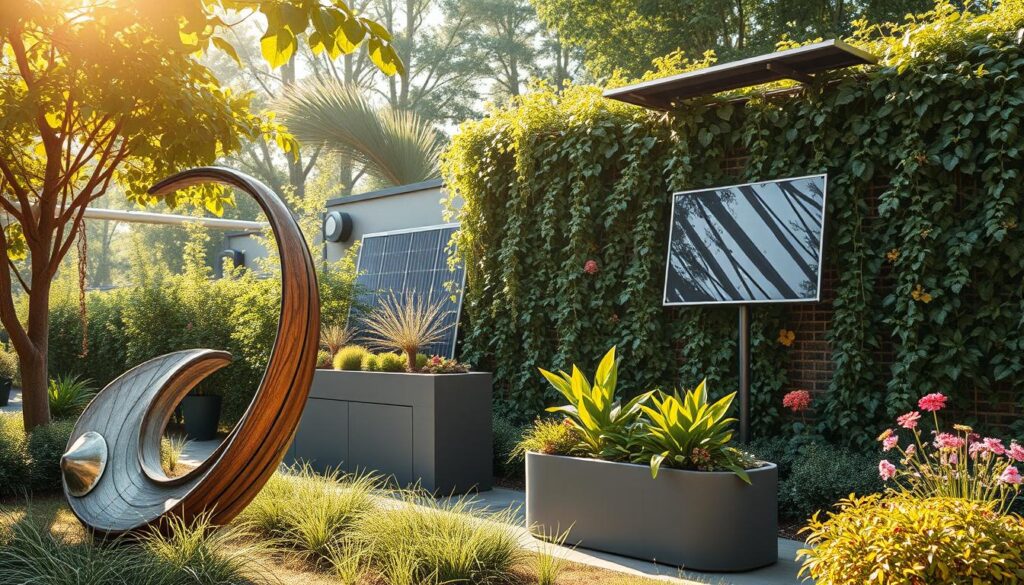
How do compost and vermicompost feed soil and energy goals?
Composting and worm bins turn kitchen scraps into life-building amendments. Keep good airflow, balanced moisture, and a 30:1 carbon-to-nitrogen mix. Note emerging research into energy from vermicompost, but rely on proven backyard systems first.
- Map wind and shade to protect structures and lines.
- Keep a maintenance calendar for barrels, lines, and bins.
- Prioritize durability to support future resilience and sustainability.
From Yard to City: Architectural Ideas that Inspire Garden Design
Architectural moves from tall, planted facades to shaded arcades can inspire small-space transformations. Use city-scale forms as a vision to shape walkable, biophilic places that welcome people and wildlife.
Architects and planners show how whole cities can use biomimetic forms, renewable energy, and shared spaces. You can translate those lessons to a small plot.
Vertical forests, biophilic forms, and walkable green spaces
Translate large projects into backyard moves: living walls, treed pergolas, and curving paths guide people through layered habitats.
- Use arched trellises and leaf-shaped beds to soften edges and support pollinators.
- Place shade structures to cool seating and reduce heat islands.
- Install a vertical planter column to echo a “vertical forest” at human scale.
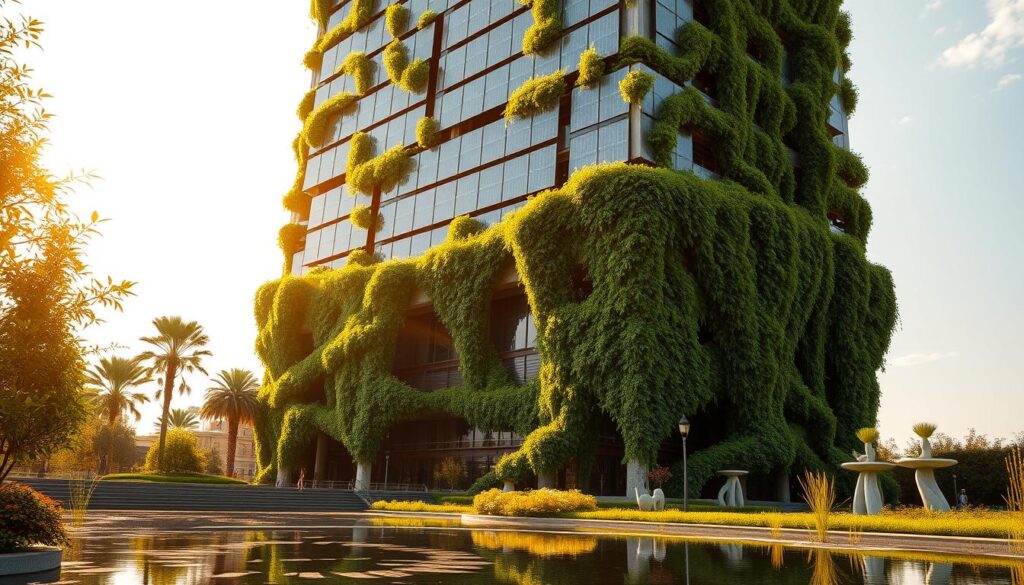
Public places that blend plant and animal habitat with people
Create mini walkable spaces with clear routes from door to seating to compost. Add a small water basin and native shrubs to invite birds and beneficial insects into the same shared place.
“Fold habitat into everyday routes so the future of our place feels lived-in and useful.”
| Element | City Example | Backyard Translation |
|---|---|---|
| Vertical planting | Bosco Verticale | Planter column, living wall |
| Public plaza | Parks with trees and water | Shaded seating, small basin |
| Artful form | Patterned facades | Trellis patterns, mosaic pavers |
Real-World Examples That Inform Solarpunk Gardens
Built places around the world offer clear lessons you can copy at home. These examples blend bold forms with practical systems so small spaces can host layered habitat, shade, and usable energy.
Built projects around the world show how bold forms and practical systems can be scaled to tiny plots and condo balconies.
Bosco Verticale: vertical forest lessons
Bosco Verticale in Milan houses roughly 100 species across two towers. Use stacked planters, trellised vines, and small trees to create your own vertical forest at home.
Gardens by the Bay: immersive plant placemaking
Singapore’s site contains over 1.5 million plants inside striking structures. Label beds and add simple interpretive signs so your space doubles as a teaching space.
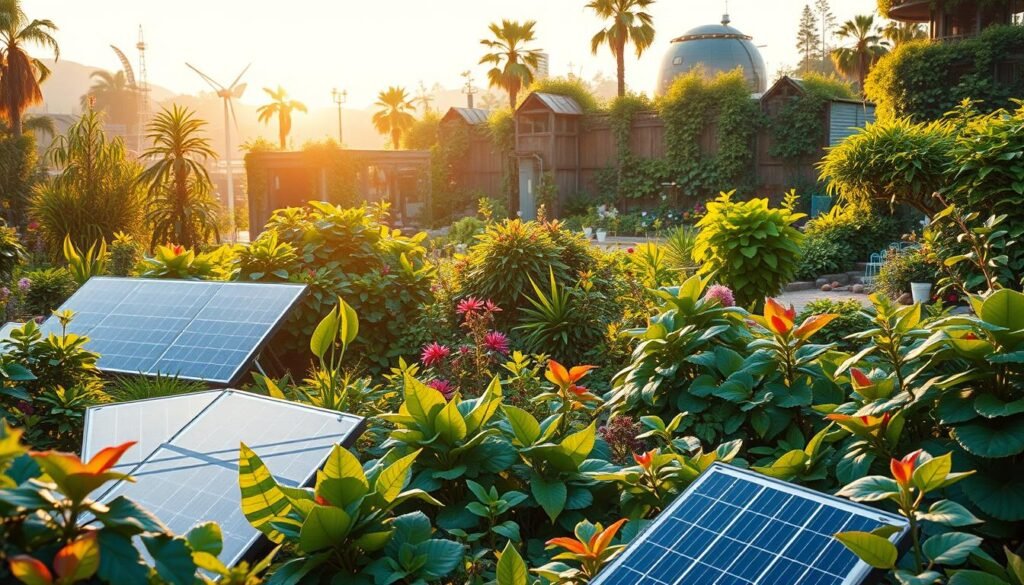
Eden Project, Masdar City, and The Crystal
The Eden Project shows how biomes and microclimates extend seasons with windbreaks and thermal mass.
Masdar City and The Crystal model solar, wind, and low-carbon systems you can right-size: add shade trees to channel breezes and a visible rain-capture tank so neighbors see systems in action.
“Start with proven sources and scale features to fit your site and budget.”
- Right-size the vertical forest idea with stacked boxes and trellises.
- Make education part of the space—labels, charts, short tours.
- Document progress so your plot becomes a local example others can adapt.
A Step-by-Step Plan to Create Your Solarpunk Garden at Home
Begin with small, practical steps that save time and resources. Use site reading and modest systems to match energy and plant choices to your climate.
How do you read the site first?
Observe light, wind, and water for several days. Track sun angles, note prevailing wind, and map where water collects. Test soil texture and pH so plant choices fit the soil.
How do you turn observation into a plan?
Lay out zones for seating, compost, beds, and paths. Add habitat layers: groundcover, shrubs, and small trees to support pollinators and birds.
How should power and systems be sized?
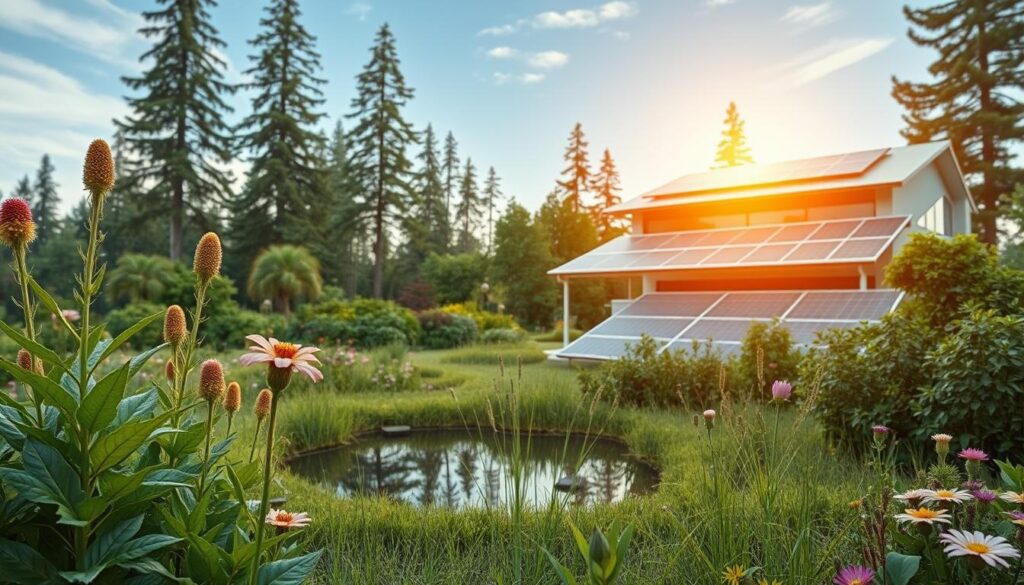
Right-size solar to run path lights or a small pump. Use simple timers or moisture sensors only where they cut maintenance work. Plan safe wiring and weatherproof housings so systems last.
What plant palettes work across U.S. climates?
Pick drought-tolerant species for arid zones, salt-tolerant near coasts, and heat-resilient mixes for the South. Blend edible and ornamental plants and interplant natives to boost climate resilience.
How do maintenance and community stewardship fit in?
Create a seasonal checklist—mulch refresh, emitter checks, and pruning windows. Host work days, share seeds, and rotate stewardship so the place becomes a shared resource and learning spot.
| Step | Action | Why it matters |
|---|---|---|
| Site reading | Map sun, wind, water, soil | Guides placement of plants and systems |
| Concept plan | Zone seating, compost, beds | Makes daily care efficient |
| Systems | Choose modest solar & sensors | Reduces ongoing work and energy waste |
| Stewardship | Schedule maintenance; invite community | Scales care and builds local resilience |
Small steps add up. For extra inspiration and practical community links, see a useful primer on shared living practices at solar-focused community living.
Avoiding Greenwashing: Equity, Practicality, and Long-Term Design
Spotting greenwashing means asking whether each element serves people, place, and long-term upkeep. True sustainability favors repairable parts, clear sources, and systems that communities can steward.
Define greenwashing at the plot scale: flashy features that photograph well but fail in upkeep, equity, or real savings.
How can design center people, repair, and real sustainability?
Make paths accessible and seating comfortable. Choose systems repairable with basic tools so neighbors can fix rather than replace.
What about ethical sourcing and circular practice?
Prefer reclaimed or certified materials and check production impacts. Plan for disassembly, reuse offcuts, and compost organics so outputs return to useful cycles.
- Favor decentralized, open-source-friendly solutions that communities can manage.
- Evaluate energy and water features for real value and low upkeep.
- Keep records and budgets for annual review so the place remains useful for the future.
“Put performance, equity, and longevity first; then layer beauty thoughtfully.”
Conclusion
Think of the path forward as a series of small actions that add up across neighborhoods. This practical vision asks you to build toward the future with simple, weekend projects that change daily life.
Solarpunk centers on technological realism and equitable energy—tools and systems sized to fit real people and places. Choose one way to start: mulch beds, install a barrel, or add native plants, then set a date to act.
Small plots and modest budgets still shape welcoming spaces that show care for people and the world. Visit local sites, study nearby architecture, share progress, and help cities grow greener through steady, shared power and practice.