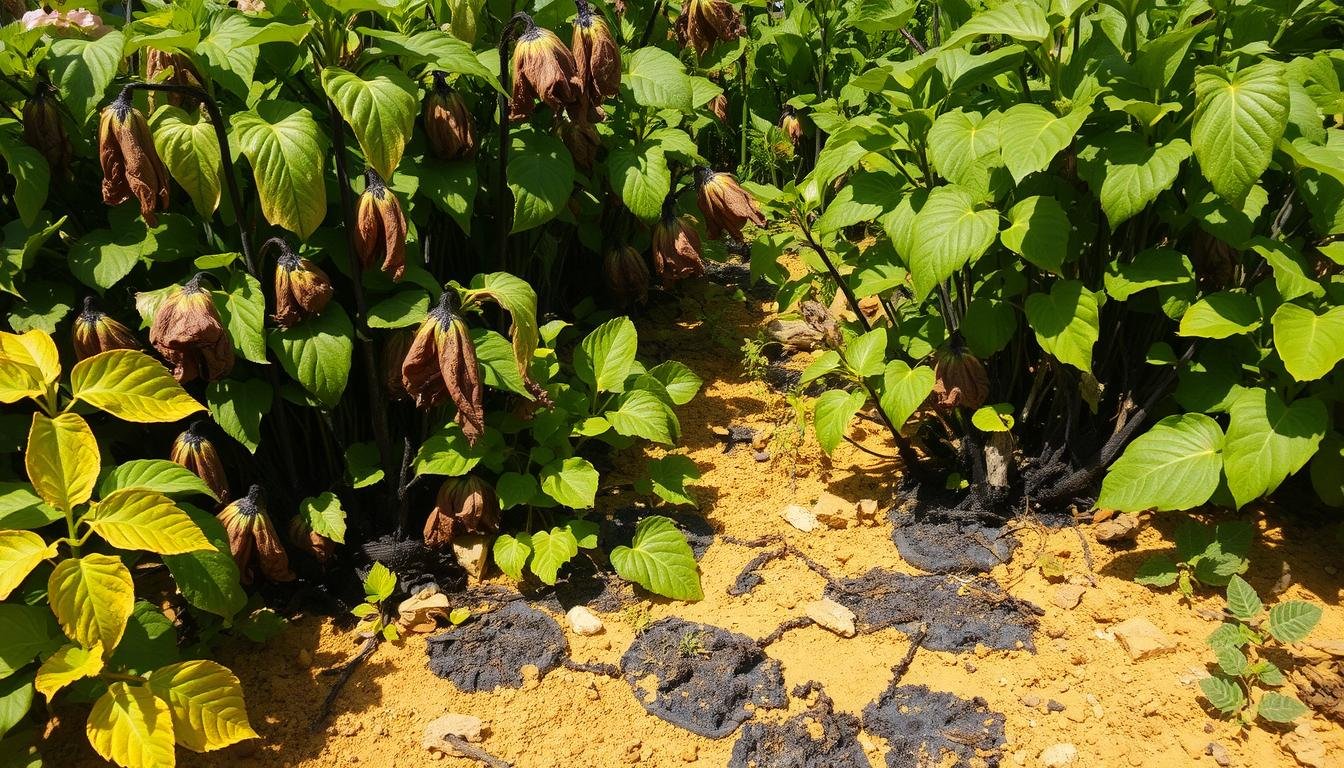
Quick action matters when soluble salts spike in the root zone and pull moisture from grass. That osmotic stress causes fertilizer burn, visible as leaf-tip scorch and stalled growth. Calm, clear steps protect your soil and help restore lawn health.
Start by confirming excess product and removing any visible granules. Leach salts with measured water, stabilize root moisture, and pause feeding to let nutrients rebalance. Slow-release options reduce future risk and keep growth steady.
When damage is severe, dethatch, aerate, and overseed bare spots after removing dead turf. Beneficial microbes and mycorrhiza can speed root recovery and improve nutrient uptake during this phase. With steady care, many areas show improvement in weeks; others need reseeding and patience.
Key Takeaways
- Confirm excess fertilizer, remove granules, and act calmly to protect the lawn.
- Leach salts with careful watering to relieve osmotic stress in the soil.
- Use slow-release products and calibrated spreaders to prevent repeats.
- Support roots with beneficial microbes for better nutrient uptake.
- Aerate and overseed only after removing dead turf for best results.
Spot the Damage Fast: Key Signs of Fertilizer Burn and Nutrient Imbalances
Spotting problems early saves patches of lawn. Watch for leaf-tip scorch, odd crusts on soil, and quick shifts in grass color or vigor.
Scan borders, walkways, and low spots for crusty soil or sudden yellowing in the grass. These areas often collect the most product and show signs first.
Leaf tip browning, wilting, and yellowing leaves
Look for brown tips and widespread wilting that won’t improve with normal watering. High nitrogen or concentrated spills commonly cause this classic fertilizer burn pattern.
Patchy dead grass, bare spots, and crusty buildup
Map irregular patches and bare zones where granules pooled. A white, crusty film on the soil top signals dried salts from excess fertilizer.
Excess growth, weak blades, weeds, and pest pressure
Too many nutrients can spur rapid, floppy shoots that tear easily. Thinned turf invites weeds and pests into stressed areas.
Runoff red flags
Check nearby drains, ditches, or ponds for musty smells, algal blooms, or odd water colors—these are signs nutrients are leaving the lawn and harming local water.
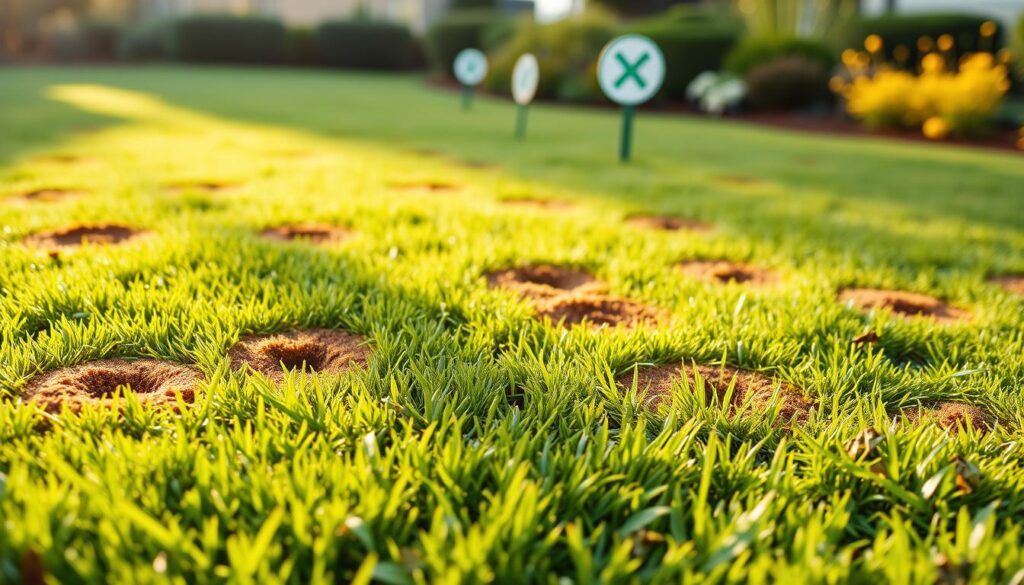
- Key sign: leaf-tip scorch, wilting/yellowing, patchy areas, and a white salt crust on soil.
- If unsure: brown tips plus weak, rapid growth and uneven patches usually point to too much product rather than simple drought.
Did you accidentally over-fertilize emergency recovery guide
Act fast: remove visible granules, then leach salts gently with measured water. Pause mowing and feeding so stressed grass can recover while aeration improves soil flow.
A quick sweep and rake can stop soluble salts from sinking into the root zone. First, carefully remove excess pellets from the lawn and hard surfaces so they do not wash back onto the grass.

How much water and when?
On day one, apply enough water to push salts below the roots. Then give about 1 inch of water per day for a week. Watch for puddles and avoid over-saturating low spots.
Care while the lawn heals
Pause fertilizing and mowing. Taller blades help absorb nutrients and rebuild energy. Aerate compacted soil to speed infiltration. Light gypsum can help crusted areas in some soils.
“Act now: remove what you can, leach salts carefully, and support the lawn while it regains strength.”
| Action | When | Why |
|---|---|---|
| Rake and sweep | Immediately | Stop excess fertilizer from dissolving onto grass |
| Heavy leach then 1″ daily | Day 1–7 | Move salts below roots, reduce fertilizer burn |
| Aerate & pause mowing | After leaching | Improve soil flow and let grass recover |
Why Over-Fertilization Happens: Amounts, Types, Timing, and Technique
Too much product, applied at the wrong moment, creates salt hotspots that stress grass.
Most burn starts with a misjudged amount or applying too much fertilizer too soon. Measure lawn area precisely and follow bag rates for your grass type. Simple math prevents big problems.
Technique matters. Uneven spreading and high concentration zones form when a spreader is set wrong or walking pace varies. Use a calibrated spreader and overlap evenly across lawns.
Using wrong formulations or ignoring a soil test invites trouble. Match N-P-K to soil needs so nitrogen, phosphorus, and potassium balance for healthy grass rather than excess salts.
Weather and timing matter. Skip feeding in heat or drought. Wind drifts granules to edges and wet leaves dissolve pellets, creating local hot spots.
- Most burn starts with misjudged amount. Measure area; follow the bag rate for your grass type.
- Even coverage and the right product for your soil prevent high-concentration salt zones.
- Log when you fertilize lawn and what fertilizer lawn type you used to avoid stacking feeds and keep steady care.

| Cause | Common effect | Quick fix |
|---|---|---|
| Miscalculated area / amount | Hot spots and burned patches | Re-measure lawn; rake up excess and leach with water |
| Wrong product for grass type | Imbalanced nutrients, salt buildup | Match formulation to grass after soil test |
| Poor timing (heat, drought, wind) | Scorch and drifted piles | Delay feeding; apply on calm, cool days |
| Uneven technique | Stripes and patchy growth | Use calibrated spreader; maintain steady pace |
Balance rate, product, and timing to protect roots and keep turf vigorous.
What Excess Nutrients Do to Soil, Roots, and Growth
Excess salts in the root zone change water movement in the soil and stress plants fast. This short passage explains how high nutrient loads harm soil life and lawn health.
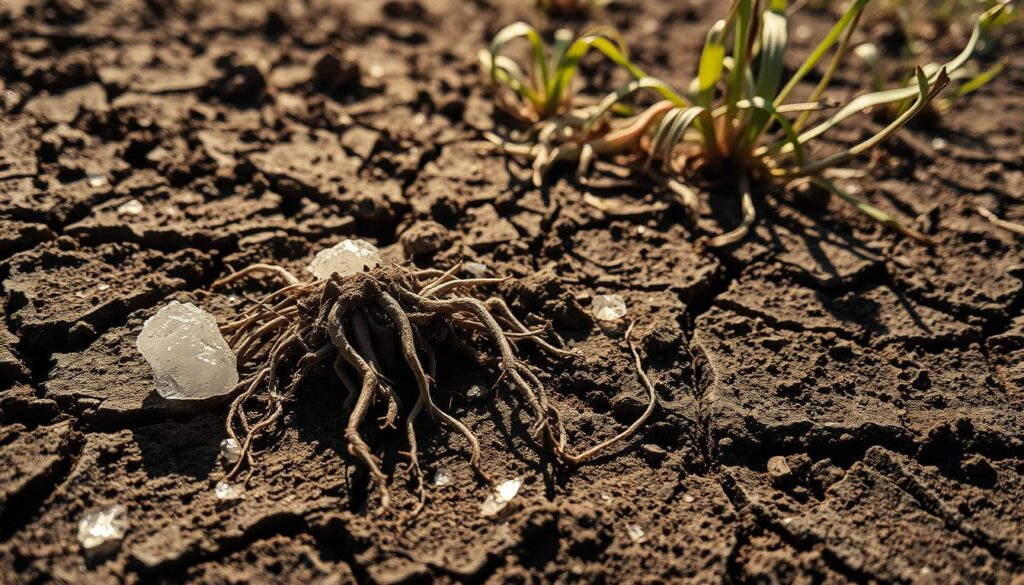
Salt buildup and osmotic stress
Excess salts in soil pull water out of roots, a classic osmotic stress that leads to fertilizer burn. Expect slowed growth, scorched tips, and poor heat recovery.
How nutrient lockout works
Overloaded levels of nitrogen, phosphorus, or potassium trigger nutrient lockout. Plants cannot absorb nutrients they need when one element dominates the root zone.
Too much nitrogen produces fast, weak top growth and shallow roots. High phosphorus blocks iron and zinc uptake, so grass looks pale. Excess potassium can cut calcium and magnesium uptake and add stress.
Visible results in the lawn and soil life
Salt concentration rises near the surface and reverses normal uptake. The visible result is stunted growth, faded color, and lower drought resistance across the lawn.
Lockout wastes applied nutrients, and as salts build, microbial life falls. Weak microbes mean poorer soil structure and slower nutrient cycling.
“Flush salts, ease stress on the roots, and return to balanced feeding to restore soil and lawn vigor.”
Targeted Fixes for Lawns, Gardens, and Container Plants
Quick, site-specific fixes restore vigor: remove dead turf where needed, loosen and seed thin spots, and flush salts from pots and beds. These steps help soil rebalance and give new grass and plants the best start.

How should I repair the lawn?
For lawn repairs, remove dead grass, aerate, topseed thin patches, and keep moisture consistent during germination.
After leaching, core aerate compacted areas to improve infiltration. Cut out only dead grass and keep live turf to shade the soil.
Loosen the surface, add topsoil where needed, then overseed with a regional blend. Light, frequent watering helps seed anchor roots.
What about containers and garden beds?
In containers and garden beds, scrape salt crusts, flush, and refresh soil where salts built up.
Scrape crusts from pot rims and flush with ample water. Replace the top 1–2 inches of potting mix when damage is severe. For beds, consider partial soil replacement if nutrient imbalances persist.
If excess fertilizer harmed sensitive plant species, up-pot or refresh more of the medium. When feeding again, choose slow-release or organic fertilizer to reduce spikes.
“Clear dead turf, ease compaction, and refresh soil so new growth takes hold.”
| Problem | Action | Why |
|---|---|---|
| Dead grass mats | Cut out and remove | Allow seed and soil contact for faster fill-in |
| Thin patches | Aerate, add topsoil, overseed | Improves seed-to-soil contact and moisture retention |
| Salt crusts in pots | Scrape, flush, replace top mix | Lower EC and restore healthy root environment |
| Runoff pooling | Regrade slightly | Prevents re-concentration of salts at low spots |
For safe handling and pet-friendly practices, review these fertilizer safety tips.
Step-by-Step Recovery Timeline: From Day One to New Growth
Begin recovery with focused steps that flush salts, protect weakened turf, and then rebuild soil life for steady results. These actions help a stressed lawn return to healthy growth without harsh treatments.
Day zero to day three: leach salts and stabilize soil moisture
Begin by removing loose granules and prepping irrigation to move salts away from roots.
Days 0–3, flush salts with water and stabilize moisture. Saturate once to leach, then keep soil evenly damp without ponding.
Week one: monitor yellowing vs. brown patches and adjust watering
Watch zones closely. Yellow patches often recover; uniform brown usually signals dead turf that needs replacement.
Week 1, separate yellow (recovering) from brown (dead) and adjust watering. Pause mowing and limit foot traffic while the lawn heals.
Week two to four: overseed and introduce gentle nutrition
Weeks 2–4, overseed, then add gentle slow-release nutrition and beneficial microbes for steadier growth and a more healthy lawn.
Aerate if soil is compacted. Keep seedbeds moist until new grass reaches 2–3 inches. Start low-level slow-release feeding once roots are established.
Rebuild soil life
Add beneficial bacteria and mycorrhiza to help roots absorb nutrients and restore microbial balance. These products support long-term resilience.
“Flush salts carefully, protect stressed turf, then seed and rebuild soil life for lasting lawn care results.”

| Timeframe | Action | Expected result |
|---|---|---|
| Day 0 | Remove granules; heavy leach | Move salts below root zone |
| Days 1–3 | Maintain even soil moisture; pause mowing | Stabilize turf and prevent further stress |
| Week 1 | Monitor yellow vs. brown; adjust water | Identify recoverable areas vs. replacement needs |
| Weeks 2–4 | Aerate, overseed, add slow-release and microbes | New growth, stronger roots, healthier lawn |
For related safety on pets and fertilizers, see this pet safety resource while planning lawn care steps.
Prevent Future Mistakes: Smarter Lawn Care and Fertilizer Choices
Smart choices start with testing soil and matching fertilizer rates to real needs. Use slow-release products, calibrated equipment, and seasonal timing to protect roots and keep steady growth.

How can a soil test help?
Start with a soil test to match N-P-K to turf needs. Tests reveal phosphorus, potassium, and nitrogen levels and show if micronutrients are locked out. High phosphorus can block iron and zinc, while excess nitrogen raises burn risk.
Which fertilizer type is best?
Choose slow-release over quick spikes when possible. Controlled-release products feed steadily, lower burn potential, and support balanced growth. Use organic fertilizer carefully; it helps soil biology but still needs correct rates.
What about application technique?
Measure the right amount and apply the right way. Calibrate spreaders, overlap passes evenly, and avoid windy or hot, dry days. Water-in granular feeds to move prills into the upper soil and off grass blades.
When should I fertilize?
Match product choice to grass type and season. Cool-season lawns need different timing than warm-season grasses. Space applications; don’t stack too much fertilizer back-to-back when you fertilize lawn.
“Test, measure, and time feeds to keep nutrients in balance and lawns resilient.”
| Checklist | Why it matters | Action |
|---|---|---|
| Soil test | Shows real nutrient status | Test every 1–3 years; pick N-P-K to match needs |
| Slow-release | Steady nutrition; less burn | Use controlled-release products for routine care |
| Calibrated spreader | Even coverage; correct amount | Calibrate and overlap passes; avoid wind |
| Seasonal match | Boosts health and recovery | Choose product by grass type and season |
For extra tips on common lawn mistakes and safer habits, read this short piece on gardening habits that harm plants: gardening habits that destroy lawns.
Conclusion
Flush salts, pause feeding, and re-seed non-recovering patches—that’s the fastest way back from fertilizer burn.
In most cases, balance returns with patient water, measured inputs, and products matched to site and season. If areas become dead grass, remove and repair so weeds do not move in.
Keep a simple log of what was applied and when. Excess nitrogen or phosphorus often causes nutrient imbalances; test the soil before adding more nutrients.
Protect roots by pacing water—enough to leach, not enough to drown new growth. For related notes on the effects of too much fertilizer, see this post: will too much fertilizer kill a.
FAQ
What are the first signs that fertilizer has harmed my lawn or plants?
Look for leaf tip browning, wilting, and yellowing. Early signs include scattered yellow patches and crisp leaf edges. If granules were left on the surface, you may also see a white or crusty residue on the soil.
How can I tell if grass patches are dead or just stressed?
Brown, brittle blades that don’t spring back when bent are usually dead. Yellowing that still shows some green and flexible blades often indicates stress. Check roots—dead grass has dry, brittle roots; stressed grass still has moist, pliable roots.
What should I do immediately after over-applying granular fertilizer?
Rake or sweep up visible granules to remove concentrated pockets. Then flood and flush the area with deep, slow watering to leach excess salts away from roots without waterlogging the soil.
Can heavy watering fix fertilizer burn without causing other problems?
Yes, deep watering is the main fix. Water slowly until the soil is well soaked and excess salts are leached below the root zone. Avoid shallow, frequent watering that encourages weak shallow roots.
Should I keep fertilizing or mowing after my lawn shows burn symptoms?
Pause both. Stop fertilizing until soil tests show safe nutrient levels. Hold off on mowing unless needed to remove fully dead grass, and then set the mower high to reduce stress on recovering plants.
How does excess nitrogen, phosphorus, or potassium harm soil and roots?
Excess salts cause osmotic stress, pulling water from roots and causing root burn. High levels of one nutrient can cause nutrient lockout, preventing uptake of others and leading to stunted growth, pale color, and weaker drought resistance.
What are runoff warning signs I should watch for after over-fertilizing?
Strong chemical smells, foamy or colored runoff, and algal growth in nearby water features or gutters mean nutrients are washing away. Reduce watering and contain runoff immediately to protect waterways.
How can I treat container plants and garden beds with salt crusts?
Gently scrape off visible salt crusts, then flush pots with clean water until runoff is clear. For beds, water deeply to dilute salts and topdress with fresh compost or new planting mix if the topsoil is heavily damaged.
When is aeration helpful after over-fertilizing?
Aerate compacted areas once the soil has drained and roots begin to recover. Aeration improves water movement, helps leach salts, and brings oxygen to roots—supporting long-term recovery.
How soon should I overseed bare patches caused by fertilizer burn?
Wait until you’re sure the damaged turf is dead and soil salts have been leached—typically one to four weeks depending on watering and weather. Lightly rake, amend the soil if needed, then overseed and keep consistent moisture until seedlings establish.
Can I use organic fertilizer to fix nutrient imbalances?
Organic amendments like compost, compost tea, and slow-release granulars can rebuild soil biology and supply gentler nutrients. They’re best after leaching salts and when soil tests show what specific nutrients are lacking.
How do I avoid over-fertilizing in the future?
Start with a soil test to match N-P-K to your lawn’s needs. Use a calibrated spreader, apply the recommended rate for your grass type, choose slow-release products when possible, and avoid fertilizing before heavy rain or during heat stress.
What role does timing and weather play in fertilizer safety?
Warm, dry, or windy conditions and drought increase risk of burn and runoff. Apply fertilizer during active growth periods with moderate temperatures and follow forecasts to avoid rain that causes runoff.
How can I rebuild soil life to help plants recover nutrient uptake?
Add compost, use microbial inoculants, and avoid harsh, quick-release chemicals while recovery proceeds. Beneficial bacteria and mycorrhizae enhance root nutrient uptake and improve long-term resilience.
When should I get a professional soil test or help for severe damage?
If large areas show deep brown death, runoff affects nearby water, or you suspect extreme salt or nutrient imbalance, order a lab soil test through your county extension or hire a turf specialist to get targeted recommendations.