Could a few well-chosen varieties keep a backyard plot productive when taps are restricted? My summer ban forced true dry growing, so I leaned on resilient choices and low-input methods to keep food coming.
This short intro shares why variety choice matters and previews field-tested plants that thrive with deep, infrequent irrigation.
Record-setting drought and a shifting climate are reshaping how U.S. growers approach the growing season. Open-pollinated and landrace lines adapt to local microclimates, helping plots gain real resilience over years.
Below you’ll find a practical list of staples, nightshades, grains, greens, herbs, flowers, and native perennials proven under hot, dry conditions. I also note simple mulch, soil, and watering moves that stretch every drop and protect roots.
Ready for an actionable list and clear notes on which variety shone? Start with these tested picks and practical steps, then explore herbs and companions in our best herbs roundup.
Key Takeaways
- Proven, low-input varieties can set and finish with limited irrigation.
- Open-pollinated and landrace lines build local resilience over seasons.
- Simple soil care and deep, infrequent watering stretch supplies.
- Staples to flowers: a variety of crops thrive under heat and dryness.
- Field-tested choices support steady harvests and local seed saving.
Why drought-tolerant seeds mattered during a water ban in the United States
Record heat and shrinking municipal supplies pushed many home growers into survival mode. Picking the right varieties and quick shifts in practice proved far more effective than extra hours at the hose.
How bad is the challenge? Increasing water scarcity and unusual summer weather now make long, hot stretches common in many U.S. areas. Evaporation speeds up and soils crust, so plants show stress fast.
What did dry gardening look like in practice?
Hoses mostly stayed off. When watering was allowed, I used deep, infrequent cycles with drip or soaker lines and layered heavy mulch to conserve moisture.
Why soil and placement matter
Covered, living soil held moisture far better. No-till and added organic matter buffered roots through prolonged drought and heat.
“Choosing proven varieties was the fastest way to conserve water and stabilize yields.”
- Microclimates made the difference—south-facing beds lost moisture fastest.
- Some mint-family herbs and sorghum quietly persisted with minimal inputs.
- Staged planting into cooler windows reduced peak stress on plants.
| Challenge | Impact | Adaptation | Who persisted |
|---|---|---|---|
| High heat & low supply | Flowers abort, fruits stall | Deep, infrequent irrigation + mulch | Mint-family herbs, sorghum |
| Exposed beds | Soil crusting & rapid drying | Shade, placement, living mulch | Heat-tolerant tomatoes & peppers |
| Long dry periods | Yield reduction | Staged sowing, native plants at borders | Native plants, perennials |
| Poor soil | Shallow roots | No-till, added organic matter | Deep-rooting staples |
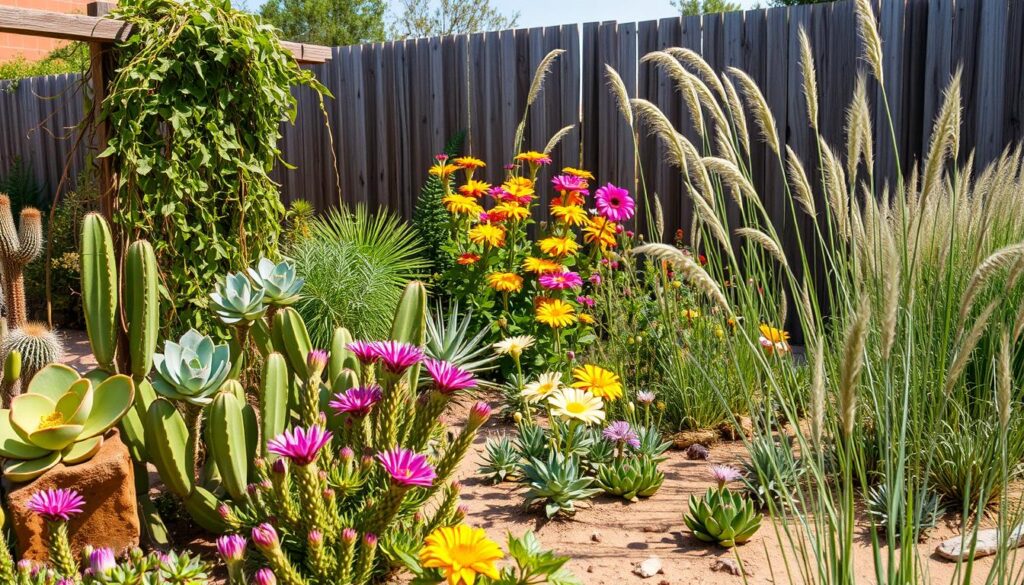
Drought-tolerant seeds that saved garden during water: field-tested winners
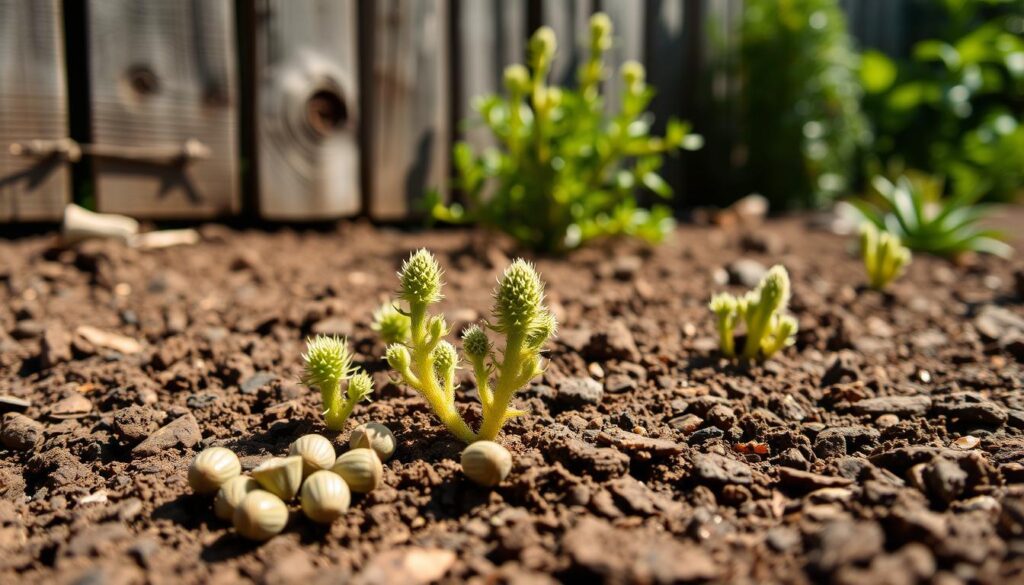
A handful of reliable plants repeatedly produced when I could only water deeply and rarely. These open-pollinated and landrace lines proved hardy, flavorful, and easy to save seed from for future seasons.
Dark Star zucchini
Dark Star set heavy under occasional deep watering. This squash outperformed many varieties on hot days and gave steady food with excellent flavor.
Desert King watermelon
Desert King produced 20–30 lb melons on less water. When vines rooted deeply, fruits matured with fewer irrigations and retained sweet, dessert-worthy taste.
Feuille de Chêne lettuce
Feuille de Chêne stayed crisp and productive with minimal watering. It’s rare to find a lettuce that holds texture in dry conditions.
Tepary and landrace beans
Tepary and local landrace beans are bred for hot, arid regions and short seasons. They finish reliably and provide a protein-rich crop with low inputs.
Homesteader’s Kaleidoscopic perennial grex
This perennial mix supplies ongoing greens. You can clone or save seed from survivors to build stronger local populations each year.
“Save seed from the plants that thrive and your plot becomes more resilient every season.”
Planting tips: give each variety space, add deep mulch, and perform an early deep soak so roots can chase moisture and need less water later.
| Variety | Strength | Typical Yield | Best Use |
|---|---|---|---|
| Dark Star zucchini | Heat-resilient, sets heavy | Continuous summer pickings | Sauté, bake, preserves |
| Desert King watermelon | Aridity-selected | 20–30 lb melons | Fresh dessert, drinks |
| Feuille de Chêne lettuce | Holds crisp in heat | Steady leaf harvest | Salads, sandwiches |
| Tepary & landrace beans | Short-season, heat-proof | Reliable pod yields | Protein-rich meals |
| Homesteader’s Kaleidoscopic grex | Perennial, clonable | Yearly harvests once established | Continuous greens |
Heat-loving nightshades that didn’t quit: eggplant, peppers, tomatoes, tomatillos
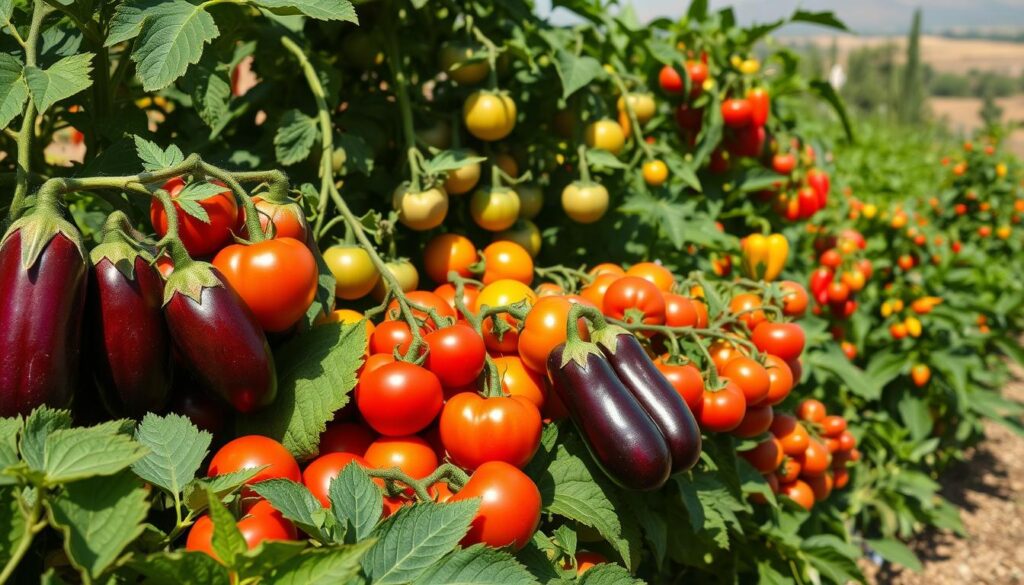
Nightshades proved some of the toughest performers when heat and scarce taps were the rule. These plants set fruit and kept producing with deep, infrequent irrigation once roots were established.
Ping Tung Long eggplant matures fast and outperformed supermarket types in my dry-season trials. Once established, it keeps fruiting while other varieties stall.
Peppers built for hot spells
C. baccatum types and Korean hot peppers handled extended dry spells better than many bell types. They respond well to targeted deep soaking and a thick mulch layer.
Tomato trio for pressure
Azoychka, Florida Everglades cherry, and Baylor paste stood out. Azoychka sets early, Florida Everglades resists disease and thrives under dry-farmed techniques, and Baylor makes low-input sauces.
Tomatillo resilience
De Milpa tomatillo often outpaces tomatoes in harsh conditions. It sets readily in heat and has a landrace background built for resilience.
- Practical watering: shift nightshades to deep, infrequent cycles and keep mulch thick to lower evaporation.
- Canopy management: prune lightly for airflow and to cut blossom stress without inviting sunscald.
- Variety stacking: mix early slicers, cherries, and paste types to hedge bets.
- Save seed: pick from plants that set through the hottest stretch to strengthen future local stocks.
| Crop | Key Strength | Best Use | Field Note |
|---|---|---|---|
| Ping Tung Long eggplant | Fast maturity, heat-tough | Grill, roast | Fruit sets after modest irrigation |
| C. baccatum & Korean peppers | Heat-resilient species | Fresh, dried, sauces | Better dry-spell performance than bells |
| Azoychka / Florida Everglades / Baylor | Early / dry-farmed / paste | Slices, snacking, sauces | Stack for yield security |
| De Milpa tomatillo | Landrace-hardy | Green sauces, preserves | Sets in hotter, drier conditions |
For more on similar choices, see this roundup of heat-tolerant vegetables.
Grains and seed crops that shine in dry conditions
Grains and small seed crops proved quietly heroic on the hottest beds, supplying calories with little fuss. These staples fit into edges and paths, giving reliable yield with modest inputs and low labor.
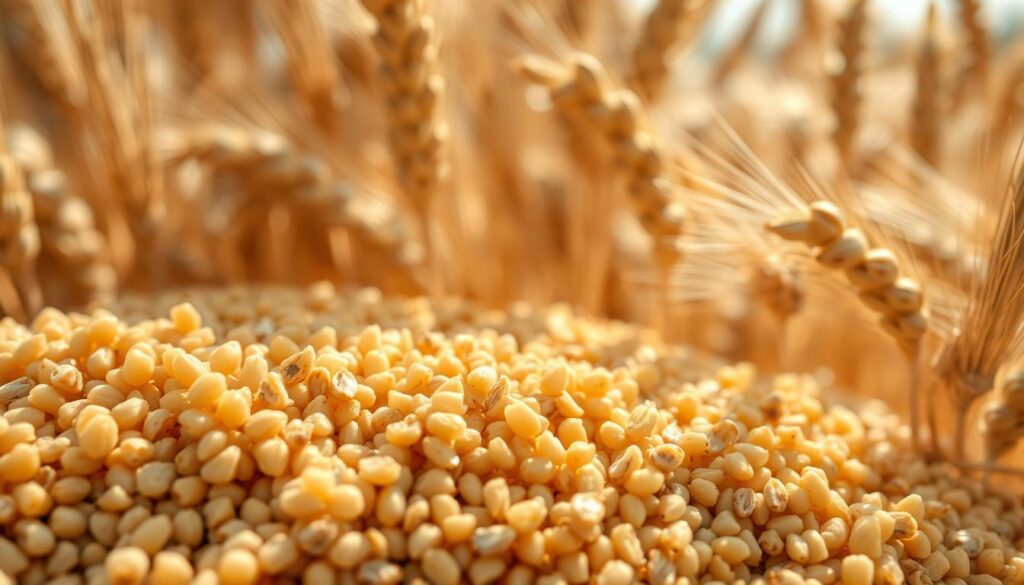
Amaranth
Amaranth thrives in heat with minimal inputs. Its tiny grain is gluten-free and easy to harvest, making it a resilient staple for home cooks.
Kaslaea quinoa
Kaslaea is a bred pseudo-grain for toughness. It sets reliable seed in hot, dry conditions where conventional grains falter.
Juosves millet
Juosves millet pulls double duty. Use it in the kitchen or as chicken feed; it needs less irrigation and matures fast.
Omega flax
Omega flax is low-input and shows off blue flowers. Those blooms attract bees and help pollinate nearby plants.
Sorghum
Sorghum proved the standout: heavy seed heads with little fuss. Planted on margins and paths, it often filled full heads even with no intentional irrigation.
- Seeding strategy: sow into warmed, mulched beds and give an early deep soak so roots can chase moisture later.
- Edge planting: place sorghum and amaranth where soils dry fastest; they still fill heads in tough spots.
- Harvest planning: stagger sowings to spread work and dry stalks on the plant to ease threshing and storage.
- Seed stewardship: save seed from the hottest-year survivors to build a locally adapted grain mix for your microclimate.
“Save seed from the plants that thrive and your plot becomes more resilient every season.”
| Crop | Best Use | Key Strength |
|---|---|---|
| Amaranth | Gluten-free grain | Heat-hardy, easy harvest |
| Kaslaea quinoa | Pseudo-grain | Reliable seed set in dry conditions |
| Juosves millet | Food & poultry feed | Fast, low-input |
| Omega flax | Oilseed & pollinator support | Low water, bee-friendly |
| Sorghum | Staple grain, biomass | Drought-proof, heavy heads |
Quick greens and staples that keep food coming with less water
Fast, short-cycle greens and a few hardy staples provided steady food when irrigation was limited. Choose compact, low-input plants and sow in small blocks to match your available water and harvest rhythm.
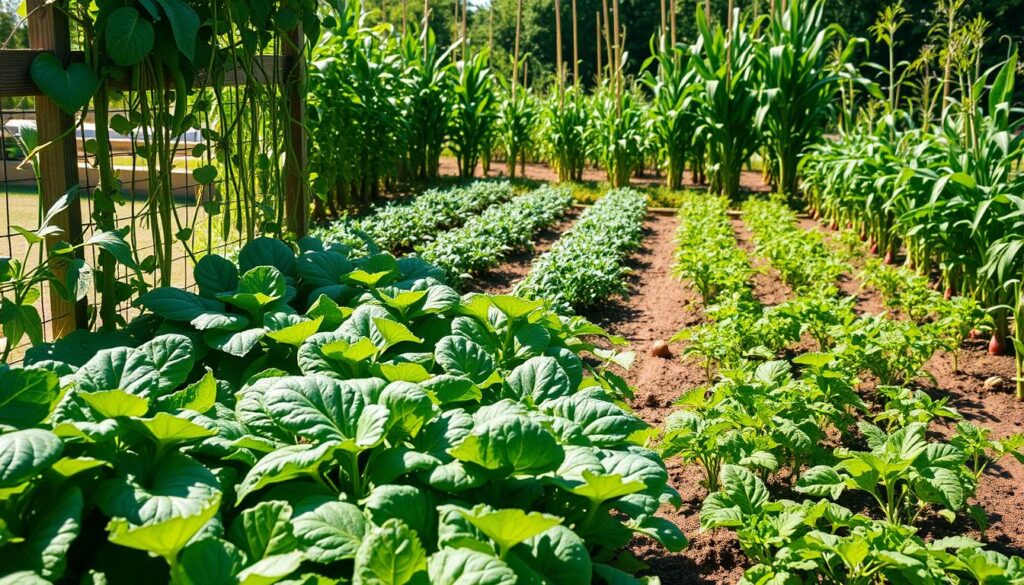
Swiss chard & tatsoi
Swiss chard keeps producing with minimal irrigation in full sun and is great for succession planting.
Tatsoi forms compact rosettes fast, shades soil, and needs little extra water to stay productive.
Orach and mustard greens
Orach (mountain spinach) and mustard greens handle heat and rebound quickly after brief dry stress.
They are low-input leaves that stretch soil moisture and keep salads varied.
Arugula
Arugula grows from sowing to salad in weeks. Short cycles cut total watering needs and keep kitchen greens constant.
Chickpeas
Chickpeas are extremely drought tolerant once roots set. These pulses add protein and mature with very modest irrigation.
- Bed prep: add compost, avoid tillage, and mulch to hold soil cool and moist.
- Planting rhythm: sow small, frequent blocks to sync harvests with limited water access.
- Flavor & nutrition: mix spicy and mild greens with chickpeas for balanced meals.
- Seed saving: save seed from plants that stayed tender and productive under dry conditions.
“Keep quick-turn varieties and staggered sowings to steady kitchen food while using less water.”
Flowers, herbs, and native perennials that held the ground
A mix of showy flowers, tough herbs, and long-lived natives kept beds functional and attractive with minimal intervention. These plants shaded soil, fed bees, and built structure that improved with each season.
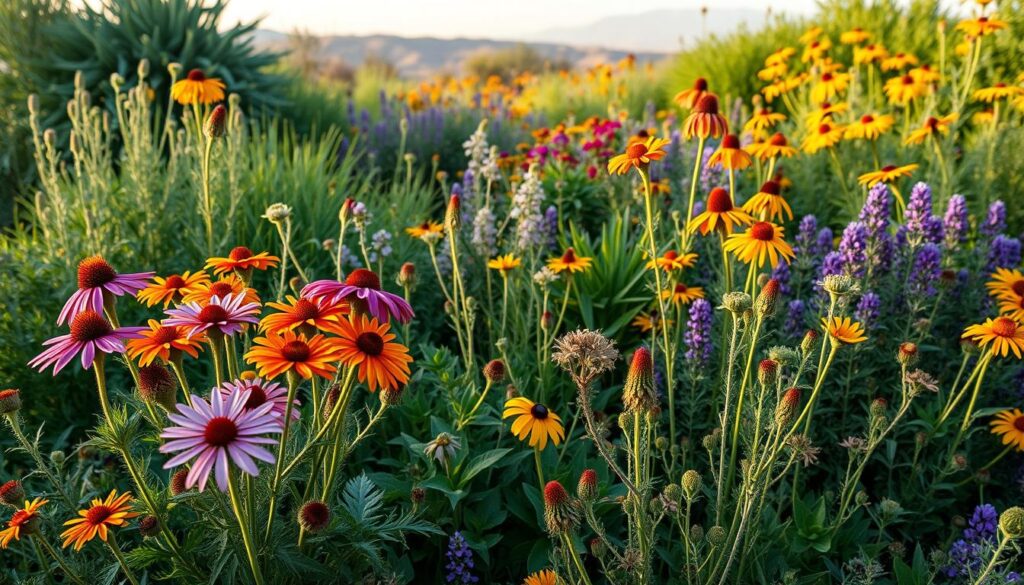
Mammoth sunflower and cheery zinnias
Mammoth sunflower performed well on lean soil and modest inputs. Zinnias kept color in the hottest weeks and drew bees to every border.
Mint-family stalwarts: oregano, spearmint, lavender
Oregano, spearmint, and lavender often survived on rain alone. They may pause growth in long dry spells but rarely die, and they anchor ground with strong roots.
Lamb’s ear and sunchokes as set-and-forget plants
Lamb’s ear shrugged off neglect and kept soft foliage through heat. Sunchokes behaved like native perennials—dormant between storms, vigorous once rains return.
Native shrubs, trees, and resilient perennials
Native shrubs such as elderberry and long-lived trees provided habitat and slope stability. Asparagus stands offered ferny foliage and near zero maintenance once established.
- Pollinator support: blue flax and summer flowers keep bees working when other plants fade.
- Layer your borders: mix perennials, shrubs, and trees to shelter beds from wind and heat.
- Rain-only strategy: use native plants in areas you won’t irrigate; they hold foliage and structure year after year.
“Perennials and native plantings repay patience: their roots deepen, reducing needs and improving resilience over time.”
| Plant | Role | Field Note |
|---|---|---|
| Mammoth sunflower | Flower & pollinator magnet | Productive in lean soil |
| Oregano / Lavender | Herb & ground anchor | Survives on rainfall alone |
| Elderberry / Asparagus | Shrub & perennial border | Low maintenance, wildlife-friendly |
How I planted, watered, and mulched to conserve water and protect soil
Switching from frequent shallow sprays to slow, deep irrigation was the single most effective habit I adopted. Paired with thick mulch and no-till care, this approach conserved resources and kept roots healthy in harsh summer climate spells.
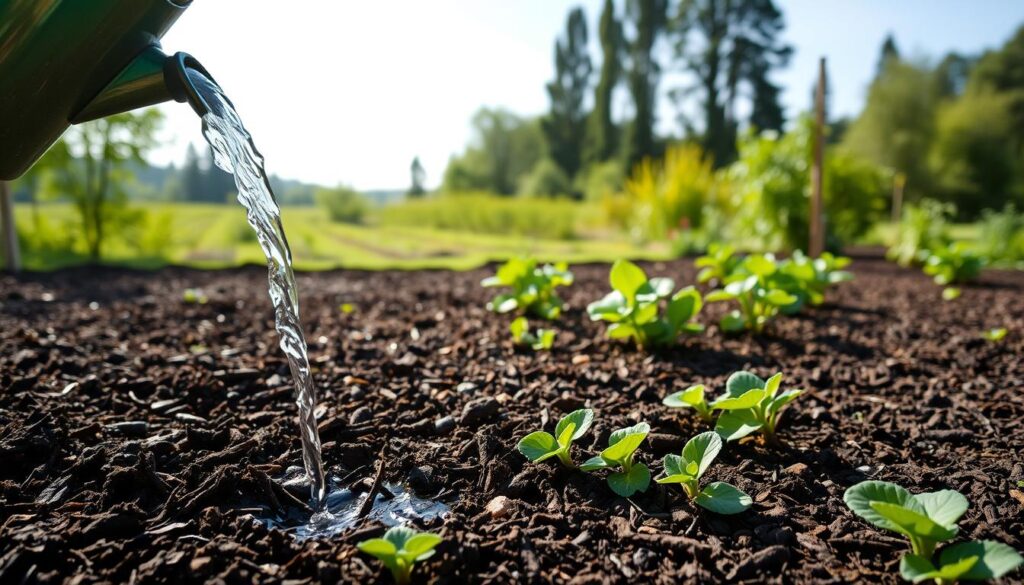
Start by giving new transplants an establishment soak so roots can grow deep. After that, move to deep, infrequent cycles with drip or soaker lines to cut evaporation and promote strong root systems.
Deep, infrequent watering with drip and soaker lines
Simple rule: soak deeply, less often. Drip and soaker hoses deliver moisture near roots and cut loss to heat and wind.
Water at dawn and let the soil dry slightly between sessions. This trains plants to seek moisture deeper and reduces total water use.
Mulch to hold moisture, cool the ground, and limit weeds
Mulch 2–4 inches of organic material. A good layer can halve your watering needs and keeps soil cooler on hot days.
Mulch also cuts weeds and protects fragile surface life in the soil. Replace or top up each season to keep the layer effective.
No-till care and mycorrhizal support for stronger roots
No-till preserves soil structure and the fungal networks that move moisture to roots. Living roots and mycorrhizae expand the zone from which plants pull moisture.
Open-pollinated and landrace varieties: saving for local resilience
Save seed from plants that set under your local climate and conditions. Over seasons, your plot’s stock becomes more adapted and more reliable.
- Bed design: group plants by needs—thirsty types near the spigot, toughest on hot edges.
- Protective systems: use hedges, shade cloth, and windbreaks to moderate weather and reduce evaporation.
- Track results: record which plants set and which stalled to guide next season’s choices and seed saving.
| Practice | Main Benefit | Quick Tip |
|---|---|---|
| Deep, infrequent irrigation | Deeper roots, less loss | Use drip/soaker; water at dawn |
| Thick organic mulch | Halves watering needs | 2–4 inches; top up yearly |
| No-till & mycorrhizae | Better moisture transport | Keep living roots; avoid digging |
| Open-pollinated / landrace saving | Local adaptation | Save from strongest plants |
For practical hacks on stretching supplies and simple installations, see our eco DIY conservation hacks.
Conclusion
Proven species and simple practices kept food, flowers, and seed production steady through a strict ban. Pick resilient varieties, protect soil with thick mulch, and water deeply but infrequently to encourage strong roots.
Across a heat-scoured summer, sorghum, mint-family herbs, select tomatoes and peppers, lamb’s ear, sunchokes, zinnias, and elderberry endured with little irrigation.
Save seed from the toughest performers to build local resilience. Blend grains, quick greens, nightshades, and native perennials to buffer extremes into fall.
Map exposed beds, match them with the hardest plants, and time sowings to avoid peak heat. With focused gardening and proven varieties you can face water scarcity and still harvest year after year.
For more on hardy herbs and companions, see our best garden herbs.