Want a Garden That Glows at Night? A Guide to Night-Blooming Seeds

Could a small patch of white flowers and silvery leaves become your favorite evening place? A moon garden uses reflective blooms, scent, and soft texture to make outdoor spaces inviting after dusk.

Table of contents

Think of fragrant jasmine, moonflower vines, and lamb’s ear catching pale moonlight. Group whites by shade and separate strong scents so each aroma can shine. Most plants still need six to eight hours of sun to thrive, so plan placement for both day and evening performance.

Soft sound from rustling grasses or a small water feature adds calm. Add low, warm lighting and cozy seating for a patio that feels like a gentle retreat. Be mindful of safety: note poisonous species like angel’s trumpet if children or pets use the space.

This short guide will help you choose plants, pair scents, and set lighting so your outdoor spot feels both lively by day and serene when the moon rises.

Key Takeaways

  • Moon gardens use white blooms and silvery foliage to reflect evening light.
  • Plan for sun exposure; most plants need 6–8 hours to perform well both day and evening.
  • Group similar shades and separate strong scents for balanced fragrance.
  • Add soft sound and gentle lighting to create a relaxing place to unwind.
  • Note safety: some showy plants are poisonous—place them away from children and pets.
  • Start small: a simple patio with pots can become a favorite evening retreat.

Want garden that glows at night guide: plan an enchanting moon garden now

Choose a clear, sunny spot that also catches moonlight and keep the planting footprint modest for maximum impact. Organize the layout around a focal element, calm paths, and seating so the evening scene reads as intentional and restful.

Walk your property at dusk and record where pale moonlight reaches; this tells you which areas will shine. Favor sites with low artificial glare and minimal shadow from fences or structures.

Pick the right spot: clear moonlight, low shadows, and daytime sun

Confirm the area gets 6–8 hours of sun by day so leaves and blooms stay healthy. Choose a south-facing space when possible for steady moon views and to limit bright street lamps.

Shape the layout: focal points, winding paths, and cozy viewing angles

Create a small crescent or round bed with a bench or fountain as a focal point. Add gentle curves and stepping stones to encourage quiet movement through the garden.
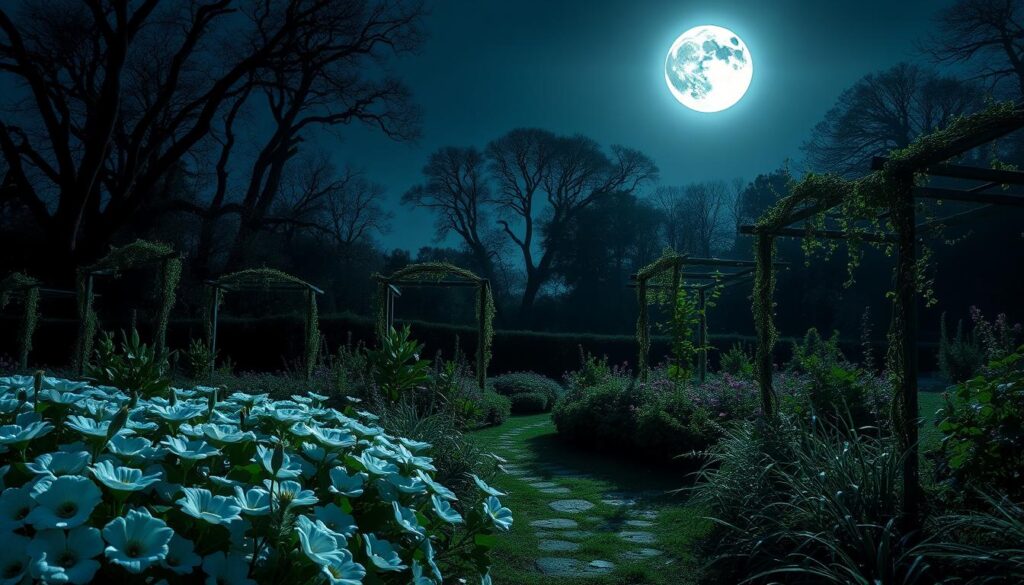
A moonlit garden, bathed in a soft, ethereal glow. The foreground features a lush bed of night-blooming flowers, their petals unfurling to reveal mesmerizing patterns. Overhead, the full moon casts a silvery light, illuminating a gentle path winding through the garden. In the middle ground, delicate vines and trailing plants cascade down trellises, creating a sense of enchantment. The background is a tranquil scene of towering trees, their branches reaching up towards the night sky. The overall atmosphere is one of serene beauty, inviting the viewer to step into this enchanting moon garden and experience the magic of nature after dark.

Color and scent strategy: group whites, separate fragrances, avoid harsh hues

Group white flowers by shade and keep strong fragrances in separate pockets to avoid muddled scent. Avoid loud colors that overpower the soft moonlit effect.

Design scale and form & Safety and accessibility

Layer tall plants at the back, mid-height in front, and keep paths wide enough for safe passage. Use low path lights and site poisonous ornamentals like angel’s trumpet away from high-traffic places.

Seeds and plants that shine after dusk: white flowers, silvery foliage, and fragrance

Choose a palette of late-opening bloomers and silvery leaves to ensure the bed brightens as dusk settles. Layer seeds that open in the evening with steady white flowers and aromatic shrubs so the space reads bright and welcoming after sunset.

Night-blooming stars from seed include moonflower, evening primrose, and four o’clocks. Moonflower (Ipomoea alba) unfurls large, fragrant trumpets that last until daybreak. Evening primrose and four o’clocks add steady, sweet perfume as they open late in the day.

Fill beds with white flowers—Shasta daisies, sweet alyssum, candytuft, creeping phlox, lilies, and mock orange—to reflect pale light and keep the visual field crisp. Thread bulbs like white daffodils and summer snowflakes to extend interest across the season.
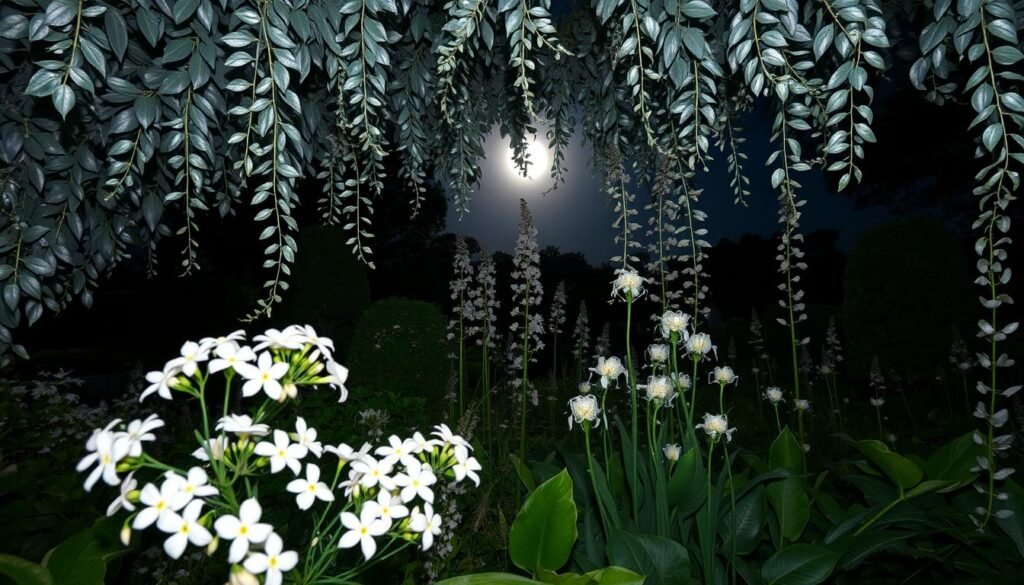
A lush, moonlit garden filled with an enchanting array of night-blooming plants. In the foreground, a cluster of delicate white flowers with silvery petals gently sway in the soft breeze, their fragrance carried on the air. Cascading from above, trailing vines with lustrous, silvery foliage create a canopy of shimmering leaves. In the middle ground, tall, graceful stems support the glowing blooms of night-flowering plants, their petals radiating a soft, luminous glow. The background fades into a serene, moonlit landscape, with the pale light casting a tranquil, ethereal atmosphere over the entire scene. Captured with a wide-angle lens to showcase the depth and beauty of this enchanting moon garden.

Weave silvery foliage—dusty miller, lamb’s ear, Artemisia, Russian sage, and variegated hosta—for soft halos and bold twilight silhouettes. Globe artichoke and cardoon provide structural leaves for evening form.

Focus scent near seating. Plant Nicotiana and night-blooming jasmine where breezes carry fragrance. Buddleja ‘White Profusion’ and night phlox invite nocturnal pollinators and add gentle motion.

  • Seed starters: moonflower, evening primrose, four o’clocks for reliable evening bloom.
  • White reflectors: Shasta daisy, alyssum, candytuft, phlox, lilies.
  • Silvery accents: dusty miller, lamb’s ear, Artemisia, Russian sage, variegated hosta.
  • Use caution: angel’s trumpet offers drama and perfume but is poisonous—site away from high-traffic areas.
  • Try a golden twist: swap some whites for yellow blooms and golden conifers for a warm dusk palette.

Lighting, seating, and sensory features for magical evenings

Use low, warm light and gentle sound to shape an inviting moon garden where plants and moonlight remain the stars. Keep fixtures subtle so petals and silver leaves catch attention, not bright bulbs.
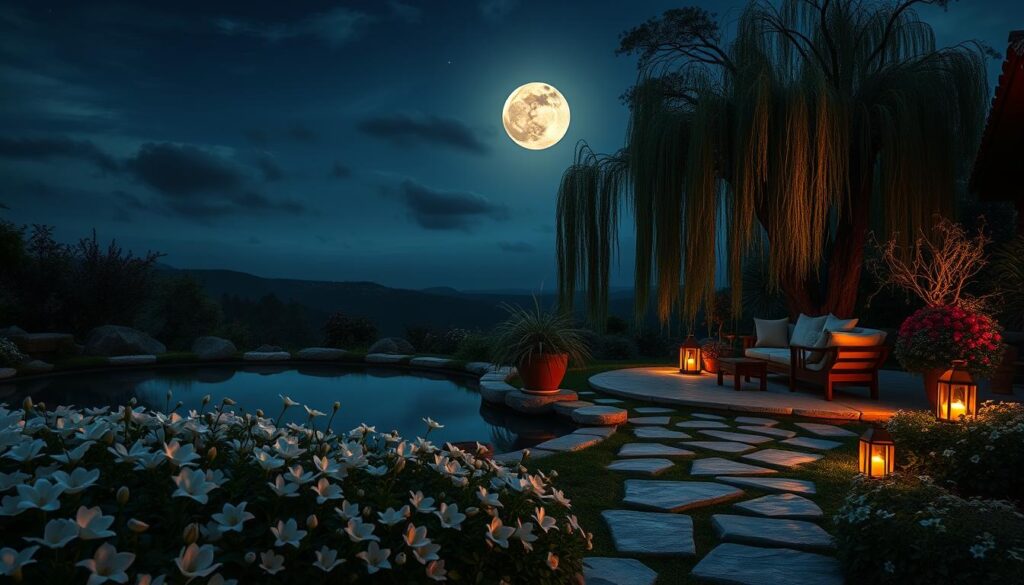
A moonlit garden sanctuary, with a serene pond reflecting the night sky. In the foreground, a lush bed of night-blooming flowers - pale moonflowers, fragrant jasmine, and delicate angel's trumpets - gently swaying in a soft breeze. Surrounding the pond, a path of smooth stones leads to a cozy seating area, adorned with glowing lanterns and plush cushions, inviting visitors to linger and savor the tranquil ambiance. In the middle ground, a weeping willow tree casts ethereal shadows, its graceful branches creating a natural canopy. The background is a vista of rolling hills and a majestic full moon, illuminating the entire scene with a magical, otherworldly glow.

Subtle lighting ideas

Line paths with solar lights and tuck lanterns near turns to make movement easy and safe. Wrap thin string lights along an arbor or fence post for a delicate sparkle without glare.

Float a few candles in a birdbath or small fountain to add mirrored shimmer. Use warm-tone bulbs and dim settings so the moon keeps its presence.

Create a comfortable nook

Place a bench or hammock with layered cushions where fragrance gathers. Anchor the spot with a small table for a book or tea and leave open space for air to move.

Angle seating toward key flowers and silver foliage so each visit feels composed and restful.

Water and sound

Add a petite fountain for soft water music and plant grasses that rustle with breezes. Hang a single wind chime where it won’t overpower the soundscape.

  • Key idea: Use warm, low-glare lighting to mark paths and highlight textures without overpowering the moon.
  • Key idea: Sit where scent drifts naturally; pair seating with a water feature for calm atmosphere.

Care made simple: low-maintenance tips and a present-day seasonal roadmap

Focus on steady, small actions—watering at the root, a fresh mulch layer, and timely pruning. These routine steps keep plants healthy and let evening blooms and silver foliage read clearly through the year.

Easy upkeep

Easy upkeep: watering, mulching, pruning, and self-cleaning bloomers

Water at the base in the cool of the day and soak deeply rather than shallowly. This encourages strong roots and reduces frequent watering needs.

Mulch 2–3 inches to hold moisture, suppress weeds, and moderate soil temperature. Replenish annually to keep the bed tidy.

Choose self-cleaning bloomers where possible to cut deadheading time. For others, remove spent flowers to keep petals bright under evening light.

Prune lightly after bloom; trim herbs and grasses to keep paths open and sightlines clear for safe evening movement. Most sites do best with 6–8 hours of sun by day for steady growth.
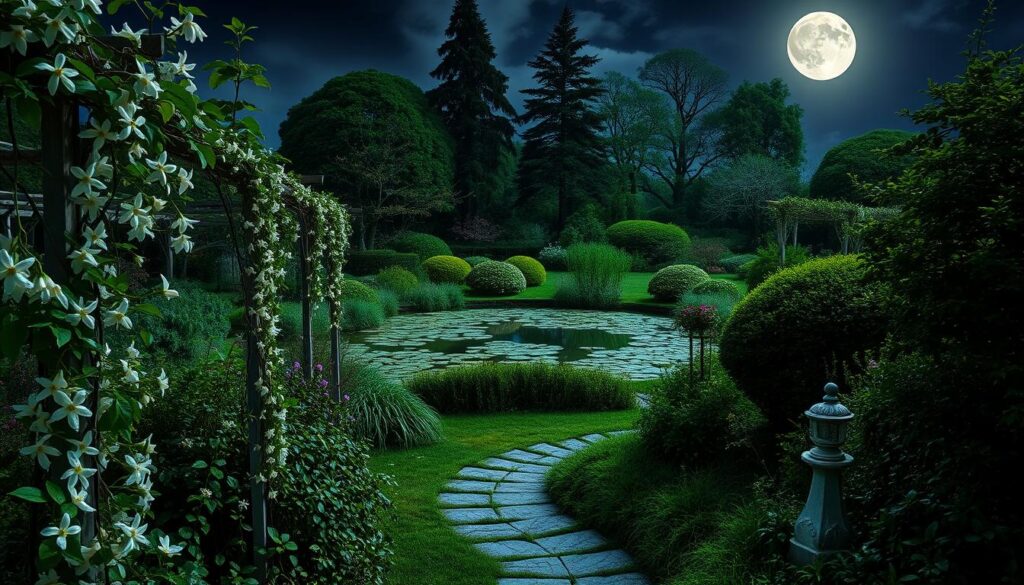
A moonlit garden, lush with night-blooming flowers and verdant greenery. In the foreground, a winding path leads through cascading vines and luminous petals. Delicate moonflowers and fragrant jasmine adorn the trellises, their pale blooms catching the soft lunar glow. In the middle ground, a tranquil pond reflects the night sky, its surface dotted with floating water lilies. Towering trees and shrubs line the perimeter, their silhouettes casting gentle shadows across the scene. The overall atmosphere is one of serene enchantment, a dreamlike oasis that thrives under the moon's gentle caress.

Seasonal picks by timing: spring bulbs, summer scent, fall texture, winter structure

Plan the year in layers: spring bulbs for early sparkle, summer scent for peak evenings, fall texture for softness, and winter structure to hold the scene.

  • Spring: white daffodils and tulips give early form and crisp color.
  • Summer: jasmine and honeysuckle supply warm-evening scents; support them with steady water.
  • Fall: white asters and dusty miller add pale tones and soft texture as days shorten. See practical fall tips here.
  • Winter: rely on evergreens with silver or gray foliage for bones; move tender night phlox into containers and protect them from freezes.

Support pollinators by leaving some nectar sources late into the season and avoiding unnecessary pesticides. For more planting ideas and herbs that complement evening scent, visit this herb resource: best herbs to plant.

About the Author

Garden Expert (Ethan Green) is your green-thumbed guide at The Garden Haven. With years of hands-on experience in home gardening, greenhouse care, and sustainable planting, Garden Expert shares practical tips and expert advice to help you grow healthier, happier gardens—season after season.

Editorial Process Note

Just like a healthy garden, our content is carefully nurtured. Every tip and technique shared on The Garden Haven comes from years of hands-on experience. Before we publish an article, our team "weeds out" any inaccuracies by checking facts against trusted horticultural sources. We regularly revisit our articles to keep them fresh and up-to-date, ensuring you always have the best information for a thriving garden.

Conclusion

Start with a single spot you can see from a window and build outward using soft color and layered scent. Keep the plan small, focus on white flowers, silver foliage, and evening-fragrant plants so moonlight and gentle lighting do most of the work.

Choose low, warm lights—string lights, solar path markers, lanterns—and add a small fountain for subtle sound.

Revisit the area at dusk to confirm moonlight and adjust plant groupings. Tuck jasmine or Nicotiana by seating and limit bold colors so the view reads calm from indoors and out.

Maintain easy rhythms: mulch, water deeply and less often, prune lightly, and refresh annuals. Moon gardens scale well to containers, patios, or larger beds; small tweaks in lighting or plant placement lift the whole scene.

Step outside at dusk, follow a slow path, and let the flowers, fragrance, and soft light restore you.

FAQ

What is a moon garden and why choose white or silvery plants?

A moon garden is a planting scheme designed to read beautifully in low light by using pale flowers, silvery foliage, and strong evening scents. White blooms and light-colored leaves reflect moonlight, making paths and seating areas feel luminous while attracting nocturnal pollinators like moths and bats.

Which seeds are best for night-blooming plants I can start from seed?

Good seed-starting choices include moonflower (Ipomoea alba), evening primrose (Oenothera biennis), and four o’clock (Mirabilis jalapa). Start moonflower indoors 4–6 weeks before last frost; sow evening primrose and four o’clock directly after danger of frost or in late spring for summer blooms.

How do I pick the right spot for a moonlit planting area?

Choose a location with clear moonlight exposure, minimal harsh artificial light, and enough daytime sun for the selected plants (many need 4–6 hours). Avoid deep shade and place fragrant or focal plants near windows or seating so scent and sightlines are maximized.

Can I include color other than white without losing the moonlit effect?

Yes. Use restrained pops of pale blue or soft yellow to add interest while keeping white as the dominant palette. Bright or highly saturated colors can look muddy after dusk, so place them sparingly and away from main viewing angles.

What silvery foliage plants hold up well in evening-focused beds?

Dusty miller (Jacobaea maritima), lamb’s ear (Stachys byzantina), Artemisia, and certain hostas and Russian sage provide durable, reflective texture. These plants offer contrast and structure after dark and often require minimal maintenance.

How can I safely add seating and paths for evening enjoyment?

Plan clear, gently lit paths with low solar stakes or lanterns to balance visibility without overpowering moonlight. Choose non-slip paving and position benches or hammocks with sightlines to the best-scented or brightest blooms for relaxed viewing.

What lighting options keep the space magical but functional?

Use subtle options: solar path lights, low-voltage LED uplights, string lights, and lanterns with warm bulbs. Avoid strong spotlights that wash out moonlit effects. Floating candles in a basin or a softly lit fountain add atmosphere without harsh glare.

Which fragrant plants release scent most strongly in the evening?

Night-scented species include Nicotiana (flowering tobacco), night-blooming jasmine (Cestrum and Jasminum spp.), star jasmine, and honeysuckle (Lonicera). These plants release volatile compounds at dusk to attract pollinators and reward evening visitors.
Some showy evening plants—such as angel’s trumpet (Brugmansia), certain species of lilies, and parts of hydrangea—can be toxic if ingested. Place potentially hazardous plants out of reach, label beds clearly, and consider pet-safe alternatives like phlox, alyssum, or Shasta daisies.

How do I handle watering and mulch for low-maintenance evening beds?

Mulch helps conserve soil moisture and reduce weeds; apply a 2–3 inch layer avoiding crown contact. Water deeply but infrequently to encourage strong roots—early morning irrigation is ideal. Group plants by water needs to simplify care.

What seasonal timeline should I follow for planting and maintenance?

Spring is prime for bulbs and early annuals; sow summer-blooming seeds in late spring. Deadhead spent flowers to extend bloom and prune lightly after peak season. In fall, add structural evergreens or ornamental grasses for winter interest and plan bulbs for the following spring.

Can I combine water features with a moonlit palette without attracting mosquitoes?

Yes. Use moving water—small fountains or bubblers—to deter mosquitoes. Install a shallow basin with a pump or plant water-loving species that support wildlife balance. Avoid stagnant containers or cover them and change water frequently if decorative.

How do I design a small space to feel like a moon garden?

In tight areas, focus on a crescent bed, a vertical trellis with moonflower or jasmine, and a single cozy seating spot near fragrant plants. Use reflective containers, light-colored gravel, and a few silvery-leaved specimens to amplify light and make the area feel larger.

Which perennials provide year-round structure for evening gardens?

Choose evergreen or semi-evergreen shrubs and grasses—like dwarf conifers, Russian sage, and ornamental grasses—to maintain silhouette in winter. Combine them with spring bulbs and summer night-scented perennials for layered interest across seasons.

How can I attract night pollinators without disrupting neighbors?

Plant native nectar sources that bloom at dusk and avoid bright artificial lights that confuse insects. Position stronger-scented plants away from shared fences if odor is a concern, and choose species attractive to moths and bats rather than noisy or invasive plants.

Are there special soil or fertilization needs for moon garden plants?

Most moon garden species prefer well-draining soil enriched with organic matter. A balanced slow-release fertilizer in spring supports growth; adjust feeding by plant type—heavier feeders like some annuals need more, while drought-tolerant perennials need less.