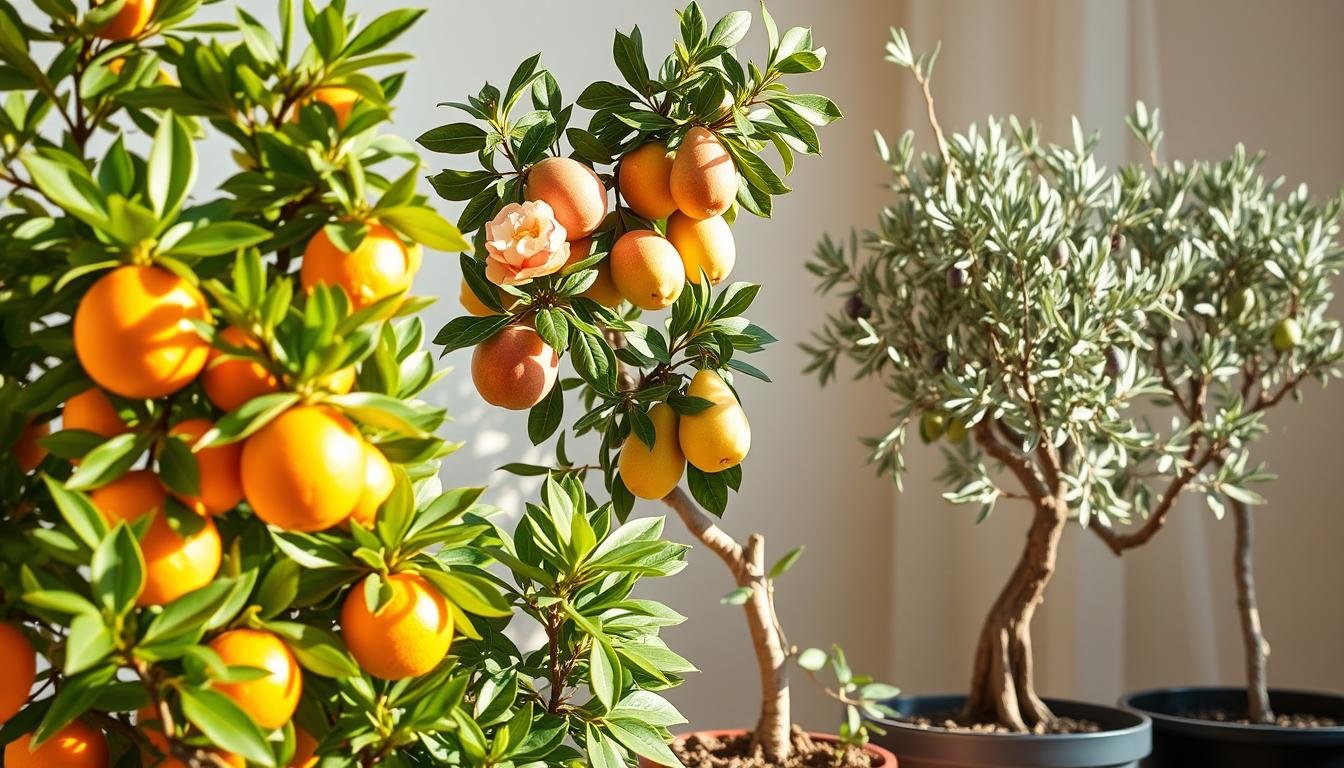
Can a small tree in your living room truly deliver fresh harvests and a burst of fragrance? This question guides the friendly plan ahead: choose compact stock, place each plant where it can soak up sun, and learn basic care steps.
Start by picking dwarf or grafted selections for a productive home orchard. Dwarf selections keep size manageable and often flower sooner than seed-grown plants.
Potted specimens lose nutrients faster than in-ground ones, so schedule soil refreshes and watch moisture closely. Use a southern-facing window or supplemental grow lights to give the bright light many species need for steady flowering and fruit set.
Some citrus and figs reward hand pollination or a cool winter rest. Move plants slowly between patio and living room to avoid shock, and group similar needs together to simplify care.
Key Takeaways
- Choose compact stock and grafted plants for faster, more reliable harvests.
- Provide consistent bright light from a south window or grow lights.
- Refresh potting soil regularly and monitor moisture with a meter.
- Hand-pollinate picky species and respect winter dormancy cues.
- Group similar plants for easier daily care and seasonal moves.
Quick-start guide: choosing fruit trees that thrive in containers and indoors
Most fruit trees indoors thrive when you give them strong light, the right pot and soil, and choose dwarf, self-fertile cultivars. Aim for a south-facing window delivering at least six hours of direct sun, and use grow lights when natural light falls short.
Choose compact, self-fertile specimens to start a small home orchard with fewer surprises. Most indoor specimens need about six to eight hours of direct light year-round. Place plants by a south-facing window or add full-spectrum grow lights if sunlight is limited.

- Start with dwarf selections labeled for pots; they prune and move more easily.
- Use a sturdy pot with drainage holes to prevent waterlogging and root rot.
- Match moisture to species: citrus likes evenly moist soil, olives should dry at the top inch, and figs enjoy a deep weekly soak.
- Acclimate specimens outdoors over 7–10 days if you move them for summer light.
“Good light and steady care turn compact plants into reliable producers.”
| Need | Quick tip | Why it matters |
|---|---|---|
| Light | Six to eight hours or grow lights | Promotes flowering and fruit set |
| Pot | Drainage holes, sturdy material | Prevents root rot and eases watering |
| Soil | Well-draining, container-formulated mix | Holds nutrients and avoids compaction |
| Airflow & temp | Stable indoor temps, gentle circulation | Protects blossoms and young fruit |
Container fruit trees varieties that work indoors: compact citrus that bear fruit in bright light
Citrus are the stars of indoor fruiting—give them bright light, slightly acidic soil, and steady moisture for flowers that bear fruit.
Plan to hand-pollinate blossoms and inspect leaves often so your citrus trees stay healthy and productive.
Bright, fragrant citrus often outperform other small orchard picks when given steady light and attentive care. Below are simple, species-level tips to help you choose and care for compact, productive specimens.
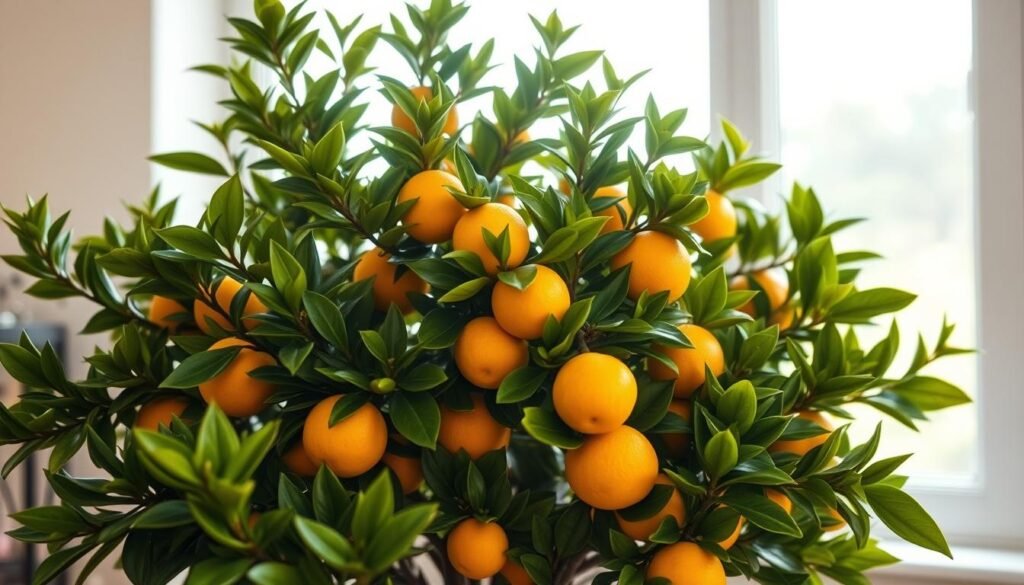
Meyer lemon tree
Meyer lemon blooms fragrantly and prefers slightly acidic, well-drained soil. Position the meyer lemon tree in bright light near a south-facing window. Hand-pollinate indoor blooms with a soft brush to help it bear fruit.
Calamondin orange
Calamondin tolerates dry indoor air and is drought-tolerant in winter. Use tepid water and a free-draining mix so roots stay healthy. This hardy little tree rewards gentle neglect during cool months.
Kumquat
Kumquats need about 8–10 hours sunlight and do best by a south-facing window. Expect compact growth around 3–4 feet tall with regular rotation so light reaches all sides.
Mandarin and tangerine
Mandarins and tangerines like even moisture but not waterlogged soil. Prune in winter, and pause when buds swell. Check leaf undersides and nodes weekly for mealybugs and scale and wipe pests away promptly.
“Good light and hands-on care turn compact citrus into steady producers.”
- Tip: Let the top inch of soil dry, then water thoroughly so roots absorb moisture evenly.
- Tip: Feed with a citrus-specific fertilizer during active growth.
Figs for small spaces: Chicago Hardy and Celeste that fruit indoors
Choose self-fertile figs like Chicago Hardy and Celeste for reliable fruit in small spaces. Expect fall yellowing as the tree enters dormancy—reduce watering and maintain bright light to protect the roots.
Chicago Hardy and Celeste are two compact, self-fertile cultivars prized for small-home growing. Both do well in a sunny spot and set fruit without a pollinator. With regular pruning they often stay around 4–5 feet tall, making them ideal for limited living areas.

Best dwarf-friendly cultivars and pot size tips for more fruit
Select specimens labeled for pots and choose a pot that matches your space. A larger planter increases vigor and yields. A smaller planter limits overall size and helps keep the tree manageable.
- Soil: Use a loamy, well-draining mix for steady moisture and good root health.
- Water: Water weekly until excess drains from the bottom; avoid soggy roots.
- Support: Stake soft stems while fruit sets to prevent breakage.
Fall yellowing and winter dormancy: reduce watering and keep bright light
Leaves commonly yellow in fall as figs enter dormancy. Cut watering to light sips to prevent root rot and keep plants in bright, draft-free spots.
Resume deeper watering when new buds appear in late winter. Top-dress with fresh mix before spring growth, and prune after harvest or in late winter to shape the tree and improve light penetration.
“A loamy mix, sensible pot size, and gentle seasonal care keep compact figs productive year after year.”
| Factor | Recommendation | Why it matters |
|---|---|---|
| Cultivars | Chicago Hardy, Celeste | Self-fertile; fruit reliably in small spaces |
| Pot size | Small (control size) to large (more yield) | Balances vigor with available space |
| Soil & watering | Loamy mix; weekly until runoff | Maintains moisture without waterlogging |
| Dormancy care | Reduce watering; keep bright light | Prevents root rot during rest |
For deeper winter care tips and step-by-step guidance on growing figs in pots, see our detailed guide on growing fig trees in containers.
Olive trees indoors and outdoors: Arbequina and Picholine for low-fuss fruit
Choose fruiting European varieties like Arbequina and Picholine and give them strong light daily. A cool, non-freezing winter period helps induce flowering and fruit set on an olive tree grown inside.
European olive types perform well in bright spots and repay a gentle chill with better blooms.

Place your specimen where it receives at least six hours of direct sunlight—ideally a bright south window or with supplemental grow lights.
- Habit: Arbequina has a graceful, weeping habit while Picholine grows more upright; choose by the space and the feet tall range you can accommodate.
- Winter chill: Move the plant to a cool, above-freezing room for a few months to simulate natural chill and encourage blooms and set.
- Watering: Water regularly year-round; allow the top inch to dry between thorough soakings.
- Soil & feeding: Use a gritty, well-draining mix and feed lightly during active growth—olives are modest feeders.
- Care notes: Prune after harvest or in late winter to open the canopy, wipe leaves to improve light capture, and scout for scale; treat early with horticultural oil.
For folks growing small fruit trees near a sunny window, olives offer a low-fuss option with savory rewards when you follow a simple light, chill, and water routine.
Avocado trees in pots: grow from grafted starters, not just a pit
Skip the pit and start with a grafted avocado for faster harvests and compact growth. Give bright light, well-draining soil, and water regularly so the tree needs are met without waterlogging roots.
Bought grafted starters typically bear fruit in far fewer months than seedlings from a pit, which can take 15–20 years to produce. Choose naturally small selections such as Wurtz, Gwen, or Whitsell; these stay around a few feet tall and usually do not need a pollinator to set.

“A grafted start saves years and brings reliable harvests to smaller spaces.”
- Light: Place by a south window or use strong grow lights to ensure bright light during short days.
- Soil & drainage: Use a chunky mix and add coarse material at the base to avoid wet feet.
- Water: Water regularly to keep the root zone evenly moist, then allow slight drying; never leave standing water.
- Support & pruning: Stake young stems and tip-prune to encourage branching and lateral fruiting wood.
For step-by-step growing tips on starting with grafted avocado starters, see grafted avocado starters. Expect grafted plants to bear fruit sooner than a pit-grown specimen and enjoy the shorter wait to harvest.
Apricot and other non-citrus options for containers
Beyond citrus, apricot, banana, and mulberry are strong candidates with distinct light and moisture needs. Match each plant to its preferred exposure and watering rhythm so your trees grow well and produce.
Apricot tree (Moorpark, Goldcot)
The Moorpark and Goldcot apricot tree stays compact in a snug pot when pruned. Use a loamy mix amended with compost and aim for six to eight hours of bright light daily.
Water regularly and soak until moisture runs from the bottom of the pot to flush salts and reach all roots.
Keep the specimen a manageable feet tall by pruning in winter and removing crossing wood to improve airflow.

Super Dwarf Cavendish banana
The Super Dwarf Cavendish favors bright indirect light and high humidity. Mist leaves and feed monthly during active growth for lush, large foliage.
Let the soil dry fully between deep waterings; big leaves transpire fast, so check moisture often to avoid stress.
Dwarf Everbearing mulberry
Dwarf Everbearing mulberry likes a warm, sunny spot and a roomy pot for steady production. Harvest fruits as they ripen to prevent drop and staining.
Rotate the pot periodically so the canopy develops evenly and each side sees good light.
- Practical tip: Use a stable pot or rolling caddy for heavy planters to ease seasonal moves and cleaning.
- If you enjoy lemon flavors in recipes, pair an apricot with a compact meyer lemon nearby to extend your indoor harvest palette.
“Small non-citrus picks reward steady care and the right light with genuine harvests and bold flavor.”
Care essentials for trees indoors: sunlight, soil, pot size, and seasonal moves
Most care challenges come down to light, watering rhythm, and the right container soil mix. You’ll want to give at least six hours of direct sun, use pots with drainage, and hand-pollinate blossoms to keep harvests coming.
Simple routines make big wins. A healthy fruit tree needs predictable light, fresh soil, and gentle seasonal shifts. Follow basics and you’ll avoid most problems.

Sun and placement
Aim for a south-facing window so specimens get at least six hours of bright light. In winter, add full-spectrum LEDs to keep hours sunlight steady.
Rotate pots so all sides get even exposure and avoid sudden moves; acclimate plants over a week before outdoor time.
Soil and pots
Pick a loamy, well-draining mix and refresh the top layer each spring. Citrus trees prefer slightly acidic soil and tepid water when you water.
Every planter needs drainage holes to prevent root rot and to let excess water leave from the bottom pot.
Watering, feeding, and rhythms
Keep citrus slightly moist, let the olive tree dry at the top inch, and water figs weekly until runoff from the bottom pot.
Feed with species-specific fertilizer during active growth; potted soil loses nutrients faster than garden beds.
Pollination, pruning, and hygiene
Hand-pollinate blossoms with a small brush — indoor blooms often need help. Prune to open the canopy and tip-prune to control size.
Wipe leaves, top-dress soil periodically, and scout for scale or mealybugs so you can treat early and keep plants vigorous.
“Good light, fresh soil, and steady rhythms are the simple steps that help small orchard plants thrive.”
Conclusion
When you’re starting a small home orchard, pick compact, productive specimens and keep care simple. Expect a range of timelines—some plants fruit in months to a few years, while a pit-grown avocado may take many years.
Begin with forgiving choices like a meyer lemon, an apricot tree, or olive trees. Keep canopies around 3–5 feet tall with pruning so the space stays manageable and accessible for watering and pruning.
Remember timelines: a grafted avocado can fruit far sooner than a plant started from a pit, which often needs 15–20 years. Some specimens set after a few months or a few years, depending on care and light.
Keep routines steady, give a cool winter stint to olive or olive trees when needed, and enjoy each first blossom. Celebrate small wins as you learn what your plants prefer while you’re growing at home.