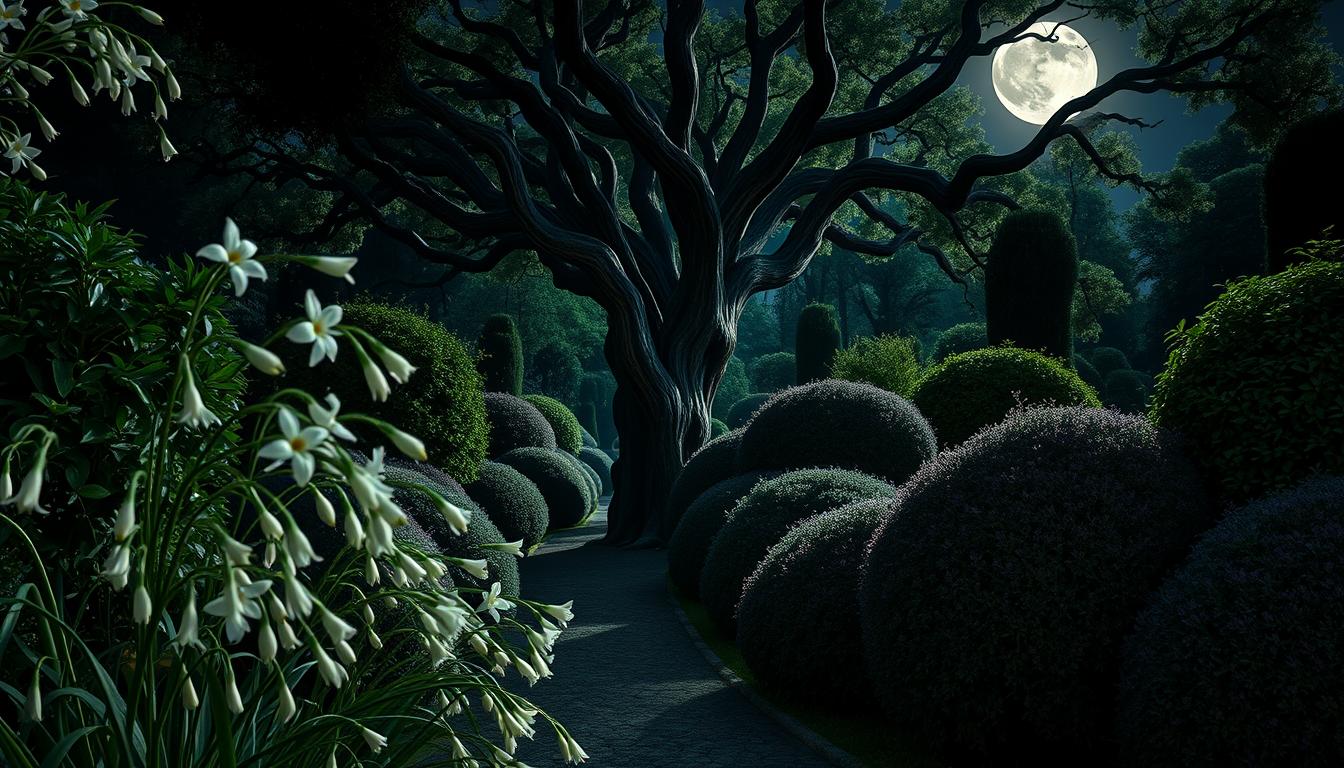
Could a small patch of white flowers and silvery leaves become your favorite evening place? A moon garden uses reflective blooms, scent, and soft texture to make outdoor spaces inviting after dusk.
Think of fragrant jasmine, moonflower vines, and lamb’s ear catching pale moonlight. Group whites by shade and separate strong scents so each aroma can shine. Most plants still need six to eight hours of sun to thrive, so plan placement for both day and evening performance.
Soft sound from rustling grasses or a small water feature adds calm. Add low, warm lighting and cozy seating for a patio that feels like a gentle retreat. Be mindful of safety: note poisonous species like angel’s trumpet if children or pets use the space.
This short guide will help you choose plants, pair scents, and set lighting so your outdoor spot feels both lively by day and serene when the moon rises.
Key Takeaways
- Moon gardens use white blooms and silvery foliage to reflect evening light.
- Plan for sun exposure; most plants need 6–8 hours to perform well both day and evening.
- Group similar shades and separate strong scents for balanced fragrance.
- Add soft sound and gentle lighting to create a relaxing place to unwind.
- Note safety: some showy plants are poisonous—place them away from children and pets.
- Start small: a simple patio with pots can become a favorite evening retreat.
Want garden that glows at night guide: plan an enchanting moon garden now
Choose a clear, sunny spot that also catches moonlight and keep the planting footprint modest for maximum impact. Organize the layout around a focal element, calm paths, and seating so the evening scene reads as intentional and restful.
Walk your property at dusk and record where pale moonlight reaches; this tells you which areas will shine. Favor sites with low artificial glare and minimal shadow from fences or structures.
Pick the right spot: clear moonlight, low shadows, and daytime sun
Confirm the area gets 6–8 hours of sun by day so leaves and blooms stay healthy. Choose a south-facing space when possible for steady moon views and to limit bright street lamps.
Shape the layout: focal points, winding paths, and cozy viewing angles
Create a small crescent or round bed with a bench or fountain as a focal point. Add gentle curves and stepping stones to encourage quiet movement through the garden.
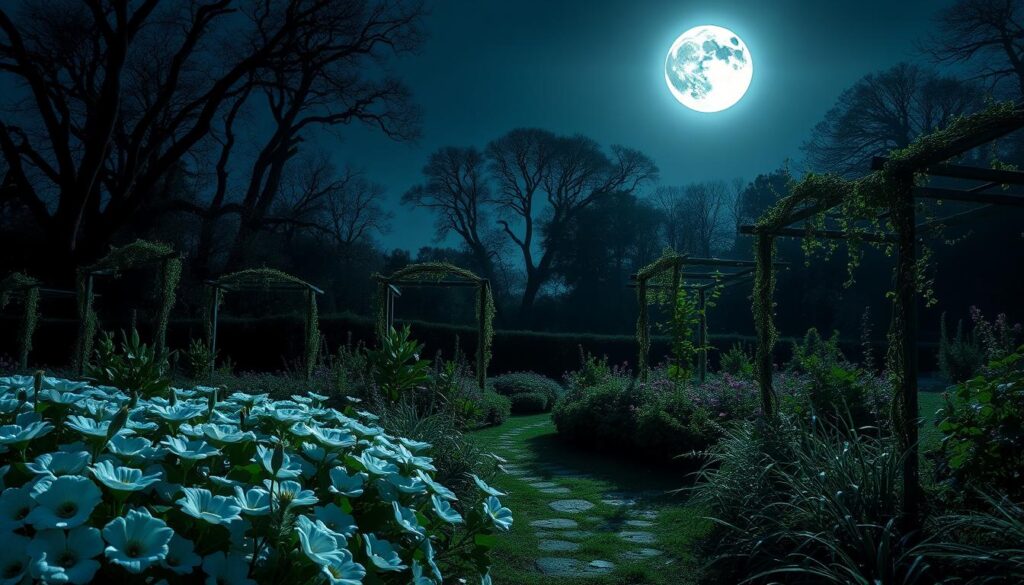
Color and scent strategy: group whites, separate fragrances, avoid harsh hues
Group white flowers by shade and keep strong fragrances in separate pockets to avoid muddled scent. Avoid loud colors that overpower the soft moonlit effect.
Design scale and form & Safety and accessibility
Layer tall plants at the back, mid-height in front, and keep paths wide enough for safe passage. Use low path lights and site poisonous ornamentals like angel’s trumpet away from high-traffic places.
Seeds and plants that shine after dusk: white flowers, silvery foliage, and fragrance
Choose a palette of late-opening bloomers and silvery leaves to ensure the bed brightens as dusk settles. Layer seeds that open in the evening with steady white flowers and aromatic shrubs so the space reads bright and welcoming after sunset.
Night-blooming stars from seed include moonflower, evening primrose, and four o’clocks. Moonflower (Ipomoea alba) unfurls large, fragrant trumpets that last until daybreak. Evening primrose and four o’clocks add steady, sweet perfume as they open late in the day.
Fill beds with white flowers—Shasta daisies, sweet alyssum, candytuft, creeping phlox, lilies, and mock orange—to reflect pale light and keep the visual field crisp. Thread bulbs like white daffodils and summer snowflakes to extend interest across the season.
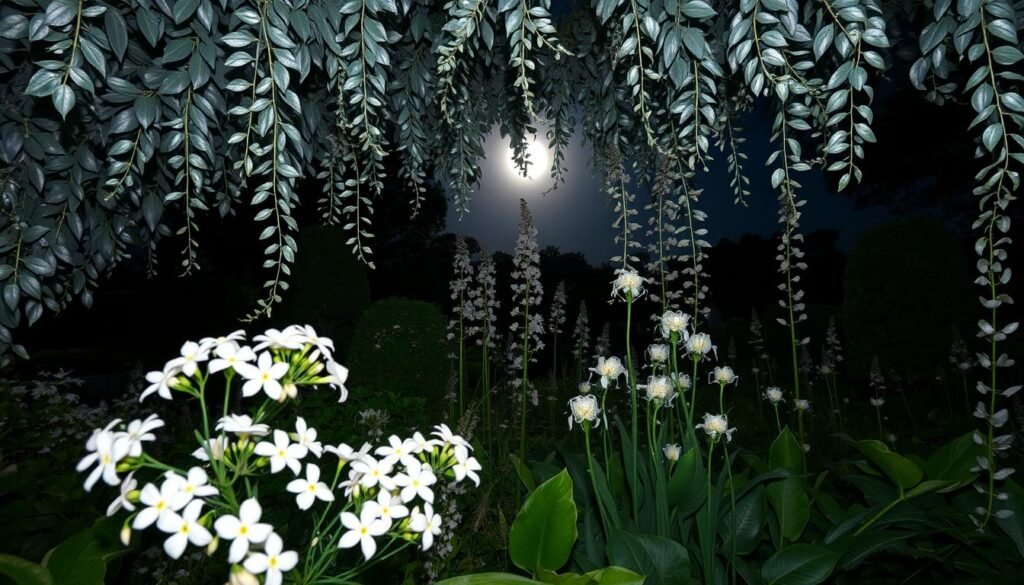
Weave silvery foliage—dusty miller, lamb’s ear, Artemisia, Russian sage, and variegated hosta—for soft halos and bold twilight silhouettes. Globe artichoke and cardoon provide structural leaves for evening form.
Focus scent near seating. Plant Nicotiana and night-blooming jasmine where breezes carry fragrance. Buddleja ‘White Profusion’ and night phlox invite nocturnal pollinators and add gentle motion.
- Seed starters: moonflower, evening primrose, four o’clocks for reliable evening bloom.
- White reflectors: Shasta daisy, alyssum, candytuft, phlox, lilies.
- Silvery accents: dusty miller, lamb’s ear, Artemisia, Russian sage, variegated hosta.
- Use caution: angel’s trumpet offers drama and perfume but is poisonous—site away from high-traffic areas.
- Try a golden twist: swap some whites for yellow blooms and golden conifers for a warm dusk palette.
Lighting, seating, and sensory features for magical evenings
Use low, warm light and gentle sound to shape an inviting moon garden where plants and moonlight remain the stars. Keep fixtures subtle so petals and silver leaves catch attention, not bright bulbs.
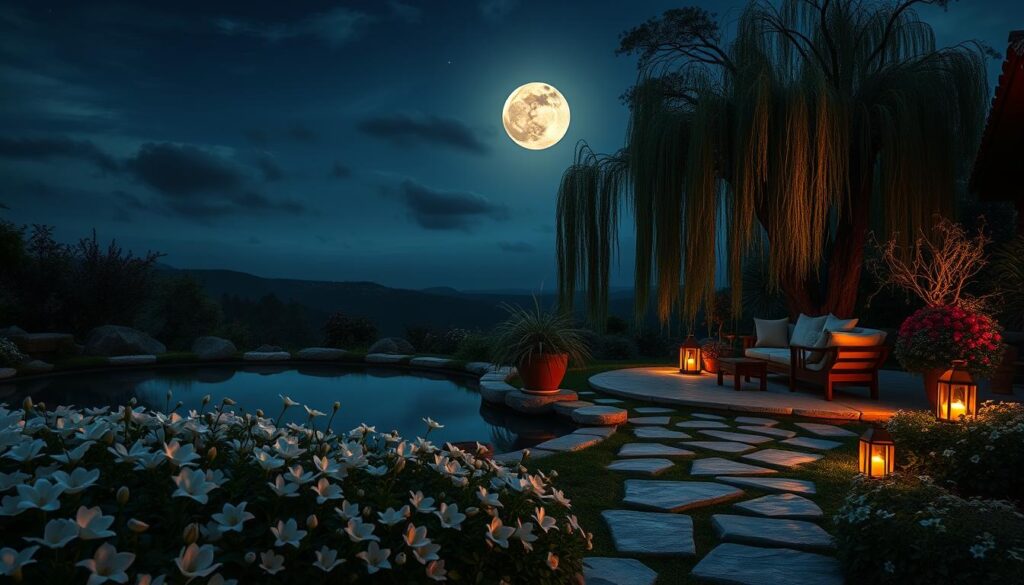
Subtle lighting ideas
Line paths with solar lights and tuck lanterns near turns to make movement easy and safe. Wrap thin string lights along an arbor or fence post for a delicate sparkle without glare.
Float a few candles in a birdbath or small fountain to add mirrored shimmer. Use warm-tone bulbs and dim settings so the moon keeps its presence.
Create a comfortable nook
Place a bench or hammock with layered cushions where fragrance gathers. Anchor the spot with a small table for a book or tea and leave open space for air to move.
Angle seating toward key flowers and silver foliage so each visit feels composed and restful.
Water and sound
Add a petite fountain for soft water music and plant grasses that rustle with breezes. Hang a single wind chime where it won’t overpower the soundscape.
- Key idea: Use warm, low-glare lighting to mark paths and highlight textures without overpowering the moon.
- Key idea: Sit where scent drifts naturally; pair seating with a water feature for calm atmosphere.
Care made simple: low-maintenance tips and a present-day seasonal roadmap
Focus on steady, small actions—watering at the root, a fresh mulch layer, and timely pruning. These routine steps keep plants healthy and let evening blooms and silver foliage read clearly through the year.
Easy upkeep
Easy upkeep: watering, mulching, pruning, and self-cleaning bloomers
Water at the base in the cool of the day and soak deeply rather than shallowly. This encourages strong roots and reduces frequent watering needs.
Mulch 2–3 inches to hold moisture, suppress weeds, and moderate soil temperature. Replenish annually to keep the bed tidy.
Choose self-cleaning bloomers where possible to cut deadheading time. For others, remove spent flowers to keep petals bright under evening light.
Prune lightly after bloom; trim herbs and grasses to keep paths open and sightlines clear for safe evening movement. Most sites do best with 6–8 hours of sun by day for steady growth.
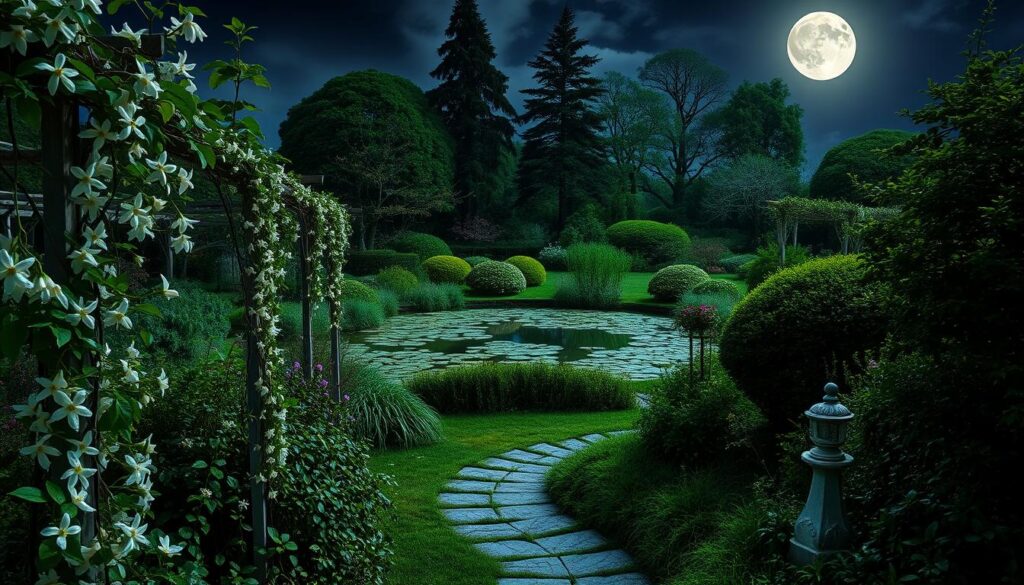
Seasonal picks by timing: spring bulbs, summer scent, fall texture, winter structure
Plan the year in layers: spring bulbs for early sparkle, summer scent for peak evenings, fall texture for softness, and winter structure to hold the scene.
- Spring: white daffodils and tulips give early form and crisp color.
- Summer: jasmine and honeysuckle supply warm-evening scents; support them with steady water.
- Fall: white asters and dusty miller add pale tones and soft texture as days shorten. See practical fall tips here.
- Winter: rely on evergreens with silver or gray foliage for bones; move tender night phlox into containers and protect them from freezes.
Support pollinators by leaving some nectar sources late into the season and avoiding unnecessary pesticides. For more planting ideas and herbs that complement evening scent, visit this herb resource: best herbs to plant.
Conclusion
Start with a single spot you can see from a window and build outward using soft color and layered scent. Keep the plan small, focus on white flowers, silver foliage, and evening-fragrant plants so moonlight and gentle lighting do most of the work.
Choose low, warm lights—string lights, solar path markers, lanterns—and add a small fountain for subtle sound.
Revisit the area at dusk to confirm moonlight and adjust plant groupings. Tuck jasmine or Nicotiana by seating and limit bold colors so the view reads calm from indoors and out.
Maintain easy rhythms: mulch, water deeply and less often, prune lightly, and refresh annuals. Moon gardens scale well to containers, patios, or larger beds; small tweaks in lighting or plant placement lift the whole scene.
Step outside at dusk, follow a slow path, and let the flowers, fragrance, and soft light restore you.