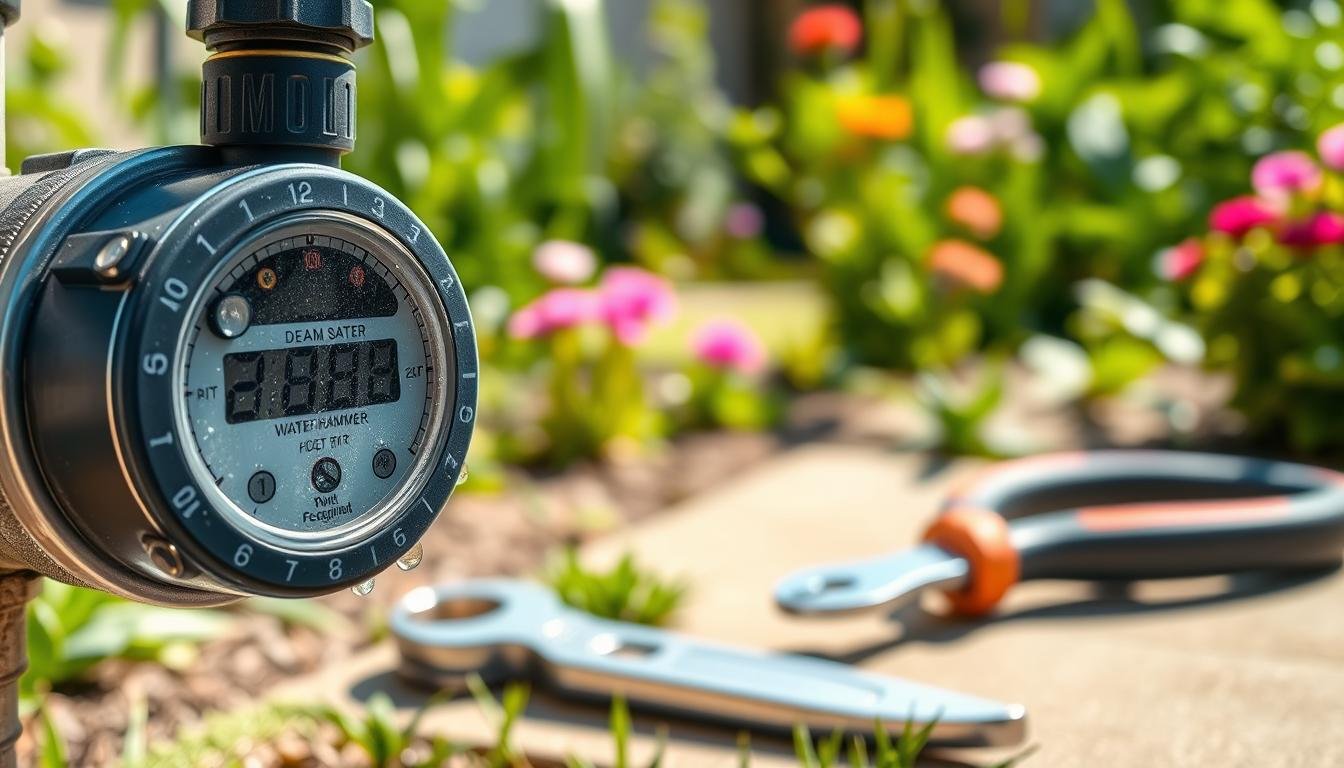
You’ve just finished watering the garden, the timer clicks off, and the house answers with a sharp bang that makes your heart jump. That sudden noise is scary, but it’s a common, manageable plumbing problem. Take a breath—this guide will walk you through clear checks and sensible fixes.
Water hammer is simply a pressure surge or shock wave that happens when running water stops very fast. Fast-acting valves and solenoid timers often trigger that abrupt stop and the loud noise in nearby pipes.
This troubleshooting-style piece starts with simple observations: watch the flow and listen for pipe movement. Then we move to longer-term options like pressure control, cushioning with insulation, restoring air pockets, and installing a proper arrestor.
Safety note: if you see active leaks or severe shaking, shut off the supply and inspect before continuing. By the end, you’ll know what causes the bang and which fix fits your home and watering setup.
For a deeper look at causes and proven solutions, visit this resource on water hammer causes and.
Key Takeaways
- That loud bang is a pressure shock in the pipes, often from fast-closing valves.
- Start with simple checks: watch flow, feel for pipe movement, and listen for noise.
- Short fixes include securing pipes and adding cushioning with insulation.
- Longer-term fixes include restoring air pockets, lowering pressure, or adding an arrestor.
- Stop and inspect if you find leaks or heavy vibration—safety first.
- By the end of the guide you’ll match the right remedy to your watering setup.
Water hammer at a hose bib timer: what it is, why it happens, and why it matters
Water hammer is hydraulic shock—energy from fast-moving water turning into a pressure wave when a valve closes quickly. Hose bib timers often use fast-closing solenoid valves, so they can trigger that bang right at the end of a watering cycle. Understanding the “why” helps you choose a fix that lasts, not just a quick patch.
When a solenoid snaps closed, moving water can turn its momentum into a damaging shock. First, water flows through the line. The timer’s valve shuts almost instantly. Momentum creates shock waves that race back through the pipes.
Homeowners hear a single bang, a rapid series of bangs, or feel a shudder in nearby walls. That sound is specific: it follows a sudden shutoff and a pressure surge, not slow rattling from loose fittings.
Over time, repeated surges loosen joints, crack valves, and cause leaks or other damage in the home plumbing system. Two big amplifiers make things worse: loose pipes that strike framing, and high supply pressure that raises each surge.
Air pockets in the system can cushion a stop, but air chambers fill with water and lose their effect. For a deeper practical read on causes and solutions, see this guide on solving water hammer.
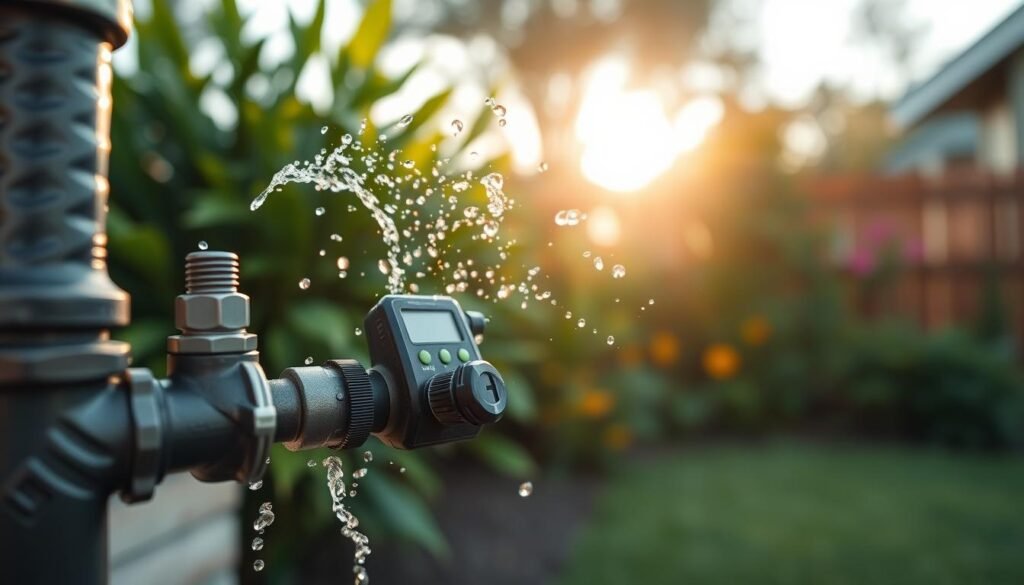
How to fix water hammer at hose bib timer [troubleshooting]
This troubleshooting path starts with confirming the timer is the trigger, then quieting the pipe movement, and finally controlling the pressure surge itself. Most fixes are DIY-friendly and build on each other—start simple, then step up if the bang persists. The goal is a calm shutoff that protects your system, not just a quieter sound.
Start by confirming whether the timer is really the source of the bang or if something else in the line is acting up. Run the line with the timer, listen at shutoff, then close the spigot slowly by hand and compare the shutoff speed and sound. Note any change in water flow: a loud snap only at high flow points to momentum plus a quick close.
Confirm the trigger with a shutoff test
Quick test: run the fixture, let the timer click, and listen for the exact moment the noise occurs. If the bang stops when you close the valve slowly, the rapid valve action is the likely culprit.
Secure loose pipes with pipe straps
Loose pipes amplify shock because they strike framing. Check basements, crawlspaces, and the area behind the exterior bib. Add sturdy pipe straps where the run spans long distances and tighten existing ones.
Pro tip: use padded straps or non‑galvanized fittings on copper to avoid electrolysis and reduce vibration.
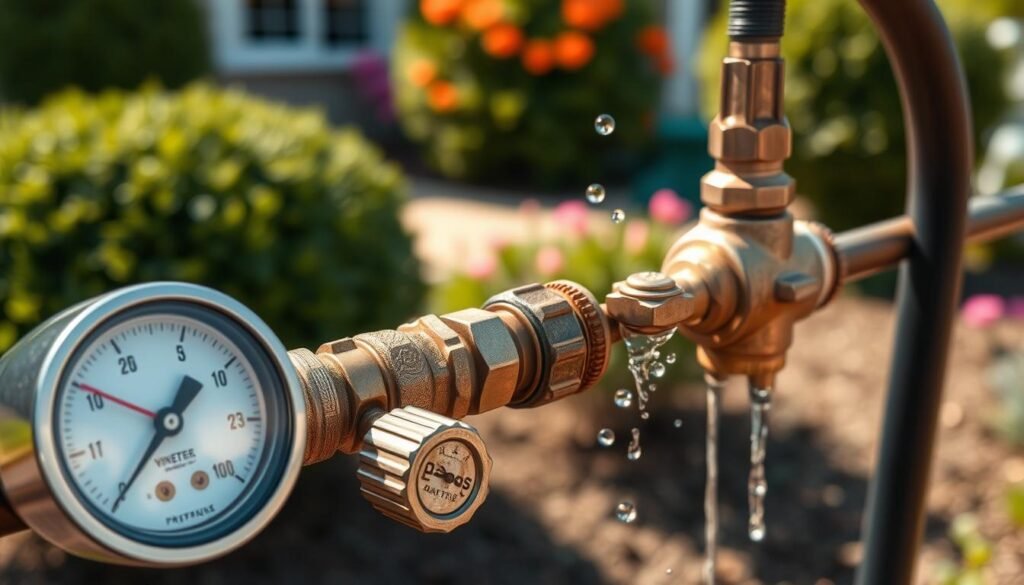
Cushion vibration with foam pipe insulation
Slide pre-slit foam tubes over problem runs where pipes pass through joists, studs, or siding. The foam cushions movement and dampens banging without major work. Tubes often come in ~6-foot lengths for easy coverage.
Restore air pockets and drain waterlogged chambers
Air chambers are vertical capped sections that hold air as a cushion. When those chambers fill, they lose effectiveness. Stop the supply, open a low faucet to drain, then open a high faucet to admit air. Close and restore service; repeat every few months if needed.
Venting entrapped air and using air‑relief valves
After repairs or winterizing, fill lines slowly so trapped air can escape. For long runs, consider adding an automatic air‑relief valve at high points to vent pockets that cause banging.
Lower excessive pressure with a PRV
High pressure makes each shutoff a bigger shock. Check the pressure‑reducing valve near your main and set a safer range—commonly below about 50 psi—or have a pro measure system pressure for you.
Install a water hammer arrestor near the valve
For persistent surges, add a sealed water hammer arrestor close to the fast‑closing valve. These piston or spring/bladder units absorb the shock and usually need no maintenance.
Consider slower valve closure or a different timer
If the solenoid snaps closed instantly, switching to a valve or timer that closes more gradually cuts the surge at the source. Combine this with arrestors for the best long‑term result.
“If straps or insulation stop the noise, you’re done. If pressure runs high, adjust the PRV. If the bang remains at shutoff, install an arrestor and consider a slower‑closing valve.”
For a smart DIY drip setup that plays well with timers and helps reduce high‑flow spikes, see this handy guide on a practical 30-plant DIY drip system.
Choosing the best long-term solution for your hose bib timer and irrigation setup
Long-term peace comes from matching the fix to the cause: movement, trapped air, or excessive pressure. Air chambers and arrestors both cushion shock, but they differ in upkeep and reliability. If the problem appears at many fixtures, a pressure regulator/PRV adjustment is often the real root fix.
Air chambers vs. water hammer arrestors: maintenance, effectiveness, and placement
Air chambers can work well and cost little, but they may fill with water and need draining every few months. Arrestors are sealed, engineered devices that absorb surges and usually need no maintenance.
Simple rule: install the cushioning device as close as possible to the fast‑closing valve so the shock is absorbed before waves run through the pipes.
If you dislike periodic upkeep, choose an arrestor. For frequent on/off cycles, a sealed device holds up better than chambers.
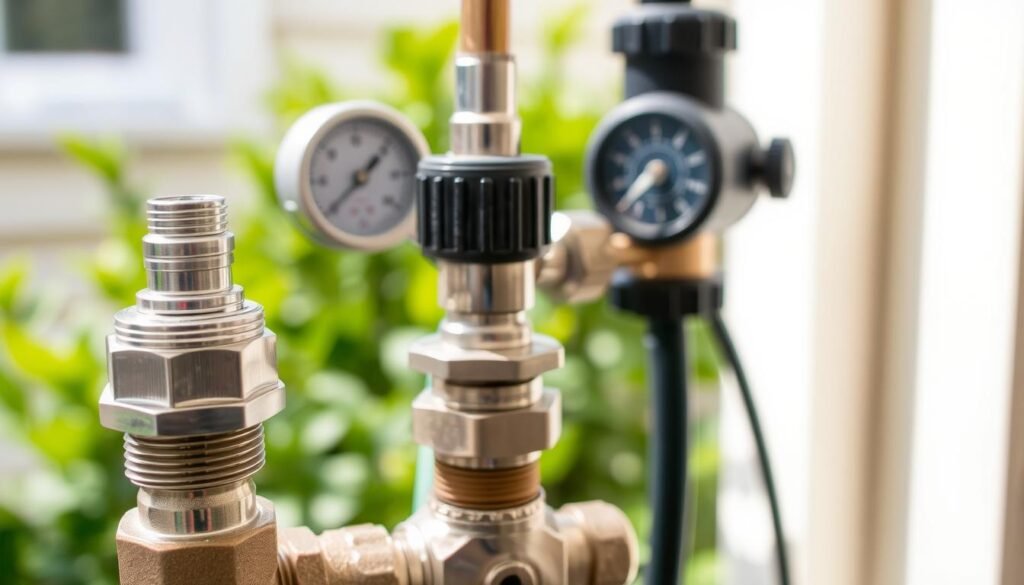
When a pressure regulator is the real fix for recurring hammer across the home system
If the bang shows up at the washer, dishwasher, or multiple garden zones, high water pressure or swings likely affect the whole home. A PRV keeps steady flow and cuts peak pressure that makes other solutions temporary.
Secure pipe straps and add foam insulation as supporting fixes; they reduce physical banging and guard against leaks and long‑term damage.
“Only timer‑localized banging?” — install an arrestor near the valve and secure pipes. “Multiple fixtures?” — check and adjust the PRV first, then add local arrestors as needed.
For handy gear that improves quick connections and irrigation flow, consider quick‑connect fittings.
Conclusion
Water hammer at a hose bib timer is usually a quick-close valve problem made louder by loose piping or high pressure. When you secure pipes, restore cushioning (air chamber/arrestor), and keep pressure in a safe range, the bang fades—and your watering routine feels peaceful again.
Quick recap: confirm the timer trigger → strap and cushion pipe runs → restore air pockets and vent trapped air → check system pressure → install an arrestor or choose a slower‑closing valve design.
Most remedies are small, affordable steps that protect the overall system and reduce the risk of long-term leaks. After each change, listen for the difference; one simple fix often solves the problem and prevents extra purchases.
If banging continues alongside visible moisture, sudden pressure spikes, or pipe movement you cannot access safely, call a licensed plumber. For practical methods on air removal and arrestor placement, see this guide on air in pipes and arrestor tips.
Quiet shutoffs mean less stress on your irrigation gear and a calmer end to every watering cycle—simple care now saves repair bills later.