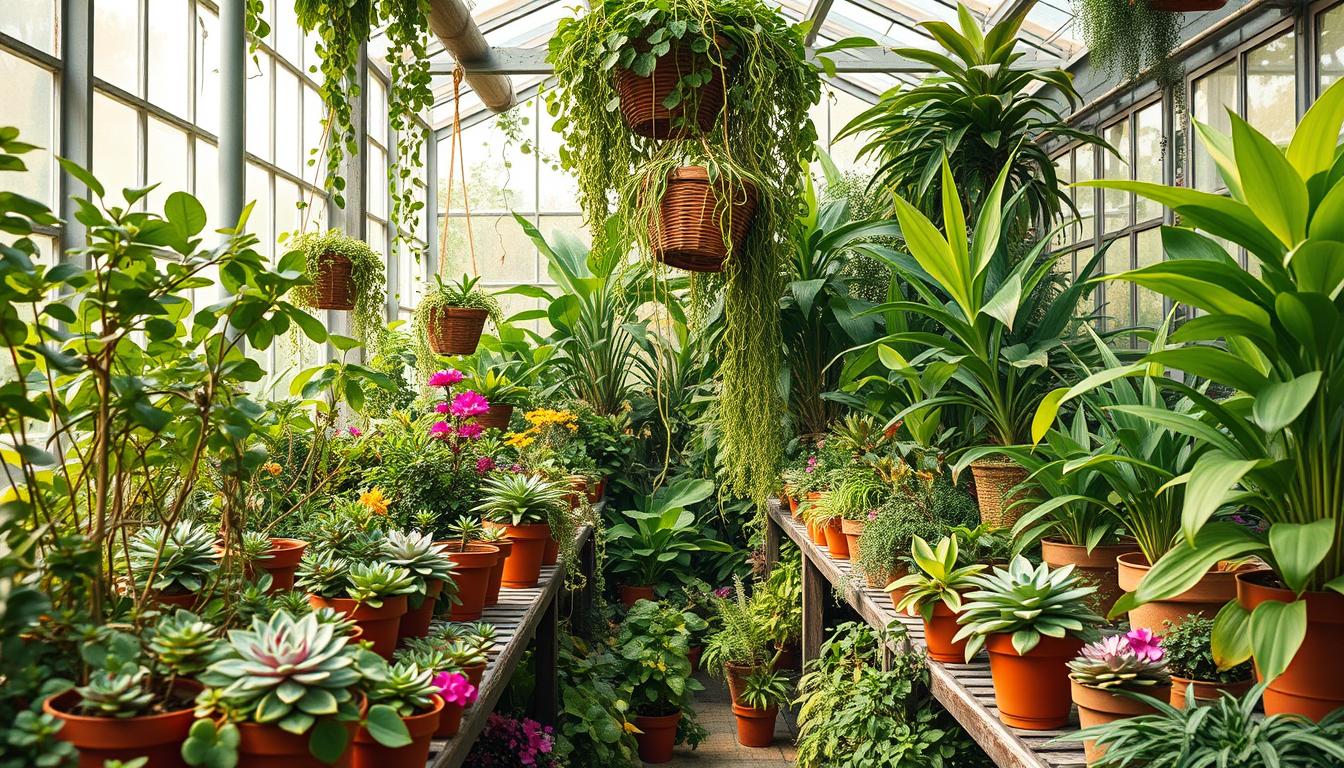
Can a small shelter in your backyard really keep fresh food on the table through shifting seasons? A compact structure can soften frost, block strong winds, and shield tender beds from heavy rain.
In this friendly guide, you’ll learn which crops suit tight spaces, how to match light and heat needs, and simple tricks — like vertical supports and containers — that boost yield without stretching your plot.
Expect practical payoffs: healthier harvests, fewer pests, smarter watering, and a steadier supply across the growing season. Whether you favor leafy greens in cool months or sun-loving fruiting varieties on a trellis, pairing crop choice with airflow and shade keeps problems at bay.
For a quick rundown of sturdy vegetable choices that thrive under cover, see this short resource on vegetables to grow in a greenhouse to spark ideas for your next planting.
Key Takeaways
- Small greenhouses stabilize temperature and protect tender crops from weather swings.
- Choose compact, vertical-friendly crops to maximize a limited footprint.
- Match light and temperature to each crop to reduce disease and heat stress.
- Use containers, trellises, or hydroponic methods to stack production upward.
- Rotate by season so beds stay productive through spring, summer, fall, and winter.
- Keep notes over the years to refine what performs best in your backyard setup.
Why a Mini Greenhouse Extends Your Growing Season in the United States
A compact enclosure creates a steadier microclimate that protects tender crops from sudden cold, wind, and heavy rain. This shelter buffers night-time lows and softens spring and fall temperature swings so seedlings and transplants keep developing without long delays.
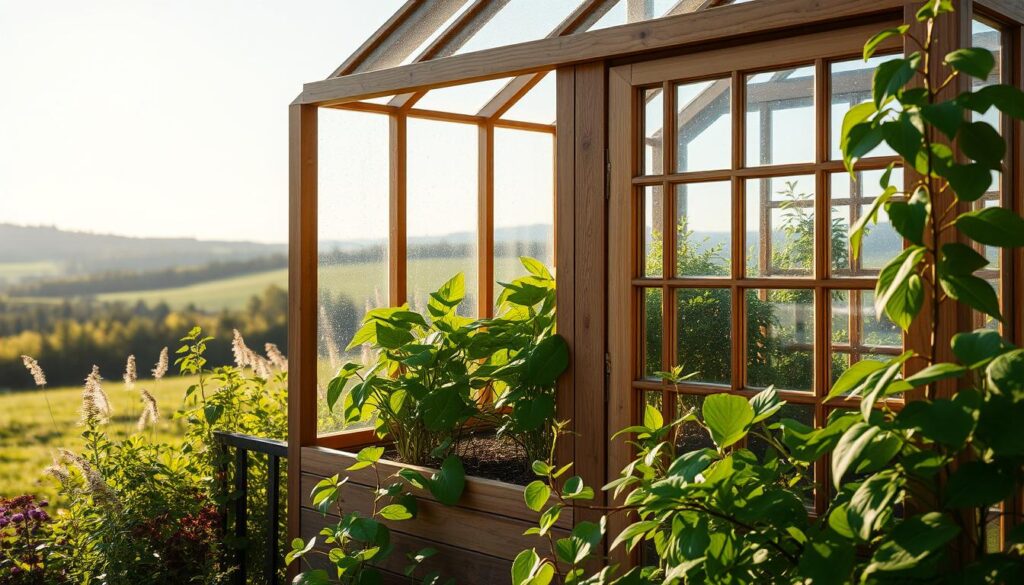
Key benefits include climate control, fewer pests, and more efficient watering.
- Climate control: reduced frost risk and moderated highs keep growth steady.
- Pest reduction: physical barriers cut insect pressure and disease spread.
- Water efficiency: contained irrigation lowers evaporation and saves time.
Light and temperature basics for year-round success
Light drives photosynthesis, so match crop needs to available sun and add ventilation to prevent heat stress on bright days.
Follow simple temperature bands: cool greens prefer 45–65°F; warm-season fruiting crops do best at 65–85°F. Avoid rapid swings to limit stress.
“A daily check of vents and a quick thermometer read often prevents the biggest mistakes.”
| Condition | Action | Why it helps |
|---|---|---|
| Cold night | Close vents, add row cover | Buffers temperature and protects young growth |
| Hot sunny day | Open vents, use shade cloth, run fan | Prevents overheating and fungal issues |
| High humidity | Increase airflow, remove crowded foliage | Reduces disease pressure |
| Pest entry | Install screens, sticky traps, clean benches | Keeps populations low without harsh sprays |
Simple things—shade cloth, fans, and consistent watering—often make the difference between average and excellent gardening results. Check vents, feel the air, and watch a max/min thermometer each morning to keep conditions steady and productive.
How to Choose Greenhouse Plants for Limited Space
Match plant habits to the room you have and stack production vertically where possible. Focus on compact varieties, clear light needs, and soil or container choices that suit your microclimate.
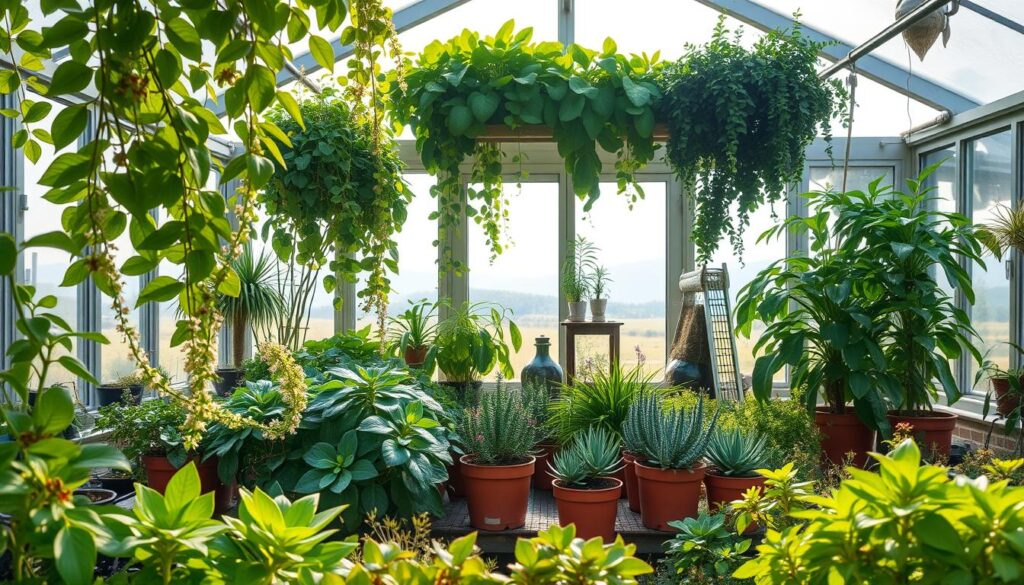
Compact varieties, plant size, and vertical-friendly growth
Start with dwarf or bush varieties and climbers that use trellises or strings. This lets a single shelf or corner yield more than flat beds.
Use shelves and hanging containers to place herbs and strawberries where you can reach them.
Matching light needs, temperature ranges, and growth cycles
Group crops by light: put full-sun lovers in the brightest zone and tuck partial-shade herbs beneath taller foliage.
Match temperature bands to families and stagger sowing so something is ready each week. Quality potting soil with compost helps steady roots in containers.
| Crop habit | Light need | Temp band (°F) | Container fit |
|---|---|---|---|
| Bushy lettuce | Partial to full | 45–65 | Shallow pots |
| Vining cucumber | Full | 65–85 | Deep containers + trellis |
| Compact tomato | Full | 65–80 | Large container, prune |
| Herbs (parsley, chives) | Partial | 50–75 | Shelf pots |
Leafy Greens That Deliver Fast, Repeat Harvests
Quick, cool-season greens thrive under cover and give steady returns with simple care. With the right sowing rhythm and light touch at harvest, a single bed can feed you for weeks.
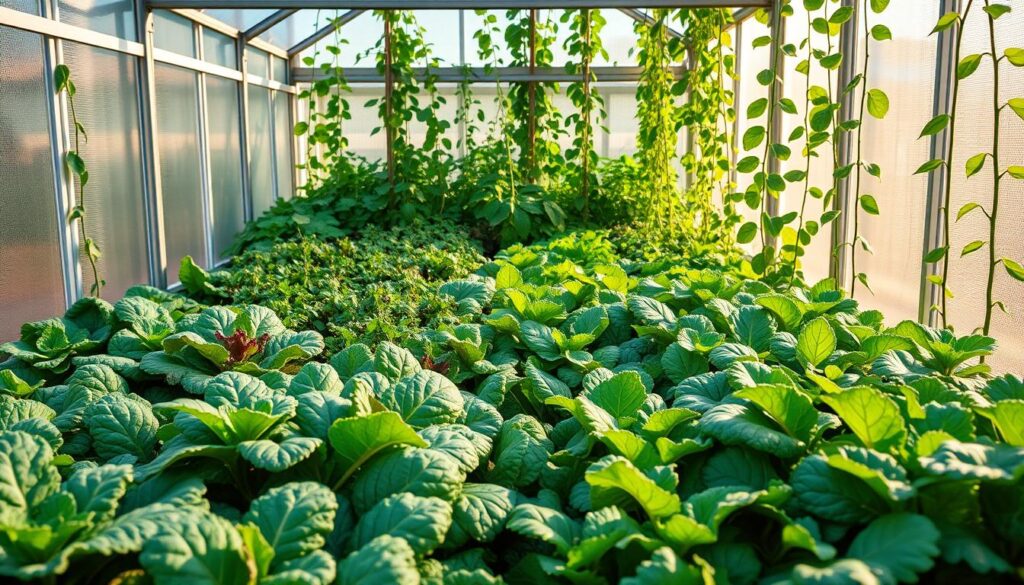
Lettuce, spinach, kale, and Swiss chard do well in a sheltered spot and suit stacked planters, raised beds, or tidy rows in the ground. Spring and fall are ideal, and hardy types can make winter production possible with extra protection.
Succession sowing and cut-and-come-again
Use small seed batches every 1–2 weeks to stagger maturity and keep a steady crop through the growing season. Harvest outer leaves on butterhead and oakleaf types so the crown keeps producing without replanting.
Keep soil shallow, rich, and free-draining. Water lightly and often; aim for moist, not soggy, to prevent damping-off. Ventilate on warm days to slow bolting and keep leaves crisp and flavorful.
| Green | Ideal depth | Sow interval | Harvest style |
|---|---|---|---|
| Lettuce | 1/8–1/4 in | 1–2 weeks | Cut outer leaves |
| Spinach | 1/4 in | 2 weeks | Cut-and-come-again |
| Kale | 1/4 in | 3 weeks | Pick lower leaves |
| Swiss chard | 1/4 in | 2–3 weeks | Snip stems as needed |
Fruiting Vegetables That Thrive Under Cover
Training vines upward and using the right varieties turns limited bench space into steady harvests. Vertical growing boosts airflow, keeps fruit cleaner, and helps you manage heat in a small greenhouse.
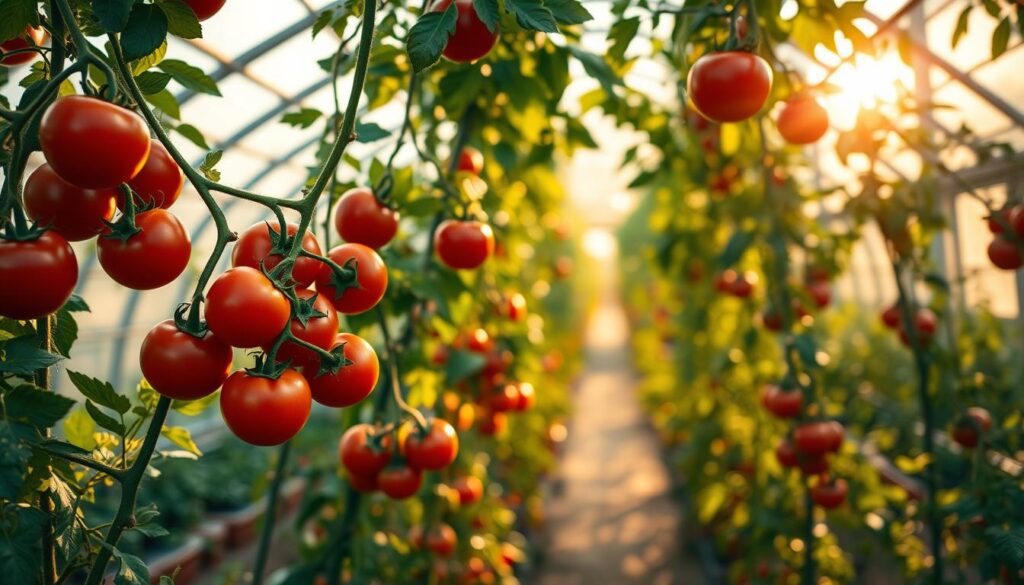
Tomatoes, peppers, and cucumbers with trellises and supports
Train tomatoes and cucumbers up strings, trellises, or sturdy netting to free floor space and improve air circulation. Prune indeterminate tomatoes to one or two leaders and remove suckers for better light penetration and easier harvesting.
Choosing greenhouse-specific or parthenocarpic varieties
Pick parthenocarpic cucumbers or greenhouse-bred varieties so fruit sets without pollinators. Tomatoes self-pollinate and benefit from steady warmth; select cultivars noted for greenhouse vigor when you can.
Container and raised-bed tips for higher yields
Use containers or raised beds to warm roots, improve drainage, and control soil mix. Install drip lines or water deeply and slowly to keep moisture even, and mulch container surfaces to buffer summer swings.
- Feed with a balanced mix early, then switch to a bloom/fruit formula as clusters form.
- Monitor for aphids and whiteflies; sticky traps and strong airflow reduce pressure without heavy sprays.
- Harvest often to encourage more fruit and prevent vines from bearing excess weight.
Herbs That Love the Greenhouse Microclimate
Warm corners and cooler edges let you keep a wide herb selection ready for snipping. Place heat-loving Mediterranean types in the brightest spot and tuck hardier varieties along benches and doorways.
Heat-loving Mediterranean herbs — basil, thyme, oregano — thrive where steady warmth and direct light concentrate their oils. Use single pots or vertical towers so each plant gets strong sun and good airflow.
Hardy standbys — parsley, chives, mint — prefer cooler edges and lighter shade. Pop them into containers around the periphery to extend harvests through spring and fall.
- Use quality potting mix in pots and ensure drainage; roots dislike soggy soil.
- Shade cloth during hot summer afternoons helps basil avoid bolting.
- Group by moisture: mint nearer watering, thyme in leaner mix.
- Snip often; light pruning keeps foliage tender and productive.
| Herb | Best spot | Container type | Care tip |
|---|---|---|---|
| Basil | Bright, warm corner | Medium pot | Shade in hottest hours, water when top inch dries |
| Thyme | Sunny shelf | Shallow pot | Lean soil, less frequent watering |
| Parsley | Edge bench, partial shade | Deep pot | Keep evenly moist, harvest stems often |
| Mint | Cool edge, dappled light | Confined pot | More water, trim roots or pot-bound to control spread |
Small Fruits and Dwarf Trees for Sweet, Compact Harvests
Compact fruiting choices let you harvest sweet rewards without sacrificing bench room. Hanging systems and sturdy pots make it easy to fit joyful harvests into tight layouts.
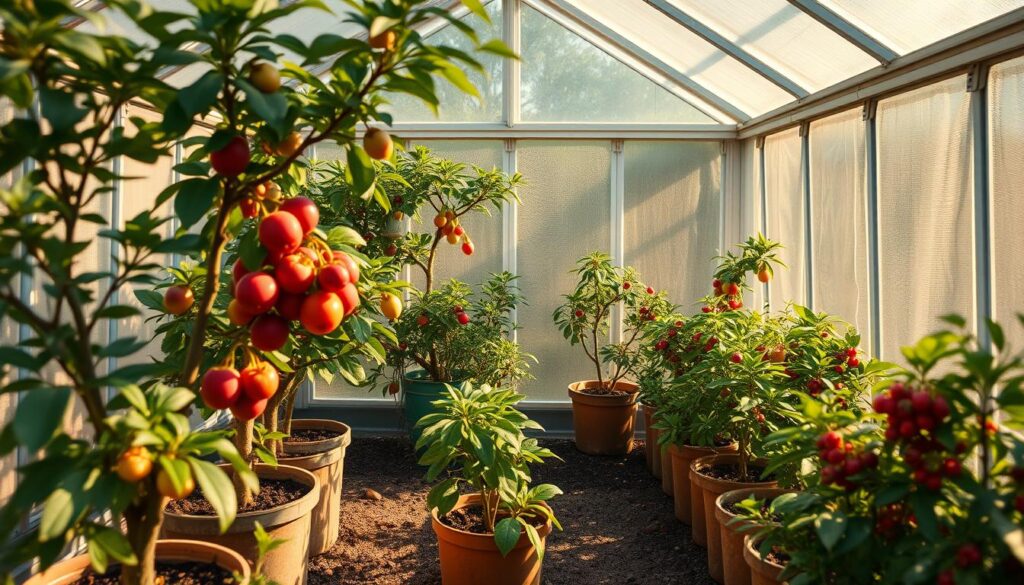
Strawberries do wonderfully up and off the bench. Use hanging baskets or vertical towers so berries ripen cleanly with great airflow. Choose everbearing varieties for steady harvests and place them where you can water and feed on schedule.
Dwarf citrus — lemons, limes, and oranges — suits large containers. Give these trees bright light and steady warmth for fragrant blooms and fruit. Rotate pots a quarter turn each week so foliage gets even sun.
- Hand-pollinate citrus blooms if fruit set is light.
- Feed with a citrus or berry formula as blooms open and keep moisture even to avoid drop.
- Train or trim strawberry runners depending on whether you want more plants or bigger berries.
- Stack on sunlit shelves and roll containers outside on warm days in a backyard setup, then bring them in on chilly nights.
“Place fruiting specimens where light, airflow, and watering are simple to maintain.”
For ideas on compact trees, see a guide to dwarf fruit trees. For container care tips that also help herbs and companion plants, read this container herb guide.
Season-by-Season Planting Guide to Keep Crops Coming
A simple seasonal plan keeps seedlings moving and harvests arriving on a steady schedule. This guide helps you match seed times and care so the shelter stays productive through spring, summer, fall, and winter.
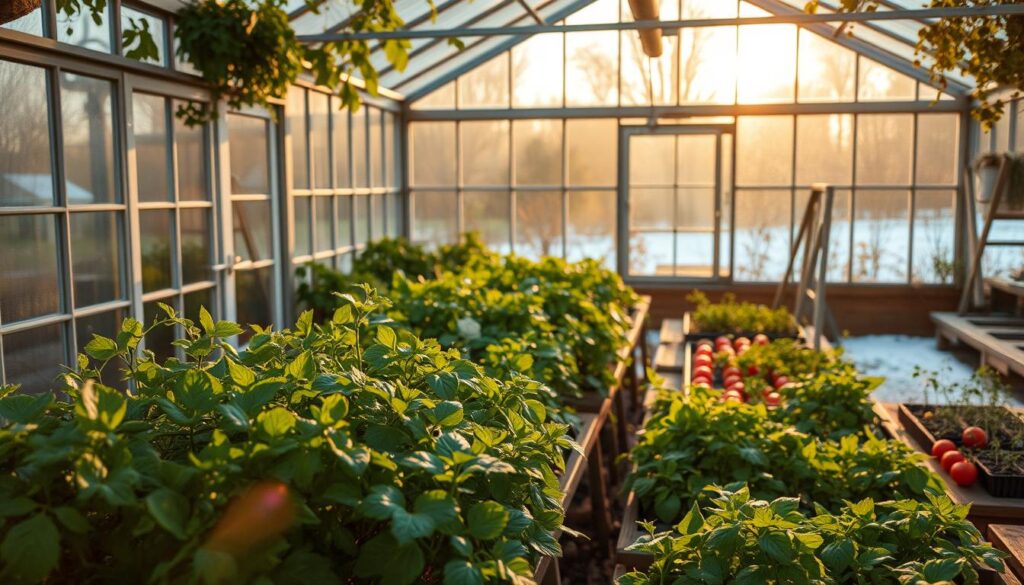
Spring: fast starts and early harvests
Start lettuce, peas, radishes, and brassicas in clean trays or in the ground under cover. Give seedlings 12–14 hours of light for vigorous seed growth.
Harden transplants as days lengthen or keep cool crops inside the greenhouse to capture early harvests.
Summer: manage heat for steady fruits
Prioritize ventilation and shade to handle higher light and weather swings. Water in the morning so roots drink before the hottest part of the day.
Support and prune tomatoes and peppers; remove spent foliage to improve airflow and steady fruiting.
Fall: clear and refresh for the next window
Pull exhausted vines, add compost to soil, and sow kale, Swiss chard, beets, and carrots to fill the autumn harvest slot.
Winter: insulation and cold-hardy choices
Seal drafts and maximize sun. With insulation, sow frost-tolerant roots and greens such as spinach and kale for slow, steady growth.
- Rotate families to limit soil pests.
- Vary varieties to spread risk and extend growing opportunities in a small backyard setup.
- Make a simple calendar to pace sowing times and avoid gaps over time and years.
Space-Saving Methods to Grow More in Less Room
When floor room is scarce, using height and streamlined systems gives you extra harvests and clearer air. Stacking and tidy layouts free walkways, reduce disease risk, and make daily care faster.
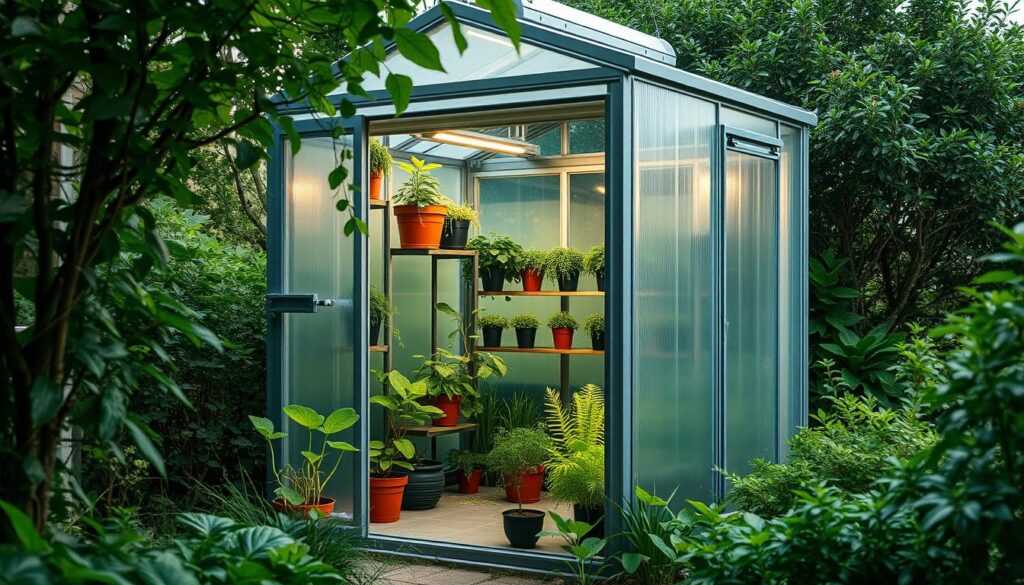
How to use vertical supports, shelves, and hanging baskets
Trellises, string lines, and rails turn upright space into productive layers. Install sturdy trellises for cucumbers and tomatoes so vines climb and sunlight reaches lower leaves.
Add shelves and hanging rails for herbs and strawberries; this keeps fruit off wet soil and opens bench space for young starts.
Hydroponic options that save floor space
Try DWC or NFT systems for quick greens and basil. Vertical hydro towers multiply planting sites without expanding footprint and keep interiors tidy with fewer pots and less soil to manage.
- Use narrow, tall containers and slim pots in corners; rotate them as plants size up to keep airflow strong.
- Tidy irrigation with drip lines or reservoirs cuts chores and reduces water waste.
- Organize stakes, clips, and ties so training vines is fast and consistent.
- Prune and thin to keep a slim profile—well-lit stems out-yield shaded, crowded growth.
- Track yield per square foot to refine layouts and maintain productive momentum.
For a compact setup that emphasizes herbs in contained units, see this inside herb garden kit guide to match systems to your space and routine.
Best Plants Grow Mini Greenhouse All Year: Editor’s Top Picks
A balanced set of rapid greens, heat lovers, and compact fruits gives you food nearly every week. These selections fit tight benches, respond well to containers, and suit a small sheltered space with modest care.
Quick choices that repay simple attention include fast salad leaves, a few staple fruiting crops, useful herbs, and compact fruit trees.
Top performers to keep on rotation
- Lettuce: Rapid harvests and easy succession sowing for fresh salads under cover.
- Spinach: Sweet baby leaves when grown in cool stretches; harvest young for best flavor.
- Kale: Tough, productive, and good through shoulder seasons with little fuss.
- Tomatoes: Select greenhouse-friendly varieties, prune and support for steady clusters.
- Peppers: Compact container types that like warm roots and regular, light feeding.
- Cucumbers: Choose parthenocarpic varieties for reliable fruit set and train them vertically.
- Basil & Parsley: Staple herbs that sit well on shelves or rails; snip often to keep new growth coming.
- Strawberries: Hang baskets for clean, sun-kissed berries; everbearing types extend harvests.
- Dwarf lemon: Fragrant blooms and bright fruit in a sunny pot; rotate for even light.
Mix these greenhouse plants so quick returns (lettuce, spinach, kale) balance with steady staples (tomatoes, peppers, cucumbers) and a few fragrant fruits. Choose suitable varieties when pollinators are scarce, and place herbs and berries where watering and light are easy to manage.
Greenhouse Care Tips and Mistakes to Avoid
Routine checks of vents, moisture, and leaf health save time and keep crops productive through sudden weather swings. These small habits deliver real benefits: steadier temperature, fewer pests, and fuller harvests.
How should you manage ventilation, humidity, and shade for temperature swings?
Vent early on sunny days to stabilize temperature and protect tender greens and fruiting clusters.
Add shade cloth during heat waves and run fans for steady airflow. Proper circulation reduces fungal disease and heat stress in the covered climate.
What soil, watering, pruning, and IPM habits matter most?
Use quality soil or soilless mixes and top-dress with compost to feed roots without excess fertilizer.
Water deeply but less often to encourage strong roots; check moisture with a meter or by feeling the ground.
Prune tomatoes, train cucumbers, and thin peppers so light reaches the canopy and airflow improves.
“Sanitize tools, clear debris, and scout weekly—early action stops small pests from becoming big problems.”
- Vent early on sunny days and add shade cloth during heat waves.
- Build soil health in beds or use fresh mixes in containers; compost lightly.
- Water deeply, use moisture checks, and avoid irregular watering that stresses a crop.
- Prune and train for airflow so light reaches fruit and lowers disease risk.
- Practice IPM: clean tools, remove debris, use sticky traps and beneficial insects.
- Calibrate a max/min thermometer daily and schedule seasonal cleaning each spring.
Follow these simple tips to keep greenhouse space healthy. Small routines make gardening easier and protect your vegetables, peppers, and tomatoes from surprise weather and pests.
Conclusion
A small, tended shelter rewards patience: each season shows which crops suit your light and layout. Stick to simple routines and you’ll see steady improvements over years, season by season.
Use a short plan: combine quick greens, a couple of staples like tomatoes and peppers, and one compact fruit or vine to add variety.
Keep a seasonal checklist for sowing, pruning, watering, and cleaning so the work stays light. Focus on airflow, steady moisture, and balanced feeding—these small tips drive big results in winter and summer.
Track yields and note standouts. Then refine your layout and choices in your backyard garden. When you’re ready, explore compact greenhouse choices for ideas and next steps.
Start with two or three herbs, a tray of greens, and one fruiting vine, and watch your space become a reliable source of fresh flavor and joy.