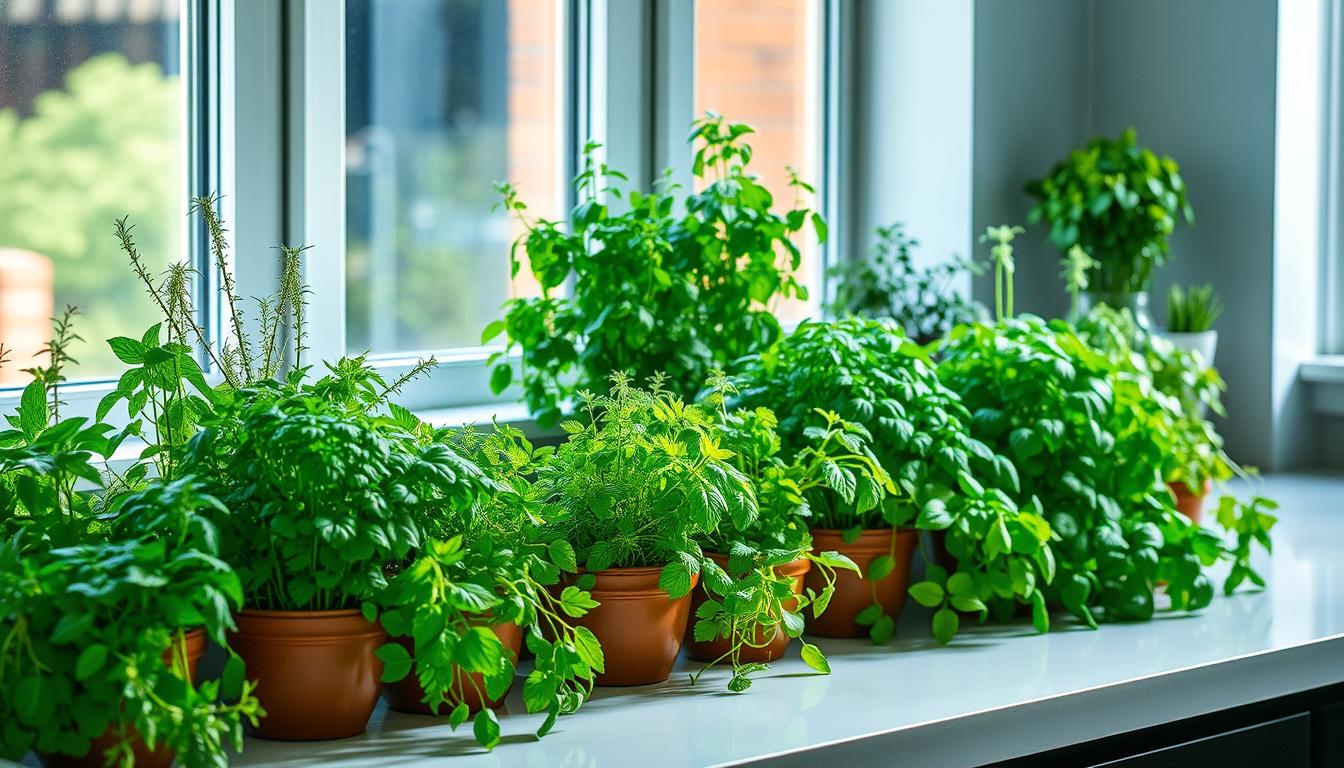
A low-light kitchen can still support a useful countertop herb garden, but it needs realistic expectations. Most herbs will not grow like outdoor plants in full sun, and some will need a small grow light to stay compact and leafy.
The best setup starts with forgiving herbs, the brightest spot you have, pots that drain properly, and a simple watering routine. If the room is dim most of the day, supplemental light usually makes the difference between weak, stretched plants and a small garden you can actually harvest from.
Quick answer
You can build a countertop herb garden for low light by choosing herbs like chives, parsley, and mint, using separate small pots with drainage, placing them in the brightest available spot, and adding a compact LED grow light when natural light is weak.
Expect small, frequent snips rather than large bunches. Low light slows growth, increases the risk of soggy soil, and makes light-hungry herbs such as basil, cilantro, and dill harder to manage without extra lighting.
A good low-light herb setup is not about forcing every herb to grow anywhere. It is about matching the plant, pot, water, and light to the space you actually have.
Key takeaways
- Low light does not mean no light. Herbs still need the brightest window or a small grow light to stay healthy indoors.
- Start with forgiving herbs such as chives, parsley, and mint before trying basil or cilantro.
- Use containers with drainage holes and saucers. Decorative jars without drainage need extra caution.
- Water less often in dim rooms because soil dries more slowly indoors.
- A compact grow light and a small herb planter set can help, but neither replaces good care.
Helpful products at a glance
These two support items fit the main problems in a low-light countertop herb garden: weak light and messy, crowded containers.
Best for dim kitchens because it adds timed supplemental light
- Compact Grow Light Fits Practically Anywhere:this compact grow light fits on a countertop or work desk, under kitchen cabinets, Supplies light-craving plants like herbs and succulents with all the light they need to flourish. Fits easily into a college dorm room, studio apartment, or any other setting where space is at a premium.
- Frees up window sills and brightens living areas:It emits all the wavelengths from 380nm to 780nm- just like natural sunlight. With the warm white high efficiency LED diodes & higher PAR output, the grow light greatly promotes indoor growth as it accelerates photosynthesis.

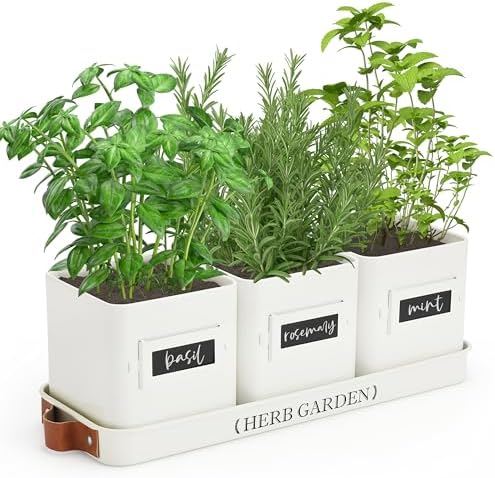
Best for tidy countertop herbs because it keeps small pots grouped
- 【Indoor Herb Garden】Experience the joy of gardening with our specialized indoor herb planter. This set includes a planter with a tray but does not come with plants and seeds. Designed specifically for herb cultivation, these planters can be used both indoors and outdoors. Crafted from durable metal with a sleek, glossy white finish, they blend functionality with a farmhouse style to enhance your living space.
- 【Windowsill Herb Garden】Our window herb garden includes three pots and a tray with a handle, with each pot measuring 4.4" W x 4.7" H, and the tray measuring 14.2" L x 4.9" W x 1.2" H. It's ideal for growing a variety of herbs such as mint, rosemary, basil, thyme, etc. Tailored for herb growth, our indoor herb pots provide an optimal environment for nurturing your herbs. Their farmhouse design and compact size make them perfect for placement on a windowsill or kitchen countertop.
What to expect from a low-light countertop herb garden
A shaded counter can grow useful herbs, but it will not give the same harvest as an outdoor bed or a sunny patio planter. Growth will usually be slower, stems may stretch toward the light, and plants may need more careful watering.
The goal is a small kitchen garden that gives you fresh sprigs for cooking. That might mean a few snips of chives for eggs, parsley for soup, or mint for drinks. It does not mean constant handfuls of herbs from every plant.
Why low light changes the whole setup
Most culinary herbs prefer strong light. When they sit too far from a window, they often grow tall and weak instead of short and leafy. Soil also stays wet longer, which can stress roots if the pot has poor drainage.
That is why the setup matters as much as the herb choice. A brighter spot, separate pots, and a simple watering check will usually do more than buying random seeds and placing them on a dark counter.
| Indoor condition | What usually happens | Best practical response |
|---|---|---|
| Bright window nearby | Forgiving herbs may grow steadily with regular rotation | Use small pots with drainage and rotate weekly |
| Dim counter away from window | Stems may stretch and leaves may stay small | Move plants closer to light or add a compact LED grow light |
| Cool, low-light kitchen | Soil dries slowly and roots may stay too wet | Water only when the top inch feels dry |
| Very limited counter space | Plants may get crowded and harder to water correctly | Use separate small pots, a tray, or a narrow windowsill setup |
Light matters: smart workarounds for dim kitchens
Start by finding the brightest spot available. A south- or west-facing window is usually helpful, but any clear window ledge with bright daytime light is better than a deep counter corner.
If you can read comfortably at midday without turning on a light, that spot is a better candidate than a darker stretch of counter. Pale walls, white trays, and weekly pot rotation can help a little, but they cannot replace real light in a very dim kitchen.
For a dim kitchen where herbs stretch toward the window, a compact full-spectrum grow light with a built-in timer can make the setup more consistent without turning the counter into a large indoor garden station.
A small grow light is most useful when your herbs are pale, leaning, or producing thin stems despite careful watering. It may help supplement weak natural light and keep the daily light schedule more regular, especially in winter.
Keep safety practical. Place the light where it will not crowd food prep, keep cords away from sinks, and adjust brightness or runtime based on how the plants respond.
When a grow light is worth considering
- Your herbs lean hard toward the window within a few days.
- Basil or cilantro grows thin and floppy.
- The kitchen gets only short periods of indirect light.
- You want a steadier routine during winter or cloudy stretches.
If you are comparing small lights, look for a compact fixture, timer settings, and adjustable brightness rather than a large system meant for a full indoor garden shelf. You can see this compact grow-light option on Amazon if you want an example of the type of setup that fits this role.
Planning your countertop herb garden setup
Good containers make indoor herb care easier. Choose pots that are small enough for the counter but large enough to hold a single herb without crowding the roots.
Right-sized containers, real drainage, and loose potting mix help prevent the two most common indoor herb problems: soggy roots and crowded plants. A tray also makes it easier to move herbs toward brighter light or carry them to the sink for watering.
For a tight kitchen, separate pots are usually easier than one shared planter. You can water mint differently from rosemary, move a struggling plant without disturbing the others, and replace one tired herb without rebuilding the whole setup.
Choose containers with drainage and matching sizes
Pick containers with drainage holes and saucers. A 4- to 6-inch pot works well for many small starter herbs, especially when you are growing one plant per pot.
Leave a little space between the soil surface and the rim so watering stays tidy. If the pot is too shallow or crowded, roots dry unevenly and the plant may decline faster indoors.
A small three-pot herb planter set works best when you want separate herbs grouped neatly on a counter or windowsill. It can support easier movement and moisture grouping, but you still need to watch for standing water in the tray.
- 【Indoor Herb Garden】Experience the joy of gardening with our specialized indoor herb planter. This set includes a planter with a tray but does not come with plants and seeds. Designed specifically for herb cultivation, these planters can be used both indoors and outdoors. Crafted from durable metal with a sleek, glossy white finish, they blend functionality with a farmhouse style to enhance your living space.
- 【Windowsill Herb Garden】Our window herb garden includes three pots and a tray with a handle, with each pot measuring 4.4" W x 4.7" H, and the tray measuring 14.2" L x 4.9" W x 1.2" H. It's ideal for growing a variety of herbs such as mint, rosemary, basil, thyme, etc. Tailored for herb growth, our indoor herb pots provide an optimal environment for nurturing your herbs. Their farmhouse design and compact size make them perfect for placement on a windowsill or kitchen countertop.
- 【Ideal for Any Windowsill】Designed to establish an herb garden in your kitchen or any sunny area of your home, our planter offers a delightful way to display your herbs while adding a splash of greenery to your windowsill or balcony. The square shape provides a larger capacity compared to a round one, perfectly utilizing every bit of your home space.
- 【Versatile Planting Options】While perfect for herbs, these planters are also great for other small indoor plants, flowers, vegetables, or even succulents. Their appealing look and convenient size make them ideal for any plant display. Equipped with drainage holes, they ensure optimal watering and prevent waterlogging, helping your plants flourish.
This kind of setup is better suited for compact starter herbs than large mature plants. If you plan to keep rosemary, mint, or basil growing for a long time, be ready to repot when roots fill the container.
For a small grouped setup, you can also check this small herb planter set on Amazon as one example of a tray-and-pot format that fits narrow counters and windowsills.
Use the right potting mix
Use a light potting mix made for containers. Avoid outdoor garden soil in small indoor pots because it can compact, drain poorly, and stay wet too long.
For low-light kitchens, drainage matters even more because evaporation is slower. If the top inch of soil still feels damp, wait before watering again.
Which herbs work best indoors in lower light
Start with herbs that tolerate indoor conditions reasonably well. Chives, parsley, and mint are easier beginner choices than basil, cilantro, or dill in a dim kitchen.
Best beginner choices
Chives are one of the easiest herbs for a small indoor setup. They handle regular snipping, do not need much space, and recover well after harvests.
Parsley grows more slowly indoors, but it can be useful if you give it decent light and even moisture. Mint is vigorous, but it should stay in its own pot so it does not crowd other herbs.
Herbs that need more care
Basil, cilantro, and dill usually need stronger light. They may still work indoors, but they are more likely to stretch, bolt, or fade if the room is dim.
If you want basil in a low-light kitchen, treat a grow light as part of the setup rather than an optional upgrade. Pinch flowers early and harvest small amounts often.
Group herbs by moisture needs
Keep tender herbs that like more moisture away from woody herbs that prefer drier conditions. This simple grouping prevents a common mistake: watering everything on the same schedule because the pots look similar.
| Herb group | Good examples | Care note |
|---|---|---|
| Beginner-friendly indoor herbs | Chives, parsley, mint | Good starting point for small, frequent harvests |
| Light-hungry tender herbs | Basil, cilantro, dill | Usually need stronger light and regular trimming |
| Drier woody herbs | Rosemary, thyme, oregano | Need bright light, airflow, and soil that does not stay wet |
| Aggressive spreaders | Mint | Best kept in its own pot |
Lighting solutions for low-light kitchens
A grow light works best when it supports a clear routine. Put it close enough to help the herbs, run it consistently, and adjust as the plants grow.
Grow light basics
For countertop herbs, a full-spectrum LED light is usually the simplest choice. A fixture that sits on a small base or adjusts over the plant canopy is easier to manage than a large shelf light in a small kitchen.
Place the light close enough to reach the leaves without crowding the plant. Many countertop setups work best when the light can be raised as the herbs grow.
Use a timer for steady light
A timer helps prevent random light schedules. In winter or dim rooms, many herbs do better with a consistent long day than with a few uneven hours here and there.
Timer modes and brightness control can make daily lighting easier, especially if you are away during the day or forget to switch lights on and off.
- Compact Grow Light Fits Practically Anywhere:this compact grow light fits on a countertop or work desk, under kitchen cabinets, Supplies light-craving plants like herbs and succulents with all the light they need to flourish. Fits easily into a college dorm room, studio apartment, or any other setting where space is at a premium.
- Frees up window sills and brightens living areas:It emits all the wavelengths from 380nm to 780nm- just like natural sunlight. With the warm white high efficiency LED diodes & higher PAR output, the grow light greatly promotes indoor growth as it accelerates photosynthesis.
- Automatic Timer,On/Off Switch: The lamp operates from a built-in timer with 3 modes cycle timing function which stay on for 8/12/16 hour and off for 16/12/8 hours. The timer sets itself when one plugs-in,full control when the light turns on and off, simply by on/off switch as you needed,no need to unplug/re-plug.
- Height Adjustable: The pole does telescope up and down as well which is handy it can grow the plant to stay at a reasonable height,also it will cover a pretty large space to shine light on more plants in close proximity when it is fully extended
Even with a grow light, watch the plants instead of assuming the setup is perfect. Pale leaves, weak stems, or stalled growth may mean the light is too far away, the runtime is too short, or watering is off.
What about all-in-one hydroponic systems?
Countertop hydroponic systems can be tidy and convenient, especially when they include built-in lighting. They are not required for this project, and they can limit your choices if they rely on specific pods or system parts.
For most beginners, separate pots plus a simple light are more flexible. Hydroponic units make more sense when you want a cleaner, contained system and do not mind the higher upfront cost.
Planting, watering, and ongoing care
Plant each herb at the same depth it was growing in its nursery pot. Give the roots room, keep the crown above the soil line, and avoid packing the mix too tightly.
Use soak-and-drain watering
Take pots to the sink, water until it runs from the bottom, then let them drain before returning them to the counter. Do not leave herbs sitting in a tray of water.
In low light, check the soil before watering. If the top inch still feels damp, wait. Overwatering is easier indoors because light, warmth, and airflow are usually lower than outdoors.
Trim early and often
Harvest small amounts regularly by snipping above a leaf node. This encourages bushier growth and keeps the plant from becoming tall and sparse.
Remove flower buds from basil and similar herbs if you want more leafy growth. Do not cut more than the plant can recover from, especially while it is still settling into its pot.
Start with plants, not seeds
Starter plants are easier for most beginners because they skip the slowest stage. Seeds cost less and offer more variety, but they need steady warmth, moisture, and light before they become useful kitchen plants.
For a first low-light countertop setup, starter plants usually give you a better sense of what the space can handle.
Creative countertop ideas that save space
If the counter is narrow, think vertically. A slim windowsill tray, small wall shelf, or hanging setup can keep herbs close to light without taking over your prep area.
Mason jars and decorative containers
Mason jars look good, but they are risky for herbs if they do not drain. A pebble layer alone does not fully protect roots from sitting in water.
If you use a decorative container, place a nursery pot with drainage inside it. Remove the inner pot when watering, let it drain, then put it back.
Vertical shelves and narrow ledges
A narrow shelf near a bright window can hold several small pots without crowding the main counter. Make sure it is secure, easy to clean, and not directly over a sink or hot appliance.
Leave space between pots so air can move around the leaves. Crowding herbs together may look full at first, but it can make watering and trimming harder.
Common mistakes to avoid
- Buying herbs that need full sun, then placing them in a dark corner. Start with forgiving herbs or add a light.
- Using sealed jars as permanent pots. Decorative containers need an inner pot or careful drainage plan.
- Watering on a fixed calendar. Check the soil instead, especially in low light.
- Crowding several herbs into one small container. Separate pots make care easier.
- Expecting outdoor-level harvests indoors. Aim for fresh snips, not large bunches.
FAQ
Can herbs really grow in low light?
Yes, some herbs can grow in lower indoor light, but growth is usually slower and harvests are smaller. Chives, parsley, and mint are better starting choices than basil or dill.
Where should I place a countertop herb garden?
Place it in the brightest spot available, preferably near a clear window. If the counter is dim most of the day, move the plants closer to light or use a compact grow light.
Do I need a grow light for indoor herbs?
You may need one if your herbs stretch, turn pale, or grow very slowly. A small LED grow light can support a steadier light schedule, but it does not guarantee strong growth by itself.
What are the easiest herbs for a low-light kitchen?
Chives, parsley, and mint are good beginner choices. Keep mint in its own pot, and give all herbs as much bright indirect light as possible.
Should I grow herbs from seed or starter plants?
Starter plants are easier for beginners because they give faster results. Seeds are cheaper and offer more variety, but they need more patience and steadier growing conditions.
How often should I water countertop herbs?
Water when the top inch of soil feels dry. In low light, pots often dry more slowly, so avoid watering just because a set number of days has passed.
Are mason jars safe for herb gardens?
They can be used carefully, but they are not ideal as direct planting containers unless drainage is handled. A nursery pot inside the jar is safer than relying only on pebbles at the bottom.
Are countertop hydroponic systems worth it?
They can be useful if you want built-in lighting and less soil mess. They cost more, may limit plant choices, and are not necessary for a basic low-light herb setup.
Final verdict
A low-light countertop herb garden works best when you keep the setup simple and honest. Start with forgiving herbs, give them the brightest space you have, use draining containers, and water only when the soil calls for it.
If the kitchen is too dim, a compact grow light can support a better routine. If the counter is crowded, separate pots on a tray make care easier. Build for small, useful harvests first, then add trickier herbs once you understand how your space behaves.