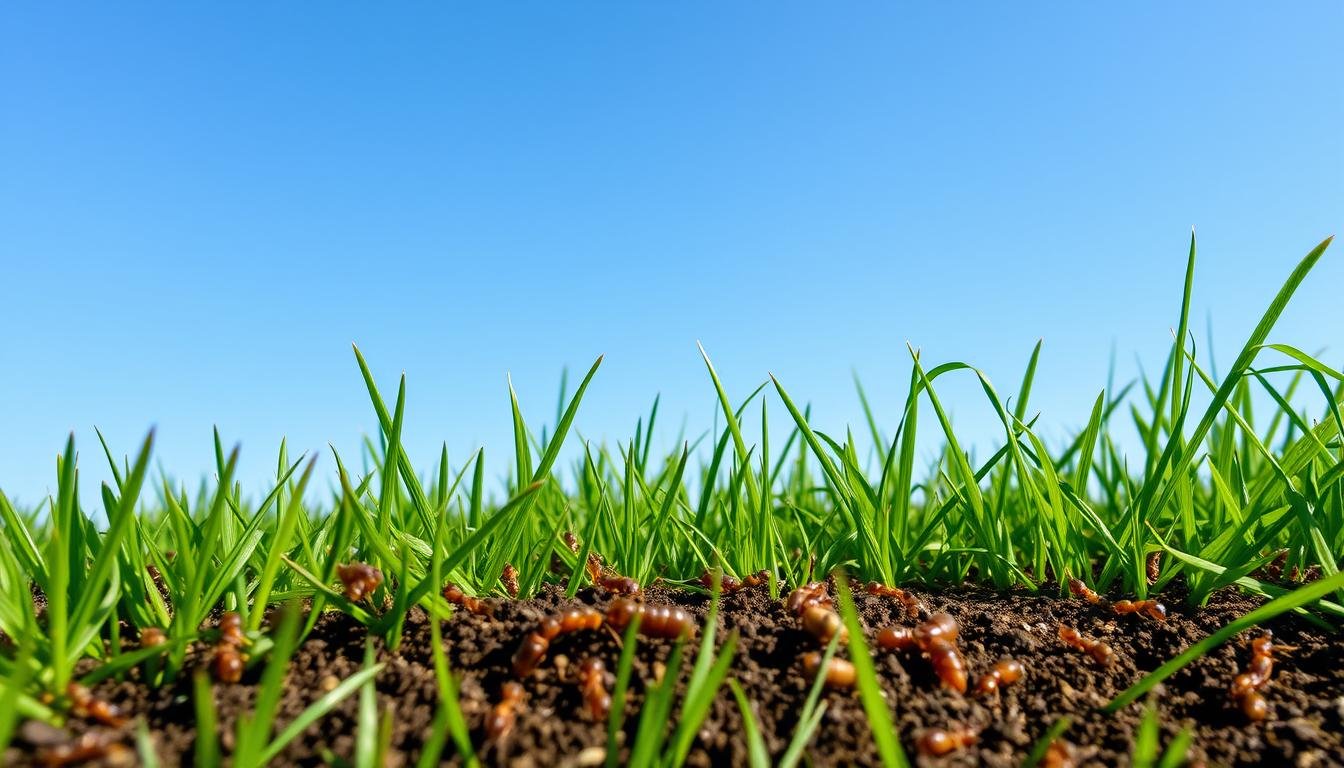
Curious whether you can protect a lush lawn while removing pests that chew roots and build trails? This guide offers a calm, practical plan to tackle both soil‑dwelling larvae and foraging insects with safe, proven methods.
Learn a lawn‑safe sequence that favors biological controls for grub larvae and gentle, household‑based tactics for ant trails. Follow timing, temperature, and moisture tips so treatments thrive and turf health improves.
Grubs chew roots, leaving yellow patches and loose sod; beneficial nematodes, milky spore, and Bt galleriae work when applied at the right time and soil temp. For ants, targeted baits and barrier treatments stop trails by removing food cues and sealing access points.
You’ll get a clear, step‑by‑step routine that protects pollinators, pets, and family while restoring the yard. Expect simple tools, precise timing, and fast wins you can spot in days to weeks.
Key Takeaways
- Use beneficial nematodes or milky spore for grub control timed to soil temperature.
- Break ant trails by removing food cues indoors and treating outdoor entry points.
- Follow a sequence: prep lawn, apply grub biologicals first, then address insect trails.
- Choose household‑safe ant tactics and avoid harsh chemicals near gardens and pets.
- Watch for early signs—yellow patches or repeated trails—and reapply as seasonal plan dictates.
Understand the problem: what’s damaging your lawn and garden right now
Your lawn tells the story. Yellow, spongey patches and sod that lifts easily point to grub larvae chewing roots in the soil. Ants often trace food from your kitchen to outdoor mounds, linking the home and yard by scent trails.
Identify first, then treat. Confirm grub activity by tugging thin turf and checking the top few inches for C‑shaped larvae. Trace any visible ant lines to nest entrances and food sources so you can match treatments to each problem.

Spotting grub activity in grass and beds
Look for irregular yellow patches that don’t recover with water, stunted plants in beds, and turf that peels back like a mat. Curl grubs are white, C‑shaped larvae of scarab beetles (Japanese beetles, June bugs, European chafers) and live in the upper soil near roots.
Recognizing ant issues: trails, mounds, and kitchen-to-yard paths
Ant signs include straight or curved foraging lines, small mounds at patio cracks, and paths between pet bowls or pantry crumbs and the yard. Wipe counters and baseboards with a 1:1 white vinegar and water spray or soapy water to remove pheromone trails when you first see ants.
- Quick checks: inspect raised garden edges, lawn borders, and moist areas where larvae may be more common.
- Map problem areas: note surface types (mulch, pavers, lawn) and take photos to track progress and decide where targeted effort may help.
How get rid ants grubs without harming: proven lawn‑safe strategies
Start targeted and gentle: biological controls for grubs and household‑safe surface tactics for ants protect turf, pets, and beneficial insects while solving the root problem. Match solutions to behavior: treat the soil where larvae feed and follow scent lines for foragers to reduce collateral impact.
Start with soil‑level biological controls, then apply precise surface tactics where insects travel. Use beneficial nematodes as your primary method; they actively seek larvae in the soil and release bacteria that kill them, so the turf keeps its health.

Targeted tools and household care
- Primary: beneficial nematodes for deep soil control and long‑term garden health.
- Backups: milky spore or Bt galleriae in active feeding windows as effective killing options with correct timing.
- Ant tactics: remove food, seal dry goods, wipe pheromone trails, and use enclosed baits or dusts at nest entrances.
- Routine: weekly checks to watch population shifts and decide whether to reapply or rotate methods.
Make sure treatments stay localized and pet‑safe by using enclosed baits and focusing on entrances, not blanket sprays.
Natural, effective grub control for healthy grass and soil
Target grubs where they live—in the soil. Beneficial nematodes hunt larvae directly, while milky spore and Bt galleriae work when feeding occurs at the root zone.

Beneficial nematodes are microscopic roundworms that move through the soil, enter grub hosts, and release bacteria that kill the larvae. They do not rely on the pest eating a product; they find the host in soil pores and reduce population from within.
When and where to apply
Apply in spring or fall when the soil sits in the 40s–70s °F range. Pre‑wet the area, then use a watering can held close to the soil surface at evening to lower sunlight exposure and drift.
Milky spore and Bt timing
Milky spore spreads as infected larvae die and is most active when soil is warm (around 65 °F) and grubs feed. Bt galleriae must be ingested, degrades in sunlight, and may need several light evening applications for effective killing.
- Application tips: apply to beds and raised garden areas at the top inches of soil, water lightly after treatment, then add a thin, leaf‑free mulch to keep moisture.
- Safety: aim materials at soil, not plant leaves or flowers, and avoid known ground‑nesting bee spots.
For a focused guide on nematode selection and timing, see beneficial nematodes for grubs.
Safe ways to manage ants in the yard and near the home
Start with low‑toxicity barriers and enclosed baits to cut trails and reach the colony. Clean surfaces and add deterrents so foragers lose scent cues and avoid entry points.

Diatomaceous earth works as a dry, mechanical killer by absorbing oils from insect exoskeletons.
- Dust a thin line of food‑grade diatomaceous earth powder along active trails and at nest entrances. Reapply after rain and avoid breathing the dust.
- Use enclosed sugar‑borax baits: mix 1/2 tsp borax with 8 tsp sugar in 1 cup warm water, saturate cotton, and tuck into lidded stations away from kids and pets. Boric acid works at the same ratio if preferred.
Wipe indoor surface trails daily with a 1:1 white vinegar‑water or mild soapy rinse to erase pheromone paths.
Spray peppermint (10–20 drops/2 cups), tea tree (5–10 drops/2 cups), or lemon eucalyptus along sills as a deterrent. Keep essential oils away from pets.
For outdoor mounds, carefully pour boiling water into visible entrances to kill many foragers; repeat at each hole and avoid soaking lawn roots, especially near play areas and garden beds.
Step-by-step method to treat your yard without hurting your grass
Prepare, then sequence. Lightly mow and water the area, apply nematodes at dusk, then tackle ant trails and mounds the next day so treatments don’t interfere.
Keep records. Note dates, products, and target areas so you can time reapplications and track improvements across the garden and yard.

Prep the area
Tidy debris, mow a notch lower than usual, and water soil in beds and lawn zones to settle dust and wake soil life.
Circle spots with loosened turf or heavy trails and mark raised garden edges and high-traffic areas for focused work.
Apply grub control first, then ant controls
In the evening, apply beneficial nematodes across affected beds and lawn patches with a watering can held close to the soil. Move slowly for even coverage and avoid spraying foliage.
Lightly water after application and add a thin mulch to help nematodes stay moist. The next day, dust diatomaceous earth along outdoor cracks and nest entrances.
Place enclosed sugar‑borax or sugar‑acid baits where you see trails most often. Reserve small amounts of boiling water for visible outdoor mounds only.
Follow-up and seasonal care
- Mid-week check: refresh baits, spot‑dust DE, and note any new garden or raised garden edges needing attention.
- If using Bt galleriae, reapply within a few days and do evening treatments to avoid UV loss.
- Repeat nematodes in spring and/or fall as needed and maintain baits during peak activity.
Pet, pollinator, and soil health: making sure your method stays safe
Safety first. Keep borax/boric acid baits enclosed and out of reach, and focus nematode applications on soil in the evening to protect bees and earthworms.

Apply treatments with care. Aim products at the top soil band and avoid sprays on blooms. This protects pollinator species and preserves soil life that keeps plants vigorous.
Protecting pets and kids
Use lidded bait stations with small entry holes for sugar‑borax mixes. Place stations where a curious pet or child cannot reach them and label containers clearly.
Keep unused borax and boric acid locked in a cabinet and rinse tools after use so residues do not move into the home kitchen or play areas.
Safeguarding bees and earthworms
Apply beneficial nematodes close to the soil surface at dusk and only to damaged zones. Beneficial nematodes are safe for mammals, birds, reptiles, amphibians, and earth life when used this way, but avoid spraying flowers or ground‑nesting bee areas.
- Treat only where needed. Avoid flowering plants and known ground‑nesting bee spots.
- For fire ants near play spaces: favor enclosed baits and physical barriers rather than open dusts.
- Recheck bait placements weekly and document any non‑target activity to refine timing and methods next season.
For more detail on selecting and timing nematodes, see beneficial nematodes for grubs.
Conclusion
Finish your season with soil-first tactics that favor beneficial life and steady lawn recovery.Start in moist soil at dusk with beneficial nematodes, then use precise surface measures so turf and plants stay healthy.
Focus on timing and sequence: apply nematodes in spring or fall when soil sits in the 40s–70s °F, then tackle trails with diatomaceous earth powder and enclosed borax sugar baits near edges.
Keep treatments focused and repeatable. Refresh baits, re-dust cracks, and reapply biologicals seasonally to lower pest population pressure and protect earth and plant life.
Seal food, wipe pheromone lines indoors, and fix entry points at the home so outdoor work lasts longer. For deeper guidance on nematode use and timing, see using nematodes to disrupt colonies.
With a light, steady routine you’ll protect soil, nurture plants, and keep your garden thriving.