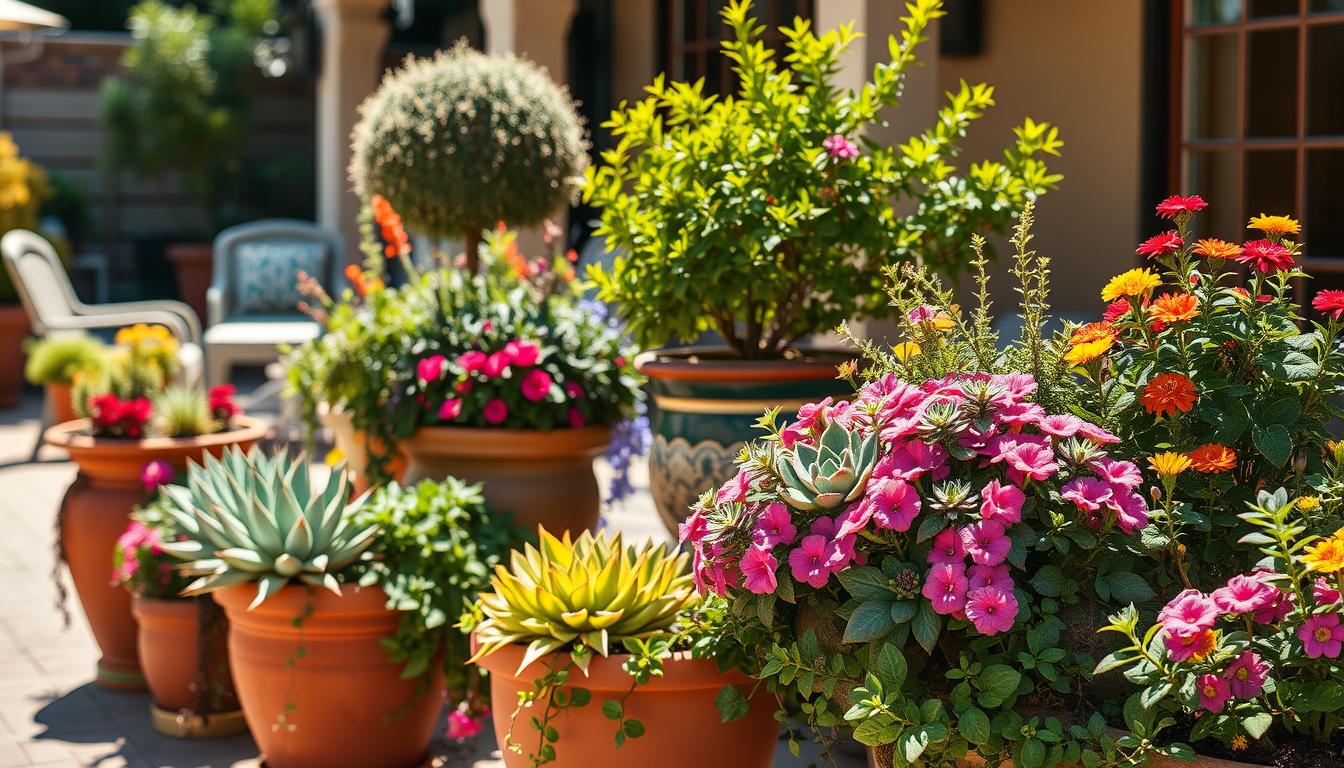
Can a single pot deliver bold color, easy care, and season-long interest on a small patio? This guide answers that with clear, practical steps for every U.S. climate.
Container planting lets you place drama where you need it most. Use the Thriller-Filler-Spiller design, match plants by light and water needs, and pick pots with drainage holes to avoid soggy roots.
Terra cotta dries faster and can crack in frost. Plastic holds moisture longer. Pre-moisten a soilless potting mix and skip gravel in the bottom. Pro designers like Mark Thompson and Linda Vater show how off-center thrillers and color-wheel planning make small spaces sing.
Read on to learn smart pot choices, sun and shade pairings, seasonal swap lists, and easy care routines that keep your plants thriving through heat, wind, and cold.
Key Takeaways
- Match plant light and water needs for long-term success.
- Use the Thriller-Filler-Spiller method for instant impact.
- Choose pot material by climate—terra cotta, plastic, or glazed ceramic.
- Pre-moisten a soilless mix and avoid adding gravel for drainage.
- Plan seasonal swaps so color continues from spring to frost.
Why patio-perfect container garden combinations matter by U.S. zones
Match planters and plant choices to your local climate to keep pots healthy, reduce work, and extend bloom time. Selecting material and species that suit your heat, cold, and light patterns prevents common problems like drought stress and root rot.
Your region’s heat, cold, and light patterns decide which planters and plants will thrive on a patio. Choose plants with similar light and water needs so they share a pot without drama.
Pick pot material to suit the weather. Unglazed terra cotta dries fast in hot sun. Plastic or glazed ceramic hold moisture longer in dry areas. In humid places, prioritize drainage and airflow to avoid rot.
Put heavy pots on casters to move them into shade or shelter. Add drip kits for steady watering during heat waves. Repeat plant choices across grouped pots for a cohesive look and easier care.
- Think seasonally: plan swaps (pansies for cool spells, zinnias for summer).
- Use structure: Thriller-Filler-Spiller gives reliable, region-proof design.
For simple herb ideas and potting tips try grow herbs in pots to adapt plant choices to your microclimate.
Quick-start: Match plants to sun, heat, and your patio microclimate
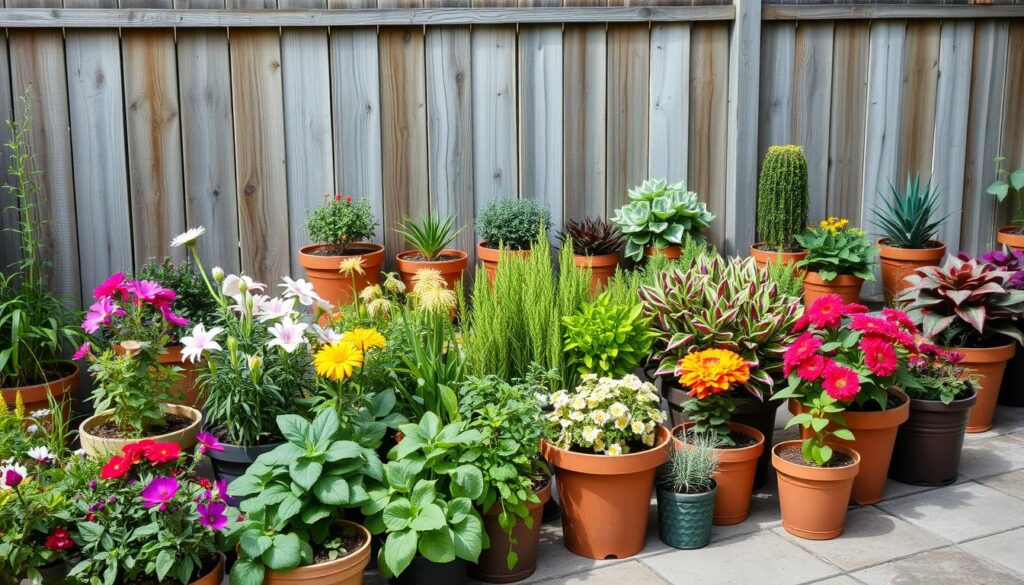
Do a short light and wind audit before you pot up. Match each spot to the right plants so blooms stay strong and care stays simple.
Measure hours of direct sun. Define: full sun = 6+ hours, part sun = 3–5 hours, and shade = under 3 hours. Pick plants that suit those exact conditions to avoid weak growth and poor bloom.
How hardscapes and wind change things
Reflective walls and pale pavers raise daytime heat and light. Watch for leaf scorch and fast soil drying.
Balcony wind tunnels desiccate pots. Cluster planters as a natural windbreak and use heavier pots where gusts are strong.
- Use a moisture meter and consider water-retention crystals in very small containers.
- Rotate twin planters weekly to refresh foliage in deep shade without stressing the plant.
- Look for microclues: tight buds = low light; crispy edges = too much sun or wind.
| Exposure | Soil Notes | Suggested plants |
|---|---|---|
| Full sun (6+ hrs) | Fast-draining, added organic matter | Angelonia, lantana, succulents |
| Part sun (3–5 hrs) | Balanced mix, steady moisture | Calibrachoa, coleus (morning sun) |
| Shade (<3 hrs) | Richer mix, retain moisture | Caladiums, torenia, creeping Jenny |
Core supplies: Containers, potting mix, and drainage that set you up for success
Pick the right planter and you solve most problems before they start. A good pot controls water, gives roots room, and sets how often you water. Clean, well-draining planters are the single best investment for long-term success.
What should you look for?
How big and how well does the planter drain?
Choose a pot large enough for mature roots. Leave at least 3 inches of soil beneath root balls and 1–2 inches of headspace from the rim for easy deep watering.
Ensure working drainage holes. If water pools, add extra holes low on the side and elevate pots on feet or bricks to improve airflow and prevent waterlogging.
Which potting mix and how to pre-moisten it?
Use a soilless potting mix (peat or coir plus perlite/vermiculite and bark). Pre-wet the mix before filling. Stir in 1 part pasteurized compost to 3 parts mix for water-holding and gentle nutrients.
Which material fits your patio?
Terra cotta breathes and dries fast and can crack in frost. Glazed ceramic and plastic hold moisture longer. Metal heats quickly in full sun—match material to your plants and climate.
“Good drainage and right-sized pots halve your watering work and double plant health.”
Design like a pro: Thriller, filler, spiller made easy
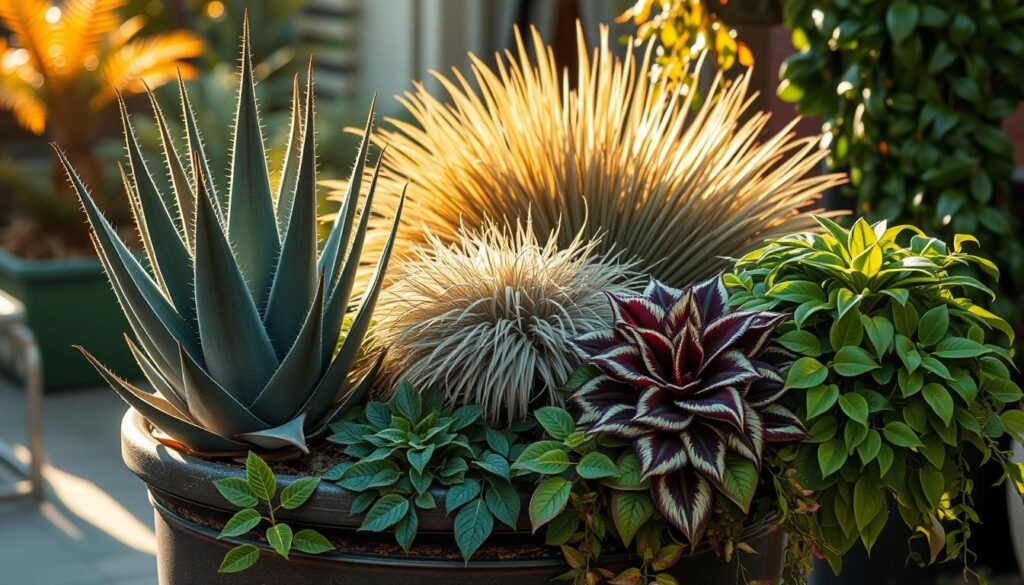
Lead with a bold specimen, then add rounded body and soft edge plants for instant balance. This simple framework creates height, mass, and flow that look curated with little fuss.
Lead with a single striking plant that draws the eye. Think cordyline, bromeliad, or a banana for strong form.
How do you pick thrillers, fillers, and spillers?
Choose clear roles: a vertical thriller, colorful fillers, and trailing spillers that soften the rim. Repeat one filler and one spiller across grouped pots for cohesion.
Place the thriller slightly off-center for a natural, dynamic feel. Use three pot heights to layer sightlines and create depth. Keep tall thrillers in wide, stable planters.
| Role | Examples | Placement Tip |
|---|---|---|
| Thriller | Cordyline, bromeliad, banana | Off-center, tall pot or back of grouping |
| Filler | Lantana, angelonia, dragon wing begonia | Round forms near thriller to add body and color |
| Spiller | Dichondra ‘Silver Falls’, scaevola, sweet potato vine | Edge of pot; repeat in adjacent pots for flow |
“Start bold, repeat rhythm, and edit often to keep balance and season-long interest.”
Color and texture strategies that pop on a patio
Choose a color plan first—then add texture to give depth and movement.
Decide whether you want calm harmony, bold contrast, or lively triads before you plant. That choice sets the mood for every pot and makes selection faster.
Which color schemes work best?
Analogous blends—like Electric Lime coleus with pentas, bicolor lantana, and ‘Silver Falls’ dichondra—feel lush and restful. Use them where you want a seamless, full look.
Complementary pairings—purple angelonia with orange crossandra—create instant pop. They read especially well in rust-toned terra cotta and near seating areas to draw the eye.
Triadic schemes—yellow melampodium, pink gomphrena, and blue evolvulus—deliver balanced energy across grouped containers.
How should I layer foliage and texture?
Pair bold architectural foliage, such as cordyline, with soft spillers and fine grasses. The mix of feathery, glossy, and spiky leaves builds dimension and keeps visual interest.
| Strategy | Example | Placement tip |
|---|---|---|
| Analogous | Electric Lime coleus, pentas, bicolor lantana | Group similar hues in one area for a lush sweep |
| Complementary | Purple angelonia + orange crossandra | Use near focal points for high contrast |
| Triadic | Melampodium, gomphrena, evolvulus | Repeat across three pots for lively balance |
| Texture mix | Cordyline, fine grasses, ‘Silver Falls’ dichondra | Use one bold foliage across several containers to tie display |
- Quick rule: pick the color plan first, then add texture to deepen the effect.
- Keep many pots in neutral finishes so flowers and foliage remain the star.
- Shift colors seasonally but keep your texture mix consistent for steady interest.
“Repeat one accent color or foliage type across multiple pots to knit the display together.”
Main keyword guide: patio-perfect container garden combinations us zones
Use this quick-reference hub to pick the right plants, pots, and color strategies by exposure and region. Read it before you shop so choices match the light and routine of your patio.
Identify the sunniest and shadiest corners before you buy plants or pots. Match spots to full sun, part sun, or shade lists so your selections thrive from day one.
Quick checklist:
- Start with light: pick full-sun, part-sun, or shade-friendly plants before style.
- Drainage and volume: choose pots with holes and enough soil for mature roots; add a caddy for mobility.
- Design roles: set one off-center thriller, add repeated fillers, and soft spillers for flow.
- Color plan: pick analogous, complementary, or triadic palettes to simplify choices.
- Seasonal swaps: cool pansies/violas → summer zinnias, begonias, scaevola.
Water in the morning and recheck during heat waves. Use slow-release fertilizer and a periodic soluble feed to sustain blooms.
Pro tips: repeat one or two plants across grouped pots for cohesion. Match pot material to climate and use a short, zone-based shopping list to speed store trips and avoid impulse mismatches.
Sun-soaked patios: Full sun container combinations that beat the heat
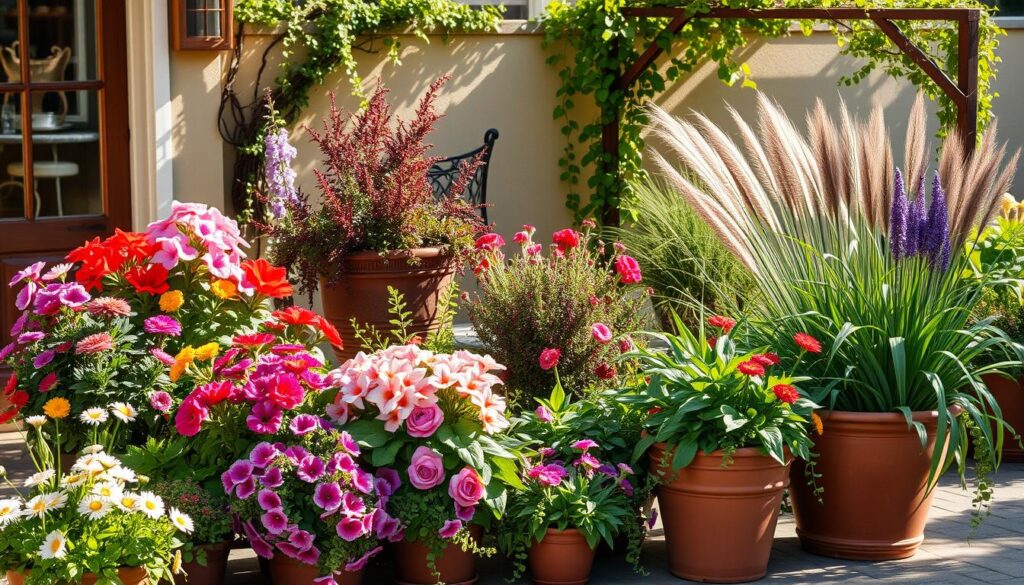
Sun-baked patios reward tough, drought-wise choices that keep color through long summers. Pick truly heat-ready selections and moisture-wise pots so blooms stay bright, not baked.
Which drought-tolerant recipes work best?
Try: lantana + angelonia + ‘Silver Falls’ dichondra, plus a compact succulent for structure. This mix gives constant bloom, spill, and sculptural interest.
What about taller anchors and accents?
Use agapanthus as a vertical anchor, add heat-tolerant vinca at the base, and a senecio succulent as a silvery accent. Lantana draws butterflies and blooms long into fall.
Pot and soil tips: choose glazed ceramic or fiber clay to hold moisture; avoid relying on unglazed terra cotta in scorching sun. Use a well-draining, soilless soil mix and add slow-release fertilizer at planting. Deep morning soaks and late-day moisture checks during extreme heat keep small pots safe.
“Group pots to shade the soil surface, leave airflow between containers, and feed lightly for steady color.”
| Recipe | Role | Why it works |
|---|---|---|
| Lantana + Angelonia + ‘Silver Falls’ | Bloom + Spill | Long flowering, drought-tolerant, butterfly magnet |
| Agapanthus + Vinca + Senecio | Anchor + Base + Accent | Vertical form, heat tolerance, low water need |
| Succulent cluster with a single filler | Structure + Body | Minimal water, sculptural shapes, low upkeep |
Bright but gentle: Part sun container recipes with steady color
Part-sun patios reward mixes that balance bright foliage with steady bloomers. These recipes keep pots vivid from spring through fall with low fuss and steady maintenance.
Pair an upright coleus as the soft thriller, New Guinea impatiens as the main filler, and calibrachoa to spill charming blooms over the rim. Choose sun-tolerant coleus if light shifts toward strong morning rays.
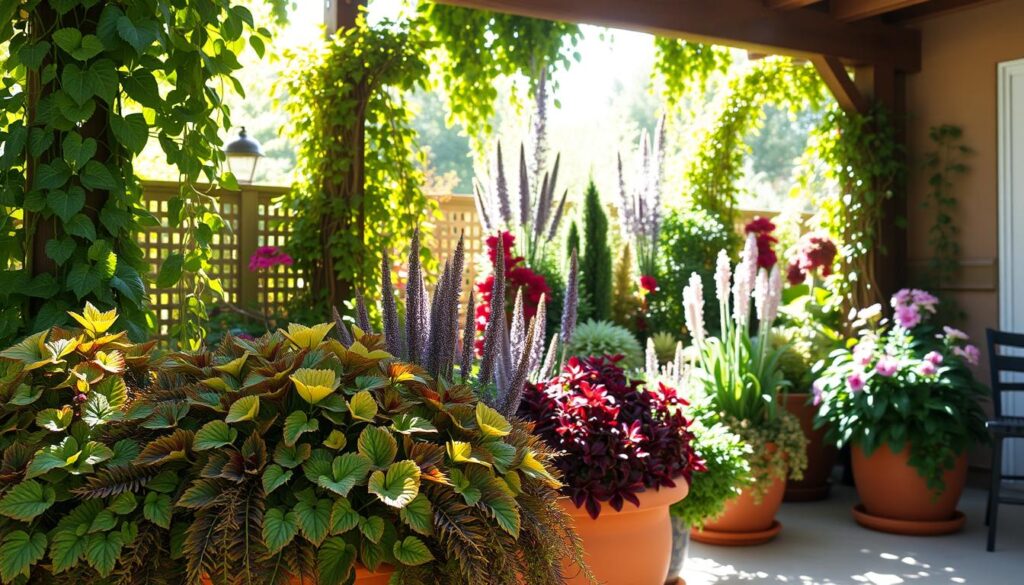
Keep watering consistent. All three plants like steady moisture and good drainage. Add slow-release fertilizer at planting and a soluble feed when bloom slows.
Pinch coleus to keep shape. Scale the pots so calibrachoa can cascade freely. Rotate the mix if light hits one side to avoid lopsided growth.
“Match growth rates—don’t place a fast, aggressive grower with slow, steady performers or it will dominate by season’s end.”
| Role | Example | Care note |
|---|---|---|
| Thriller | Coleus (sun-tolerant varieties) | Pinch for bushy habit; moderate sun |
| Filler | New Guinea impatiens | Bright, indirect light; glossy foliage |
| Spiller | Calibrachoa | Needs consistent moisture; trails best over rim |
Soft shade sanctuaries: Lush foliage and blooms that thrive out of direct sun
Shade spots can become dramatic retreats when you layer bold leaves with soft blooms. Build with large-leafed caladiums as anchors, white wishbone flower (torenia) for steady color, and creeping Jenny to spill over the rim.
Why this works: bold foliage reads clearly in dim light and small white flowers lift the mood without needing full sun.
Plant ‘Celebration’ and ‘Florida Sweetheart’ caladiums for dramatic leaf shapes and mixed leaf tones. Add torenia for cheerful, white blooms and creeping Jenny for a chartreuse spill that softens edges.
Use taller pots or stands so spillers trail gracefully and leaves sit at eye level. Keep the soil evenly moist—shade reduces evaporation but plants still transpire on warm days.
Avoid heavy, soggy mixes. Choose a loose, soilless blend and feed lightly and steadily. Rotate twin planters weekly if the spot is deep shade to keep growth even.
Group several shade containers near seating for a cooling nook. For more ideas on shaded porch planting, see plants for a covered porch.
Four-season strategy: Cool-season and warm-season swaps by region
Plan simple swaps around cold and heat so one set of pots stays lively all year. Use a steady evergreen anchor and rotate bright annuals to match shifting sun and shade patterns.
Start with a small evergreen like dwarf arborvitae or blue juniper for structure. Surround it with pansies, violas, or Panolas for cool-month color. Add silver foliage such as lamb’s ears or dusty miller for soft contrast.
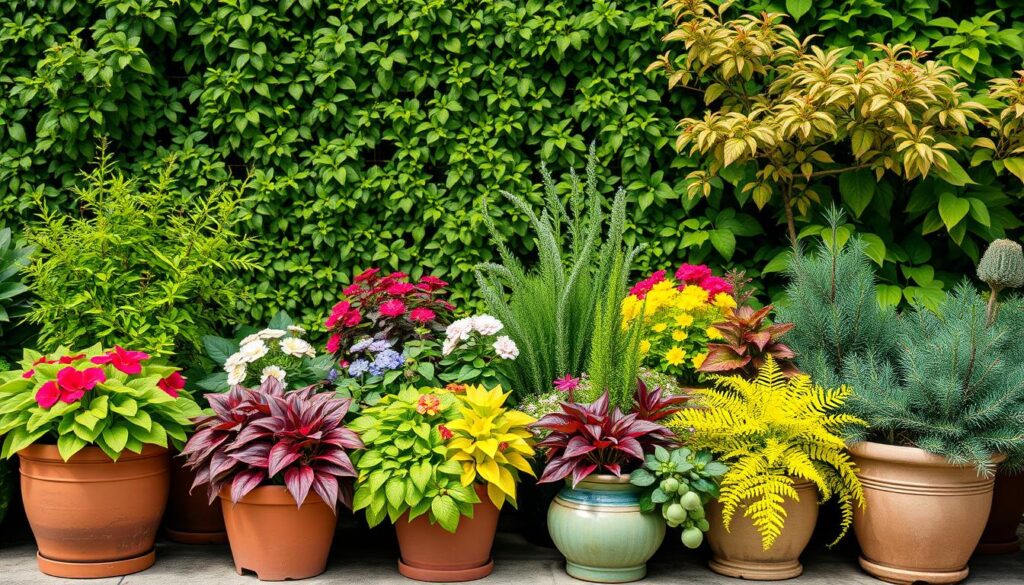
As temperatures rise, swap to warm-season stars: zinnias, begonias, calibrachoa, and fan flower (scaevola). Choose compact or dwarf shrubs so the plant stays right-sized in pots.
How do I keep swaps simple and affordable?
Mass one color of pansies or violas in a shallow urn for big impact at low cost. Use neutral pot finishes so the palette can change without replacing pots.
- Keep slow-release fertilizer active and refresh the top few inches of mix between seasons.
- In the South, some perennials return; in colder areas, plan to replant spring annuals.
- Stagger swap dates across pots so something always looks photo-ready.
“Start with structure, add seasonal color, and edit lightly for steady interest.”
Container choices by climate: Terra cotta, fiber clay, and metal on U.S. patios
Match pot material to your climate so watering stays predictable and roots stay comfortable. Choose materials that work with local sun, wind, and rainfall to cut chores and boost plant health.
Terra cotta is porous and dries fast; it also can crack if left to freeze. Glazed ceramic and plastic hold moisture longer and suit dry, hot spots.
Modern fiber clay urns give a chic look with less weight. Metal warms quickly in strong sun and needs monitoring on very hot days.
- Small containers dry faster—scale up when possible to reduce stress.
- Elevate planters in humid areas for airflow and avoid standing water under pots.
- Add casters to heavy pots so you can move plants to shelter when frost or heat hits.
| Material | Best for | Drainage | Care tip |
|---|---|---|---|
| Terra cotta | Dry, mild climates | Porous—drains fast | Bring indoors in freeze; water more in sun |
| Glazed ceramic / plastic | Hot, dry patios | Retains moisture | Good for thirstier plants; watch watering frequency |
| Fiber clay | All-purpose, lightweight style | Built-in drainage varies | Check for holes; choose sturdy, deeper pots |
| Metal | Modern looks, sheltered spots | Fast heating, good drainage if holed | Shade in midday heat to protect roots |
“Keep materials consistent across grouped containers so seasonal color and texture stand out.”
Watering and fertilizing routines that keep containers blooming
Keep a steady morning soak and planned feeding rhythm to protect roots and sustain blooms.
A steady morning routine and smart midseason feeding are the backbone of long-lasting container displays. Water in the morning so the soil and roots soak deeply before heat peaks.
How often should you check moisture and give a second drink?
Aim water at the base of each pot until you see runoff. Empty saucers to stop roots from sitting wet. In extreme heat, check soil again late in the day; small or windy spots often need a second drink.
What feeding schedule keeps blooms strong?
Start with a slow-release fertilizer mixed into the potting mix at planting. By late summer, add a water-soluble feed (for example, 15-30-15) every two weeks during peak bloom to replace nutrients leached by frequent watering.
- Use a moisture meter to avoid over- or under-watering and learn each pot’s rhythm.
- Keep soil airy by avoiding compaction so roots breathe and water moves freely.
- Refresh the top few inches of soil each season to maintain water-holding and nutrient capacity.
| Action | When | Why |
|---|---|---|
| Deep morning soak | Every day (as needed) | Wets root zone; reduces afternoon stress |
| Late-day check | Heat waves | Prevents wilting in small or windy spots |
| Slow-release fertilizer | At planting | Provides steady nutrients |
| Soluble feed | Every two weeks in bloom | Replaces nutrients leached by frequent watering |
“Observe leaves—turgid, glossy foliage usually means hydration and nutrition are right.”
Group pots with similar water needs to streamline care. For quick herb ideas and to expand plant options, try this hydroponic herb guide: fresh herbs at home.
Smart placement and mobility: Caddies, drip kits, and window boxes
Make care easier with simple mobility and steady irrigation. Put heavy planters on wheels and add a WaterWise-style drip to automate watering so displays stay healthy and low-effort.
Use wheeled caddies for large container moves. A heavy pot becomes a quick shade rescue or a movable focal point. Rolling planters let you dodge wind and follow light without strain.
Add a WaterWise-style drip kit to deliver slow, steady water to each pot. This saves time, keeps moisture even, and is great for vacations or heat waves. Set timers to avoid overwatering.
How should I use window boxes and groupings?
Repeat the same plant mix across window boxes for a unified look. Anchor each box with a thriller and add spillers to soften edges. Group containers to create a microclimate and cut watering needs.
| Solution | Benefit | Quick tip |
|---|---|---|
| Casters / caddies | Easy seasonal moves | Use heavy-duty wheels under large containers |
| WaterWise-style drip | Consistent moisture | Set a timer; check emitters monthly |
| Window boxes | Unified curb appeal | Repeat plants and add spillers for framing |
| Grouped containers | Microclimate + reduced evaporation | Place similar water-need pots together |
“Mobility is a container superpower—move stressed pots to shade for a few days and they recover fast.”
- Keep hose access or a watering can nearby for quick top-ups.
- Avoid placing metal pots on hot walls; allow airflow behind them.
- Test layouts briefly before committing to long-term placement.
Small-space solutions: Hanging baskets, tabletops, and window planters
How do you get full impact from very little space? Go vertical with hanging baskets, stage color on tables, and line window boxes to make every inch count. These moves add bloom, scent, and utility without stealing floor area.
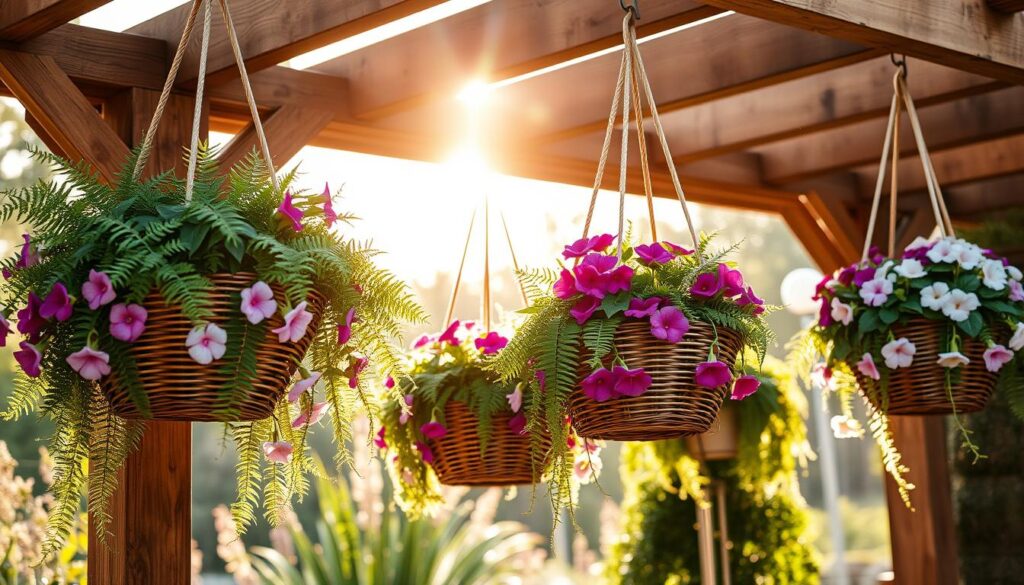
Monochrome baskets and herb-flower pairings for utility and beauty
Try a purple-themed hanging basket: angelonia, fan flower (scaevola), and million bells (calibrachoa) set in sheet moss. The trio reads as one bold splash of color and spills nicely over the rim.
Tabletop pairings bring function to form. Plant rosemary, basil, and lemongrass around a soft blue plumbago for scent, cooking use, and steady bloom close to the door.
- Line wicker or unusual vessels with a garbage bag or florist foil to protect the material.
- Use trailing calibrachoa or ivy for movement in tight spots.
- Favor compact varieties and dwarf shrubs for windier balconies.
- Scale the Thriller‑Filler‑Spiller idea down for small pots and repeat one strong color across grouped containers for cohesion.
Keep care simple: add self-watering inserts or a tiny drip and place small pots where scent and utility are within arm’s reach of your home.
Shrubs, grasses, and perennials in pots: Texture, longevity, and overwintering
Do evergreen anchors and motion-making grasses help your patio look finished year-round? Yes — they give structure, reduce yearly replanting, and let you layer seasonal color around a steady core.
Choose dwarf arborvitae or compact blue juniper as durable focal points in a larger container. These evergreens keep shape and hold winter interest.
Add ornamental grasses like Mexican feather grass for soft movement. The contrast of stiff evergreen form and airy grass lifts texture without fuss.
How do I overwinter potted perennials and shrubs safely?
Use big pots with quality potting mix so roots stay insulated. Refresh the top few inches of soil each year and avoid compacting soil around woody roots.
- Shift pots to a sheltered, shaded spot and surround them with leaves or mulch for extra insulation.
- In colder areas, move containers to an unheated garage; water lightly every two weeks.
- Avoid waterlogged soil in winter—roots need air while dormant.
| Anchor | Texture | Winter tip |
|---|---|---|
| Dwarf arborvitae | Vertical, evergreen | Large pot, mulch base |
| Blue juniper | Low, sculptural | Protected corner or garage |
| Mexican feather grass | Soft motion | Cut back in spring; mulch lightly |
| Mixed perennials | Seasonal color rings | Combine with evergreens for year-round interest |
“Combine evergreen bones with seasonal annual rings to keep color steady and maintenance light.”
Ready-to-plant container recipes inspired by pros
Try these plug-and-play mixes to get bold color and balanced texture on your patio today. Each recipe balances height, bloom, and spill so you can plant with confidence and see instant impact.
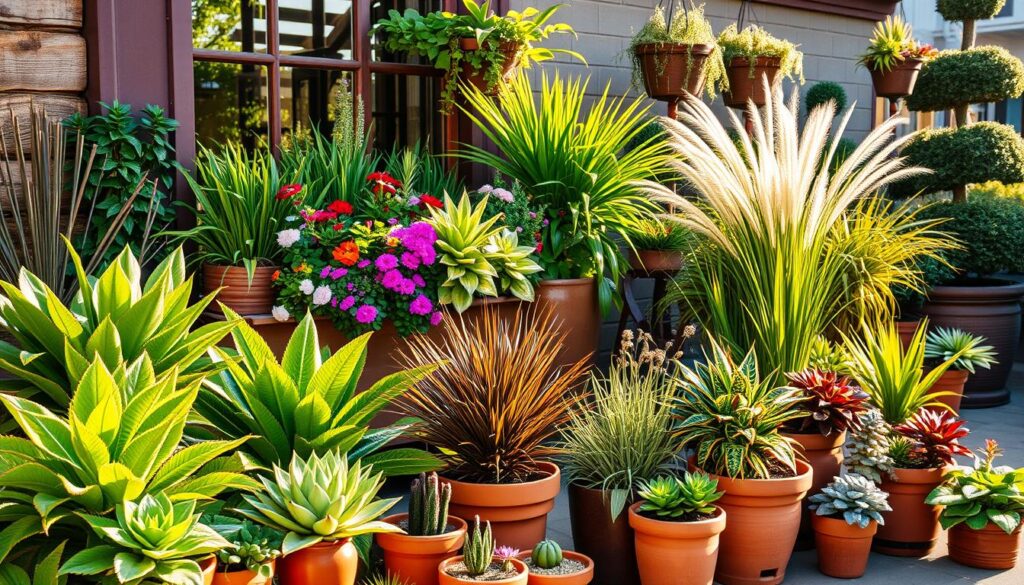
Warm analogous: Electric Lime coleus, pentas, lantana, and ‘Silver Falls’
How to set it up: use Electric Lime coleus as the thriller, add pentas and bicolor lantana as the fillers, and let ‘Silver Falls’ dichondra cascade as the spiller.
Arrange tall to low so foliage and blooms step down naturally. Repeat the spiller in two adjacent pots to tie the display together.
Rust-toned terra cotta with angelonia, crossandra, and oregano
Why this works: purple angelonia adds vertical spike, ‘Orange Marmalade’ crossandra delivers massed bloom, and ornamental oregano with purple fan flower softens the rim.
Use rust-toned pots for warm contrast. In hot sun, choose glazed or moisture-retentive planters and watch unglazed terra cotta more often for quick drying.
Succulent-centered hanging planter with fan flower accents
Build it: pick structural succulents (kalanchoe, senecio) as the core and tuck in purple scaevola for a pop of color and trail.
Water deeply but infrequently, let excess drain, and avoid wet crowns on succulents. Place the thriller slightly off-center so spillers can cascade freely.
“Repeat one element—like dichondra or scaevola—across pots to unify the display.”
- Feed: slow-release at planting; add a soluble feed every two weeks during peak bloom.
- Water: deep soak; allow good drainage and protect succulent crowns.
- Design tip: place thrillers off-center and repeat a filler across grouped pots for cohesion.
- Seasonal swap: refresh fillers around evergreen or structural thrillers to update color without redoing the whole planting.
Conclusion
Summarize: map light, choose the right pot and mix, then use the Thriller‑Filler‑Spiller approach to create lasting impact.
Start with exposure and pick a durable pot material that suits your climate. Match your plants to that spot so care stays simple and predictable.
Lean on rhythm: repeat one filler or spiller across grouped pots for cohesion and easier maintenance.
Water deeply in the morning, feed on schedule, and plan cool‑ and warm‑season swaps to keep color and interest. Anchor displays with a shrub or ornamental grass, then rotate annuals for seasonal change.
With thoughtful design and steady routines, your patio will reward you with reliable beauty and joy all year long.