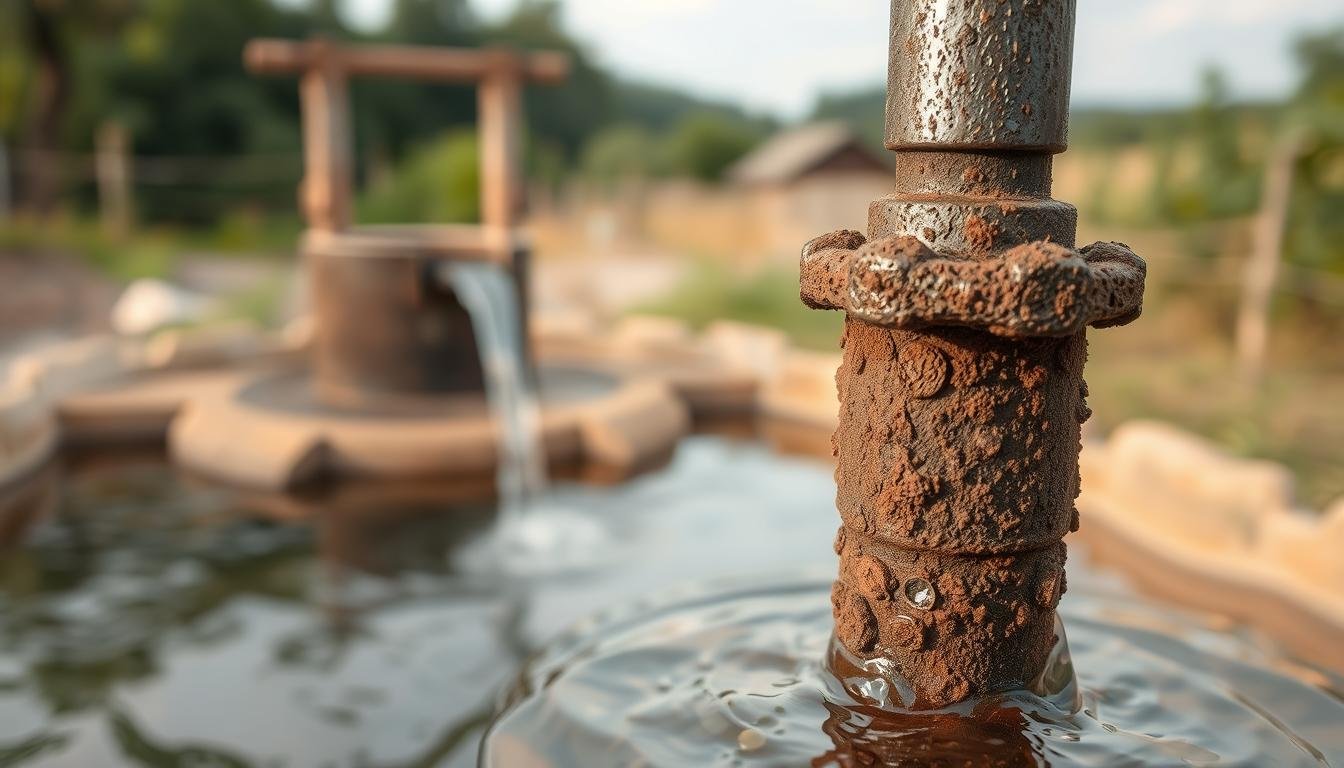
Iron in well water can clog drip emitters when dissolved iron turns into rust-colored particles or when iron bacteria create sticky orange-brown slime inside tubing. The result is usually the same: uneven watering, stained filters, weak flow, and garden beds that stay too dry even while the system is running.
Before replacing every line or buying a filter, identify the type of clog. Gritty orange residue usually points toward particles that need better flushing and filtration. Slimy, smearable residue points toward biofilm, which needs a different approach and may require professional help if it is severe.
Quick answer
Drip emitters clog with iron because well water can carry dissolved iron that later oxidizes into solid rust particles. Iron bacteria can also form a sticky film that traps iron and debris inside filters, fittings, and emitter passages.
The safest first step is simple: open the line ends, flush into a white cup, inspect the filter, and check whether the residue feels gritty or slimy. That diagnosis tells you whether testing, filtration, flushing, cleaning, or professional treatment makes sense.
Key takeaways
- Orange stains, rusty flush water, weak emitter flow, and stained filters are common signs of iron-related clogging.
- Gritty residue usually points toward ferric iron particles or sediment; slimy residue often points toward iron bacteria.
- Do not assume one filter will fix every iron problem. Dissolved iron, heavy precipitate, and biofilm behave differently.
- Start with inspection, flushing, and water screening before choosing filters or replacing drip parts.
- Chemical injection, acid control, chlorine treatment, and biocide programs need caution, proper equipment, backflow protection, and often professional guidance.
Helpful products at a glance
These support items fit the diagnosis-first workflow. They are not complete iron-treatment systems, but they may help you test, filter, or flush a drip setup more effectively.
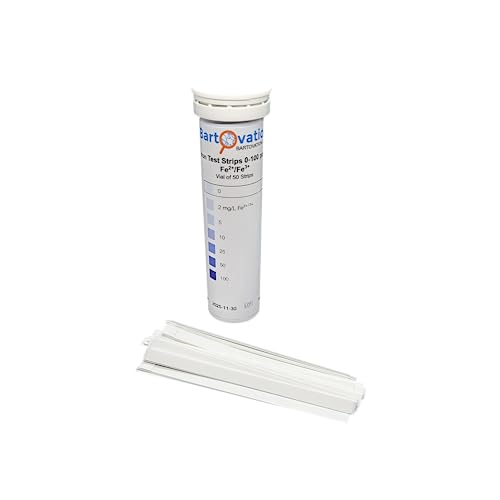
Best for early iron screening because it helps check water before buying filters
- This test only detects iron that is dissolved in the water, not visible undissolved iron particles.
- No need for field kit or reagents to conduct tests
Best for gritty drip-line debris because it adds a cleanable filtration stage
- High-Performance Disc Filtration: The Netafim 3/4-Inches drip irrigation disc filter features 120 mesh (125 micron) filtration, designed to efficiently capture fine debris, ensuring clean water flow for drip irrigation systems, garden irrigation, and automatic watering setups.
- Enhanced Durability: Built with high-quality materials for longevity, this irrigation disc filter is ideal for home improvement irrigation projects, protecting your irrigation equipment from clogging and extending the life of emitters, drippers, and drip rings for plants.
Best for routine line flushing because it helps clear and inspect lateral ends
- FROM AN AMERICAN COMPANY
- Operating pressure: 10 to 30 PSI - Optimal pressure 25PSI
What iron-clogged drip emitters usually look like
Iron problems often show up as a pattern, not one single symptom. You may see weak flow at the far end of a bed, filters that stain orange soon after cleaning, or emitters that drip unevenly even when the zone pressure seems normal.
Common clues to check first
- Reddish-brown residue on screens, filters, emitters, or flush water.
- Shorter wetting patterns around plants even after a normal irrigation cycle.
- One lateral line performing worse than another on the same zone.
- Filter bowls, cartridges, or screens turning orange quickly after cleaning.
- Stringy orange-brown slime inside tubing or fittings.
To make the check easier, flush water from both the head and tail end of the line into a white cup. If your tubing uses compatible 1/2-inch drip fittings, a line-end flush cap such as the view DIG Q58PRO Compression Flush Cap on Amazon can make routine flushing and inspection less messy.
Do not judge the system only by the first few seconds of water. Let the line run long enough to bring debris from the lateral end. The tail end often tells you more about what is settling inside the tubing.
Slimy vs. gritty clogs
Texture matters because the fix changes. A filter may help with particles, but it will not remove dissolved iron by itself. It also will not solve established iron bacteria slime on its own.
Confirm the clog type before buying parts. A few minutes of flushing and inspection can prevent the wrong fix.
| What you find | What it usually suggests | Best next step |
|---|---|---|
| Gritty orange particles | Rust-colored ferric iron, sediment, or both | Flush lines, inspect filters, and consider better-matched drip filtration |
| Sticky orange-brown slime | Possible iron bacteria biofilm | Clean affected parts, improve maintenance, and consider professional guidance for severe cases |
| Clear water but weak flow | Dissolved iron may be oxidizing later in the system, or emitters may already be fouled | Check filters, flush line ends, and screen the water before replacing parts |
| Filters stain orange quickly | Heavy particle load, rapid oxidation, or biofilm buildup | Look upstream at the well, pump, storage tank, and filter setup |
Why dissolved iron becomes a clog
Well water can carry iron in a dissolved form that is not always obvious when the water first leaves the well. Once that water meets oxygen, sits in a tank, splashes through a reservoir, or moves through changing pressure, some of that dissolved iron can turn into solid rust-colored particles.
Those particles are small, but drip emitters have narrow passages. A little buildup at the wrong point can reduce flow enough to leave plants under-watered.
Where oxidation speeds up
Oxidation may increase where water splashes, sits, or pulls in air. Open tanks, leaky suction fittings, aerated reservoirs, and long idle periods can all give iron more time to form particles before the water reaches the emitters.
This is why aeration can help or hurt. If aeration happens before a settling tank and filter, it may help turn dissolved iron into particles that can be trapped. If it happens inside the wrong part of the system, those particles may form inside tubing and emitters instead.
Iron bacteria can create a different kind of clog
Iron bacteria are a common nuisance in irrigation systems that use iron-rich water. They can form a reddish, slippery film that sticks to filter housings, fittings, tubing walls, and emitter openings.
This slime can trap rust particles and other debris, so the problem may look like both sediment and biology at the same time. If a filter gets dirty again soon after cleaning and the residue smears instead of feeling sandy, biofilm should be on the list of suspects.
Simple field checks
- Rub residue between your fingers. Grit feels sandy; slime smears or stretches.
- Open a filter housing and look for orange-brown film on the inside walls.
- Flush a line after it has been sitting and check for stringy material.
- Smell the water or residue. A swampy odor may point toward biological buildup.
These checks do not replace water testing, but they help you decide what kind of problem you are dealing with before spending money on parts.
Step-by-step diagnostic workflow for iron-clogged drip emitters
Work from easy checks toward more involved fixes. This keeps the process practical and reduces the chance of replacing parts that are not the real problem.
Start with inspection and flushing
- Open the line ends. Flush laterals into a white cup or bucket so the color and texture are easier to see.
- Check the filter. Look for orange staining, gritty debris, or slimy film inside the housing.
- Compare head and tail ends. More debris at the far end may mean particles are settling in the lateral.
- Feel the residue. Grit points toward particles. Slime points toward possible iron bacteria.
- Screen the water. A quick iron test can help decide whether a lab sample or specialist is worth the next step.
A simple iron test strip can be useful as an early screening step, especially if you are trying to decide whether to keep troubleshooting the irrigation parts or look harder at the well water itself. For a quick product check, you can view Iron Test Strips on Amazon.
Use strip results carefully. Test strips can help screen for soluble iron, but they are not a full lab analysis and may not detect every iron form. If clogging is severe, keeps returning, or may require chemical treatment, collect a proper lab sample instead of relying only on a quick strip.
When sampling for a lab, follow the lab’s container and preservation instructions. Some tests require acidified bottles, and those should not be rinsed out. Note where you sampled from, such as the wellhead, after a tank, or after filtration, because the result can change by location.
Quick decision table
| Observation | Likely direction | What to do next |
|---|---|---|
| Orange grit in flush water | Ferric iron particles or sediment | Flush thoroughly, inspect filters, and consider a drip filter sized for the system |
| Sticky orange film | Possible iron bacteria | Clean affected parts and get help before using strong chemical treatment |
| Filter clogs soon after cleaning | High debris load or rapid precipitation | Check aeration points, storage tanks, filter placement, and source conditions |
| Only the far end of a line is weak | Debris settling in the lateral | Flush line ends and check whether emitter replacement is needed only after cleaning |
| Weak flow with little visible debris | Old emitter fouling, hidden biofilm, pressure issue, or dissolved iron changing downstream | Check pressure, inspect emitters, screen water, and avoid guessing at chemical fixes |
If screening shows iron may be part of the problem, keep the result in perspective. A quick strip can support the troubleshooting path, but a lab test is better for recurring clogging, severe biofilm, or any plan involving chlorine, acid, stabilizers, or other treatment chemicals.
- This test only detects iron that is dissolved in the water, not visible undissolved iron particles.
- No need for field kit or reagents to conduct tests
- Easy to read chart with blocks at 0, 2, 5, 10, 25, 50, and 100ppm
- Desiccant cap preserves freshness of strips
Root causes to check before treating the water
If iron problems keep coming back, do not stop at the emitter. The source, pump, tank, and filter position may be creating the conditions that make iron precipitate inside the system.
Aging well parts and rust sources
Older casing, screens, fittings, and steel components can add rust or metal particles to the supply. If clogging started suddenly after well work or pump changes, write that down. The timeline may matter.
Deep pumping and pressure changes
Lower water levels, pump changes, or altered drawdown can change how gases leave the water. That can shift pH and encourage dissolved iron to form particles sooner than it did before.
Suction-side air leaks
Small air leaks on a pump suction line can pull oxygen into the water before filtration. Watch for sputtering, bubbles in clear housings, pressure swings, or cloudy water that clears after sitting.
If the source is creating the problem, a filter at the wrong point may become a maintenance headache rather than a solution. Fix air leaks, inspect the pump setup, and understand where particles are forming before adding more parts.
Filtration, settling, and flushing fixes that make sense
Physical fixes work best when they match the form of iron in the system. The usual goal is to turn dissolved iron into particles where those particles can settle or be filtered before they reach the emitters.
Oxidation and settling
In some systems, controlled aeration or another treatment step is used upstream so iron forms particles before filtration. Those particles then need calm settling space or a filter that can handle the load.
Open reservoirs can also grow algae, collect debris, or create new maintenance problems. If a tank or reservoir is part of the setup, it should be managed as part of the irrigation system, not treated as an automatic cure.
Disc filters, screen filters, and heavier filtration
For small home drip systems with gritty debris, a cleanable drip-irrigation filter may help keep particles from reaching emitters. A disc filter is one possible stage when the system size, fittings, flow, and debris load are a match.
If your flush water shows gritty orange particles, a properly sized drip-irrigation disc filter may help catch debris before it reaches the emitters. The Netafim DF075-120 is a 3/4-inch, 120 mesh disc filter designed for drip irrigation filtration; you can view Netafim DF075-120 Disc Filter on Amazon.
- High-Performance Disc Filtration: The Netafim 3/4-Inches drip irrigation disc filter features 120 mesh (125 micron) filtration, designed to efficiently capture fine debris, ensuring clean water flow for drip irrigation systems, garden irrigation, and automatic watering setups.
- Enhanced Durability: Built with high-quality materials for longevity, this irrigation disc filter is ideal for home improvement irrigation projects, protecting your irrigation equipment from clogging and extending the life of emitters, drippers, and drip rings for plants.
- Versatile Compatibility: Compatible with various drip irrigation parts, including self-piercing emitters, drip hose valves, watering stakes, and manifold systems, this mesh disc filter is an essential addition to any garden or plant watering system.
- Ideal for Automatic Irrigation Kits: Perfect for automated and solar drip irrigation systems, this disc irrigation filter provides reliable protection and filtration, ensuring optimal water distribution for plants, trees, and gardens.
Keep expectations realistic. A disc filter can catch particles, but it does not remove dissolved iron by itself. If iron is oxidizing heavily after the filter, or if slime is the main problem, the system may need settling, different filtration, cleaning, or professional water-treatment design.
Operational tips and maintenance rhythm
Maintenance matters as much as the first repair. Flush laterals on a schedule, clean filters before they blind, and inspect line ends before the hottest part of the season. A simple log of filter cleaning dates, residue color, and weak zones can help spot worsening iron problems early.
A compatible flush cap can make it easier to clear and inspect line-end debris during routine drip-system maintenance. Before buying one, match the fitting to your tubing size and outside diameter; this type of fitting is for maintenance access, not filtration or iron removal. You can check this drip-line flushing fitting on Amazon.
- FROM AN AMERICAN COMPANY
- Operating pressure: 10 to 30 PSI - Optimal pressure 25PSI
- Secure and easy installation without glues or clamps
- UV Resistant High Impact Plastic
If a line stays weak after repeated flushing, inspect the emitters themselves. In older systems, some emitters may be too fouled to recover fully. Still, replacement should come after diagnosis and cleaning, not before.
Chemical treatment requires more caution
Chemical treatment may be part of a larger solution when iron bacteria, dissolved iron, pH conditions, or heavy precipitation overwhelm physical maintenance. It should not be treated as a casual first step for a backyard drip system.
Chlorine and biocide programs
Chlorine is sometimes used in irrigation systems to oxidize iron and manage biological growth, but dose, contact time, pH, plant sensitivity, equipment materials, and filtration all matter. The treated water also needs a safe place in the system where particles can be captured before they reach emitters.
Do not mix chemicals, guess at dosing, or inject chlorine into an irrigation system without proper equipment and backflow protection. If slime is heavy or the system serves a large area, a qualified irrigation or water-treatment professional is the safer path.
Acid control, stabilizers, and chelation
Acid control and stabilizers such as polyphosphates or phosphonates may be used in some water-treatment designs, but they depend on water chemistry. They can also create plant, equipment, corrosion, and safety concerns when used incorrectly.
For a home gardener, the practical takeaway is simple: use inspection, flushing, filtration, and proper testing first. Save chemical decisions for situations where the water chemistry is known and the system is designed to handle treatment safely.
When to call a professional
Call a professional if clogging returns quickly after cleaning, if the system has obvious iron bacteria slime, if filters blind soon after service, or if you are considering chlorine, acid, stabilizers, or injection equipment.
Professional help is also sensible when the irrigation system is large, when pump or well changes may be involved, or when plant loss would be costly. A specialist can interpret lab results, size treatment equipment, and protect the water source with proper backflow prevention.
FAQ
Why does iron in well water clog drip emitters?
Iron clogs drip emitters when dissolved iron turns into solid rust-colored particles or when iron bacteria create sticky biofilm. Both can collect in filters, tubing, fittings, and emitter passages.
How do I know if the clog is iron and not ordinary dirt?
Iron-related clogs often leave orange or reddish-brown stains. Gritty orange particles point toward precipitated iron or sediment, while slippery orange-brown slime may point toward iron bacteria.
Should I replace clogged emitters right away?
Not usually. Flush the lines, inspect filters, check pressure, and identify the residue first. If emitters remain weak after cleaning and the cause has been addressed, replacement may make sense.
Will a drip filter remove dissolved iron?
A drip filter can catch particles, but it does not remove dissolved iron by itself. If iron is still dissolved when it passes through the filter, it may oxidize later inside the tubing.
Can iron bacteria be fixed without replacing all drip tubing?
Sometimes, yes. Mild buildup may improve with cleaning, flushing, and better maintenance. Severe or long-standing biofilm can be harder to remove and may require professional treatment or replacement of badly fouled sections.
Is aeration good or bad for iron in irrigation water?
Aeration can be useful if it happens before settling and filtration. It can backfire if it causes iron to form particles inside lines or emitters instead of where those particles can be trapped.
Can I use chlorine to clear iron-clogged drip lines?
Chlorine may be used in some irrigation treatment programs, but it requires correct dosing, contact time, equipment compatibility, backflow protection, and safety precautions. Do not guess at treatment rates or mix chemicals.
When is lab testing better than test strips?
Use lab testing when clogging is severe, keeps returning, or may require chemical treatment. Test strips are better for early screening, not for designing a full treatment program.
Final verdict
Iron-clogged drip emitters are easier to fix when you slow down and identify the clog first. Gritty orange debris points toward flushing and filtration. Slimy orange-brown film points toward biofilm and a more cautious cleanup plan.
Start with the simple checks: flush the line ends, inspect the filter, compare residue texture, and screen the water if iron is suspected. Then choose the least risky fix that fits the evidence. For heavy iron, recurring slime, or chemical treatment decisions, proper lab testing and professional guidance are worth it.