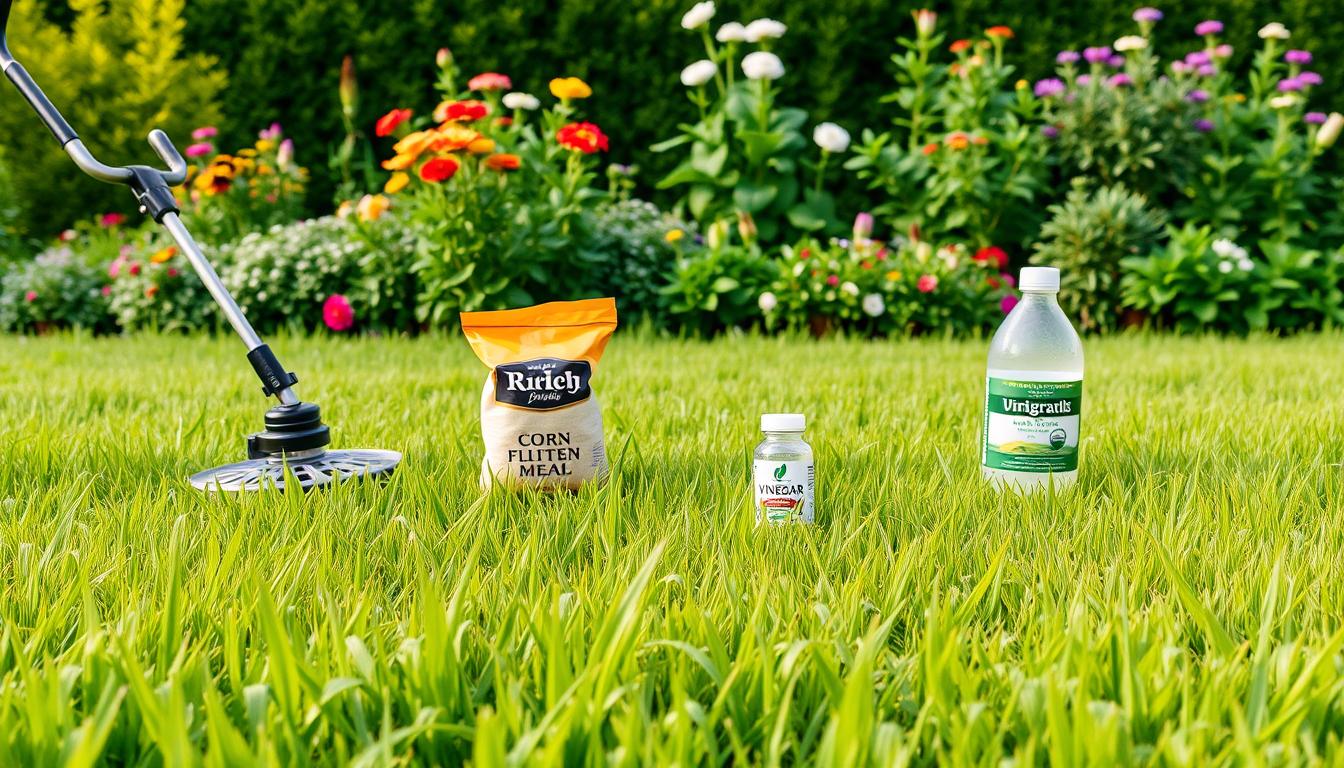
Can one simple plan outcompete crabgrass and restore a dense, healthy lawn without harsh chemicals?
We faced a summertime weed that loved thin turf and heat-baked edges. Crabgrass returned each year and made paths and driveways look tired.
Our plan used three clear pillars: cultural practices to help turf and plants win, targeted non-synthetic spot control for stubborn patches, and seasonal timing to stop seedlings before they seed. This steady, repeatable way builds soil health, closes bare soil, and lowers crabgrass pressure over time.
We kept the method simple and cost-efficient. Focused things include healthy soil structure, consistent water habits, and the right mowing height. You’ll get step-by-step guidance for edges, pathways, and planting beds so the whole garden benefits.
See quick facts and proven tips from this practical guide, including how timing and simple tools gave visible improvement in the first season. For deeper prevention tactics, check this natural crabgrass resource for numbers and timing: natural crabgrass control tips.
Key Takeaways
- Three focused pillars—cultural care, targeted spot control, and seasonal timing—work together.
- Improve soil, water wisely, and mow higher to favor turf over weeds.
- This is a repeatable plan, not a one-time fix; expect steady thickening.
- Simple tools and low-cost steps make the plan easy to follow.
- Edge and pathway care prevents heat and compaction from inviting crabgrass.
- Integrates with garden care to support pollinators and soil life.
Why Our Lawn Had a Persistent Crabgrass Problem and What Finally Changed
The lawn failed where soil was thin, cut too low, and walked on. We changed small behaviors and site conditions across the season to flip the balance back to turf.
Our root causes were clear: low mowing height, compacted soil, and bare spots along the driveway and sidewalk. Those strips heated and dried, giving crabgrass seedlings a head start.
We also learned our watering pattern hurt more than helped. Frequent, shallow water fed surface germination while deep, infrequent soaking built strong roots. Foot traffic and pet paths left wear stripes that invited both weeds and insects.
So we raised the mower to 3–4 inches, aerated compacted zones, and top-dressed thin areas. Then we overseeded with region-appropriate blends so more plants filled open niches near the house and trees.
- Pre-spring prep, late-spring monitoring, mid-summer touch-ups.
- Redirect high-traffic lanes and reinforce them to stop soil disturbance.
- Plant a tidy border to block windblown seed from nearby lots.
The turning point came from steady, small actions across one season. Consistent changes reset site conditions and cut the advantage crabgrass once enjoyed. Learn timing and extra tactics for hard patches in this review on how to get rid of crabgrass.

Our 3-pronged organic approach that finally got rid
A focused set of cultural steps, precise spot tactics, and seasonal repeats rebuilt turf strength and cut seedling success. Follow clear, small actions across the year to shift sites back to dense grass.
We rebuilt competition for seedlings by focusing on soil, shade, and timing. Below are the three prongs and the practical steps we used in each area of the garden.
Prong One: How do cultural controls help turf win?
- Raise mower to 3–4 inches, sharpen blades, and return mulched clippings to feed soil.
- Overseed thin spots with region-appropriate mixes and top-dress with compost for quick contact.
- Aerate compacted lanes once or twice per season to boost root depth and reduce pest pressure.
Prong Two: What targeted suppression works in problem spots?
- Hand-weed after rain to remove seedlings before seedheads form.
- For pavement cracks, pour boiling water away from desirable plants and trees.
- Solarize isolated sunny patches under clear plastic, then reseed.
Prong Three: When should you act across the year?
- Scout in late spring and make light, regular passes through high-heat times.
- Walk borders and driveway edges at different times of day to map hotspots in the area.
- Water deeply and less often; mow dry and never cut more than one-third of the blade.
How do you encourage helpful life around plants and trees?
Limit broad sprays and add plant diversity in borders. Add organic matter to feed soil organisms that suppress many pests naturally.
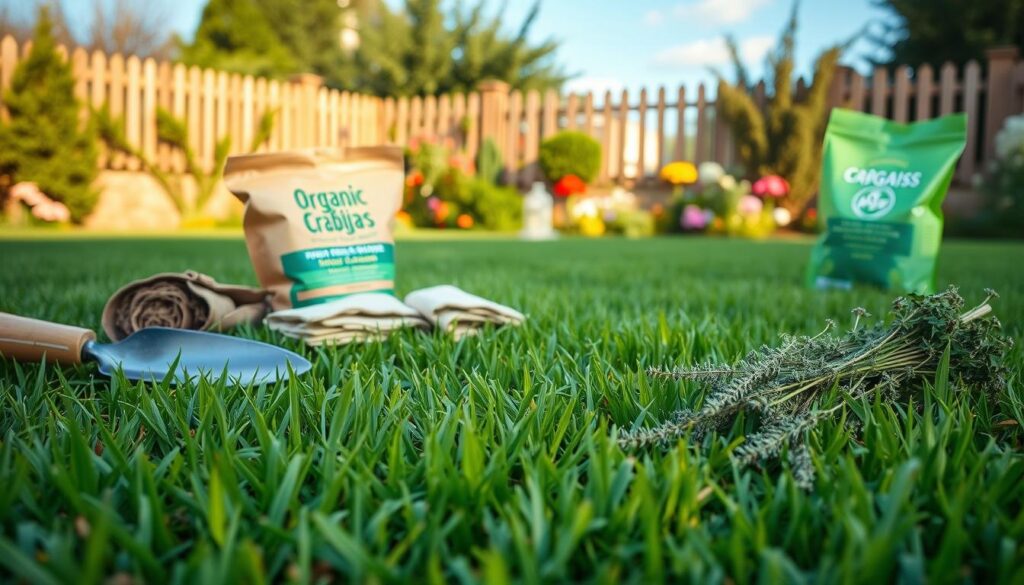
Tools, timing, and safety notes from organic garden practice
Smart timing and careful tools let beneficial life thrive while you manage pests and weak spots. Match products to biology, protect pollinators, and expect steady gains across seasons.
Smart planning beats brute force. Plan treatments around life cycles and site conditions to reduce repeat work and limit harm to nearby plants and beneficial insects.
When and how often should you treat?
Make light, regular passes through late spring and summer for lawn weeds. For beetle grub controls, apply in late summer to early fall when soil sits near 60–70°F.
These biological options can take a year or more to show clear declines. Expect noticeable change after a couple of seasons, not overnight.
Why skip broad sprays and trap-style quick fixes?
Traps scented with flower lures can draw more beetles into your yard. Broad-spectrum sprays—even some labeled natural—harm pollinators and beneficial insects and need frequent reapplication.
What about diatomaceous earth and safe use?
Diatomaceous earth is an abrasive powder that damages insect exoskeletons. Use extreme caution: it can also harm monarch caterpillars and other beneficials. Keep it off blooming areas and out of high-traffic beds.
After-application essentials
- Lightly water treated earth so products reach the target zone without runoff.
- Walk beds and lawn a couple of times per season to spot new seedlings or pest flare-ups.
- Wear gloves, read labels, keep materials off flower borders, and store tools clean—small steps that add up to better luck next year.
Conclusion
A season of simple, regular care changed our lawn’s trajectory more than a single big fix. Build dense turf, spot-treat only where needed, and repeat the routine across the year for steady gains.
Keep edges tight and seed bare strips near the house. Match irrigation to soil and sun; water deeply but less often so roots grow strong.
Support nearby plants and trees with mulch rings. That buffers the lawn and cuts pressure from windblown seed and lawn pests.
Protect helpful insects and reserve harsher steps for real pest emergencies. Check the yard monthly, reseed thin spots, and celebrate small wins.
Stick to simple things: mow higher, seed bare spots, walk the garden, and refine your checklist. With steady work you’ll have fewer bare patches, better color, and a lawn that supports your garden and weekends — a bit of good luck from consistent care.
FAQ
What is the basic idea behind the three-prong method described in the article?
The method combines healthy turf culture, targeted non-synthetic suppression where crabgrass thrives, and seasonal timing repeated over the year. Together these steps reduce crabgrass seed germination, outcompete seedlings with thicker grass, and suppress problem spots without relying on broad chemical herbicides.
How do I identify crabgrass hotspots in my lawn and garden?
Look for bare or thin patches in sunny, compacted areas like edges, driveways, and heavy-traffic strips. Crabgrass germinates in warm soil and often appears first in open, dry spots. Walk the yard in late spring and early summer to spot emerging seedlings and map repeat trouble zones.
What cultural practices help outcompete crabgrass?
Build dense, healthy turf by overseeding with the right grass for your region, raising mowing height to shade soil, improving soil fertility with balanced compost or slow-release fertilizer, and aerating compacted areas. These actions foster strong, competitive grass that naturally suppresses crabgrass.
When should I water and mow to minimize crabgrass without inviting other pests?
Water deeply and infrequently—about 1 inch per week—to encourage deep roots. Mow at a higher setting recommended for your grass type; this shades the soil and reduces weed seed germination. Avoid frequent shallow watering that favors crabgrass and can attract lawn pests or disease.
What targeted, non-synthetic suppression options work in problem areas?
Physical removal of young plants, hand-hoeing, and spot treatments with certified organic herbicides like acetic-acid products can help. Mulching bare garden beds and using landscape fabric by pathways reduce seed establishment. Focus efforts on edges, sunny spots, and near hardscapes where crabgrass seeds accumulate.
How does seasonal timing and repetition help control crabgrass over multiple years?
Crabgrass seeds persist in the soil, so one season of tactics rarely finishes the job. Preventing germination in spring, removing seedlings in early summer, and maintaining strong turf through fall and winter reduces the seed bank. Repeat these steps for two to three seasons for lasting improvement.
Can diatomaceous earth be used safely around lawns and garden plants?
Diatomaceous earth (food-grade) can deter some crawling insects when applied dry, but use it sparingly. It can harm beneficial insects if overapplied and loses effectiveness when wet. Apply to small, targeted areas and avoid blanket coverage that could disrupt pollinators and soil life.
Why avoid broad-spectrum insecticides and quick-fix trap approaches?
Broad-spectrum insecticides kill beneficial predators and pollinators, upsetting ecological balance and often allowing other pests to surge. Trap-style or reactive fixes rarely address root causes like thin turf or soil compaction. The article favors prevention and targeted, less disruptive measures.
How should I monitor treated areas after applying suppression measures?
Check problem spots a couple of times each season. Look for new seedlings after warm rains and note areas needing reseeding or extra mulch. Water treated zones lightly if instructed by product guidance, and keep a simple log to track when and where you applied measures for better timing next year.
Will encouraging beneficial insects harm my crabgrass control efforts?
Encouraging beneficial insects supports a balanced garden ecosystem and won’t directly remove crabgrass, but it helps control other pests that weaken turf. Planting native flowers, maintaining hedgerows, and avoiding broad insecticides invite predators and pollinators that improve overall plant health.
How long before I see noticeable reduction in crabgrass using these methods?
Expect gradual improvement over one to three seasons. You may see fewer seedlings within the first season if you combine thickening turf, correct mowing/watering, and targeted spot suppression. Lasting control comes from consistent follow-up and seasonal timing.
Are there safety notes I should follow when using non-synthetic treatments?
Read product labels carefully, wear gloves and eye protection when handling powders like diatomaceous earth, and avoid drifting sprays onto desirable plants. Keep pets and children off freshly treated spots until products settle or dry, and focus applications to minimize impact on beneficial insects.
What tools are most useful for treating crabgrass hotspots?
Useful tools include a hand weeder or dandelion digger for removal, a broadcast spreader for overseeding, a core aerator for compaction, and a soil probe or trowel for checking root depth. Simple items like mulch, garden scissors, and a watering gauge also help maintain consistent care.
Should I use a specific grass type to resist crabgrass better?
Choose a grass suited to your USDA zone and sun exposure. Tall fescue and perennial ryegrass create dense stands in many U.S. lawns, while warm-season grasses like Bermuda or zoysia resist warm-weather weeds in southern regions. Local extension services can recommend best varieties for your area.