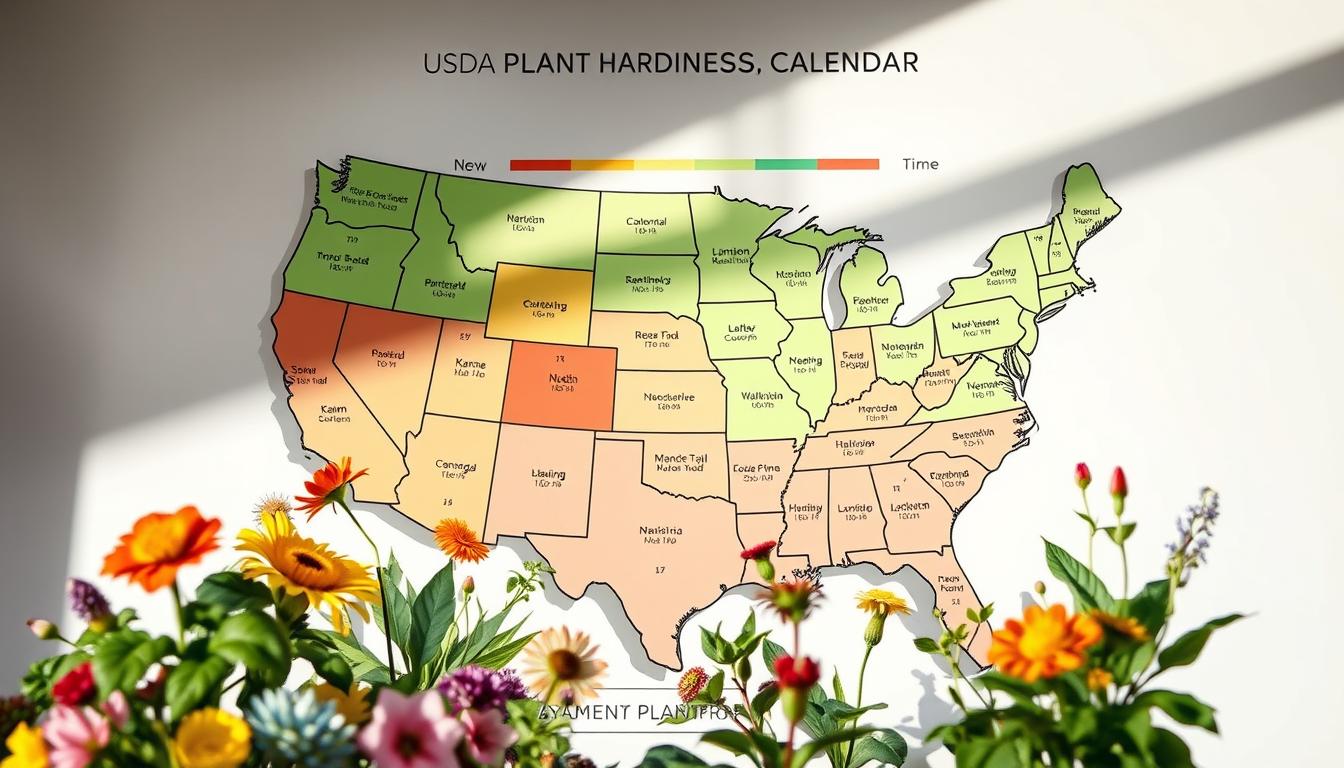
Seed-starting dates work best when they begin with your average last spring frost date, not just your USDA zone number. Your zone gives a broad climate clue, but frost dates, soil temperature, crop type, sun exposure, wind, and local weather decide when seeds should actually go into trays or garden beds.
The simple rule is this: count backward from your last frost date for indoor starts, direct sow when soil and weather suit the crop, and keep adjusting the plan as the season changes. That keeps the calendar useful without treating it like a guarantee.
Quick answer
Start most indoor seeds by counting backward from your average last spring frost date using the timing listed on the seed packet. Tomatoes may be started several weeks before transplanting, while crops such as carrots, radishes, beans, and squash often do better when sown directly outdoors.
Use your USDA zone as a starting point, then confirm your local frost dates by ZIP code. A gardener in a windy, low-lying yard may need a different schedule than a gardener in the same zone with a warm south-facing bed.
The best seed-starting calendar is local, flexible, and crop-specific. It should tell you what to start indoors, what to direct sow, when to harden off seedlings, and when to pause because the forecast looks risky.
Key takeaways
- Use USDA zones for broad climate guidance, not as the only planting-date rule.
- Record your average last spring frost and first fall frost dates before building a calendar.
- Start long-season crops indoors when your growing season is short.
- Direct sow crops that dislike transplanting or grow well in outdoor soil.
- Check soil temperature, weather forecasts, and microclimates before planting outside.
- Use seed-starting supplies only when they solve a real timing problem.
Helpful products at a glance
These tools can support the calendar-building process, but they do not replace correct timing, seed packet directions, or local weather judgment.
Best for indoor seed starts because it keeps trays organized
- EASIER SEED STARTING: Our Burpee SuperSeed tray with 36 flexible pop-out cells is designed to simplify indoor seed starting for all your favorite vegetables, flowers and herbs. Just add seed starting mix, seeds, water and light to get growing! Rows are labeled alphanumerically for seedling identification with included Plant-o-Gram diagram. Tray dimensions: 11.5" x 10-3/8" x 2-1/4"
- SMARTER WATERING SYSTEM: Molded corner slots in each cell improve drainage and soil aeration to set your seeds up for germination success. Deep channels in the watering tray draw excess away from the cells, while the raised perimeter edge keeps water contained in the tray - no spills! Seed tray side handles make it easy to lift and pour off excess water or check seedlings daily.

Best for direct sow timing because it checks soil temperature
- Detailed Specifications: Total length: 20 inch/50.8cm; Stem Length: 19.7 inch/50cm; Stem Material: rugged 304 stainless steel; Diameter of Stem: 5mm; Diameter of Scale Dial: 4.8cm/1.9 inch; Temperature Display Range: 0-200 °F
- Accurate & Clear Reading: IP55 waterproof PC-coated lens is sealed to keep out moisture and avoid fogging for easy & clear reading; Only ± 2°F accuracy so you know your compost pile’s true condition and can optimize accordingly

Best for late frost risk because it supports temporary crop protection
- Heavy-weight FRCs (1.2 oz./sq. yard): Are usually used to extend the growing season in spring and fall, allow 30%-50% light transmission, and recommend of freeze protection and season extension
- UV PROTECTION High quality spun polypropylene fabric is UV stabilized and reusable, and allows air and moisture to reach your plants,

Understand USDA plant hardiness zones
USDA plant hardiness zones are based on average annual extreme minimum winter temperatures. They are most useful for judging whether perennials, shrubs, trees, and other long-term plants are likely to survive winter in your area.
For vegetables and annual flowers, zones still help, but they are not enough. A zone label does not tell you the exact date to start basil, tomatoes, lettuce, carrots, or zinnias. For seed starting, frost dates and crop needs matter more.
How plant labels use zones
When a plant label says “hardy to zone 6” or “hardy to zone 10,” it is pointing to winter cold tolerance. That helps with overwintering decisions, but tender annuals can still be damaged by one cold night after spring growth begins.
Why zone alone can mislead seed-starting plans
Two gardens in the same USDA zone can have different planting windows. Elevation, wind, shade, paved surfaces, nearby water, and low spots can shift frost risk and soil warmth by several days or more.
A seed-starting calendar should guide your timing, not overrule what your garden and forecast are telling you.
Find your frost dates before choosing seed-starting dates
Your average last spring frost date is the main anchor for spring seed starting. Your average first fall frost date is the anchor for fall crops and late-season succession planting.
Use a reliable ZIP-based frost-date or planting-calendar tool to record both dates. Then write them down in a garden notebook, spreadsheet, phone calendar, or printed planting chart so you can build around them.
| Planning step | What to record | Why it matters |
|---|---|---|
| Check your USDA zone | Your local hardiness zone | Gives a broad climate baseline for plant selection |
| Find spring frost data | Average last spring frost date | Helps schedule indoor starts, hardening off, and transplanting |
| Find fall frost data | Average first fall frost date | Helps plan fall crops and late succession sowing |
| Note microclimates | Warm beds, low cold spots, windy areas, shaded beds | Helps adjust the calendar for your actual garden |
| Watch the forecast | Late cold snaps, heavy rain, heat waves, warm nights | Helps decide when to delay, protect, or transplant |
Average frost dates are not promises. They are planning points. A late cold snap can still arrive after the average date, especially for tender crops such as tomatoes, peppers, cucumbers, squash, eggplant, and basil.
Build a seed-starting calendar from your zone and frost dates
Once you know your frost dates, group your crops by how they grow. Some need a head start indoors. Some prefer to be planted directly outside. Others can work either way depending on your climate and space.
Step 1: Mark your last spring frost date
Put your average last frost date on the calendar first. Then work backward for indoor seed starts and forward for transplant dates.
Step 2: Read the seed packet timing
Most seed packets give a range such as “start indoors 6 to 8 weeks before last frost” or “direct sow after danger of frost has passed.” Use that instruction as the crop-specific guide.
Step 3: Add hardening-off time
Indoor seedlings need time to adjust before they move outside full time. Add a hardening-off period to your calendar instead of moving tender seedlings straight from a protected indoor space into sun, wind, and cool nights.
Step 4: Add weather checks
One week before transplanting or direct sowing, check the forecast. If nights look too cold or heavy rain is expected, delay planting or use protection only where it makes sense.
Choose indoor starts or direct sowing
The biggest seed-starting mistake is treating every crop the same. Tomatoes and peppers often benefit from indoor starts in many areas. Carrots and radishes usually make more sense as direct-sown crops.
When indoor starts help
Indoor starting is useful for long-season crops, short growing seasons, and gardeners who want stronger transplants ready when outdoor conditions improve. It is often used for tomatoes, peppers, eggplants, many herbs, and some brassicas.
For gardeners counting backward from the last frost date, a reusable seed-starting tray can make indoor starts easier to organize without turning the process into a large indoor setup.
A tray is only one part of the setup. Seed quality, seed-starting mix, moisture, light, temperature, airflow, and hardening off still matter. A tray may keep seedlings organized, but it cannot fix poor timing or weak growing conditions.
If you are starting only a few herbs or flowers, you may not need much equipment. If you are starting several long-season vegetables before your outdoor beds are ready, a simple tray system can be a practical first step.
When direct sowing is better
Direct sowing means planting seed into its final outdoor bed or container. It is often better for crops that dislike root disturbance or grow quickly in suitable soil, including carrots, radishes, peas, beans, corn, squash, and many root crops.
Direct sowing also keeps the indoor setup simple. Instead of managing trays, lights, and transplant timing, you focus on soil condition, moisture, spacing, and weather.
| Method | Best fit | What to watch |
|---|---|---|
| Indoor starts | Tomatoes, peppers, eggplants, herbs, some brassicas | Light, moisture, airflow, hardening off, transplant timing |
| Direct sow | Carrots, radishes, peas, beans, squash, corn | Soil temperature, soil moisture, spacing, birds, heavy rain |
| Hybrid approach | Gardeners with limited indoor space or mixed crops | Start only the crops that benefit most and sow the rest outdoors |
| Protected early planting | Cool-season crops or early spring beds | Frost risk, overheating under covers, anchoring, ventilation |
If indoor space is limited, use it for the crops that gain the most from an early start. Direct sow the crops that prefer outdoor planting. That keeps the calendar simpler and avoids crowding weak seedlings on windowsills.
Seed-starting supplies that may actually help
Seed-starting supplies should match the method you choose. A gardener starting peppers indoors has different needs than a gardener direct sowing peas and carrots into a raised bed.
The Burpee SuperSeed Seed Starting Tray is a 36-cell reusable tray designed for vegetables, herbs, and flowers. Its flexible pop-out cells are designed to ease transplant removal, and the molded corner slots are intended to support drainage and soil aeration.
- EASIER SEED STARTING: Our Burpee SuperSeed tray with 36 flexible pop-out cells is designed to simplify indoor seed starting for all your favorite vegetables, flowers and herbs. Just add seed starting mix, seeds, water and light to get growing! Rows are labeled alphanumerically for seedling identification with included Plant-o-Gram diagram. Tray dimensions: 11.5" x 10-3/8" x 2-1/4"
- SMARTER WATERING SYSTEM: Molded corner slots in each cell improve drainage and soil aeration to set your seeds up for germination success. Deep channels in the watering tray draw excess away from the cells, while the raised perimeter edge keeps water contained in the tray - no spills! Seed tray side handles make it easy to lift and pour off excess water or check seedlings daily.
- SIMPLER TRANSPLANTING: Soft food-grade silicone cells cradle seedlings and gently flex to pop out when it’s time to transplant into your outdoor garden! This system is specially designed to reduce stress on your seedlings, so you don't damage their roots. After transplanting, trays are easy to clean and reuse or simply store for next growing season. Top shelf dishwasher safe.
- SEED STARTER TIP: Many favorite vegetables, including peppers and tomatoes, must be started indoors before warmer weather arrives. Start pepper seeds 8-10 weeks before your area’s average last frost date, and tomato seeds 6-8 weeks before last frost. Check your Burpee seed packets for instructions on when and how to plant any of your herb, flower and vegetable seeds.
This tray is a better fit for a modest indoor-start plan than for a large propagation setup. It does not include seeds, mix, lighting, or heat, so it works best when you already know which crops need indoor starting and how many cells you need.
Gardeners who want to compare the listing details can check the current tray details on Amazon.
Time crops by temperature and growth habit
Frost dates give you the calendar. Crop type tells you how cautious to be. Cool-season crops can often begin earlier than warm-season crops, but soil condition and weather still matter.
Cool-season crops
Leafy greens, kale, cabbage, peas, carrots, beets, and radishes often handle cool conditions better than tomatoes or cucumbers. Many can be planted in early spring or again for fall harvests, depending on your local season.
Warm-season crops
Tomatoes, peppers, cucumbers, squash, corn, eggplant, and basil need warmer conditions and protection from frost. Setting them outside too early can stall growth or damage tender leaves.
Use soil temperature as a reality check
Calendar dates are useful, but seeds respond to the soil they are actually planted in. Cold, wet soil can slow germination or cause problems even after the average frost date has passed.
A soil thermometer fits best in this part of the process because it helps compare calendar timing with actual soil conditions. This is especially useful before direct sowing warm-season crops or transplanting into beds that warm slowly.
Use soil temperature as one decision aid, not the only rule. Seed packet instructions, moisture, short-term weather, crop type, and frost risk still belong in the decision.
Seedling readiness matters too. Look for sturdy stems, healthy early leaves, and active root growth before transplanting. Weak or stretched seedlings may need better light, airflow, or timing before they move outdoors.
Adjust for short seasons, warm regions, and microclimates
Short-season gardeners often need to start long-season crops indoors to make better use of limited frost-free weeks. Warm-region gardeners may need to shift some crops into cooler months instead of following a northern spring calendar.
Short-season gardens
In colder or shorter-season areas, indoor starts can help tomatoes, peppers, eggplants, and some herbs reach transplant size before outdoor planting is safe. The goal is not to rush them into cold soil; it is to have healthy plants ready when conditions improve.
Warm and subtropical gardens
In warmer regions, the best planting window may be fall, winter, or early spring for crops that dislike intense heat. Parts of Florida, for example, can have very different schedules across north, central, and south areas because freeze risk, humidity, heat, and season timing vary.
Microclimates in the same yard
A raised bed near a south-facing wall may warm earlier than a shaded bed near a fence. A low corner of the yard may collect cold air. Windy beds may dry faster and stress new seedlings. Keep notes so next year’s calendar reflects your garden, not just your ZIP code.
Build your month-by-month planting calendar
Turn your frost dates into a simple calendar with four main groups: indoor seed starts, direct sowing dates, transplant dates, and fall crop dates. Keep it flexible enough to change after unusual weather.
Back-calculate indoor start dates
Start with the average last spring frost date. If a crop should be started indoors 8 weeks before transplanting, count backward and mark the sowing week. Then mark a hardening-off period before the outdoor move.
Plan succession sowing
For quick crops such as lettuce, radishes, and some greens, stagger sowings rather than planting everything at once. A 1 to 3 week gap can help spread harvests, depending on the crop and season.
For fall crops, count backward from your average first fall frost date using days to maturity, then add a buffer because late-season growth often slows as light drops and temperatures change.
The VIVOSUN Compost Thermometer is a 20-inch analog probe style thermometer listed for soil, compost, outdoor gardening, and planting use. Its listed 0-200°F range makes it a practical tool for checking soil temperature before direct sowing or transplanting.
- Detailed Specifications: Total length: 20 inch/50.8cm; Stem Length: 19.7 inch/50cm; Stem Material: rugged 304 stainless steel; Diameter of Stem: 5mm; Diameter of Scale Dial: 4.8cm/1.9 inch; Temperature Display Range: 0-200 °F
- Accurate & Clear Reading: IP55 waterproof PC-coated lens is sealed to keep out moisture and avoid fogging for easy & clear reading; Only ± 2°F accuracy so you know your compost pile’s true condition and can optimize accordingly
- Rugged Frame: 304 rustproof stainless steel and reinforced connection between dial and stem for long-lasting use
- Read at A Glance: 3 colored temperature zones on the dial that indicate different composting levels: steady, active and hot; Ready to use: insert it into the center of the compost to about 6cm deep and wait for 3-5 minutes
A 20-inch probe may be more than a small container gardener needs, but it can be useful for raised beds, in-ground beds, and compost checks. It gives information; it does not decide the planting date by itself.
Readers who want to review the tool details can view VIVOSUN Soil Thermometer on Amazon.
Update the plan when weather changes
A planting calendar should be reviewed during the season. Late frost, warm spells, cold rain, wind, and early heat can all change the best day to sow or transplant.
For gardeners who start early or face late cold snaps, a floating row cover can be useful protection, but it still needs monitoring and ventilation during warm spells.
Row covers, frost blankets, cloches, and low tunnels can help with temporary protection, especially for cool-season crops and early plantings. They are not a reason to ignore frost risk for tender crops.
Covers can also overheat plants in direct sun. Check the temperature under protection, vent when needed, and remove covers when the weather turns warm enough.
Anchoring matters, too. Wind can shift fabric and expose plants, while loose edges may rub seedlings. Use protection as a short-term tool, not as a substitute for watching the forecast.
The Agfabric Plant Covers Freeze Protection Frost Blanket is a 10 ft x 50 ft floating row cover listed as 1.2 oz fabric. It is best viewed as temporary plant protection for early crops, light cold events, and frost-risk management when used with care.
- Heavy-weight FRCs (1.2 oz./sq. yard): Are usually used to extend the growing season in spring and fall, allow 30%-50% light transmission, and recommend of freeze protection and season extension
- UV PROTECTION High quality spun polypropylene fabric is UV stabilized and reusable, and allows air and moisture to reach your plants,
- EASY INSTALLATION Measured size as described, easy to cover it on the plant top personally
- MULTI-APPLICATION Protect your vegetable such as tomato, pepper, pumpkin, strawberry rows, fruit trees, citrus and shrub, flowers as well as newly-sown grass
The size may be more than a small container garden needs, but it can make sense for garden beds or rows. It still requires anchoring, monitoring, and removal or ventilation during warm sunny periods.
Gardeners comparing row-cover options can view Agfabric Frost Blanket on Amazon.
Common seed-starting timing mistakes
Starting every crop indoors
Some crops are simply better direct sown. Carrots, radishes, beans, peas, squash, and corn often do not need indoor trays unless you have a specific reason and experience with transplanting them carefully.
Planting warm-season crops too early
A warm afternoon does not mean the season has fully changed. Tender crops need suitable soil, warm nights, and a lower frost risk before they move outside.
Ignoring hardening off
Seedlings grown indoors need a gradual transition. Wind, sun, and temperature swings can stress plants that have been protected indoors.
Following the calendar without checking the garden
Calendar dates are averages. Use them with current weather, soil moisture, soil temperature, and microclimate notes.
FAQ
Is USDA zone enough to know when to start seeds?
No. USDA zone helps with broad climate and winter-hardiness decisions, but seed-starting dates should also use frost dates, crop type, soil temperature, and local weather.
How do I calculate indoor seed-starting dates?
Find your average last spring frost date, then count backward using the seed packet’s indoor-start window. Add time for hardening off before transplanting outside.
What crops should I direct sow?
Carrots, radishes, peas, beans, corn, squash, and many root crops are commonly direct sown. Always check the seed packet because variety and climate can change the timing.
Which crops usually need warm soil?
Tomatoes, peppers, cucumbers, squash, eggplant, corn, and basil generally need warmer conditions and protection from frost. Planting them too early can slow growth or cause cold damage.
How do microclimates affect seed starting?
Microclimates can make one part of your yard warmer, colder, windier, wetter, or drier than another. Use those differences to adjust planting dates by bed, not just by ZIP code.
Should I buy grow lights and heat mats for seed starting?
Not always. They can help in some indoor setups, but many gardeners should first decide which crops truly need indoor starting and how much space they have.
Can row covers protect plants from frost?
Row covers can support temporary frost-risk management when used correctly, especially for cool-season crops. They do not guarantee survival in every freeze, and they need ventilation during warm sun.
How often should I update my planting calendar?
Review it before each major planting window. Adjust after late frosts, unusual heat, heavy rain, delayed seed orders, or changes in garden space.
Final verdict
The best time to start seeds in your USDA zone depends on more than the zone number. Use your average last spring frost date as the starting point, then adjust by crop type, soil temperature, microclimate, and the forecast.
Keep the process practical: start long-season crops indoors when they need the head start, direct sow crops that prefer outdoor planting, and use frost protection only when it fits the crop and weather. A good calendar should help you avoid planting too early, not push every seed into the ground on the same date.