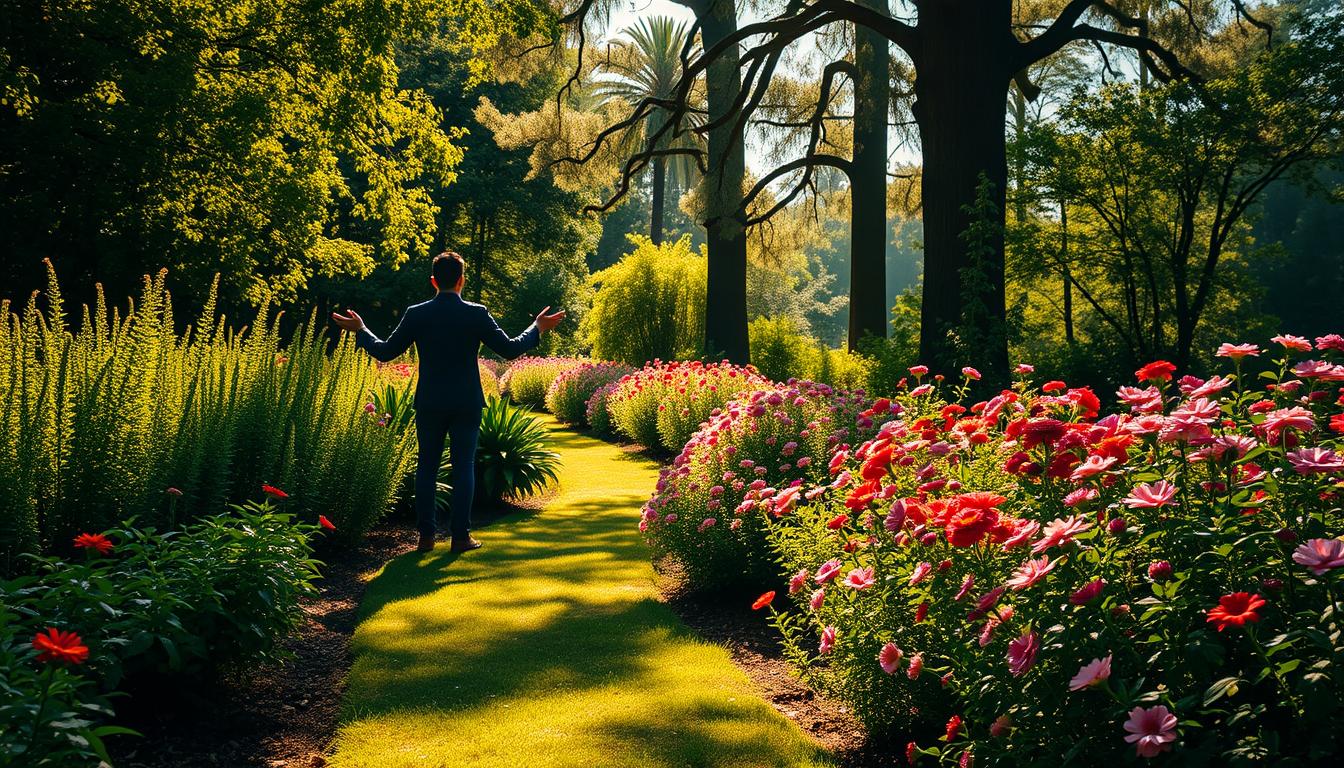
What if one short loop outside could change how you feel for the rest of the day? I step onto the path, feel cool soil at the edges, and set one small intention: notice. The scent of fresh earth and the hush of birds make a simple ritual feel like a gentle reset for life.
This practice is simple and repeatable. One brief walk, one clear focus, and a quick jot in a notebook can shift stress and sharpen perspective. Research summarized by LSU AgCenter horticulturist Heather Kirk-Ballard links thankfulness to better sleep, fewer health complaints, and stronger relationships.
In this piece you’ll find science-backed benefits, a plain route to follow, and three pocket tools to make this habit stick. You don’t need perfect landscaping or long meditation. Just notice light on leaves, a bee at work, or the first ripe tomato.
Key Takeaways
- Short, consistent loops anchor the mind and ease stress.
- Noticing small details brings measurable well-being gains.
- Evidence shows better sleep and fewer health problems with regular practice.
- Tools: name one thing you’re thankful for, walk unplugged, and jot a note.
- Any space—balcony or yard—can host this gentle ritual.
Why a Daily Garden Gratitude Walk Works: Science, Mood, and Meaning
Research shows simple outdoor practices combine movement, sensory focus, and intentional appreciation to lift mood, improve sleep, and strengthen bonds.
Evidence links gratitude to better sleep, lower stress, and stronger relationships. Heather Kirk-Ballard (LSU AgCenter) reports that people who note what they value tend to be happier and more resilient.
Walking calms the nervous system. The garden gives your senses a clear target. Together, they form an efficient way to reset the mind in a few minutes.
Health gains accumulate: grateful people report fewer complaints and deeper rest. That improves energy, patience, and clarity the next day.
Expressing thanks also helps people feel seen. That builds motivation and steadier bonds at home and at work.
- Quick wins: one breath, one bird call, one leaf—notice and move on.
- No gear needed: a short loop at a chosen time trains the mind to expect a calm pocket each day.
This practice does not ignore problems. It simply carves intentional room for what lifts you and the people in your world.
How to Start a Daily Gratitude Walk Through Garden Has Become a Habit Today
Pick a short loop and the same time each day to make this simple and repeatable. Set a tiny goal: three to ten minutes, unplugged, noticing small details. This clear cue helps the brain link place and purpose.

When and where will you go?
Choose your window: morning sun gives energy; evening golden hour slows you down. A set time anchors the practice and makes it easier to maintain.
How to make it present
Walk unplugged for at least ten minutes. Silence notifications and let birdsong and breeze become your soundtrack. This quiet moment deepens attention.
What to notice
Name twenty specific things you appreciate—comfy shoes, basil scent, moist soil, cloud shapes. Keep items concrete to sharpen focus and spark awe.
Simple ways to anchor the habit
- Collect a cue: a small stone or a quick photo to remind you of the walk.
- Include people: thank a neighbor or a friend who helps with plants; shared thanks builds connection.
- Close the loop: jot two lines or record a short voice note with date and one standout item.
For more tips on how this practice fits with planting and care, see how the garden and gratitude go.
Go Deeper: Awe, Harvest Seasons, and Sustainable Ways to Walk with Gratitude
Let small moments in the yard invite awe and reconnect your chores to meaning. Noticeable shifts in feeling can come from brief, mindful pauses that link your work and life to larger seasonal rhythms.
Let the small, ordinary moments in the yard open a sense of awe and steady your mind.
How can everyday nature trigger awe?
Micro-awe is simple: watch a bee linger, feel rain on leaves, or pause under moonlight. These tiny observations reduce stress and widen perspective in a short time.
Can chores shift from work to meaning?
Reframe weeding, staking, and harvest as part of seasonal life. This view honors effort and turns small tasks into a nourishing cycle rather than a list of problems.
What small actions help the planet?
Practical ways include mulching, composting, and planting natives. These choices cut waste, support pollinators, and make your patch a helpful part of the wider world.
| Action | Impact | Time |
|---|---|---|
| Pause to watch pollinators | Reduces stress, builds awe | 1–2 minutes |
| Compost kitchen scraps | Less waste, richer soil | Weekly |
| Share surplus produce | Builds community | Varies |
- Honor the season: recall winter stores when harvest feels heavy.
- End one loop with three slow breaths and name small things you value.
Conclusion
A tiny, repeatable moment in nature can stack into lasting calm and clearer perspective.
Keep your conclusion simple: commit to one short loop, one list of specific things, and one tiny note each day. Over time, this practice strengthens well-being and brings steady calm to life.
Make momentum easy: pick a start time, set shoes by the door, and leave a memento where you’ll see it. Track your days in a simple log to notice progress.
If time is tight, take a 60-second porch pause. Name three things and one small moment you liked. Text a friend a photo now and then; sharing keeps the habit human.
This short ritual is a practical way to care for your garden, your relationships, and your inner life—one attentive moment at a time.
FAQ
What is a gratitude walk in the garden and why try it?
A gratitude walk is a short, mindful stroll that shifts attention to small, positive details in your outdoor space — like the scent of soil, a bird’s call, or a blooming flower. It’s a simple practice that helps reduce stress, improve mood, and connect daily chores with meaning. Aim for five to twenty minutes to start, and treat it as a gentle ritual rather than a task.
When is the best time to take this walk?
Both morning light and evening “golden hour” work well. Morning walks prime your day with calm and focus; evenings help you unwind and reflect. Pick a consistent time that fits your schedule so the routine sticks. Even brief walks during lunch breaks can reset your mood and energy.
How do I begin if I’ve never tried mindfulness or nature rituals?
Start small. Set a specific route and a short duration, leave your phone on silent, and notice five sensory details — color, texture, scent, sound, temperature. You can also name a few things you appreciate each time. Consistency matters more than length; three minutes daily beats a long session once a month.
What if I feel awkward or self-conscious walking alone outside?
That’s common. Invite a partner, neighbor, or friend to join a few times until you feel comfortable. You can also walk at quieter times or carry a simple tool like a notebook or camera to focus attention. Over time the ritual becomes familiar and easier to enjoy.
Can I combine the walk with practical garden tasks?
Yes. Reframe chores as caring acts — pruning, watering, or harvesting can be part of the walk. Move deliberately and notice the sensations of each action. This turns work into a mindful practice that supports both wellbeing and a healthier space.
How do I avoid it becoming just another item on my to-do list?
Keep the tone gentle and optional. Reduce pressure by limiting time, choosing pleasant routes, and celebrating small wins. Use prompts like a favorite plant or a single breath to launch the walk. If it starts to feel like work, pause and simplify the ritual.
What are small keepsakes or anchors to deepen the habit?
Collect a single leaf, a smooth stone, or a quick photo as a visual anchor. Or record a two-line voice note or journal entry about the moment. These simple mementos reinforce memory and make it easier to continue on busy days.
How does this practice support mental health and sleep?
Spending time in nature lowers cortisol and calms the nervous system, which can reduce anxiety and improve sleep quality. The focused, positive attention of the walk also strengthens gratitude and perspective, helping you carry a lighter mood into the evening.
Can this ritual encourage sustainable gardening choices?
Absolutely. Regular observation deepens awareness of seasonal cycles and pollinators, making it easier to choose eco-friendly practices — like planting native species, reducing chemical use, or conserving water. Small changes add up into meaningful environmental care.
How do I track progress without overdoing it?
Use a simple tracker: mark days on a calendar, jot one sentence in a notebook, or save a daily photo. Keep entries short and nonjudgmental. The goal is gentle continuity, not perfection, so celebrate streaks and forgive missed days.