
What if a simple patch of plants could save you money, feed your soil, and cut back on store-bought inputs?
This short introduction will show why a few smart plant choices can build living, resilient soil that feeds plants steadily without synthetic products. Cover crops are plants grown to protect and improve the earth rather than to harvest. They suppress weeds, add organic matter, protect soil from erosion, and attract helpful insects.
You will learn how these plants work, when to seed around your last frost date, and easy mixes for raised beds and small plots. Start with one bed and a simple mix. No heavy gear is needed—just seeds, compost, and basic irrigation.
Smart timing prevents reseeding and keeps weeds low. For a practical take on yard alternatives, see an idea about lawns at this helpful post.
Key Takeaways
- Cover crops build living soil and cut input costs.
- They add organic matter, boost fertility, and protect soil.
- Start small—one bed and a simple mix works well.
- Timing around frost dates prevents reseeding problems.
- No special equipment required—seeds, compost, and water suffice.
- Living roots feed microbes and improve moisture holding.
Why cover crops matter right now: improve soil health and boost plant growth
Short answer: Living green in your beds keeps the ground working for you. Quick plantings shade weeds, feed microbes, and build organic material that unlocks steady fertility for later vegetables.
A short patch of fast growers like oats or buckwheat will block light and stop weed germination in spring and warm months. That shading buys you time and cuts weeding chores.
Legumes — field peas, hairy vetch, and Austrian winter peas — act as green manure. They fix atmospheric nitrogen and add organic matter before heavy feeders such as corn, peppers, or tomatoes take the bed.
Living roots matter. Roots release exudates that feed soil microbes. Those microbes build humus, improve water-holding capacity, and speed nutrient cycling. Compost adds carbon, but living roots energize the system in real time.
“Keep the ground covered—living or mulched—to protect microbes, prevent compaction, and stabilize temperature swings.”
- Pick one or two goals: quick weed suppression or a fertility boost.
- Even a short spring window can make a measurable difference.
- No heavy gear required—small efforts compound year to year.
What are cover crops and how they work to build organic matter and soil fertility
Short answer:A temporary green layer turns sunlight into living soil.Plants capture carbon with photosynthesis and move some sugars into roots. Those root exudates feed microbes that make stable organic matter and improve soil structure.
A cover crop is a non-harvest planting grown to protect and improve the ground rather than to produce a marketable yield. Think of it as a living tool that adds bulk and biology to beds.
How do living roots and microbes create carbon flow?
Plants make glucose and oxygen from CO2 and water. They send a portion of those sugars into the root zone as exudates. Soil microbes eat those exudates and respond by building humus — the stable organic matter that holds nutrients and water.
Above- and below-ground biomass becomes future matter as residues break down. That process unlocks minerals, opens pore space, and helps water move evenly through the soil.
What practical benefits will gardeners see?
- Fewer weeds: a quick canopy shades seedlings and reduces weed pressure.
- Nitrogen boost: legumes like peas and vetch fix N in roots and tops for the next crop.
- Erosion control: living cover shields the ground from rain and wind.
- Beneficial insects: flowering mixes invite pollinators and predators.

“Keep it covered—living plants first, then mulch if timing or spring weather delays seeding.”
Match species to your goal, seed promptly, and irrigate for reliable germination. For a practical starter plan, check this helpful post on garden cover crops.
Beginner’s guide using cover crops naturally fertilize
Start small and learn fast. Try one test patch to see how a short-lived planting can boost soil life and cut back on weeding. A small experiment gives clear results with low effort.

How do big-farm ideas fit raised beds and small plots?
Translate field techniques to your garden by choosing 1–3 species and keeping tools simple. Broadcast seed by hand, rake lightly for contact, and water until sprouts appear.
- Start small: pick one bed or raised box and try a single mix for 4–8 weeks.
- Easy mixes: oats + field peas is a classic example for spring weed suppression and a gentle nitrogen boost.
- Warm-season option: buckwheat grows fast, adds biomass, and draws beneficial insects between vegetable plantings.
- Structure + nitrogen: rye + daikon radish + vetch improves pore space and adds fertility.
- Prep tip: spread 1–2 inches of finished compost, smooth the seedbed, then sow and keep soil moist.
- Paths and margins: sow white clover in walkways; clip for a nitrogen-rich mulch.
- Tools: a rake, watering can or hose, and a tarp for termination are enough.
“Choose species you can terminate at home and avoid letting plants set seed.”
Manage expectations on time. Even a short pre-plant window yields visible benefits if you seed promptly and keep soil damp. Learn from one bed and scale what works for your garden.
Timing and planning by season and last frost date in the United States
Match cool- and warm-season choices to your local frost window and soil state. Check your last frost date, soil temperatures, and how many weeks you have before the next planting. That planning decides if a cool or warm planting fits the spring window.
The Southeast can sow cool-tolerant options like oats, field peas, Austrian winter peas, white clover, and hairy vetch in late winter or very early spring if soils are workable and not waterlogged.

Warm-season covers such as buckwheat, cowpeas, and sunn hemp are frost-sensitive. Plant them only after frost danger and when nighttime temperatures hold steady.
- Plan backward from your next planting date; allow 2–3 weeks for termination and residue settling.
- Try quick rotations: spring lettuce, a short warm-season cover like buckwheat, then a fall crop.
- In long-season areas, run multiple successions; in short seasons, pick fast growers to use limited time.
“An early canopy from oats or peas shades seedlings and reduces new weed flushes.”
Keep notes on sowing dates, soil conditions, and weeks to termination to refine timing for your microclimate.
How to choose the right cover crop for your goal
Smart selection of plants turns short windows into big soil gains. Match your objective—weed control, nitrogen build, mulch production, or resting beds—to species that excel at that task. Pick one clear goal and the seed choices become obvious.

Which plants speed weed suppression?
Oats establish quickly in cool soil and shade out weed seedlings. In warm windows, buckwheat grows fast and adds biomass while attracting beneficials.
Which legumes boost nitrogen?
Choose legumes for fertility: field peas in cool seasons, hairy vetch in mixes, and red clover or white clover for longer-term nitrogen support.
How do you grow mulch in place?
Plan to cut, roll, or tarp at flowering. Terminate oats or buckwheat then transplant through the dense residue. This creates a no-till mulch that suppresses weeds and protects soil.
What about resting beds and paths?
Sow white clover for borders and walkways. Mow clippings for a nutrient-rich mulch or add them to compost to return fertility to beds.
- Combine grasses + legumes (oats + peas; rye + vetch) for balanced biomass and nitrogen.
- Consider seed size, sowing rate, seasonality, and how easy termination will be in your garden.
- Match sunlight and moisture so plants establish fast and outcompete weeds.
“Aim for one clear goal per bed—your choice of plants will do the rest.”
Beginner-friendly cover crop mixes and examples
Which mixes work fast and save time?A few simple mixes deliver clear results: quick weed suppression, improved structure, and added nitrogen without extra fuss.
A smart seed mix can outcompete weeds while adding biomass and life to tired soil.
What makes a reliable spring mix?
Oats + field peas is a classic. Oats give quick support and shade. Peas fix nitrogen and add leafy material. Terminate before seeds form to keep weeds down and return nitrogen to the bed.
How does a cool-season trio help heavy soils?
Rye + daikon radish + vetch holds green into winter, breaks compaction, and fixes N. Daikon’s taproot leaves pores as it decays, improving infiltration and root penetration for the next crop.
When should I pick a warm-season option?
Buckwheat shows up fast in summer. It builds abundant biomass, feeds pollinators, and attracts beneficial insects. Cut at bloom (30–40 days) to stop reseeding.

“Adjust seed rates for even coverage and note your temperatures and termination dates for better mixes next year.”
- Terminate oats + peas and buckwheat before seed set; mow or crimp rye + vetch before full flowering.
- In cooler areas, Austrian winter peas can be spring-sown; in cold zones, oat-heavy mixes often winter-kill and act as mulch.
- Try small test plots, add a bit of red clover or white clover at borders, and pick seed sizes that broadcast well by hand.
Planting basics: beds, seeds, and simple care that improve soil
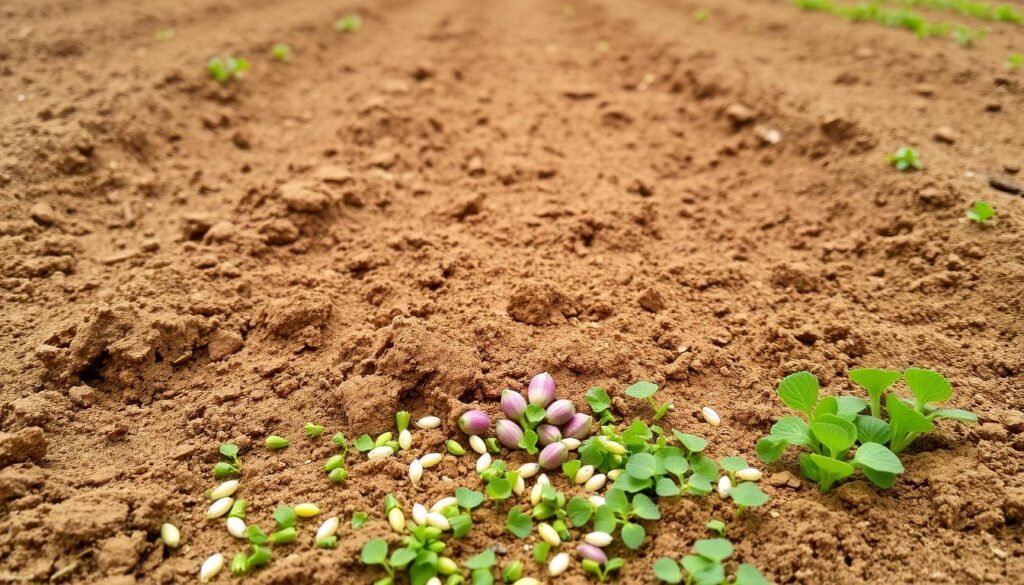
Good establishment begins before the first seed touches the soil. Prepare a smooth, slightly moist surface and you will see faster, more even germination. A little prep protects the bed and helps plants take hold quickly.
Prepare the seedbed: Smooth the bed and add 1–2 inches of finished compost. This boosts organic matter, helps retain moisture, and buries many weed seeds.
How should I sow for even coverage?
Broadcast seed by hand for small plots. Walk across the bed in two directions to spread seed evenly. Lightly rake for good soil contact so sprouts start uniformly.
What about water and early care?
Irrigate thoroughly after sowing. Keep the surface consistently moist for the first 7–14 days so roots can anchor and a quick canopy forms to shade the soil.
Where can I buy small quantities of seed?
For small gardens, trust names like Johnny’s Selected Seeds, High Mowing Organic Seeds, and Fedco Seeds for quality, small-pack cover crop seeds. You don’t need 50-pound bags to get started.
- Smooth the bed and add 1–2 inches of finished compost.
- Broadcast seed evenly, rake lightly, and water thoroughly.
- Keep irrigation steady for 7–14 days for strong establishment.
- Trial small areas to fine-tune seeding rates before scaling.
- Label your beds with sowing date and species to track timing.
“Even, early establishment is the foundation for a strong cover that protects the bed and feeds soil biology.”
Termination methods and timing to protect soil and prevent weeds
Short answer: Termination choices affect soil structure, timing, and whether plants will reseed. Pick a method that fits your schedule, soil goals, and next crop.

When does crimp-and-tarp beat mowing and tarping?
Crimp-and-tarp is low-input. Flatten the stand with a crimper, cover with a silage tarp, and wait about 2–3 weeks until plants brown and die. This keeps roots in place so the soil structure and microbial habitat stay intact.
Why choose mow-and-tarp for faster results?
Mow (flail preferred) and tarp chops material so it breaks down more quickly. That creates a smoother mulch for transplanting sooner and reduces the chance of fresh weed flushes.
Are winter-kill plants and pulling ever the right call?
Winter-kill species — like oats or daikon in cold zones — save you labor. They die off and leave a tidy mulch by spring with minimal work.
Pulling plants removes roots and the matter that feeds microbes. Reserve hand-pulling for small patches or stubborn weeds only.
What about tilling and timing?
Tilling can work, but shallow cultivation (2–3 inches) is kinder to soil life and structure than deep plowing. Aim to terminate within about ten days of flowering to capture biomass and stop reseeding.
- Crimp + tarp = low disturbance, wait 2–3 weeks to brown.
- Mow + tarp = faster decomposition, smoother mulch for transplants.
- Pulling = last resort; you lose root benefits.
- Winter-kill species automate termination in cold winter climates.
- Shallow tilling (2–3 inches) protects pore space and microbes.
- Terminate rye early to avoid allelopathy; cut brassicas before flowering if needed.
“Terminate covers within about ten days of flowering to capture biomass and prevent unwanted reseeding.”
Keep the ground covered after termination. Leave residues or re-cover quickly to protect the soil, retain moisture, and suppress new weeds. Schedule termination with a buffer of a few weeks before planting so residues mellow and beds are easy to work.
Conclusion
Keep living roots in your beds whenever possible to feed microbes, build organic matter, and grow healthier plants with less work.
Letting living roots hold the ground makes the garden easier to manage and more productive. Start this spring with a simple mix like oats + peas, or try a short buckwheat window before summer.
Plan backward from planting time and leave a cushion for termination. Pick methods that fit your tools — mow and tarp or crimp and tarp work well. Mix legumes such as vetch and clover for nitrogen while grasses add bulk and mulch.
Prep a smooth, composted bed, source good seeds, and keep notes on timing and results. The payoff is steadier soil health, fewer weeds, and resilient plants. Ready to start? See how to use cover crops for practical next steps.