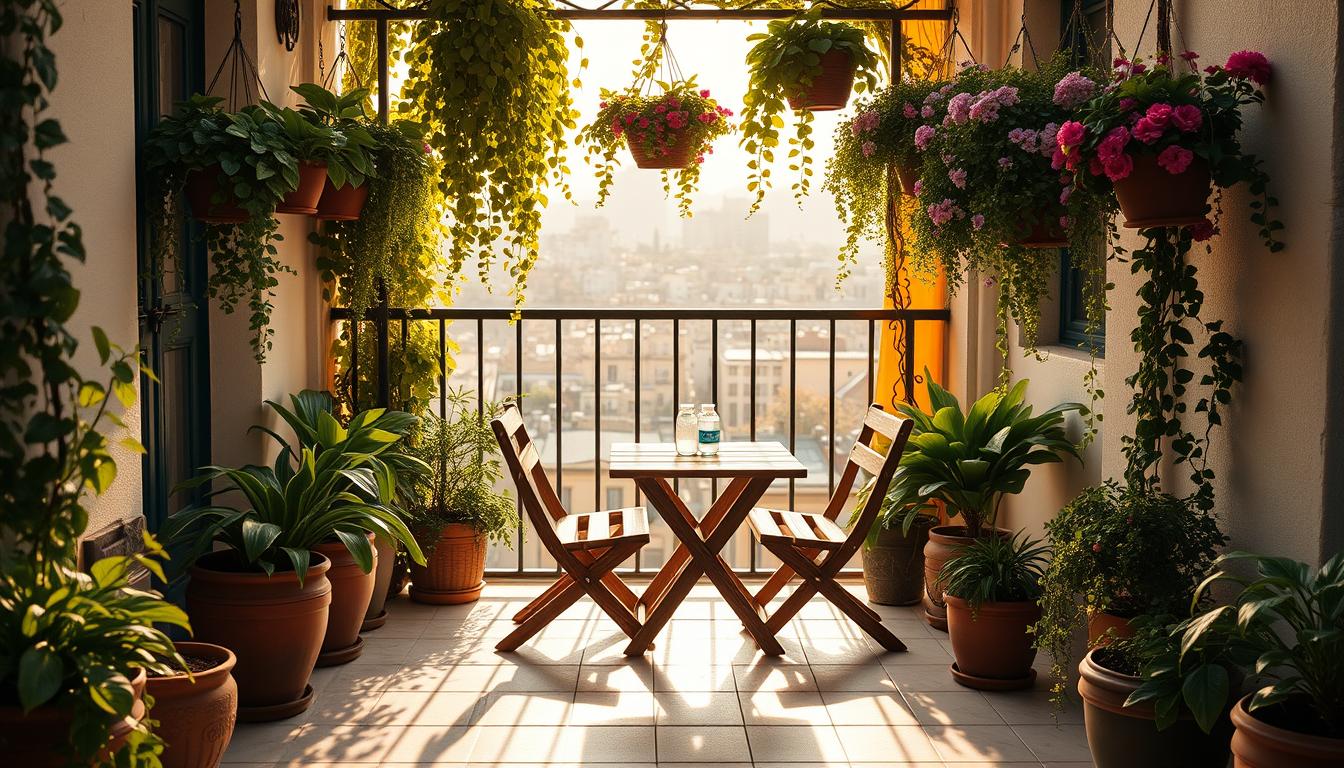
Yes — and it starts with a clear plan. I turned a typical 24–60 sq ft apartment balcony into a steady source of fresh greens, herbs, and a few fruity treats. This piece shows a practical, high-yield approach that fits real life.
The goal: a productive, safe, and cozy room-like outdoor spot that balances growing, dining, and relaxing without crowding the footprint. I focus on vertical growing, smart containers, and load-aware flooring choices.
Think coordinated color and decor to tie the space to your interior. Scaled furniture pieces and an outdoor rug add a living-room feel and keep the area uncluttered.
Preview: an edible wall and railing planters, a container canopy with trellises, and a compact table nook that doubles as a laptop spot. Renters can use clip-on planters and temporary flooring for flexibility.
Key Takeaways
- Maximize vertical space to multiply planting area without crowding.
- Choose weatherproof, lightweight flooring with known load capacity.
- Use scaled furniture and coordinated color to make the area feel like an extension of your interior.
- Pick a mix of quick leafy crops, sun-lovers, and a few container fruits for variety.
- Renters can achieve big yields with temporary fixtures and clip-on planters.
Why a Tiny Apartment Balcony Can Feed You More Than You Think
A focused plan turns limited floor area into a productive, low-stress garden. Small adjustments—vertical racks, tight spacing, and high-value crops—raise yields per square foot fast.
A tiny outdoor nook can out-yield a full garden when you focus on what matters most. Treat the area like a room you use daily. That habit makes care simple and consistent.
Vertical growing and stacking planters multiply planting area without enlarging your footprint. Tight spacing works for many greens and herbs if you water and feed on schedule.
- Daily check-ins: five minutes a day prevents pest and watering issues.
- High-value crops: herbs, salad mixes, peppers, and roots give the best return for little room.
- Kitchen-garden sowing: staggered planting keeps bowls full with repeat harvests.
Map sun and wind, match plants to microclimates, and pick manageable containers. When you make the outdoor space welcoming, you spend more time there—and the plants reward you with steady harvests.
| Strategy | Why it helps | Best crops |
|---|---|---|
| Vertical racks | Adds layers of planting without extra floor area | Basil, mint, lettuce mixes |
| Stacking planters | Increases density and ease of watering | Salad greens, baby spinach |
| High-value focus | Maximizes flavor and cost savings per pot | Peppers, herbs, specialty roots |
| Frequent, small sowings | Keeps harvest steady and reduces waste | Cut-and-come-again lettuces |
Map Your Sun, Wind, and Load Limits Before You Plant
Quick audit sets safe, realistic expectations. Chart light, gusts, and structural limits so your design fits both plants and rules.
Start with a quick, hands-on audit: measure the usable footprint and watch light and wind for several days.
Note typical sizes—most small balcony areas run 24–60 sq ft. Check building guidance for max load before adding heavy planters or furniture.
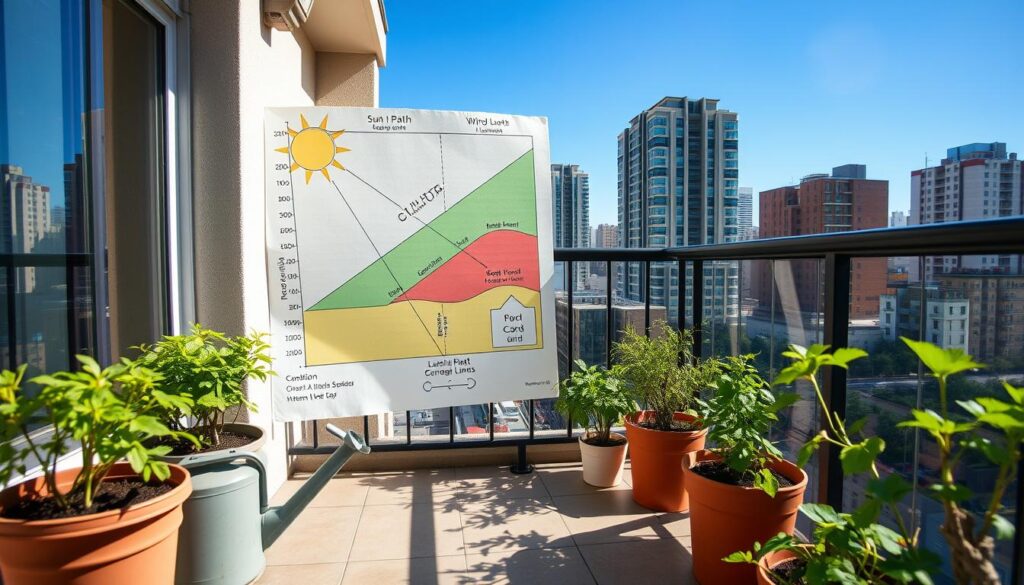
How much sun and where?
Track sun by the hour and label zones: full sun (6+ hrs), part sun (3–5 hrs), and shade (less than 3 hrs). Match plants to these pockets.
Where to place heavy items?
Keep deeper, water-filled pots near the wall where structure is strongest. Spread weight evenly and avoid stacking heavy items in one corner.
- Flooring: choose weatherproof, non-slip, lightweight options. Interlocking deck tiles are renter-friendly and removable.
- Wind control: install privacy screens or curtains to cut drafts and reduce water loss.
- Access: plan 18–24 inch aisles for watering and harvesting on time.
- Tools: add hooks on a wall for pruners and a watering can to save time and space.
| Checklist | Why it matters | Action |
|---|---|---|
| Measure area | Defines plant capacity and aisles | Record sq ft (24–60 typical) |
| Track light | Matches crops to microclimates | Log hours over 3 days |
| Check load limits | Prevents structural risk | Consult building guidelines |
| Choose flooring | Protects surface and grip | Use lightweight, interlocking tiles |
The High-Yield Layout at a Glance: Zones for Dining, Growing, and Relaxing
Divide the area into clear functional zones so each moment outdoors has a purpose. A simple plan gives you room to grow, a place to eat, and a calm corner to unwind.
Start by sketching three zones: vertical edibles at the edges, taller containers with trellises in the middle, and a compact dining nook. This keeps plants and people from getting in each other’s way.
How should you set up the edible wall and railing zone?
Use grid panels, slim shelves, and railing boxes to lift herbs and greens to eye level. Hanging planters free floor area and speed harvests.
Where do deeper pots and trellises go?
Place the canopy and trellis zone midline. Deep pots hold tomatoes, cucumbers, or beans. Run strings to an overhead line or upper frame for vertical support.
Can a dining nook double as a workspace?
Yes. A foldable bistro set or a railing bar creates a two-seat dining spot that also holds a laptop or a potting tray.
- Keep sightlines open to preserve views; step plant heights down toward the seating area.
- Leave a 24-inch path for easy watering and harvests.
- Choose foldable furniture and a slim table to reclaim floor room when needed.
- Place scent-forward herbs like basil and rosemary near the nook for a fresh, inviting feel.
| Zone | Main features | Best use |
|---|---|---|
| Edible wall & railing | Grid panels, railing boxes, hanging pots | Herbs, salad greens at eye level |
| Canopy & trellis | Deep containers, overhead strings, stakes | Vining crops: tomatoes, cucumbers, beans |
| Dining/work nook | Foldable chairs, slim table, railing bar | Meals, laptop work, potting on demand |
Go Vertical: Wall Planters, Ladders, and Hanging Solutions
Want more growing room without losing floor space? Turn an underused wall into layered planting real estate with ladders, grids, and hooks. Vertical systems create plenty of room for herbs, greens, and pollinator flowers while keeping the area tidy and reachable.
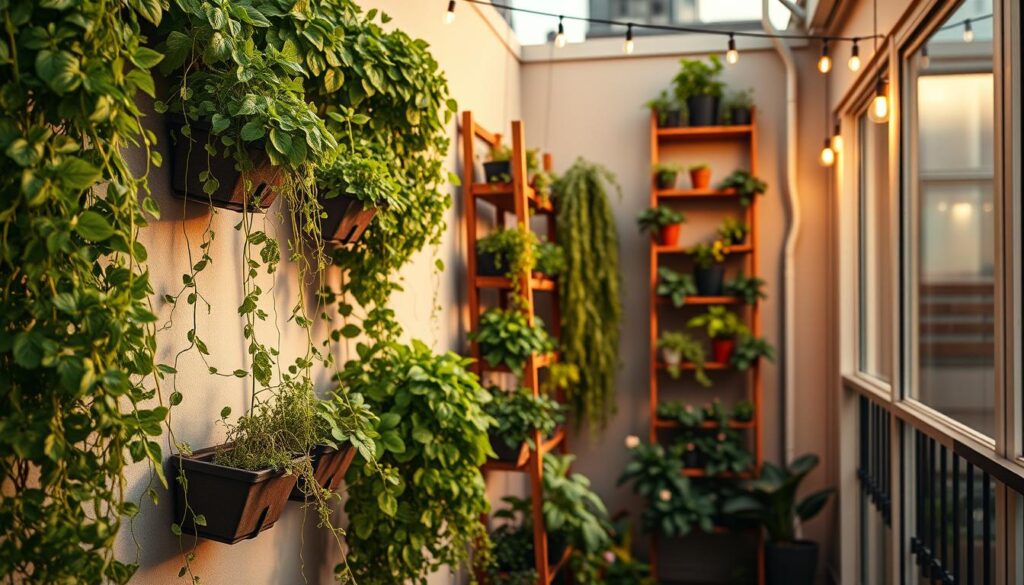
How can a wall grid and ladder boost yields?
Mount a metal wall grid and clip modular planters for cut-and-come-again lettuce, mint, and cilantro. A freestanding planter ladder is renter-friendly, portable, and keeps herbs at harvest height.
How do hanging baskets free floor space?
Use ceiling hooks for lightweight hanging baskets. Distribute weight, check anchor points, and keep soil light with perlite or coco coir so the structure handles the load.
- Group by water needs on the same tier to simplify care.
- Tuck trailing oregano or strawberries high so stems cascade without shading lower pots.
- Plant plenty of fast growers—basil, dill, kale—near eye level for frequent harvests.
Tip: Label tiers for quick feeding and pruning. These renter-safe fixes multiply your planting space and make the balcony feel like a true kitchen garden.
Railing Real Estate: Boxes, Bars, and Safety
Make the railing work harder without sacrificing safety or style. With secure mounts and mindful plant choices, you can add color, grow herbs, and enjoy a slim dining spot.
A secure railing can double as a kitchen shelf when you fit it with the right boxes and a slim bar.
Flower boxes with edibles for color and yield
Choose railing boxes with sturdy brackets and straps. Test each mount before you add soil or water. Mix edible flowers and herbs—nasturtiums, parsley, and thyme—for color and quick harvests.
Group low-growing plants on the outer edge so views stay clear. In windy spots, pick compact varieties and use coconut fiber liners to anchor roots.
Balcony bar shelves for eating, working, and seed starting
Install a balcony bar shelf to create a narrow table for coffee, seed trays, or a laptop. Place a couple of folding chairs at the bar when you host, then stow them to keep the path open.
- Safety first: keep heavy pots on the inner ledge and add under-box drip trays or self-watering inserts to stop runoff.
- Use liners and straps to prevent soil washout in storms and protect the building if you live in an apartment.
| Feature | Why it helps | Best picks |
|---|---|---|
| Sturdy brackets | Prevents tipping and keeps mounts steady | Metal brackets with strap anchors |
| Self-watering trays | Reduces runoff and watering frequency | Under-box trays or inserts |
| Compact plants | Survives wind and keeps sightlines clear | Parsley, thyme, baby nasturtium |
Containers and Soil That Supercharge Growth in Small Spaces
Pick the right pots and soil and your plants will repay you with steady yields. Deep, tuned mixes and lightweight, weatherproof containers keep roots happy without overloading the structure.
Proper planters and mixes unlock big growth from limited outdoor space. Start with deep, right-sized pots so roots can spread without wasting precious volume.
Choose lightweight containers such as resin or fabric. They cut weight while giving roots room. Dark-colored pots warm soil for warm-season crops; pale ones keep greens cooler in heat.
Build mixes with quality potting soil, plenty of perlite for drainage, and a cup of compost for steady nutrients. Check drainage holes and elevate pots on feet to avoid soggy bottoms.
“Blueberries thrive in rotted pine bark rather than regular potting soil; top-dress with coffee grounds for acidity.”
- Match mixes to crops: rotted pine bark and acid mix for blueberries; regular potting with compost for most herbs.
- Thirsty trees: set dwarf mulberries in shallow water trays so they can sip between waterings.
- Group by water needs and pot volume to keep irrigation simple across the balcony.
| Need | Action | Why it helps |
|---|---|---|
| Deep rooting | Use deep, right-sized planters | Prevents root binding and boosts vigor |
| Drainage | Add perlite and elevate pots | Prevents waterlogging and root rot |
| Crop-specific mix | Use rotted pine bark for blueberries | Provides acidity and proper texture |
| Weight limits | Choose resin or fabric containers | Respects load ratings while enabling big pots |
Repot perennials every 1–2 years and mulch tops with straw or cocoa shells to cut evaporation. Little choices like these keep your urban garden resilient and productive.
Leafy Staples That Keep the Harvest Coming
Short answer: Plant dense, pick often, and stagger sowings. These habits turn quick greens into weeks of fresh salad with very little extra work.
Leafy greens are the fastest way to keep harvest bowls full with little fuss. They fit tight spaces and tolerate varied light. With the right planters and a bit of routine, you can harvest on a weekly schedule.
How does the cut-and-come-again lettuce method work?
Sow loose-leaf lettuce densely across a wide shallow pot. Wait about four weeks, then harvest outer leaves while the center keeps growing.
- Pick often, plant densely, and your bowls stay full—leafy staples shine on any balcony garden.
- Sow every 2–3 weeks to avoid gaps and save time later.
- Use shallow, wide planters for leaf crops so deeper pots are free for fruiting plants.
- Feed lightly with a balanced liquid fertilizer to keep leaves tender without bitterness.
What edible fillers add color and ease?
Add cranberry hibiscus for tart, ruby leaves that brighten salads and the view. It gives color and a tangy bite without demanding much extra care.
Tuck oregano along pot edges so it spills over and scents the space. Oregano tolerates sun or shade and handles leaner watering schedules than most greens.
- Combine partial-shade greens under taller pots to use every pocket of light.
- Keep a small pair of shears on a hook so harvests are quick and gentle on regrowing crowns.
- Rotate planters between brighter and shadier spots weekly if your light shifts with the seasons.
“Staggered sowings and simple tools save time and keep your salad bowl full all season.”
For a step-by-step herb setup, try this handy herb planter guide to pair oregano and lettuce in the same pot safely.
Sun-Lovers for Salsas and Salads: Tomatoes, Peppers, and Basil
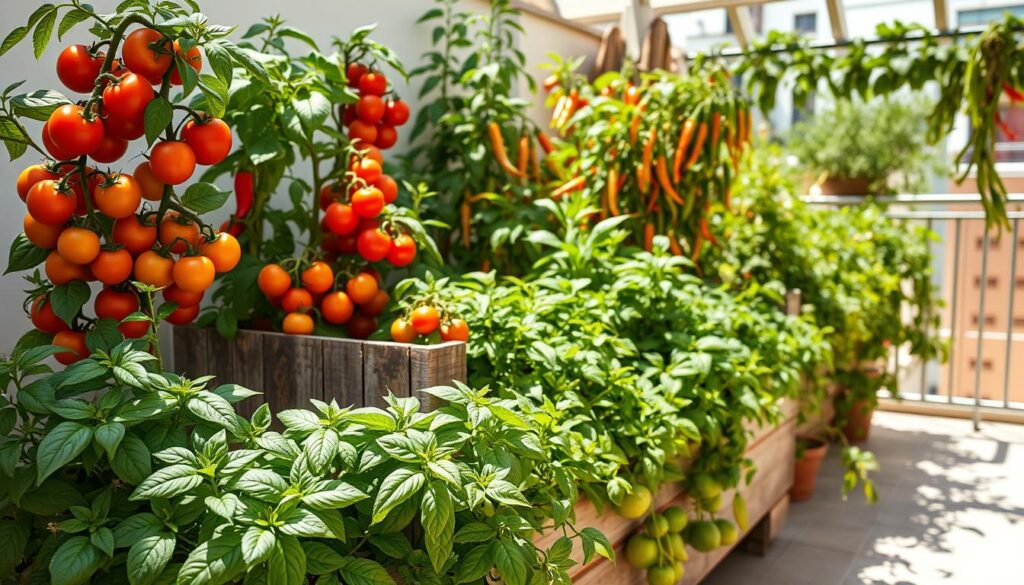
These heat-loving favorites need bright sun and good airflow; plant them in deep pots and you’ll harvest fresh salsa ingredients all season.
When sun and airflow meet, tomatoes, peppers, and basil become your go-to salsa team.
Give heat-lovers prime sun and airflow, and they’ll pay you back with constant flavor for salsa nights. Set tomatoes in deep containers with strong stakes or strings. Choose compact or determinate varieties to keep growth tidy on a balcony.
Tomatoes in pots often face fewer pests and start in perfect soil. If your spot lacks breeze, shake flowering trusses gently to aid pollination.
- Peppers: plant in the warmest, brightest spot. They thrive in heat and can live multiple years where frost is absent.
- Basil: sow seeds in small batches for steady harvests. Pinch tops weekly to encourage bushy growth. Try an African blue basil cutting if you want a perennial option.
- Water and feed: water deeply then let soil dry slightly to encourage strong roots. Mulch to hold moisture and feed every 2–3 weeks during peak growth.
Prune lower tomato leaves to improve airflow and remove suckers you don’t need for your training method. Harvest peppers green or fully colored to keep production steady.
Shade Winners: Ginger, Turmeric, and Coffee Under the Canopy
Can you grow spicy roots and a coffee shrub in low light? Yes — place them under taller crops and you add edible interest without losing prime sun. These choices fit tight space and reward you with flavor and novelty.
Plant ginger and turmeric from grocery-store rhizomes. Bury each piece 4–6 inches deep in roomy pots. Keep soil evenly moist and rich in organic matter so roots expand without waterlogging.
Harvest when foliage dies back in fall, or snap small pieces during the season for cooking. The yields are modest, but the fresh flavor and aroma are worth it.
Grow coffee as a glossy, shade‑tolerant evergreen. It makes tea from the leaves and can overwinter indoors if your region freezes. Rotate its pot occasionally to keep growth even on directional light balconies.
- Use shadier pockets under trellised tomatoes or beans to stack layers in one footprint.
- Feed lightly—shade plants need fewer nutrients than heavy fruiters but like steady moisture.
- Label your shade zones and refresh rhizomes each spring for consistent yields.
“The small sensory payoff — spiced roots and glossy leaves — makes shaded corners feel purposeful and lived-in.”
Small Fruits in Pots: Strawberries, Blueberries, and Dwarf Mulberry
Short answer: Pick fruiting varieties that thrive in containers and fit your outdoor seating plan. These choices give steady treats without sprawling into permanent beds.
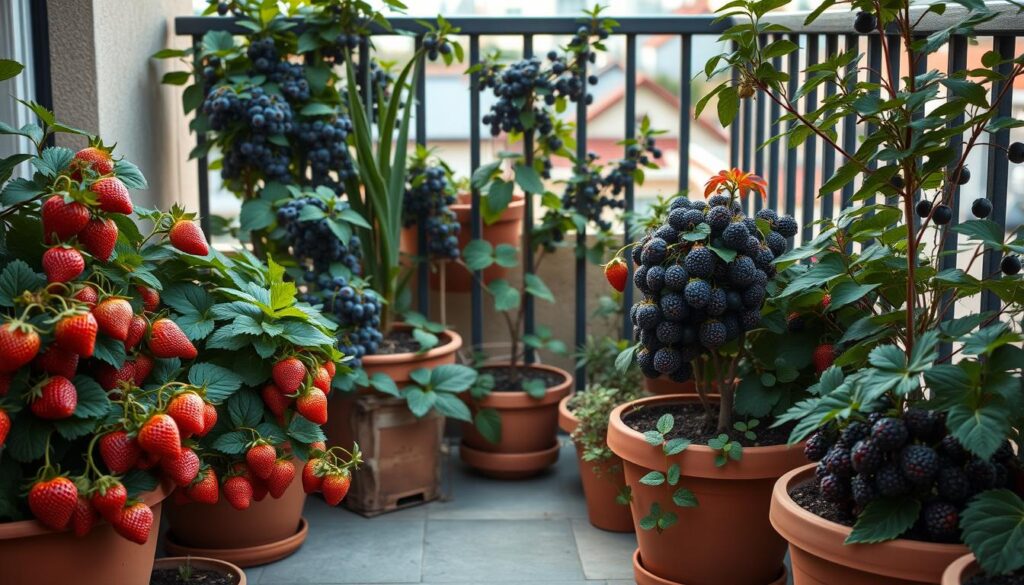
Fruit in pots gives you juicy rewards and keeps vines from sprawling across your living space. Strawberries excel in hanging planters or tiered pots and need quick drainage with half to full sun.
How should you tweak soil and water?
Plant blueberries in rotted pine bark, not regular potting soil. Top lightly with spent coffee grounds to keep acidity steady.
Dwarf mulberries have vigorous roots and get thirsty. Set the heavy pot in a shallow water tray during heat spells so it can sip as needed.
“Group fruit pots near a seat or door so you check ripeness daily and snack straight from the vine.”
- Support: add one cane or trellis for taller berry canes to limit wind rock.
- Protect: net berries to deter birds while keeping airflow.
- Placement: keep at least one planter by your furniture or door for easy harvests and scent.
| Fruit | Best container medium | Quick care tip |
|---|---|---|
| Strawberries | Hanging baskets or tiered pots, quick-drain mix | Half–full sun, water evenly |
| Blueberries | Rotted pine bark + acidic top-dress | Use coffee grounds; choose self-fertile varieties |
| Dwarf mulberry | Large, sturdy container with deep mix | Keep in water tray in heat; prune lightly |
For design ideas and container tips, see this handy guide at Suburban Growing. It helps integrate fruit pots into a cozy, productive outdoor room.
Trellises and Strings: Training Vines Up, Not Out
Train vines upward and you keep paths clear while harvesting more per pot. This approach makes a narrow balcony feel open and elegant while boosting yield.
Design strings to overhead eye hooks or a sturdy wall grid. Anchor trellis feet in weighted pots so supports stay put when wind hits.
Run taut lines along a wall to train peas and beans. Prune side shoots so plants stay flat and won’t spill into the path.
- Grow up, not out—slim trellises and twine save floor space for seating and movement.
- Clip tomato leaders to twine with plant clips, spiraling upward to keep aisles clear.
- Use loose ties for soft stems and check them weekly to prevent girdling.
- Use railing-friendly supports sparingly; favor interior anchors for safety and neighbor courtesy.
- Space pots so leaves just touch at maturity—this captures light without blocking airflow.
- Choose compact, container-bred varieties and add a hanging support for lightweight vines that can drape down.
“Keep pruners and a spool of twine on a small hook so training is a two-minute morning task.”
Watering, Fertilizing, and Time-Saving Care Routines
Can simple routines cut chores and boost yields? Yes: automate moisture and set a steady feed cadence. These habits keep containers productive and free up your weekend for living, not chores.
Automating irrigation and following a clear fertilizing cadence keeps chores short and yields high. Start with devices that protect surfaces and extend the interval between fills.
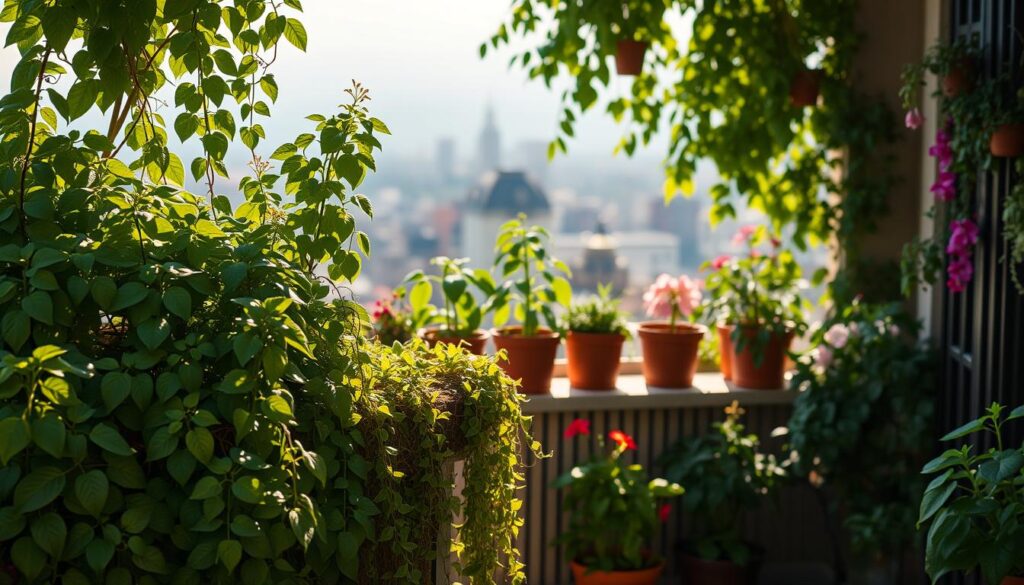
How do self-watering planters and trays help?
Self-watering planters store reserve water so roots sip as needed. They cut daily checks and reduce runoff that can stain decking or harm neighbors below.
Add sub-irrigated trays under heavy pots to stretch time between waterings on hot weeks. Water deeply when you do fill; shallow sips force roots to stay near the surface and dry faster.
What is a simple fertilizing cadence for steady yields?
Feed fruiting crops every 2–3 weeks with a balanced liquid fertilizer. For leafy greens, switch to every 3–4 weeks to keep leaves tender.
- Automate what you can—consistent moisture and steady feeding keep containers productive with minimal daily effort.
- Group thirsty plants together and place them within easy reach to save time during chores.
- Mulch pot surfaces and refresh topsoil with compost mid-season for steady nutrients.
- Set calendar reminders so fertilizing becomes a quick, repeatable task.
| Tool | Main benefit | Best for |
|---|---|---|
| Self-watering planter | Maintains consistent moisture; less daily watering | Herbs, salad greens |
| Sub-irrigation tray | Protects floor surfaces and recycles runoff | Medium to large containers |
| Balanced liquid feed | Quick nutrient boost; easy dosing | Fruit-bearing crops (tomatoes, peppers) |
| Mulch/top-dress | Reduces evaporation and evens soil temp | All container types in hot weather |
“Inspect leaves while you water; early signs of pests or deficiency are easier to fix than late ones.”
Keep a small bin with gloves, pruners, and fertilizer by the door. This saves time and makes caring for your balcony plants a five‑minute habit rather than a full chore.
Flooring That Feels Like a Living Room: Outdoor Rug vs. Deck Tiles
Comfortable flooring invites barefoot mornings and more time outside. Choose weatherproof, non-slip, and lightweight coverings so your planting room feels like a true extension of the home.
Comfortable flooring sets the tone for the whole balcony. It changes how you use the space and how often you sit, water, or harvest.
What are safe, renter-friendly choices for an apartment balcony?
Interlocking deck tiles snap together for fast install. They lift water away and improve footing after rain. They are easy to remove and won’t alter the substrate.
An outdoor rug adds warmth, softness, and instant living-room color. Pick a low-pile, weatherproof weave and a subtle pattern so pots and furniture read as one cohesive set.
- Pick safe, light, and cozy materials so you actually use the space daily.
- Keep a clear 24-inch lane and place edges to avoid trip points.
- Combine tiles under dining areas and a low-pile outdoor rug beneath lounge chairs for zoned comfort.
- Vacuum or shake rugs often to stop grit from scratching the surface.
- Test barefoot—if it feels good, you’ll spend more time caring for plants and relaxing.
Small Outdoor Furniture That Works Hard: Bistro Table, Chairs, and Foldables
Pick pieces that slide and fold—then your outdoor room shifts from workbench to dinner spot in seconds.
Quick answer: Choose compact, foldable pieces so your balcony doubles as a gardening station and a dining nook. Opt for light, weather-ready materials so you can move seating to sweep, water, or repot in moments.
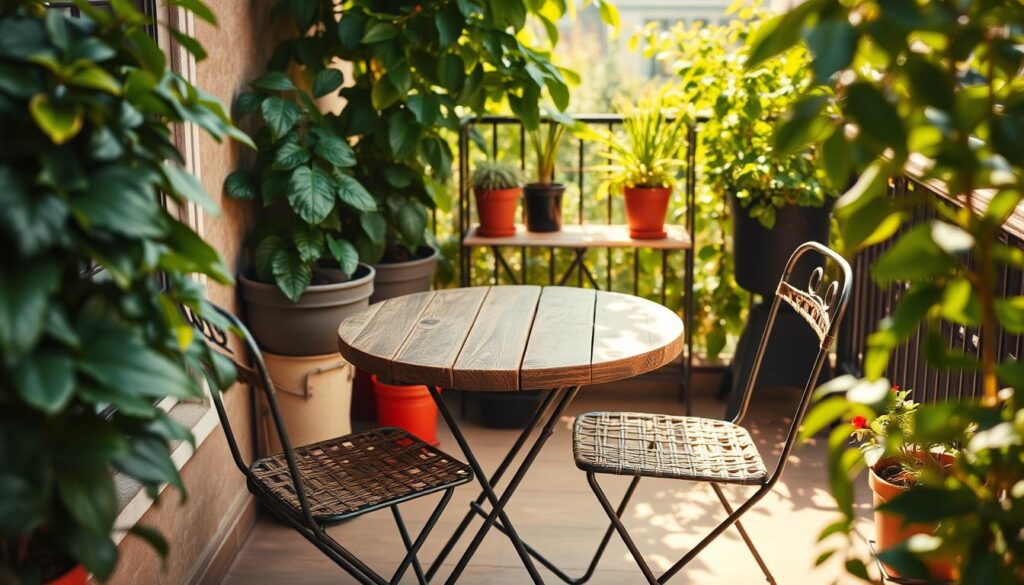
Start with a two-seat bistro set. A slim table and tuck-in chairs free up the aisles. When guests arrive, add a modular bench or split a vintage dining set into two pieces for flexibility.
- Fold-flat pieces save storage in a small apartment and clear the path for plant care.
- Lightweight materials like aluminum or resin are easy to lift and resist weather.
- Add a collapsible side table for potting or serving; fold it away when you don’t need it.
- Store cushions indoors to extend their life and speed cleanup after rain.
Leave rail and bar areas free for planters and a serving shelf. For curated picks, explore our garden furniture selection to find durable, compact outdoor furniture that fits the space.
Privacy, Shade, and Comfort: Screens, Curtains, and Awnings
A layered approach to screening and sun control makes the area feel private and cool. Use a mix of panels, fabric, and overhead shade to protect plants and people. The goal is a calm outdoor room that invites use at any hour.
Which screen options work best?
Solid panels block wind and neighbors for instant seclusion.
Bamboo rolls add warm texture; pair with a fabric liner for more coverage. Cheap outdoor cloth can extend privacy on a budget.
How should you add shade without closing the space?
Mount a compact awning or a freestanding umbrella to tame harsh midday sun while keeping airflow. Hang outdoor curtains for adjustable filtering and a soft, breezy style.
| Option | Best use | Durability |
|---|---|---|
| Solid panel | Maximum privacy, wind block | High (metal or treated wood) |
| Bamboo roll + fabric liner | Natural look, moderate coverage | Medium (replace liner seasonally) |
| Curtains & umbrella/awning | Adjustable light and comfort; protects furniture | High with weatherproof fabrics |
Tip: Attach slim planters to inward-facing screens to blend screening with growing. Secure all fixtures per building rules and add a small fan on hot days to keep air moving under fabric and shade.
Style the Space Like an Extension of Your Interior
Carry your living-room colors and calm textures outdoors so the space reads as part of your home. Treat the area as a true extension of your interior by matching key pieces and repeating a simple color story.
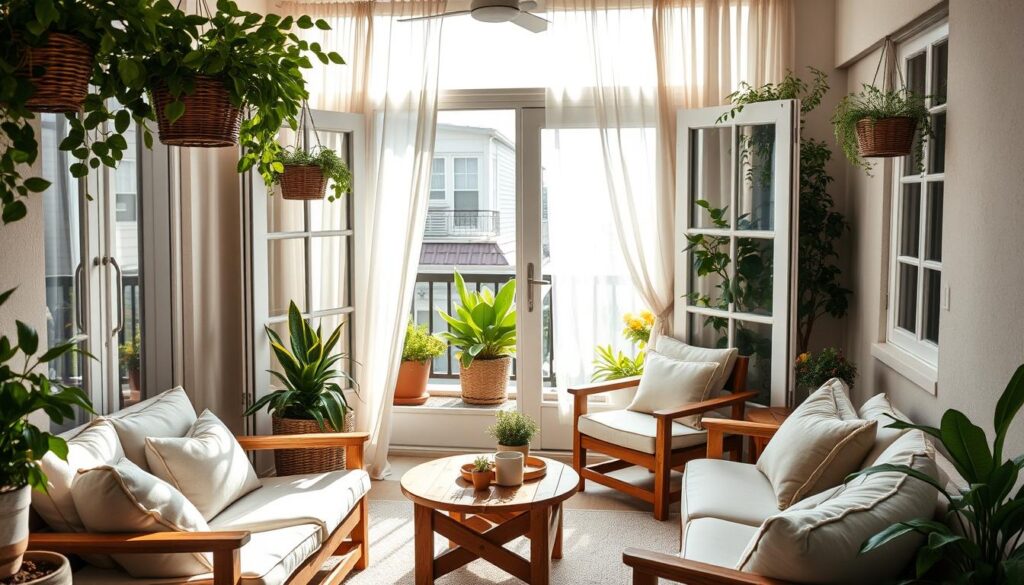
Pick two to three colors and repeat them across cushions, planters, and small decor. Use a subtle pattern on an outdoor rug and pair it with solid pillows to keep the view calm.
Color, pattern, and decor ideas
- Match finishes: keep pots in terracotta, black, or pale stone for a tidy feel.
- Scale wisely: choose one striking lantern or planter rather than many tiny items.
- Coordinate furniture: matching chairs and a compact table make the transition feel seamless.
- Frame sightlines: place a single statement planter at the far end to lengthen the outdoor space.
Quick tip: hang weatherproof art or a small mirror to bounce light and widen the view. Tie curtains or a screen into the same color scheme so privacy looks intentional, not improvised.
“Mirror your interior palette outside so the balcony feels like an easy extension of your home.”
| Element | Why it helps | Practical pick |
|---|---|---|
| Limited palette | Creates a calm, cohesive feel | Two–three colors repeated |
| Single statement piece | Draws the eye and reduces clutter | Large planter or lantern |
| Matching chairs | Seamless indoor–outdoor flow | Compact, weatherproof dining set |
Nighttime Magic: String Lights and Lanterns for Ambience
A string of warm bulbs can turn a daytime garden into a calming evening room. Use layered lighting to extend use past sunset while keeping views clear and comfort high.
Soft lighting transforms evenings—add string lights and a lantern to extend balcony use well past sunset.
Drape string lights along the top railing line or overhead to outline the space without glare. Choose warm white for gentle comfort, or add a single subtle color strand for festive nights that still feel relaxed.
Anchor lanterns on a side table or wall hook so they don’t crowd the chairs or block pathways. Keep fixtures low profile to preserve the views; indirect lighting makes the area feel larger and calmer.
Pin lights along an awning frame for a glowing canopy effect. Use outdoor-rated fixtures and timers so setup is safe and automatic. Coordinate light tone with your textiles and decor for a cohesive after-dark style.
- Soft lighting encourages evening visits and gentle plant checks.
- Place a dim zone near pollinator plants so night insects aren’t overwhelmed.
- Add one extra cushion or throw for cool nights to boost warmth and invite lingering.
“A warm glow lets you relax, dine, and notice blooms while the city slows down.”
| Goal | Placement | Tip |
|---|---|---|
| Perimeter glow | Top railing or overhead line | Warm white string lights, low glare |
| Task & mood | Side table or wall hook | Anchor lanterns, keep walkways clear |
| Canopy effect | Along awning frame | Pin lights for even, cozy cover |
Pet- and Kid-Safe Balcony Gardening
Keep edges secure and choose safe plants so everyone can enjoy the outdoor room.
A few simple fixes — mesh, sturdy pots, and smart screening — make an inviting, safe planting space. Start by adding a fine mesh along the railing to stop paws and curious hands without cutting airflow or light.
Make safety part of the plan. Use non-toxic choices like oregano, basil, strawberries, and lettuces. Move heavy planters away from edges and anchor tall trellises so wind won’t tip them.
- Privacy screens can double as safety barriers and hold lanterns or hooks for tools.
- Keep clear paths so watering cans and small feet move safely through the space.
- Store sharp tools in a latching box near the door and pick shatter-resistant decor and stable stools.
- Train vines away from the railing to prevent footholds and do a quick check after storms to re-secure loose items.
“Secure edges and choose non-toxic plants, and your outdoor room becomes a calm, safe place for play and harvesting.”
All-Weather Strategy: Durable Materials, Covers, and Seasonal Storage
A deliberate all-weather plan saves time and protects your favorite pieces through each season. Pick rot-resistant woods, weatherproof synthetics, and simple covers so maintenance stays light and your space looks cared-for.
Avoid constant repairs by choosing durable materials up front. Teak, cedar, and redwood resist rot and age gracefully if you treat them with a sealer each year.
For lighter pieces, consider synthetic wicker made from polypropylene. It stands up to sun and rain and stays easy to move when you store foldable chairs flat against a wall during storms.
- Use water‑repellent covers when you leave town or during heavy wet seasons.
- Elevate pots on feet and use saucers to stop standing water from harming decking or your house exterior.
- Keep a repair kit with zip ties, clips, and sealant for quick fixes after rough weather.
“A 15-minute monthly walk to tighten fasteners and reseal wood prevents most costly repairs.”
| Task | What to use | Quick tip |
|---|---|---|
| Wood care | Teak, cedar, redwood + annual sealer | Seal in spring after cleaning |
| Synthetic pieces | Polypropylene wicker | Wash with mild soap; UV-stable options last |
| Storm prep | Foldables + water‑repellent covers | Store flat and tie covers down |
| Daily routing | Pot feet, saucers, small repair kit | Channel water away from door thresholds |
Rotate textiles seasonally. Clean and dry cushions before you store them inside the house to prevent mildew and keep them ready for the next sunny day.
For gear and tips on caring for container-grown tomatoes and other sun-lovers, see this short guide to outdoor furniture maintenance and seasonal care to save time and extend the life of your pieces.
Mindset and Yield: Tight Crops, High-Value Plants, Big Results
Aim for high-impact plants and tight spacing — that mindset shifts results fast. Focus on layered growing and steady care to get more from less.
Think in layers and value—grow what you love to eat, and train it to fit. Tight rows of greens free up pots for heavier producers that climb. Use vertical trellises for tomatoes and beans so the floor stays open for salad mixes and herbs.
- Plant tight and harvest often to encourage regrowth and avoid crowding.
- Prioritize high-value crops like peppers, ginger, turmeric, and basil for flavor-per-pot wins.
- Keep a simple log of sowing and feeding so small, regular actions compound over a season.
- Swap underperformers quickly—your limited space demands efficient picks.
Try one new idea each month. Celebrate tiny harvests; they add up and change how you use this garden, your space, and your life. These steady moves make the balcony a reliable source of fresh flavor and useful ideas.
small balcony produces surprising amount foodhere’s layout
Quick answer: Treat the space like a cozy room with defined planting, seating, and vertical zones. This plan fits heavy growers and a tiny dining nook without crowding the path.
Treat this outdoor nook as a multi-use room: growing, eating, and lounging all in one compact plan.
Here’s the exact plan: an edible wall and railing planters at the left edge, midline trellis pots center-left, and a slim dining/work nook on the right. Use railing boxes for herbs and edible flowers and stack a wall grid with planter cups for salad greens.
Place two deep containers center-left with strings for tomatoes and cucumbers. Keep airflow clear by spacing pots and pruning to the trellis. Add self-watering trays under the biggest pots and mulch tops to cut watering chores.
Add a compact bistro set or a railing bar on the right for meals, reading, and potting. Layer lighting with one lantern and a short run of string lights for a warm after-dark look.
- Style tip: repeat two pot finishes and one accent color across cushions and textiles to tie the look together.
- Choose scaled furniture so pathways stay open and fold pieces away when you need extra workroom.
- Tuck shade crops like ginger and turmeric under taller canopies to use every microclimate.
This mix balances yield and calm style, proving practical balcony ideas and thoughtful furniture make urban balconies both beautiful and productive.
Conclusion
Finish by treating the area as a single, flexible room where planters, seating, and lighting work as one. This approach turns your balcony into an intentional extension of your home that feels like part of the interior.
Make choices that protect views and invite use: pick weatherproof flooring, add a light outdoor rug, use privacy screens, and mount a slim railing bar for plants and coffee.
Keep the look tidy with a simple color story and a few versatile pieces. A small table and two chairs shift from potting to dinner in seconds. Add string lights and subtle decor to welcome dusk.
Match crops to microclimates, use lightweight planters and proven soil tweaks, and keep a steady feed routine. Sketch your plan, place planters this weekend, and enjoy plenty of fresh harvests from your small apartment balcony.