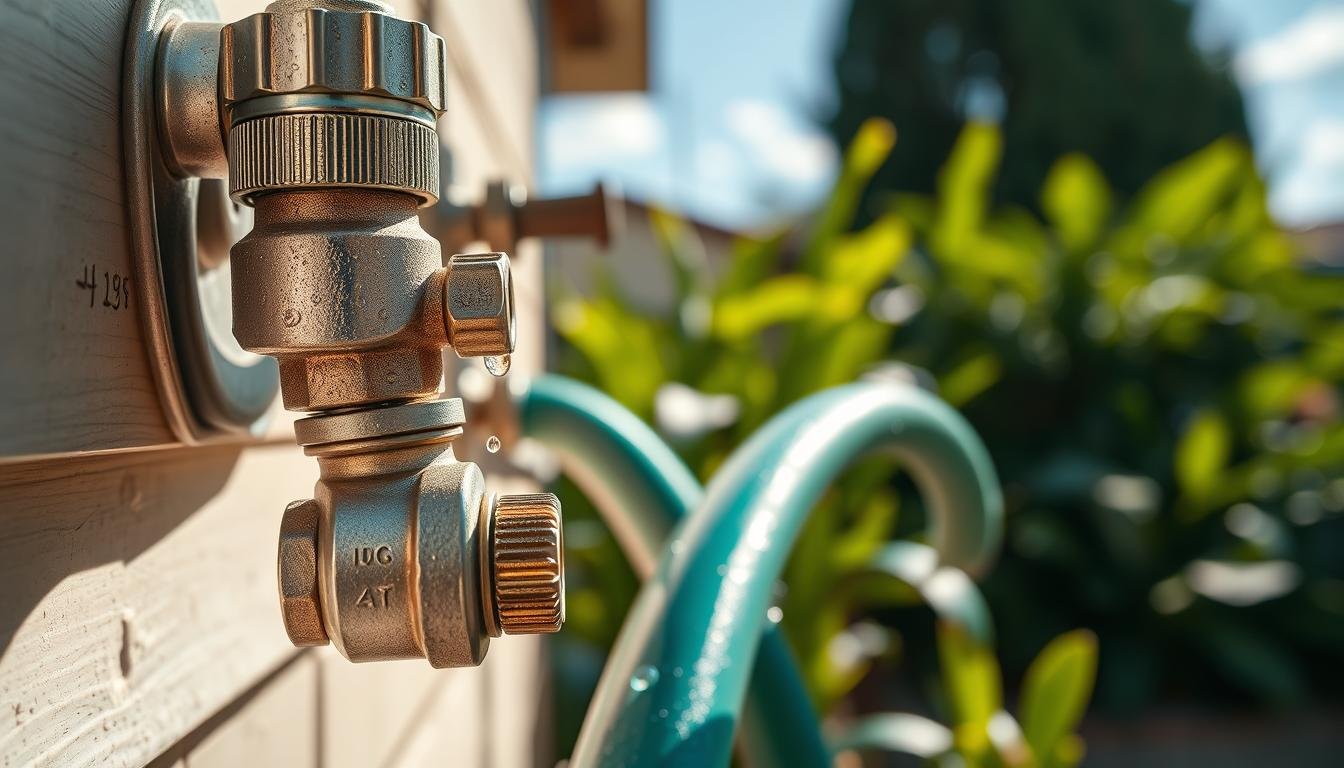
Spring arrives and your garden wakes — new seedlings stretch, soil smells warm, and then the hose gives you a weak trickle.
You’re not chasing perfection — just a clean, strong stream that waters deeply and consistently. This short guide helps you check whether the issue lives at the outdoor faucet, the splitter, or further into the plumbing so you avoid replacing the wrong part.
We start with simple observations and basic tools: a flashlight, hand tightening, and an optional pressure gauge. Quick wins often include unkinking the hose, reseating washers, and clearing mesh screens. If those don’t help, we’ll look at valves, regulators, supply-line blockages, and when a pro should step in.
Small checks first, smarter checks next — and a clear off-ramp if the problem exceeds the splitter or hose. For more detail on common outdoor faucet problems and parts, see this helpful resource at outdoor faucet troubleshooting.
Key Takeaways
- Begin with quick visual checks and simple fixes before swapping parts.
- Splitters add extra restriction points where tiny leaks or clogs steal flow.
- Carry a flashlight, basic tools, and a pressure gauge for deeper checks.
- Expect fast wins (washers, screens, kinks) and slower fixes (PRV or supply blockages).
- Call a plumber if valves, mains, or hidden leaks are likely the culprit.
What “Low Pressure” Means at a Hose Bib Splitter and Why It Happens
“Low pressure” at the splitter is usually a flow restriction in the path between your pipes and the nozzle. Diagnosing it is mostly about isolating where that restriction starts so you fix the right part.
Water pressure is the force in psi pushing through the system, and water flow is the volume that actually reaches your nozzle. Imagine a strong push through a straw: if the straw narrows, the push stays but the stream thins.
Outdoor taps and garden setups are more vulnerable because long runs, small nozzles, and add-ons introduce friction and extra seals. A partially closed valve or a misset pressure regulator can cap performance even when the supply is fine.
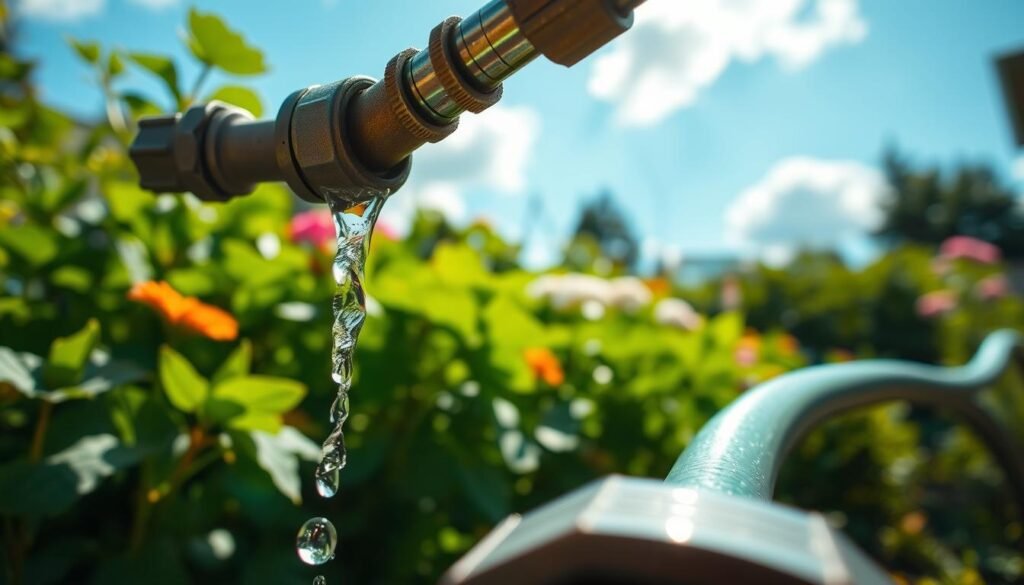
Common culprits include kinks, hidden leaks, clogged inlet screens, sediment in valves, and mineral build-up in pipes. Splitter-specific problems are narrow internal passages and tiny losses at each port; running two lines often makes these losses obvious.
Listen for sputtering at startup, a hiss at a fitting, or misting along a line—those cues help you map the flow path. Next, follow a simple ladder of checks: start at the nozzle, move back to the faucet, then test at the supply with a gauge or consult a pressure regulators FAQ or a DIY drip system setup guide for longer runs.
how to diagnose low pressure from hose bib splitter [troubleshooting]
A clear, step-by-step isolation process helps you find the fault fast. First check if the whole house shows reduced flow, then narrow the issue to the splitter, the hose and nozzle, the faucet outlet, or the supply line.
Whole-house or just outside?
Run a kitchen or bathroom faucet and compare the flow to the outdoor spigot. If indoor fixtures are weak, the main water supply or regulator may be the cause.
Bypass the splitter — what to try
Remove the splitter and attach one hose directly to the spigot. Test each port on the splitter alone. That isolates a bad port or internal restriction.
![how to diagnose low pressure from hose bib splitter [troubleshooting]](https://thegardenhaven.com/wp-content/uploads/2026/02/how-to-diagnose-low-pressure-from-hose-bib-splitter-troubleshooting-1-1024x585.jpeg "how to diagnose low pressure from hose bib splitter [troubleshooting]")
Quick checks and tests
Unwind and straighten the hose, inspect the nozzle face, and walk the line with water on to find leaks or misting. Hand-tighten fittings and check rubber washers for cracks.
| Symptom | Likely Cause | Quick Test | Next Step |
|---|---|---|---|
| Weak everywhere | PRV or main supply | Compare indoor fixtures | Check regulator setting; call plumber |
| Weak only outside | Clog, splitter port, or valve | Bypass splitter | Clean or replace affected part |
| Hose drips or mist | Pinholes or loose coupling | Walk the line | Repair or replace hose/connection |
| Low gauge reading | Supply blockage | Attach a pressure gauge | Use auger or call a pro |
For a simple gauge test and booster tips, see this outdoor spigot guide and a useful adapter reference.
Fixes That Restore Water Pressure and Prevent Future Low-Flow Problems
Once you identify where the restriction sits, the fix is usually straightforward: clean, reseal, replace, then optimize your setup for steady garden watering. Start with gentle cleaning, then move on to small repairs or part swaps before trying big changes.
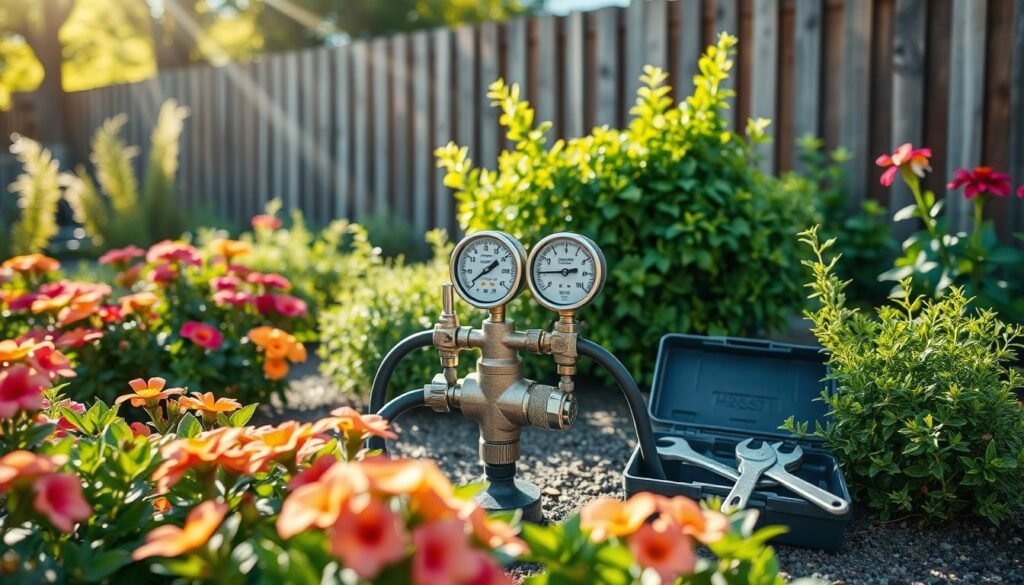
Clear clogs and buildup safely
Soak removable nozzle parts and short hose sections in a 1:1 vinegar and water mix for 24 hours. This loosens mineral scale, algae, and gritty sediment. Rinse and flush parts well until the water runs clear.
Flush the line by removing the splitter or nozzle and running the faucet briefly. Direct the flow into a bucket or away from seedlings so loosened debris doesn’t damage delicate plants.
Repair or replace worn components
Replace cracked washers and damaged gaskets, and tighten or replace a loose packing nut at the faucet handle to stop leaks. Swap old splitters that have narrow channels or sticky ports for a higher-quality model. Cut out damaged hose sections or choose replacement if leaks are frequent.
Improve performance long-term
- Select shorter runs and a wider garden hose—often 5/8-inch—for better water flow across typical yards.
- Avoid extra quick-connect bottlenecks that can restrict flow, and pick fittings designed for good throughput; see a guide on quick-connect fittings.
- Drain and store hoses out of direct sunlight to reduce algae and mould, keeping hoses flexible and less prone to kinks and micro-cracks.
When the whole system stays under target
If measured water pressure sits below roughly 40 psi, consider adjusting the pressure regulator where allowed or adding a booster pump for outdoor use. Booster pumps often connect at the faucet and use a small tank for steady output, but persistent system-wide issues merit a plumber’s evaluation. For more on outdoor faucet parts and service, check helpful outdoor faucet troubleshooting.
Conclusion
Small, steady checks usually lead to fast fixes and fewer surprises in the yard. Measure before you swap parts and you’ll save time, money, and plants.
, A little methodical testing will usually pin down where flow is getting choked and get your yard watering well again. Work from the splitter toward the supply: port → nozzle → faucet screen and valves → indoor shut-off → regulator or main line.
Quick checklist: bypass the splitter, unkink and inspect the line, reseat washers, clean screens, and flush sediment—then test with a gauge and compare to about 40–60 psi.
Store hoses out of sun, keep runs short, and clean buildup seasonally. If readings stay low across fixtures, a failed PRV, recurring clogs, or hidden leaks merit a call to a licensed plumber. For related fittings, see this camlock connector guide.