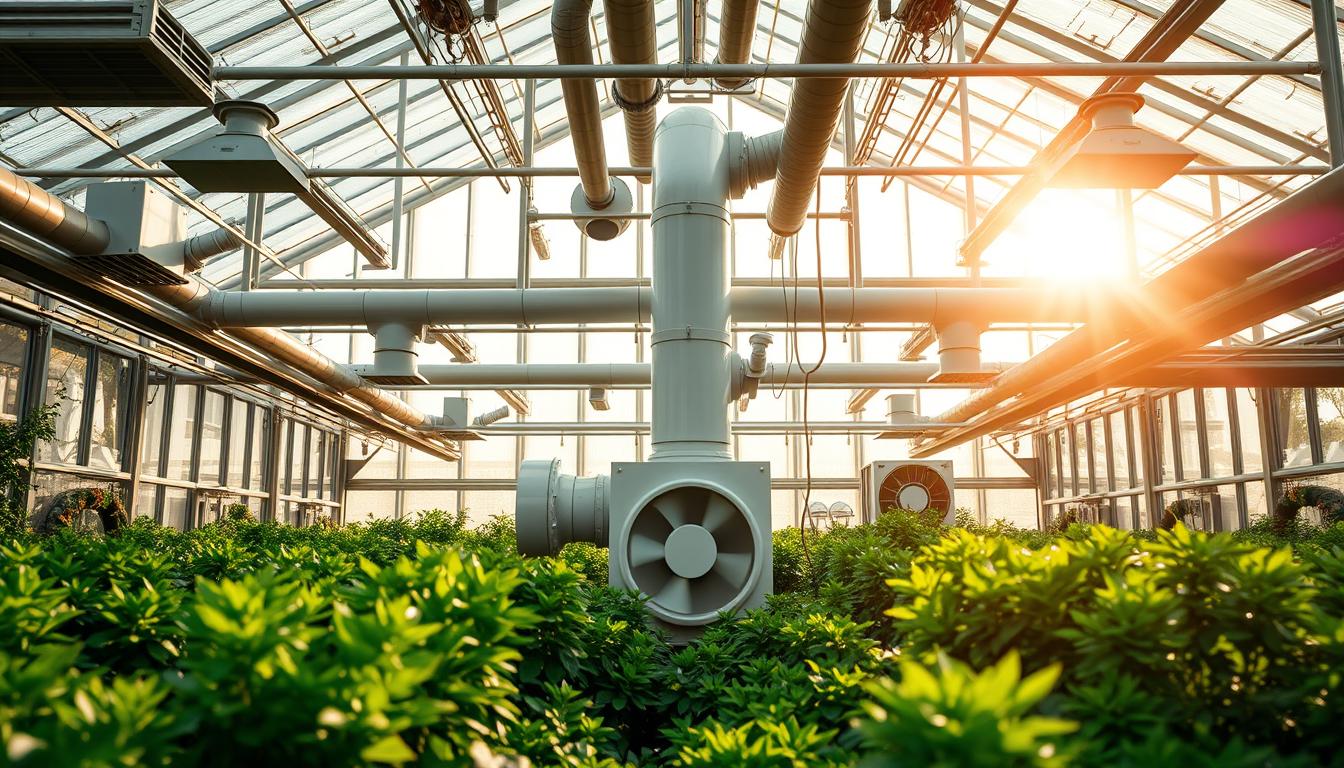
We Overhauled Our Greenhouse Ventilation—Here’s What Worked and What Didn’t.

Can a few simple changes stop midday heat spikes and keep winter nights steady? We tested practical fixes in two real settings to find out.

Table of contents

In a compact cedar Yardistry greenhouse with UV-resistant polycarbonate panels, an automatic roof vent opener set between 60°F and 70°F ran reliably over ten months.

A solar-powered floor fan aimed at the roof vent helped push warm air out in summer. In a larger aquaculture setup, a legacy Rinnai tankless heater used one probe and two pumps, which felt clunky and offered no backup.

After tying the site to two industrial Lochinvar boilers, adding five pumps and five probes, temperature swings fell from about 3°F to ~1°F and loop losses measured only ~15°F over a 100′ run.

Key Takeaways

  • Small tweaks matter: vent timing and fan placement cut peak heat.
  • Sensor redundancy: multiple probes smoothed control and added safety.
  • Heat source choice: commercial boilers beat undersized electric options in winter load.
  • Measure first: loop loss and pump layout drove better decisions.
  • Repeatable steps: settings and placement translate across backyard and commercial greenhouses.

Project context: a year of testing ventilation across different greenhouses and climates

We tracked temperature, lighting, and system reliability across two different sites to learn which fixes last. Small, quick changes and larger system upgrades both proved useful when matched to purpose and area.

Over twelve months we tracked temperature, light, and system reliability in two distinct growing spaces.

Profiles of each space

Cedar Yardistry structure: a compact cedar build with UV-resistant polycarbonate panels, an automatic roof vent set to 60–70°F, and a small solar fan aimed at the vent. It ran for 10 months hosting seedlings and collector plants. Shelving on three sides works well for organization but the panels stop at the lower shelf line and shade the under-shelf area.

Aquaculture production site: began with a Rinnai tankless unit using one probe and two pumps. After repeated cold events and a frozen exhaust, the site tied into two Lochinvar boilers with five pumps and five probes for redundancy and tighter control.

Seasonal stress in Ohio forced added artificial light on cloudy days and emphasized reliable heating in sub-zero spells. For a practical starter layout, see our urban greenhouse plan for ideas that scale with time.
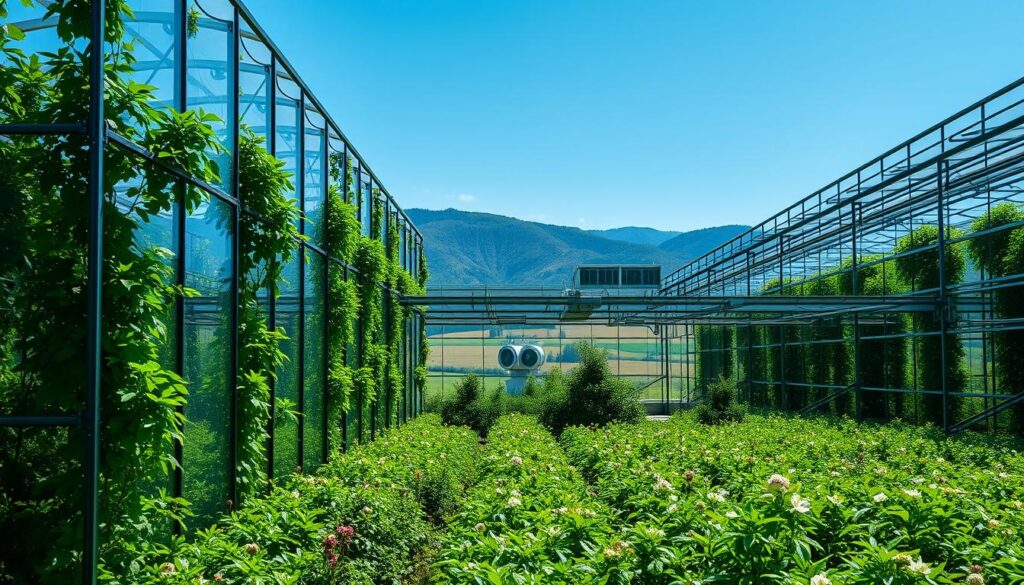
A lush, expansive greenhouse complex set against a backdrop of rolling hills and a clear blue sky. In the foreground, an array of towering glass structures, their frames casting intricate shadows across the verdant plant life within. The lighting is a soft, diffused glow, illuminating the diverse foliage and capturing the delicate details of the blooming flowers. In the middle ground, a network of automated vents and fans work in tandem, regulating the temperature and airflow to create the perfect growing environment. The scene conveys a sense of scientific precision and environmental harmony, where nature and technology coexist in perfect balance.

How we redesigned airflow paths and controls for real-world gains

We reshaped airflow and controls to force heat up and out, rather than letting it pool at plant level. The goal was simple: predictable air movement and reliable temperature control with minimum fuss.

Automated vent timing. Dialing the automatic roof opener to 60–70°F prevented midday heat spikes. That set point repeatedly relieved peak warmth without manual intervention, so the structure stabilized through bright days and cooler nights.

Low fan, high exhaust. A solar-powered floor fan aimed at the highest exit pushed warm air into the vent and boosted the stack effect in summer. Steady low-power flow moved heat away from foliage and roots more gently than short, loud bursts.

Better controls for hydronics. We replaced one probe and one pump with five probes and five pumps so each zone calls for heat independently. That change cut temperature swings from about 3°F to roughly 1°F and removed the tug-of-war between systems.

Measured gains. Sending 130°F and getting 115°F back after a 100′ loop showed only ~15°F loss with improved flow. Keeping panels clean and sealed helped the planned air path work as intended, day after day.
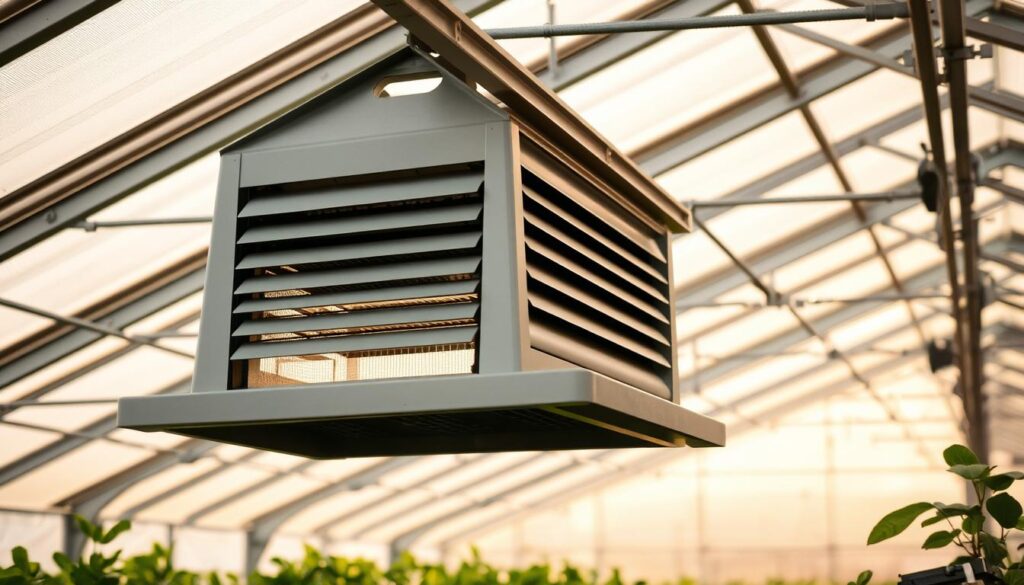
A greenhouse interior bathed in soft, natural light, featuring a prominent roof vent that dominates the foreground. The vent's sleek, aerodynamic design stands out, its louvered panels angled to guide a steady, controlled airflow. The mid-ground showcases lush, verdant plants thriving beneath the ventilated canopy, while the background fades into a hazy, atmospheric haze, emphasizing the vent's central role in maintaining the optimal growing environment. The scene conveys a sense of purposeful functionality, where form and function seamlessly converge to enable efficient greenhouse ventilation.

Overhauled greenhouse ventilation—here’s what worked what didn’t

Timed vents and a low‑power fan made the biggest difference on hot afternoons, clearing warm air fast. Setting the roof opener to 60–70°F then letting a small solar fan push air out matched heat buildup with gentle airflow. This cut peak stress on seedlings and kept interior temperatures steady on bright days.

What helped most

  • Passive-plus-active airflow: roof vents paired with the fan boosted natural convection without noisy ductwork.
  • Central boiler redundancy: two Lochinvar units with five pumps and five probes dropped swings to ~1°F and kept water and air targets stable.

What created problems

  • Panel layout and shelving: polycarbonate panels that stop above lower shelves left the under-shelf area shaded and reduced usable light. Tight bench runs also restricted low-level airflow.
  • Single-point control and electric limits: a lone probe with one pump caused system tug-of-war. Electric heating at >8,000W per system proved impractical given site power limits.
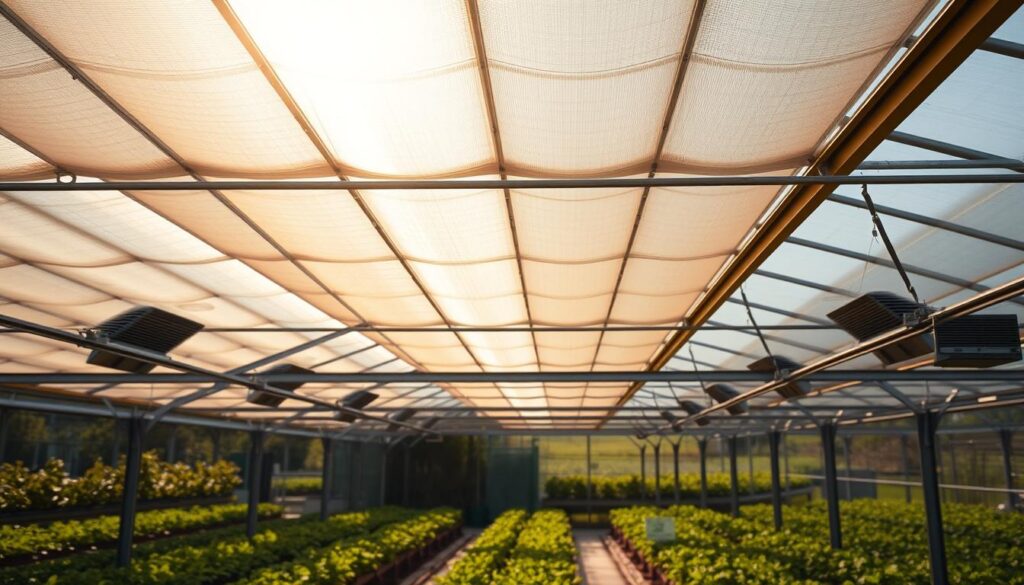
A large greenhouse with an array of ventilation panels installed on the roof and walls. The panels are a combination of transparent and semi-opaque materials, allowing natural light to filter in while facilitating air circulation. The structure is bathed in warm, golden sunlight, casting soft shadows across the panels. The greenhouse is situated in a lush, verdant setting, with the background hinting at thriving plants and a serene outdoor environment. The overall atmosphere conveys a sense of efficiency, functionality, and a harmonious integration of technology with the natural world.

Quick fixes: open space under benches, use wire shelving, and balance glazing so the lower area gets air and light. Small things—blocked intakes or piled debris—can stall the whole plan.

Design trade-offs, materials, and infrastructure that affect ventilation performance

Good glazing and reliable service capacity set the stage for steady climate control. Choose durable panels up top and plan power and networking beneath to keep systems responsive over time.

Polycarbonate panels can make or break light and heat behavior.

Polycarbonate panels: UV coatings, yellowing after months, and roof exposure risks

Panels determine long-term clarity and airflow behavior. Roof exposure takes the worst of sun and will speed UV wear. That can mean yellowing, loss of transparency, and trapped heat.

Reports from budget kits showed panels going brittle after months in strong sun, with roof panels failing first.

“We saw yellowing and reduced light transmission within months on low-grade kits.”

In contrast, the Yardistry unit used UV-resistant panels and stayed clear over 10 months, supporting the vent-and-fan strategy.

Practical tip: ask for documented UV coatings, schedule inspections, and clean panels to avoid dust or algae films that act like an insulating blanket.
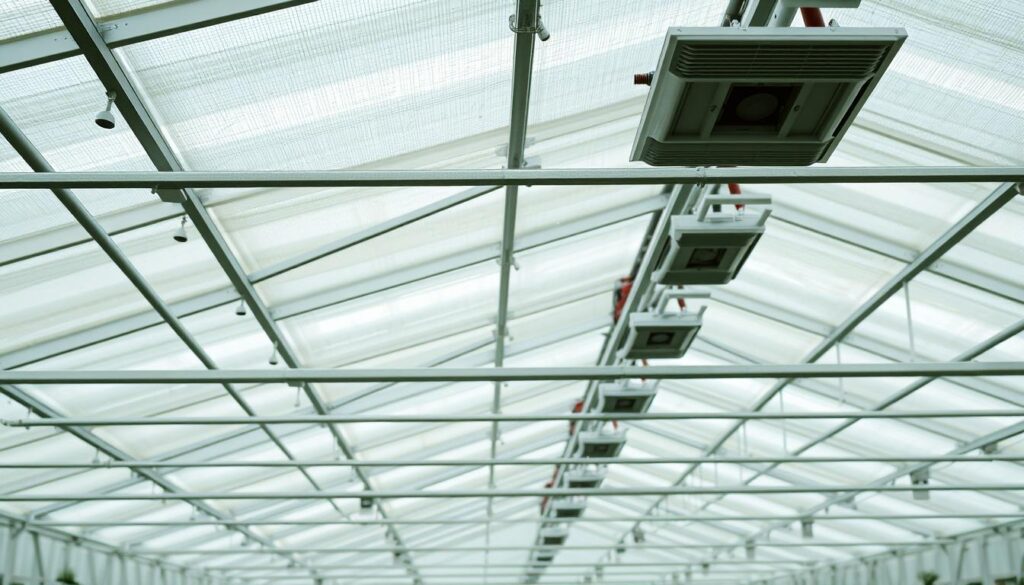
A well-lit greenhouse interior with a series of ventilation panels mounted on the walls and ceiling. The panels are made of sturdy, translucent materials like glass or polycarbonate, allowing natural light to filter through. The panels are arranged in a grid-like pattern, creating a sense of order and functionality. The lighting is bright and diffused, casting an even glow throughout the space. The camera angle is slightly elevated, offering a perspective that showcases the intricacy of the ventilation system and its integration with the overall greenhouse design. The atmosphere is one of efficiency and thoughtful engineering, reflecting the careful consideration of ventilation performance.

Power and internet backbone: why 400A service and reliable controls matter over time

Infrastructure matters as much as glazing. Limited electrical service forces devices to compete and can trip breakers during peak loads. Upgrading to a 400A three‑phase service removed those limits at the larger site.

Robust networking — 10GbE fiber with enterprise access points — kept sensors and controllers responsive. That connectivity cut delays in alerts and prevented avoidable losses during hot spells and deep cold.

  • Hydronic redundancy from dual Lochinvar boilers replaced single-point tankless failure modes and improved winter reliability.
  • Plan for lifecycle costs: cheap panels or undersized service may work short-term but add risk over time.

Bottom line: prioritize clarity up top (panels), power beneath (service), and visibility everywhere (networked sensors) to keep systems steady across seasons and years.

About the Author

Garden Expert (Ethan Green) is your green-thumbed guide at The Garden Haven. With years of hands-on experience in home gardening, greenhouse care, and sustainable planting, Garden Expert shares practical tips and expert advice to help you grow healthier, happier gardens—season after season.

Editorial Process Note

Just like a healthy garden, our content is carefully nurtured. Every tip and technique shared on The Garden Haven comes from years of hands-on experience. Before we publish an article, our team "weeds out" any inaccuracies by checking facts against trusted horticultural sources. We regularly revisit our articles to keep them fresh and up-to-date, ensuring you always have the best information for a thriving garden.

Conclusion

A couple of simple adjustments delivered steady climate control across both sites during summer and winter. Small changes — let hot air escape high and add modest, directed airflow — stabilized daily swings and reduced surprises over the year.

Practical takeaway: pair an automatic roof opener set to 60–70°F with a small solar fan for gentler, effective cooling on bright days. In larger builds, move from single-point heating to dual boilers with multiple probes and pumps to cut swings to ~1°F and add redundancy.

Plan infrastructure early — power, sensors, and clear panels matter. For notes on the build and service upgrades, see this project update.

FAQ

What kinds of structures did you test during the year-long ventilation project?

We evaluated several real-world setups, including a cedar Yardistry frame fitted with polycarbonate panels and an aquaculture-style greenhouse with radiant-floor heating. Testing focused on differences in materials, layout, and heating systems to see how each influenced airflow, light penetration, and temperature stability across seasons.

How did seasonal demands across the United States shape your approach?

Seasonal extremes—hot summers, cold winters, and varying daylight—forced solutions that balance cooling and heat retention. That meant designing systems that shed heat quickly on sunny, hot days yet conserve warmth during freezes, while maximizing light when days are short.

What changes did you make to airflow paths and control logic?

We redirected airflow upward, combined passive roof vents with targeted fans, and moved from a single-probe control to multiple sensors and pumps. This allowed smoother, more distributed control so air and soil temperatures stayed steadier across the space.

What settings worked best for automated roof vent openers?

In most cases, dialing in a 60–70°F opening threshold reduced heat spikes without compromising cooler overnight temperatures. The exact setpoints varied by structure and sunlight, so we paired these thresholds with hysteresis and multi-sensor input to avoid rapid cycling.

Why add a solar-powered fan aimed at the roof vent?

The fan moves warm air up to the vent when solar gain is highest, improving passive vent effectiveness and reducing internal heat buildup on bright summer days without extra grid power.

How did moving from a single-probe system to five probes and five pumps help?

Multiple probes provided spatial temperature data, preventing one hot or cold spot from dictating the entire system. Coupling probes to dedicated pumps allowed finer control over water and air movement, reducing temperature swings and improving microclimate consistency.

What measurable improvements did your changes produce?

We reduced typical air-temperature swings from about 3°F down to roughly 1°F in controlled areas, and limited loop heat loss to about 15°F across a 100-foot piping run in the best configurations, showing meaningful stabilization for plant health.

Which combinations proved most effective for cooling and ventilation?

Pairing passive roof vents with timed, directed fans performed best—vents provide the exhaust path and fans ensure warm air reaches those openings quickly, especially during hot, high-light periods.

What common layout or material choices hindered airflow?

Shelving and panel placement that block lower-area airflow and light were frequent culprits. Tall, densely packed racks and improperly installed panels can create dead zones where air circulation is poor and plants receive less light.

How did centralized boilers and redundancy perform in keeping temps steady?

Centralized boilers with redundancy maintained both air and water temperatures reliably, reducing downtime risk during cold snaps and smoothing fluctuations that stress plants. Redundancy proved critical in larger operations.

What failed or underperformed in some setups?

Single temperature-probe control was too crude for larger or uneven spaces. Also, undersized electric heating or cooling systems struggled to keep up in big structures, especially under peak seasonal loads.

What should I know about polycarbonate panels and their long-term performance?

Polycarbonate often includes UV coatings, but those can yellow or degrade over months with heavy sun and heat exposure. Roof orientation and ventilation affect longevity; plan for replacement or protective measures when light transmission falls.

How important is electrical service and networking for reliable control systems?

Very important. Robust services—up to 400A for larger sites—and reliable internet or local networking ensure controls, sensors, and automated devices run without interruption. Poor power or flaky connectivity undermines even the best mechanical designs.

Can I apply these solutions in a small backyard structure?

Yes. The core ideas scale down: use roof vents plus a small fan, deploy two to five temperature probes for better sensing, and set conservative automated thresholds. Tailor component sizes to your space and climate rather than copying commercial specs.

What maintenance keeps these systems working well year after year?

Regular cleaning of panels and vents, annual checks on fans and actuators, calibration of temperature probes, and inspection of pumps and piping for leaks will preserve performance. Address yellowing panels and blocked airflow patterns promptly.