
Can a tiny balcony or a sunny windowsill really supply petals for your plate and your table? This guide shows that you can create a stunning, safe edible layer in your home garden with minimal space and fuss.
Start simple: pick a few reliable varieties, use pesticide-free starts, and place pots or raised beds near the kitchen for daily harvests. Good soil and the right planting mix make a big difference; Cassie Winslow’s advice to begin with “gorgeous soil” is spot on.
Choose plants adapted to your zone and mix quick annuals with self-seeders like calendula and borage for low-effort returns. Design for reachability, prioritize safety, and build a short daily routine to keep blooms productive. For practical choices and beginner tips, see a detailed guide on edible blooms for small spaces and expert planting tips at garden herbs and soil basics.
Key Takeaways
- Start small: pick a few reliable varieties suited to containers and balconies.
- Use pesticide-free starts and quality planting mix for safe harvests.
- Plan placement near the kitchen to encourage regular picking.
- Mix types—annuals, self-seeders, and a few perennials—to extend bloom time.
- Daily habits like deadheading and quick checks keep plants productive.
Why Grow Edible Flowers Now: Benefits for Cooking, Decor, and Your Home Garden
Bright petals bring immediate color and a delicate taste to simple dishes and baked goods. They add a subtle, elevated touch that feels like a chef’s finish without a big expense.
Many options thrive in small containers and sunny windowsills, so you can harvest fresh accents even in tight spaces.

Petals add scent, texture, and color that turn a salad or dessert into a memorable plate. Using homegrown blooms saves money compared with store-bought garnishes and keeps your kitchen supplies free of florist sprays.
Several self-seeding annuals and hardy perennials will come back each year, lowering costs and keeping your home garden productive. Harvesting often encourages more buds, so regular picking actually helps more flowers grow.
- Practical beauty: Small pots supply restaurant-quality garnishes for light dishes.
- Garden helpers: Many blossoms attract pollinators and support nearby herbs and plants.
- Easy start: If you’re already cooking with herbs, trying their blossoms is a low-lift idea and a good idea for building confidence.
| Benefit | What to Expect | Quick Tip |
|---|---|---|
| Cost savings | Fewer store purchases for garnishes | Plant self-seeders to reduce replanting |
| Flavor & finish | Subtle floral notes on light dishes | Pick in the morning for best aroma |
| Garden health | Attracts bees and beneficial insects | Mix annuals with perennials for continuous blooms |
Getting Started the Right Way: Soil, Sun, and Safe Plants
Build a strong foundation with rich, well-draining soil and place beds where light matches each plant’s needs. This simple care prevents problems later and keeps blooms reliable through spring and beyond.
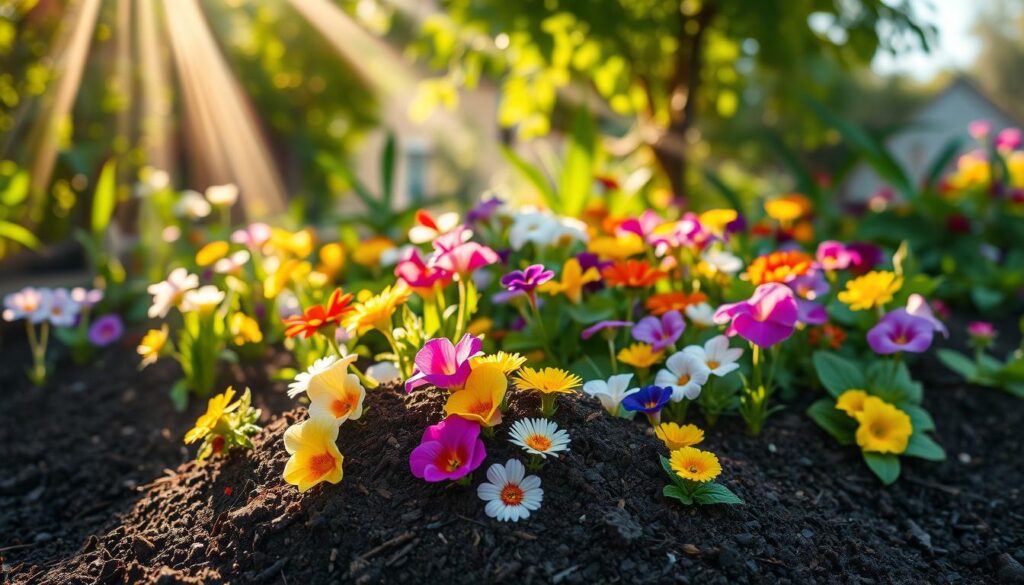
Build “gorgeous soil”
Mix a quality planting blend that drains yet holds moisture. Enrich it with compost so roots can anchor and feed. Use raised beds or large containers with drain holes to avoid waterlogging.
Match light and climate
Aim for full sun for most varieties; place heat-sensitive types in part shade. Check your USDA zone and choose options well suited to your garden so blooms set reliably.
Choose clean starts
Start from pesticide-free seeds when possible. If you buy starts, confirm they were grown without chemicals. Site plantings away from roads and pet paths to reduce the need for cleaning edible blooms later.
“Beautiful flowers start with gorgeous soil; the right plant in the right spot makes success simple.”
| Task | Why it matters | Quick tip |
|---|---|---|
| Soil mix | Balances drainage and moisture | Blend 60% mix + 40% compost |
| Light | Drives bloom and flavor | Observe sun 2–3 days before planting |
| Seed choice | Reduces chemical residue | Use certified pesticide-free seed packets |
- Water deeply but infrequently; mulch to keep soil steady.
- Space for airflow to reduce disease and simplify later cleaning edible petals.
- Keep notes on what thrived where to refine choices next season.
Beginner-Friendly Varieties That Are Easy to Grow and Use
Select easy-to-manage plants that offer distinct flavors and keep blooming with little fuss. These picks suit small beds and containers and reward simple care with steady harvests for your kitchen.
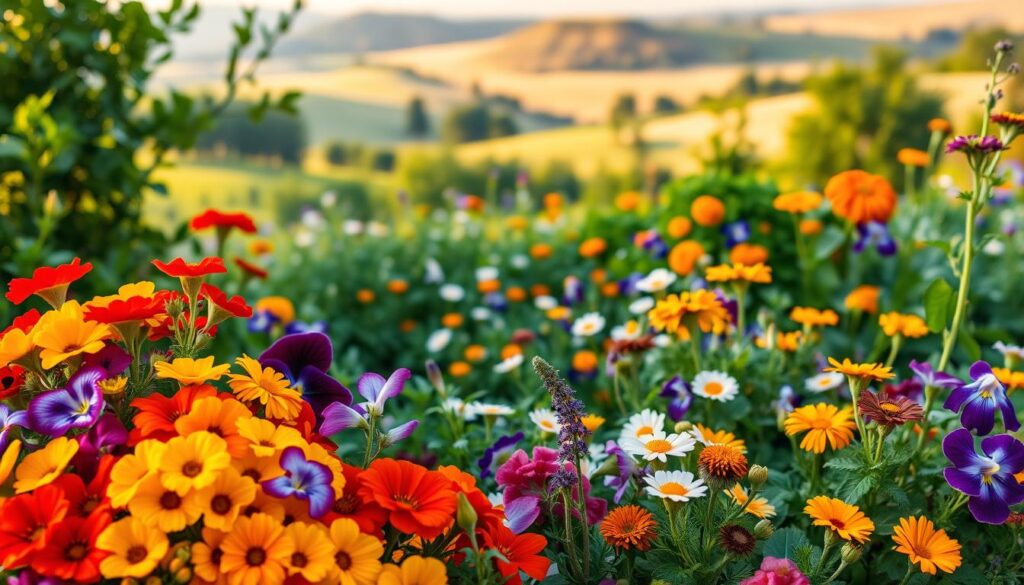
Borage
Borage tastes like cucumber and draws bees. It self-seeds and prefers sun to part shade. Sow it in beds — its taproot dislikes small pots.
Nasturtium
Nasturtium has peppery leaves and flowers and trailers beautifully from a container rim. It tolerates average soil and plenty of sun.
Chamomile & Calendula
German chamomile tastes apple-honey and suits containers for tea or dessert accents. Calendula gives vivid petals that lend a saffron-like color to rice and salads; it self-seeds readily.
Pansies, Chive, Cornflower, Lavender
Pansies hold up to baking and pressing; buy pesticide-free starts. Chive flower heads add an oniony lift to salads and soups. Cornflower dries well for tea and craft uses. English lavender offers floral-herbaceous notes for syrups and ice cream—plant in well-drained soil or a pot and source clean starts.
how grow edible flowers cooking decor: Step-by-Step Plan
Plan simply and plant with purpose: map a core mix for salad accents, garnish petals, and a few perennials that come back year year to reduce replanting. Keep goals small and practical so you harvest flowers regularly without extra fuss.
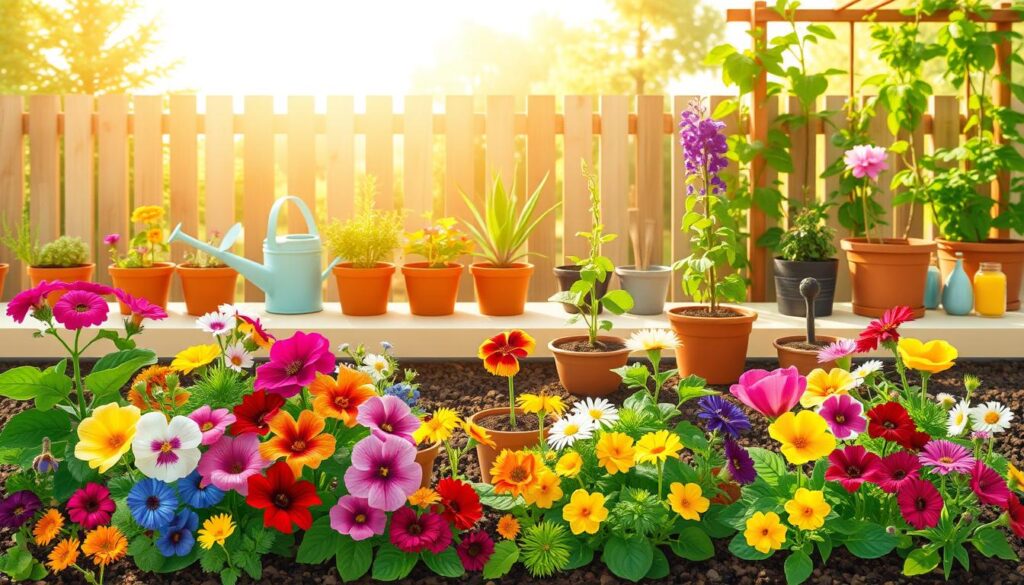
Plan your mix
Map your goals: choose a few quick annuals for immediate color and self-seeders like calendula and borage to anchor the display. Add chives or lavender in permanent spots so the bed has structure each spring.
Sow or set starts
Check your last frost date and time seedings across spring. Sow borage in April–May. Start nasturtiums 2–4 weeks before or just after frost for reliable establishment.
Water, feed, and deadhead
Water deeply, then allow the top inch to dry. Feed lightly with compost or a balanced organic mix to support buds.
Deadhead and harvest often: pick in the morning and remove spent blooms to encourage more buds. Frequent harvesting improves production.
Keep blooms clean
Site beds away from roads, footpaths, and pet areas so petals stay kitchen-ready. Group plants by sun and water needs to simplify care.
“Stagger plantings and keep pruners near the door — morning harvests become part of your routine.”
| Task | Timing | Quick tip |
|---|---|---|
| Plan mix | Early spring | Pick salad, garnish, and perennial anchors |
| Seed/transplant | After last frost / April–May | Sow borage after frost; start nasturtiums around frost date |
| Care | Through season | Deep water, light feed, deadhead weekly |
Containers, Balconies, and Small Spaces: Grow Edible Flowers Anywhere
With the right containers and light, a small space can supply steady blooms and fresh garnish. Smart pot choices and simple routines make tiny areas well suited to a lasting, productive display.

Choose pots that drain well and use a quality potting mix so roots never sit in water. Give each container generous drainage and fresh mix to keep plants healthy and petals abundant.
- Aim for six hours of bright sun at a balcony or sunny window; rotate pots weekly for even growth.
- Great container picks include nasturtium for trailing color, pansies for sturdy, edible petals, chamomile for airy sprays, and compact English lavender for scent and garnish.
- Avoid deep-taproot plants like borage in small pots; save those for the garden or raised beds.
Indoors, add a small fan for airflow and wipe leaves and rims to reduce dust so blooms stay kitchen-ready. Group pots by watering needs, use lightweight containers on balconies, and fertilize lightly and regularly to extend flowering without lanky growth.
| Plant | Pot fit | Key tip |
|---|---|---|
| Nasturtium | Great container | Trailing habit—hang or edge pots |
| Pansy | Container friendly | Sturdy petals, cool-season pick |
| Lavender | Well suited | Needs sharp drainage and sun |
Harvest lightly and often. Indoor plants rebound quickly and will supply steady sprigs and petals for your home kitchen when you keep a short, regular routine.
Herb and Vegetable Blossoms You’re Probably Already Growing
Many gardeners discover that pantry herbs and veggie plants produce tasty petals and tiny blooms that fit right into salads and plates. They often taste like the leaves you already use, so testing them feels familiar and safe.
Herb blossoms tend to mirror the plant’s flavor. Basil, oregano, rosemary, cilantro, and dill give subtle versions of their herbaceous notes in blossom form. Chive flowers break into small florets with a clean onion kick—perfect to scatter over a salad or soup.
- Arugula blooms taste like the leaves: peppery and bright for sandwiches or eggs.
- Squash blossoms are rich and slightly sweet—great stuffed or sliced into frittatas.
- Pea blossoms (Pisum sativum) are tender and mild; they add a sweet, fresh touch.
- Broccoli flowers are edible when the plant bolts—use them as a garnish or quick sauté addition.
Caution: do not confuse garden pea blooms with sweet pea (Lathyrus odoratus); the latter are poisonous and must be avoided.
Practical tips: harvest in the morning, rinse gently, and clip only part of the bloom load so plants still make leaves and pods. For a quick primer on safe picks and more examples, see this guide on edible flowers.
Planting and Care by Season: From Spring Sowing to Self-Seeding
Begin in spring with clear timing: direct-sow hardy annuals after the last frost and set transplants once nights stay mild. Stagger sowings every 2–3 weeks to stretch the season and keep a steady supply for the kitchen and the garden.
Start spring by timing seeds and transplants so each bed sets a steady rhythm of blooms and volunteers.
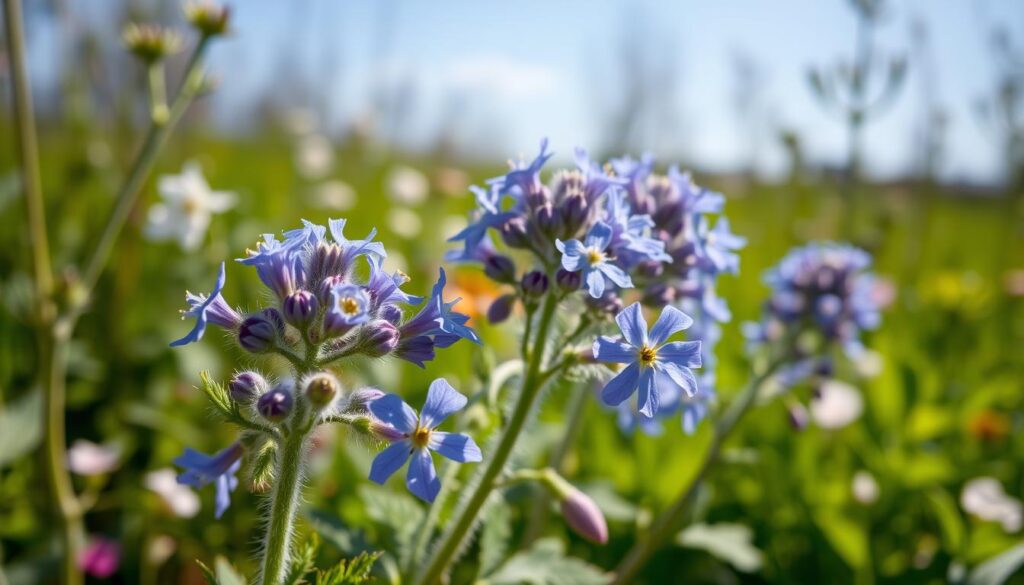
Direct sow vs. transplants
Direct-sow borage in April–May and sow cornflower after the last frost. Sow calendula from early spring through early autumn for repeated color. Set tender starts like nasturtium around frost dates so they establish quickly.
Self-seeders that return
Borage, calendula, chamomile, and nasturtium often come back from seed. Leave a few seed heads in fall if you want volunteers, or thin and transplant small seedlings into gaps.
Perennials for structure
Chives and lavender return year year and give early-season harvests and bed framework. They reduce replanting and support longer bloom windows for other plants.
- Keep newly seeded beds moist until germination, then reduce water as roots deepen.
- Thin seedlings to improve airflow and keep petals clean.
- Deadhead to extend bloom time unless you want seeds to set and flowers come up next year.
| Season | Action | Quick tip |
|---|---|---|
| Spring | Direct sow / transplant | Stagger sowings every 2–3 weeks |
| Summer | Deadhead / mulch | Increase watering depth during heat |
| Fall | Leave some seed heads | Mark volunteer areas for spring |
Practical note: For a brief guide to companion herbs and site selection, see this best herbs to plant and simple tips for growing edible flowers in small spaces.
Harvesting and Cleaning Edible Flowers for Best Flavor and Safety
Pick blooms in the cool hush of morning to lock in scent and crisp texture. This simple timing gives you plump petals and the best aroma when you prepare dishes at home.
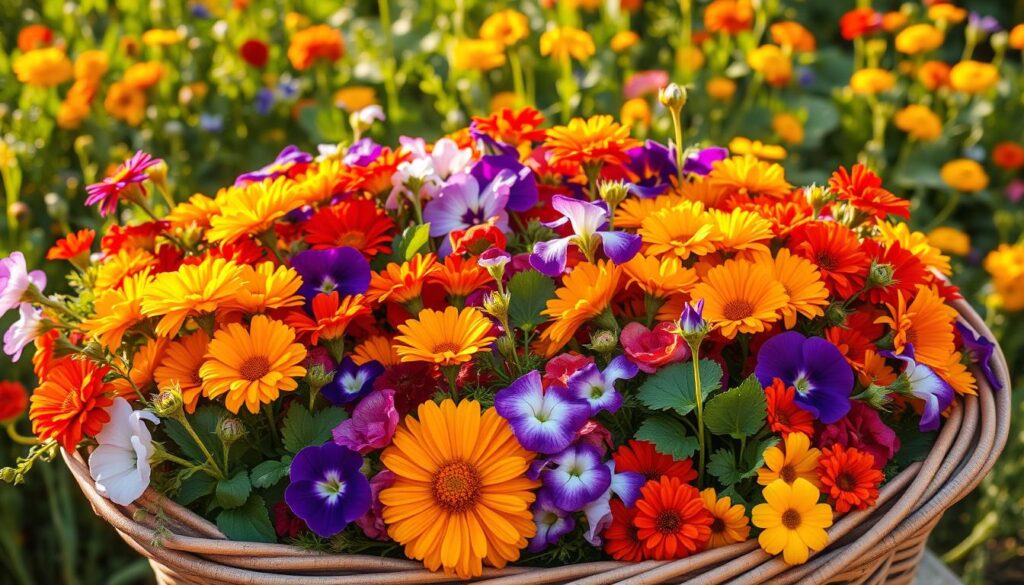
When to harvest
Harvest flowers in the early morning when dew keeps petals firm. This is the best time to capture peak flavor and structure.
Keep plants productive
Pick often to encourage new buds. Snip whole flower heads with clean shears rather than tugging; that protects leaves and stems and speeds recovery.
Cleaning methods
For sturdy petals like roses and marigolds, do a quick dunk in room-temperature water to remove dust and insects. For delicate blooms such as pansies and nasturtium, gently wipe each petal with a damp cloth.
Trim for taste
Remove pollen-heavy stamens and pistils when they add bitterness or a gritty texture. Also clip away any green bases that taste bitter at the petal attachment point.
Short-term storage
If you need to save a harvest for a few hours, wrap petals in a damp paper towel and seal them in a bag in the fridge. Keep this to a short time—excess moisture speeds mold in a busy home kitchen.
- Rinse where insects hide, and keep harvest areas away from roads and pet traffic for cleaner picks.
- Taste a petal before plating to check intensity; adjust amounts for salads or desserts.
- For chive flowers, separate florets after rinsing so they scatter evenly over dishes.
- Compost spent petals and leaves to close the loop back to the garden.
| Action | Best time | Quick tip |
|---|---|---|
| Morning harvest | Before heat builds | Capture scent and firmness |
| Cleaning | Right after picking | Dunk sturdy petals; wipe delicate ones |
| Storage | Same day use | Damp towel + sealed bag; avoid over-wetting |
Taste Profiles and Kitchen Ideas: From Salad to Ice Cream
Pair the right petal with the right recipe and you’ll add aroma, texture, and color in one move. Start by tasting and matching: a peppery petal lifts savory plates while mild blossoms suit sweets and creams.
What do common picks taste like?
Nasturtium is peppery and bright. Pansy stays neutral and pretty, so it won’t change a dessert’s flavor.
Lavender gives floral-herb notes with a rosemary hint, and chamomile tastes apple-honey. Add a few borage blooms for a crisp cucumber-like lift.
Which cool plates benefit most?
Build cool plates first: salads, chilled soups, and spring rolls hold crisp petals best. Toss greens with nasturtium and finish with chive blossoms for a savory note.
Can you bake with petals and make ice cream?
Yes. Press pansy petals onto cookies, scatter bachelor’s buttons on a glazed cake, or infuse syrup with lavender for toppings and drinks.
Stir finely chopped petals into whipped cream or serve a scoop of lavender ice cream with a few borage blooms for a special touch.
| Use | Best picks | Quick note |
|---|---|---|
| Salad | Nasturtium, chive | Peppery lift; salad use garnish |
| Sweets | Pansy, chamomile | Mild accents; press or scatter |
| Ice cream & syrup | Lavender, calendula | Infuse gently for aroma and color |
“A little color and scent goes a long way—use petals sparingly and let them highlight the dish.”
Safety and Sourcing Checklist: A Good Idea Before You Eat a Flower
Check identification and source before serving any petal. Before you pick a single petal, confirm the identity of the plant and err on the side of caution. A quick ID prevents accidental ingestion of a toxic look-alike.
Skip any bloom you did not raise or that may have been sprayed. Avoid florists’ cuts, roadside specimens, and starts with unknown spray histories. Buy pesticide-free starts at farmers markets or trusted nurseries and ask sellers about treatments.
- Identify every specimen. If you’re unsure, skip it and choose a known-safe plant.
- Trim pollen-heavy parts. Remove stamens and pistils from blossoms that pack pollen to reduce bitterness and irritation.
- Watch allergies. People with ragweed sensitivity may react to chamomile and related herbs—introduce new blooms in small amounts.
- Keep plantings away from roads and pet paths. This reduces contamination and cleaning time for salad use garnish.
- Taste-test carefully. Try one tiny petal, wait, and note any reaction before serving more widely.
“Only serve petals from plants you know and trust; safety is simple when sourcing is deliberate.”
| Checklist | Why it matters | Quick action |
|---|---|---|
| Correct ID | Prevents toxic mix-ups | Use guidebooks or local extension resources |
| Proven source | Limits chemical exposure | Buy pesticide-free starts at farmers markets |
| Allergy check | Protects guests | Serve small samples first; note reactions |
| Prep & storage | Maintains food safety | Keep petals separate from raw proteins; refrigerate briefly |
| Species caution | Some look-alikes are poisonous | Vegetable pea blossoms are fine; sweet pea is not |
Final note: chive flowers and other common blossoms make lovely additions when sourced and prepped carefully. Use this checklist to keep salad use safe and consistent.
Conclusion
Start with one pot or a small bed and let simple choices teach you the rest. With a couple of reliable varieties, your home garden will supply fresh petals and flavor with little fuss.
Begin with English lavender, chives, calendula, and borage in a great container or a sunny patch. Blend perennials and self-seeders so blooms return year year, and harvest in the morning for best scent and texture.
Keep safety central: know each plant, source pesticide-free starts, and trim pollen-heavy parts. Over time, small routines—water deeply, feed lightly, harvest often—help you grow edible flowers with confidence.
Invite family to taste and plate petals; watching flowers come from plant to plate makes gardening a shared, joyful idea that rewards your time.