Ever wondered if a tidy kitchen setup could stop odors while turning food scraps into useful material? This guide answers that question with clear steps that fit a typical U.S. apartment or house.
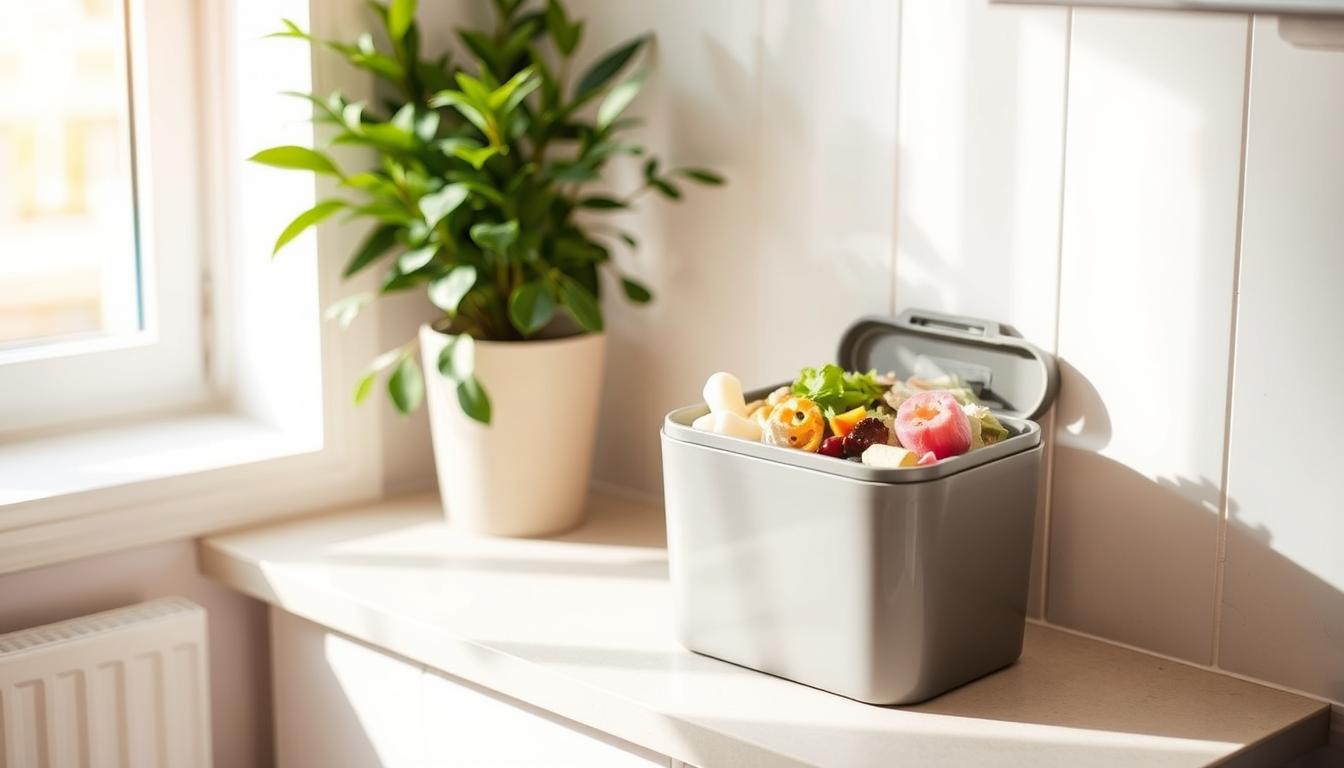
Start with a covered caddy under the sink to gather daily peels and coffee grounds. Balance wet “greens” and dry “browns” roughly one to two by volume, keep the mix moist but not soggy, and add air now and then to stay aerobic and fresh.
Many systems skip meat, dairy, and oily scraps to avoid pests. Vermicomposting with red wigglers works indoors when the bin stays covered and in a cool, dark spot. If hands-off is preferred, explore city drop-offs or private curbside services and learn more about indoor methods at composting indoors.
Key Takeaways
- Containment matters: sealed bins and liners keep smells locked in.
- Balance is simple: one pail of greens to two pails of browns limits odors.
- Air and moisture: occasional turning and damp, not soggy, mix prevent anaerobic smells.
- Method choice: vermicompost, Bokashi, or countertop units suit most homes.
- Big benefits: less landfill methane and nutrient-rich output for plants.
Why Small-Space Composting Matters Right Now
Turning food scraps into soil-building material helps curb methane from crowded landfills and feeds healthier container gardens.
Composting in tight quarters cuts landfill-bound organic waste and reduces methane — a powerful climate pollutant. Finished compost improves soil structure, helps containers hold moisture, and supplies nutrients that keep plants vigorous without heavy fertilizers.
Even without a yard, people can contribute by using contained methods at home or tapping local drop-off programs. These options let apartments and rentals join the circular, soil-building way of handling organic matter. Small steps add up for the planet and for balcony beds.
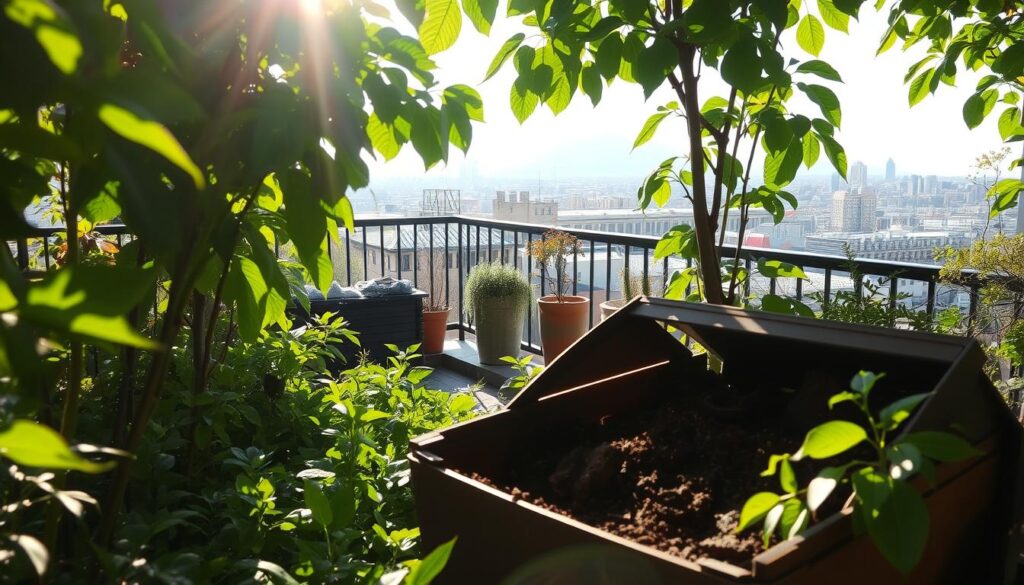
- Kitchen habits link to climate wins: each banana peel or coffee filter diverted avoids methane in a landfill and feeds a compost garden.
- Community programs help: drop-off stations and curbside pickup let neighbors share the load and keep neighborhoods cleaner.
- Think long-term: regular additions improve structure and biology, so pots and planters thrive over time.
Accept a bit of experimentation to find the best routine. Choose a spot in the home that makes the process effortless so composting becomes a daily habit, not a chore. For tips on tiny setups and planter-friendly methods, see this guide for composting for tiny gardens.
Set Up for Odor-Free Success: The Basics That Prevent Smells
Keep collection simple and balanced so smells never take hold. Place a covered kitchen caddy by the sink and follow a clear greens-to-browns rule.
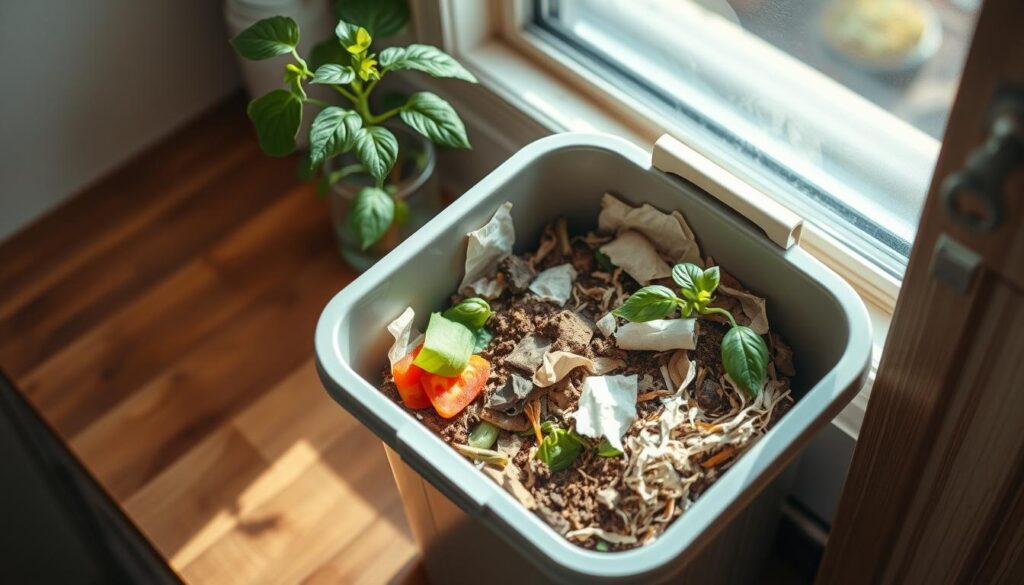
Start with a tidy, lidded caddy by the sink to make daily collection effortless.
Collect food scraps the smart way
Place a sealed bin near prep areas so daily deposits are easy. Empty that bin into your main system on a regular cadence — a quick transfer prevents countertop mess and pests.
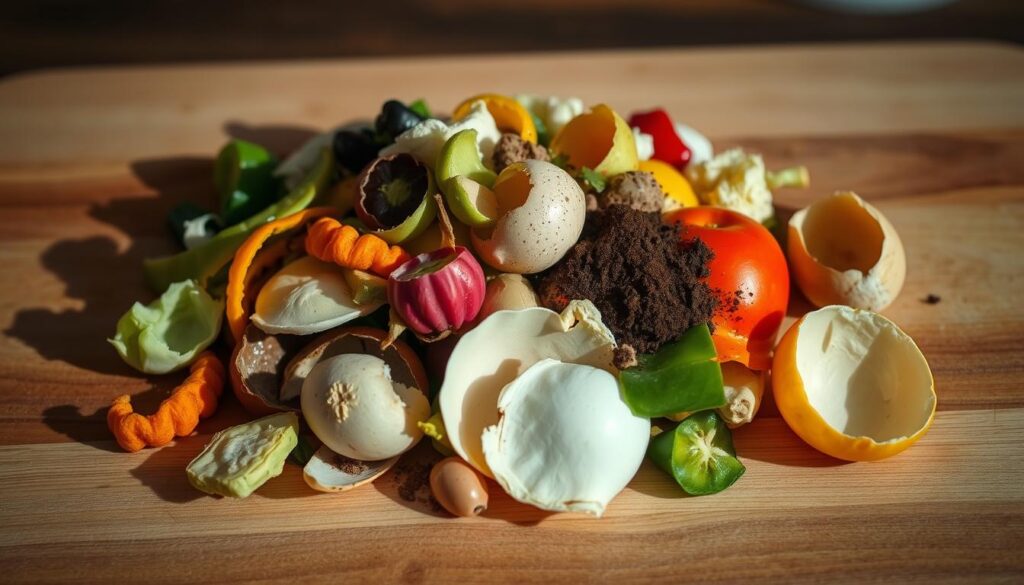
- Include: fruit and vegetable peels, coffee grounds, tea bags, and eggshells.
- Avoid: meat, bones, dairy, and oily foods in most home setups; those items attract pests and decompose slowly.
Master greens and browns
Aim for about one pail of greens to two pails of browns. Add extra dry material like shredded paper when the mix feels wet or is smelling bad.
Chop or tear inputs so microbes can break scraps down faster. Smaller pieces speed the process and cut sour pockets.
Moisture and air
Keep the pile damp like a wrung-out sponge. If dry, mist lightly; if too wet, add browns and fluff the mix for air. Aerate on a schedule unless worms handle that role.
Check the system at least once a week to catch issues early. Use tight lids, wipe rims, and top new deposits with a thin brown layer to deter flies.
- Quick summary: Odor-free composting starts with smart collection and balanced inputs. Use a lidded kitchen container, avoid meat and dairy in non-Bokashi systems, and add browns liberally to keep things fresh.
- Quick summary: Moisture and airflow are your best friends—think damp, never drippy, and add air routinely so microbes stay active and smells stay away.
Choose the Right Small-Space Compost System
Match method to daily routine and the place where scraps collect. Picking the right system keeps smells low and effort minimal. Below are practical options for indoor and yard-adjacent living.
Vermicomposting at home
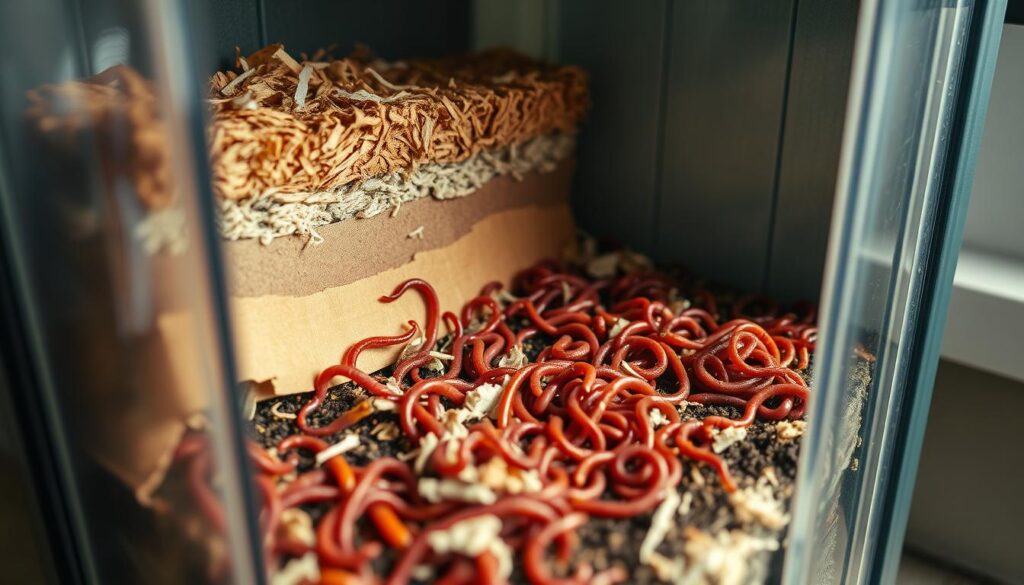
Worms thrive in a covered worm bin kept near 65–70°F. Use red wigglers, add damp bedding like shredded paper, and feed chopped kitchen scraps weekly in small amounts. Keep the bin dark and tidy so a worm farm stays productive.
Bokashi buckets
Ferment food scraps — including meat and dairy — in an airtight bucket. Layer with inoculant, drain leachate for diluted fertilizer, then bury fermented solids to finish breakdown in soil within weeks.
In-situ, countertop, and compact options
Buried modules such as a composting cannon or compot sit in pots or beds so worms process additions on site. Countertop processors grind and heat scraps in hours; their dry output needs soil or a bin to finish.
Compact tumblers and sealed compost bins simplify aeration and prevent pests. Many models let the unit move around a balcony or yard as needed.
“Match your method to your space and routine: indoors, vermicomposting and Bokashi keep things contained; outdoors, tumblers and buried modules work quietly.”
| Method | Best place | Accepts | Notes |
|---|---|---|---|
| Worm bin | Indoors, cool dark spot | Fruit, veg, coffee | Keep bedding damp; feed small amounts |
| Bokashi | Counter or cabinet | All kitchen scraps, meat, dairy | Drain leachate; bury solids to finish |
| Countertop processor | Kitchen counter | Most food waste | Pre-processes in hours; add to soil/bin |
| Tumbler / closed bin | Balcony or yard | Veg, yard waste | Easy aeration; move around if needed |
- Bold summary: Match method to routine; indoors choose worm bins or Bokashi, outdoors pick tumblers or buried modules.
- Bold summary: Prefer outsourcing? Look for a local composting site, drop-off, or curbside program as another option on busy weeks.
can you compost small space without it
Balance inputs, seal the process, and keep moisture like a wrung-out sponge. Match a method to daily habits so the routine stays simple and effective.
Balance is the first rule: aim for about two parts dry browns to one part greens by volume. That ratio limits odors and keeps microbes active. Periodic aeration and chopping scraps speed breakdown and reduce pockets that end up smelling bad.
Containment matters. Use sealed bins, buried modules, or worm systems with lids to block pests and trap smells. Countertop pre-processors and community drop-offs add flexibility for busy households.
Match method to lifestyle
Choose a system that fits daily flow: Bokashi for all-food flexibility, vermicomposting for indoor low-odor processing, or a compact tumbler for a balcony corner. Consistency beats perfection.
Get started with a kitchen caddy, weekly transfer, and a thin top layer of browns. That simple loop keeps organic matter moving and the home fresh.
| Practice | Why it helps | Best for | How often |
|---|---|---|---|
| 2:1 browns to greens | Controls moisture and odors | All indoor systems | At each addition |
| Sealed container | Keeps pests out, limits smell | Worm bins, Bokashi, tumblers | Continuous use |
| Weekly aeration or transfer | Prevents anaerobic pockets | Home bins and tumblers | Weekly |
Your Apartment-Friendly Workflow
Set a simple rhythm that fits a live apartment: collect scraps daily, transfer on schedule, and seal the main bin. Keep tools handy and checks brief so the routine becomes habit.
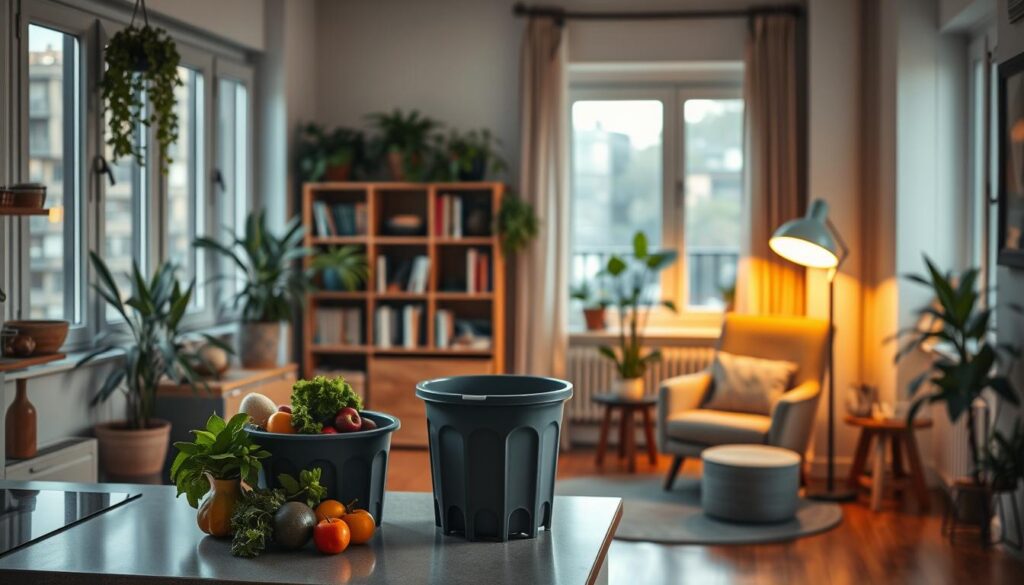
Keep a covered caddy under the sink to collect food. Empty that kitchen container once or twice per week into your main bin. Top new layers with shredded paper to lock moisture and deter flies.
Break scraps into smaller pieces with a few quick cuts; this speeds breakdown by giving microbes more surface area. Maintain moisture like a wrung-out sponge and aerate unless worms handle that job.
For vermicomposting, feed a modest portion once a week in one corner and rotate. For tumblers, add, spin, and let the pile rest. For Bokashi, press layers and drain leachate every few days.
- Build a repeatable loop: collect, transfer, top with browns, close the lid, and check once a week.
- Keep tools close: a lidded caddy, a tote of shredded paper, and a compact main bin you can move around if needed.
- Busy days trick: freeze a bag of additions for later to keep odors low and routines flexible.
| Action | Why | Frequency |
|---|---|---|
| Collect in covered caddy | Keeps kitchen tidy and pests out | Daily |
| Transfer to main bin | Prevents lingering food and odors | Once or twice per week |
| Top with shredded paper | Controls moisture and fruit flies | Every transfer |
| 60-second check | Fix dry or wet spots fast | Weekly |
For extra guidance on systems that suit apartment life, see this practical guide on how to set up at home: home composting systems.
Troubleshooting Smells, Pests, and Slow Breakdown
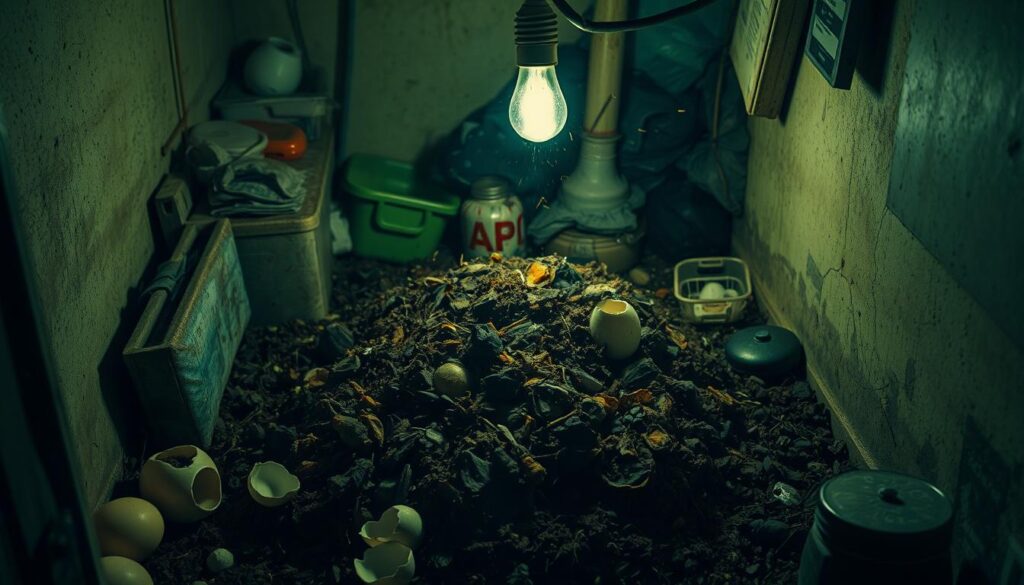
A sour smell usually signals that oxygen is missing from the mix. Act fast with simple fixes: add dry browns, fluff for air, and pause very wet inputs.
When it’s smelling bad, sprinkle a thick brown layer like shredded paper or cardboard and mix gently to introduce air. Stop adding wet food for a few days and let the pile breathe. That step often restores a pleasant, aerobic process.
Keep pests out
Use tight lids, wipe rims, and cap each deposit with a brown layer. In non-Bokashi systems skip meat and dairy to avoid flies and rodents. Bury fresh scraps under bedding or soil to reduce attraction.
Speed up breakdown
Chop scraps into smaller pieces and turn or tumble the bin on a weekly rhythm. If the bin is overloaded, split matter into two containers; two smaller batches process faster than one packed mass.
Worm care tips
Feed modestly once per week, rotate feeding zones, and add dry bedding if the bin feels wet. Stable temperature and light bedding keep worms active and productive.
- Bold summary: Smells mean imbalance—add browns, fluff for airflow, and ease up on wet additions.
- Bold summary: For pests and slowdowns, tighten containment, right-size feedings, and keep a steady weekly routine.
If pressure builds, another option is to freeze inputs or use a local drop-off for a few days. The point of troubleshooting is quick, small corrections that keep your system clean, quiet, and neighbor-friendly.
Conclusion
Small living does not block good outcomes: a sealed system, steady rhythm, and brief checks keep odors away and yield useful material for plants.Pick one method, add community options as needed, and enjoy the steady reward of richer pots and a cleaner waste stream.
A steady routine and the right sealed system keep odors out and nutrient cycles going. Set a lidded food scraps bin, pick a primary system—worm bin, Bokashi, or a compact tumbler—or link to a local composting site for heavier loads.
Bold summary: Small spaces aren’t a barrier—divert food waste cleanly with the right bins, moisture control, and a bit of weekly care. Finished compost or vermicast boosts a compost garden and nourishes houseplants.
Want more methods? See 7 compost methods for any space for practical options and setup tips.