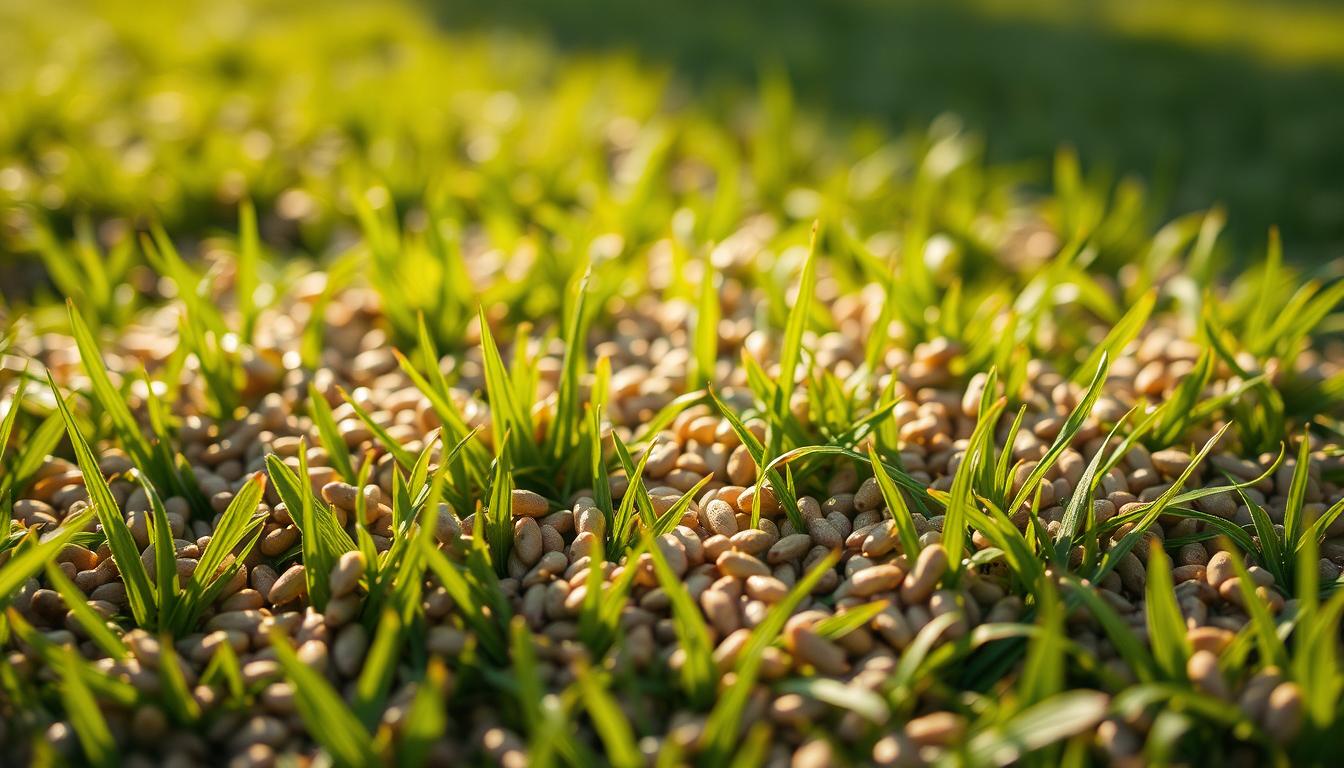
Can a bare yard really become a tidy, green stretch in just a month? This guide answers that question with clear weekly steps you can follow, whether you live in a cool northern climate or a warm southern state.
You’ll get a straightforward way to choose the right grass varieties, prepare the seedbed, and place seed at the correct depth. We cover starter fertilizer basics, shallow tillage, and simple soil tips that help young roots take hold.
Follow a strict watering schedule that starts with light, frequent misting for 10–14 days, then shifts to deeper soakings to build strong roots. Expect practical cues for first mowing and easy fixes for common issues so your results are steady, not patchy.
Key Takeaways
- Choose region-appropriate grass to speed establishment.
- Prepare the seedbed with shallow tillage and debris removal.
- Rake seed to about 1/8 inch and roll for good soil contact.
- Start with light, frequent watering, then move to deeper soakings.
- Use a starter fertilizer if you skip a soil test, but follow rates carefully.
- Learn exact weekly actions and milestones for steady progress.
- Consult this practical seeding guide for detailed steps: how to plant grass seed.
What to Expect Over the Next Four Weeks: Timing, Results, and Regional Fit
Expect visible green quickly if you match grass choice to soil heat and moisture. Follow regional timing and simple milestones so your seed sets roots and shoots steadily over the month.
Expect to see the first green threads within a couple of weeks if soil warmth and moisture match your seed choice.

Best time to start: soil temperatures and frost windows
The best seeding windows depend on your region and soil temperature. Warm-season grass does best when soil reaches 65–70°F after frost risk ends. Cool-season grass favors 50–60°F in early fall or early spring.
- Use a soil thermometer to make sure conditions are right: 65–70°F for warm-season, 50–60°F for cool-season.
- Plan at least 45 days before first frost for cool-season, and about 90 days for warm-season to build roots.
- Expect germination in about 4–18 days under ideal moisture and soil temps; cooler spots will take the least days longer.
- Match grass types to your area—northern regions use cool-season varieties; southern regions use warm-season species.
Set weekly milestones for watering shifts and the first mowing. This keeps your grass and seed on a steady track toward a healthier lawn.
Prepare Soil and Pick the Right Grass Seed for Your Climate
Begin with a soil check and seed selection that fit your climate; this saves time and reduces rework.
Which grass types suit your area?
Which grass types work best where?
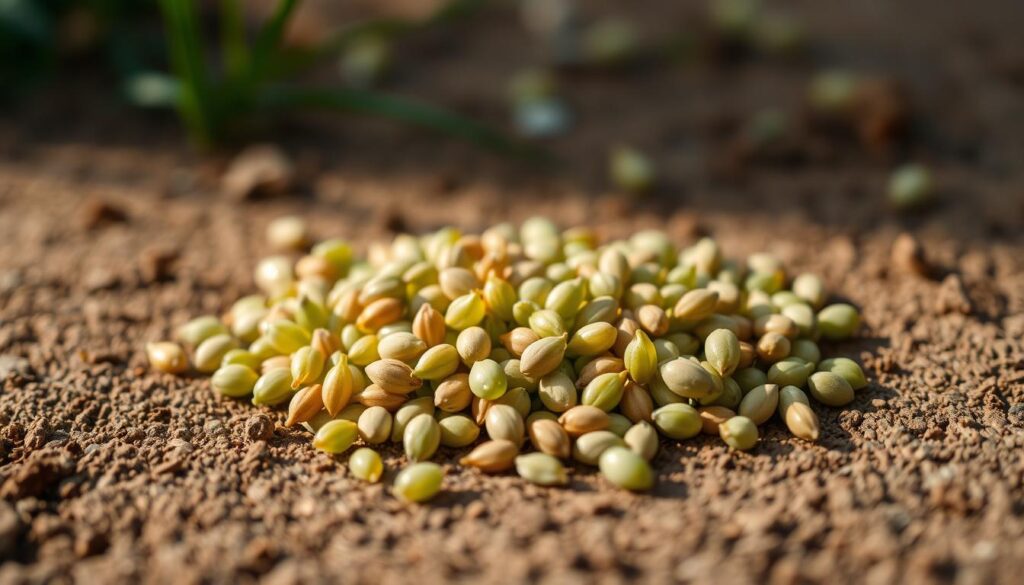
Choose grass types that match your region. Northern yards do best with cool-season mixes like Kentucky bluegrass, rye, and fescue. Southern areas favor warm-season species such as Bermuda and Zoysia. In the transition zone, use blends tailored to both heat and cool snaps.
How should you test soil and use starter fertilizer?
Run a soil test at least one month before you seed to check pH and nutrients. If you must dig or grade, call 811 first to locate utilities.
If you lack recent results, apply a starter fertilizer at 1–2 lbs N per 1,000 sq ft on the surface before seeding. Follow bag rates and local extension guidance for the best results.
What site prep steps matter most?
Do shallow tillage 1–2 inches to break crust and expose debris. Remove rocks, roots, and weeds, then rake smooth and firm. Pre-water the area several days ahead to 5–6 inches deep so moisture is even through all areas of the seedbed.
Which tools or rentals should you consider?
Spread seed with a drop or broadcast spreader, splitting the rate into two passes at right angles. Lightly rake seed no deeper than 1/8 inch, then use a lightweight roller for good seed-to-soil contact.
Mulch with clean straw or an erosion blanket. For larger projects, renting specialized equipment like rollers or slit seeders improves uniformity and saves time.
Start with a clean, fertile seedbed and a grass mix matched to your climate. Test your soil, prep the site, and apply a starter fertilizer so seedlings take off fast.
For professional installation tips, see grass seed installation. If you’re weighing alternatives, read about clover options at clover for yards.
4-week plan lush new lawn grown entirely: a step-by-step seeding schedule
A clear week-by-week schedule helps seed establish fast and keeps moisture consistent as roots develop.
Before Week One (Day 0 setup)
Day 0: Deeply pre-water the seedbed to 5-6 inches to charge the soil. Apply amendments or a starter fertilizer if you don’t have a recent soil test. Finish grading and rake to prepare soil for even seed contact.
Week One
Split your grass seed into two passes for uniform coverage. Lightly rake seed to about 1/8 inch, then roll to improve seed-to-soil contact. Mulch with clean straw or an erosion blanket to protect from washout.

Keep the upper 1 inch of soil moist with light, frequent watering for the first 7–10 days. Avoid heavy foot traffic and watch for early germination. Re-seed thin spots and re-mulch washed areas as needed.
Week Three
Shift to deeper, less frequent watering so roots grow downward. Water early in the morning and adjust for rain. Protect the young turf from heavy play while density builds for the best results.
Week Four
Mow when blades reach your target cutting height, following the one‑third rule; this encourages lateral spread. Walk the seed lawn, mark thin areas or bare patches, and plan touch-ups, making sure you maintain light surface moisture for quick results.
Watering, Mowing, and Feeding for a New Grass Seed Lawn
Keep the seedbed evenly moist for 10–21 days, then water deeply but less often. Mow at the right height and follow the one‑third rule to thicken turf. Feed with slow‑release fertilizer and hold off on herbicides until the stand is established.
For the first 10–21 days, water lightly each morning so the top inch of soil never dries out. This keeps seed contact steady and prevents crusting. After seedlings show true leaves, switch to deeper, less frequent cycles to drive root growth.
When should I start mowing?
Begin mowing at about 2–2.5 inches, following the one‑third rule. Never remove more than one-third of blade length. Sharp blades cut cleanly and reduce disease stress. Alternate mowing patterns to encourage upright, dense grass.
How do I feed and manage weeds?
Apply a slow‑release fertilizer at seeding and plan follow-up feedings per a soil test. Hand‑pull small weeds early so you don’t disturb seedlings. Delay herbicide use until after several mows to avoid harming young grass.

| Action | Timing | Why it matters | Quick tip |
|---|---|---|---|
| Light daily water | Days 1–10 (up to 21) | Keeps top 1″ of soil moist for germination | Water in morning to cut disease risk |
| Deeper soakings | After 10–21 days | Encourages roots to grow 4–6″ deep | Use a trowel to check moisture depth |
| Mow & feed | Mow at 2–2.5″; fertilizer at seeding + seasonal | Protects leaf area; feeds steady growth | Use slow‑release N and follow label rates |
For more detailed seeding steps and product guidance, see how to start a new lawn from grass.
Troubleshooting Thin Areas, Overseeding Existing Lawns, and Seed Know‑How
Fix thin turf and bare patches by prepping the surface, spreading the right seed at the right rate, and watering as you would for a new seeding. These steps help existing grass recover faster and reduce repeat work.

How do I overseed an existing lawn?
Scalp and bag clippings if the stand is dense. Rake to expose soil, then topdress ≤1/8″ so seed meets the earth.
Check labels and adjust spread rates. Delay if a pre‑emergent was applied in the last 3–4 months.
How much grass seed do I need and what to expect?
Use about 4–7 lbs per 1,000 sq ft (175–250 lbs per acre). Expect germination in roughly 4–18 days under good moisture and warmth.
Seed storage, viability, and alternatives
Store seed cool and dry up to three years. Do a simple towel test with 10 seeds to check viability before you buy more.
Choose hydroseeding for large slopes (it needs specialized equipment). Pick sod for instant cover if budget allows; seed is more cost‑effective for starting new.
“Prep, seed, and patience are the trio that turns thin patches into dense grass.”
- Tip: Measure each area and buy only as much grass as you will use this season to avoid waste.
Conclusion
With the right steps and steady care, you’ll turn seed into a dense, green lawn in just a few weeks.
Start with clear choices and steady care, and the small actions you take now add up to real green results. You’ll want to prepare soil, seed to about 1/8 inches, and roll for firm contact so germination is fast and even.
Use 4–7 lbs of grass seed per 1,000 sq ft, keep the surface soil moist early, then shift to deeper water cycles to push root growth. Hand‑pull weeds first and wait until after several mows before applying herbicide.
Recheck each area, touch up thin spots, and you’ll see steady results over time. Careful steps lock in a lasting, even green lawn.
FAQ
What are the most common online schemes my grandparents might face in a single day?
They can encounter tech support pop-ups and unsolicited calls claiming the computer has a virus, impersonated calls or emails from banks or government agencies demanding payment, romance-style approaches on dating apps or social media that ask for money, fake job offers that request fees or personal data, and investment pitches promising guaranteed returns. These all rely on urgency, trust, or emotional pressure to get money or personal details.
Why are older adults frequent targets on social media, email, and phone?
Scammers target older adults because they often have accumulated savings, may be more trusting of authority, and might be less familiar with digital red flags. Platforms like Facebook, email, and phone provide easy ways for fraudsters to build rapport, spoof identities, and exploit emotional ties—especially when messages seem urgent or official.
What are the top red flags to watch for in messages and calls?
Look for urgent language demanding immediate payment, requests to click unfamiliar links or download files, ask for wire transfers or gift cards, spelling errors and misspelled domains, pressure to skip normal verification steps, and unsolicited contact from people or organizations you didn’t initiate contact with.
What does a tech support scam typically look like?
It often begins with an alarming pop-up or an unsolicited call saying your computer is infected. The scammer then asks you to grant remote access, install software, or pay for a “service” fee. Fake error screens and high-pressure language push victims to act quickly.
How did a tech support attempt almost trick my grandparents?
In many cases, victims grant remote access after seeing alarming pop-ups. The scammer then shows fabricated errors and requests payment for fixes, or installs malware to steal passwords. Nearly every successful case involves a rushed decision to give control or payment information.
What immediate steps stop a tech support con in its tracks?
Don’t allow remote access. Close the browser or power off the device if necessary. If you answered a call, hang up and call the company using a verified number from the official website. Run antivirus scans and, when in doubt, consult a trusted local technician or the device maker’s official support.
How can I tell a real bank or government message from an impostor?
Real agencies will not demand immediate payment through gift cards or wire transfers, nor will they threaten arrest in a sudden call. Check the sender’s email domain carefully, avoid links, and hang up to call the organization using a number from an official website or recent statement. If the caller insists, verify by contacting the institution directly.
What tricks do romance fraudsters use to gain trust quickly?
They start with frequent messages, shared interests, flattery, and early expressions of deep feeling. Then they create emergencies—medical bills, travel problems, or business setbacks—and request money via wire transfer, money order, or gift cards. They often avoid in-person meetings and resist video calls.
How should someone protect themselves from romance-related money requests?
Slow down the relationship, verify identities with video calls and reverse image searches, never send money or financial details, and keep personal documents private. If pressured, consult a friend or family member and report suspicious profiles to the platform.
What are the warning signs of fake job or employment offers?
Red flags include requests for upfront fees or equipment purchases you must reimburse, demands for your Social Security number or bank info before an interview, offers with vague job descriptions or unrealistic pay, and communications from free email providers rather than corporate domains.
How do investment scams typically operate? What should I watch for?
Fraudsters promise guaranteed, high returns and push for quick decisions. They use persuasive testimonials, fabricated performance data, and unsolicited outreach. Always verify licenses, check the SEC (Securities and Exchange Commission) or FINRA (Financial Industry Regulatory Authority) records, and never rush into investments without independent advice.
How do scammers make calls or emails appear to come from real organizations?
They use caller ID spoofing, cloned voice technologies, and look-alike email domains to mimic banks, government agencies, or charities. These techniques exploit trust and make fraud attempts seem legitimate at first glance.
What should I do immediately if a message or call seems suspicious?
Do not share personal or financial information. Avoid clicking links or opening attachments. Hang up if on a call, then call the organization directly using an official number. Report the attempt to the Federal Trade Commission (FTC) at reportfraud.ftc.gov and your bank if financial details were exposed.
How do phony emails, texts, and DMs try to steal data?
They use shortened URLs, misspelled domains, fake login pages, and infected attachments to trick you into entering credentials or downloading malware. Links can redirect to credential-harvesting sites that look nearly identical to real login screens.
What risks come from opening attachments in unknown messages?
Attachments can carry malware, spyware, or ransomware that steals credentials, encrypts files, or creates a backdoor into devices. Only open attachments from trusted senders, verify unexpected documents via a separate channel, and keep software patched and antivirus active.
What personal information is most valuable to fraudsters?
Account usernames and passwords, Social Security numbers, bank and credit card details, date of birth, and answers to common security questions. Even partial data can be used to commit identity theft or reset account access.
If I clicked a malicious link or paid a scammer, what should I do first?
Disconnect the device from the network, change passwords from a secure device, contact your bank or credit card company to stop payments and dispute charges, enable fraud alerts or a credit freeze with major bureaus, and report the incident to the FTC. If remote access was granted, seek professional help to remove malware.
How can families help older relatives stay safe online without being patronizing?
Have calm, regular conversations about typical fraud tactics and red flags. Offer hands-on help setting strong, unique passwords, enable two-factor authentication (2FA), and place important numbers in contacts. Encourage verification steps like calling back official numbers and saving suspicious messages to review together.
Where can I find verified resources and report scams?
Use official sources such as the Federal Trade Commission (FTC) at consumer.ftc.gov, the FBI’s Internet Crime Complaint Center (IC3) at ic3.gov, and your bank or credit card issuer. For investment checks, consult the SEC (sec.gov) or FINRA (finra.org). Report suspicious social media profiles to the platform and preserve evidence like screenshots.