
Replacing a well water filter every week usually means the cartridge is catching a problem that starts earlier in the system. Sand, silt, pump movement, a worn well screen, storm runoff, water chemistry, or a poor filtration match can load the filter faster than it can handle.
Quick answer: Start by confirming whether actual particles are in the water. Do a clear-glass settling test, watch for pressure changes, check whether the issue follows storms or heavy water use, and look at where sediment appears in the system. A coarse pre-filter, pressure gauge, or basic water test kit may help with troubleshooting, but they do not fix damaged casing, a failing well screen, pump-depth problems, or unsafe water.
If the clogging started suddenly, or if the water changes color, taste, smell, or texture, treat it as more than a filter problem. Private wells need testing and, in some cases, a licensed well contractor.
Key takeaways
- Weekly cartridge clogging is a warning sign, not a normal maintenance cycle.
- Cloudy water, grit in sinks, clogged aerators, and pressure drops often point to sediment loading.
- A spin-down sediment filter may help with visible sand before water reaches a finer cartridge.
- A pressure gauge can help track whether flow restriction lines up with filter loading.
- Water testing matters when clarity, odor, taste, or sediment changes suddenly.
- Structural well issues need professional inspection, not more replacement cartridges.
Helpful products at a glance
These tools fit different parts of the troubleshooting process. They should support diagnosis, not replace water testing or well repair when those are needed.
Best for coarse sand pre-screening because it uses a flushable spin-down screen
- The Rusco clear cover is made of high impact polymer resin for maximum strength and durability
- The top of the Rusco system is made of PVC- The Rusco sediment filters use centrifugal separation technology to filter sediment from water

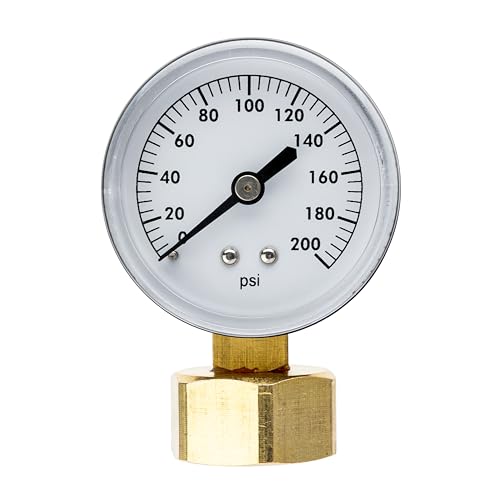
Best for pressure checks because it connects to a standard hose-thread point
- For measuring water pressure in irrigation systems up to 200 PSI
- Metal case, plastic face with easy-to-read display, and precision mechanicals
Best for first-step water screening because it covers common well and tap-water checks
- Comprehensive Testing: Detects a wide range of contaminants, including 9 key ones. From the most dangerous, like Lead and Bacteria, to Iron, Copper, Chlorine, and Nitrates.
- At-Home Convenience: Suitable for any drinking water—TAP or WELL. Get lab-accurate results without leaving home.

Start with these checks before buying more cartridges
Before changing filter parts again, find out whether the filter is clogging from sand, fine silt, corrosion particles, biological buildup, or a restriction somewhere else. The fix depends on what is actually loading the cartridge.
Do the clear-glass settling test
Fill a clear glass from a cold tap and leave it undisturbed. If the water clears and particles collect at the bottom, you likely have sand or silt. If the water stays cloudy without settling, the issue may involve air, dissolved minerals, bacteria, or another water-quality problem.
Check when the clogging gets worse
Write down when the filter clogs, what the water looks like, and what happened before the problem. Heavy rain, snowmelt, nearby digging, new irrigation use, or unusually high household demand can all change how much sediment enters the system.
Look for pressure and fixture clues
A clogged cartridge often shows up as weak shower flow, slow hose-bib output, clogged aerators, or appliances that fill slowly. If pressure drops soon after installing a fresh cartridge, the filter may be loading quickly. If pressure stays poor even with a clean cartridge, the restriction may be elsewhere.
Good troubleshooting starts with the source of the sediment, not the next cartridge on the shelf.
Common signs and what they usually point to
Sandy well water usually leaves more than one clue. The table below can help you decide what to check first.
| What you notice | What it may suggest | What to check first |
|---|---|---|
| Grit in sinks, tubs, or toilet tanks | Sand or coarse sediment is passing through the system | Do the glass settling test and inspect the cartridge |
| Cartridge turns dark within days | Heavy sediment load or fine particles | Track timing after storms, irrigation use, or heavy household draw |
| Pressure drops after a new filter is installed | Fast filter loading or an undersized filter stage | Compare pressure before and after filter changes |
| Orange, brown, or rusty staining | Iron, corrosion, or water chemistry changes | Test water and inspect metal components |
| Sudden sediment after years of clear water | Possible well screen, casing, pump, or runoff issue | Document the change and contact a licensed well contractor if it continues |
Why a sandy well water filter clogs every week
A cartridge clogs when particles fill the filter media and narrow the water paths. Fine cartridges clog faster because they catch smaller material. If a single fine cartridge has to catch visible sand, silt, and small particles all at once, weekly replacement is not surprising.
Storms and surface runoff
Heavy rain, snowmelt, flooding, or disturbed soil near the well can push more sediment toward the water source. If filter clogging gets worse after weather events, drainage around the wellhead and the condition of the cap and seal deserve attention.
Well cap, casing, or screen problems
A damaged cap, poor seal, cracked casing, or worn well screen can let fine debris enter the water supply. This is not the kind of problem a cartridge can truly solve. The filter may catch some debris, but the well still needs inspection.
Pump placement and heavy draw
A pump set too close to the bottom can stir settled sand. Heavy water use, irrigation demand, or rapid pump cycling can also disturb sediment and send more particles into the filter.
Water chemistry and biological buildup
Not every clog is plain sand. Low pH can contribute to corrosion particles. Iron, manganese, or biological growth can create recurring discoloration or slimy buildup. Those problems need testing before treatment decisions are made.
How clogging affects pressure, flow, and fixtures
When the filter loads with sediment, water has less space to pass through. That restriction can show up as weak flow at showers, outdoor spigots, hose bibs, irrigation timers, and appliances.
Check pressure under normal use
A simple hose-thread pressure gauge can help document whether pressure drops appear before or after filter changes. The Orbit 91130 gauge connects to a 3/4-inch female hose-thread point and measures up to 200 PSI, which makes it more useful for basic outdoor and irrigation checks than for full well diagnostics.
Use pressure readings as a pattern check. Compare what happens with a fresh cartridge, after several days of use, and during heavier demand. If readings fall quickly after a new cartridge goes in, sediment loading may be the bottleneck.
A pressure gauge does not identify the sediment source. It also does not confirm whether the well is safe or whether the pump system is working correctly. It simply gives you another data point before you keep replacing parts.
Watch downstream screens and valves
Fine grit can collect in faucet aerators, showerheads, washing-machine inlet screens, irrigation valves, and appliance connections. Over time, particles can wear seals and valve seats, especially when grit keeps passing beyond the main filter.
If several fixtures clog around the same time, the issue is probably not one bad faucet. It is more likely that sediment is moving through the plumbing before enough of it is removed.
Helpful diagnostic tool for pressure checks
For readers who want a basic pressure-check tool at an outdoor spigot or irrigation connection, the Orbit 91130 can fit that role. Treat it as a way to document pressure behavior, not as proof of what is happening inside the well.
- For measuring water pressure in irrigation systems up to 200 PSI
- Metal case, plastic face with easy-to-read display, and precision mechanicals
- Durable brass fitting connects to a standard 3/4” hose faucet/tap
- Can be installed as a permanent gauge or used as part of a sprinkler toolkit
If you want to compare the listing details before deciding, you can check the current Amazon listing.
When equipment may help and when it will not
Filtration can reduce what reaches the cartridge, but it cannot repair a damaged well. The safest way to think about equipment is by job: coarse sediment control, pressure checking, and water screening.
| Support option | Best fit | Main limit |
|---|---|---|
| Spin-down sediment pre-filter | Visible sand or coarse grit before a finer cartridge | Does not remove every fine particle or fix well damage |
| Fine sediment cartridge | Smaller particles after larger grit is reduced | Can clog fast if used alone on sandy water |
| Pressure gauge | Tracking pressure changes during troubleshooting | Does not identify water chemistry or structural well issues |
| Basic water test kit | First-step screening after changes in water appearance, taste, or odor | Does not replace certified lab testing for private well safety decisions |
| Licensed well inspection | Persistent sand, sudden sediment, damaged casing, screen, or pump concerns | Costs more than a filter change but addresses source-level problems |
Fixes that reduce sediment before it reaches the cartridge
The main idea is simple: do not make a fine cartridge catch everything. If visible sand is present, larger particles should be reduced before water reaches the finer stage.
Start with the right pre-filter: spin-down sediment screens
A spin-down sediment filter uses a screen to catch larger grit and a bottom flush valve to clear collected debris. A model such as the Rusco 3/4-100-F uses a 100 mesh polyester screen and is listed around 152 microns, which makes it a coarse pre-screening option rather than a fine treatment system.
This type of filter may help when the glass test shows visible sand settling out. It is most useful before the cartridge stage, where it can reduce how much larger grit reaches the finer filter.
Match the screen or cartridge to the particle problem
The finest cartridge is not always the best first step. Fine filtration can restrict flow and clog quickly when it is forced to catch coarse sand. A staged setup usually makes more sense: coarser screening first, finer filtration after that.
Micron choice should depend on the sediment size, flow demand, pressure behavior, and the equipment already installed. Avoid guessing based only on the cartridge label.
Use staged filtration carefully
A coarse spin-down filter before a finer cartridge can support better sediment handling when the well itself is sound. It still needs flushing and inspection, and it should be sized for the line, pressure, and flow demand.
Check bypass valve position, housing orientation, o-ring seating, and whether the filter is installed on the correct line. A good filter in the wrong spot can still leave fixtures and irrigation equipment exposed to grit.
Coarse sediment option after diagnosis
If your main issue is visible sand or larger grit, the Rusco spin-down filter is the most relevant product in this article. It fits the coarse pre-screening role, but it should not be treated as a fix for casing damage, pump-depth issues, bacteria, iron, or unsafe water.
- The Rusco clear cover is made of high impact polymer resin for maximum strength and durability
- The top of the Rusco system is made of PVC- The Rusco sediment filters use centrifugal separation technology to filter sediment from water
- The top of the Rusco system is made of PVC- The Rusco sediment filters use centrifugal separation technology to filter sediment from water
- The Rusco filtration system has a polyester screen filter
For a closer look at the product details, you can view the Rusco 3/4-100-F spin-down sediment filter on Amazon.
Maintenance and water testing steps
Once sediment is confirmed, maintenance should be based on what the system is doing rather than a fixed calendar. A cartridge that loads in seven days is telling you something changed or the filtration setup is not matched to the water.
Build a simple tracking routine
- Write the cartridge change date on the housing or in a phone note.
- Track water clarity, pressure changes, storms, irrigation use, and heavy household demand.
- Flush any spin-down pre-filter on a schedule that matches the sediment load.
- Inspect filter housings, seals, and o-rings for leaks or poor seating.
- Compare pressure and flow before and after a new cartridge goes in.
Test and act
Private well water should be tested regularly and any time the water changes in clarity, odor, taste, or sediment level. A basic at-home kit can support first-step screening, but safety concerns, bacteria questions, and treatment decisions may still need certified lab testing.
The Watersafe kit is listed for drinking water, well water, and tap water. Its listing includes tests for lead, bacteria, hardness, pH, and nitrates. That makes it a practical screening option when you want a first look at common concerns.
Do not use an at-home kit as the final word on well safety. Lab testing is the better path when water suddenly changes, bacteria may be involved, or you need to choose treatment for iron, pH, hardness, nitrates, or other water-quality issues.
The most useful loop is: test, interpret, treat if needed, then re-test. That keeps you from adding random equipment or treatment products without knowing what problem you are trying to solve.
Basic screening option for changed well water
If the water looks different, smells different, tastes different, or suddenly carries more sediment, a screening kit can help you decide whether formal testing or targeted treatment should come next.
- Comprehensive Testing: Detects a wide range of contaminants, including 9 key ones. From the most dangerous, like Lead and Bacteria, to Iron, Copper, Chlorine, and Nitrates.
- At-Home Convenience: Suitable for any drinking water—TAP or WELL. Get lab-accurate results without leaving home.
- Cost-Effective: Provides a budget-friendly solution, eliminating the need for expensive lab tests and shipping.
- Advanced Technology: Proprietary technology detects low levels of contaminants, like Lead at 5 ppb (3X lower than the EPA's action level) and Bacteria at 1 bacteria/ml.
You can view the Watersafe water testing kit on Amazon if you want to compare the current listing details.
When to call a well contractor
Call a licensed well contractor if sediment starts suddenly, keeps returning after reasonable pre-filtration, or appears during heavy draw from the pump. Also get help if you suspect a damaged cap, casing, screen, pump placement issue, or surface water entry.
Filtration manages what is already in the water line. It does not fix the well structure. If the source keeps sending sand into the system, filters will keep loading until the source problem is found.
This is especially important for private wells used around edible gardens, outdoor spigots, irrigation, or household fixtures. Clear water can still have water-quality issues, so do not use appearance alone as a safety check.
FAQ
Why is my well water filter clogging every week?
Weekly clogging usually means the cartridge is overloaded by sand, silt, fine particles, corrosion debris, biological buildup, or the wrong filtration setup. It can also point to well hardware or pump problems.
Can I fix sandy well water by using a finer cartridge?
Not always. A finer cartridge may catch smaller particles, but it can also clog faster if it is forced to handle visible sand. Coarse sediment should usually be reduced before fine filtration.
How do I know if the problem is sand or water chemistry?
Do the glass settling test first. Settled particles suggest sand or silt. Staining, odor, slimy buildup, or cloudy water that does not settle may point toward water chemistry or biological issues that need testing.
Will a spin-down sediment filter stop weekly clogging?
It may help if visible sand or larger grit is loading the cartridge. It will not fix damaged casing, a failing well screen, pump-depth problems, bacteria, iron chemistry, or other water-quality issues.
When should I test my well water?
Test at least once a year and any time the water changes in clarity, taste, odor, or sediment. Use lab testing when safety decisions, bacteria concerns, or treatment choices are involved.
What should I check before replacing another cartridge?
Check for settled sediment, pressure changes, clogged aerators, recent storms, heavy water use, filter housing issues, and signs of well hardware trouble. Those clues help you avoid buying the wrong replacement parts.
Can sandy water damage fixtures or irrigation equipment?
Yes. Grit can clog aerators, showerheads, appliance screens, irrigation valves, and small passages in timers or fittings. It can also wear seals and valve seats over time.
Are there brands I should buy for sandy well water?
Start with the equipment category, not the brand. Match the product to the problem: coarse pre-screening for visible sand, fine filtration after larger grit is reduced, pressure checks for flow issues, and water testing when quality changes.
Final verdict
A sandy well water filter that clogs every week should not be treated as normal maintenance. Confirm whether particles are present, track when the problem gets worse, check pressure behavior, and test the water when quality changes.
A coarse pre-filter, pressure gauge, or basic screening kit can support the troubleshooting process, but the biggest decision is knowing when the issue has moved beyond DIY filtration. If sand keeps coming back, the well changes suddenly, or structural problems are possible, a licensed well contractor is the safer next step.