
Curious how a home landscape can cut bills, capture rain, feed a family, and invite neighbors to linger? That question guides this Ultimate Guide for U.S. gardeners who want practical wins and hopeful vision.
Solarpunk blends clean power, permaculture thinking, and social care. We promise a plan sized to a typical yard or shared lot. You will learn to shape energy, water, soil, and community systems that work together.
Expect clear how-tos: site reading, system checklists for solar, water, and compost, planting plans, DIY builds, and urban tactics. We flag low-cost paths, grants, and community options so this future is fair and accessible.
We will keep botany simple, note safety (roof loads, electrical ties, local codes), and offer renter versus homeowner options. Start small, iterate each season, and aim for multi-use elements that add cooling, habitat, and harvests.
Key Takeaways
- Practical promise: A yard-scale plan that blends energy, water, soil, and community.
- Clear skills: Site reading and system checklists for immediate action.
- Equity focus: Budget options, grants, and shared-project pathways.
- Multi-use design: Every element should do more than one job.
- Safety first: Check loads, electrical tie-ins, and local codes before big installs.
What Solarpunk Looks Like Today: Movement, Design, and Real‑World Possibilities
Today, creative stories meet rooftop panels, rain barrels, and neighbors sharing tools. The movement marries art and tech with everyday systems that save energy, collect water, and grow food.
The term began as a genre of hopeful fiction. It now informs real projects across the U.S. Podcasts, manifestos, and local workshops move ideas into action. Editors and writers urge expanding focus beyond mere aesthetics toward mutual aid and public services.
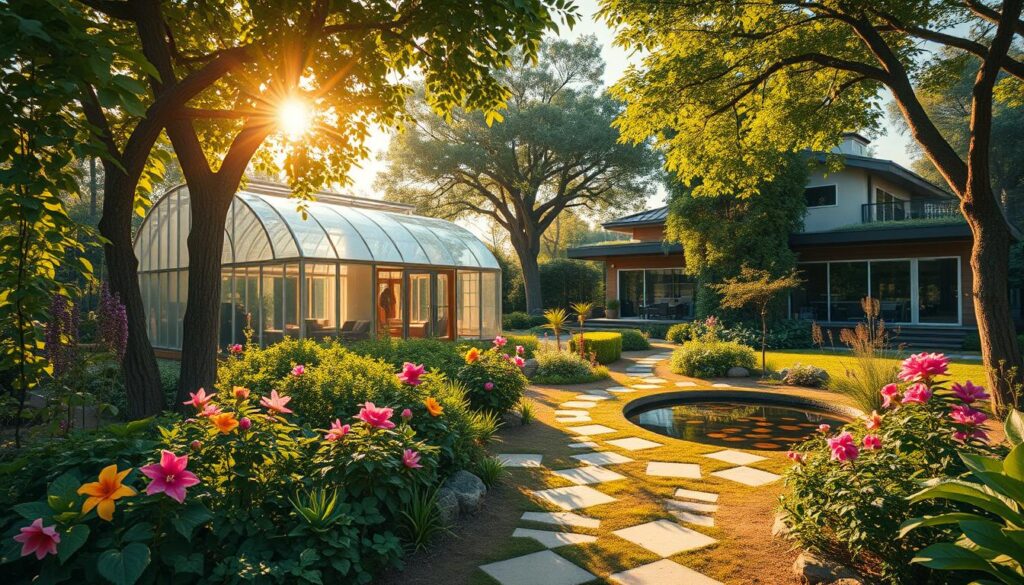
Why this matters now: Hotter summers, higher water bills, and food-price swings mean households need designs that cool, conserve, and feed. Small changes can yield big savings and social ties.
“Hope grounded in practical systems is how we turn stories into shelter, food, and power.”
- Definition: A practical, hopeful approach where gardens, clean tech, and community care support one another today.
- Real tools: Rooftop solar, rain barrels, compost, shared plots, DIY upcycling, and open-source plans.
- Values: Energy savings, water storage, pollinator habitat, and gathering spaces that build social capital and justice.
| Focus | Everyday example | Benefit |
|---|---|---|
| Energy | Rooftop panels + community battery | Lower bills, backup power |
| Water | Rain barrels + passive irrigation | Reduced outdoor use, drought resilience |
| Food & Community | Shared beds, seed libraries | Fresh produce, neighbor ties |
Barriers exist: cost, landlord rules, and time. Later sections show low-cost options, renter-friendly tactics, and group projects to spread labor and expense. This guide aims to help you turn hopeful world-building into local change that centers equity and practical justice.
Start With Place: Site, Community, and Intent
Begin by learning your place and asking what you want it to look like.Spend time observing light, water, wind, and the people who use the space. Clear intent helps choices land where they matter most.
How do you read your space: light, water, microclimates, and existing ecology?
Take short walks across the day. Note sun angles, shady pockets, and heat spots. Mark wind corridors and where rain flows or pools.
- Map sun and shade: visit at sunrise, noon, and late afternoon.
- Track water: watch where runoff runs and where you can slow, spread, and sink it safely; note what a water-smart layout should look like.
- Inventory assets: healthy soil, perennials, downspouts, fences, and habitat features to keep.
- Name constraints: record HOA rules, lease limits, roof load, and setbacks so plans fit reality.
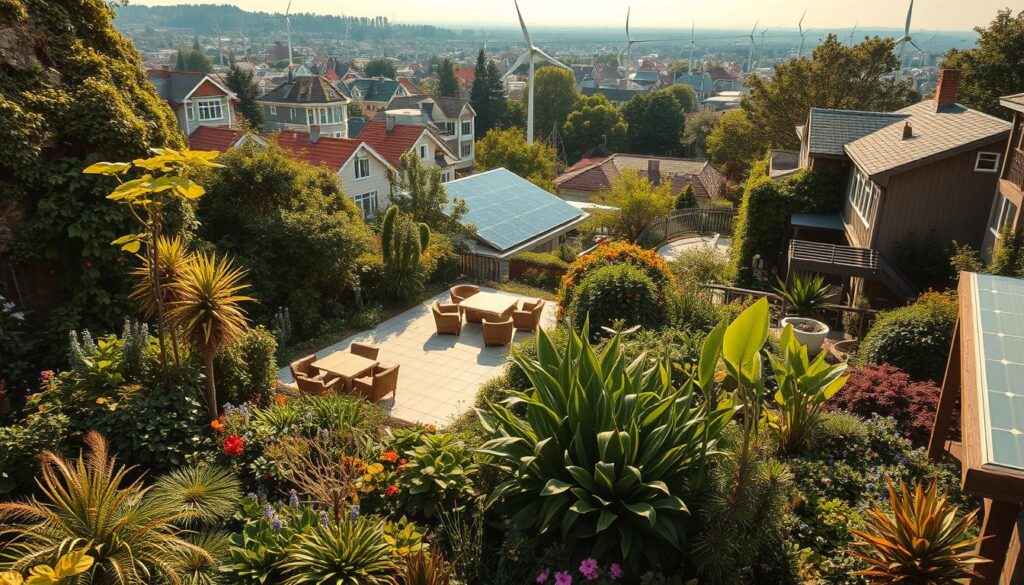
How do you set community goals: food sovereignty, shared spaces, and accessibility?
Meet neighbors and ask simple questions: who needs fresh produce, seating, or tool sharing? Aim for clear outcomes—more food, cooling shade, or pollinator habitat. Choose one or two priorities this season.
Plan circulation so paths fit strollers and carts. Put compost and rain capture where hauling is easiest. Start with one or two systems, observe how they perform for your people, then expand.
“Start small, watch closely, and let your place guide what comes next.”
Core Solarpunk Garden Principles: Aesthetics Serving Function
What practical rules turn pretty spaces into living systems? Start with forms that act. Think arcs, layers, and textured plants that cool, feed, and host life while offering quiet pleasure.
Quick takeaway: Favor elements that do more than one job. Let beauty be utility and make maintenance simple.
How do biophilic forms and multispecies habitats work?
Choose curves and layered canopies to slow wind and shade seating. A trellis framed as art can also grow beans for dinner and flowers for bees.
Layer habitats: groundcovers feed soil microbes, shrubs shelter birds, and vines bridge seasonal food sources. Keep paths wide enough for a cart and edges that double as seats.
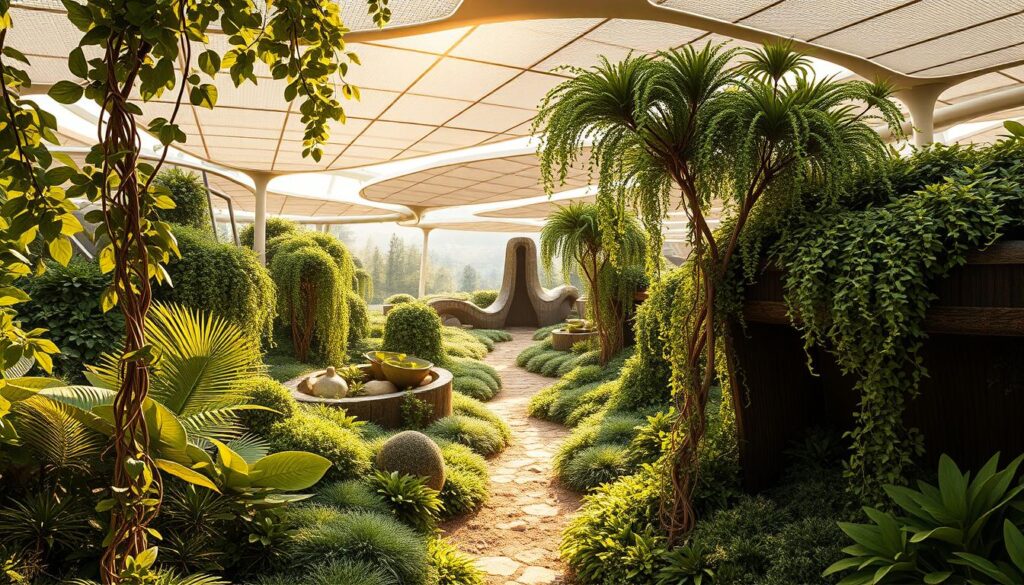
How do closed loops reduce waste and harvest energy?
Compost kitchen scraps, add worm castings, and mulch to save water. Capture roof runoff into a barrel and place thirsty plants nearby. Use a small solar pump for a recirculating birdbath or an LED path light on its own mini-panel.
- Lead with utility as art: a pergola that cools, supports grapes, and funnels rain.
- Materials: reclaimed metal, rot-resistant wood, recycled pavers for lower embodied impact.
- Accessibility: raised beds with seating edges and clear, firm paths.
| Principle | Example | Benefit |
|---|---|---|
| Biophilic forms | Curved paths, layered canopies | Cooling, habitat, calm seating |
| Closed loops | Compost → beds; rain → cistern | Less waste, richer soil |
| Quiet tech | Solar pump, LED path lights | Low-energy comfort, wildlife access |
| Durable materials | Reclaimed metal, rot‑resistant wood | Long life, lower impact |
Document the ideas you love and adapt them to climate, budget, and access. These small choices anchor a sustainable, people-centered solarpunk approach to gardens and living places.
Energy, Water, and Waste Systems That Power Your Space
How can simple systems cut bills, capture rain, and feed soil? Look at your outdoor area as a set of linked systems. Each choice should save water, store energy, or reduce waste.
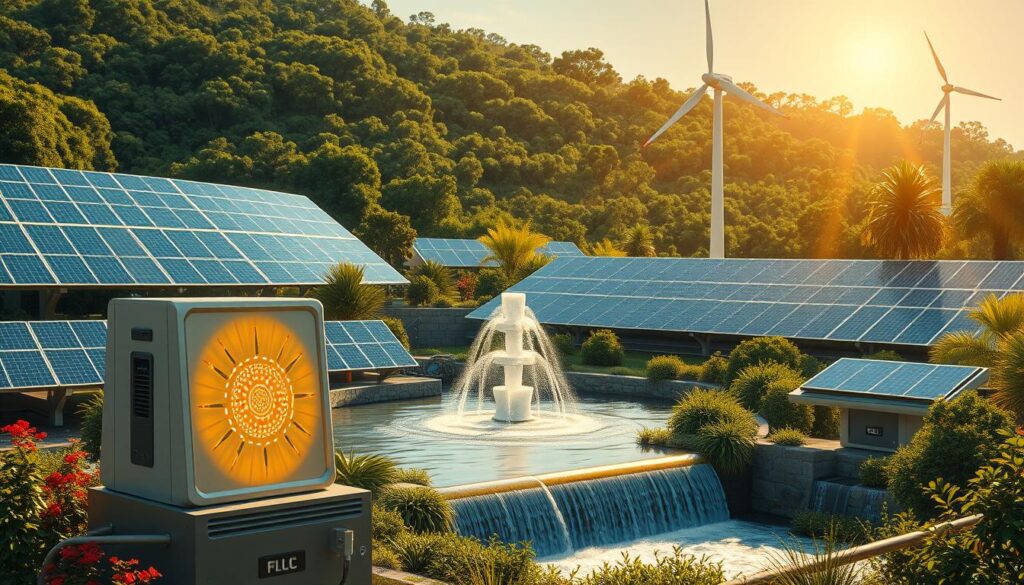
What are the solar basics for home use?
Assess roof orientation and shade first. Choose rooftop or ground‑mount panels based on space and load.
For renters, try portable panels for phones, LED lights, or a small garden pump.
- Storage: grid‑tied systems cut bills; batteries add outage backup. Call a licensed electrician for wiring and roof checks.
- Learn from off‑grid models: adapt Earthship ideas with a modest PV array plus a rain barrel and small battery.
How do you capture rain and irrigate passively?
Divert downspouts into food‑safe barrels or a cistern. Use screens, overflows, and gravity feed to beds.
Add swales, mulch basins, and contouring to slow and sink runoff.
How can compost close the loop?
Use cold bins for yard waste, hot piles for speed, and vermicomposting indoors. Keep a kitchen bucket, then move scraps to a lidded bin.
Use finished compost on heavy feeders like tomatoes and squash.
- Small tech wins: solar timers for drip lines, low‑voltage pumps, and moisture sensors prevent waste.
- Durable choices: food‑grade barrels, UV‑stable hoses, and rot‑resistant materials for bins.
- Track impact: note kilowatt‑hours, gallons captured, and pounds of compost to measure progress.
Food, Farms, and Community Gardens: Growing More Than Meals
How can shared growing spaces increase access and strengthen neighborhoods?
Small plots can feed families and spark lasting community connections. Use low-cost methods and clear roles to make food production inclusive. Focus on quick wins and long-term anchors so crops and people thrive.
From raised beds to indoor shelves — which method fits your site?
Match the method to your space and budget. Raised beds suit compact yards. Containers fit patios. Hydroponics yields leafy greens indoors. In-ground rows work where soil is deep and healthy.
How do you build fairness and shared ownership in a plot?
Plan for access: waist-high beds, wide paths, and seating. Dedicate rows for donation. Run seed swaps, work days, and a pay-what-you-can stand. Apply for local grants to offset startup costs — many cities fund projects like vertical farms, though they can need upfront support.
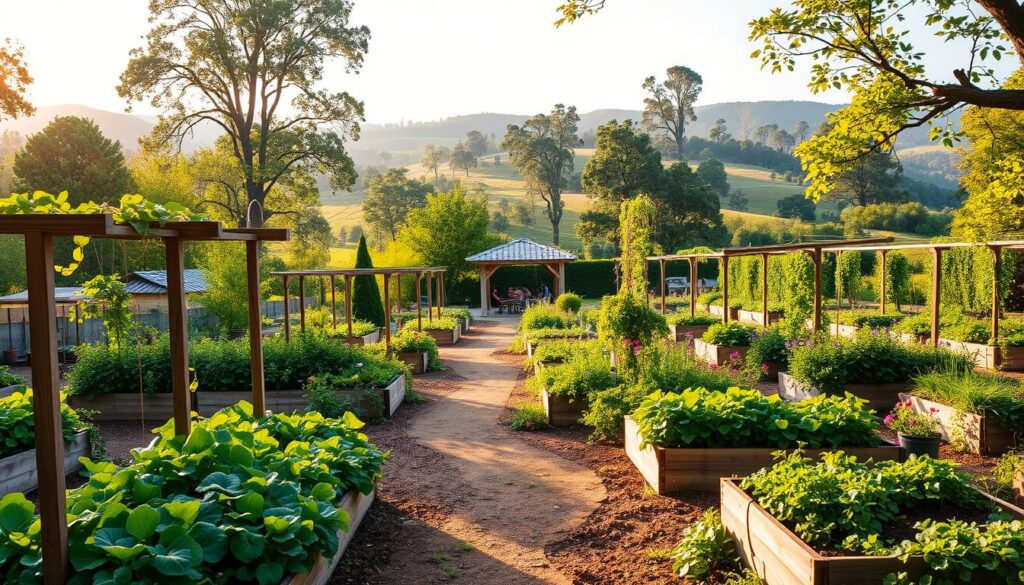
“Community First Village shows how housing plus shared growing spaces can support vulnerable neighbors.”
- Mix methods: soil beds + a small hydro shelf for year-round greens.
- Reduce waste: compost onsite and share gluts via fridges or preserves.
- Celebrate culture: plant varieties meaningful to neighbors and host tasting days.
| Method | Best for | Cost | Benefit |
|---|---|---|---|
| Raised beds | Compact yards | Low | Good soil control |
| Containers | Balconies, patios | Very low | Portable, renter-friendly |
| Hydroponics | Indoors, winter | Medium | High-yield greens |
| Community plot | Shared lots | Low–Medium | Builds local ties, supports food justice |
For a model and ideas, see a serene herb and flower project at Monastery Herb and Flower Haven. Invite neighbors, mentor new growers, and keep momentum with simple goals each season.
DIY Builds and Sustainable Materials for Solarpunk Spaces
Simple weekend builds can transform small yards into useful, low‑impact spaces. These projects let you test ideas, save money, and invite neighbors to help.
Pick projects that finish in a day or two. Try a pallet compost bin, a modular trellis from EMT conduit, or a slatted bench with storage under the seat.
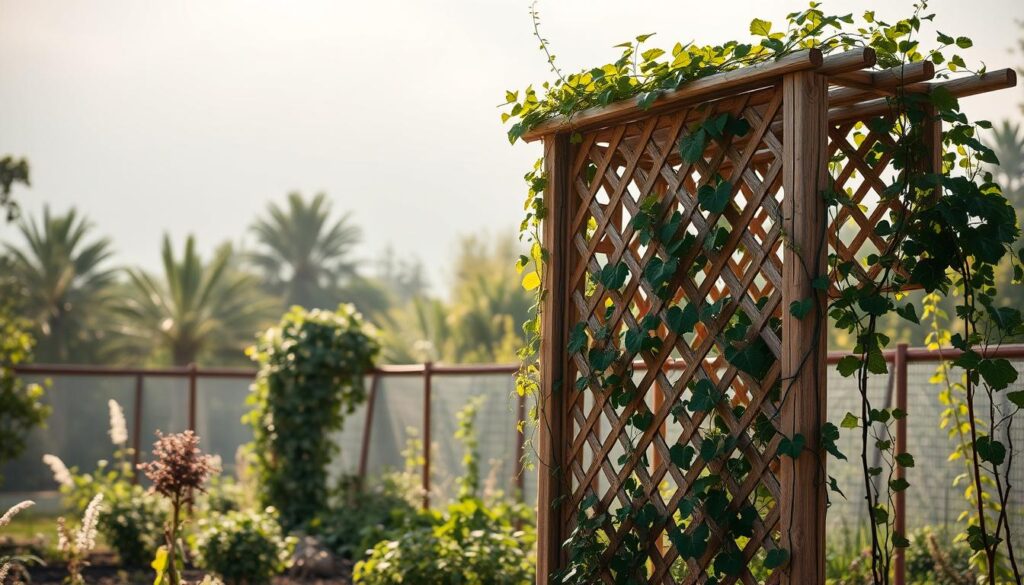
What materials and tools should you choose?
Use FSC-certified lumber, reclaimed metal, or recycled composite boards where rot is a risk. Seal wood with low‑VOC finishes for longevity.
Keep tools simple: a handsaw or circular saw, drill/driver, safety glasses, and a carpenter’s square. Borrow from a community tool library when possible.
How do you make builds modular and renter-friendly?
- Modular: bolt-together trellis panels, clip-on shade sails, and stackable planters that move with your home.
- Disassembly: prefer screws over nails and standardized parts to speed future work.
- Renter hacks: fabric grow bags on dollies, clamp-on railing planters, and freestanding trellises that leave walls intact.
“Share open-source cut lists and step photos so more people can copy, improve, and reuse what you build.”
Budget smart: mix new structural pieces with reclaimed accents. Maintain seasonally—tighten bolts, reapply finish, and swap worn ties—to extend life and keep spaces useful for years.
Urban Strategies: Vertical Gardens, Tiny Spaces, and City Design
How can small urban interventions cool streets, add habitat, and fit tight budgets? Start small, scale safely, and match plants and irrigation to your climate.
Small pockets of green can change a block’s comfort and mood.
How do green walls and facades help cooling and air quality?
Vertical planting can cut heating and cooling needs by up to 30% and lower noise by 5–10 dB. Green facades can cool local temps by around 2°C and filter particulates from traffic.
Maintenance is higher than ground beds. Expect seasonal pruning, checks for water leaks, and nutrient top‑ups. Older buildings may need structural review before adding living cladding.
How can balconies, rooftops, and parklets become living systems?
Convert rails into pollinator strips, stack planters, or run a pocket green wall with a drip timer. These low‑impact options suit renters and avoid wall penetrations.
Rooftops need non‑penetrating mounts and windbreaks. Budget for irrigation, seasonal replanting, and occasional replacements. Shared upkeep among neighbors reduces cost and burnout.
“Right‑sized projects learn from Milan and Singapore, then adapt to a single wall or stairwell in your city.”
- Start small: railing planters, stacked pots, and timer‑drip lines.
- Match plants: drought‑tolerant species in hot cities; hardy perennials where winters bite.
- Protect equity: partner with local groups and apply for grants to avoid green gentrification.
| Strategy | Best for | Upfront cost | Maintenance notes |
|---|---|---|---|
| Pocket green wall with drip | Balconies, stairwells | Low–Medium | Monthly checks, seasonal refill |
| Container trees on rooftop | Small roofs, parklets | Medium | Root checks, winter protection, non‑penetrating anchors |
| Railing pollinator strips | Apartments, shared terraces | Low | Easy care, rotate plants yearly |
| Community parklet | Sidewalk spaces | Medium | Shared schedule, grant funding advised |
Learn from icon projects like Bosco Verticale, One Central Park, and Oasia Hotel. They show what is possible at large scale. Then right‑size ideas for your apartment, roof, or sidewalk.
Inspiration Library: Earthships, Green Cities, and Floating Solar
Real projects around the world show how big ideas shrink to practical backyard wins. Use concrete examples to pick one or two tests for this season.
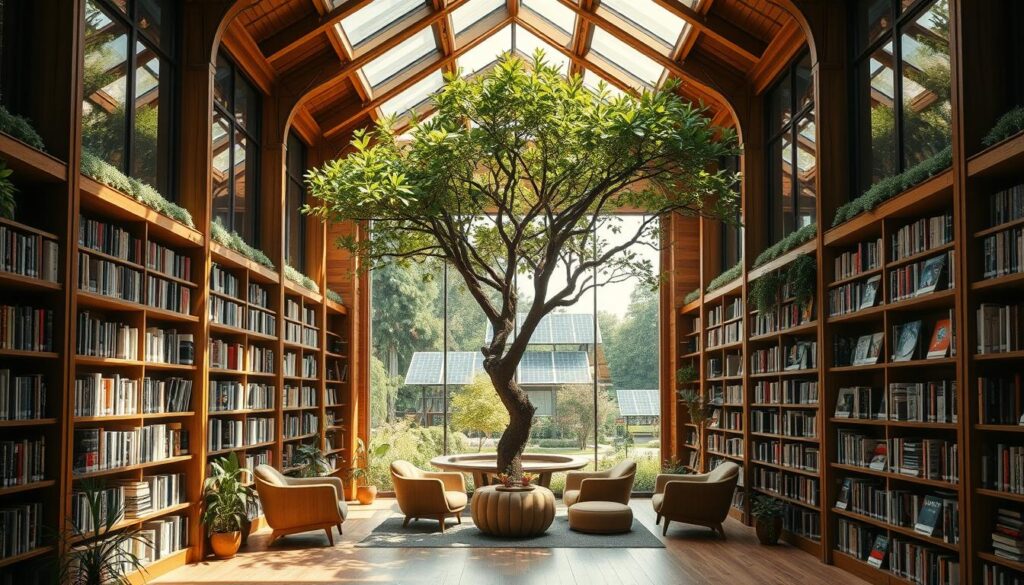
What can we learn from off‑grid homes in Taos?
Example: The Greater World Earthships near Taos include 113 homes using repurposed materials to capture water, make food, and run on mixed renewables.
They use hydroponic planters, composting toilets, cisterns with distillation, and solar, wind, biodiesel, and micro‑hydro with battery storage. Practical takeaway: prioritize water capture, diversify energy, and keep battery backup for continuity.
How do vertical forests and green towers scale ideas?
Bosco Verticale in Milan supports ~900 trees and 11,000 plants. One Central Park in Sydney cuts energy use by ~25% while Nanjing towers absorb ~25 tons CO2/year.
Translate this: add plants on fences, balconies, and shared walls to multiply benefits across a block and boost habitat.
- City lessons: Copenhagen’s bike-first planning and Curitiba’s efficient transit show how simple rules free space for tools and shared resources.
- Floating solar: Tengeh (45 ha, 122,000 panels) powers ~12,500 households; keep panels cool and ventilated to improve output.
“Pick two ideas from this series of examples, test them this season, and measure water, yield, or kilowatt offsets.”
These stories mix technology, art, and practical power—use them as a short playbook to inspire measured, local action.
Avoiding Pitfalls: Costs, Climate Limits, and Green Gentrification
Real change asks us to name limits as well as promise. Be candid about costs and climate risks, and plan for equity so projects serve people, not profit. Keep work practical, and aim for shared benefit.
What maintenance and retrofits really cost?
Budget for the long run: irrigation parts, soil refreshes, and structural checks add up. Match your design to how much time and money you can commit.
Respect older buildings. Avoid wall penetrations and choose freestanding or clamp-on systems when possible.
Consult a pro for roof loads and facade work before major installs. Vertical systems can be costly and hard to retrofit on aging structures.
How do we keep projects affordable and just?
Adapt to climate realities: droughts and heat waves raise upkeep and water needs. Favor drought-tolerant plants and deep mulch to reduce watering.
- Avoid exclusion: steer funds to shared assets—community hoses, tool libraries, and seed swaps—so more people benefit.
- Seek partnerships: tap municipal funds, utility rebates, and nonprofits to cut out-of-pocket costs.
- Prevent displacement: install priority projects in affordable housing and support resident stewards with stipends.
“Move beyond aesthetics toward mutual aid and cooling centers when neighbors face crisis.”
Name the hard issues: without inclusive planning, shiny projects can raise rents. Build ownership and decision-making inside the existing community.
Learn from writers and organizers who urge widening focus to clinics, food distribution, and direct democratic planning. Measure who benefits and adjust for fairness.
For practical builds that fit tight budgets, see compact urban greenhouse plans and adapt them as shared assets for your block.
How to build a designed solarpunk garden that’s both beautiful functional
Start with a short, staged plan that makes work manageable and measurable.
Start with a simple map: sketch your sun, soil, and water in ten minutes. Mark where people gather and what you want the space to look like this year.
Step‑by‑step roadmap: audit, prioritize, prototype, iterate
- Audit: list sun, water, soil, bills, and barriers. Note baseline harvests and energy use so you can compare later.
- Prioritize: pick two quick wins (mulch + drip, herb bed by the door) and one foundation system (rain barrel or compost).
- Prototype: build a single trellis or one vertical panel. Watch maintenance and how people move through the yard.
- Iterate: add a second barrel, expand drip, then plant a shade vine. Refine plant lists toward low‑care, high‑yield species.
- Organize: recruit two neighbors, share tools, set monthly work days, and use simple checklists so tasks actually get done.
Measuring impact: energy saved, water captured, food produced, people served
- Track kWh and small‑panel power offsets.
- Log gallons captured, pounds of compost, and weekly harvests.
- Map square feet shaded and who uses seating or paths.
- Budget: split must‑haves from nice‑to‑haves and reinvest savings into the next solution.
“Host a tasting, run a seed swap, and post a one‑page map so helpers know how systems work.”
Small steps build momentum. Measure results, then scale the solutions that actually save time, energy, and money for your home and neighborhood. Share what you learn — other writers and neighbors will copy what works.
Conclusion
Keep this simple: small steps in one yard add up to real change across a block and a world of stories. Start with a single, useful element today.
Try a rain barrel, a compost bin, or a sunny herb bed. Track water saved, kilowatt‑hours offset, or pounds harvested. Add another layer next season.
Center people. Prioritize access, safety, and shared upkeep so the space serves neighbors fairly. Remember that vertical panels and living walls bring cooling and sound benefits but need maintenance and mindful equity planning.
Make it a habit: set monthly check‑ins, invite friends, and share lessons. Small, steady projects link art, tech, and nature into a living movement for a fairer, cooler future.
FAQ
What is a solarpunk garden and why does it matter?
A solarpunk garden blends renewable energy, food production, and ecological design to create welcoming, resilient outdoor spaces. It matters because it helps cities and homes reduce carbon, build local food systems, and create inclusive community places that respond to climate and social justice needs.
How do I assess my site to start a project?
Walk the site at different times of day. Note sun exposure, shade patterns, drainage, wind, soil type, and existing plants. Map microclimates and nearby community resources. This simple audit shapes placement for solar panels, rain capture, raised beds, and communal zones.
What are the most important systems to plan first?
Prioritize energy, water, and soil systems. Decide where solar panels or small microgrids will go, design rain capture and passive irrigation, and set up composting to build soil. These systems support food production and lower long-term maintenance.
Can I add solar in a small yard or balcony?
Yes. Portable panels, balcony-mounted arrays, and shared rooftop systems work for tight spaces. Choose panels sized to your needs, pair them with efficient appliances or battery storage from brands like Goal Zero or EcoFlow, and check local building and HOA rules first.
How do I capture and use rainwater legally and safely?
Use rain barrels and cisterns with first-flush diverters and mesh screens to keep debris out. Follow local regulations—some U.S. states have specific rules. Treat collected water for edible crops only if it’s safe; otherwise use it for irrigation, soil amendment, and graywater-tolerant plantings.
What composting method should I choose?
Choose based on space and needs: hot pile composting for rapid breakdown and weed/seed control; vermicomposting for small-scale, indoor-friendly nutrient-rich castings; and bokashi fermentation where meat/dairy disposal is needed. All cut waste and feed soil biology.
How can a garden support food justice and community goals?
Design for access: raised beds at ADA heights, shared tool libraries, multilingual signage, sliding-scale CSA shares, and coordinated volunteer shifts. Partner with local food banks, city extension programs, and nonprofits to prioritize underserved neighbors and create stewardship opportunities.
What low-impact materials should I use for structures and furniture?
Favor reclaimed wood, galvanized steel, recycled plastics, and locally milled lumber. Reuse shipping pallets thoughtfully and choose rot-resistant species like cedar for exposed wood. Prioritize durability, repairability, and non-toxic finishes to keep maintenance low.
Which planting strategies maximize biodiversity and yield?
Mix native perennials with productive annuals, layer canopy, shrub, and groundcover, and use guild planting to support pollinators and pest control. Succession planting and intercropping increase harvest windows while supporting multispecies habitat.
How do vertical gardens and green walls work in cities?
Green walls use modular panels, felt systems, or pocket planters attached to facades or freestanding structures. They improve cooling, reduce noise, and add growing area. Choose lightweight media, efficient drip irrigation, and plants suited to exposure and maintenance capacity.
What are common retrofit challenges for older homes and apartments?
Structural limits, shading from mature trees or neighboring buildings, and electrical constraints are common. Start with low-cost interventions—container gardens, balcony solar kits, and rain barrels—then consult pros for roof-mounted solar, cisterns, or structural green roofs.
How do I measure impact from my project?
Track measurable metrics: kilowatt-hours generated or saved, gallons of rainwater captured, pounds of food produced, compost volume processed, and number of community participants served. Simple logs, basic sensors, and seasonal surveys give clear, actionable data.
Where can I find design inspiration and proven examples?
Look to living projects like Earthships in Taos for off-grid lessons; vertical forest schemes in Milan and Nanjing for dense-city greening; and floating or island solar projects in the Netherlands, Singapore, and Japan for large-scale water-based solutions. Adapt ideas to your climate and budget.
How do I avoid green gentrification when starting a neighborhood project?
Center local voices from the start, set equitable access rules, offer low-cost or free programming, and create community stewardship roles. Work with affordable housing groups and municipal planners to ensure benefits stay with existing residents.
What simple first projects give the biggest returns?
Start with a rain barrel, a compost bin, and a raised bed or container herb garden. Add a small portable solar panel for lighting or a pump. These steps reduce bills, improve soil, and create visible wins that build momentum.