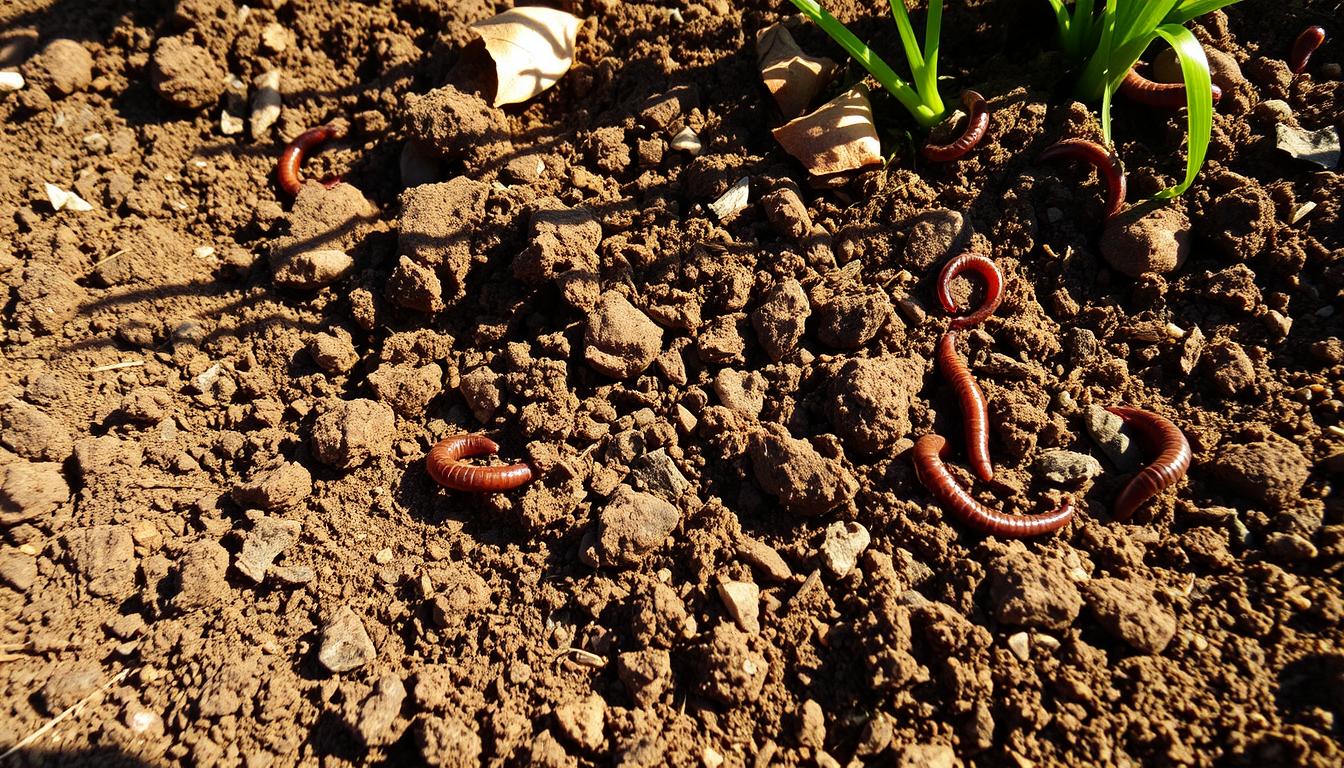
Curious how simple yard scraps can transform soil in weeks? This guide explains a practical way to feed soil life and build organic matter using common materials.
Start with a quick method: shred a 1–2 inch mix of dry material, spread it 2–3 weeks before planting, then till two to four passes to mix into the bed. Worms and microbes break the mix down fast, improving fertility and tilth for transplanting.
Maple and fruit-tree material breaks down faster, while walnut should be avoided because it can harm seedlings. Fresh, thick clippings can heat up; keep them off stems when used as mulch.
For sustainable sourcing, try neighbor swaps, leaf co-ops, or transfer-station pickups. For more context on why leaving yard trimmings in place helps soil and wildlife, see this practical guide.
Key Takeaways
- Shredded yard scraps feed soil life and boost soil health quickly.
- Use a 1–2 inch mix two to three weeks before planting for best results.
- Avoid walnut material and keep fresh clippings off plant stems.
- Sourcing can be local and low-cost via swaps or transfer stations.
- These steps improve fertility, tilth, and drought resilience.
Are leaves grass good addition your garden
Simple yard scraps can rebuild soil structure and feed life below ground. Used in shredded, thin layers, this material adds organic matter while avoiding common risks.
The short answer: yes—when applied the right way. Shredded fallen leaves mixed into the top few inches of soil give steady nutrient release. They improve tilth and help beds hold moisture between waterings.
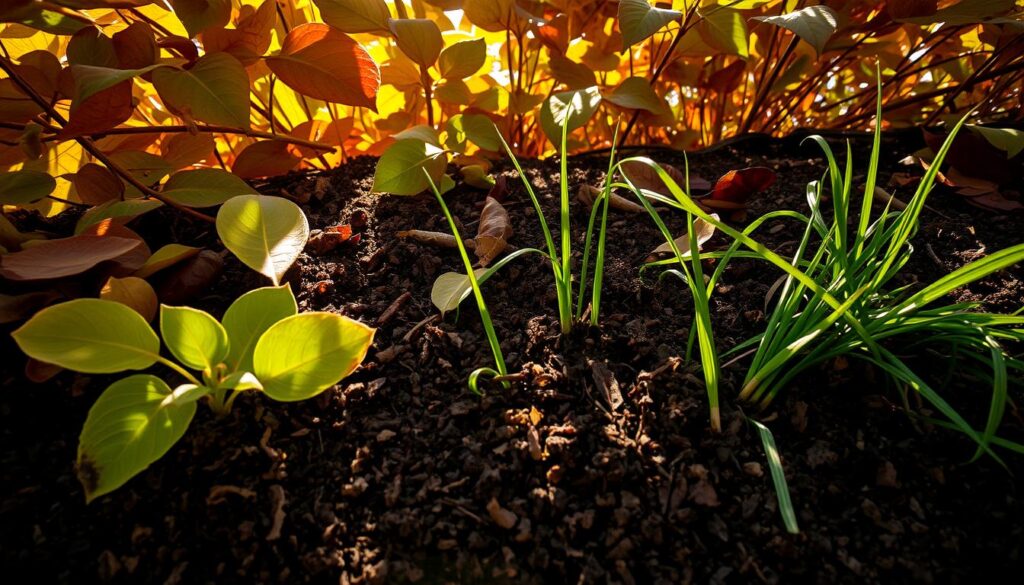
The key benefits
- Organic matter: Adds carbon and slow-release nutrients that feed microbes and earthworms.
- Moisture retention: Better tilth reduces evaporation and limits crusting after heavy rain.
- Weed suppression: Mulched maple leaf material can lower dandelion and crabgrass germination in lawns.
Common risks to avoid
Thick, unshredded layers can smother turf and invite mold. Fresh clippings may heat and burn nearby plants, so keep clippings off stems and mix them thinly into soil.
Work in shredded pieces, leave a little air around stems, and test a small bed first. This way you cut risk while reusing local materials instead of buying more products.
How to use leaves and grass clippings to build garden soil
Gather simple yard scraps, shred them, then mix into beds for quick soil improvement. This method turns local materials into active organic matter with just a few tools and a bit of time.
Gather and prep materials
Collect dry leaf piles, fresh grass clippings, a little spoiled hay, and kitchen scraps. Use a mower with a catcher to shred leaves into small pieces so clippings mix quickly. Vary textures so decomposition runs evenly.
Best types and what to avoid
Favor maple and fruit tree leaf material; they break down faster and feed soil life. Skip walnut entirely—its compounds can harm seedlings. Thick oak or similar leaf types work when balanced with extra clippings.
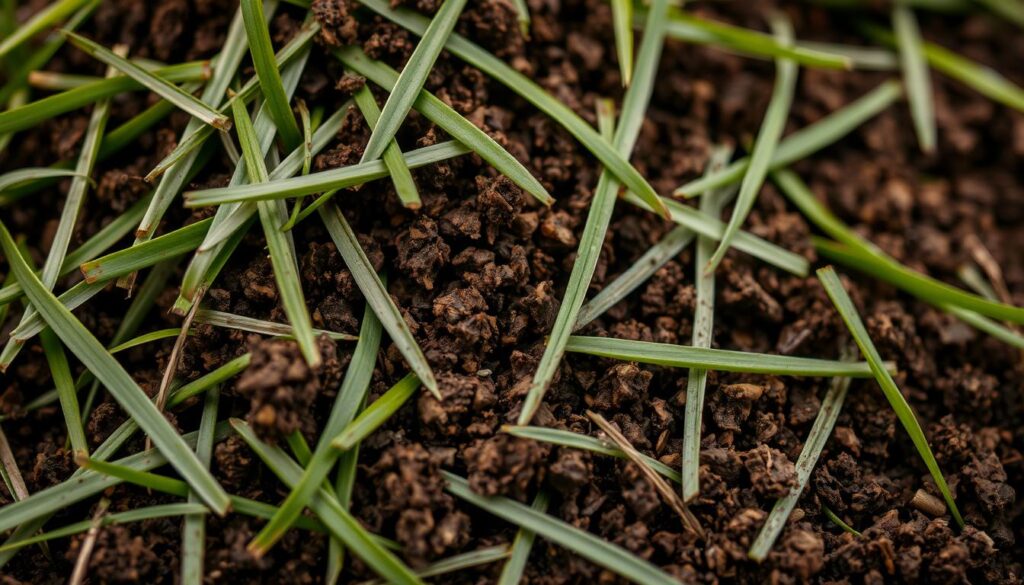
Bed prep timeline and steps
Spread a 1-2 inch layer across garden beds, then till one pass before or after spreading. Make 2–4 tilling passes to blend evenly into the top several inches of soil. Wait two to three weeks before transplanting so worms and microbes get started.
Mulch around plants
When using fresh clippings as mulch, keep material a few inches away from plant stems to avoid heat burn and trapped moisture. This keeps beds healthy while turning what was once waste into lasting fertility.
- Tip: Thin mixes with more clippings than leaf pieces speed decomposition and reduce nitrogen tie-up.
Using leaves on the lawn: mulch-mow for nutrients without smothering
Mulch-mowing tucks small leaf fragments into turf where they decompose and feed soil life. Do this when blades still show through a light leaf cover so pieces settle into the canopy instead of forming a mat.
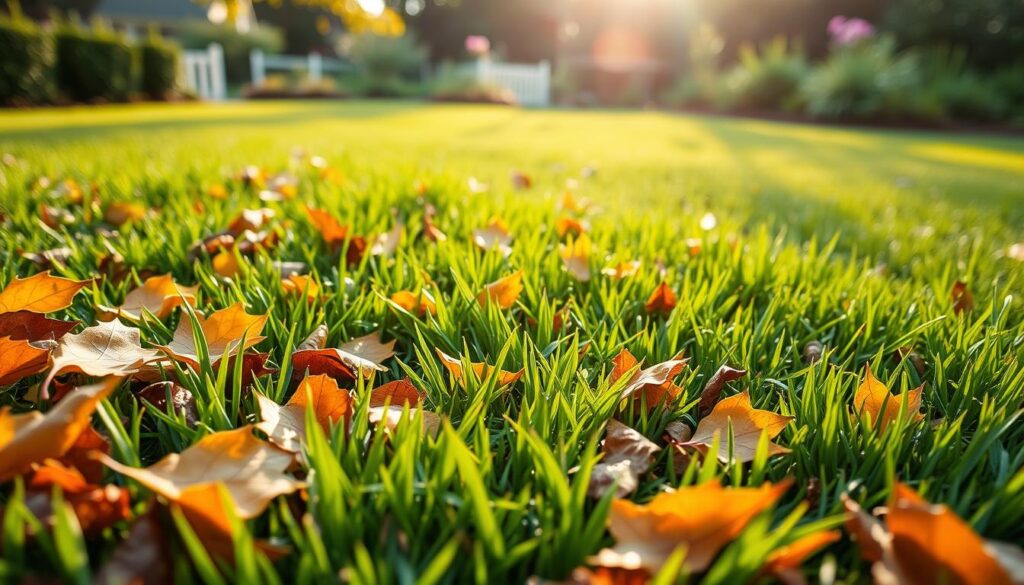
When and how to mow into the canopy for natural fertility
Make multiple passes with a sharp blade until leaf bits look confetti-like. Finer shredding speeds breakdown and keeps a thick layer from forming.
Weed suppression and maple benefits
Research from Dr. Thomas Nikolai (Michigan State) shows that mulched maple fragments can reduce dandelion and crabgrass germination. That adds a weed-control bonus while building soil.
Thickness matters: avoid matted layers and mold
Watch for matted patches, musty smells, or squishy turf. If drop gets heavy, rake, shred, and use as leaf mulch in beds or compost instead of mowing.
| Situation | Recommended action | Risk |
|---|---|---|
| Light fallen leaves | Mulch-mow 1–2 passes | Low; builds soil |
| Moderate drop | Multiple passes; raise mower height | Possible thin mats |
| Heavy drop / matted layer | Rake, shred, use as leaf mulch or compost | High; mold and turf loss |
Smart tips for maximizing soil health with local organic matter
Smart sourcing keeps materials close to home and reduces dependence on packaged soil products. Practical, small-scale systems supply steady carbon and food for soil life while cutting waste and emissions.
Start locally: build a habit of helping neighbors with raking in exchange for a few bags. That way you can gather leaves quickly and keep transport short.
Set up or join a leaf co-op to pool effort and secure steady seasonal supplies. Ask a transfer station about a yard-waste drop point; many agencies let residents leave bags at shared enclosures.
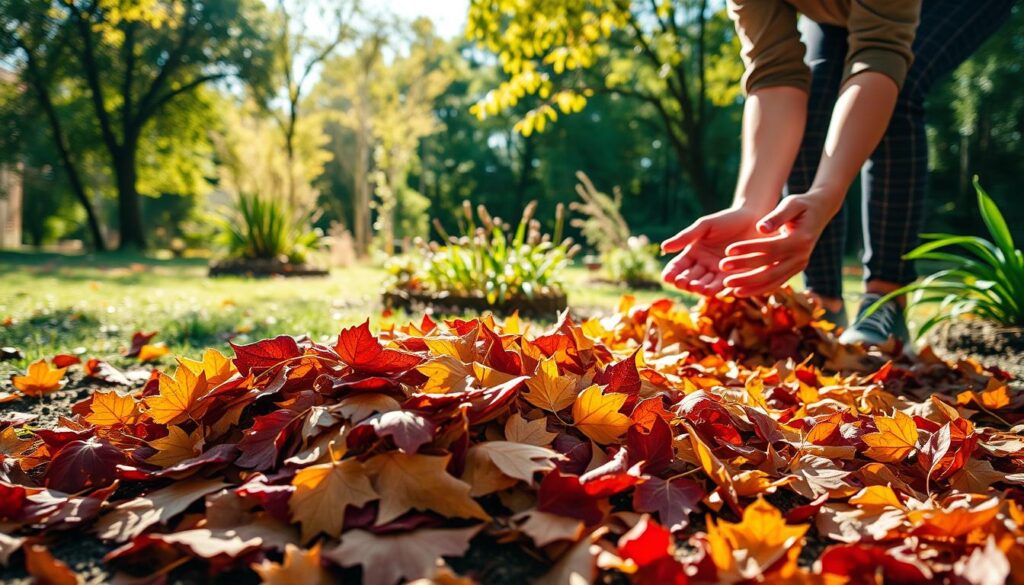
- Use simple materials: leaves, clippings, and spoiled hay feed microbes and cut the need for mined products.
- Sort carefully: remove walnut and herbicide-treated inputs to protect soil life and food plants.
- Store smart: keep dry leaf stocks in breathable bins so carbon is ready when beds need it.
- Think year-round: time pickups after windy weekends or cleanups to snag extra bags and plan efficient loops.
Keep lawn care balanced: leave a thin layer of shredded leaf on turf, and funnel excess to beds or compost. This simple way boosts soil, trims waste hauling, and brings tangible benefits to local trees and plots today.
Conclusion
Finish strong: turn simple yard scraps into steady fertility that feeds plants all season. Small, repeatable steps build long-term soil health without expensive inputs.
Shred, spread a thin 1–2 inch layer, mix into beds with 2–4 passes, and wait two to three weeks before planting. This routine uses grass clippings and fallen leaves as steady food for microbes and worms.
On the lawn, mulch-mow when blade tips still peek through to avoid a thick layer that can invite mold. Favor maple or fruit leaf material, skip walnut, and keep fresh clippings off stems.
Gather leaves locally and try one bed first. For a deeper look at nutrient impacts and why not bagging helps, see this analysis on leaf removal.