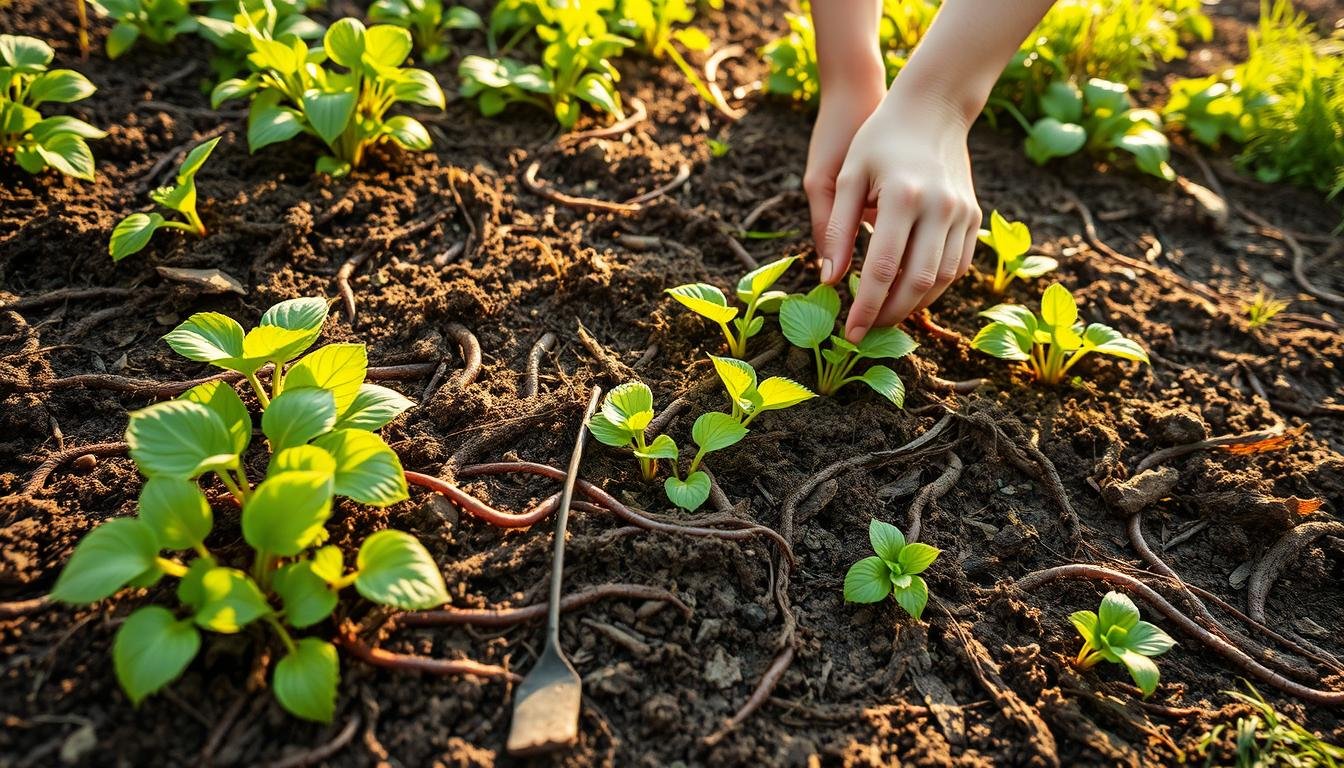
No heavy tools are needed to build a rich garden bed. Small actions, repeated each season, help create a spongy, nutrient-rich surface that supports plants and crops.
What if the fast, mechanical route is not the best long term? Agronomists and extension specialists now favor no-till gardening because intensive tilling harms the living web of fungi, bacteria, and earthworms that make soil healthy.
Home gardeners find this way practical for a small area. Layering compost and mulch protects the surface, suppresses weeds, and feeds biology. Experts like Joe Lamp’l and guidance from Oregon State University highlight that leaving the ground largely undisturbed lets organisms build pores and crumbs. Over time, beds hold moisture, host fewer weeds, and show steady improvement in structure and fertility.
Expect patience. The process takes time, but the benefits for plants and harvests grow each season.
Key Takeaways
- We’ll answer the core questionand outline expert methods for a small garden area.
- No-dig layersof compost and mulch protect and feed living soil.
- Biology builds structurethat improves water, aeration, and root growth.
- Results need timebut yield fewer weeds and richer tilth.
- Practical optionsinclude sheet mulching, cover crops, and broadforking.
Why No-Till Gardening Works for Healthy Soil and Fewer Weeds
A gentle, covered approach helps soil biology build lasting structure. Protecting the surface keeps moisture, buries many weed seeds, and lets fungi and earthworms make stable aggregates that feed plants.

Tillage and rototillers disturb the living web beneath our feet. Tines break aggregates and expose organic matter to rapid oxidation, which drains stored carbon and nitrogen. That quick change leaves ground less fertile even if it looks fluffy right after work.
What heavy disturbance disrupts
- Biology: Fungi and microbes that bind particles and fuel nutrient cycles get torn apart.
- Weed seeds: Dormant seeds rise to the surface where light triggers germination, increasing weeds later.
- Structure and water: Repeated passes worsen compaction, raise runoff, and cause surface crusting.
| Feature | Tillage Effects | No-Till Effects |
|---|---|---|
| Microbial network | Broken and reduced | Preserved and strengthened |
| Weed pressure | Often increases (seeds exposed) | Declines over time (seeds stay buried) |
| Moisture handling | Runs off, crusts | Absorbs evenly, resists drought |
| Carbon & fertility | Rapid loss by oxidation | Builds stable organic matter |
Can you really loosen soil without tilling?
The living web beneath our feet does most of the work. Roots, fungi, and earthworms form channels and tiny crumbs that improve drainage and aeration over time.

This approach trusts biology to build structure rather than mechanical digging. Microbial glues and fungal hyphae bind particles into stable aggregates. Earthworms and fine plant roots open pathways that help water and plant roots move freely.
Soil biology does the heavy lifting: roots, fungi, and earthworms
Living roots exude sugars that feed microbes. Fungi knit particles into crumbs. Earthworms make stable tunnels that act like natural aerators for plants.
Mulch layers that soften the surface and feed organic matter over time
Add a mulch layer of compost, leaves, straw, or wood chips to shield the surface and supply steady food for microbes. Over seasons this material turns into organic matter and a spongy top layer.
Cover crops as living tools for aeration, compaction relief, and nutrients
Plants such as clover, buckwheat, hairy vetch, and daikon radish relieve compaction and add fertility. Their roots break hard layers and then decay in place, leaving channels and food for the next crops.
Broadforks and hand tools: aerate without destroying aggregates
Use a broadfork to lift and crack the bed rather than flip it. This preserves aggregates and the microbial web while improving drainage and root penetration.
Cardboard and sheet mulching to smother grass and weed seeds
Overlap cardboard, wet it, then add alternating green and brown layers. This sheet mulching smothers grass and buried seeds and creates a new, plantable layer over time.
“Work with living systems. A steady stack of good materials, cover crops, and gentle tools builds fertile ground that lasts.”
- Think in layers, not depth: build from the top down with organic material.
- Keep water steady: consistent moisture speeds decomposition and microbial activity.
- Expect fewer weeds: seeds stay buried as layers accumulate and light is blocked.
| Method | What it does | When to use |
|---|---|---|
| Mulch layers | Shields surface, feeds microbes, builds organic matter | Any time; refresh yearly |
| Cover crops | Breaks compaction, fixes nitrogen, leaves root channels | Fall–spring or in summer gaps |
| Broadfork | Lifts bed without flipping aggregates | As needed for deep compaction relief |
| Sheet mulching (cardboard) | Smothers grass and seeds, builds a new planting layer | When converting turf or heavy weeds |
For a practical primer on implementing these steps in home plots, see a helpful guide on no-till gardening.
How to build and maintain a no-till bed step by step
Start by mapping beds and paths so foot traffic never compresses the growing area. Narrow beds (about 4 feet wide) and firm paths or stepping stones keep weight off planting zones and protect structure over time.

Smother existing grass and lawn. Mow the lawn low, overlap cardboard by an inch or two, wet it so it hugs the ground, and cover with a thin compost layer. For low-weed sites, a dark tarp left about three weeks softens turf and kills top growth.
Layer organic materials for steady improvement
Build “lasagna” layers: alternate 2-inch green layers (grass clippings, fresh plant debris, food scraps) with brown layers (dry leaves, straw, shredded newspaper, wood chips) up to roughly 18 inches.
Top with a 2–6 inch brown mulch layer and wet each layer thoroughly to speed decomposition and activity by microbes and worms.
Tools, moisture, and planting
Use a broadfork to lift and create channels rather than a tiller. Rock the tool gently to open the bed without flipping aggregates.
Pull back the mulch layer to make furrows for direct seeding or to set transplants, then slide the cover back into place to protect roots and keep seeds buried.
Seasonal care and yearly refresh
Mulch in summer to conserve water and suppress weeds. In fall, sow cover crops such as crimson clover, Austrian winter peas, or fava beans and terminate before seed set.
Refresh yearly: add one inch of compost or one to two new thin layers to maintain a loose, nutrient-rich surface and to bury weed seeds deeper over time.
“Design beds to avoid stepping on them; small, steady layers build deep, lasting fertility.”
Key benefits and real-world trade-offs of going no-till
No-dig methods deliver steady benefits for garden beds and crops over time. Protected surfaces hold moisture, build healthy soil structure, and reduce weed pressure as biological activity increases.
Over years a protected bed shows clearer gains in water infiltration and erosion control. Mulch and cover crops act as living cover that soaks up rain and slows runoff.

Improved water handling and erosion resistance
Mulch shields the surface and raises infiltration. This helps the garden absorb storms and hold water between rains.
Less runoff means steadier moisture for plants and less loss of top material.
Fewer weeds over time, with manageable trade-offs
As layers build, weed seeds stay buried and weed pressure drops without herbicides.
Real-world trade-offs include slower spring warming and trickier tiny-seed planting; pulling mulch back for seeding or using transplants often solves that.
- Moisture management improves: beds resist erosion and hold water longer for plants.
- Weed control eases: buried seeds and steady mulch cut weed numbers each year.
- Soil health compounds: aggregation and less compaction help roots and microbes thrive.
- Lower inputs over time: fewer weeds, less watering, and reduced fertilizer needs as biology cycles nutrients.
“Expect the biggest gains after one to two years—each season adds structure, fewer weeds, and stronger crops.”
Conclusion
Top-down feeding and gentle tools turn compacted ground into a lively planting place. No-till gardening trusts biology and steady layers to rebuild soil over time.
Start small in fall: smother a patch of lawn with cardboard, stack alternating materials, wet each layer, and plant by pulling back the top cover. This method keeps the ground protected and lets roots, worms, and microbes open channels that improve structure.
Add an inch of compost each year, rotate in cover crops that break hard layers, and use a broadfork only when deep compaction demands it. Over a season or two, seeds and weeds decline and food plants thrive in the richer place you built.
Trust the process: steady mulch, smart watering, and gentle care create resilient ground that rewards patience and practical work.