Have you ever chosen a container by how it looks—and then wondered why the plant struggled?
Many gardeners pick a pot by style, but the pot, the growing mix, and your watering routine together decide how much water roots get and how much air they breathe. That mix of air and water shapes plant health in your garden and indoor space.
This short guide explains, in plain language, how soil physics, pot shape, size, and materials change drainage, moisture, and stability. You’ll learn why identical media create the same perched water table height and how that makes short, wide pots hold more saturated mix than tall, narrow ones.
We match common plants to containers: ferns like wide, shallow vessels; cacti do better in taller, faster-draining homes; orchids need chunky bark mixes. Bookmark this guide and keep a tape measure handy—few quick checks help you pick planters that keep roots comfy and foliage thriving.
Key Takeaways
- Look beyond looks: pot type plus media and watering set moisture and air for roots.
- Perched water table: short, wide planters stay wetter at the bottom than tall, slim ones.
- Match plant to container: choose containers that fit a plant’s moisture needs and root space.
- Materials matter: plastics, fiberglass, terracotta, and metal each affect insulation and weight.
- Stability & layout: square planters fit corners and rows; tapered rounds can tip with heavy tops.
- Measure and test: size for roots, adjust watering by season, and use airy mixes to avoid rot.
Why this matters now: a best practices guide to healthier plants in containers
Choosing the right container is the fastest, most affordable way to boost plant health today. Small tweaks to planter size and form will improve watering rhythm, reduce stress, and speed steady growth.
Healthy containers balance air and moisture so roots breathe and absorb. Large planters hold more media and dry slowly, which can invite root rot. Small pots dry fast, crowd roots, and make top-heavy plants tip.
Use a simple rule: pick a planter size about two inches wider than your plant’s current diameter. For multiples, add two inches per specimen. Square planters give slightly more soil volume and less runoff than rounds.
Remember watering: big planters need less frequent watering but require checks for prolonged wetness. Tall planters boost the air-to-water ratio, helping deep-rooted trees and shrubs thrive.
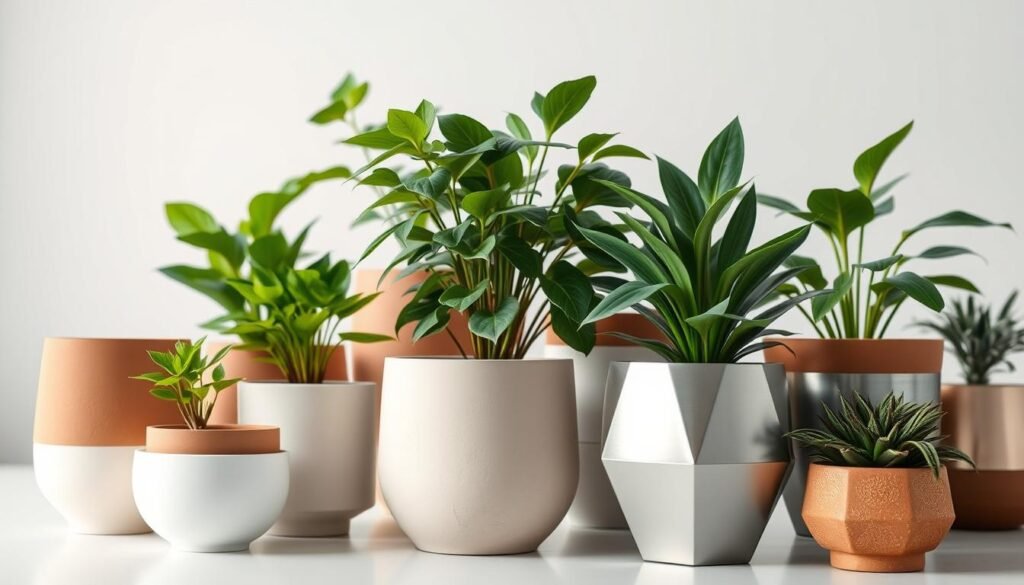
- Design for your spaces: choose forms that fit entries, corners, and maintenance routines.
- Seasonal tip: heat raises evaporation—water timing and mulch help protect plant health.
Outcome: right containers reduce stress, improve vigor, and help plants stay healthy with less fuss.
Container soil science made simple: how water, soil, and gravity interact
Roots live where air meets water, and the mix inside a container sets that meeting point. This short section explains how matric forces, capillary action, and gravity shape moisture in planters.
Matric potential and capillary action in potting mixes
Matric potential is how strongly a soil holds water via adhesion and cohesion. Tiny particles create many small pores, which pull water up by capillary action and hold more moisture.
The perched water table: same height across pots with identical media
Gravity pulls water down while capillarity pulls it up. The balance creates a saturated layer at the bottom called the perched water table.
For one soil mix, that height is the same no matter the container size or shape. In shallow planters, the saturated layer makes up a larger share of the volume.
Drainage reality check: holes help, mixes and media decide water movement
Drainage holes let extra water exit, but the mix controls how fast a container dries from the top to the bottom.
- Think of potting soil as a sponge: particle size sets water retained and air left for roots.
- Practical test: probe deeper than the surface—top dries first, bottom stays damp longer.
| Particle Size | Water Retention | Aeration | Best Use |
|---|---|---|---|
| Fine (peat-heavy) | High | Low | Carnivorous plants, moisture lovers |
| Medium (standard mix) | Moderate | Moderate | Most houseplants |
| Coarse (perlite/pumice) | Low | High | Orchids, succulents, hoyas |
Pot shape and size basics: how height, width, and container volume affect roots
Height and width work together to set how wet and airy the soil feels to roots. This section shows how simple geometry changes drying speed, nutrient storage, and root habits.
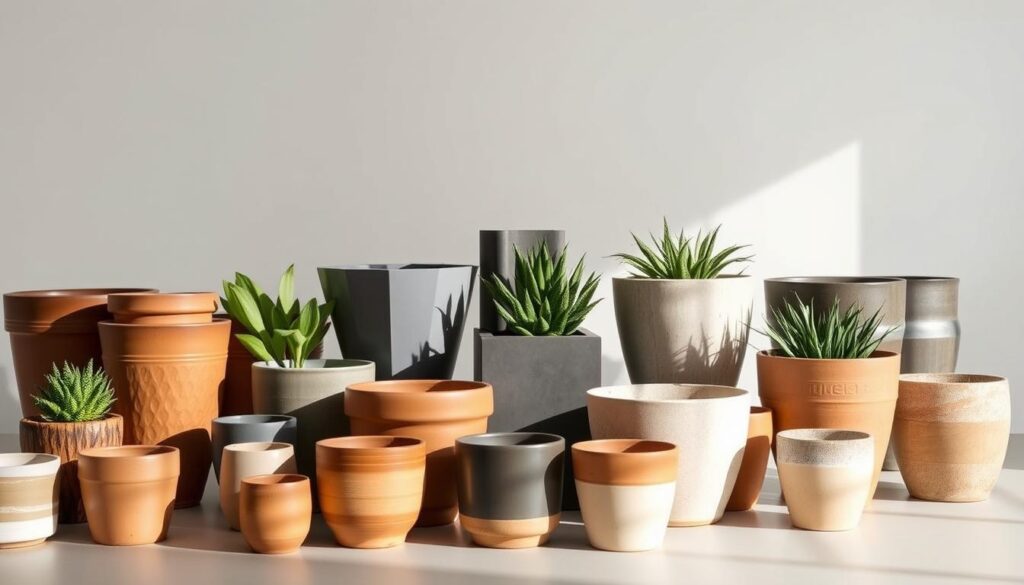
Tall vs. short: air-to-water ratios and drying speed
Taller containers raise the air-to-water ratio above the perched water table, so they dry faster near the top. That helps deep-rooted trees and desert plants when paired with a coarse mix.
Short, shallow pots keep a larger share of the profile saturated after watering. Use these for moisture-loving ferns and shade plants, but avoid heavy mixes that trap water at the bottom.
Wide vs. narrow: volume, water retention, and root room
Wider planters add container volume and let roots spread, increasing nutrient availability and stability. A square planter with the same width as a round one can hold about 8% more soil, which buffers moisture swings.
Narrow forms limit lateral growth and sometimes dry unevenly. For plants that branch roots, choose extra width. For tap-rooted or trailing species, depth may matter more than width.
- Height shifts aeration: taller equals more aerated topsoil.
- Width changes volume: wider equals more total water and nutrients, but slower bottom drying.
- Root behavior: narrow encourages downward growth; wide promotes branching.
| Feature | Short, Wide | Tall, Narrow | Best For |
|---|---|---|---|
| Air-to-water ratio | Lower (more saturated) | Higher (more aerated) | Moisture lovers vs. desert species |
| Container volume | Greater for same footprint (more nutrients) | Less lateral volume, more depth | Large shrubs vs. deep-rooted specimens |
| Drying speed | Slower at bottom | Faster overall | Choose per watering routine |
Practical checklist: confirm target height for aeration, pick width for root room, and match container volume to the plant’s feeding needs. Adjust media texture so the bottom zone never stays waterlogged.
For layout ideas and herb-friendly container choices, see our guide on creating a potted herb garden.
Best practices for pot materials: matching plastic, fiberglass, terracotta, and more to plant needs
Material choices change moisture, temperature, and durability for your plants. Pick walls that protect roots in your climate and match your watering style.
What a planter is made from shifts evaporation, insulation, and how often you check soil. Fiberglass and resin are lightweight, well insulated, and frost resistant. They handle freeze-thaw cycles and suit patios, rooftops, and areas where weight matters.
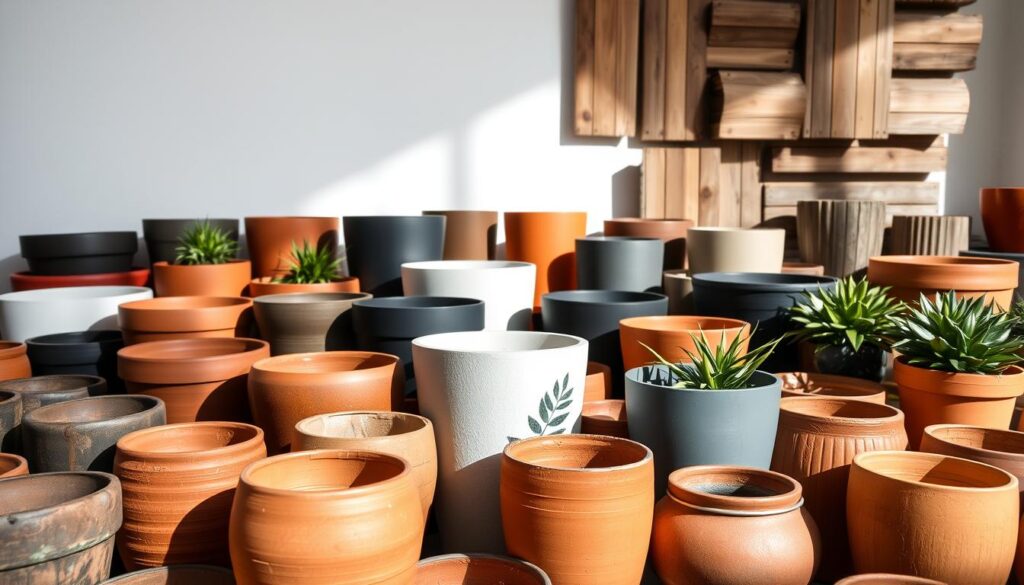
Terracotta breathes, increasing evaporation and oxygen in the soil, so herbs and succulents often thrive. Glazed ceramic holds moisture longer, so use a more open mix for plants that dislike soggy bottoms.
- Metal: heats fast in sun and can stress roots; use liners or shade and light finishes.
- Wood: offers insulation and charm but needs a liner and drainage cutouts to slow rot.
- Concrete: heavy, stable, and insulating—best when placement is final and elevated slightly for drainage.
Always prioritize a drainage hole and the right soil blend. Drainage openings help, but the media controls how water moves and how long the profile stays wet. For large planters, choose mixes that balance moisture and air to avoid long-term saturation.
Shape-specific guidance: round planters, square planters, rectangular containers, and tall planters
Container geometry shapes moisture, stability, and the way roots explore the soil. Choosing the right form makes watering simpler and helps plants settle into their best rhythm.
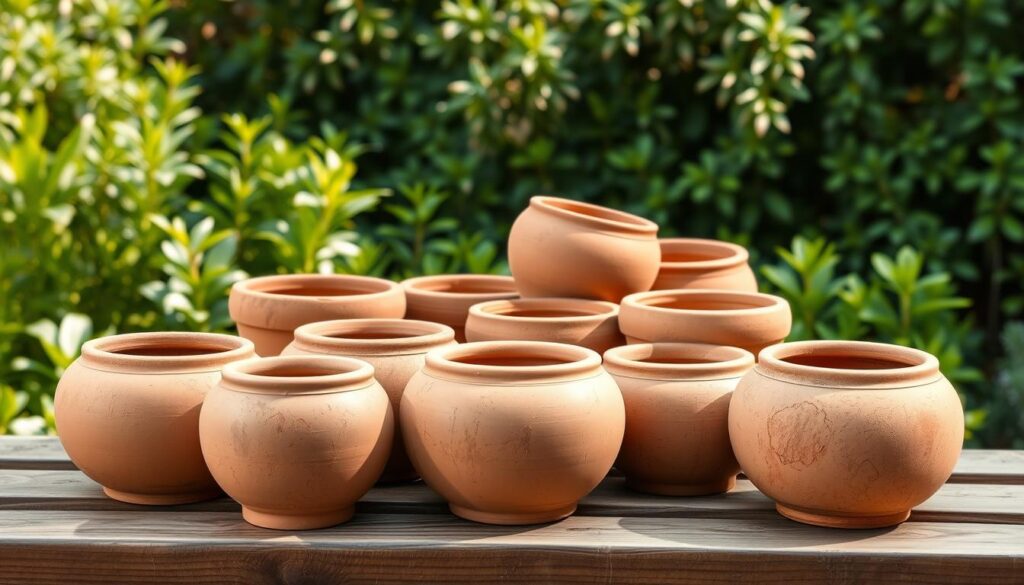
Round planters and stability
Round planters are classic and forgiving in many spots. Tapered bases can tip with top-heavy foliage and encourage circular root rings at the bottom.
Tip: pick cylindrical rounds for exposed sites, or add weight to the base and root-prune when repotting to break pot-bound circles.
Square planters and efficient use of space
Square planters fit tight corners and often hold up to 8% more soil volume than a round of equal width.
They resist tipping and reduce runoff in rows, so they work well for structured layouts and compact patios.
Rectangular containers for multiple plants
Rectangular troughs simplify planting rows of herbs or annuals. They create a single watering zone and clean lines along railings or beds.
Use them to cut hand-watering time and to create cohesive borders without wasted gaps.
Tall vs. short planters: depth matters
Tall planters raise the air-to-water ratio above the perched wet zone. They suit deep-rooted trees and shrubs that need aeration at depth.
Short, wide pots favor shallow-rooted succulents, herbs, and bonsai by promoting faster drainage near the bottom and steady surface moisture for growth.
- Consider volume and footprint: squares and rectangles often give more soil per footprint than rounds, which buffers moisture swings.
- Stability: broader bases and squared corners resist wind; add weight or choose heavier materials when needed.
- Planting efficiency: rectangular planters can replace multiple pots to simplify feeding and seasonal swaps.
does pot shape material really matter yeshere’s: step-by-step pot selection for common plants
Match your planter choice to the plant’s root habit and the room you have available. Start by measuring the rootball and the floor or shelf footprint. This keeps plants stable and simplifies watering.
Tall, slim planters save floor space and raise aeration for many houseplants. In tight spaces, pick a corner-ready square or a narrow cylinder to fit without crowding walkways.
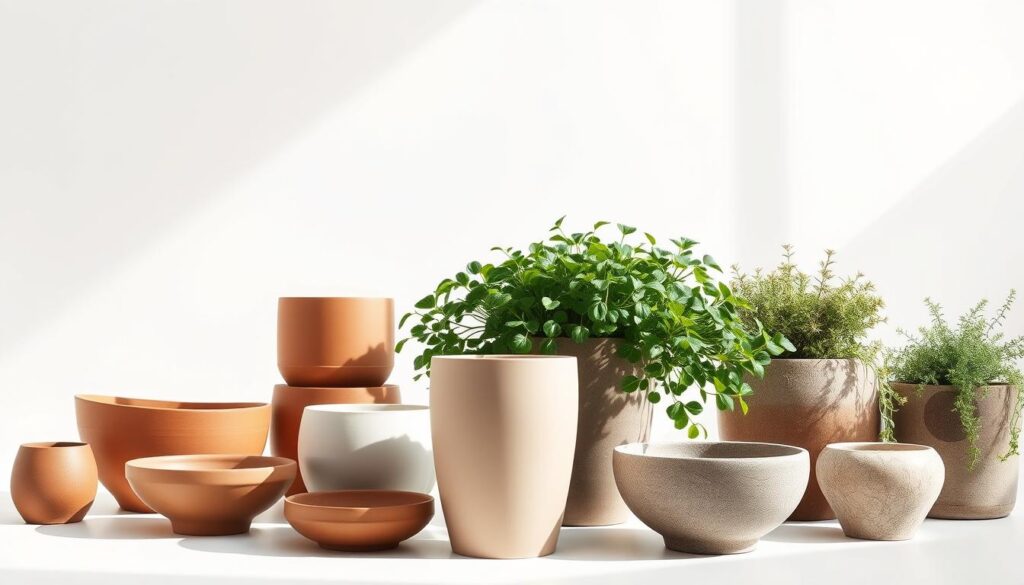
Indoor small spaces: choosing tall, slim, or corner-ready containers
Tall containers increase the air-to-water ratio above the perched wet layer, helping deep-rooted species breathe. They work well for young trees and shrubs kept indoors.
Square corner planters maximize planter size in narrow rooms and make the most of limited space. Rectangular troughs create unified watering zones along windowsills.
Plant categories and matches
- Orchids: tall cylinders with coarse bark and great drainage; water thoroughly and let roots air‑dry between sessions.
- Succulents: short to mid-height planters with gritty soil and fast drainage; terracotta helps wick excess water.
- Hoyas: moderate depth in a chunky mix; avoid oversized wide vessels that trap moisture.
- Ferns (maidenhair): wider, not too tall pots with an airy yet moisture-retentive mix; keep surface moisture even.
- Carnivorous plants: shallow, wide dishes with sphagnum/peat mixes; use low-mineral water and keep substrate wet.
- Shrubs & small trees: choose tall planters for depth, a structural well-drained mix, and upsize stepwise rather than jumping to a very large pot.
“Start with the plant’s root habits, then fit the planter to the space—this simple order saves time and prevents common moisture problems.”
| Plant Type | Recommended Planter Form | Soil & Water Notes |
|---|---|---|
| Orchids | Tall cylinder | Coarse bark, excellent drainage; water then air |
| Succulents | Short to mid-height | Gritty mix, quick drainage; terracotta helps dry |
| Hoyas | Moderate depth | Chunky, airy mix; avoid wide, heavy-filled vessels |
| Ferns | Wide, low to mid-height | Moisture-retentive but airy; keep even water |
| Carnivorous | Shallow, wide dish | Sphagnum/peat, low-mineral water; keep wet |
Step-by-step checklist: measure the rootball, choose a planter form that fits the space and stability needs, match media to species, confirm drainage, and set a watering routine to match how the container dries.
Drainage, watering, and plant health: avoiding root rot in large planters and small pots
A wet lower layer often hides itself until roots show stress. Keep an eye on how water moves through the container and you protect plant health early. Large planters dry slowly and can leave the bottom saturated for weeks. Small pots dry fast and need more frequent checks to avoid root stress.
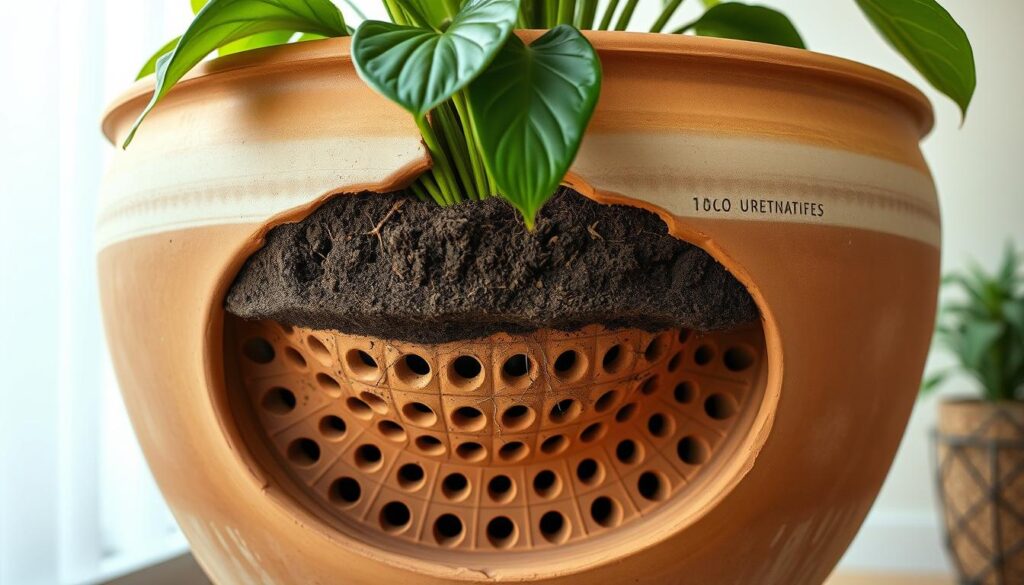
How to set watering schedules by size, shape, and season
Watering cadence depends on container volume and weather. In warm months, check moisture 1–2 times weekly. Water in the morning or evening to cut evaporation. In winter, extend intervals and use less water.
Preventing root rot with better soil and monitoring
Drainage and a well-aerated soil blend work together to keep air in pore spaces and water moving down. The mix—not just the hole—controls flow and risk of root rot.
- Test bottom moisture: use a probe or dowel to check lower zones before rewatering.
- Increase aeration: add perlite or bark to reduce saturated zones.
- Avoid oversized jumps: moving to a very large container can trap water at the bottom.
- Keep drainage clear: elevate containers and prevent standing water in cachepots.
| Container Type | Watering Frequency | Risk Zone | Action |
|---|---|---|---|
| Large planters | Less often (monitor bottom) | Bottom stays wet | Use airy mix; probe lower soil |
| Small pots | More frequent (weekly in heat) | Surface dries fast | Check top inch; water evenly |
| Tall containers | Moderate | Better bottom aeration | Reduce volume per session |
| Short, wide | Moderate to frequent | Larger saturated fraction | Cut watering volume; improve mix |
Climate and durability: planter thickness, insulation, and outdoor performance
How thick a planter’s walls are changes the temperature and moisture rhythms around roots. Thick-walled planters buffer heat in summer and slow freezing in winter, protecting roots and reducing stress.
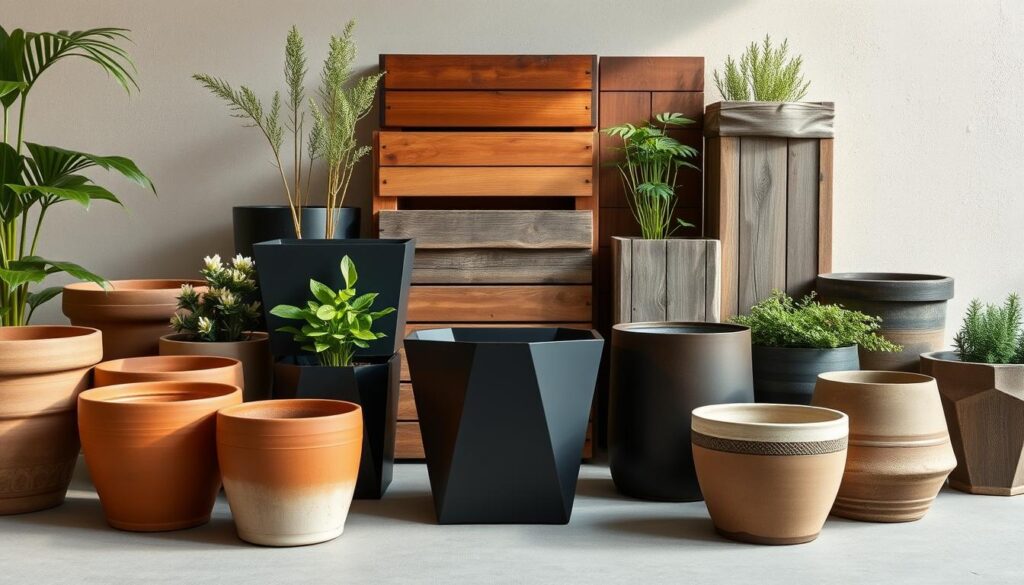
Frost resistance and insulation for United States climates
Choose frost-resistant shells and elevate pots to avoid freeze bonding on patios. Fiberglass and resin planters are lightweight, insulated, and handle freeze-thaw cycles without cracking.
Thicker walls add thermal mass, so root zones stay steadier when nights drop. In cold regions, set the planter on feet or blocks to prevent it from sticking to a frozen surface.
Self-watering features: when they help or hurt
Self-watering systems steady moisture for thirsty annuals and herbs. Resin-based planters and many plastic planters include reservoirs that cut watering chores and keep a consistent water supply.
But reservoirs can harm water-sensitive species or plants in very wet climates. If roots prefer drier mixes, use a smaller reservoir or disable wicks to avoid chronic saturation.
- Materials: quality plastic and fiberglass offer good insulation and light weight for decks and balconies.
- Large planters: ensure sturdy bases, clear drainage, and consider liners for wood troughs.
- Maintenance: clean salt buildup, check hairline cracks each season, and refresh mulch to control evaporation.
- Regional tip: reduce watering before hard freezes and never leave saucers full of water under containers.
Practical note: match the planter type to your climate and plants. A thoughtful choice of materials and simple maintenance keeps roots healthy through heat waves and cold snaps.
Conclusion
A clear guide saves time and protects growth: match height, width, and container volume to the plant’s root needs and your room. Choose mixes that move water well so roots get air, and pick planters that suit your climate and routine.
Quick takeaways: the physics of soil set moisture and the perched water table stays constant for identical media; tall forms boost aeration above the bottom while short forms hold a larger saturated fraction.
Use square planters for extra container volume and stability, round planters where style and placement demand them, and rectangles to simplify multi-plant care. Step up sizes slowly, adjust soil texture, and watch top and bottom moisture. For a practical herb example, see our grow outdoor herb planter guide and walk your garden with a tape measure today.