
Want full harvests without a big yard or a ladder? This intro maps how compact choices fit patios, balconies, and small spaces while still producing real fruit.
Imagine a patio heavy with scent and color, where a single container yields apples, citrus, or figs. Modern rootstocks keep these selections compact and vigorous so you can manage them easily in pots.
Full sun matters: at least six hours daily will support blooms and a solid fruit set. Use well-draining potting mix and the right pot size for steady roots and fewer surprises.
We’ll walk through accessible picks—apples, pears, cherries, citrus, olives, figs, plums, peaches, and even a compact banana—and explain hardiness zones, pollination needs, and simple care steps. Expect clear tips on watering, fertilizer, and yearly pruning so first harvests feel within reach.
Key Takeaways
- Compact selections let you harvest in tight spaces with no ladder needed.
- Six hours of direct sun and well-draining soil are essential for blooms and fruit set.
- Choose varieties by USDA zone and pollination needs to match your climate.
- Right pot size, consistent water, and annual pruning make yields reliable.
- Ultra-compact options perform well on balconies and patios while producing full-sized fruit.
Why choose dwarf fruit trees for small spaces and containers
Compact selections bring big rewards to patios, balconies, and tight courtyards. Ultra-dwarf types reach just 5–8 feet yet still produce full-sized, flavorful fruit that rivals in-ground harvests.
They fit where a lawn won’t. In a sunny spot, these trees small enough for containers let you prune, stake, and harvest from ground level. That makes weekend care quick and safe.
Many are self-fertile—peaches and figs often set fruit on their own—while others, like some pears and sweet cherries, perform best with a nearby pollinator. Place pots for steady light and good airflow so plants work well through the season.

- Turn small spaces into mini-orchards without crowding your garden or indoor living area.
- Expect lower water needs than in-ground trees with the right potting mix and drainage.
- Start with one apple tree or another versatile selection, then add a companion to extend harvests and improve crops.
Key buying criteria: sun, soil, space, and zones for fruit trees
Pick the right light and soil first. Then match plants to your USDA zone and chill‑hour needs for reliable bloom and fruit set.
Choose a spot that gets full sun—aim for 6–8 hours of direct sunlight each day. Containers placed where they see steady sun develop stronger blooms and better pollination than shaded pots.
How much sunlight and what soil works in pots?
Use a rich, well‑draining potting mix. Poor drainage suffocates roots and invites rot, so pick mixes labeled for containers and add perlite or coarse sand if needed.
Keep soil evenly moist but not waterlogged. Refresh the topsoil annually and use a container large enough to balance moisture and root space.
Which USDA zones and chill hours matter most?
Match selections to your zone: apples often do well in Zones 4–9; pears 3–10; cherries 4–8; citrus, olives, and bananas 9–11; figs 6–10; plums and peaches 4–9. Consider chill hours for apples—pick low‑chill apple tree options if winters are mild.
- Planting time: spring or fall work well; keep the graft union 1–2 inches above final soil level.
- Stability: stake newly potted trunks and add trunk protection where needed.
- Microclimates: sheltered courtyards may allow warmer selections to thrive.
For step‑by‑step help on selecting and placing container specimens, see this pot selection resource. Start with an adaptable apple tree or similar dependable option to build early success.
Guide best dwarf fruit tree varieties growing: what to expect in a Product Roundup
Nurseries now offer ultra-compact lines that deliver big flavors with low hassle. This roundup previews how those selections perform in pots, and what matters when you shop.
Retail programs like Gurney’s Reachables and retailers such as SummerWinds focus on easy pruning and harvest without ladders.
Preview the lineup: compact apples, pears, cherries, citrus, olives, figs, peaches, nectarines, plums, and an ornamental banana. Note each entry’s zone fit, chill hours, pollination needs, container suitability, and harvest window.

“Ultra-compact selections can produce full-sized, kitchen-ready harvests from a single patio pot.”
- What we evaluate: zone fit, chill hours, pollination, and pot readiness.
- Practical notes: taste, harvest time, and whether picks are self-fertile.
- Where to buy: seasonal trees sale listings and nursery programs during planting windows.
Use this roundup to narrow your choice to a starter tree and plan a companion for better crops. Expect tips on staking, drainage, and pot sizing so a compact plant can produce full-sized fruit with confidence.
Top potted picks: apples, pears, and cherries that thrive on patios
Compact apples, pears, and cherries bring quick rewards to sunny patios. Choose cultivars that match your chill hours and zone so blossoms set reliably and trees produce fruit without stress.
Apples for pots
Pick container-friendly apple tree selections like Fuji, HoneyCrisp, Cameron Select, Stayman Winesap, and Blondee. These perform well in Zones 4–9 with proper chill hours and full sun.
Pears in containers
Dwarf Bartlett, Dwarf Anjou, and Conference are prolific in pots and suit Zones 3–10. Add a 20th Century Asian pear to increase crisp texture and fresh eating appeal. Many pears need a compatible partner for best fruit set.
Cherries for small spaces
Cherries deliver stunning spring bloom and sweet or tart harvests. Consider Bing, Romeo (sweet), or North Star (sour). Most need bee activity for pollination; some sweet types require a second compatible cherry nearby. Zones 4–8 suit these picks.
“Match variety to chill hours and give pots rich, well-draining soil and full sun for reliable crops.”
| Selection | Zone | Pollination | Harvest window |
|---|---|---|---|
| Fuji / HoneyCrisp / Blondee | 4–9 | Often partially self-fertile; companions improve set | July–October |
| Cameron Select / Stayman Winesap | 4–9 | Self‑compatible to partial; check chill hours | August–November |
| Dwarf Bartlett / Dwarf Anjou / Conference | 3–10 | Cross-pollination recommended | Late summer–early fall |
| Bing / Romeo / North Star | 4–8 | Bee pollination; some sweet types need partners | June–July |
Quick tips: site pots in full sun, use rich, well-draining soil, and prune lightly to open the canopy. Stagger early and late apple selections so you have bowls of fresh fruit for weeks. For more plant picks and buying notes, see this compact fruit tree resource.
Compact and productive: citrus, olives, and figs for sunny balconies
Sun-soaked balconies can yield citrus, olives, and figs that pack bold flavor into small spaces. These selections thrive with full sun and rich, well-draining soil, and they handle pots and indoor winters when needed.
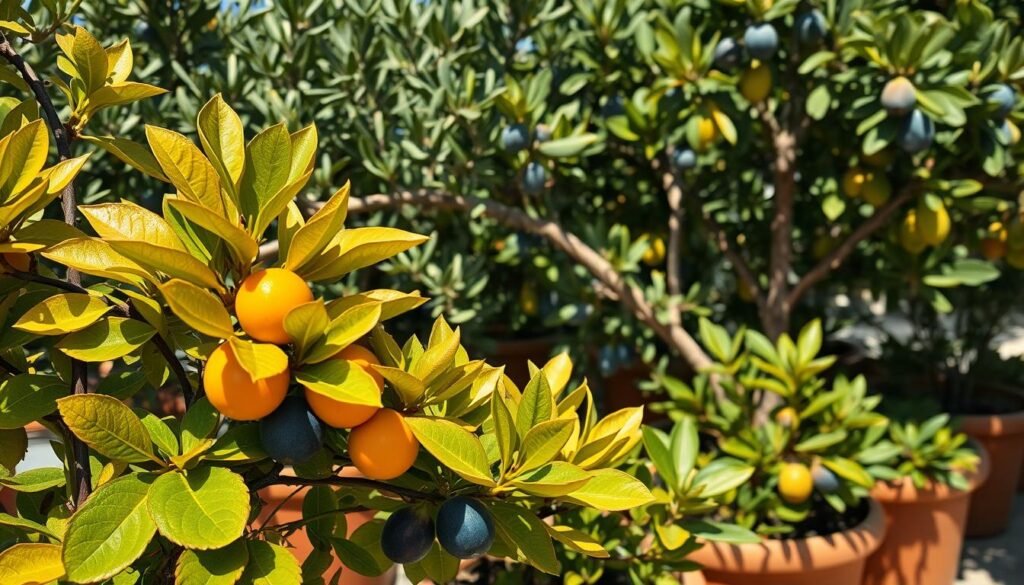
Dwarf citrus like Meyer lemon, kumquat, key lime, Washington navel, and Dancy tangerine work well in pots but need overwintering indoors in Zones 9–11 climates or when cold threatens.
Olives that suit containers
Arbequina and similar fruiting olives tolerate pots and often self-pollinate. They prefer heat and bright sunlight to set fruit and benefit from a nearby companion to boost overall taste.
Small figs with big flavor
Choose compact figs—Celeste, Little Ruby, Little Miss Figgy, and Chicago hardy—for jammy sweetness perfect for fresh eating and dessert uses. They fruit well in Zones 6–10 when given steady water and rich soil.
- Move citrus indoors before frost to protect blossoms and developing fruit.
- Keep pots small enough to shift during storms, but large enough for steady root moisture.
- Feed monthly in the season to support sugar development and consistent taste.
“Meyer lemons bring zesty aroma, kumquats make snackable eating simple, and figs offer jammy sweetness for the kitchen.”
Stone-fruit standouts and more: plums, peaches, nectarines, and bananas
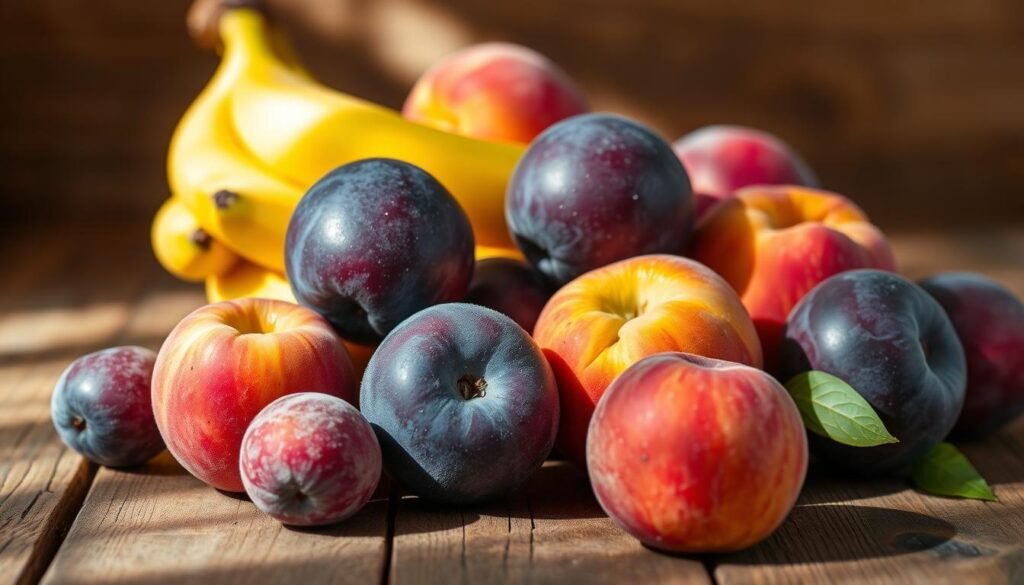
Late-blooming plums dodge spring frosts while peaches reward yearly pruning with sweet summer harvests. Add a nectarine for perfume and a small banana for tropical foliage to round out a patio collection.
Choose compact selections that favor full sun and good drainage. Plums often bloom later than many other fruit selections, which helps avoid frost damage. Look to Weeping Santa Rosa for visual charm and Damson for reliable, self-pollinating crops in Zones 4–9.
Plums for pots
Plant plum trees in deep, well-drained containers so roots stay healthy. Many prolific dwarf plum options are self-pollinating and set fruit with minimal fuss.
Peaches and nectarines that fit patios
Choose peaches like Early Elberta, Elberta, Contender, and Harvester. These peach trees usually self-fertilize and respond well to annual pruning.
Add Snow Queen nectarine for fragrant dessert fruit that shines in fresh eating plates. Thin young fruit in early summer to boost size and sugar content.
Ultra-compact options and a tropical accent
Ultra-dwarfs let trees produce abundantly while staying patio-sized. For a lush look, try a Dwarf Cavendish banana in warm regions (Zones 9–11); enjoy foliage outdoors, knowing indoor plants may not produce fruit.
- Train peach trees to an open center for light and airflow.
- Prune in late winter and thin fruit in early summer.
- Balance feeding to enhance flavor and natural sugar levels.
“Late bloomers and compact selections can deliver reliable, flavorful harvests from modest spaces.”
Container success: planting, care, and easy harvest tips
Start with the right pot and routine habits to make season-long care simple. These small steps help your plants set blooms, hold water well, and reward you with tidy, ground-level harvests.

Pot size, drainage, and staking
Choose an 18-inch container with large drainage holes so roots stay aerated and avoid standing water.
Set the graft union 1–2 inches above the soil line, stake for stability, and add trunk protection as the tree establishes.
Watering and feeding
Place containers in full sun for at least six hours daily. Check soil with your finger and water when the top two inches are dry.
Feed monthly during active growth with a balanced, water-soluble fertilizer to support blossoms and fruit fill.
Pruning, netting, and harvest from the ground
Prune in late winter or early spring to remove crossing or damaged wood and open the canopy.
Net at bloom or as fruit swells to reduce bird losses. Dwarf rootstocks let you prune and harvest from the ground—no ladders needed.
When to plant and prune
Plant in spring or fall to reduce stress; avoid extreme heat or cold when placing young specimens.
Refresh topsoil yearly and rotate pots for even light across your garden. For container selection tips, see this container planting resource and practical care notes at seasonal care suggestions.
“Small, smart decisions at planting time lead to steady harvests and easier maintenance all season.”
Pollination, self-fertile choices, and harvest timing explained
Understand which plants set fruit alone and which need partners to boost yields. That clarity helps you arrange pots and plan harvests so your patio can produce steady bowls of fresh picks.
Whether your patio pots need a companion or can set fruit alone depends on the species and bloom timing.
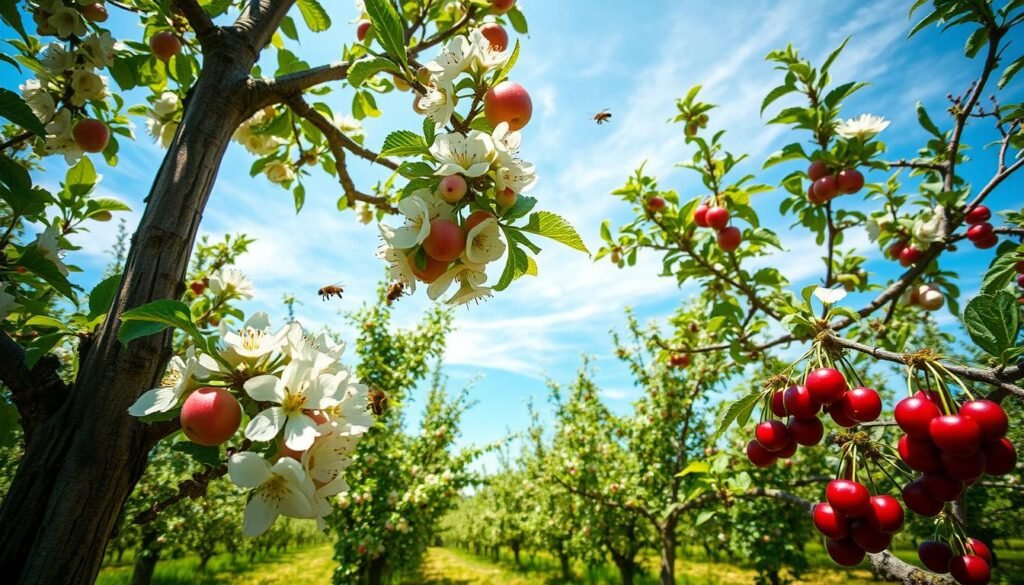
Who sets fruit solo and who benefits from a partner?
Many peaches, nectarines, sour cherries, citrus, and figs are self-fertile. These picks simplify small-space orchards and often set fruit with just one container plant.
Apples, pear, sweet cherries, and many plum trees usually do better with a compatible companion nearby. Cross-pollination often increases crop size and reliability.
When will your pots produce and how to plan timing
Some compact plants can fruit in the first year, but most give steady yields by year two.
Track ripening windows: cherries in early summer, peaches and plum in mid to late summer, and apples from midsummer through fall. Keep notes on bloom and harvest time to refine companion choices.
- Protect pollinators: avoid spraying during bloom so bees can work blossoms.
- Prune in late winter or early spring to encourage fruitful wood and open canopies.
- Cluster containers so pollinators move easily between pots and pollination improves.
“Cross-pollination can boost yield even for self-fertile selections, so pairing plants smartly pays off.”
Conclusion
Choose compact selections that match sun, soil, and zone and your patio will repay you with real harvests. Start small, learn the rhythm of bloom and pick fruit at peak taste, and you’ll enjoy fresh eating all season.
Begin with a dependable apple tree or a self-fertile peach, then add companions to stretch harvests. Match light and well-draining soil, water with consistency, and feed monthly in the season.
Enjoy apples, figs, and citrus for bright flavor or jammy picks for dessert and preserves. Use a light touch of sugar when needed, but let ripe fruit shine.
With steady care, these dwarf fruit trees turn a small garden into a tasty, low-maintenance oasis. When you expand, check reputable nurseries and trees sale listings for seasonal availability.