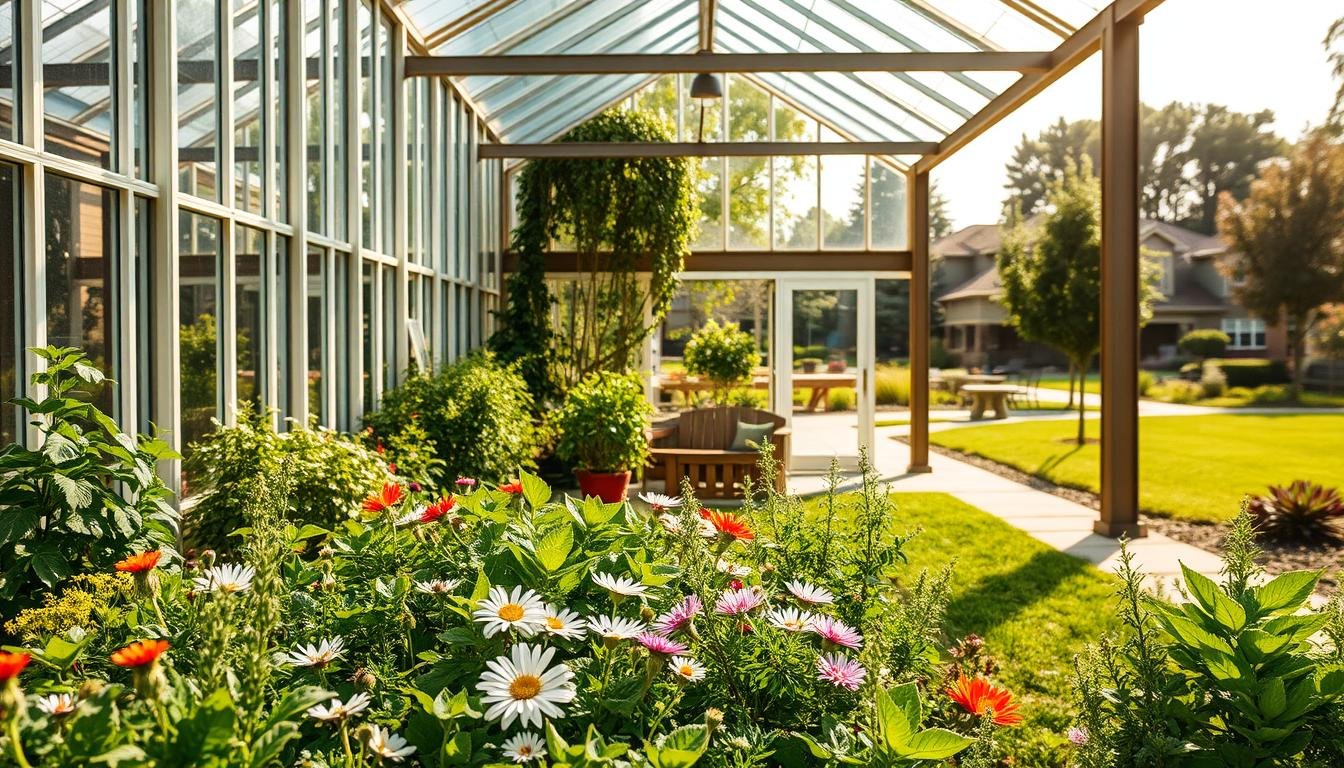
Could a small, well-designed growing hub become the place your neighbors actually want to visit? This guide shows how a thoughtful structure can meet HOA standards while becoming a practical, attractive asset for the local community.
You will learn how to navigate rules, choose a sensible design, and site a structure so it blends with curb appeal. Expect clear steps on programming, planting, funding, and installing sustainable systems that make a greenhouse a good neighbor.
This guide highlights types like domes, hoop houses, and glass options and offers models that scale to different budgets. It draws on examples from many communities to show what works and common pitfalls to avoid as you move towards sustainable neighborhood amenities.
Think of this as a practical playbook for community leaders, board members, and residents who want to build productive gardens, deepen local connection, and create welcoming learning hubs for all skill levels.
Key Takeaways
- Learn steps to align a project with HOA rules and curb appeal expectations.
- Compare structure types and management models for different budgets.
- Find practical planting, programming, and funding tips for success.
- See real-world examples from many communities that worked well.
- Focus on design and maintenance to keep neighbors supportive.
- Use the project as a community education and food-growing hub.
Why Greenhouses Belong in HOA Communities and Shared Spaces Today
Shared grow hubs expand access to plants and fresh food while building neighborly connection.
A community-managed grow area turns unused common land into a productive, attractive amenity. Residents who might otherwise have no yard can plant tomatoes, peppers, and herbs and learn from neighbors.
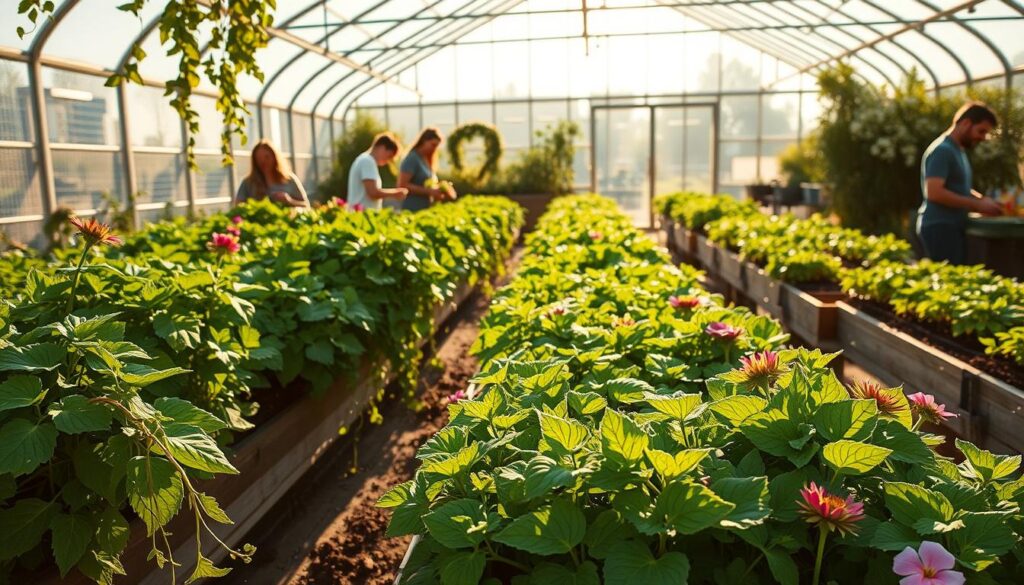
Controlled environments keep temperatures in a reliable 60–80°F range, protecting crops from extremes and enabling year-round growing. That steady climate helps families harvest warm-season food during winter and start seedlings early in spring.
- Cost-sharing works: membership models often run $50–$200 per year versus $2,000–$10,000 for individual builds, lowering barriers for gardeners.
- Design choices fit budgets: domes offer ~30% better energy efficiency, hoop houses cost about $2–$5 per sq ft, and glass structures deliver long-term durability.
- Social and wellness wins: workshops, harvest swaps, and intergenerational learning deepen belonging and support new gardeners building a green thumb.
Complementing a community garden, these growing areas serve seed starting, propagation, and off-season harvests. For a practical how-to on compact builds that work in tight yards, see this urban build guide.
Working Within HOA Rules: From Guidelines to Greenlight
Start by mapping restrictions that shape where and how a small growing structure can sit on common land. Gather covenants, height limits, and approved plant lists before you draft a plan.
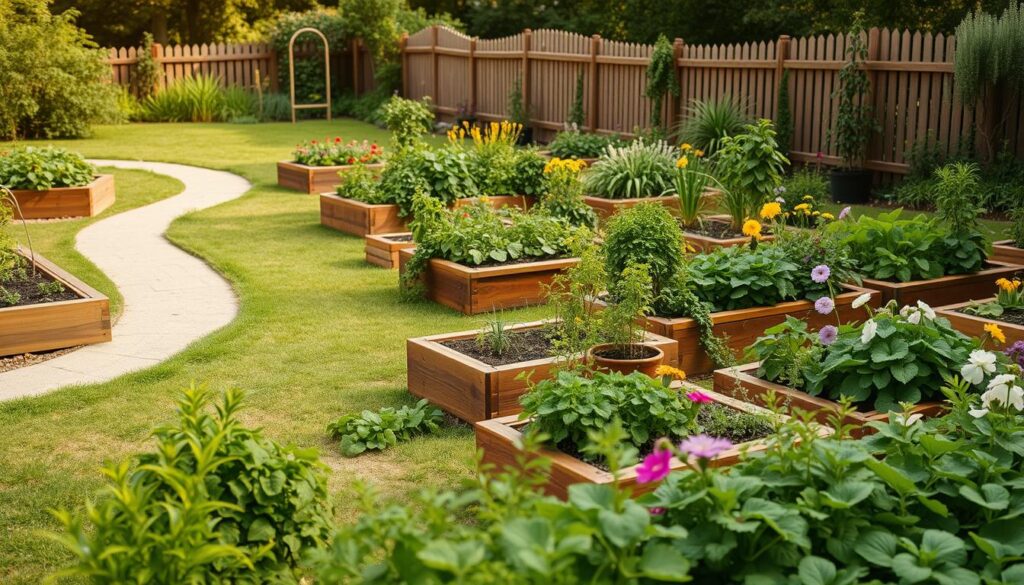
Common landscaping limits and practical effects
Many associations cap hedge heights (Maple Grove, MN: 4 ft) or allow taller plantings only in rear yards (Oak Ridge, CA: 6 ft). Some require native, low-water palettes (Sunshine Acres, FL). These rules affect siting, visibility, and screening for any proposed structure.
Creating an approval-ready package
Boards expect clear documents: site plan, elevations, sample materials, plant palette, irrigation notes, lighting and a build timeline. Add a monthly maintenance schedule and responsible contacts to reassure reviewers.
Design moves that win approval
Edible ornamentals—berries, dwarf fruit, and herbs—work better in visible areas than rows of vegetables. Group plantings with clean edges, use mulch, and propose rear trellises or espalier to respect sightlines.
| Rule | Typical Limit | How to respond |
|---|---|---|
| Height caps | 4–6 ft | Place tall elements away from sidewalks; use vertical gardening at rear fences |
| Plant lists | Native or low-water | Propose certified palettes and cite local water-wise standards |
| Visibility | Front-yard restrictions | Use ornamental clusters and neat screening to keep the area tidy |
Build neighborhood support by sharing renderings and a brief outreach plan. Link to local design guidelines when you submit materials. A clear program of classes and volunteer days helps boards see the project as a well-run asset that delivers food and learning for neighbors.
Design Paths for Community Greenhouses: Domes, Hoops, and Glass
Form drives function: from airy tunnels to sturdy glass, each option supports different growing goals. Below are clear trade-offs to help a group choose the best fit for budget, aesthetics, and year-round conditions.
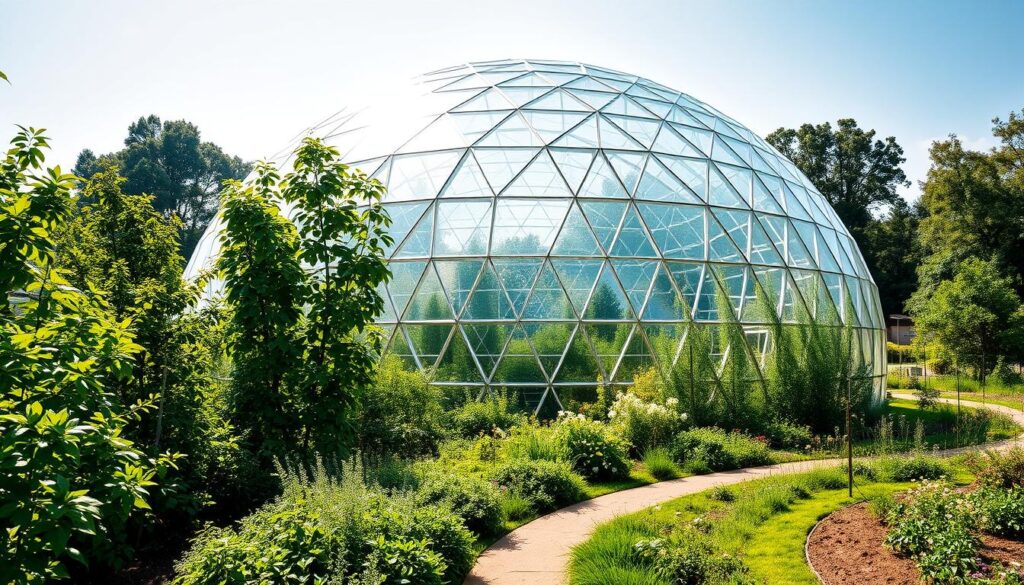
Geodesic dome greenhouses for energy-efficient, year-round growing
Geodesic dome designs shed wind and snow and often run about 30% more energy-efficient than conventional shapes. Their curved form creates bright, even light and stable internal conditions ideal for vertical crops like tomatoes and cucumbers.
Tunnel/hoop houses for scalable, budget-friendly growing spaces
Hoop houses cost roughly $2–$5 per sq ft. They scale easily: start with one bay, then add more as demand grows. Roll-up sides offer simple passive ventilation, which works well in mild climates.
Traditional glass structures for long-term durability and light transmission
Glass builds transmit up to ~90% of light and can last 40+ years with care. Upfront costs run higher (community scale: $10,000–$30,000), but they suit formal neighborhoods and deliver excellent heat retention.
| Type | Cost Snapshot | Best uses |
|---|---|---|
| Geodesic dome | Moderate–High | Energy efficiency, vertical crops, striking aesthetics |
| Hoop/tunnel | Low | Season extension, phased expansion, quick starts |
| Glass | High | Long-term light transmission, formal design, durable service life |
Practical tip: arrange beds radially in domes, straight runs in hoops, and modular zones in glass houses to simplify irrigation and access. For compact, budget builds that inspire quick wins, see this budget-friendly guide.
Siting and Aesthetics: HOA-Friendly Placement, Height, and Visibility
Smart placement and tidy plant groups make a community garden welcome in even strict rule sets. This section shows simple moves to respect sightlines, meet height limits, and keep planting neat and attractive for neighbors.
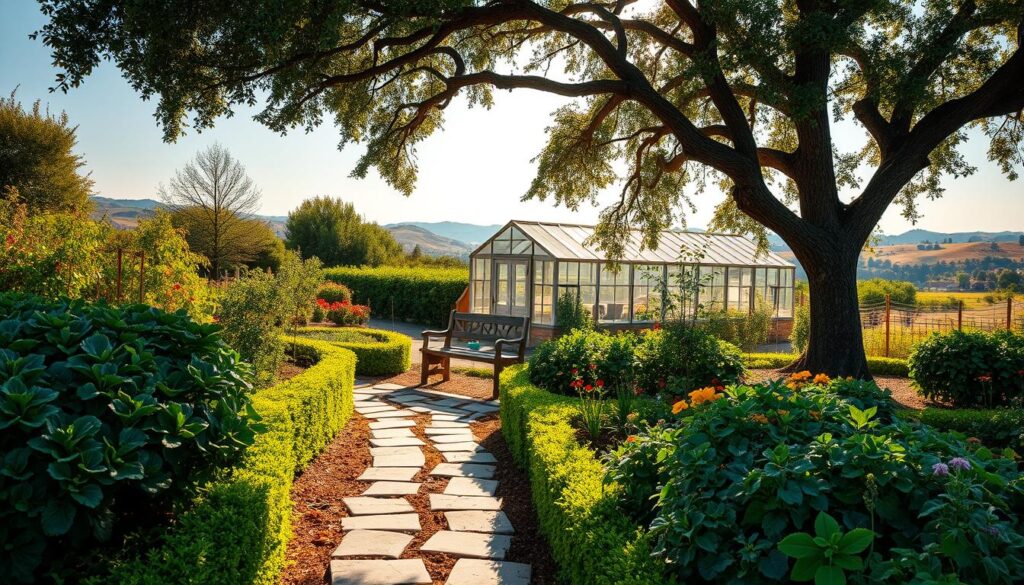
How do you handle height limits and sightlines?
Map setbacks and walking lines first. Avoid blocking street views, sidewalks, and utility access so the area stays safe and easy to approve.
Use the rule of thirds: short items in front, medium plants mid-bed, and taller plants at the rear. That keeps taller plants from creating complaints and preserves sightlines.
How can screening and native plants improve curb appeal?
Group native plants in swaths and repeat them for rhythm. Clean edges—stone, corten steel, or cut edging—give a polished look that boards like.
- Screen with style: evergreen backdrops, tasteful lattice, or vine-covered trellises soften structures without hiding them.
- Water-wise beds: mulch bands and organized rows reduce maintenance and show care for rules and resources.
- Sample palette: low native grasses and groundcovers up front, flowering perennials mid-bed, compact shrubs at the back.
What maintenance keeps a first impression positive?
Adopt a simple cadence: edge monthly, replenish mulch seasonally, and prune on a set schedule. Clear paths, neat signage, and welcoming entries make the community view the area as an asset.
For specifics on common landscaping rules and how to frame your proposal, review this HOA landscaping guide to align design with policy and neighbor expectations.
greenhouse ideas hoa communities shared spaces
Design clear circulation and flexible work zones so multiple users can garden together without friction. Add accessible features and simple routines to keep the area safe, tidy, and neighbor-friendly.
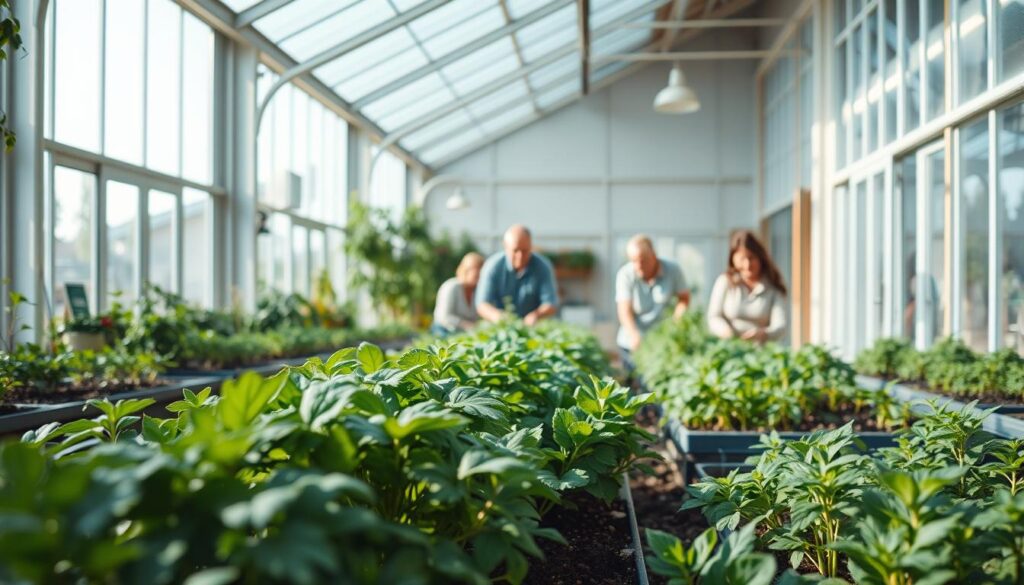
Designing clear paths and work zones lets neighbors use the garden comfortably and safely.
How should you plan beds, benches, and circulation?
Lay out consistent aisles at least 30–36 inches wide for carts and strollers. Include turning radii near benches so movement stays smooth.
Use modular beds and labeled zones so gardeners know where to plant and harvest. Shared potting benches and central storage simplify tool access and reduce clutter.
What accessibility, safety, and neighborhood cues matter?
Add raised beds at mixed heights, knee space at potting benches, non-slip paths, and easy-grip hardware. Plan quiet ventilation with timers and soft lighting for safe after-hours use.
- Storage & hygiene: lockable tool cabinets, wash stations, and a posted monthly maintenance checklist.
- Community touches: a message board, sign-in sheet, shaded seating for small workshops, and clear etiquette: label plants, clean tools, and reset benches.
These moves keep the growing spaces welcoming, usable, and easy to manage for all neighbors.
Programming and Management: Making a Community Greenhouse Work
Good programming keeps plots productive, volunteers happy, and neighbors reassured. Clear routines and fair access rules turn a promising build into a lasting neighborhood asset.
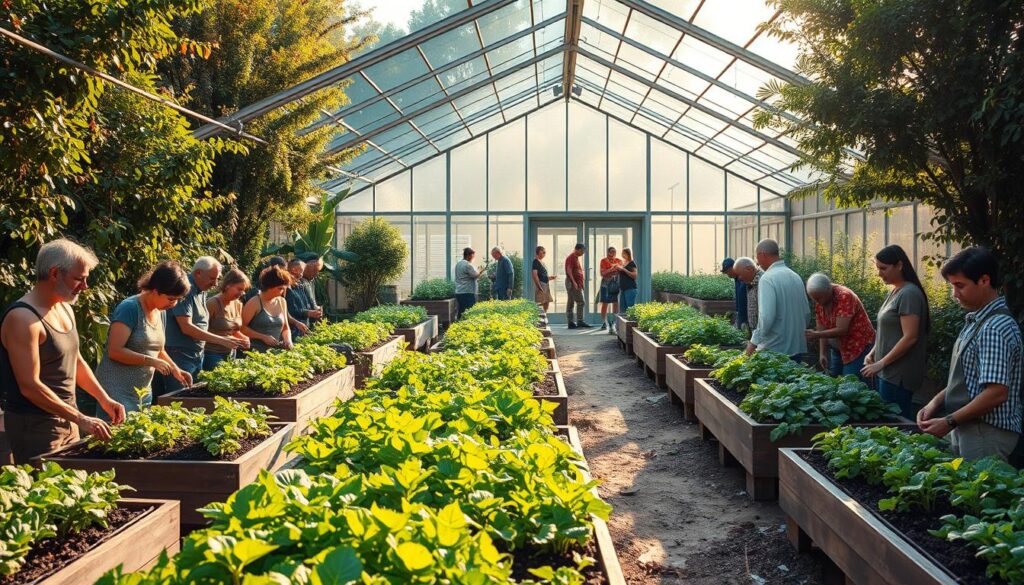
How do you set rotating duties and monthly maintenance?
Establish rotating duty schedules for watering, pest checks, and sanitation, and post them on a visible board. Mirror that calendar in a shared digital program so people get reminders and accountability.
Create a simple weekly pest and disease log with quick reporting steps. Pre-approve safe treatments—like insecticidal soap and beneficial insects—so teams act fast without surprises.
What fair access systems keep gardening equitable?
Use tiered memberships and annual lotteries to assign premium beds and bench time. Seasonal rotations let members move through high- and low-light zones so everyone gains experience and yield.
Track contributions and hours to avoid burnout. Celebrate volunteers with harvest days and small recognitions to keep morale high.
How should a group handle conflicts and neighbor communication?
Adopt a short member agreement that covers cleanliness, tool sharing, approved inputs, and quiet hours. Post contact points and a neutral mediator process for disputes.
Host monthly meetings that double as work parties—combine progress updates with hands-on tasks. Share harvest milestones and open-house days so neighbors see the positive impact.
- Contingency plans: backup watering and ventilation steps for heat waves or cold snaps.
- Transparency: regular logs and public-facing updates build trust with nearby residents.
Sustainable Systems That Win HOA Support
Well-chosen systems cut costs, reduce water use, and keep mechanical noise out of neighbors’ yards. Presenting clear conservation targets and reliable equipment helps boards see the project as a responsible, long-term amenity.
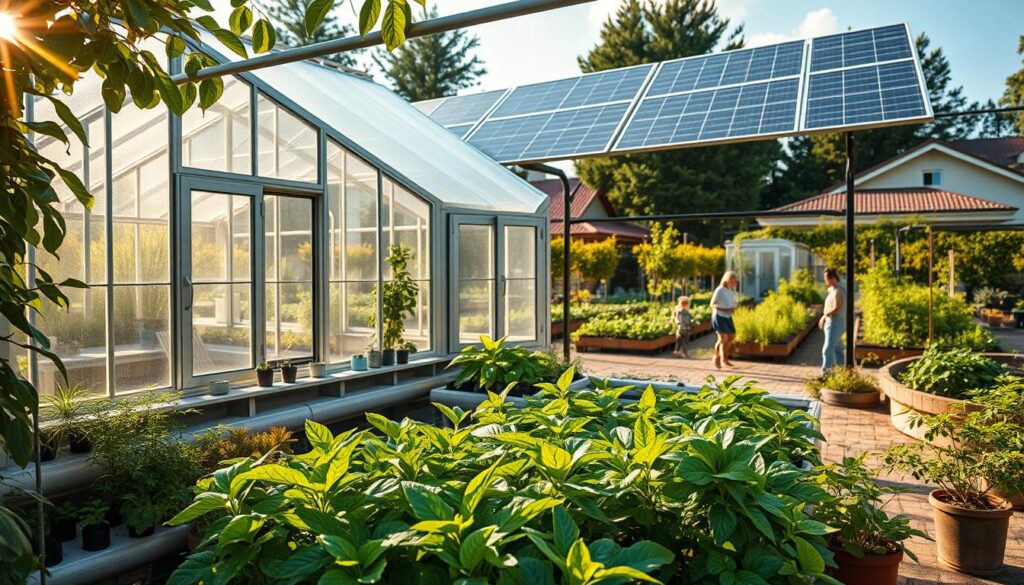
Water-wise strategies: rain capture and drip irrigation
Collect gutters into tanks and feed drip lines. Rainwater diverters plus drip irrigation can cut water use by up to ~60% compared with overhead watering. That lowers runoff and shows tangible conservation results to the HOA.
Renewable energy and thermal mass for steady climates
Use thermal mass and renewables to buffer temperature swings. Water barrels and tight seals store daytime heat for night release and reduce the need for constant mechanical heating. Cite proven examples—like the Geothermal Greenhouse Partnership’s three 42′ domes running on geothermal power—to show how clean power stabilizes climates and trims operating costs while enabling plants year-round.
Efficient ventilation: quiet fans and right-sized controls
Right-size vents, fans, and louvers for silent, steady airflow. Small solar arrays can power quiet fans and pumps. Specify decibel targets, low-vibration mounts, and automatic controls so ventilation meets performance needs without creating complaints.
- Practical install: hide utilities behind tasteful screens or matching plantings to keep the site tidy.
- Monitoring: add moisture sensors and a simple dashboard so watering is precise and reports demonstrate savings.
- Proposal tip: document sustainable practices, maintenance intervals, and conservation goals to build board confidence.
Planting Plans for Shared Spaces: Beauty, Yield, and Compliance
Design beds so ornamentals and edibles share tidy lines and steady yields. This approach keeps the area attractive for neighbors while delivering real food and hands-on gardening benefits.
What edible ornamentals work best in visible beds?
Choose plants that look like landscaping. Blueberries bring fall color, rosemary forms neat hedges, rainbow chard adds bright stems, and dwarf fruit trees stay within height caps.
Mix native plants with edibles to support pollinators and keep an HOA-approved palette. Mulch and crisp edges make beds read as tidy gardens.
How do companions and vertical systems maximize yield?
Train vining crops on trellises above shade-tolerant greens so plants grow in layered canopies. Pair basil with tomatoes and plant marigolds or nasturtiums near fruiting crops to reduce pests.
- Use compact varieties in high-traffic zones to preserve sightlines.
- Rotate quick greens and herbs with longer-season peppers and eggplants for fair harvest timing.
- Label varieties and post brief maintenance notes for clear member coordination.
| Objective | Recommended plants | Practical tip |
|---|---|---|
| Ornamental + edible | Blueberries, rosemary, rainbow chard | Plant in clusters with mulch and stone edging |
| Vertical yield | Cucumbers, beans, trellised peas | Grow over lettuce and spinach to save ground space |
| Pollinator support | Native plants, herbs, nasturtiums | Group natives near beds to attract beneficial insects |
Funding and Partnerships: How Communities Get Greenhouses Built
Securing funds and trusted partners often decides whether a project moves from idea to built reality. Start with a clear funding map and local allies to build momentum and long-term support.
Grants, donations, and crowdfunding: where to begin?
Map funding layers: municipal or foundation grants for sustainable starts, in-kind donations from local businesses, and community crowdfunding to grow local interest and ownership.
Who to partner with for expertise and impact?
Partner with nonprofits, schools, and incubator programs that offer training and program delivery. Examples matter: GoFarm in Golden, CO worked with Growing Spaces using a 26′ dome for a Farmer Incubator Program that supplied fresh food year-round.
- Align proposals with measurable outcomes: education sessions per year, pounds of produce, and volunteer hours.
- Build a phased budget: include utilities, insurance, and replacement parts to protect the project over years.
- Draft clear MOUs that define roles, harvest distribution, and maintenance so partners avoid confusion.
Communicate early wins: post harvest totals, photos, and short stories to sustain donor interest and keep the community engaged.
Community Success Spotlights to Inspire Your HOA
Real projects show how tidy design, steady operations, and clear benefits win support and deliver food, learning, and connection.
Geothermal Greenhouse Partnership — riverwalk resilience
The Geothermal Greenhouse Partnership runs three 42′ Growing Dome structures powered by geothermal heat along the San Juan Riverwalk. These geodesic dome greenhouses pair native plant borders and an amphitheater for public programming.
Why it matters: renewable energy stabilizes conditions and enables year-round growing in USDA zone 5a while drawing neighbors to events and harvest days.
Unity Gardens — learning and food access
Unity Gardens uses a Growing Dome as an educational hub that links classes with fresh food distribution. The dome supports hands-on lessons that boost food access and garden literacy.
Why it matters: students and adults learn soil care, seed starting, and how to keep plants year-round in small, well-managed plots.
School domes — cafeterias and curricula
Many schools use geodesic dome greenhouses to extend growing seasons for cafeteria programs and STEM lessons. These domes give students real experiments and produce for meal programs for years.
High-altitude wins: Truckee & Cloud City Farm
Truckee Community Farm feeds the Tahoe Food Hub with steady production, and Cloud City Farm proves year-round growing works at 10,000 ft with careful planning. Both sites show resilience in tough conditions and limited frost-free windows.
- Shared lessons: tidy aesthetics, soil stewardship, and organized volunteer systems make projects welcome in their neighborhoods.
- Design wins: energy-smart geodesic dome greenhouses help stabilize temperatures for plants year-round.
- Proposal tips: highlight quiet operations, native borders, measurable food outcomes, and invite site visits or virtual tours to inspire your board.
Conclusion
1) Five first-sentence variations:
a. “A tidy, well-run plant hub can turn a small plot into a year-round place for neighbors to learn, grow, and gather.”
b. “When residents plan a right-sized structure with clear maintenance, the project becomes a neighborhood asset that lasts for years.”
c. “Start with a modest pilot bed or a single hoop segment to test interest and build skills before scaling up.”
d. “Practical design, quiet equipment, and native plant choices make approval easier and daily upkeep simpler.”
e. “Clear rules, a simple calendar, and visible conservation measures help a project move from concept to community treasure.”
Chosen sentence: c. I chose sentence c because it is action-oriented, distinct from previously used lines, and aligns with the brief’s encouragement to start small. It offers a concrete, low-risk step that fits the brand voice and call to action.
2) Use current_section: Include recap of value, encouragement to tailor right-sized project, path to yes (rules, design, maintenance), invite to start small (pilot beds, modest dome or hoop), recommend sustainable practices (drip, thermal mass, renewables), celebrate gardeners, point to funding/partnerships, close with CTA to gather interest, sketch plan, meet board.
3) Brand voice: Warm, knowledgeable, active voice, concise paragraphs, include 2-3 bolded sentences below H2 — must include within section. H2 heading required. Use and per formatting. Avoid prohibited word overuse: list includes greenhouse, ideas, hoa, communities, shared, spaces — can be used max twice each. Need to ensure overall keyword counts obey density: section length 100-150 words. Max repetitions per keyword = (TotalWords/100)*2. If ~120 words => max 2.4 -> 2 repeats per keyword. Keyword list many; need to include some. We’ll include “community” 2 times, “garden” 2 times, “gardening” 2, “greenhouse” 2, “plants” 2, “community garden” 1 maybe, “community gardening”1, “project”2, “year”2, others sparingly.
4) HTML: include H2 Conclusion and bolded 2-3 sentence summary below H2. Short paragraphs ( and flesch tags after think? The assistant must include them per instruction. They asked to present final formatted HTML content enclosed in . Also earlier asked to begin by analyzing in tag including points 1-9. I included think. Now include keyword matrix and flesch_reading_ease before final section? The instruction required those fields. I’ll include them inside the same reply before section_12. But final content must be enclosed in section_12 tag. I’ll provide matrices between think and section_12.