
Wondering which tool keeps you upright and precise while you clear weeds from the far edge of a bed? This guide shows practical picks that save time and protect plantings.
We tested stand-up claws, scuffle hoes, and crack weeders across lawns, mulch, pavers, loose and compact soil. Results focus on effectiveness, balance, weight, and ease of use so you know which option fits each situation.
Expect clear use-cases and real testing notes. We call out when a steel shaft and heavier head are worth the extra effort, and when a light design helps during long sessions.
Whether you want minimal soil disturbance, fast debris ejection, or a tool that slices stubborn roots, this introduction frames the choices. Keep your back straight, cut clean, and remove weeds faster by matching head design and shaft length to the task at hand.
Key Takeaways
- Stand-up claws work well on deep roots without bending.
- Dutch hoes shine for smooth slicing and long shafts.
- Choose steel where roots are tough; pick light weight for long sessions.
- Real testing across situations reveals practical pros and cons.
- Pair a hand-level option for tight clusters near stems.
Why long-handled tools matter for deep beds right now
Keeping upright while tending crowded beds makes weeding faster and kinder to your body. Long shafts cut strain on knees and the back while improving reach and accuracy for common garden tasks.
Work from the path, not the planting area, and you avoid compacting soil and trampling roots. This simple habit keeps beds healthier as plants thicken later in the season.
Different types of heads suit different needs: claws pull single, deep-rooted weeds; stirrup and Dutch hoes slice surface growth quickly. The right shaft length helps you stand tall and keep control across varied bed depths.
Long reach also lets you steer narrow heads between stems, protect irrigation lines, and work crusty soil with better leverage. Over the years, an upright rhythm speeds work on large beds and reduces reliance on herbicides.
| Head Type | Best Task | Soil Conditions | Key Benefit |
|---|---|---|---|
| Stand-up claw | Pulling taproots | Hard or damp | Deep root extraction with minimal bending |
| Stirrup (scuffle) hoe | Fast surface weeding | Loose to light crust | Quick passes for frequent maintenance |
| Dutch hoe | Precise slicing in beds | Crusty or compact | Long shaft for upright control |
Review best long-handled tools reaching back deep
Pick the right shaft and head, and you’ll clear weeds at the far edge without kneeling or stepping into the bed. This section maps common needs to the right tool quickly so you choose with confidence.
User intent and how this roundup helps you choose faster
Gardeners want quick wins and less strain. If your aim is root removal from the path, a stand-up claw like the Fiskars 4-Claw targets taproots and ejects debris cleanly.
For fast surface passes amid plants, scuffle hoes such as the Ames slice seedlings without disturbing roots. They don’t yank taproots but speed maintenance.
What “deep beds” and “reach” mean for tool selection
Deep beds need shafts long enough to keep you on the path. Choose lengths that let you work rows without trampling plants or compacting soil.
Narrow heads and Dutch hoe designs (DeWit, Sneeboer, Burgon & Ball, Spear & Jackson) give maneuverability around stems. L-shaped crack weeders like Grebstk excel at edges and between pavers.
Quick matching guide
- Single-weed precision: Stand-up claw — root-focused and neat.
- Fast bed maintenance: Stirrup or Dutch hoe — skim and slice just under the surface.
- Perimeters and gaps: L-shaped crack weeder — narrow access and tight joints.
| Need | Suggested head | When to use |
|---|---|---|
| Taproot removal | Stand-up claw (e.g., Fiskars 4-Claw) | Hard or compact soil where roots resist slicing |
| Quick surface weeding | Scuffle/stirrup hoe (e.g., Ames) | Loose soil and frequent maintenance passes |
| Edges and crevices | Grebstk L-shaped crack weeder | Between pavers, boards, and narrow gaps |
Top stand-up weeders for deep-rooted weeds and back-saving reach
Stand-up weeders make quick work of taproots while keeping you upright and steady at the bed edge. These picks balance biting power, quick ejection, and build quality so you can clear weeds without kneeling.

Fiskars 4-Claw Deluxe — steel claws with smooth ejection
Fiskars uses four serrated steel claws and a lightweight aluminum shaft to bite into taproots. The large foot lever lets you apply firm pressure and the sliding expeller clears clumps fast.
In testing, it handled mulch, lawns, and compact soil well. It struggles a bit on tiny seedlings and narrow seams, but excels where roots are stubborn.
Value alternatives: Garden Weasel WeedPopper and Walensee Stand Up
Garden Weasel WeedPopper is all-steel with a step-and-twist action and strong plunger. It works great on dandelions and similar weeds across open areas. The T-handle helps rotation, though thin singles can be less precise.
Walensee Stand Up is lightweight and economical. Its three stainless tines and plastic foot press make it ideal for frequent tidy passes on shallow roots and large beds where weight matters.
Sturdiest build: Landzie 44-Inch Long Steel Weeder
Landzie offers an all-steel two-claw design with a simple foot lever release. Fewer parts mean fewer failures, so it’s a rugged pick for repeated use over a wide area.
| Model | Head | Handle | Strengths |
|---|---|---|---|
| Fiskars 4-Claw Deluxe | 4 serrated steel claws | Aluminum shaft, large foot lever | Fast ejection, works on compact and damp soil |
| Garden Weasel WeedPopper | All-steel cylinder with plunger | T-handle | Good for dandelions, strong step-and-twist action |
| Walensee Stand Up | 3 stainless tines | Light shaft, plastic foot press | Lightweight, economical, fast tidy passes |
| Landzie 44-Inch Steel | 2 steel claws | All-steel handle | Very sturdy, low maintenance, reliable leverage |
Quick guidance: Choose a handle and grip that feel balanced for comfortable use. Ejection systems speed work, while simpler steel designs often outlast plastic parts. Match price and weight to how often you’ll weed the beds, and pair a claw model with a hoe pass for seedlings.
Best long-handled hoes for slicing through beds without bending
Hoes let you slice a clear path through crowded beds while staying upright and steady. Pick a stirrup style for quick surface passes or a Dutch design for precise cuts around plants.
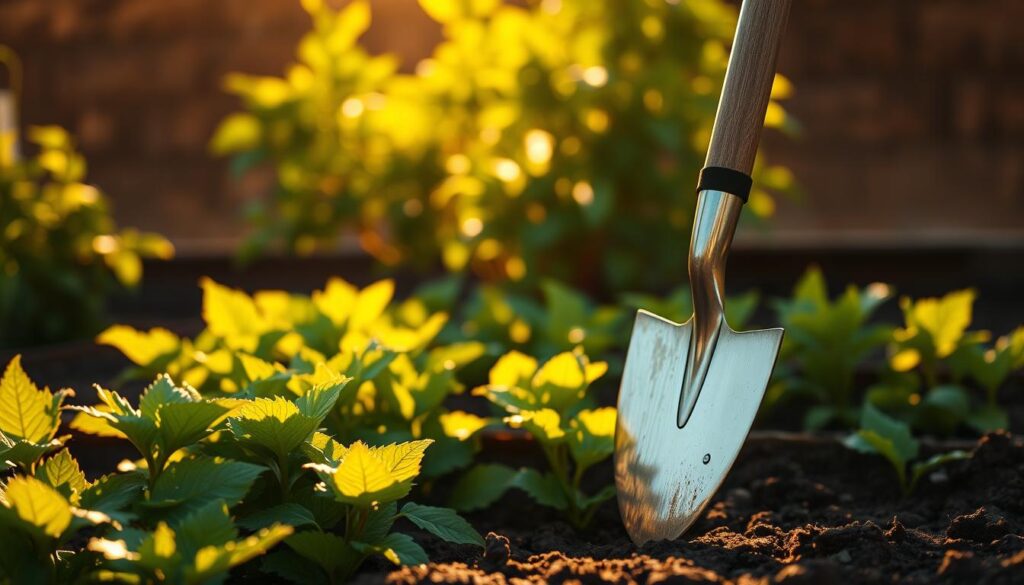
Scuffle and stirrup hoes accelerate routine bed work by severing seedlings just below the ground. The Ames Wood Handle Scuffle Hoe uses a long stirrup head that glides under shallow weeds and sets a steady cadence on loosened soil.
The DonSail Adjustable Hoe trades some heft for versatility. Its adjustable handle fits different users and reduces fatigue, making it handy between rows. Expect less robustness in the shaft, so avoid heavy leverage tasks.
Which Dutch hoe fits precise bed work?
For surgical control around plants, Dutch hoes excel. DeWit offers a sharp carbon steel blade on a smooth ash handle and a lifetime guarantee. Sneeboer Royal adds teeth and a hooked edge for stubborn patches and keeps motion low-drag.
Burgon & Ball pairs a stainless steel head with precision and corrosion resistance, while Spear & Jackson Kew gives a long handle and angled blade for easy maneuvering and solid performance under repeated use.
- Quick tip: Match head width to plant spacing — narrow between tight stems, wider for open rows.
- Wood shafts offer a warm, controlled grip; check length so you stand upright during work.
- Routine hoeing stops seedlings early and saves serious time later in the season.
| Model | Blade | Handle | Strength |
|---|---|---|---|
| Ames Scuffle Hoe | Stirrup blade | Wood | Fast surface slicing |
| DonSail Adjustable Hoe | Flat blade | Adjustable shaft | Versatile length, lightweight |
| DeWit Dutch Hoe | Carbon steel | Ash | Sharp, durable passes |
| Burgon & Ball Dutch Hoe | Stainless steel | Long handle | Precision, rust resistance |
Specialty long-reach tools for tricky spots and overgrowth
When beds meet pavers, fences, or dense margin growth, specialty gear solves problems standard heads can’t. Use these options selectively to finish edges and tough corners without wasting energy.
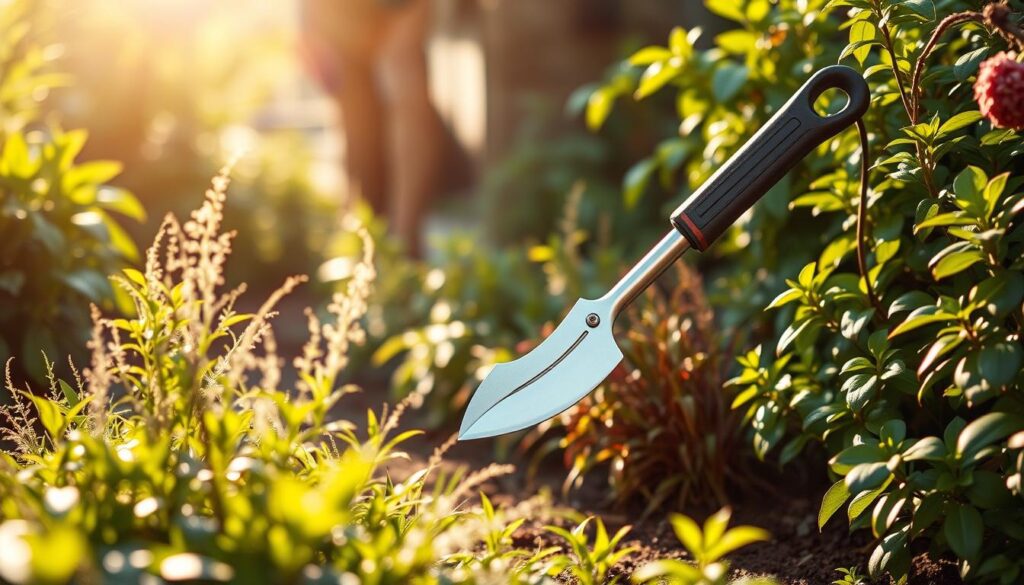
Ames Double-Blade is a long-handled grass whip with a steel blade and a wooden handle. It cuts on both forward and back swings and gives a fast visual reset along bed perimeters and paths. It tires the arm if used too long and does not remove roots.
Grebstk Crack Weeder
The Grebstk has a stainless steel L-blade and a beech wooden handle. Its serrated and smooth edges scrape tight joints and deck slats that bigger heads can’t reach.
It works best in narrow gaps and is less effective on wide spaces or stubborn taproots.
Roamwild Multi-Digger
This multi-function steel head combines a piercing spike, serrated edges, a small hoe, and foot pegs for scraping. The double handle helps you twist out plugs.
It’s a handy all-in-one when beds border mixed hardscape and soft ground, though it may require some stooping for hoe work.
Quick workflow example:
- Edge tight joints with the Grebstk.
- Slice tall margin growth with the Ames grass whip.
- Finish the bed surface with a Dutch or stirrup hoe.
| Model | Primary action | Handle | Ideal area |
|---|---|---|---|
| Ames Double-Blade | Slice tall growth | Wooden handle | Perimeters and paths |
| Grebstk Crack Weeder | Scrape joints | Beech wooden handle | Tight gaps, deck slats |
| Roamwild Multi-Digger | Pierce, scrape, small hoe | Double grip steel | Mixed hardscape edges |
How we tested for effectiveness, comfort, and durability in beds
We ran tools through real garden situations—loose and compact soil, lawn edges, mulch, and hardscape joints—to see what truly works at the back of beds. Our tests measure ease, speed, and whether a pick stays comfortable during routine weekend work.
Testing began with practical passes. We used each device in mulch, rock-covered beds, grass borders, and between pavers so findings reflect typical chores.
Effectiveness looked at how often a weed came out or a seedling was severed in one or two passes without excessive disturbance.
Comfort covered balance, shaft length for upright work, and fatigue over longer sessions. We noted how a handle shape changed effort and control.
- Durability: we scraped, twisted, and dug to check heads and shafts for wear.
- Speed: timed cadence—stand-up weeders for targeted pulls, hoes for broad surface control.
- Versatility: tracked when a single tool handled both bed surfaces and edge work.
- Ease: checked ejection, soil clearing from heads, and angle changes near plants.
We recorded where each item excelled (taproots, seedlings, cracks) and where it lagged. This approach mirrors a weekend gardener’s rhythm and highlights small learning curves that pay off in speed and precision.
Handle length, grip, and weight: choosing comfortable use over time
Proper handle length keeps you upright and balanced, while the right grip and weight reduce fatigue. Fit the tool to your height and typical session length for safer, more productive garden work.
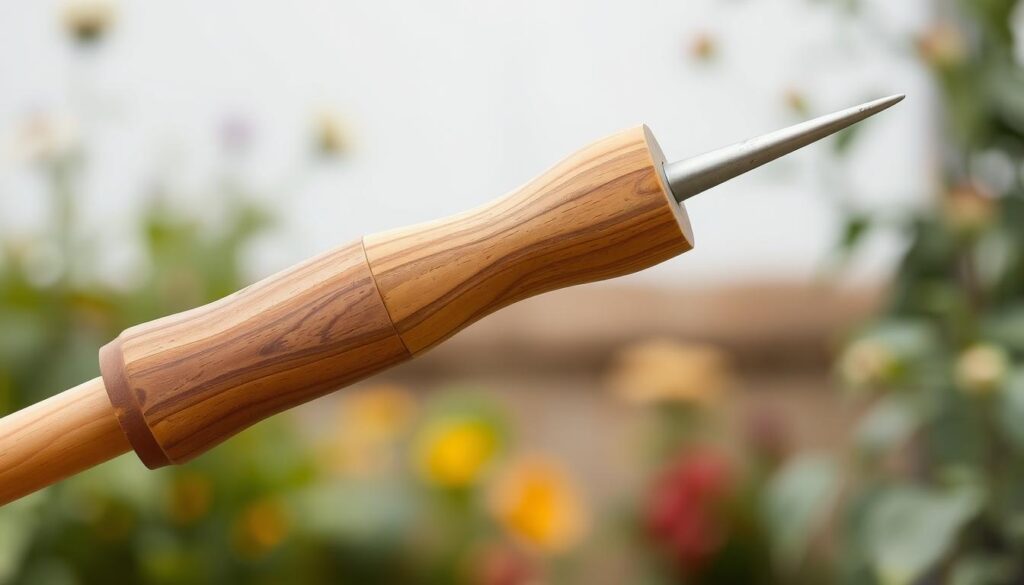
A shaft that matches your posture protects the spine and keeps each pass efficient. Aim for a handle that lets your arms hang naturally while the head meets the soil. This stance saves the back and improves control on long rows.
Standing upright vs. hunching: shaft length for back-friendly work
Adjustable options, like the DonSail model, let shared equipment fit different heights. Use a length that keeps your shoulders loose and reduces hunching as beds change through the season.
Grip styles: ergonomic, gel, and wood—what reduces hand fatigue
Grips matter: ergonomic or gel wraps cushion palms for long sessions, while smooth ash handles give tactile feedback and steady control. If hands run hot, a slightly textured grip or a thin glove stops slipping without bulk.
“A balanced handle makes the whole motion feel natural—less wrist correction, more steady rows.”
- Balance the head and handle so the tool tracks straight with minimal wrist work.
- Choose weight based on conditions: lighter shafts for endurance; heavier heads for crusted soil.
- Check fasteners regularly to keep the handle secure and responsive during sessions.
Practical takeaway: match shaft length, grip style, and overall weight to your height and how long you garden. Comfort beats a tiny power edge when you want to finish the weekend chores without pain.
Blade and head materials: stainless steel vs. carbon steel in real soil
How a head is made—its metal and geometry—shapes how it cuts, grips, and wears over seasons. This matters for wet beds, compacted soil, and routine upkeep.
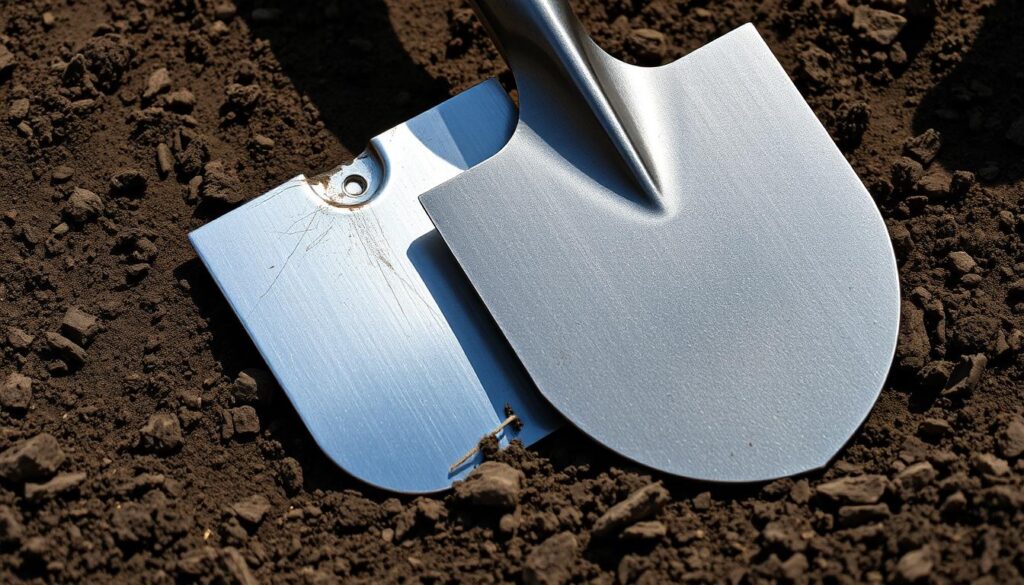
What stainless steel gives you
Stainless steel resists rust and cleans up easily after damp work. Brands like Burgon & Ball keep blades shiny and low-maintenance, which is handy in humid climates or mulch beds.
It dulls more slowly from corrosion, though it can be harder to re-sharpen to a very fine edge.
Why carbon blades stay keen
Carbon steel holds a sharper edge and hones quickly for precise cuts. DeWit’s carbon blades suit tight gaps and narrow passes where a keen carbon edge matters.
Expect light oiling after use to stop rust. With simple care, carbon stays the go-to for gardeners who like a razor finish.
Head geometry: claws, loops, and teeth
Serrated claws anchor into crowns and boost first-pass extraction and ejection ease. Stirrup loops cut on both forward and back strokes for fast row work.
Dutch hoe teeth, as on Sneeboer models, add bite on slightly compacted surfaces and increase surface contact for smoother slicing.
Quick summary: Stainless steel resists moisture and cuts cleanup chores; carbon takes and keeps a finer edge with routine care. Pick head shape to match how you cut or grab weeds, and choose grips that balance head weight for steady, comfortable passes.
| Material | Typical brands | Strength | Care needs |
|---|---|---|---|
| Stainless steel | Burgon & Ball, some stand-up tines | Rust resistance, low maintenance | Wipe clean, occasional sharpening |
| Carbon steel | DeWit | Edge retention, easy sharpening | Dry, oil after use to prevent rust |
| Head geometry | Sneeboer (toothed), stirrup loops | Serrated bite, dual-stroke cutting | Check fasteners; simpler parts reduce upkeep |
Match the tool to the job: roots, soil, bed layout, and plant spacing
Start with the weed and the conditions, then pick the head that does the work. Taproots demand claws or root-cutting edges; seedling mats and loose soil favor quick hoe passes.
Deep roots and taproots: stand-up weeders and root-cutting edges
Stand-up claw weeders (Fiskars, Garden Weasel, Landzie) center over the crown and yank roots with little soil disturbance.
Serrated claws and root-cutting edges bite into tough crowns and eject the pull quickly, saving time on stubborn weeds.
Loose vs. compact soil: when hoes excel and when claws win
On loose or raised-bed soil, stirrup and Dutch hoes glide under seedlings for fast surface passes. They cut on push and pull, clearing runs between plants.
In compacted or wet ground, toothed Dutch heads or serrated claws grip better than smooth blades and reduce slips during leverage work.
Narrow gaps and obstacles: L-shaped crack weeders and narrow hoe heads
Narrow hoe heads weave between stems without nicking plants. Grebstk L-shaped crack weeders scrape flush along pavers and fence lines where wider heads can’t reach.
Use tool sequences: pull the big offenders first, then hoe remaining seedlings in one smooth pass. Layout matters—wide beds with center access favor longer shafts and lighter heads for steady control.
Long-handled tools vs. short-handled options: when to switch
Short hand blades give close control around crowns and transplants. Save standing passes for wider sweeps to protect your spine and speed through the bed.
A quick swap from a shaft to a hand blade changes how gently you work near fragile stems.
Hori hori knives and precise hand work
Corona and Garden Guru hori hori knives sink beside roots to slice and lift. They also measure planting depth during change-outs. Use one for transplanting, root cutting, and careful weeding close to young plants. This short tool gives exact cuts with minimal soil damage.
Kana hoes for creeping growth and harvest finesse
Kana hoes scrape shallow mats and trim creeping weeds with finesse. They excel in tight pockets a long head cannot reach. Expect to kneel or bend for precise work, and switch back when you need wide, upright passes.
Knees vs. posture: ergonomics trade-offs
Long handles reduce strain on your back for broad chores. Short implements win on precision around crowns and delicate stems. Consider gel grip pads if you kneel a lot, and use a kneeler pad for joint comfort.
Practical plan: start upright for most weeds, then move in with a hori hori or kana hoe for selective finishing near prized plants.
| Hand option | Primary action | When to use |
|---|---|---|
| Hori hori (Corona, Garden Guru) | Slice, dig, measure | Transplants, root cutting, precise weeding |
| Kana hoe | Scrape, trim, harvest | Creeping weeds, tight pockets, small veggies |
| Stand-up weeder | Pull taproots while standing | Bulk passes across beds to save the back |
Price, value, and warranties: what you get at each budget
A clear budget plan helps you pair everyday value with occasional investment. Under $40, you can cover most routine weeding and slicing needs; above that, forged heads and long warranties justify the cost for steady gardeners.
Think of price as a trade-off between immediate value and decades of reliable performance. Choose a light-duty option for frequent, short sessions and a premium Dutch hoe when you want a lifetime companion.
Entry-level stand-up and hoe picks under $40
Under $40 gets solid workhorses: Garden Weasel WeedPopper (~$26–33), Walensee Stand Up (~$30–37), Ames scuffle hoe (~$34), and DonSail adjustable hoe (~$21–26).
These options favor lower weight and simple parts. Expect plastic ferrules or light aluminum shafts that keep overall weight down. They cover routine weeds and surface passes well and make good starter choices.
Premium Dutch hoes and forged heads: where the extra money goes
Premium models (DeWit, Sneeboer Royal, Burgon & Ball, Spear & Jackson Kew) invest in forged or finely finished heads and long straight-grain wood shafts.
Why pay more? You get superior blade geometry, longer warranties (DeWit and Burgon & Ball offer lifetime support; Spear & Jackson lists 10 years), and a smoother cut that stands up to repeated seasonal use.
Quick guidance:
- Value: Buy a capable mid-tier weeder plus a budget hoe if you only weed weekly.
- Upgrade: Choose a forged Dutch hoe as your durable slicer when frequency and soil demands rise.
- Materials: Stainless steel resists rust; carbon steel holds a keen edge but needs oiling. All-steel heads add weight but extend life.
| Price Tier | Examples | Materials & parts | Warranty |
|---|---|---|---|
| Entry ( | Garden Weasel, Walensee, Ames, DonSail | Aluminum/steel heads, plastic ferrules, lighter shafts | Limited manufacturer coverage (1–3 years typical) |
| Mid ($40–$90) | Walensee heavy, Landzie steel | All-steel heads, wooden handle options, reinforced expellers | 3–5 years; better parts and service |
| Premium (>$90) | DeWit, Sneeboer, Burgon & Ball, Spear & Jackson | Forged carbon or stainless steel blades, straight-grain wood shafts, solid ferrules | 10 years to lifetime support |
Care, sharpening, and storage to extend tool life
A few minutes of tidy post-session care keep blades keen and shafts crack-free all season. Clean, dry, sharpen, and oil now so you save time and avoid repairs later.
After working in damp soil, rinse blades with soapy water and dry thoroughly. Grit left on edges will wear them faster and make future passes feel dull.
How to care for wood handles
Sand any rough spots with fine paper, then wipe dust away. Apply a thin coat of boiled linseed oil to the handle and buff off excess so the finish is not sticky.
This keeps wood supple and prevents checks from moisture swings.
Sharpening and protecting steel heads
Use an oiled sharpening stone for hoes and serrated claws. Light, even strokes refresh the edge without removing too much metal.
Wipe a thin film of oil on steel surfaces before storage. While stainless steel resists rust, it still benefits from a quick wipe to keep a low-friction glide.
- Quick checklist: rinse and dry after use; sharpen on an oiled stone; oil steel and wood; hang tools off the floor.
- Keep a small care kit—stone, rag, oil—in the shed so maintenance happens right away.
Real-world scenarios: examples of using tools at the back of deep beds
These quick examples show how picks perform where access is tight and visibility is limited. Use reach and head shape to protect plants while you clear the bed.
Small, targeted moves at the bed edge can protect plant foliage while clearing persistent visitors.
Reaching behind mature perennials without damaging leaves
Example: Slip a narrow Dutch hoe under foliage to sever seedlings without bruising leaves. Make shallow strokes and keep the blade parallel to the soil.
Weeding along fence lines and raised bed perimeters
Center a stand-up weeder over a stubborn taproot and pull straight up so you don’t step into the garden. Along fence lines, an Ames grass whip clears tall growth quickly; follow up with a claw or hoe to remove roots.
- Raised edges: Run a Grebstk along seams between boards and pavers to dislodge lodged plants.
- Rock mulch: Fiskars-style claws grab through gaps where hoes may skate.
- After rain: Toothed Dutch heads bite slightly compacted soil and restore a friable finish.
Tip: Combine actions—pull, slice, edge—for neat rows without trampling interiors. Small, precise movements keep leaves intact and soil structure healthy. For more on selection, see our roundup of weeding tools.
Conclusion
Finish smart: pick the right head for root work and a complementary slicer for surface passes. Across independent tests, stand-up weeders like the Fiskars 4-Claw and forged Dutch hoes from DeWit, Sneeboer, and Burgon & Ball cut strain and sped chores while staying comfortable over long sessions.
Build a compact kit: one precise stand-up weeder, one quality hoe, and an edge scraper handle the full range of bed tasks. Prioritize fit and grip so you stay consistent week to week—consistency is what keeps beds manageable all season.
Match materials to your climate: choose stainless for low upkeep or carbon if you enjoy sharpening. Give wooden shafts a seasonal oil and a quick blade wipe; a little care keeps favoured pieces ready for the next clear-out.