
Can a small grouping of potted evergreens save you time and money while boosting curb appeal all season long?
Living décor like dwarf evergreens gives color, form, and texture that lasts from festive nights into late winter and spring. Use slow-growing varieties to stretch your budget—many thrive one to two years in pots before they need larger homes.
Good potting mix improves drainage and airflow in tight spaces, and routine watering matters except when soil freezes. Clustered pots create a layered, “mini forest” effect that feels curated and dramatic.
In this guide you’ll learn timing for cold weather care, smart plant picks, simple lighting ideas, and easy topiary or small tree designs. For more on using evergreens in pots, see a practical how-to at Using Evergreens in Containers.
Key Takeaways
- Dwarf evergreens give multi-season value and often thrive 1–2 years in pots.
- Use quality potting mix to improve drainage and root health in confined planters.
- Cluster pots to build height, texture, and a curated look with minimal effort.
- Water year-round unless soil is frozen and protect pots during freeze-thaw cycles.
- Repurpose planters by transplanting specimens to larger pots or the ground after the season.
Why Holiday Container Gardens Shine in Winter
Winter porch displays thrive because living evergreens and cut boughs offer lasting color, texture, and scent through the holiday season and into the new year.
Dense needles and glossy leaves give firm structure when most plants go dormant. Fresh sprays of Deodar cedar, pine, juniper, and magnolia add texture and fragrance that lasts into winter.

What makes these displays so effective?
- Reliable color: Needles and broadleaf foliage hold green through cold snaps.
- Layered texture: Mix soft needles, magnolia leaves, woody cones, and cut branches for depth.
- Lasting scent: Cedar and fir boughs add a fresh, wintry aroma to entries.
- Low upkeep: Prune stray tips and swap tired cut pieces—no full replant needed.
Start with one showpiece pot or cluster several to scale impact. Use proper potting mix and right-size planters so plants thrive beyond the holidays and stay healthy for the year ahead in your garden.
When to Plant Evergreens in Containers for Cold-Weather Success
Plant in milder windows so roots establish before heat or deep cold. Follow zone-based timing and simple winter protections to keep specimens healthy through snow and thaw cycles.
B in warmer regions (USDA Zone 7 and above), aim to plant in spring or early fall. This gives roots time to grow before the stress of summer heat or winter freeze. Nurseries also stock the best selection in these seasons, so you can pick ideal shapes and sizes.
What should colder-zone gardeners do?
In Zones 6 and lower, ask local pros about winterizing. Wrap pots in burlap for insulation and group them near walls or in alcoves to cut wind. Move smaller pots into protected spots when heavy snow or hard freezes are forecast.
Practical tips for healthy roots and water routines
- Use potting mix: choose a high-quality mix for drainage and airflow; avoid garden soil in pots.
- Water wisely: check the top few inches after thaws and water only if soil is dry. Do not water frozen soil.
- Pick larger pots: bigger containers buffer temperature swings and protect roots better than undersized ones.
| Zone | Best Planting Time | Winter Protection | Key Action |
|---|---|---|---|
| 7 and warmer | Spring or early fall | Minimal—shelter from extreme heat | Install in mild weather; choose during nursery peaks |
| 6 and colder | Early fall when possible; avoid deep freeze | Burlap wrap, group pots, wind protection | Consult local garden center and monitor moisture |
| All zones | Avoid extreme cold or heat | Right-size pots and good drainage | Use quality potting mix and water during thaws |
Tip: Read plant tags and ask your garden center about cultivar hardiness in your microclimate. Small adjustments in timing and site can save a season of extra care.
Choosing Evergreens: Conifers, Broadleaf, and Dwarf Picks for Containers
Select hardy, slow-growing specimens that stay proportionate and attractive in pots. This keeps arrangements neat and reduces repotting for the season.
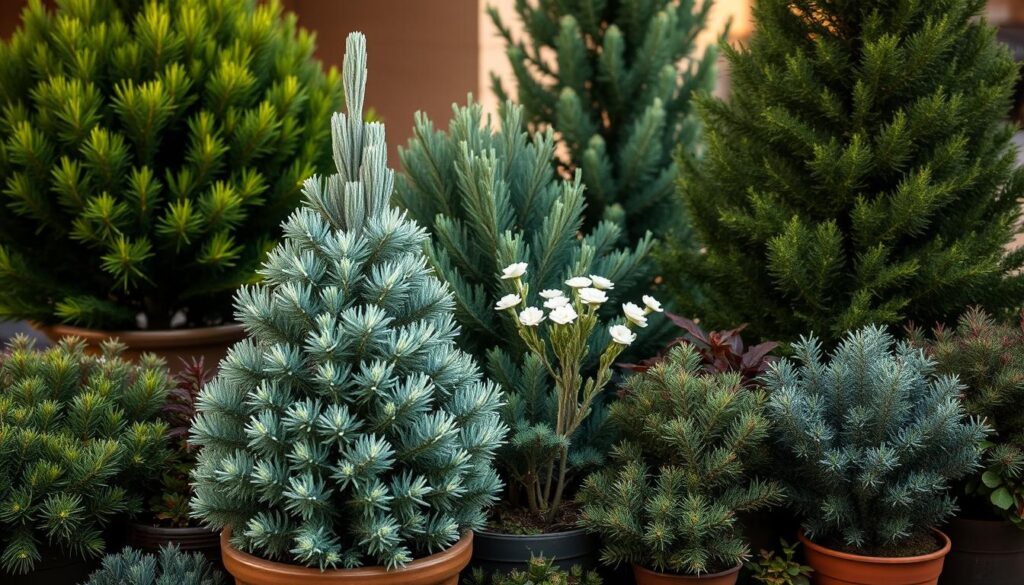
Which types work best? Conifers bring fine needles and cones for vertical structure. Broadleaf selections offer glossy foliage and strong winter presence.
Conifer standouts
- Dwarf Alberta Spruce — classic, narrow form that reads like a small tree.
- Blue Point Juniper — blue-green color and texture contrast.
- Deodar Cedar — airy branches for soft height.
Broadleaf beauties
- Green Mountain and Green Velvet boxwood — tidy pyramids and mounds.
- Teddy Bear Magnolia — large leathery leaves for drama.
- English ivy or trailing juniper — reliable spillers to soften edges.
| Category | Good Picks | Sun Needs |
|---|---|---|
| Upright | Dwarf Alberta, Deodar Cedar | Partial to full sun |
| Mounded | Green Velvet Boxwood | Partial sun |
| Spiller | Trailing Juniper, English Ivy | Shade to part sun |
Design Formulas: Thrillers, Fillers, and Spillers with Holiday Flair
Want an instantly polished porch or entryway? Use a simple formula—one upright thriller, one or two fillers, and trailing spillers—to build layered depth and long-lasting appeal.
Start with a strong upright focal plant, then layer companions around it to create a living vignette. This quick method gives clear vertical lines and a friendly, photographed-ready look.
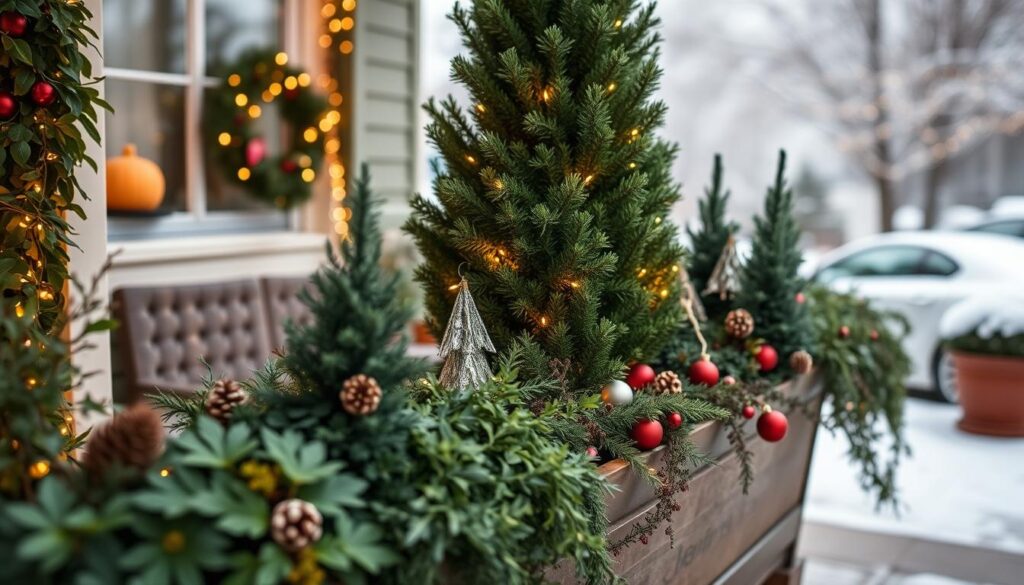
How do you create a mini forest with clustered pots?
Cluster two to five pots and vary scale. Place the tallest in back or center, and stagger lower mounds forward for depth.
Keep the thriller about one to one-and-a-half times the container’s height for balance and stability.
How do you balance textures and color?
Weave glossy magnolia leaves with fine needles, woody cones, and bright berries. Add a few straight branches or a lit cage to lift the eye.
“A simple, repeated element ties the group together—use the same berry or cone across pots for cohesion.”
What finishing touches make a display sing?
Nestle grapevine balls and subtle ornaments for instant décor. Edit seasonal accents after New Year’s but keep the living core. The result feels curated and invites visitors into your garden or container garden.
holiday container gardens evergreen, lights, mini trees
Want a quick, polished entry? Pair potted evergreens with subtle string lights and a small tree for an instant seasonal look.
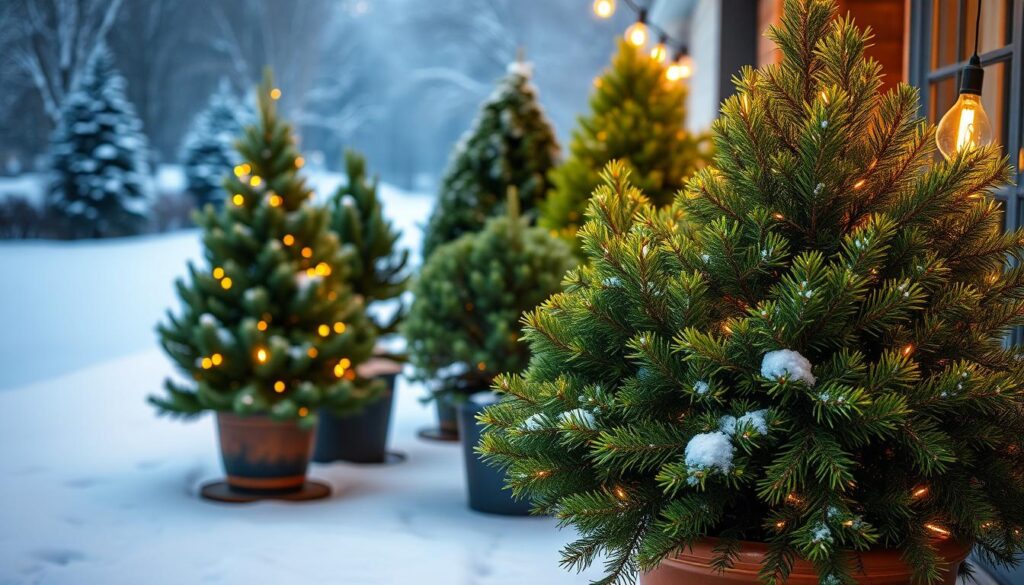
Start with one tall, lit specimen as an anchor. Flank it with two smaller pots for balance. This simple trio creates a calm, photographed-ready entry.
Pick the bulb tone to match your style. Use warm white for a cozy porch. Choose cool white for a sharp, modern feel.
Scale the strand to the plant. Use micro-LEDs on narrow trunks and full strings on larger conifers. Spiral lights from the inside out to hide cords and highlight shape.
Keep the display modular. Add ribbons and bows for the holiday season, then remove ornaments to leave a timeless look through late winter.
| Element | Best Option | Why it works |
|---|---|---|
| Anchor plant | Tall potted evergreen | Provides height and a focal point |
| Accent pots | Two smaller mounds | Creates symmetry and layered depth |
| Lighting | Warm or cool LED strings | Sets mood and conserves energy |
| Safety | Outdoor-rated cords & timers | Prevents trips and saves power |
Safety first: always use outdoor-rated strands and protected outlets. Secure cords out of walkways and set timers or smart plugs for consistent schedules.
For more styling ideas and step-by-step examples, see holiday container garden ideas.
Lighting Ideas: From Subtle Glow to Sparkling Statements
Use simple lighting to lift small displays and guide guests after dark. A few well-placed strands and wrapped branches can turn porch and window groupings into warm, welcoming scenes without fuss.
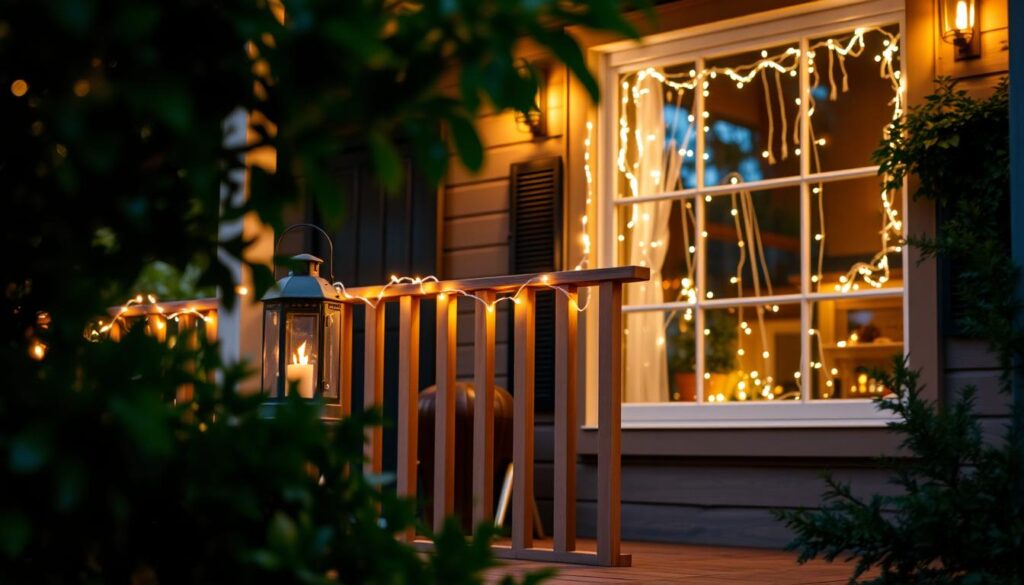
String frames for instant height
A tomato cage flipped over and wrapped with string creates a quick vertical armature. Anchor it in a pot filled with juniper or pine boughs. Cover the base with dried eucalyptus and tuck in a few pinecones for texture.
Wrapped branches and glowing paths
Strip leafless branches or small patio stems and wrap them in a single strand to make a sculptural glow. Skirt the trunk with greenery or low shrubs for a finished look. Line walkways with low lanterns or small lamped jars for safe, inviting routes.
Which color temperature should you use?
Use warm white for a cozy, traditional entry and cool white for crisp, modern window displays. Control intensity by adding or removing wraps: fewer turns = soft glow; more wraps = sparkling statement.
- Scale safely: use outdoor-rated strands and timers; make sure connections are weather-protected.
- Place candles in glass jars for quick porch pots, and always set them away from dry materials.
- Coordinate zones: echo the same tone from porch to window so the whole front reads as one scene.
“A single upright frame wrapped in a warm glow can read as much bigger than its actual size.”
Mini Trees and Topiaries: Small Footprint, Big Holiday Impact
Want strong shape with little fuss? Compact topiaries bring instant form and curb appeal while using minimal space.
Compact topiaries give dramatic form without crowding a porch or stoop.
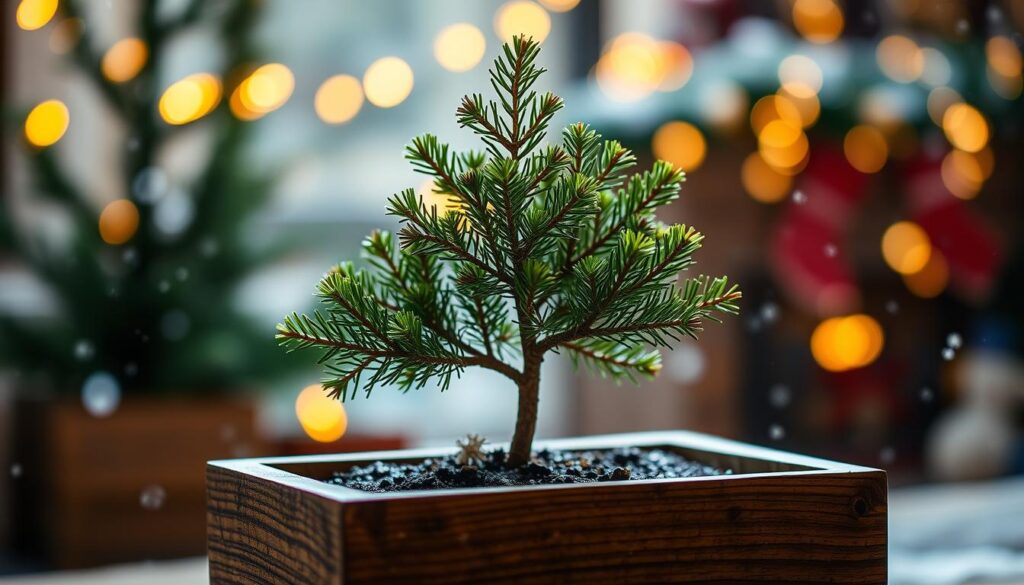
Which specimens work best?
Dwarf Alberta Spruce and Norway Spruce read like classic, scaled-down trees for tight entries. Dwarf Alberta keeps a neat cone shape; the alberta spruce label helps when you shop.
How should you decorate and display them?
- Keep décor simple: one bow and a few tasteful ornaments preserve the plant’s structure.
- Use pairs: matching topiaries flank a door and create intentional height and balance.
- Mix forms: a spiral boxwood beside a conical spruce adds playful contrast.
“Let the plant’s shape do the work; accents should highlight, not hide, the form.”
What about care after the season?
Strip decorations, feed lightly in spring, and top-dress potting mix. Move specimens into the garden or larger pots once roots fill their containers. Light pruning keeps topiary lines crisp for years.
Container and Soil Essentials for Winter Durability
Choose hardy pots and a free-draining mix so roots stay alive through freeze and thaw.
Choose pots and soil that stand up to freeze-thaw cycles to keep roots healthy all winter. Pick larger planters when possible; they buffer temperature swings and tip less in gusty winds.
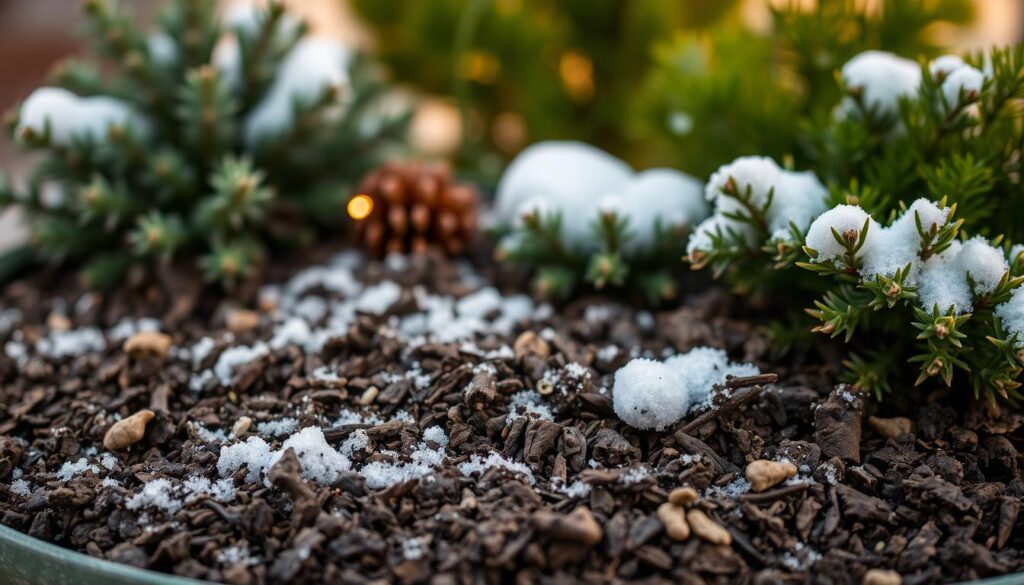
Which materials and mix keep roots safe?
Freeze-tolerant containers such as fiberstone, high-quality resin, and concrete resist cracking better than thin clay in snow and ice.
Potting mix should be peat- or coir-based with perlite or bark fines for airflow. Avoid garden soil—it compacts, stays wet, and suffocates roots.
- Drainage: large drain holes and a free-draining mix prevent roots from sitting in water in winter.
- Right-size pots: bigger containers moderate temperature swings and allow 1–2 years of root growth before repotting.
- Practical aids: use pot feet to lift pots, saucers with spacers to protect surfaces, and group pots to share warmth.
When should you water or insulate?
Probe a few inches into the soil during thaws and water only if it feels dry. Skip watering when the soil is solidly frozen.
In cold zones, wrap pots with burlap or move small pots to sheltered spots to reduce wind chill and salt exposure. These small steps keep potted plants healthier through winter.
Idea List: Porch Pots, Window Boxes, and Tabletop Containers
Want quick styling ideas that work on a porch, in a sill, or at your dining table? These compact suggestions mix living greens, cut branches, and simple decor for a polished, low-fuss display.
Small showpieces make a big difference. Slip nursery cans into birch-bark wraps, then top with mixed evergreen branches, grapevine balls, and oversized ornaments for a lively porch vignette.
What goes in a window box?
Build a classic window box with white fir, Fraser fir, and juniper. Add magnolia leaves and winterberry for color. Tuck in dried hydrangea or baby’s breath for contrast.
How do tabletop arrangements stay charming?
Pot a ‘Blue Star’ juniper and top-dress with cones, a faux bird, and a few small ornaments. This movable centerpiece reads fresh on a mantle or table.
- Fast pops: paint dried eucalyptus seeds red and tuck them near the rim.
- Lantern feel: cluster clear glass vases with pillar candles on a bed of dried moss.
- Height cue: add redtwig or yellowtwig dogwood branches for lines against deep green foliage.
Scale each arrangement to its spot. Narrow sills take lush low greens; deep boxes can hold tall accents. Mirror pairs at an entry for balanced curb appeal in any container garden.
Care and Sustainability: Watering, Pruning, and Life After the Holidays
Follow a few steady practices to protect plants through winter and give them a second life in the garden or a larger pot.These small efforts save time and reduce waste over the year.
How should I water and shape plants in winter?
Water year-round, but stop if the soil is frozen. During warm thaws, probe the top few inches and water only when dry. This prevents winter desiccation and root stress.
Light pruning keeps shapes tidy. Clip stray shoots and remove damaged tips. Avoid heavy cuts in deep cold; wait for milder weather to reshape safely.
When is the right time to transplant or pot up?
Most specimens do well in pots for about 1–2 years. Plan moves in early spring or fall to reduce shock and help roots establish.
Feed in spring: refresh the top 1–2 inches of potting mix and apply a balanced, slow-release fertilizer once growth resumes.
How do I keep care sustainable after seasonal displays?
Remove bows and holiday décor after the holiday season, but leave the living greens for winter interest. Repurpose plants rather than discarding them—plant in the garden or upgrade to larger pots.
- Monitor health: watch for winter burn and reduce wind exposure.
- Mulch smart: add a thin bark or moss layer to moderate surface temps.
- Keep records: note which selections performed best to refine next year’s plan.
For more long-term care ideas and a step-by-step planting guide, see our grow herb plant guide.
Conclusion
Simple, living arrangements give structure, color, and interest through cold months. Keep care easy: edit décor, water during thaws, and plan repotting so plants thrive into spring.
A few well-chosen pots and branches will carry interest from late fall into bright spring. Start with one strong focal pot, add a couple of companions, and echo the look in window boxes for cohesion.
Choose reliable picks—dwarf conifers and broadleaf shrubs hold shape and leaves, then move to larger pots or plant in the garden when roots fill the current home.
Remove heavy ornaments after the season, keep décor minimal, and use warm or cool tones of lights to suit your style. For tips on keeping living specimens long-term, see living Christmas trees.
Gather pots, branches, and a few hardy specimens this weekend—your porch will look welcoming in under an hour, and your plants will reward you through the year.
FAQ
What are the easiest small trees and shrubs to use in winter pots?
Dwarf Alberta spruce, boxwood varieties, ‘Blue Star’ juniper, and compact arborvitae are reliable picks. They tolerate pruning, hold shape, and show well with decorations. Choose species rated for your USDA zone and select slightly larger pots to protect roots from freeze-thaw cycles.
When is the best time to plant evergreens in pots for cold-weather success?
For gardeners in Zone 7 and warmer, plant in spring or fall when roots can establish before extremes. In Zones 6 and colder, prioritize early fall or late spring and use insulated pots, burlap wraps, and extra mulch to protect roots over winter.
How do I prevent potted trees and shrubs from heaving or freezing?
Use frost-resistant containers, add drainage holes, and raise pots off cold surfaces. Wrap thin-rooted plants in burlap and insulate the pot sides with bubble wrap or mulch. Move sensitive pots to a sheltered porch during extreme cold.
How should I water potted evergreens in winter?
Water when the soil is thawed and the top inch feels dry. Plants still use water in cold spells, especially evergreens that lose moisture from foliage. Avoid overwatering—good drainage and a well-draining potting mix prevent root rot.
Can I leave lights and ornaments on outdoor planters through the season?
Yes, but use outdoor-rated LED lights and secure ornaments to prevent wind damage. LEDs run cooler and use less power. Remove delicate decorations during heavy snow or ice to protect foliage and branches.
What soil mix and pot materials hold up best in freezing temperatures?
A well-draining potting mix with bark, perlite, and a bit of compost is ideal. Use frost-resistant materials like thick plastic, resin, cedar, or glazed ceramic. Avoid thin unlabeled terracotta; it can crack in repeated freeze-thaw cycles.
How can I create height and a “mini-forest” effect on a porch?
Cluster pots of varying heights and sizes, using taller specimens as thrillers and smaller shrubs or spillers at the base. Add tomato cages or wire cones for support and string lights for vertical emphasis. Grouping increases visual weight and winter interest.
Which lighting color works best for porch and window displays?
Warm white creates a cozy, traditional glow ideal for porches and entryways. Cool white looks crisp and modern on window boxes. For natural-looking displays, match light tone to your overall color story—red-and-green feels classic; white-and-green reads elegant.
Are broadleaf evergreens like boxwood suitable for winter window boxes?
Yes. Boxwood and some magnolia varieties hold up well and provide glossy texture. Pair them with juniper, winterberry stems, and dried accents for layered interest. Ensure root protection and avoid placements with desiccating winds.
How do I transition potted holiday plants for year-round use?
After the season, reduce decorations and give plants gradual exposure to regular light and water. Lightly prune to maintain form, repot into larger containers if rootbound, or transplant hardy specimens into the garden for long-term growth.
How can I include berries, cones, and foliage without harming plants?
Use clipped stems from pruning—berries and cones can be wired into arrangements or tucked among branches. Avoid over-pruning live plants; collect fallen cones and dried stems, or source decorative cuttings from nursery bundles to preserve plant health.
What quick décor ideas make tabletop and window displays pop?
Combine a small conifer like ‘Blue Star’ juniper with cones, a few ornaments, and a moss base. Add candles in glass hurricanes and a ribbon or bow for a finishing touch. Keep arrangements balanced and avoid heavy items that compress soil.
How often should I prune potted topiaries and spirals during the season?
Light shaping can be done in late fall and again in early spring. Avoid heavy pruning during deep cold. Remove dead tips and maintain silhouette with small snips to preserve health and decorative form.