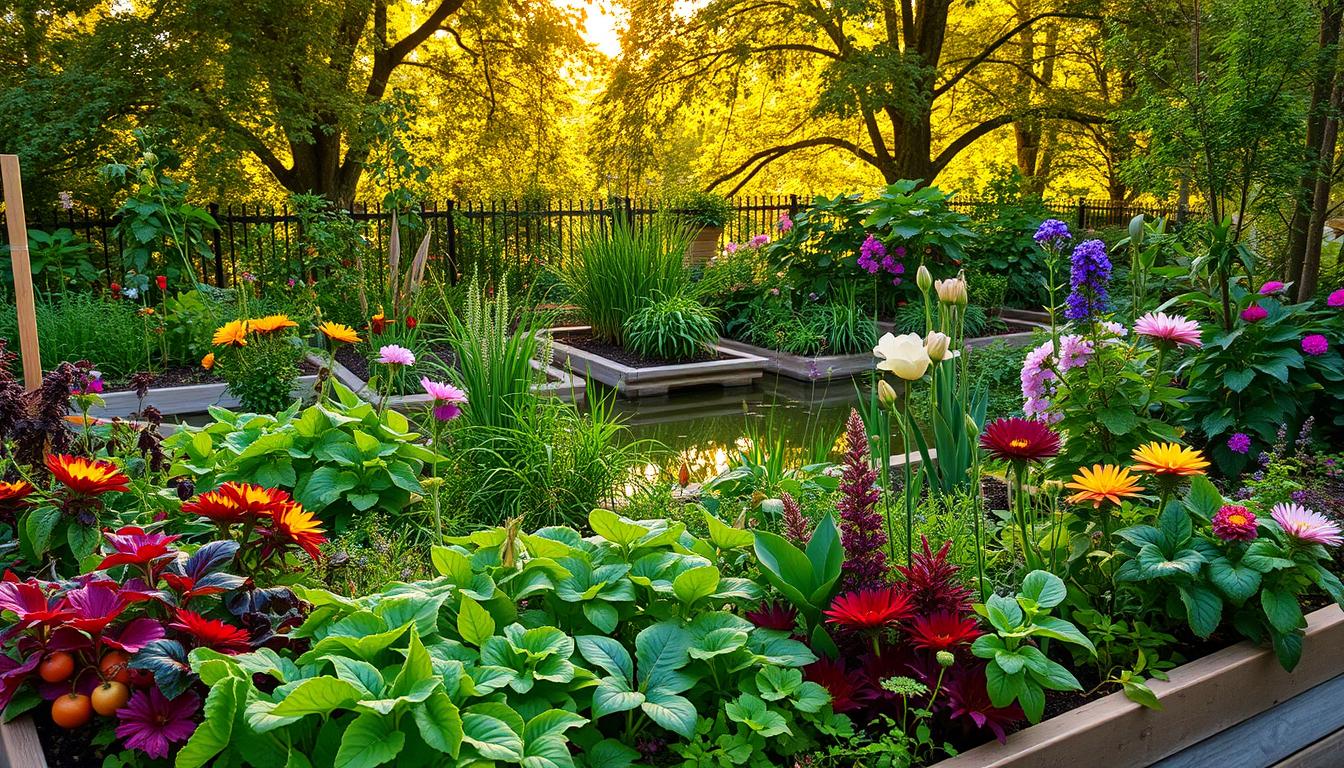
Can a small backyard change the planet’s future? This guide shows simple, proven practices that help your outdoor space work in harmony with the environment.
Start with clear goals: conserve water, cut waste, and build resilient soil that feeds plants and wildlife. Practical moves—going peat-free, capturing rainwater, and planting for pollinators—save money and boost biodiversity.
Only 2.5% of Earth’s water is freshwater, so saving water on-site matters. Growing food nearby cuts transport emissions and packaging while improving self-reliance.
You’ll find step-by-step tips for composting, natural pest control, tool choices, and replacing impermeable patios with permeable or planted surfaces. This approach fits yards, balconies, and community plots.
For a deeper read on proven methods, see this short primer on thoughtful practices at sustainable gardening tips.
Key Takeaways
- Balance personal needs with the planet by conserving resources and cutting waste.
- Save water with rain capture and drought-smart plant choices.
- Build soil health via compost and organic inputs for better yields.
- Support pollinators and wildlife with native, climate-fit plants.
- Choose low-energy tools and permeable surfaces to reduce impact.
- Start small: prioritize one change and measure progress seasonally.
What Readers Mean by “how does sustainable garden function look at” Today
Think of your outdoor space as a small ecosystem. It works by cycling resources, storing water, and choosing plants that match local conditions. This gives clear outcomes: lower water use, richer soil, more wildlife, and long-term savings.
Searchers want mechanisms, not a checklist. They want to understand soil cycles, water flow, habitat design, and system thinking. In practice, that means closing loops with compost and mulch, capturing rain, and using peat-free mixes and hand or electric tools.
- On-site resource use: harvest rain and recycle leaves and scraps.
- Soil-first cycles: feed microbes with compost for steady yields and drought resilience.
- Food and emissions: even a small kitchen bed cuts trips, packaging, and fuel.
Measure gains by tracking water bills, compost output, mulch area, and wildlife sightings. Sustainability does not require extra spending—design smart once and reduce maintenance over time, protecting natural resources and the environment for the future.
Core Principles That Make a Garden Truly Sustainable
These core principles help you design a space that saves resources and supports life.
Work with nature, not against it
Core principles guide choices that let nature do most of the work in your yard. Choose plants suited to your local climate and soil. Build living soil with compost and cover crops so microbes support plant health.
Conserve resources and reduce waste across the whole system
Conserving resources starts with water capture, mulching, and planning beds to limit waste. Use compost and reuse materials to cut inputs and save money.
Replace hard, impermeable areas with permeable paths or planted zones to slow runoff and recharge soil moisture.
Support local ecosystems and biodiversity
Plant native plants to feed pollinators and birds. Small shifts—more layers, fewer chemicals—build richer wildlife and stronger food webs.
Trees, shrubs, and healthy soil also lock up carbon. Source plants and compost nearby to support local suppliers and lower transport impact.
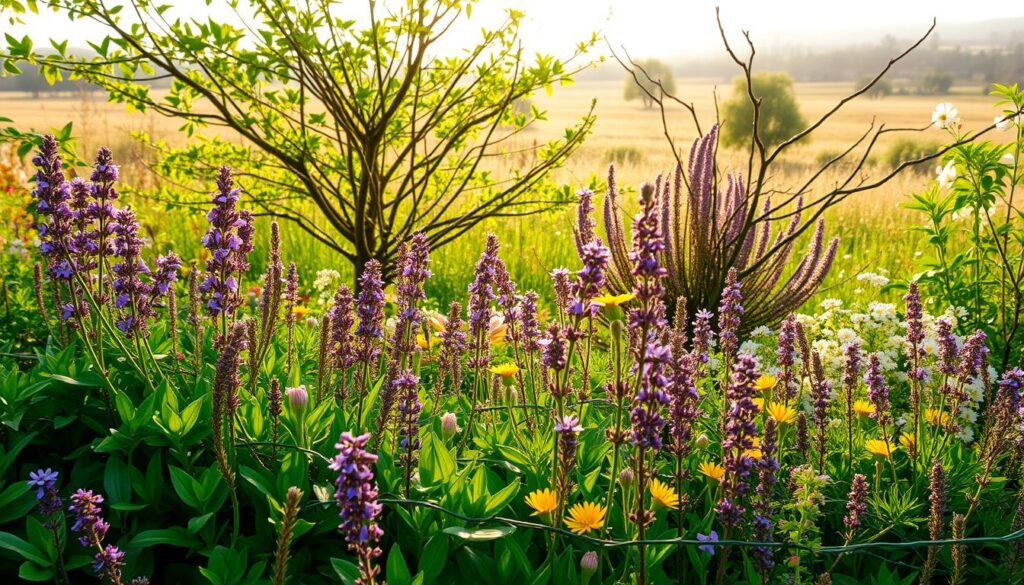
- Design tip: Group climate-fit plants to reduce watering and maintenance.
- Waste cut: Keep organic matter on-site as mulch or compost.
- Hydrology: Use permeable surfaces to slow and sink water into soil.
Soil First: Building a Living Foundation
Start by treating soil as a living system that feeds roots, stores water, and hosts tiny allies. This base makes beds and containers more productive and resilient.
Feed the base, and plants reward you with vigor and fewer problems.
Compost and organic amendments for structure and microbes
Add finished compost and well-rotted manure to boost structure and microbial life. Composting kitchen scraps and yard trimmings closes the loop, cuts waste, and lowers methane emissions from landfills.
Mulching to retain moisture and cut watering needs
Apply 2–3 inches of organic mulch to slow evaporation, suppress weeds, and moderate soil temperature. Healthy soil holds more water, so you’ll water less over time.
Peat-free mediums to reduce carbon impacts
Choose peat-free mixes made from coconut coir or wood-based materials. They perform well and lower carbon costs tied to peat extraction.
“Feed the soil first; the plant follows.”
- Keep it hands-on: light aeration and simple hand tools protect fungal networks.
- Invite allies: diverse soil life, including beneficial insects and fungi, builds resilience.
Tip: These steps form the heart of practical, tested sustainable gardening practices that help gardens thrive with less input.
Conserving Water Without Compromising Plant Health
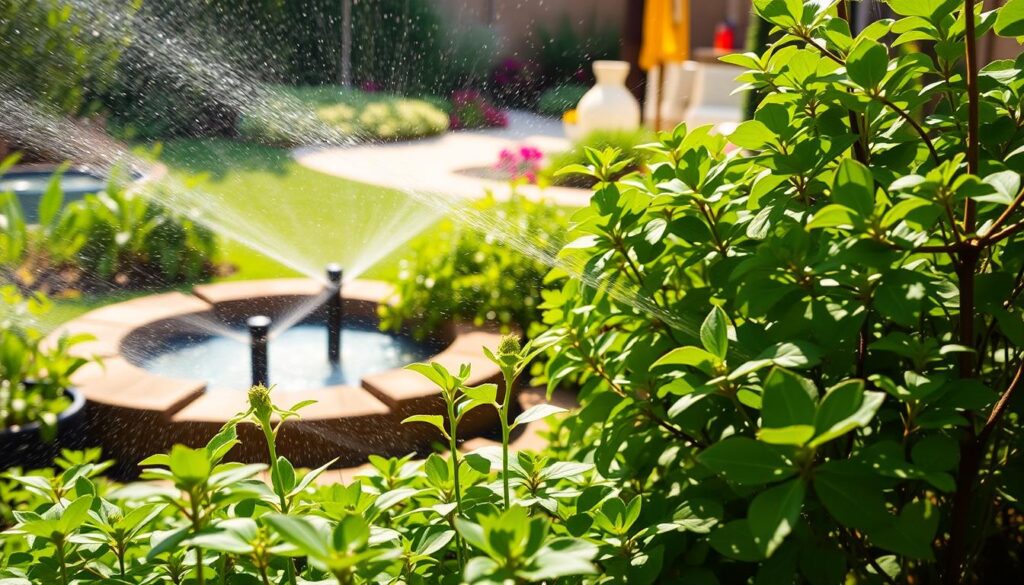
Capture smart, deliver precisely, and build soil that holds moisture. These three moves cut waste while keeping beds and containers thriving. Simple systems repay effort fast.
Can stored rain serve your needs?
Install rainwater butts on downspouts to collect roof runoff. That stored rain is ideal for containers and beds. It reduces tap use and costs.
What is the best way to give water where it matters?
Use drip lines or soaker hoses. They deliver the right amount to roots and avoid surface loss. Schedule watering in early morning or evening to cut evaporation.
How do soil and plants cut demand?
Mulch deeply and add organic matter to make soil sponge-like. Choose drought-tolerant choices—lavender, native grasses, and succulents—for dry, sunny spots. Group similar needs so irrigation stays efficient.
| Strategy | Action | Benefit |
|---|---|---|
| Rain capture | Install butts on downspouts | Free stored supply for plants |
| Targeted delivery | Drip or soaker lines | Less runoff, precise root feeding |
| Soil care | Add compost and mulch | Holds water, reduces drought stress |
| Plant choice | Use drought-tolerant species | Lower long-term gardening needs |
“Small changes to capture and deliver water pay dividends across seasons.”
Biodiversity Boosters: Designing for Pollinators and Beneficial Insects
Give pollinators food and shelter across the seasons, and your outdoor space will hum with life.
A thriving yard invites pollinators and helpful insects with layered plantings and small water stations.
Which native plants feed bees, butterflies, and birds?
Choose local species like lavender, coneflower, and milkweed to supply nectar and seeds from spring to frost. These native plants support many species and need less care than exotics.
What do habitat layers provide?
Stack trees, shrubs, perennials, and groundcovers to offer shelter, nesting sites, and travel routes. Layering creates micro-climates and steady foraging through the year.
Why leave “messy” areas and No Mow windows?
Leave small brush piles, hollow stems, and leaf litter for overwintering insects and ground-nesting bees. Try short No Mow windows so lawn flowers bloom and feed early-season pollinators.
- Add water: shallow dishes with pebbles give safe drinking spots without standing water.
- Reduce disturbance: prune by hand and delay heavy cleanup until late winter.
- Skip pesticides: let beneficial insects thrive and control pests naturally.
For a practical example and planting ideas, see Becky’s enchanting garden.
Plant Selection That Fits Your Climate and Space
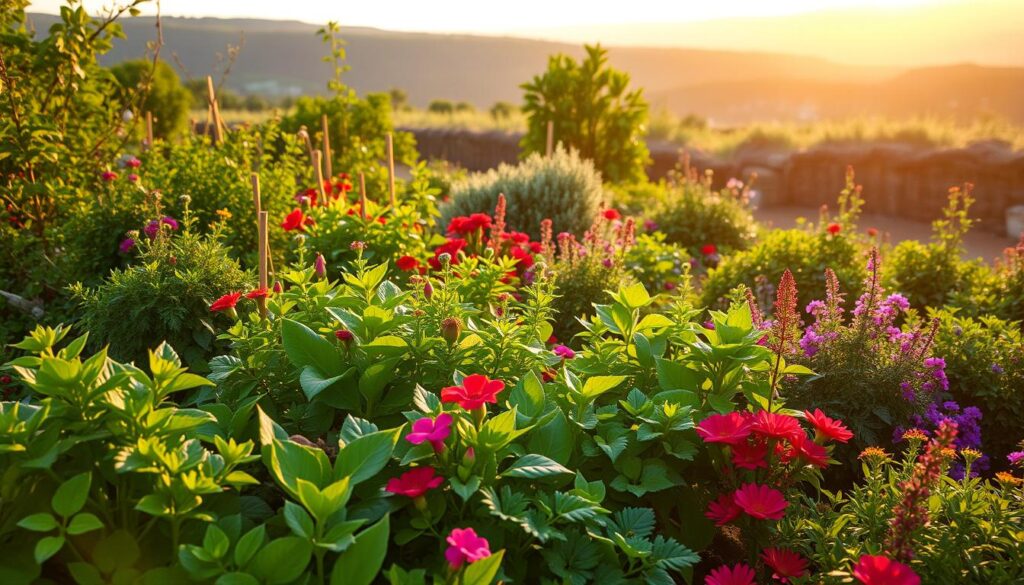
Choose plants that match your climate and space to cut maintenance and boost wildlife. Native choices need less care, resist many pests, and feed pollinators throughout the seasons.
Which species should you begin with?
Start with local lists from your extension or nursery. Match each spot’s sun, soil, and moisture before you plant. This step pays off with fewer replacements and less watering.
Native and climate-appropriate species for resilience
Native plants like lavender, echinacea, black-eyed Susan, and milkweed support bees, butterflies, and other pollinators. They adapt to regional weather and often resist local pests.
Drought-tolerant picks to save water and maintenance
Use drought-tolerant varieties in hot, exposed beds to cut irrigation. Compact shrubs and tough perennials anchor the design and provide shelter for wildlife and beneficial insects.
- Plan bloom succession so pollinators find nectar from spring through fall.
- Choose columnar or compact forms for small spaces and containers.
- Mix textures—grasses, flowering perennials, low shrubs—for layered habitat and visual interest.
| Goal | Suggested species | Benefit | Best placement |
|---|---|---|---|
| Attract pollinators | Milkweed, echinacea | Feeds butterflies and bees | Sunny perennial beds |
| Lower water use | Lavender, native grasses | Reduce irrigation needs | Dry, hot exposures |
| Provide structure | Resilient shrubs | Habitat and year-round form | Borders and hedgerows |
| Small-space impact | Compact cultivars | High ecological value in limited area | Containers and narrow beds |
For regional plant lists and siting guidance, consult local landscape resources like landscape design advice. For herb picks that support bees and other beneficial insects, see this selection of top herbs for gardens: best herbs for garden you need to.
Closed-Loop Gardening: Composting and Waste Reduction
Closed loops keep resources moving on-site, turning scraps into soil and saving inputs over time.
Turn kitchen scraps, leaves, and prunings into a steady supply of compost. This diverts waste from landfills and cuts methane while feeding microbes that boost soil structure.
What should you compost and how do you store it?
Collect fruit and veg peelings, coffee grounds, shredded newspaper, and yard trimmings. Use a tidy bin or simple pallet frame. Dedicate separate zones for active composting and curing finished material so processes stay simple.
How can you reuse on-site to save resources?
Upcycle broken pots for drainage, turn pallets into compost bins, and use reclaimed wood for edging. These choices help you save money and reduce purchases of new materials.
- Keep loops tight: mulch leaves where they fall and chip small branches for paths.
- Use local inputs: swap compost or source cured material from municipal programs.
- Track results: healthier plants and fewer store-bought inputs show the system works.
“Compost is nature’s recycling program, returning carbon and nutrients to the soil.”
Energy and Tools: Choosing Low-Impact Ways to Work
Pick cleaner power and simpler tools to protect soil, plants, and your time. Electric and rechargeable gear cut greenhouse gas emissions compared with gas machines. Hand tools remain the lowest-impact choice and are kinder to soil life.
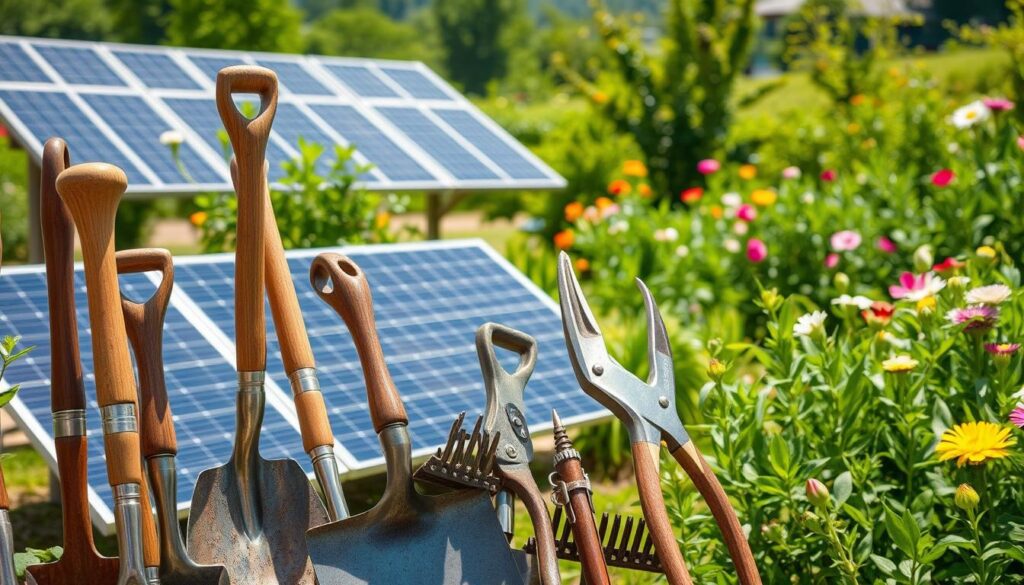
Prioritize quiet, low-emission options for routine chores. Keep gas-powered equipment only for rare heavy tasks. This reduces fuel use and noise and helps pollinators and microfauna nearby.
Maintain to extend life. Clean, sharpen, and oil rotating parts and blades after each session. Proper storage and battery care cut waste and delay replacements.
- Right-size your kit: fewer versatile pieces beat many single-use gadgets.
- Plan sessions: combine tasks to cut trips and idle time, saving energy and wear.
- Protect soil: choose tools that limit compaction and disturbance near roots and plants.
- Charge smart: use off-peak power where possible and store batteries at recommended temps.
Invest once in quality. A well-made pruner or cordless mower needs less repair and feels better to use. That choice supports long-term, practical sustainable gardening and keeps your area healthy and productive.
Surface Choices and Layout That Support the Environment
Make paths and patios part of your water solution. Use porous surfaces and simple grading to slow runoff, feed soils, and keep planted areas healthy. These small design moves save time and reduce maintenance.
What surfaces let rain soak in?
Choose permeable hardscapes like gravel, open-joint pavers, or pavers set in sand. These options let water soak into the soil instead of racing to drains.
How should you shape the land?
Grade gently to move runoff toward planting zones and rain gardens. A shallow basin with deep-rooted plants handles a set amount of stormflow and filters pollutants.
- Reuse first: select reclaimed or recycled materials for paths and patios.
- Soften edges: weave planting pockets into hardscapes so plants cool surfaces and invite habitat.
- Plan access: align beds and paths to fit your space and cut maintenance passes.
- Protect foundations: route overflow to planted zones, not foundations.
Tip: Small layout changes shape how water moves across your yard and improve long-term gardening outcomes by feeding soil and supporting life.
Growing Your Own Food to Cut Carbon and Costs
Planting near the kitchen trims trips, packaging, and fuel use while boosting flavor and independence. A compact plot or containers can supply salads, herbs, and quick veggies for most meals.
Where should you start?
What should I plant close to the door?
Grow fast, reliable species like lettuce, basil, radish, and cherry tomatoes in small beds or pots. These crops shorten supply chains and reduce waste from packaging.
Which watering and soil practices keep yields steady?
Use mulch and a drip system to keep roots evenly moist and cut watering time. Feed beds with finished compost so plants stay nutritious and resilient.
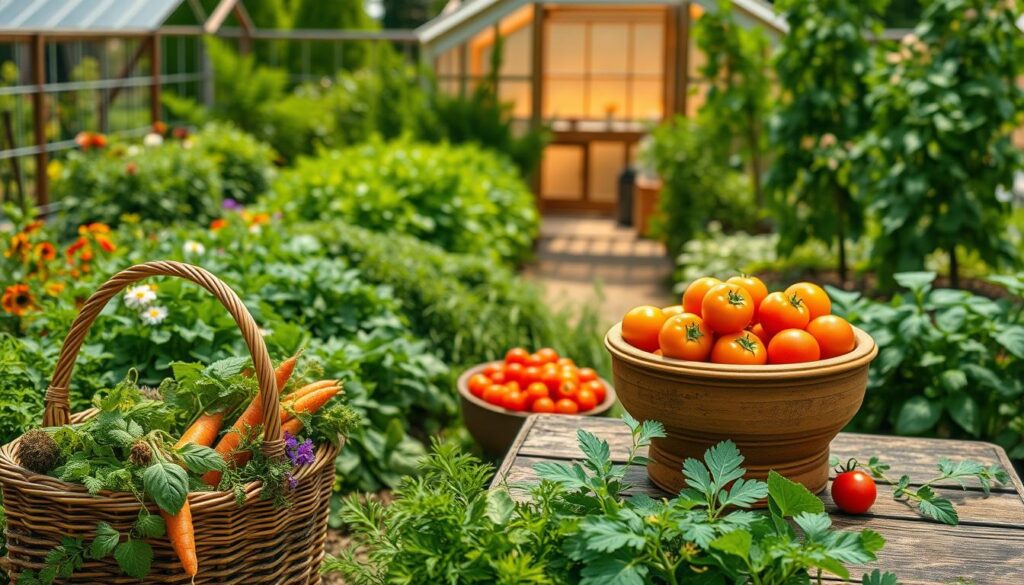
- Grow close: salads and herbs near the kitchen save time and help you save money.
- Match crops: choose varieties suited to your microclimate for dependable harvests.
- Support pollinators: interplant flowers so bees and birds visit and boost yields.
- Simple tools: a sharp pruner, trowel, and hoe handle most tasks quietly and cleanly.
- Rotate crops: reduce disease and keep soil productive across seasons.
“Compost and careful watering turn kitchen scraps and small effort into rich, lasting returns.”
For a clear summary of the broader benefits of homegrown produce, see environmental and health benefits.
Carbon and Climate: How Gardens Sequester and Save
A few smart plantings can turn your outdoor space into a small carbon bank. Plants pull carbon dioxide from the air and store it in leaves, stems, roots, and the soil. These natural stores help the planet and build resilience in your yard.
Why do trees, shrubs, and soil matter?
Trees and shrubs add long-lived biomass that holds carbon for decades. Deep roots move carbon into stable soil pools.
Soil rich in organic matter keeps more carbon and supports life that keeps plants healthy.
What daily choices cut emissions?
- Feed the sink: add compost regularly and avoid heavy tilling to keep carbon in place.
- Choose low-energy tools: electric or hand tools reduce fuel use and emissions.
- Grow food nearby: shorten supply chains and lower refrigeration and transport energy.
- Keep cover year-round: living roots and mulch protect soil and lock carbon.
“Each planting and small change compounds over time, helping the planet and the future of your outdoor space.”
Track progress: more soil organic matter, thriving perennials, and reduced fuel use show your carbon plan is working.
Permaculture Patterns: Designing for Synergy
Permaculture patterns arrange plants so they share work: pests are deterred, soil stays covered, and yield improves. These design ideas help you build beds that ask for less input and return more resilience.
Simple plant pairings and layered guilds turn messy beds into efficient teams. For example, plant marigolds near tomatoes to deter nematodes and attract beneficial insects. Small swaps like this cut pest pressure and lower spray needs.
Which companions should you try?
Pair plants that share resources or protect each other. Mix herbs, flowers, and vegetables so one species masks pests while another feeds pollinators.
Why stack layers in a bed?
Create guilds with groundcovers, herbs, shrubs, and a small tree. Each layer offers food, mulch, shade, and windbreaks. This stacking reduces watering and fertilizer needs.
- Use companions wisely: match nutrient needs and pest traits.
- Diversify species: mix annuals and perennials to spread risk.
- Keep soil covered: living mulches cut weeds and keep moisture.
- Design for access: place high-care plants near paths and water.
- Observe and adapt: note successes and change spacing or pairs over time.
“Intentional plant relationships reduce inputs and build lasting resilience.”
Social and Economic Sides of Sustainability
Local buying and shared effort sharpen community ties and cut costs. Practical swaps and smart propagation keep resources moving nearby. This builds resilience while trimming purchases and waste.
Support local sources and share surplus
Buy close to home for compost, mulch, and plants to lower transport emissions and boost the neighborhood economy.
Share abundance by swapping cuttings, seeds, and extra produce. Neighbors gain resilient varieties and fewer leftovers go to waste.
Save money with propagation and smart inputs
- Propagate: division, cuttings, and seed saving stretch your collection at nearly zero cost.
- Choose durable resources: invest in long-lived tools and reclaimed materials to cut replacement spending.
- Join the network: find local seed libraries, co-ops, and community plots for skills and seasonal advice.
“Sharing starts small: one cutting, one jar of compost, one recipe—and it spreads.”
Measure value by tracking fewer purchases and lower waste. For a hands-on example of compact herb setups and local sourcing, try this best pallet herb setup.
How does sustainable garden function look at in Practice
Put a clear plan into motion with a short audit, focused priorities, and simple seasonal routines. Small, repeatable steps build soil health, conserve water, and invite local wildlife into your outdoor space.
Begin with a short site audit: map sun, wind, and where water pools to spot the biggest gains.
From plan to action: assess, prioritize, implement
Note existing plants and soil condition. Mark slopes and runoff paths so you can place rain capture and plantings where they deliver most benefit.
Prioritize big wins: add compost and mulch to feed soil, install a rain barrel or swale, and select resilient plants suited to each spot. These steps save time and resources over seasons.
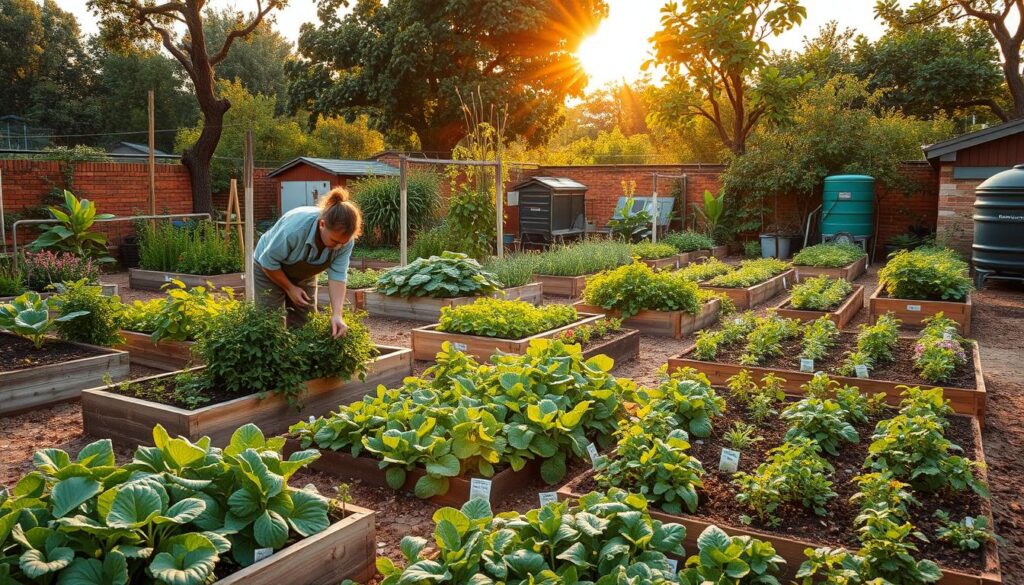
Seasonal routines for soil, water, and wildlife
Create simple, repeatable chores: check drip lines in spring, turn compost monthly, and renew mulch in late spring. These routines cut waste and keep systems humming.
Leave stems and seedheads over winter to shelter local wildlife. Open short No Mow windows to feed early pollinators and boost biodiversity.
“Small, steady care—soil first, water next, habitat always—makes the system resilient and low-maintenance.”
| Step | Action | Season |
|---|---|---|
| Audit | Map sun, wind, slopes, and soil | Any time (start now) |
| Soil building | Apply compost; add 2–3″ mulch | Late spring / fall |
| Water setup | Install drip lines; test emitters | Early spring |
| Wildlife support | Leave stems; No Mow windows | Late fall to spring |
| Tools | Sharpen and oil pruners, spades | Start of season and as needed |
- Monitor and adapt: watch soil moisture, plant vigor, and wildlife visits; tweak watering and plant choices.
- Celebrate progress: less watering, richer soil, and more beneficial visitors show the plan works.
- Maintain tools: sharp, clean tools cut effort and waste over time.
“Start small, measure results, and let practical practices compound into lasting gains.”
Small Spaces, Big Impact: Balconies, Courtyards, and Urban Lots
Even tiny outdoor corners can deliver food, habitat, and cooling when you build up and harvest a little rain.
Urban plots and narrow balconies can host rich pockets of edible and pollinator-friendly planting. Stack vertically and choose pots that hold more soil; both moves save trips and reduce frequent watering.
What fits small urban plots?
Think vertical with wall planters, trellises, and stacked containers to multiply growing space without expanding your footprint. Pick larger pots where you can; they buffer roots from heat and cut watering frequency.
- Harvest rainwater: add a compact diverter or small barrel on a shed or balcony to top up pots.
- Choose plants that tolerate heat and dry spells to support conserving water and lower care.
- Group containers by need and use peat-free, well-draining mixes to keep roots healthy and light to move.
- Try self-watering inserts or drip spikes for reliable moisture when you’re away.
“A few tall planters and a rain diverter turn a patio into a productive, wildlife-friendly space.”
Conclusion
Small, steady choices turn intention into lasting results. A clear routine and a few practical moves make sustainable gardening achievable for anyone.
Bring it together: compost, mulch, and select native plants to build soil and boost biodiversity. Add rain capture and efficient irrigation to save water and time.
Grow herbs and quick vegetables near the kitchen to cut carbon and enjoy fresher meals. Choose electric or hand tools to reduce noise and emissions while protecting soil life.
Track simple wins—healthier soil, more pollinators, and lower water use—and adapt each season. These small changes protect the environment and help the planet one patch at a time.
FAQ
What are the core principles behind a resilient garden that conserves resources?
The foundation is to work with nature: build healthy soil, conserve water, support biodiversity, and reduce waste. Use compost and mulches, choose climate-appropriate plants, layer habitats (trees, shrubs, perennials), and adopt low-impact tools and energy choices. These actions lower inputs, boost yields, and create habitat for pollinators like bees and butterflies.
How can I improve soil health on a modest budget?
Start by adding compost and organic amendments to increase structure and microbial life. Mulch to retain moisture and suppress weeds. Avoid peat-based mixes; choose peat-free potting mediums when needed. Save kitchen scraps for a simple bin or worm composter to turn waste into free, nutrient-rich soil food.
What are practical ways to cut outdoor water use without harming plants?
Capture rainwater with barrels or water butts, use drip irrigation or soaker hoses to target roots, and water in early morning or late evening to reduce evaporation. Improve soil with compost and mulch to hold moisture, and plant drought-tolerant or native species suited to your local climate.
Which plants support local wildlife most effectively?
Choose native trees, shrubs, and perennials that provide nectar, pollen, seeds, and shelter. Flowering natives attract bees, butterflies, and other pollinators; berry-producing shrubs feed birds. Provide layered habitat and leave small “messy” areas or dead stems through winter for insects and overwintering pollinators.
Can small patios or balconies have meaningful ecological impact?
Yes. Use containers, vertical gardens, and compact native plants to create nectar corridors. Install small rain-capture systems or direct downspouts to planter boxes. Even a single herb garden or pollinator-friendly window box helps local biodiversity and reduces food miles.
What composting methods work well for urban gardeners?
Tumbler bins speed composting and contain odors. Worm bins (vermicomposting) are ideal for apartments and produce rich castings for potted plants. For small yards, a simple covered heap or layered bin handles yard trimmings and kitchen scraps. Avoid meat and dairy to limit pests.
How do I choose plants that match my microclimate?
Observe sun, shade, wind, and soil moisture in each garden area. Match those conditions to plant hardiness and moisture needs. Consult local extension services or native-plant societies for regional lists. Start with drought-tolerant and low-maintenance species to reduce water and effort.
What are low-impact tool and energy choices for regular garden care?
Favor hand tools—pruners, spades, forks—and battery-electric mowers or trimmers over gas-powered equipment. Maintain tools well to extend life. Use mulches and groundcovers to reduce mowing and fuel use. These choices cut emissions and often save money long term.
How can I design hard surfaces to reduce runoff and support the local watershed?
Use permeable pavers, gravel, or porous concrete for paths and patios. Create rain gardens or bioswales to capture and filter stormwater. Grade beds to funnel water into planting zones or storage barrels, helping recharge soil and reduce strain on drains.
What simple steps reduce my garden’s carbon footprint?
Plant long-lived trees and shrubs to sequester carbon, build soil with organic matter, reduce synthetic fertilizer and pesticide use, and grow food to cut transport emissions. Composting, reusing materials, and choosing electric tools also lower greenhouse gas impacts.
How can companion planting and permaculture patterns help everyday gardeners?
Companion planting can suppress pests, improve pollination, and maximize space. Permaculture principles—stacking functions, using guilds, and designing for water and energy flow—create resilient systems that need fewer inputs and support biodiversity over time.
What are cost-saving strategies that also benefit the environment?
Propagate plants from cuttings, divide perennials, swap seeds or seedlings with neighbors, and use on-site materials for mulches and structures. Collect and reuse rainwater, compost everything possible, and choose low-maintenance plantings to lower ongoing costs.