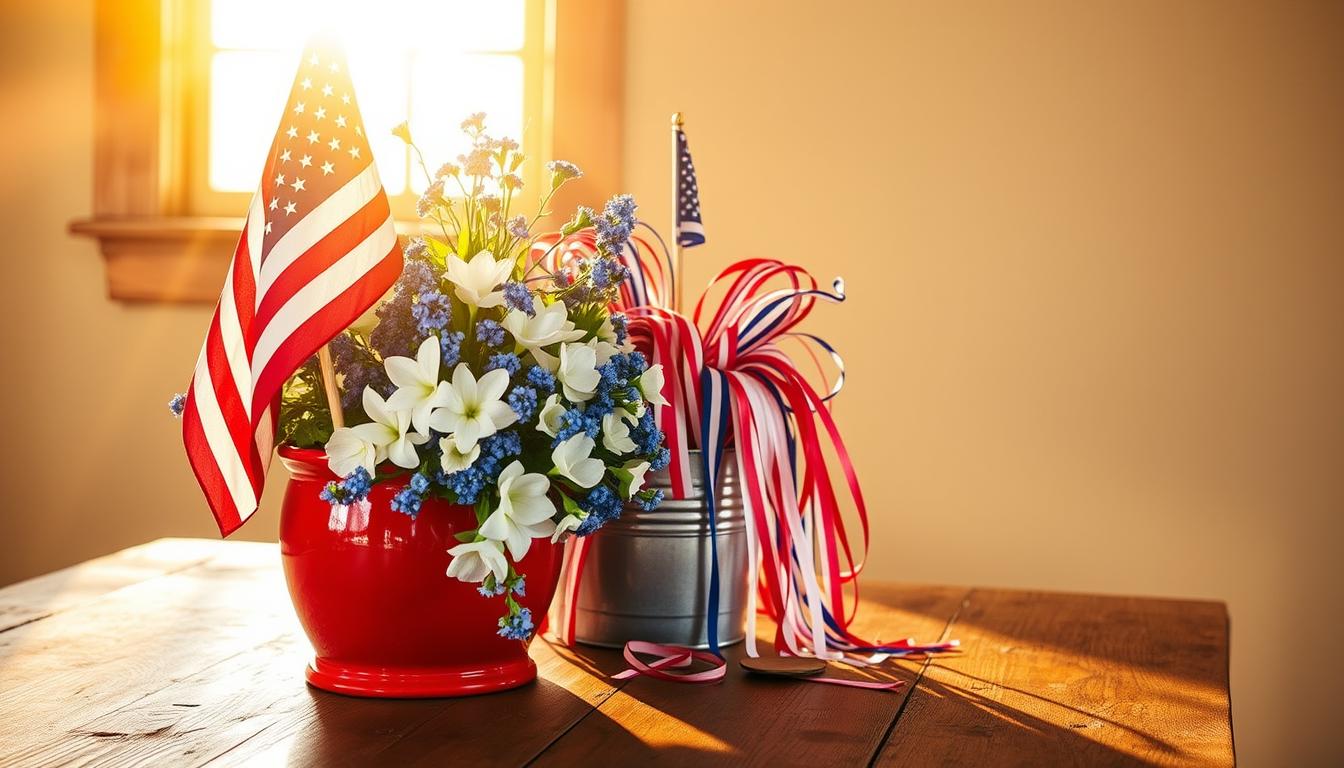
Can a single planter deliver a bold, festive statement for Independence Day without fuss? This piece shows you a simple path to a layered, vibrant display that shines on porches, steps, and patios.
Start with a blue pot and pair red calibrachoa with white petunias for instant “floral fireworks.” Add mini flags and bowls of red apples or tomatoes for extra pop. Use pre-planted mixes like verbena and geraniums to speed the process.
Hanging baskets and urns also work well. Try red salvia with white begonias and violet-blue ageratum, or red impatiens with white petunias and blue lobelia for overflowing color. Plant a week before the holiday so roots settle and blooms fill out.
Whether you pick ready mixes or assemble your own, this is an approachable gardening project that fits any skill level. For more layout options and quick inspiration, see patio planting ideas.
Key Takeaways
- Choose heat-tolerant flowers for lasting blooms through summer.
- Use a thriller-filler-spiller plan for strong visual layers.
- Pre-planted mixes save time and still look lush.
- Place containers near entries or patios for maximum impact.
- Plant a week ahead and follow simple watering and deadheading steps.
Patriotic Container Basics: Pots, Placement, and a Quick Supply List
Choose sturdy, well-draining pots and place them where you can water and admire them easily. This quick primer covers materials, soil, sun, and a simple shopping list so your summer display thrives with minimal fuss.
Best vessels and liners for patio use
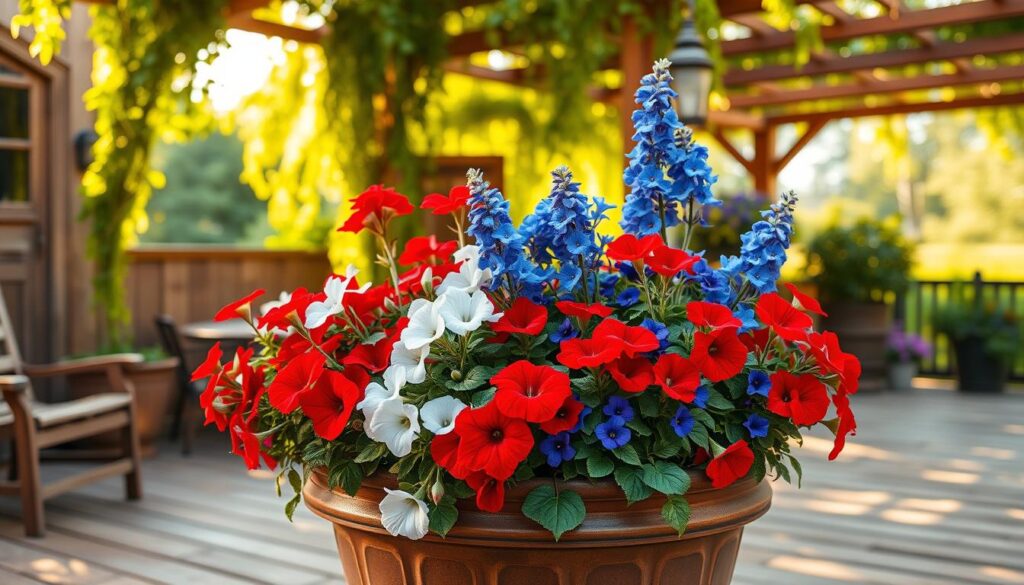
Glazed ceramic planters, resin urns, plastic barrels, hanging baskets, and blue flowerpots all work well. Pick materials that stay cool and resist cracking in heat.
Use breathable liners like coco coir or sphagnum moss in hanging baskets to keep moisture where roots need it while letting air circulate.
Soil, drainage, and sun exposure for thriving flowers
Fill pots with quality potting mix — not garden soil — to avoid compaction and improve drainage. Confirm a drainage hole and skip thick gravel layers; rely on the hole for water flow.
Match sun exposure to your plant list. Full-sun selections need six-plus hours; partial-shade picks prefer morning light and afternoon protection.
- Quick supply list: pot with drainage, potting mix, slow-release fertilizer, plants, mulch or stones, and a gentle-spray watering can.
- Right-size the pot: larger containers buffer heat and cut watering frequency.
- Save time: slide pre-planted mixes into decorative pots for an instant display with minimal root disturbance.
- Place containers near a water source, by entryways for maximum display, and away from roof runoff to avoid waterlogging.
Instant Impact Combos to Try on Your Patio or Porch
Try one proven combination and you’ll get instant curb appeal with layered shape and long-season blooms.
These mixes balance height, mid-level color, and trailing motion so your display reads clearly from the street.

Geraniums, petunias, and fan flower for a season-long display
Anchor with bright geraniums (Calliope Medium Dark Red) and tuck in blue-and-white petunias for punch.
Edge with scaevola (fan flower) to add airy petals that keep blooming without much deadheading.
Verbena with bacopa and lobelia for red, white, and blue blooms
Use clustered verbena for core color, dot the rim with white bacopa, and flood the edge with royal lobelia for steady blue flowers.
This soft, trailing mix fills pots beautifully and stays full all season.
Fireworks look: fountain grass, red and white petunias, and sweet potato vine
Add purple fountain grass for height and movement.
Surround it with bright red and white petunias and let dark sweet potato vine spill over the lip for dramatic contrast.
Single-plant statement: deep blue and red petunias with trailing variegated vinca
Mass alternating bands of deep violet-blue and red petunias for a bold banded effect.
Soften edges with variegated vinca to introduce pale green and white-margined foliage.
- Tip: Calibrachoa blends well with petunias and extends flower coverage in smaller pots.
- Scale: Choose simpler mixes for small planters and layered mixes for large containers or paired displays near an entry for Independence Day impact.
Step-by-Step: How to Plant a Red, White, and Blue Arrangement
Follow a simple thriller–filler–spiller plan to get bold color and instant curb appeal. Pick an eye-catching vertical plant first; it becomes the thriller that unifies the look.
Choose a thriller, filler, and spiller
Place a tall grass or upright geranium in the center or back to set height and movement. Add massing fillers like calibrachoa and petunias in red and white petunias to supply dense blooms.
Finish with spillers—scaevola, sweet potato vine, or bacopa—to soften edges and trail over the rim.
Potting, spacing, and watering for immediate color
Dry-fit plants on the soil surface to test spacing and the overall look. Move pieces until the color balance and symmetry feel right.
Use quality potting mix, backfill, and firm gently so root balls sit level with the soil surface. Water thoroughly until drainage runs clear to settle soil and reduce transplant shock.
- Group colors in swaths so the arrangement reads from a distance; repeat a color on opposite sides for balance.
- Tuck in slow-release fertilizer at planting and supplement with liquid feed during heavy bloom.
- For instant impact, slide a pre-planted verbena and geranium combo into a decorative pot and top with fresh mix.
how create red, white, blue container july with Sun or Shade in Mind
Pick species that fit the light on your patio. This keeps blooms steady through summer and cuts stress on plants.
Sun lovers deliver nonstop color; shade-friendly choices brighten cooler spots.
Full sun winners
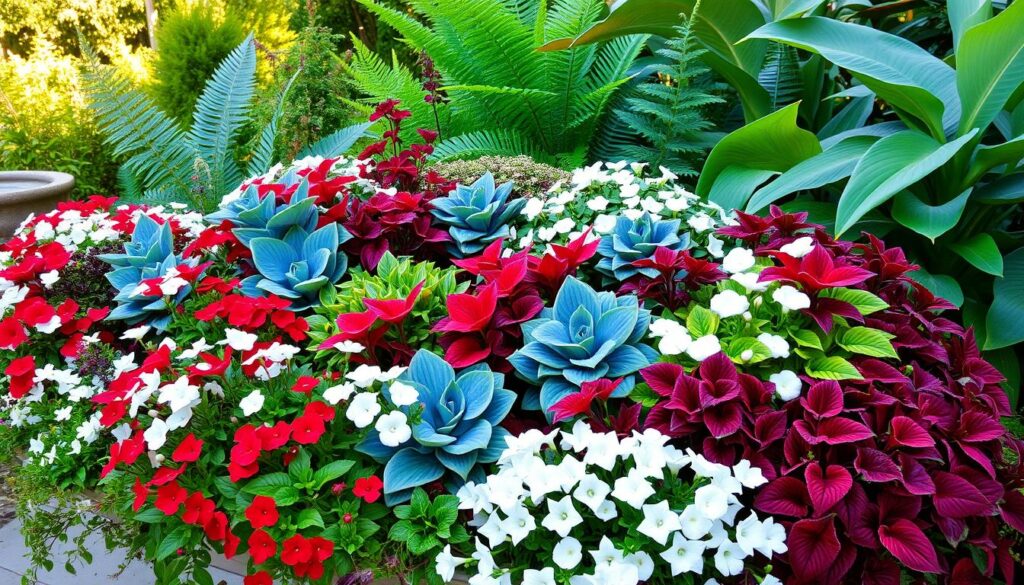
Petunias, scaevola, verbena, and heat-tolerant lobelia hold color in long bright days. Scaevola (fan flower) keeps blooming without much deadheading, which saves time on busy holiday weekends.
- Petunias give broad color and pair well with verbena for texture.
- Verbena forms dense clusters that last through high light and heat.
Partial shade options
Begonias, bacopa, and variegated vinca trail and mound in gentler light. Bacopa brings delicate white and faint blue tones, while Vinca major ‘Variegata’ offers pale green leaves edged in white.
“Match your mix to the exact spot—pots beside walls run hotter, so choose tougher plants there.”
- Blend exposures in one large container: place shade-tolerant plants on the cool side and sun-tolerant ones on the bright edge.
- Watch foliage for cues: scorched leaves mean too much sun; sparse flowering means move to brighter light.
- Water in the morning to prepare plants for heat and to protect leaves overnight.
Drought-Tolerant Patriotic Picks for Hot Summers
Opt for hardy combinations that stand firm in heat and reward you with steady blooms. These mixes keep their shape and color with less fuss, ideal for long summer days.
Pair heatproof species in lean, well-draining soil to save water and keep a crisp look.
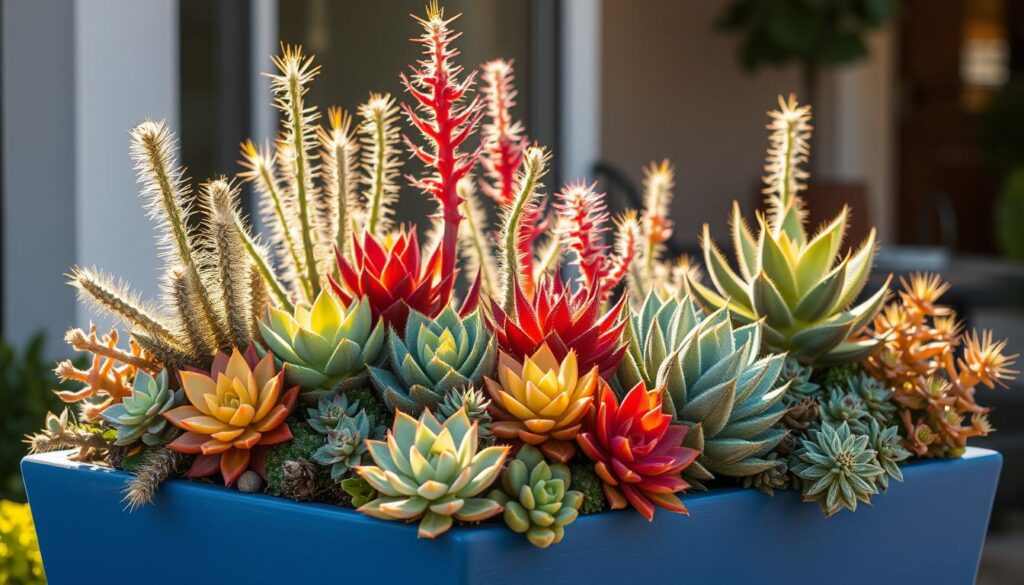
Begonias and verbena with licorice plant for rugged beauty
Use tall purple verbena (Verbena bonariensis) for airy height. Add showy red begonias for saturated color and waxy texture.
Work silver licorice plant at the rim for soft, trailing contrast. Weave in small white bacopa to introduce a cool white blue accent that brightens the edge.
- Water: Deeply, then let the top inch dry to encourage deep roots and steady blooms.
- Soil: Mix perlite or pine bark fines into potting mix for quick drainage.
- Feeding: Add slow-release fertilizer and avoid heavy feeds during extreme heat.
| Plant | Role | Heat/Drought Notes |
|---|---|---|
| Verbena (tall) | Thriller — vertical motion | Strong heat tolerance; pinching refreshes blooms |
| Wax begonia | Filler — bold color | Handles sun with lean soil; keeps form and color |
| Licorice plant | Spiller — silver contrast | Reflects light; reduces heat stress on roots |
| Bacopa (white) | Accent — trailing small flowers | Adds cool contrast and softens the overall look |
“Watch for early or late frost in shoulder seasons and move pots indoors overnight if needed.”
Finish: Topsoil with light decorative stones to cut evaporation and choose lighter pots to keep roots cooler during peak summer.
Perennial and Annual Pairings for July Fourth and Beyond
Anchor one or two reliable perennials, then weave in annuals for color and movement. This keeps your display valuable year after year while letting you refresh bright accents for Independence Day.
Anchor with Shasta daisies for tall, white flower spikes and deep green foliage. Add clustered geraniums for bold color and deep purple petunias to fill and spill. Tuck silver dusty miller near the edges to cool the palette and lift texture.
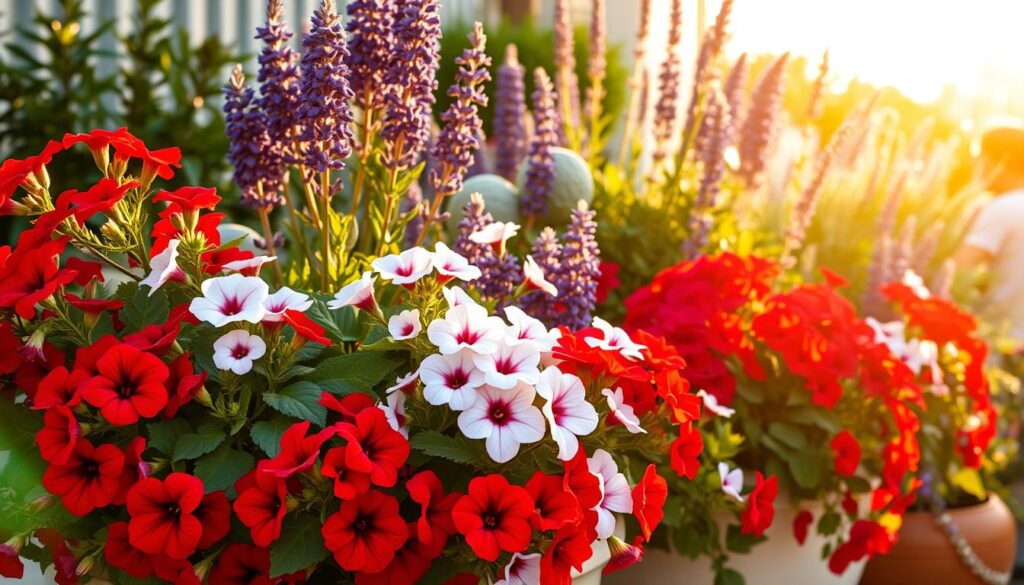
Delphinium and mixed annuals in classic vessels
Stage delphinium in ceramic planters or vintage milk cans for nostalgic charm and towering blue flower spikes. Fill gaps with calibrachoa and lobelia to add small blooms and steady motion.
“Rotate annual varieties after peak heat to keep beds and pots looking fresh into fall.”
- Tip: Use larger pots for perennial roots and swap annuals seasonally.
- Balance: Place taller plants center or back, then layer mounds and trailers.
| Plant | Role | Best vessel | Notes |
|---|---|---|---|
| Shasta Daisy | Backbone | Deep pots | Tall white flowers; anchors beds and gardens |
| Geraniums | Bold filler | Medium pots | Vibrant clusters; pairs well with petunias |
| Delphinium | Thriller | Ceramic planters | Blue spikes that read well on Independence Day |
| Calibrachoa / Lobelia | Trailers | Hanging or rim pots | Adds small flowers and movement; ties white blue flowers together |
Color and Theme Enhancers: Pots, Flags, and Tabletop Touches
Small decorative details lift the whole display, tying pots to patio textiles and table settings. Choose a few repeating accents and your color story reads clearly from the curb to the table.
Start with a glazed blue planter or a freshly painted vessel in soft white blue shades to anchor the palette. The pot itself becomes part of the theme and frames your white petunias and bright red highlights with confidence.
Glazed planters and refreshed vessels
Paint older pots in two coordinating tones to unify mismatched containers. Choose light shades to keep roots cool and make flowers stand out.
Flags, bowls, and small tabletop accents
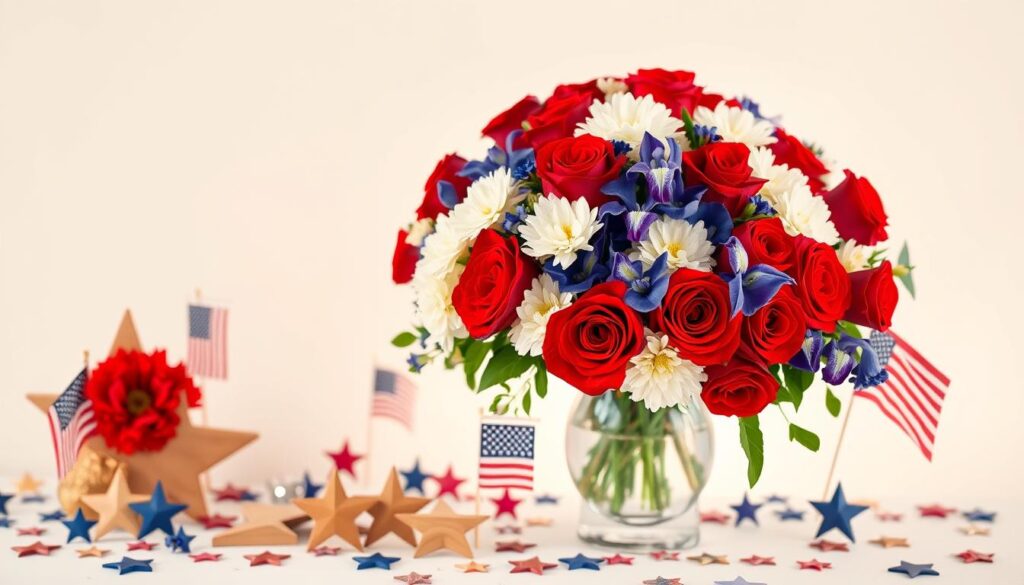
Add mini flags on slim stakes so blooms stay visible. Place a blue-and-white bowl on the patio table filled with ripe tomatoes or red apples to mirror the planter’s tones.
- Keep it consistent: repeat a white blue accent and a bright red note across cushions and linens.
- Subtle option: tuck a band of blue flowers or a ring of petunias at the rim and let accessories carry the stronger color cue.
- Lightweight choices: use slim stakes, small pennants, and shallow bowls on balconies to reduce weight while keeping a polished look.
Care Tips and Timeline: From Independence Day to Labor Day
Keep a simple weekly routine—deep watering, light grooming, smart feeding, and shade during heat—to preserve bright color through the season. Short checks twice a week prevent most problems and extend peak blooms into late summer.
A steady schedule saves time and keeps plants resilient. Water deeply when the top inch of soil dries, ideally in the morning so foliage faces afternoon heat well-hydrated.
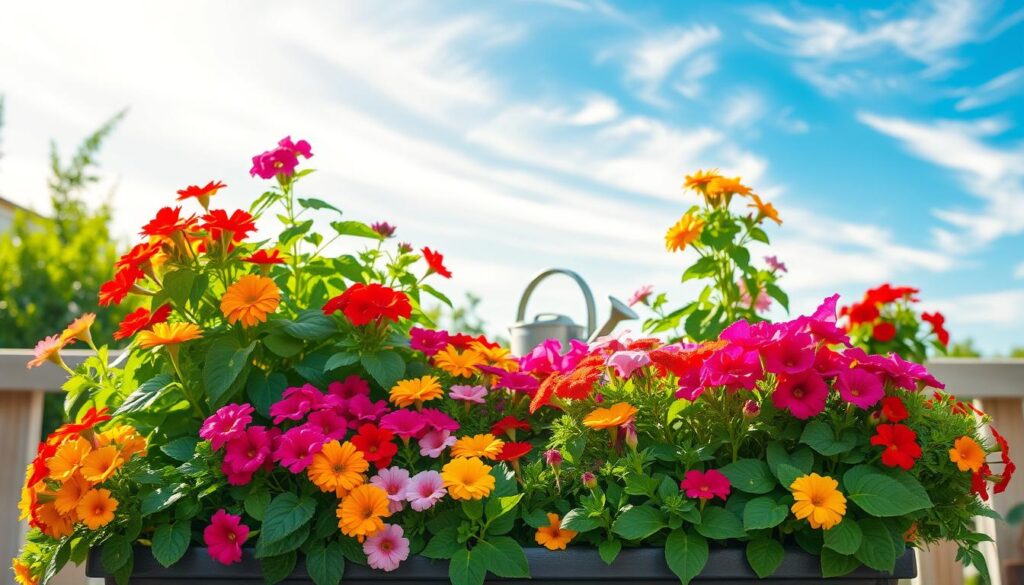
Watering, deadheading, and heat protection to keep blooms going
Water: Deep soak, then let soil firm. Morning watering reduces stress during hot afternoons.
Groom: Deadhead where needed—many petunias self-clean; scaevola blooms without trimming. Trim verbena to encourage a fuller surge of flowers.
Shield: Move pots to morning sun and afternoon shade during heat waves. Grouping pots creates a cooler microclimate.
Refreshing combinations and swapping plants as the season progresses
- Feed: Add slow-release fertilizer at planting, then dilute liquid feed every 2–3 weeks during peak bloom.
- Prune: Shear leggy petunias by one-third mid-season to spark new color in about two weeks.
- Refresh: Replace tired annuals or tuck in late-season accents rather than replant everything.
“After storms, drain saucers and re-fluff soil to restore airflow and avoid root stress.”
Watch the weather: be ready to cover pots if an early frost threatens. Note which white blue and heat-tolerant performers—like lobelia ‘Techno Heat Electric Blue’ and petunia ‘Sure Shot White’—did best to guide next season’s planting and overall gardening plans.
Conclusion
Finish with a clear plan: pick one strong combination, place it for the light you have, and follow a simple care routine. This approach keeps your Fourth July and Independence Day display bright and lasting.
With the right pot, plant choices, and a short weekly check, your colors will hold through heat and traffic.
Favor reliable annuals and a few perennials—petunias, verbena, and geraniums give steady blooms while daisies or delphinium add height and drama.
Repeat small accessories and matching shades to personalize the palette. Start with one combination, then expand across containers as you learn what thrives in your garden.
Celebrate small wins: trim, feed, swap tired varieties, and note ideas for next season. Enjoy the compliments your bright, balanced projects will bring.