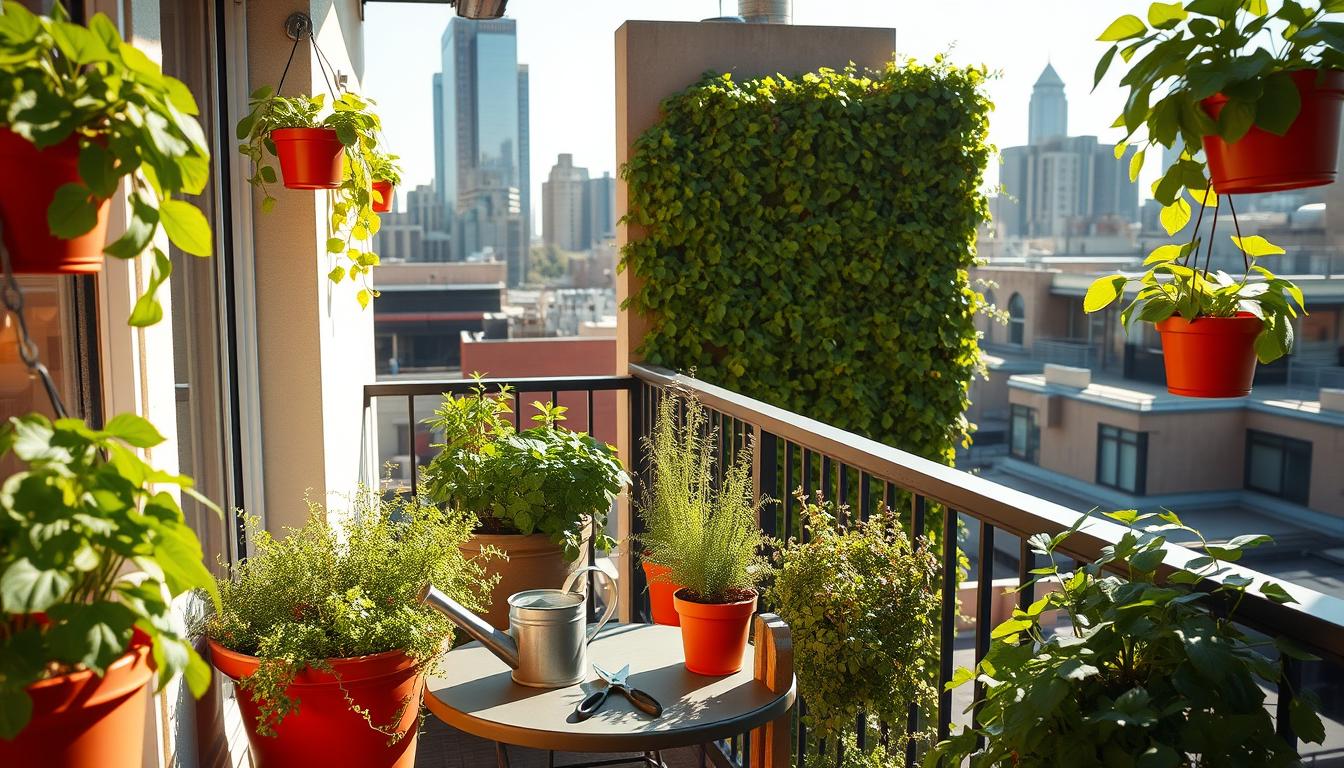
Can three simple shifts really rescue a cramped balcony or tiny yard? That question changed my approach and can change yours, too.
Design for the exact site, space plants with purpose, and feed the soil on a steady cadence. These fixes turn frustration into flow and make a compact garden productive this year.
Think vertical structures like trellises and bamboo teepees, triangle spacing to mix root depths, and a 3–4 week compost routine instead of heavy fertilizer. Raised beds and square-foot layouts reduce weeds and runoff, while grow bags, railing planters, and hanging baskets let renters grow vegetables with ease.
Expect practical examples—nets for cucumbers, cages for tomatoes, and slings for heavy fruit—that keep tall crops from shading others. By the end of this guide, you’ll have an achievable way to design, plant, and feed a thriving small space garden in your yard or balcony.
Key Takeaways
- Plan for your exact site and use vertical space to grow up instead of out.
- Space plants by pairing root depths and use triangle layouts for impact.
- Feed gently with compost every 3–4 weeks to avoid nutrient swings.
- Favor raised beds, square-foot methods, and renter-friendly containers.
- Support heavy fruit with slings and keep tall crops on the north side.
- For more herb and layout ideas, see this herb garden design guide.
From Frustration to Lush: Why small space doesn’t have to limit your garden
Even tiny plots can produce a lot when crops match light and microclimates. Layering height and choosing the right methods turns limited area into steady yield.
Work with the site, not against it. Start by noting where sun and warmth collect through the day. Put fruiting plants in the sunniest yard patches and move greens and roots to partial shade.
Raised beds and square-foot setups concentrate effort and reduce chores. Succession planting keeps food coming through much of the year in many U.S. climates.
“Match what you plant to where light falls, and a modest area will reward you with steady harvests.”
- Audit light — map sunny, shady, and warm pockets over a week.
- Think vertical — stack crops so different plants share the same footprint across the year.
- Reduce upkeep — use raised systems to cut weeding and simplify watering.
| Site | Crop example | Best placement | Benefit |
|---|---|---|---|
| South-facing wall | Tomatoes, peppers | Full sun against wall | Warmer, longer season |
| Shady nook | Lettuces, spinach | Partial shade | Less bolting, steady harvests |
| Balcony rail | Herbs, salad greens | Planters and hanging pots | High yield per foot |
| Warm patio corner | Peppers, dwarf beans | Protected from wind | Better fruit set |
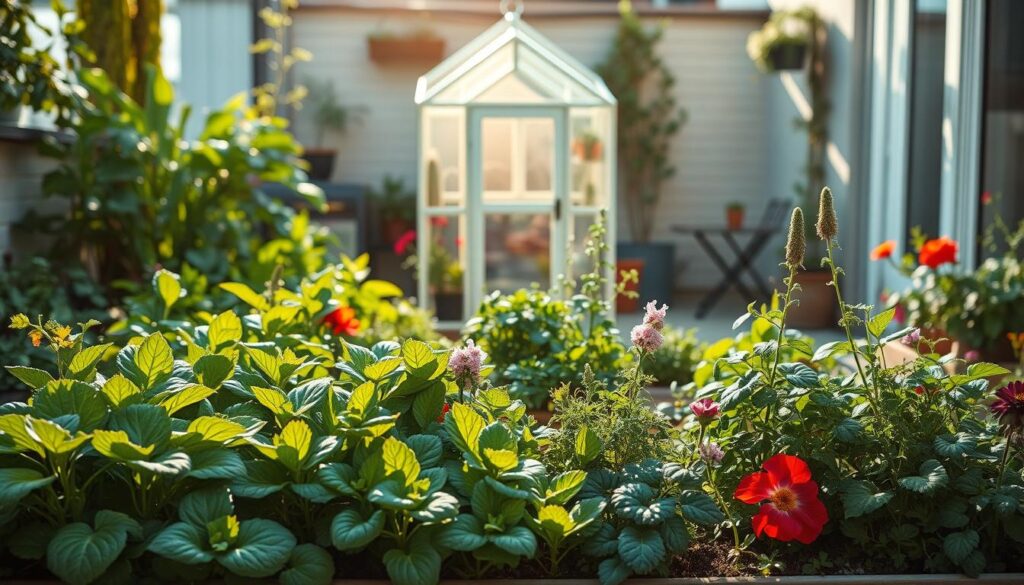
Expect a bit of trial and error. Note what thrives, swap placements next season, and make room for quick crops between slower ones. These things add up: a few well-placed crops repeated across the year can supply surprising amounts of fresh food.
Fix One: Design for your space—grow up, not out
Designing upward frees ground room and increases yields in tight plots. Start with a quick sun audit and place supports where light is strongest.
Map sun and microclimates first. Walk the yard at morning, noon, and late afternoon for several days. Note heat pockets and shaded corners so you know where trellises and tall crops will thrive this summer.
Install support before you plant
Set bamboo teepees, nylon nets, or a slim trellis on a railing before seedlings go in. A wire trellis on a fence or a mesh run along a wall guides vines early and reduces later pruning.
Layer heights for beauty and yield
Mix climbers above mid-height tomatoes and low herbs or flowers at the edge. This stacking boosts light use and invites pollinators without crowding.
- Vines that earn their keep: peas, pole beans, cucumbers, and grapes.
- Place tallest crops on the north side so they do not shade shorter plants.
- Keep paths narrow but reachable to avoid compacting beds during harvest.
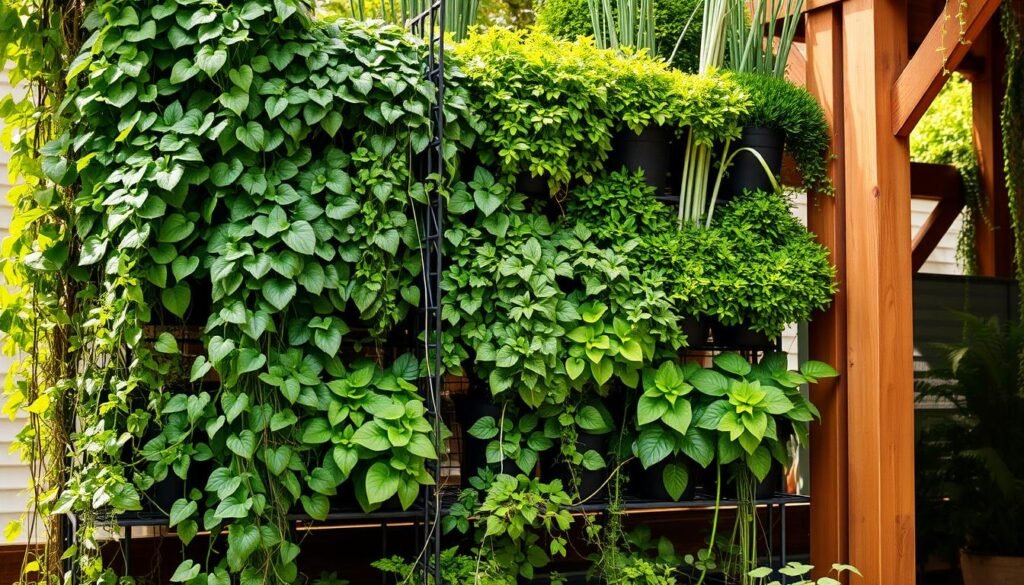
Design is a quiet yield booster. Plan where your structure sits, and the garden will return more food with less fuss.
Fix Two: Space plants strategically—interplant, companion, and stagger
Use shapes, timing, and root pairing to make every square foot work harder. Intentional gaps and mixed timings let quick crops and longer-season vegetables share beds without crowding.
Leave room below as well as above. Keep at least three-quarters of the recommended spacing so roots can expand and plants do not stall. Triangle spacing uses the same footprint more efficiently than straight rows.
Triangle spacing and root depth
Pair shallow and deep roots to reduce competition. For example, match bush beans with beets so each draws from a different depth and nutrient band.
Interplant fast crops and stagger sowing
Sow quick seeds like lettuce or radishes around tomato transplants and harvest the fast crop before the larger plant needs room.
Companion choices that work
- Space with intent: use triangle spacing and keep at least 3/4 of labeled distances.
- Companion pairs: lettuce under tomatoes; bush beans beside beets.
- Stagger: tuck new seeds in as you harvest to keep continuous yield.
| Pairing | Root depth | Suggested spacing | Benefit |
|---|---|---|---|
| Lettuce + Tomato | Shallow + medium | Triangle: 3/4 labeled distance | Early harvest, soil shade |
| Bush Beans + Beets | Shallow + deep | 12–18″ staggered | Low root competition, steady moisture |
| Radish + Pepper | Very shallow + medium | 8–12″ triangle | Fast turnover, fills gaps |

These gardening tips help a vegetable garden host more crops without chaos. Choose compact variety types, map planting dates, and the garden will feel larger and more productive.
Fix Three: Feed for optimal growth—soil, nutrients, and gentle intervals
Nurture the soil food web and your garden will repay you with steady, resilient growth. Keep feeds gentle and regular to avoid pH swings and nutrient burn.
Build living soil first, then add targeted inputs. Add compost regularly and skip heavy, frequent fertilizers that spike nutrients. This protects soil structure and keeps microbes active for healthy plant support.

Build living soil with compost
Work compost into beds or top-dress containers every few weeks. Healthy soil holds moisture and feeds microbes so roots can access steady nutrients without shocks.
Eggshells for calcium
Wash used eggshells, air dry, then crush to pieces under 1/2 inch. Sprinkle or work them near the planting hole so the plant root zone benefits over time.
Simple 3–4 week feeding cadence
- Feed every 3–4 weeks: gentle compost or a light organic tonic keeps nutrients available over time and reduces stress.
- Water consistently: steady moisture helps microbes move nutrients into roots.
- Watch foliage: adjust by what leaves show instead of adding more products by default.
Keep things simple. Compost first, then fix gaps with targeted amendments. Over time you will see steadier growth and more reliable harvests in your gardening efforts.
Raised beds and square-foot methods that multiply yield in a small space
Raised beds concentrate effort into compact, higher-yield planting areas. One-square grids make planning and rotation simple so every inch pulls its weight.
Raised beds cut weeds, stop compaction, and keep water where roots can use it. Elevated soil warms sooner in spring and drains better than the surrounding ground.
Why raised beds reduce weeds, compaction, and water runoff
When you lift planting areas, you control what goes in and who walks there. That keeps unwanted seeds out and prevents heavy foot traffic from crushing soil structure.
Square-foot gardening to maximize every foot of soil
Divide a bed into one square sections and match plant spacing to each square. This system helps plan succession and keeps a tidy vegetable garden that fits tight yards.
Season extension with row covers, cloches, and low tunnels
Use row covers, cloches, or low tunnels to warm the air and extend harvests into cooler months. These simple tools push production and protect tender crops from frost.
- Quick example: a 10×10 layout with narrow paths yields four beds, each gridded into one square units for rotation.
- Keep paths narrow to reach the center without stepping on the bed and compacting the soil.
- Raised systems standardize mixes and drainage so year-to-year results are consistent.
| Feature | Benefit | Why it matters |
|---|---|---|
| Raised beds | Less weeds, better drainage | More food per area and easier watering |
| One square grid | Efficient spacing | Maximizes soil and light for each plant |
| Row covers/cloches | Season extension | Longer harvests and protected crops |
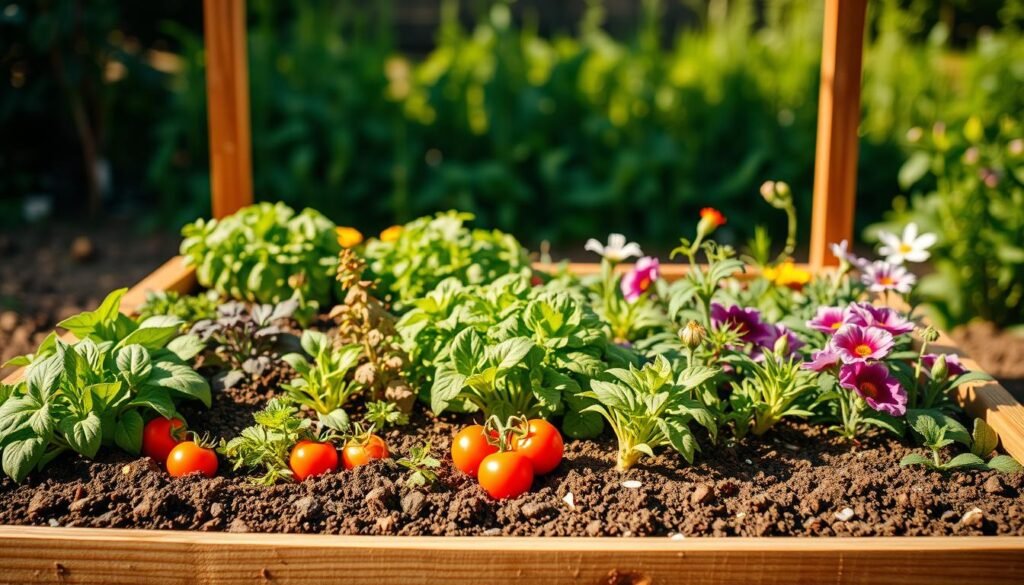
i almost gave up on small-space gardeninguntil I embraced containers and renter-friendly setups
Containers unlock flexible production in tight areas and let you grow where light is best. Portable beds and pots put control back in your hands so plants get the depth and watering they need.
Start with choices that suit renters and limited yards. Metal raised beds that break down, 5–15+ gallon grow bags, railing planters, and hanging baskets all move with you and chase sun across a balcony.
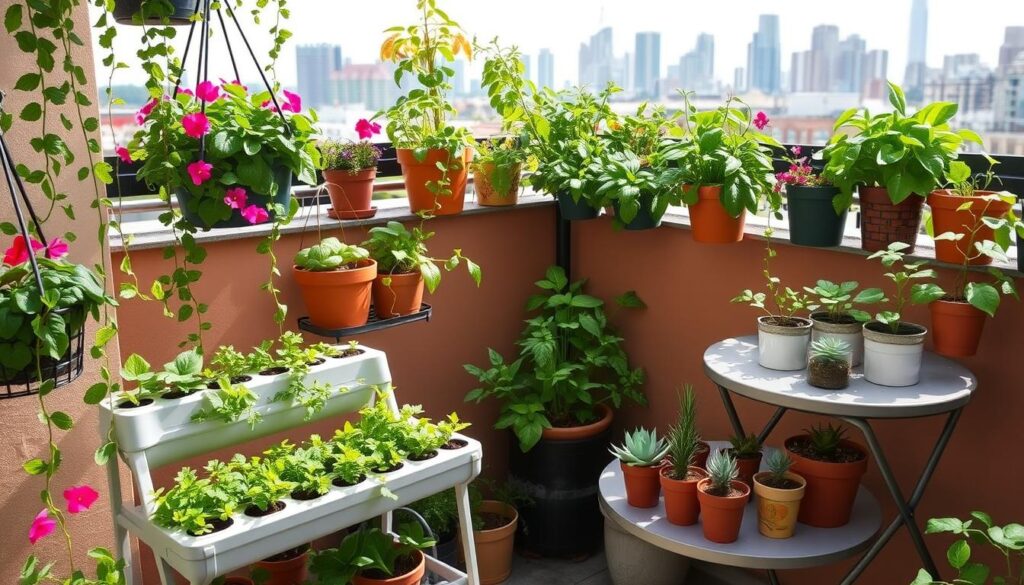
Grow bags, railing planters, and hanging baskets for herbs and greens
Use grow bags for tomatoes or portable peppers and hang baskets for herbs and salad greens. Railing planters capture edge sun without taking floor space. Lift a bag to check moisture — when it feels light, it is time to water.
Choose varieties suited to shallow or compact containers
Match variety to container depth. Parisian carrots and Cherry Belle radishes do well in shallow pots, while long carrots or Daikon need deeper soil. Blend coir into mixes, cap with mulch, and keep drainage holes open to avoid drowning roots.
- Quick tips: move containers seasonally, match pot size to plant needs, and expect a little bit of repositioning as the sun angle changes.
- These simple steps help a little bit more than luck to turn a tiny area into a productive vegetable garden that will grow food year after year.
Water wisely in tight quarters
Containers lose moisture fast, so a simple plan keeps plants steady and productive. Use coir, mulch caps, and clear drainage to balance moisture and avoid stress.
Containers and raised beds evaporate more than the ground, so adjust your routine. Start with a soilless or lightweight mix that holds air and add coir to retain moisture without compaction.
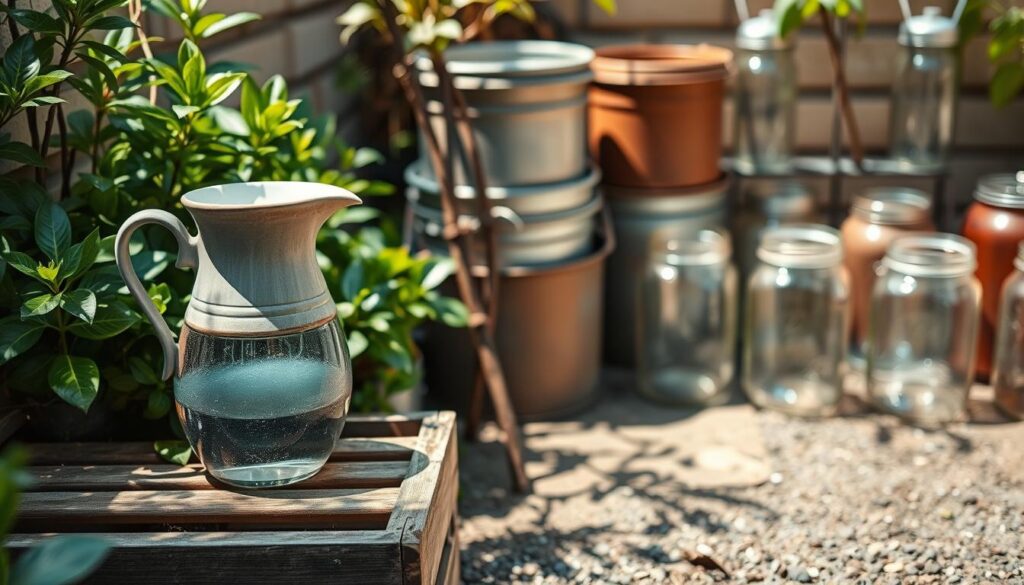
Soilless mixes, coir, mulch caps, and drainage
Keep roots damp but not soggy. Top with a mulch cap to cut surface loss and always make drainage holes in rigid pots. That is the safest way to prevent anaerobic conditions and root rot.
- Water is your biggest lever in tight quarters; coir-rich mixes and mulch caps keep moisture steady without drowning roots.
- Aim for deep, infrequent watering so the full profile wets and nutrients move to roots.
- Group pots by need, check with a finger or meter, and in hot spots add a little bit more mulch or shade cloth.
“Early day watering reduces loss to midday heat and lowers disease risk across the yard.”
Succession, timing, and year-round momentum in a small space
Keep seedlings ready so harvested squares refill fast and your garden never rests. Plan by sun and swap quick crops into gaps to maintain steady yields through the year.
Keep a steady relay of seedlings so each harvested square is replaced within days, not weeks. Start trays on a schedule and move transplants as soon as space opens.
Keep seedlings coming to backfill every harvested square
Start seeds on a beat that matches days to maturity. That way a lost lettuce or cleared bed becomes a new planting, not wasted space.
Quick wins: radishes, salad greens, and peas to bridge seasons
Fast crops like radishes, salad greens, and early peas fill gaps while longer crops grow. These quick wins keep food coming and build momentum.
Plan by sun exposure: fruiting crops in full sun, roots/greens where light is lower
Place fruiting crops where sun is strongest and tuck roots and greens into lower-light spots. Water new transplants consistently for the first week so roots establish and stall-outs stay rare.
- Rotate families—leafy, fruiting, root, legume—to balance nutrients and pests.
- Keep notes on maturity days to layer sowings with confidence.
- When heat spikes, switch to heat-tolerant greens or pause sowing briefly, then restart as things cool.
Vertical harvests that save space while boosting production
Put structure where sunlight is best and your garden will produce more per foot. Vertical systems free ground area and make picking easier while improving air flow.
Guide vines up, not across, to protect soil and increase yield.
Simple supports and where to place them
Grow cucumbers up nylon netting so fruit hangs straighter and stays cleaner. Keep tomatoes in cages or on trellises for earlier ripening and higher production. Peas and pole beans climb tripods or a sturdy fence; tie new growth early so the support carries the weight the right way.
Protect heavy fruit and preserve light
For melons or winter squash, add fabric slings to support heavy fruit and prevent tearing from the vine. Place tall structure along the north edge to avoid shading shorter plants and to keep every bed productive.
- Train cucumbers onto netting so fruit dangles straight and harvest is fast.
- Use cages for tomatoes to reduce disease and speed ripening.
- Tie vines early on tripods or fence posts so growth follows the structure.
- Check ties after storms; loosen gently as stems thicken.
Vertical methods work in raised beds as well as in-ground. Try these vertical ideas for a fresh way to grow more food from the same space: vertical ideas.
Conclusion
Three focused shifts—build upward for light, pair roots and timing, and feed soil on a steady 3–4 week cadence—deliver the biggest returns in a small space garden.
Design for vertical growth and microclimates, use raised beds or containers to control mixes and drainage, and keep water and nutrients steady so roots stay healthy.
Start simple and repeat what works: choose compact varieties, note what thrives, and rotate plantings to protect soil and cut pests.
With trellises, cages, and good compost rhythm, a modest balcony or yard will produce real food. Begin, observe, and adjust each season to grow food more confidently through smart space gardening and steady care.