
Can one overlooked step turn a promising seedbed into a year of patchy grass and wasted effort?
Many homeowners jump in with good intentions but miss simple timing and prep rules. Seed success depends on matching seed timing to your grass’s active growth window. For cool-season grass, early fall is ideal; warm-season lawns do best in late spring to early summer.
In this short guide, you’ll learn how poor soil prep, wrong tools, and incorrect watering often spoil results before sprouts appear. We explain clear fixes for these problems so your lawn care feels smart, not stressful.
Expect straightforward steps on timing, seed-to-soil contact, watering rhythm, and the right first mow height. Follow these and you save time, money, and grow fuller, greener turf faster.
Key Takeaways
- Time overseeding to your grass growth cycle for best establishment.
- Prep soil with mowing, dethatching, aeration, and topdressing for strong seed contact.
- Use light daily watering at first, then taper to promote deep roots.
- Choose equipment suited to yard size to avoid wasted passes and uneven results.
- Delay herbicides and wait to mow until new grass reaches about 3–4 inches.
Why Overseeding Fails: Understanding the Costly Pitfalls and What To Do Instead
Identify the real causes so your labor and seed pay off. Fix timing, soil, and aftercare and you’ll see better results with less wasted time.

Start with the season and soil — both must suit your grass type and local climate. Seeding cool-season turf works best in early fall (early spring only as a backup). Warm-season grass should be seeded in late spring to early summer.
Compacted soil blocks air and moisture. Core aeration opens paths for roots and can create 20–40 holes per square foot when done right. Without this, grass seed often sits on a sealed surface and dries out.
- Match season to grass growth — this alone avoids the most common mistakes and saves time.
- Keep the top 1–1.5 inches moist for 2–3 weeks; too much water can wash seed away.
- Delay herbicides and high-nitrogen fertilizers until new shoots have been mowed several times.
Use the right spreader and seed type for sun, shade, and traffic. For step-by-step aeration and seeding tips, see aeration and seeding tips.
5 common overseeding mistakes that are wasting results before seeds even sprout
Tiny seeds need exact conditions; get timing and soil right or expect gaps. Below are the main pitfalls that stop growth before sprouts appear, with clear fixes you can apply this season.
Wrong timing for your grass type and climate
Plant during your grass’s active window. Cool-season grass does best in early fall (early spring only if missed). Warm-season lawns prefer late spring to early summer. Seed outside these windows faces heat, drought, or cold right when it needs steady growth.
Poor seed-to-soil contact and compacted soil
Thatch and sealed soil leave seed sitting on top, where it dries. Core aeration and light dethatching open soil and keep a seed close to soil contact. A thin 1/4-inch topdress helps hold moisture and improve contact.

Choosing the wrong seed or seeding rate
Wrong type or an improper seeding rate causes weak seedlings or bare patches. Match grass seed to your region and apply recommended seeding rates per 1,000 sq ft for even coverage.
Improper watering and fertilizing practices
Keep the top inch moist but avoid puddles that move seeds. Start with light, frequent watering, then taper. Skip high-nitrogen fertilizers and herbicides until new grass has been mowed several times.
Mowing and foot traffic too soon on newly seeded areas
Wait until new shoots reach about 3–4 inches before the first mow. Limit foot traffic to avoid compaction and seed displacement; ruts and early mowing crush progress.
| Issue | Symptom | Quick Fix | Best Timing |
|---|---|---|---|
| Wrong timing | Poor germination | Seed in active growth window | Fall for cool-season; late spring for warm-season |
| Poor soil contact | Seeds on surface, dry out | Aerate, dethatch, light topdress | Before seeding |
| Wrong seed/rate | Thin turf or competition | Match seed to region; follow label rate | During seeding |
| Water/fertilizer errors | Washed or burned seedlings | Gentle watering; starter fertilizer only | After germination phase |
Timing is everything: best time to overseed cool-season grasses vs. warm-season grasses
Pick the right window and you cut failures, save seed, and speed recovery. Alignment with active growth gives new plants the warmth and moisture they need to root deeply.
Timing your seed drop to the lawn’s growth cycle makes the difference between quick coverage and months of patchy spots.
Cool-season lawns: target early fall first, early spring second
Early fall gives cooler days and more rain. Soil stays warm long enough for roots to form. If you miss fall, try early spring, but expect more weed pressure and a tighter window.
Warm-season lawns: when should you seed?
For warm-season grasses, aim for late spring to early summer when growth is vigorous. Warmer soils speed germination and let young grass compete well for light and nutrients.
Why summer heat and late fall often fail
Peak summer dries seedbeds fast and stresses tiny plants. Late fall risks frost before roots deepen, leaving seedlings prone to heaving. Check local climate and a 10–14 day forecast, then plan aeration, dethatching, and seeding during your true growth window.
- Quick tip: Prioritize the prime window for your region rather than forcing a poor season.
Soil prep mistakes to avoid: seed-to-soil contact, dethatching, and aeration
Good prep makes germination easy and reduces extra work later. Softening the soil and clearing barriers helps seed reach moisture and start roots quickly.
Start by wetting the area a day or two before you aerate to avoid digging into rock-hard dirt.
Why and when to aerate
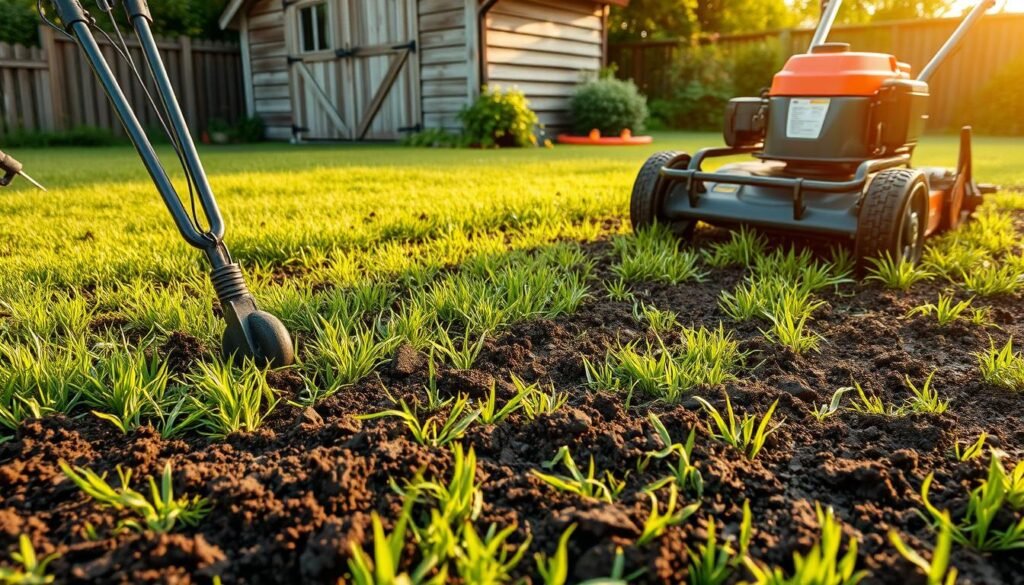
Core aeration opens channels so oxygen, water, and nutrients reach roots. Professionals aim for even holes—about 20–40 cores per square feet in tough spots. If your yard feels hard, pre-wet the soil a day or two to help tines pull clean cores instead of tearing.
Prep steps for better soil contact
Mow low to about 1 inch before dethatching so seed can touch the soil. Dethatch to remove the spongy mat that keeps seed perched on top. Rake and apply a light 1/4-inch topdressing to hold moisture and improve soil contact.
| Task | Why it matters | Quick tip |
|---|---|---|
| Aerate lawn | Relieves compacted soil and boosts air flow | Pre-water 1–2 days; target 20–40 cores per square feet |
| Dethatch & mow low | Removes barriers to seed-to-soil contact | Mow short, then dethatch before seeding |
| Topdress | Holds moisture and improves seed contact | Use a thin 1/4-inch layer after raking |
Mark heads and lines before you begin to protect sprinklers and cables. Focus extra passes on high-traffic paths so new grass and roots can establish without extra compaction. For practical tips on machine use and safety, see avoid errors when aerating.
Seed selection and seeding rate: match grass to climate and apply the right amount
Choosing the right seed and applying the correct rate ensures even establishment and fewer redo jobs. Match the seed to your region, light, and use pattern for uniform color and strength.
Choosing seed that suits your yard’s sun, shade, and stress level sets success in motion.
Which grasses fit your region and light?
Pick cool-season or warm-season grass based on your climate. Stay within the same family as existing turf to avoid a patchwork look.
Use shade-tolerant blends near trees and durable mixes for high-traffic zones.
How much seed per 1,000 square feet?
Follow the bag rate for seeding per 1,000 square feet. Too much seed creates crowding and weak seedlings.
Keep some extra for touch-ups 2–3 weeks after the first pass.
Which spreader should you use?
Choose a handheld for small fixes (~1,500 sq ft), a drop spreader for precision under 5,000 sq ft, and a broadcast spreader for large, open lawns. Overlap passes slightly and calibrate the spreader to the label rate.
| Choice | Best use | Tip |
|---|---|---|
| Handheld | Small patches, tight areas | Good for quick touch-ups |
| Drop spreader | Lawns under 5,000 square feet | Precise, less drift near beds |
| Broadcast spreader | Large, open lawns | Overlap passes; calibrate output |
Read seed tags for species mix and germination. For professional installation options, see grass seed installation.
Watering, fertilizer, and weed control: avoid products and schedules that harm new grass
Keep moisture steady but light and delay strong inputs until seedlings can handle them. Cautious feeding and holding off herbicides protect tender shoots and encourage deep root growth.
A steady, light moisture plan and cautious feeding make the biggest difference for young turf.
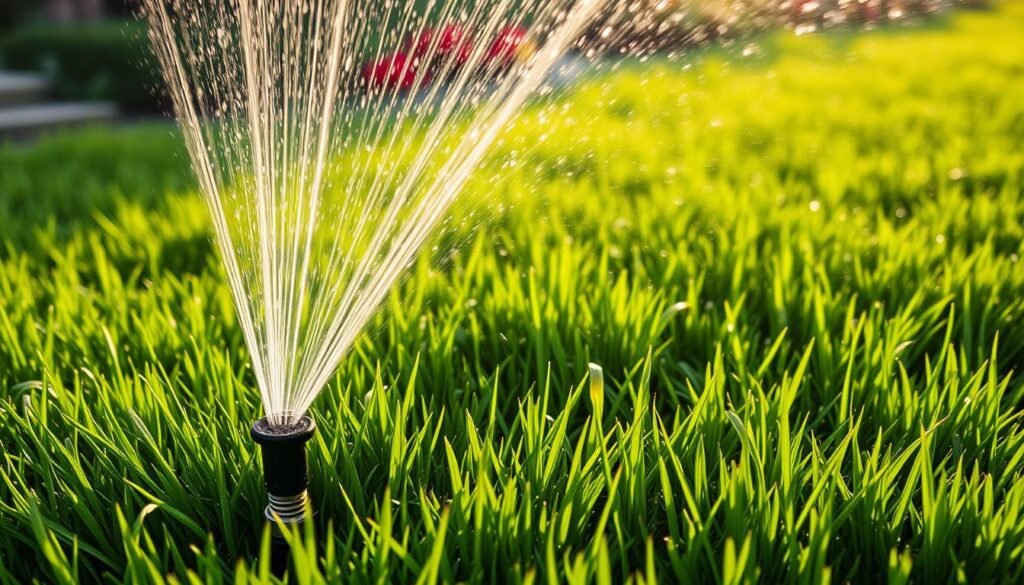
Keep the top 1–1.5 inches of soil evenly moist for 2–3 weeks after you drop grass seed. Short, frequent sets—often 2–4 times daily for 5–10 minutes—work best until sprouts appear.
Watch for puddles or runoff. If water moves, shorten each set and add another. Overwatering can float seeds, while underwatering stops growth.
How should I schedule watering for new grass?
Start with light, frequent watering so the surface never dries. After germination, water less often but deeper so roots follow moisture down and the lawn toughens up.
When is fertilizer safe after seeding?
Avoid established-lawn fertilizers at seeding—they can burn tender tissue. If you choose a starter fertilizer, apply it sparingly at label rates. Otherwise, wait 6–8 weeks until the new grass has been mowed a few times.
When can I start using weed control?
Delay using weed killers until seedlings are well rooted and regularly mowed. Early herbicide use can harm young plants. Prioritize gentle nutrients and healthy soil over harsh treatments.
- Tip: Water early morning to limit evaporation and disease.
- Tip: Keep foot traffic off seeded areas during the first weeks.
Mowing and traffic: protect fragile roots for stronger, thicker growth
The first few cuts and footfalls set the stage for how well your lawn fills in over the season. Gentle handling in the opening weeks protects tender shoots and helps roots establish deeply.
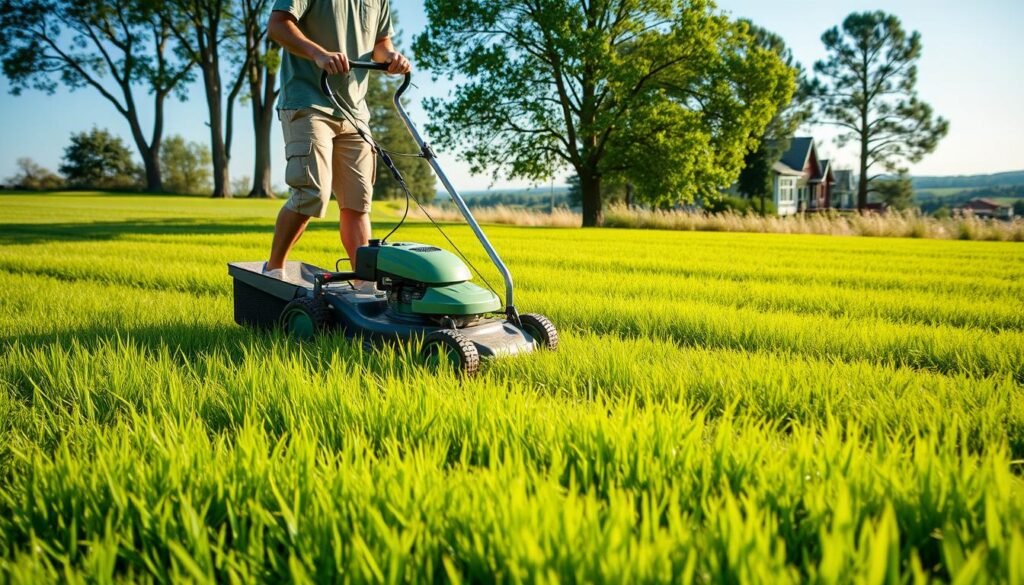
Wait to mow until new grass reaches about 3–4 inches, and use the highest safe setting for the first pass.
How tall is tall enough before the first mow?
Only mow when the new grass stands tall and a gentle tug shows resistance. Sharp blades cut cleanly and reduce tearing at the crown and roots.
Avoid mowing soon after rain or when soil is soggy. Wet soil and mower wheels can pull seedlings and leave ruts.
How do I limit foot traffic and pets?
Keep people and pets off newly seeded areas for several weeks so shoots can anchor. Use stepping stones if crossing is unavoidable.
Trim perimeter growth first and make wide, gentle turns to avoid scraping young plants during early cuts.
| Action | Why it helps | Timing |
|---|---|---|
| Delay first mow | Protects crowns and developing roots | When new grass = 3–4 inches |
| Use highest blade setting | Reduces stress and tearing | First 1–2 cuts |
| Limit traffic | Prevents compaction and seed displacement | First few weeks after seeding |
| Cross with boards | Minimizes footprints in soft soil | Only when necessary |
Plan and gear up: tools and conditions that make overseeding work
Match equipment and timing to your yard and local climate for smoother seeding and fewer redo passes. Good planning keeps seed in place, reduces compacted soil issues, and helps young grass establish faster.
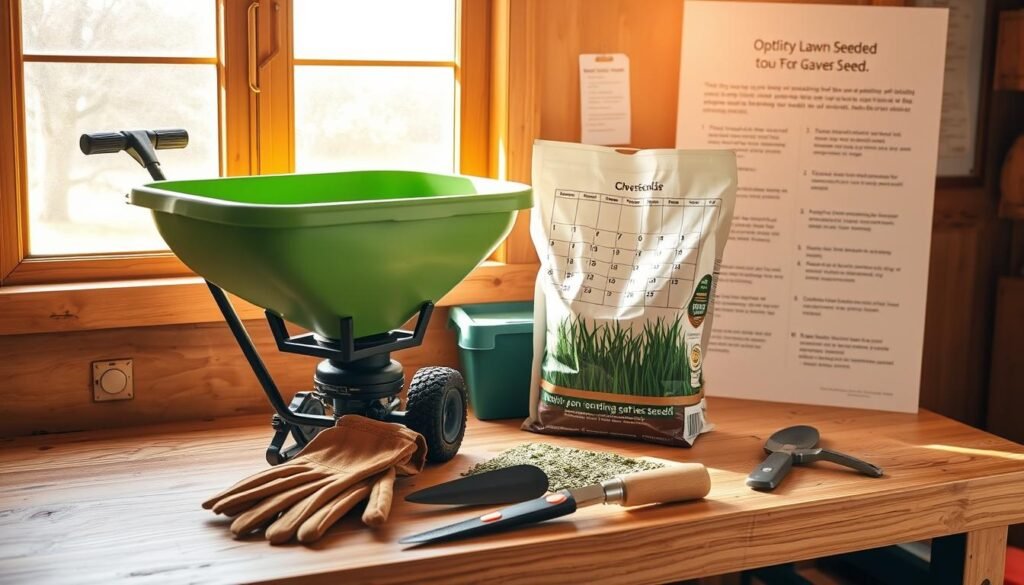
Start by choosing tools that fit your lawn size and the soil you’ll tackle.
Pick the right aeration and seeding equipment for lawn size and conditions
For small yards, a manual aerator and a handheld spreader get the work done without extra cost. Larger or compacted lawns benefit from a gas-powered push-behind core aerator or a tow-behind unit to save time.
Use a drop spreader for precision under 5,000 sq ft and a broadcast spreader for wide, open areas. Calibrate the spreader with a quick catch test so your grass seed rate matches the label.
Check forecasts and local conditions to avoid drought, downpours, and heat spikes
Water the site lightly 1–2 days before you aerate so tines pull clean cores instead of bouncing on hard ground.
Plan seeding when short-term conditions are calm. Avoid heavy rain, drought, or heat spikes that move or dry seed. For cool-season grasses aim for fall; for warm-season grasses target late spring to early summer.
- Walk steady and overlap passes to prevent clumps or skips.
- Mark irrigation heads and call 811 to protect shallow utilities before you dig or aerate lawn areas.
- Stage tasks in one flow—mow low, dethatch, aerate, seed, then start gentle irrigation so the seedbed stays moist.
Conclusion
Small, steady actions in the first weeks protect your seed and build stronger roots for lasting results. Pick the best time for your grass, prep soil, water gently, and delay harsh fertilizers and weed products until the new grass can handle them.
Follow a simple plan: match season (fall or spring), use the right spreader and seed, and keep newly seeded areas off-limits to traffic.
Wait to start mowing until shoots reach about 3–4 inches. Use a light starter fertilizer only if needed and focus on steady watering to train deep roots. Little choices add up: correct seed type, soil prep, and patient lawn care save time and money while giving you denser, greener lawns.