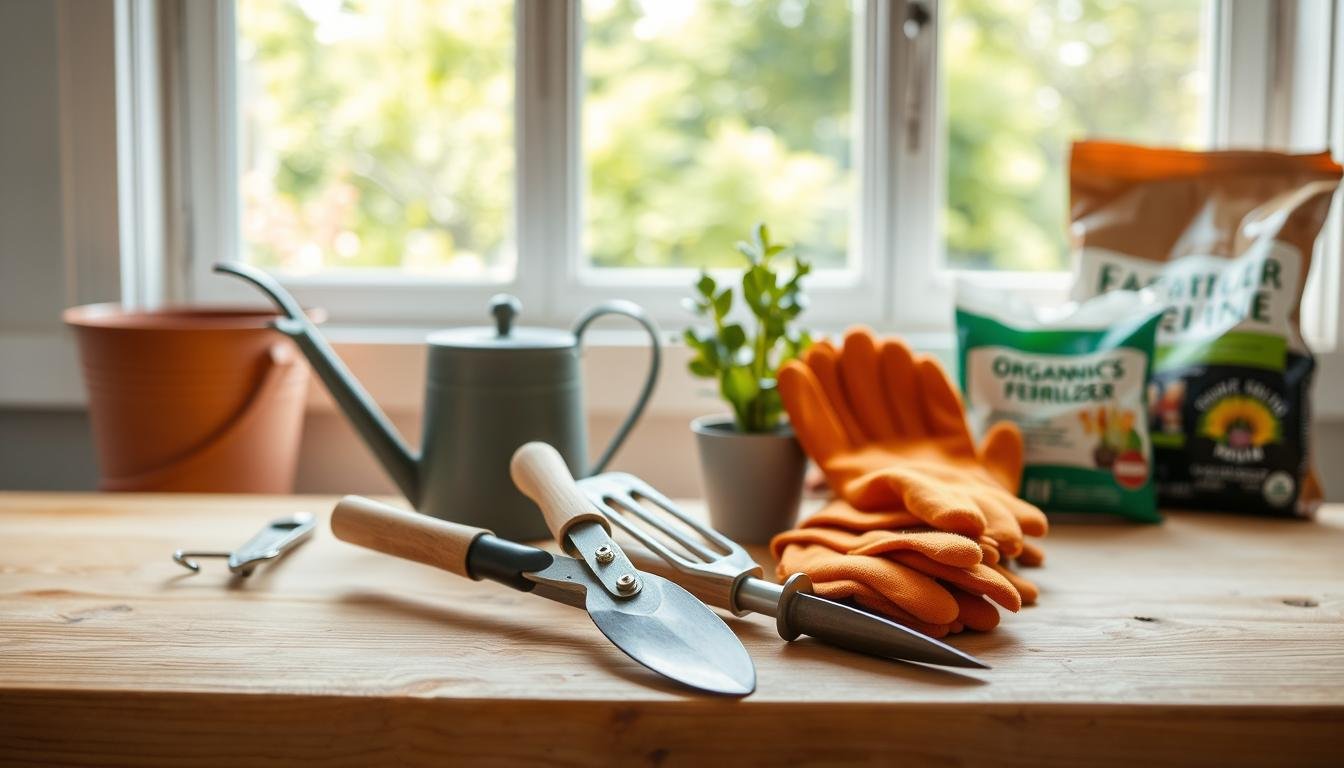
This short guide cuts the clutter and focuses on durable gear you will actually use. Start with a compact kit that covers cutting, digging, raking, weeding, and watering.
What if a small set of reliable items could get you growing confidently this year?
New gardeners often buy too much gear. That wastes money and time. This concise list helps you buy once and work more.
We highlight gloves, shears, a spade and fork, a small trowel, a rake pair, a hoe, a hose with an adjustable nozzle, and a watering can. Quality metal heads and comfy handles cut strain and last longer with simple care.
Want the full shopping checklist and quick buying tips? See our linked guide for a practical starter list for new gardeners.
Key Takeaways
- Focus on a tight kit that handles 90% of common garden tasks.
- Choose sturdy metal heads, sharp blades, and comfy grips.
- Keep gear dry and wipe edges to prevent rust and bluntness.
- An adjustable hose nozzle and a watering can cover broad watering needs.
- Pick tools that fit your space—raised beds or small yards favor compact picks.
Why these essential gardening tools matter for beginners in the United States today
A compact kit saves money and gets you working in the yard faster.Good basics cut decision fatigue and help plants establish sooner.
Start small, build confidence, and spend time where it counts—outside with healthy soil and green growth.
Across U.S. yards, from city patios to suburban lawns, a lean set of gear handles trimming, digging, raking, and watering without crowding your shed. This approach lowers cost and confusion so a new gardener can focus on growing healthy plants rather than shopping endlessly.
Clean cuts and proper digging improve root health and reduce disease risk. A hose with an adjustable nozzle gives reach and flow control for beds and borders. A watering can lets you water precisely in containers and tight spots where hose use is awkward.
- Save time: versatile items mean fewer trips back and forth during routine tasks.
- Boost safety: gloves and sturdy footwear protect hands and feet from thorns and hidden hazards.
- Support learning: mastering a few fundamentals builds skill before adding niche pieces.

Choose metal heads and solid handles for lasting value. When tools feel comfortable to grab, gardeners form daily habits that keep plants thriving and chores quick.
only 10 gardening tools beginner truly needs: the core list at a glance
A compact kit of well‑chosen items handles most garden chores without crowding your shed. These picks cover protection, pruning, digging, raking, weeding, and watering so you can get outside and work comfortably.
Hand protection and grip: a good pair of gloves you’ll actually wear
Choose a comfortable pair that fits close to your hand. Gloves keep thorns, splinters, and insects from cutting short a session, so you garden longer and with less fuss.
Precision in small spaces: hand trowel and hand cultivator/hand rake
A sturdy trowel and a three‑tine hand rake let you transplant seedlings, mix soil, and weed tight beds with control. These hand tools save time when rows or containers need careful work.
Cut cleanly: pruning shears/secateurs for stems, leaves, and soft branches
Sharp shears give clean cuts that help plants heal faster. Use them for deadheading, shaping, and small branch work to keep beds healthy and tidy.
Move soil and shape beds: shovel/spade and garden fork
For heavier jobs, a spade and a garden fork break up compacted soil, turn compost, and lift roots with precision. They handle the chores that hand tools can’t.
Tidy and prep surfaces: bow rake for soil, leaf rake for debris
A bow rake levels and firms soil; a leaf rake collects light debris without ruining bed surfaces. Together they speed prep for planting and fall cleanup.
Beat the weeds: hoe for fast, chemical‑free weeding
A hoe skims off young weeds before they set seed. It’s a fast, low‑cost way to keep rows neat without herbicides.
Water wisely: garden hose with adjustable nozzle and a watering can
A garden hose with a spray gun covers reach and flow patterns for beds and borders. A watering can gives precise pours for pots and hanging baskets when a hose won’t fit.
- Fit your space: prioritize items that match raised beds, borders, or containers.
- Buy quality: solid metal heads and firm handles last longer and perform better.
Cutting and pruning essentials that protect plants and save time
Sharp cuts make the difference between healthy growth and lingering disease in beds and borders. Good pruning gear gives you clean results fast and helps plants recover more quickly.
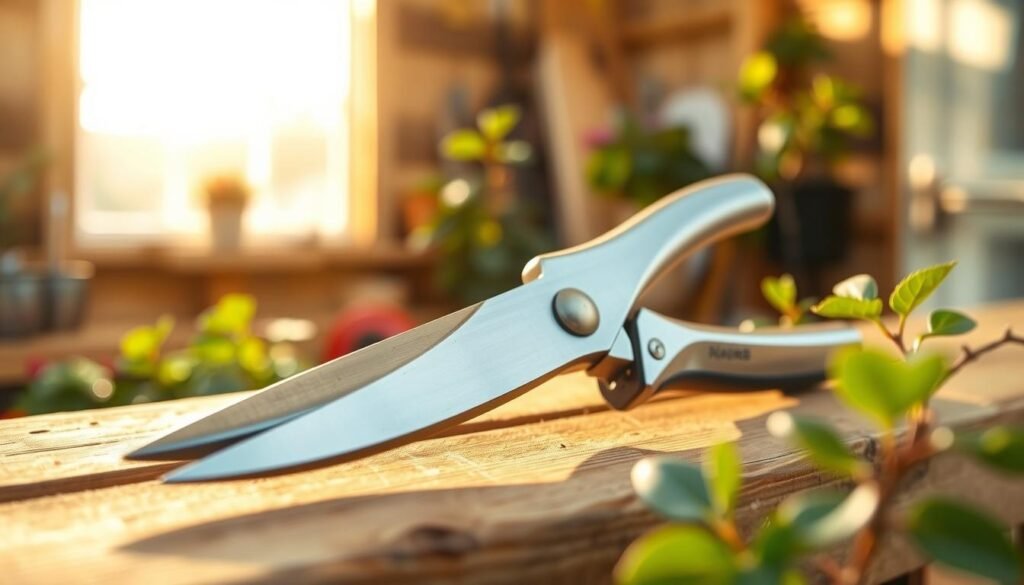
Pruning shears/secateurs: sharp blades, clean cuts, healthier plants
Pruning with quality secateurs delivers smooth cuts on green stems and soft branches, which lowers infection risk and preserves plant form.
Keep blades sharp and wipe them with rubbing alcohol after use. This prevents disease transfer and keeps the pivot action smooth.
When to pick garden shears or hand pruners
Long-handled garden shears give leverage for hedges and woody shrubs. Compact hand pruners win in tight beds and around delicate leaves.
Match the tool to the job: bypass pruners for live wood; anvil styles for dead, hard stems. Choose ergonomic grips to reduce hand fatigue on long sessions.
Scissors in the garden: quick, precise, and often overlooked
A dedicated pair of scissors is a versatile addition for any gardener. Use them for snipping herbs, cutting twine, and opening seed or soil bags.
- Use pruning shears for smooth cuts on soft branches to protect structure and reduce disease.
- Keep blades sharp and clean; alcohol wipes cut infection risk between plants.
- Long handles boost leverage; compact pruners give precision in crowded beds.
- Prune just above an outward-facing node to encourage open growth and good airflow through leaves.
- Store clean and dry; add a drop of light oil on pivots so tools are ready when you are.
Digging, soil prep, and planting tools for better roots and healthier soil
Good digging gear helps soil breathe and gives roots room to grow. Pick durable pieces that match your space so planting is faster and kinder to the ground.
Turn compacted beds into welcoming homes for roots by using the right mix of long and hand implements.
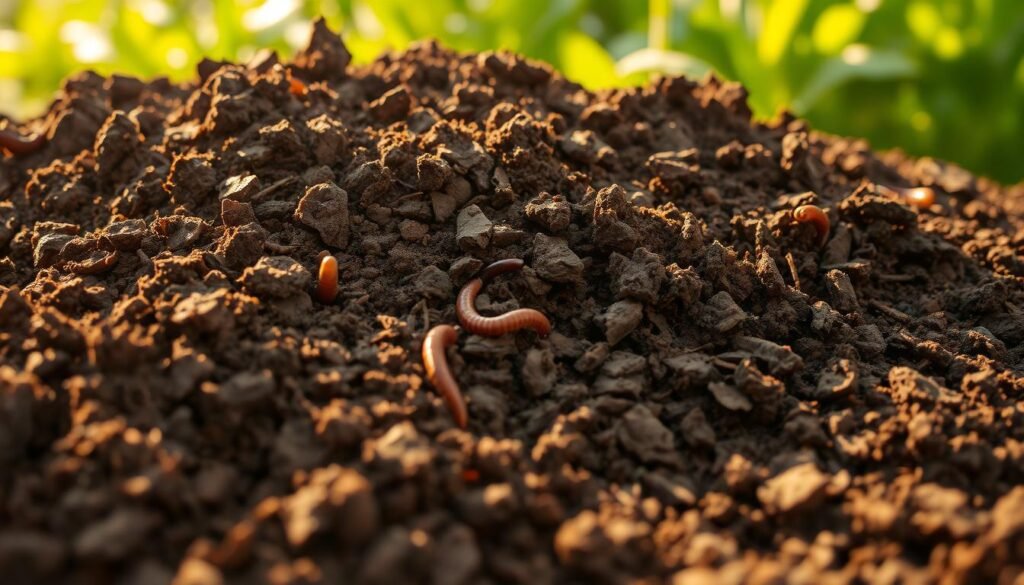
Shovel/spade and garden fork: turning compost, breaking up dirt, and transplanting
A round‑head shovel moves soil, clears planting spots, turns compost, and mixes amendments. Use a spade for straight‑sided holes that set a plant at the correct depth.
Leverage a garden fork to loosen compacted soil, lift perennials, and turn compost without smearing layers. Invest in solid metal heads and reinforced sockets; flimsy shafts bend in heavy clay and slow you down.
Hand trowel and hand rake/cultivator: precise planting, seed rows, and root work
Choose a hand trowel with a stainless blade to resist rust and bending. An ergonomic handle eases repeat tasks like transplanting seedlings and filling pots.
A hand rake breaks crusted surfaces, mixes in compost, and forms shallow seed rows with even spacing. Keep a small bucket of amendments nearby to speed planting and mix soil well at each hole.
“Dig deep enough to let roots spread, but avoid working wet soil—wait until it crumbles to protect structure.”
| Tool | Best Use | Key Feature | Care Tip |
|---|---|---|---|
| Round‑head shovel | Move soil, edge beds, dig holes | Curved blade for scooping | Clean clay off and dry before storage |
| Garden fork | Loosen soil, lift roots, turn compost | Sturdy tines, reinforced socket | Rinse compost residue to prevent rot |
| Hand trowel | Transplanting, pot work | Stainless blade, comfy handle | Wipe blade and oil pivot if present |
| Hand rake/cultivator | Seed rows, break crust, mix amendments | Three‑tine design for control | Shake out soil and store dry |
- Tip: Dig holes twice as wide as the root ball but no deeper; set the plant slightly high to settle with watering.
- Tip: Avoid overworking wet soil—wait until it crumbles rather than smears to protect drainage.
- Tip: Clean tools after use to prevent rust at joints and edges and to keep performance steady.
For a compact shopping reference, see our starter list to match gear to your garden tasks.
Watering and moisture control: from gentle mist to targeted pours
Smart water delivery helps plants grow stronger while cutting waste. Use the right mix of hose reach and can precision to match soil, season, and container size.
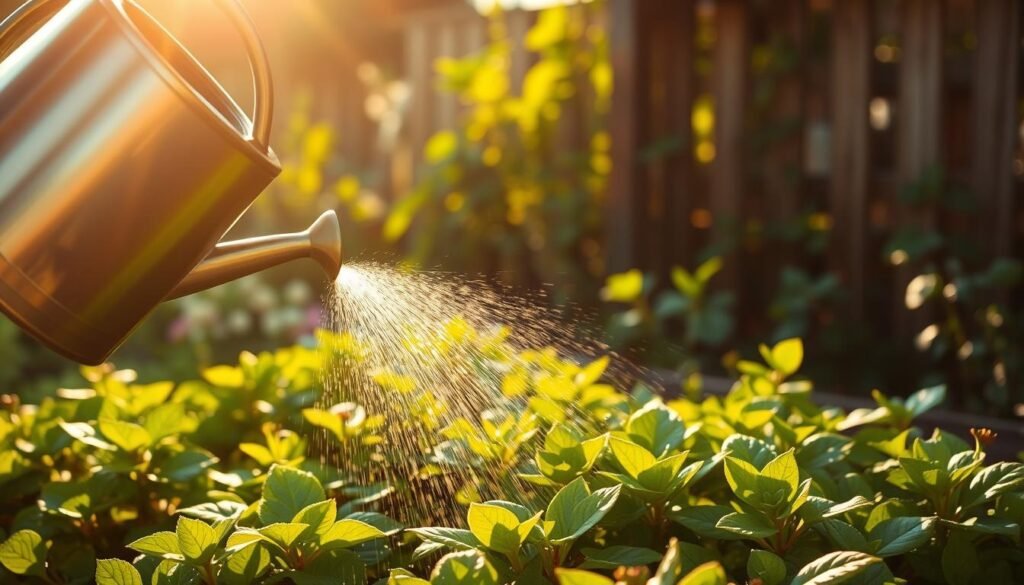
Garden hose: reach, flow control, and spray patterns for beds and borders
A long hose cuts down on hauling and saves time during morning routines. Add an adjustable nozzle so you can switch from a fine mist for seedlings to a strong stream for cleaning paths.
Check fittings and washers regularly to stop leaks that waste water and create muddy spots. Quick-connects speed swapping nozzles or sprinklers without fuss.
Watering can: accurate, low‑splash watering for containers and hanging baskets
Use a can when precision matters. Long spouts and rose heads aim water at the soil base and keep foliage dry to lower disease risk.
Pick a size you can carry comfortably; large cans get heavy when full. Match flow to soil—slow, deep pours encourage roots to dive while fast sprays cause runoff.
- Choose a garden hose long enough to reach all beds and add an adjustable nozzle for a gentle mist and stronger patterns.
- Aim water at soil, not leaves, and water early so plants dry quickly and evaporation is lower.
- Store hoses coiled out of direct sun and drain before freezing to extend life.
| Item | Best Use | Key Feature | Care Tip |
|---|---|---|---|
| Garden hose | Reach beds and borders | Length with adjustable nozzle | Check washers; coil away from sun |
| Adjustable nozzle | Mist to jet patterns | Multiple spray settings | Rinse and store dry |
| Watering can | Containers and seedlings | Long spout or rose head | Choose carryable capacity; rinse after use |
| Quick-connect set | Swap attachments fast | Push-fit connectors | Inspect seals annually |
“Water early, target the soil, and let roots find moisture on their own.”
Pair hose reach with can precision to keep your garden thriving while using less water and enjoying simpler routines with your favorite tools.
Safety and comfort: the first tool is the one you wear
Comfortable, protective wear keeps you working longer and lowers injury risk. Investing in good wearable gear saves time and helps gardens thrive all year.
Gloves: fit, material, and durability to protect hands

Wear gloves that fit so you actually keep them on. Leather or coated fabrics balance dexterity and protection. A snug fit stops dirt from slipping in and reduces snagging on thorns.
Protect hands from cuts, sap, and insects when pruning, weeding, or moving rough materials. Store gloves dry and brush off grit to preserve coatings and seams.
Footwear and sun protection: stay steady, dry, and shaded while you work
Choose boots or clogs with waterproof uppers and a solid tread. High tops add ankle support and make muddy work safer. Easy‑clean materials cut morning prep time.
Shield skin with a breathable wide‑brimmed hat and lightweight long sleeves during the sunniest hours. Add UV sunglasses to protect eyes from glare and stray stems.
- Keep a small first‑aid kit for minor nicks; clean and cover cuts promptly.
- Pace work and take water breaks so comfort stays consistent over time.
- Rotate gear by season—lighter fabrics in summer, warmer layers in spring and fall.
- Consider knee pads or a kneeling pad to reduce strain when working close to the soil.
| Item | Why it matters | Quick tip |
|---|---|---|
| Gloves | Protect hands from thorns and grime | Choose leather or coated fabric; dry before storing |
| Boots/Clogs | Stable footing on wet grass and soil | Look for slip resistance and waterproof uppers |
| Hat & Sunglasses | UV protection and shade | Wide brim plus UV-rated lenses |
Care and maintenance so your garden tools last for years
Give your gear a few minutes of care after each use and it will repay you season after season. Small actions—oil pivots, clean sap, and store dry—preserve metal, sharpen performance, and cut replacement costs.
A quick wipe and a drop of oil can save hours of work down the road.
Keep pivots smooth with 3-IN-ONE Multi-Purpose Oil
After pruning, add a drop of 3‑IN‑ONE oil to the pivot of secateurs or clippers. This keeps movement smooth and helps dissolve sap or early rust on blades.
Thin coats on shovels and spades also protect metal surfaces during storage. Wipe excess oil so you don’t attract grime.
Clean fast with Lava Soap for sap and grime
Lava Soap with pumice lifts dirt, oil, and sticky tomato sap from hands. Rub the bar across fingertips before work to reduce dirt under nails.
Use the soap after heavy pruning to remove sap quickly, then dry hands so you can re‑oil any metal parts safely.
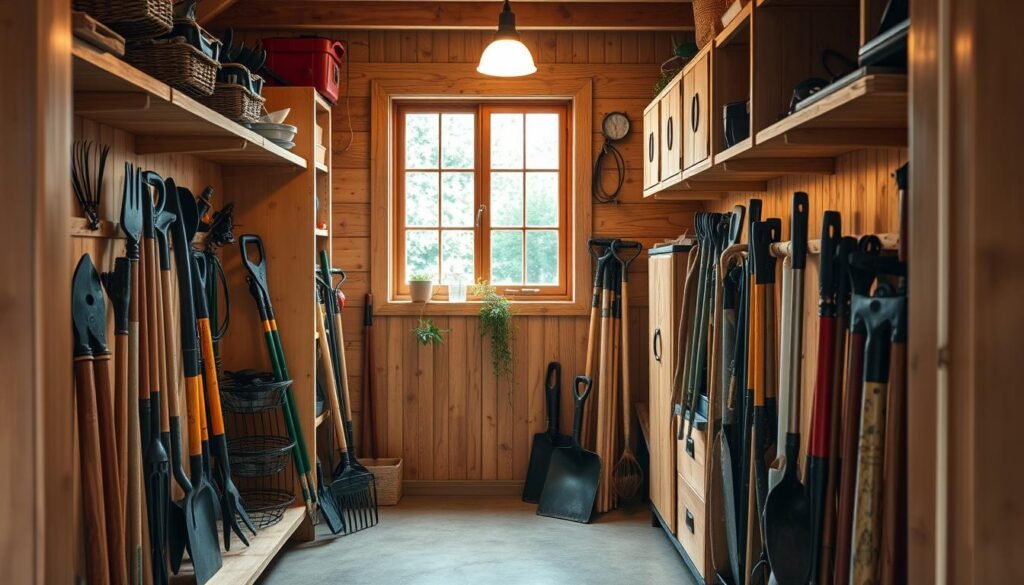
Smart storage: dry, organized, and out of the elements
Hang long-handled items to keep edges off concrete and cut moisture contact. Flexible buckets nest when not in use and serve as caddies or mixing tubs.
Bundle hoses and cords with Velcro ties so you can find them fast. Assign labeled spots by task for a grab‑and‑go routine.
- After pruning: drop oil on pivots and wipe blades to stop rust.
- Before storage: brush or spray off dirt from tines and edges.
- Space saver: use flexible buckets for storage and quick mixing.
- Organize: bundle accessories with Velcro and label shelves.
| Item | Best use | Care action |
|---|---|---|
| Pruning shears | Cutting stems and small branches | Oil pivot, wipe blades, sharpen as needed |
| Shovels / spades | Digging and edging | Coat thinly with oil, rinse dirt, store hanging |
| Flexible bucket | Mixing soil, caddy, rinsing | Rinse clean and nest for storage |
| Velcro ties | Bundle cords and hose accessories | Secure and label for quick access |
Beginner tips to make the most of your 10 tools in 2025
Durable gear with good balance and sharp edges turns chores into quick, satisfying sessions. Small choices now save time and money across seasons.
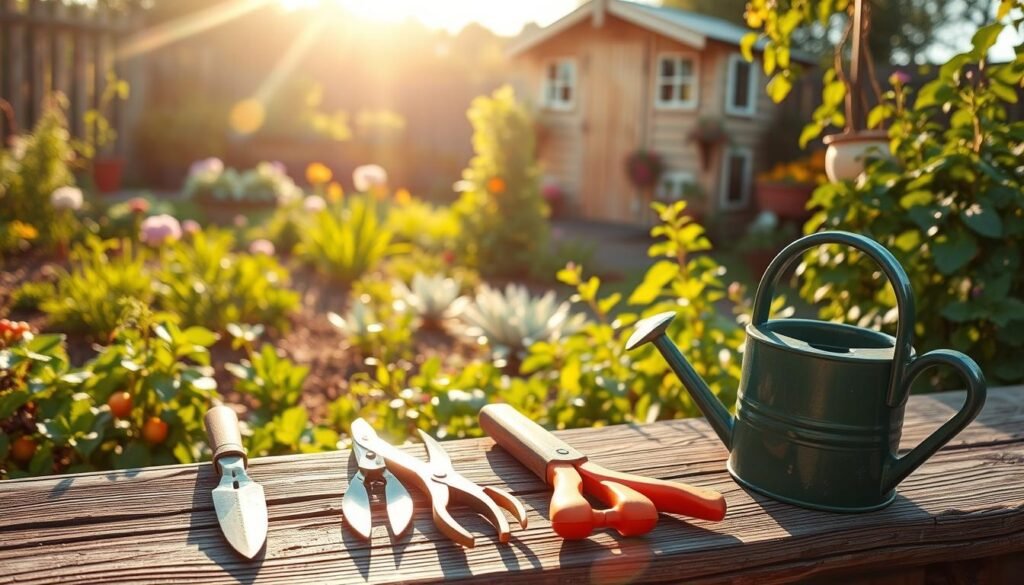
Buy once, cry once: invest in metal quality, sturdy handles, and sharp blades
Choose solid metal heads and reinforced sockets. Durable forks and spades used often are worth the purchase if you keep them rust‑free and stored dry.
Sharp blades cut effort in half, so sharpen secateurs and spades regularly to reduce strain and finish jobs faster.
Start small, add as you grow: prioritize tasks, then expand your garden gear
Keep a short weekly task list to decide what you need for each session.
Stage gear by project: set out the shovel, fork, and trowel for a bed refresh to streamline workflow.
Track what you reach for most; that signals where to upgrade first rather than buying an entire kit at once.
- Spend on core items: solid construction saves time and frustration.
- Practice quick hoe passes: slice off tiny weeds before roots strengthen.
- Learn care habits: clean, dry, and oil pivots so gear lasts for years.
| Action | Why it matters | Care tip |
|---|---|---|
| Invest in metal heads | Lasts under heavy use in clay and beds | Wipe dry and oil to prevent rust |
| Sharpen blades | Reduces effort and protects plants | Use a file or sharpening stone monthly |
| Stage gear by project | Saves trips and maintains flow | Group in a caddy and return items after use |
| Track favorite items | Shows where to upgrade first | Log weekly use and cost per season |
For a practical shopping reference, consult our starter list to match gear to your garden goals: starter list.
Conclusion
A balanced kit of hand and long‑handled pieces saves time and protects soil while you grow strong plants. Keep gear sharp, clean, and stored so each season starts ready.
Choose a set that fits your hands and garden design, and care for it with simple routines.
Prioritize sharp pruning shears, a reliable trowel, a sturdy shovel and fork, and a hose plus watering can for precise water. Use 3‑IN‑ONE Oil on pivots and Lava Soap to clean hands and sap. Stow small items in flexible buckets and secure hoses with Velcro ties so the right item is always at hand.
Start small, tend soil and seeds with steady rhythms, and upgrade as your garden grows. With a focused kit and simple maintenance, every gardener can enjoy healthier beds and less fuss.