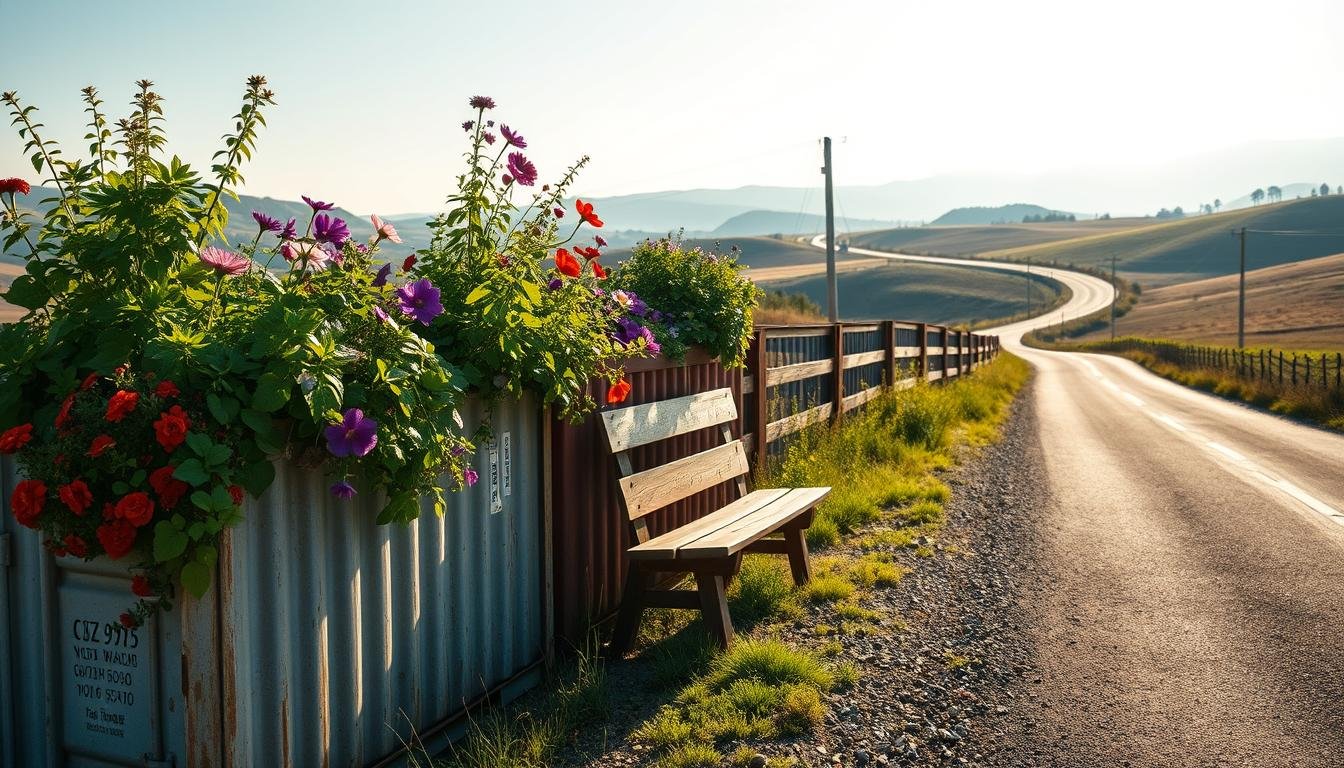
My Favorite Garden Planter Was a Free Find on the Side of the Road

I spotted a sturdy roadside container that changed a tired corner of my yard. That single discarded tub brought size, character, and a little history to a small space. It also taught me how easy it is to rescue useful containers and give them a new life.

This post lists practical places to locate usable containers today, quick safety checks, and smart repurposing tips that save time and money. I’ll show how big-box nursery recycling and bakery buckets can become reliable homes for plants.

Expect short how-tos: check materials, test for cracks, add drainage, and use empty boxes to reduce potting mix needs. I’ve never regretted asking staff at the outdoor nursery for returned pots. Reusing keeps plastic out of landfills and adds a little story-power to each planting space at home.

Want to learn where to hunt and how to prep a find so it thrives? Skip ahead or read straight through for step-by-step methods and quick checks. For more about our approach, see about this site.

Key Takeaways

  • Rescue spots: bakeries, big-box nursery recycling, and community listings often have usable containers.
  • Always inspect for cracks, residue, and weight before reuse.
  • Add drainage holes and use displaced containers inside garden boxes to save soil.
  • Asking staff politely can score quality returned pots at zero cost.
  • Reading trusted gardening books and guides builds confidence for safe repurposing.

The roadside score that became a garden highlight

This rescued tub added instant scale, character, and a useful story to a small bed. It gave room for vigorous plants and a weathered look you can’t buy, all in the same piece.
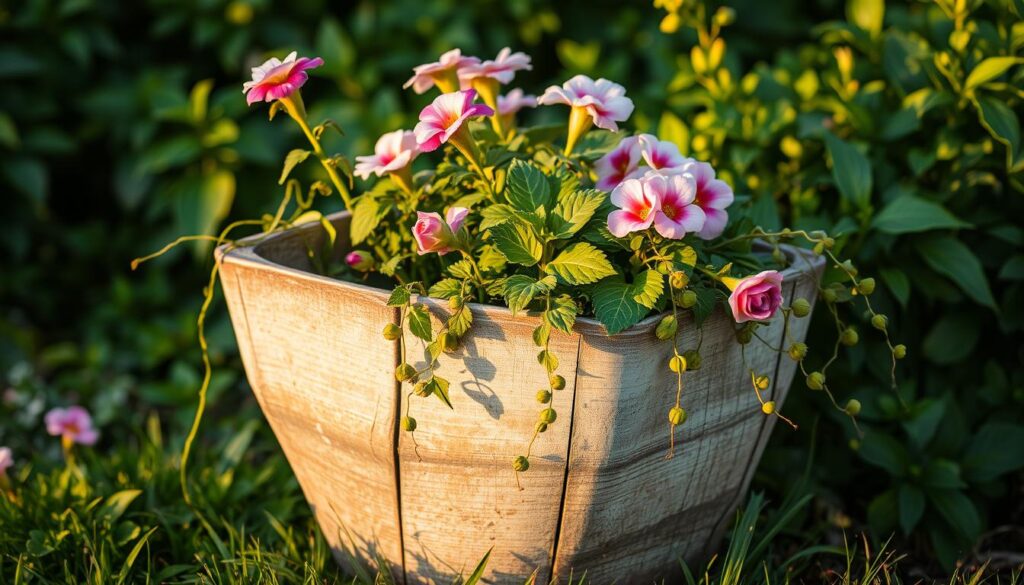
A weathered, rustic garden container sits amidst lush greenery, its aged wood and metal patina catching the warm, golden light of the afternoon sun. The planter's irregular shape and imperfections create an organic, charming aesthetic, complementing the vibrant blooms and trailing vines spilling over its edges. The scene is framed by a soft, blurred background of verdant foliage, hinting at the larger garden setting. The overall mood is one of effortless beauty and simple, natural elegance - a hidden gem plucked from the roadside, now thriving as a garden centerpiece.

Why this piece beat store-bought pots

The piece was larger than typical pots and had taller walls. That size meant deeper roots and less frequent watering. Its worn finish fit the area better than a shiny new pot. A reclaimed container also brings a small tale into the planting section.

Quick checks I made at the curb

I inspected for cracks, soft or brittle plastic, and chemical residue. Then I checked stability: the broad base reduced tip-overs in windy spots.

  • Drainage plan: flipped the pot, marked 4–6 holes, drilled clean holes, and added thin mesh to stop soil loss while letting water flow.
  • Placement: watched light patterns, avoided low spots where water pools, and set the pot on pavers for airflow.
  • Soil and care: used a quality soilless mix, seasonal top-ups, and a slow-release feed each spring.
FeatureFound TubTypical Store Pot
SizeLarge, deepOften shallow
StabilityBroad base, sturdyNarrower, tip risk
PrepDrill holes, add meshUsually ready but may need drainage

favorite garden planter was free find on: where to find free containers today

Quick answer:You can collect sturdy containers from stores, recycling centers, and community swaps with a little timing and courtesy. These sources save money, keep plastic in use, and give you many sizes for trees and smaller plants.
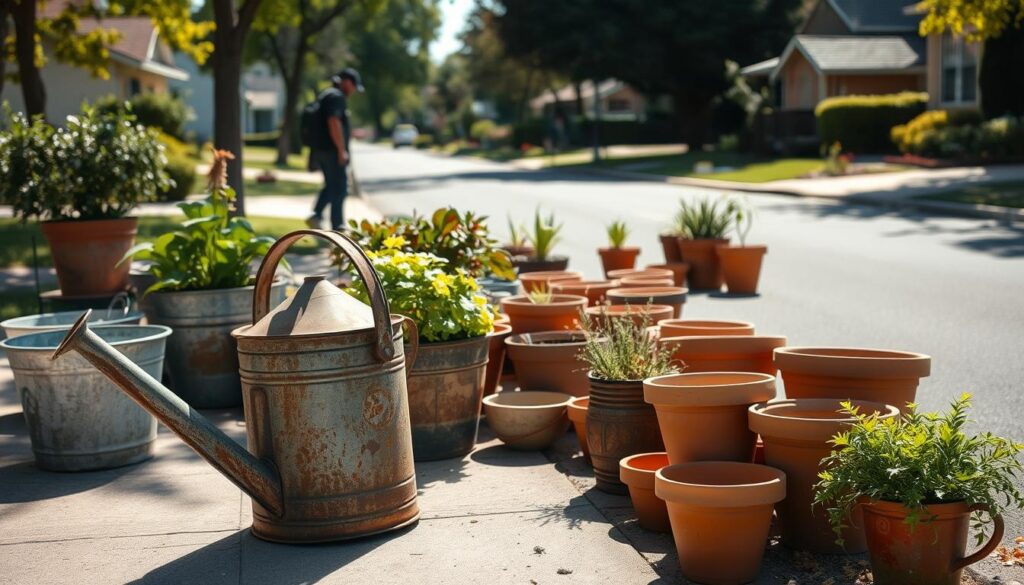
A sun-dappled suburban street, with an assortment of free containers lining the curb - weathered planters, repurposed buckets, and quirky vintage finds. In the foreground, a rusted metal watering can catches the light, its patina hinting at a life well-lived. Scattered throughout, an array of terra cotta pots, their earthy tones complementing the lush greenery that spills from their lips. In the distance, a shadowy figure peruses the offerings, imagining the possibilities. The scene is infused with a sense of discovery, a reminder that one person's trash can be another's treasure.

Home Depot and Lowe’s: look for the nursery recycling shelf in the outdoor area. Politely ask staff if you may take returned pots. Visit earlier in the day for the best selection and avoid busy checkout times.

Local nurseries & big-box return bins

Check return bins for odd-sized tree pots and 5-gallon black plastic pots. These are easy to drill for drainage and are great for young trees.

Bakeries, recycling centers, and online swaps

Ask bakeries for empty frosting buckets—food-grade tubs wash up well and often include lids. At recycling centers, always ask permission before taking tins or sturdy plastics.

  • Use Craigslist, Freecycle, and Facebook Marketplace “Free” filters; set alerts and be ready to pick up fast.
  • Scout bulk pickup days, new builds after landscaping, and restaurant back areas for takeout tubs; lids work well as catch trays.
  • Respect dumpsters: get permission, wear gloves, and leave areas tidy.
SourceBest itemsTip
Home Depot / Lowe’sReturned nursery pots, 5-gallonAsk staff; early visit
Bakeries / GroceryFrosting buckets with lidsPolite request; wash before use
Online “Free” sectionsAssorted pots & planter boxesSet alerts; quick pickup
Recycling centers / Bulk dayTins, durable plastic pots, tree potsAsk permission; avoid chemical residues

Creative ways to repurpose free finds into garden-ready containers

Simple prep makes reused vessels safe and productive. With the right drainage and soil, thrifted pots and tubs support healthy plants for years.

With basic tools and a plan, discarded tubs and boxes transform into sturdy homes for plants. Start by drilling 3–6 holes. Deburr edges so roots don’t snag.
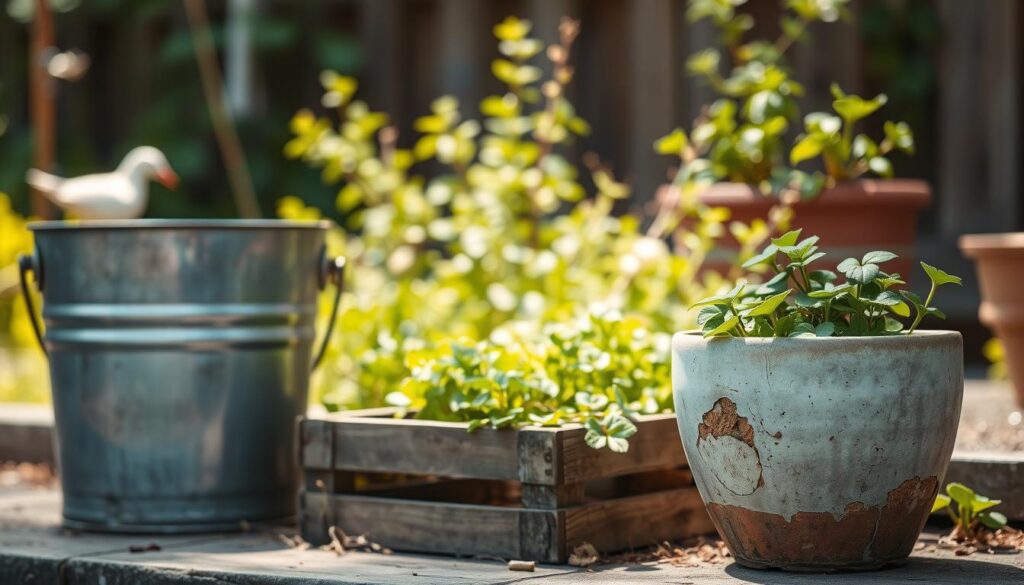
A quaint, rustic garden setting with an assortment of repurposed containers in the foreground. The containers include a vintage galvanized bucket, a wooden crate, and a chipped ceramic pot, all arranged in a harmonious, visually appealing composition. The middle ground features lush, verdant foliage, hinting at the thriving plants that reside within the found-object planters. The background is softly blurred, allowing the focus to remain on the creative, one-of-a-kind containers. The scene is bathed in warm, natural lighting, casting gentle shadows and highlighting the unique textures and patina of the upcycled items. An overall sense of charm, sustainability, and DIY inspiration permeates the image.

How do you manage drainage and base layers?

Drill 3–6 holes depending on diameter. Add a thin mesh over holes. Set the container on pot feet or pavers so water flows and roots get air. Do not use rocks; they cause perched water tables.

Can containers save soil when used in garden boxes?

Yes. Seal empty tubs and flip them inside larger planters or garden boxes. This displaces volume and cuts potting soil needs without hurting plant roots.

What creative vessels and size tips work best?

Thrifted coffee cups, rubber boots, and wooden fruit boxes add seasonal color. Use 1–5 gallon and tall tree pots for deep-rooted starts and tree transplants. Start seeds in small cells then pot up.

How do winter and safety affect reuse?

Plastic tolerates freeze/thaw better than terracotta; move clay under cover before hard freezes. Choose food-grade plastic when possible. Scrub with hot soapy water and sanitize with a mild bleach rinse, then rinse again.

TaskActionWhy it helps
DrainageDrill 3–6 holes; meshPrevents waterlogging and root rot
Base layerUse pot feet or paversImproves airflow and runoff
SoilUse soilless mix; add compost sparinglyLight, drains well, feeds plants
Space trickSeal empties inside large potsSaves soil and weight

Keep learning: reading gardening books about compost and companion planting sharpens choices. Titles like The Complete Compost Gardening Guide and The Gardener’s A–Z Guide are good places to start. Consider adding brief labels with planting date and variety so you repeat wins years later.

About the Author

Garden Expert (Ethan Green) is your green-thumbed guide at The Garden Haven. With years of hands-on experience in home gardening, greenhouse care, and sustainable planting, Garden Expert shares practical tips and expert advice to help you grow healthier, happier gardens—season after season.

Editorial Process Note

Just like a healthy garden, our content is carefully nurtured. Every tip and technique shared on The Garden Haven comes from years of hands-on experience. Before we publish an article, our team "weeds out" any inaccuracies by checking facts against trusted horticultural sources. We regularly revisit our articles to keep them fresh and up-to-date, ensuring you always have the best information for a thriving garden.

Conclusion

A quick scouting trip and a little prep can turn yesterday’s discard into a lasting planting feature.

Start today: swing by a Home Depot or Lowe’s nursery recycling shelf, ask a bakery about frosting buckets, or set alerts in online “free” groups for usable containers and pots.

Check condition, add drainage, choose the right soil, and match each plant to its place. Watch bulk pickup days so tree pots and larger tubs don’t slip away.

Why it matters: reused plastic keeps waste down and frees budget for seeds, compost, books, and tools that grow a gardener’s skills.

Share what you’ve rescued and which plants you’ll try next. Links or affiliate notes in this post help support the work here.

FAQ

Where can I find free containers like the roadside pot you described?

Look at local options: check Home Depot and Lowe’s outdoor nursery and ask staff about recycling shelves, visit independent nurseries for odd-sized tree pots and return bins, browse Craigslist, Freecycle, and Facebook Marketplace “Free” listings, and watch neighborhood bulk or yard-waste days. Also ask bakeries for frosting buckets, grocery stores for sturdy food-service containers, and check recycling centers (with permission) for durable tins and plastics.

How do I know a picked-up container is safe to use for planting?

Inspect for cracks, lingering odors, rust, or chemical residues. Prefer food-grade plastics for edibles and avoid containers that held pesticides, motor oil, or unknown chemicals. Clean thoroughly with hot water and a mild detergent, rinse well, and sanitize with a diluted bleach solution (then rinse again) if needed. When in doubt, use the container for ornamentals or as a cachepot rather than direct planting.

What should I check first when scoring a used pot curbside?

Look for sound structure, adequate depth and width for your plant, and drainage potential. Test for rot or thin spots in plastic and check metal for extensive rust. Consider weight and placement—heavy pots are stable, but large plastic tree pots may need reinforcement or extra drainage holes.

How do I add drainage to a non-draining container?

Drill or punch several holes in the bottom using a drill bit or a heated metal rod for thin plastics. Add a layer of coarse material—broken pottery shards, gravel, or recycled pot fragments—then a breathable landscape fabric before filling with potting mix. Ensure water can escape freely to prevent root rot.

Can I use food containers like frosting buckets or milk jugs for plants?

Yes—if they’re clean and food-safe. Frosting buckets make excellent large containers; add drainage holes and a raised base to prevent sitting in water. Milk jugs and 2-liter bottles work for seedlings and self-watering setups. Avoid containers that held oils, chemicals, or strong-smelling foods unless thoroughly decontaminated.
Yes. Don’t take items behind private businesses or from construction sites without permission. For recycling centers or big-box return bins, ask staff first. Respect community rules around curbside pickups and avoid dumpster diving where prohibited. When in doubt, ask—most gardeners and staff are happy to help.

How do I retrofit thrifted boots, coffee cups, or boxes into attractive pots?

Make drainage holes and line delicate materials with a small saucer or plastic liner. Use a well-draining potting mix and place these novelty containers inside a shallow tray to catch overflow. For seasonal color, plant annuals or small succulents that tolerate shallow soil depths.

Which free containers are best for starting tree or shrub seedlings?

Use sturdy, deep containers like 1–5 gallon nursery pots or reclaimed tree pots—these provide root space and stability. Ensure they have good drainage and use quality potting soil with added compost. Transplant when roots fill the container or when the seedling is strong enough for the landscape.

How should I prepare containers for winter to avoid cracking?

Choose frost-resistant plastics or move terracotta indoors. Reduce watering in late fall, elevate pots slightly to improve drainage, and empty very large containers if freezing will cause damage. Insulate vulnerable pots with bubble wrap or burlap and place them against a south-facing wall for extra warmth.

Can I use found containers inside garden beds to save soil? How?

Yes. Sink durable pots or buckets into raised beds to create contained planting zones—this preserves soil and prevents root competition. Ensure bottoms are open or cut out to allow root growth, and fill with fresh potting mix for transplants or vegetables that need specific soil conditions.

What safety steps should I take when collecting containers from public places?

Wear gloves, watch for sharp edges, and disinfect items when you bring them home. Avoid lifting heavy loads alone and use proper posture. If collecting near roads, wear visible clothing and stay clear of traffic. Always ask permission where required.

Where can I learn more container techniques like composting and companion planting?

Read trusted gardening books and extension resources from universities such as the USDA or your state extension service. Local nurseries often host workshops, and community gardening groups share practical tips. Books on container gardening, composting, and companion planting provide hands-on methods to boost success.