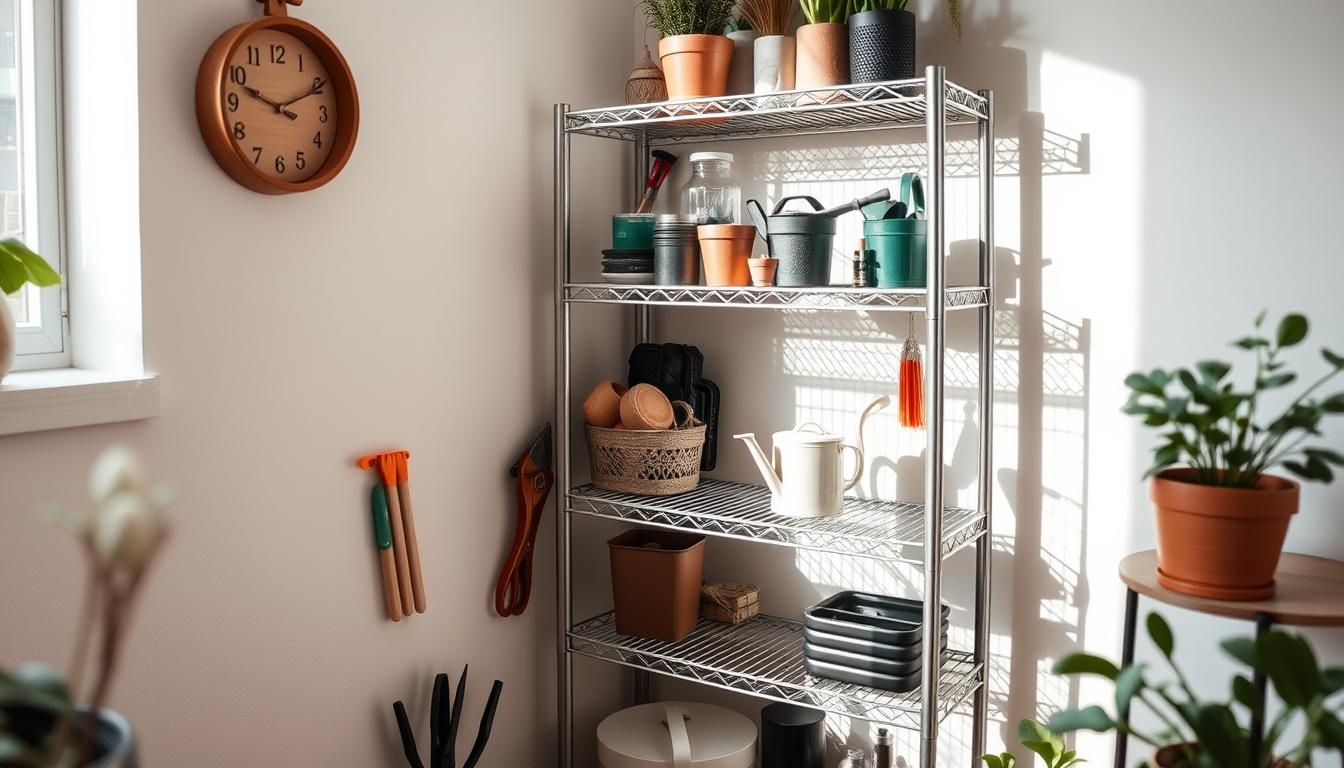
Can a tiny balcony or closet still be a full-featured workshop for your garden? That question drives this short, practical intro. Urban gardeners often feel squeezed for space, yet small changes can free inches and save hours.
Keeping tools organized in a tight space prevents damage and boosts productivity. Vertical fixes like shelves, hooks, and magnetic strips turn blank walls into efficient storage. Compact boxes and stackable bins tuck into closets and corners to keep small hardware sorted and easy to reach.
We’ll mix buyable picks with simple DIY builds—floating shelves with magnets, pegboards, jar rails, and roll-out carts—so you can get started quickly. Expect hidden bins, foldable benches, and portable pouches that conceal clutter while staying accessible.
Follow small habits—labeling, decluttering, and returning items—to keep systems working over time. This section lays the groundwork for fast wins and weekend projects that protect gear and speed your workflow.
Key Takeaways
- Vertical storage saves floorspace and protects gear.
- Compact containers and stackable bins fit tight corners and closets.
- Simple DIY builds add function on a small budget.
- Hidden and portable options keep supplies accessible and tidy.
- Labeling and regular upkeep help keep tools organized long term.
Small-Space Mindset for Urban Gardeners: Make Every Inch Work
Start with a quick audit: map walls, cabinets, under-furniture, and door backs, then place frequently used items where you can reach them without hunting.
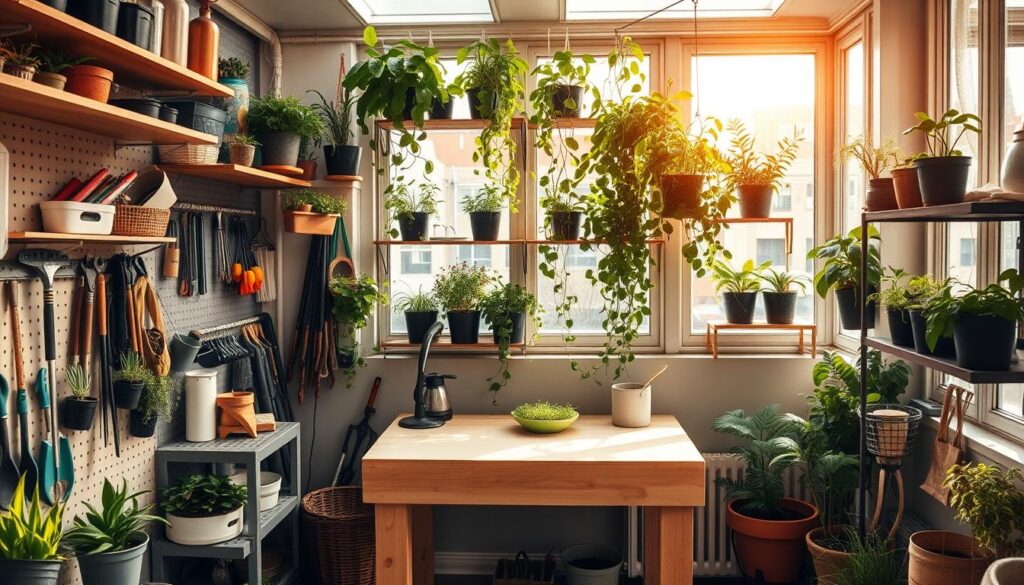
Start by mapping every vertical inch and hidden nook before you buy anything. This simple step shows where shelves, rails, and slim bins will deliver the biggest returns.
Assess walls, cabinets, under-seating, and doors. Mark eye-level zones for daily gear so you have an easy grab and an easy find habit. Use under-furniture bins and dual-purpose benches to reclaim dead space.
How should you prioritize gear?
Stage the most frequently used items—pruners, gloves, a hand trowel—at the front. Put heavier or messy pieces low. Store seasonal or seldom-used supplies higher or deeper in cabinets.
Apply the one-touch rule: give each tool a single, obvious home to help keep tools returned and to save time. Clear bins and labels make small items visible so you can organize tools without rummaging.
| Zone | Best Use | Example Items | Why it works |
|---|---|---|---|
| Wall | Daily access | Pruners, hand trowel, plant ties | Keeps items visible and off the floor |
| Under-furniture | Bulk or heavy | Power tool bins, totes | Uses dead space without cluttering |
| Door backs & cabinets | Slim or seasonal | Sprayers, spare pots, soil bags | High-value space that stays out of the way |
Quick checklist: sketch your room, label clear bins, reserve first-reach for daily gear, and run a 10-minute weekly reset to keep everything tidy. Small tweaks now save time later and make gardening moments calmer and more productive.
Vertical Wins: Wall-Mounted Storage Solutions that Keep Tools Organized
A vertical approach turns narrow wall segments into efficient, visible work zones. Use shelves, hooks, and strips to free floor space and keep items within reach.
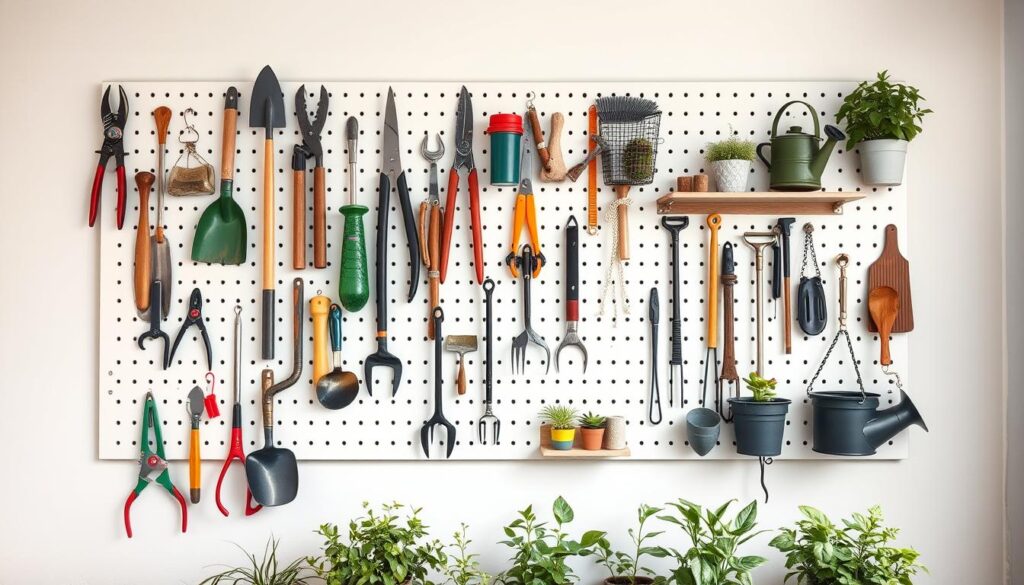
Shelves and hooks hold bulk gear like drills and saws while hooks stow hammers and wrenches. Place heavy shelves over studs and use heavy-duty anchors for safety.
Magnetic strips—where do metal pieces belong?
Mount magnetic strips above a bench to park screwdrivers, pliers, and bits. That clears drawer space and keeps metal tools easy to find.
Why add a pegboard near your bench?
Pegboards give flexible layouts: hooks, small shelves, and bins adapt as your project mix changes. Group by task—potting, pruning, or repairs—so tools accessories live where you use them.
How do labeling and zones speed work?
Use clear labels and color-coded lanes to make parts and rails instantly readable. Cluster daily items at eye level and heavier gear low. This makes tool storage more reliable and helps keep everything tidy.
- Bold takeaway: Go vertical to keep tools organized and floors clear; sturdy shelves, hooks, and magnetic strips make items visible and easily accessible.
Hidden and Multi-Purpose Storage: Under, Inside, and Behind
Use hidden storage to hide bulk but keep access quick. Lift-top benches, under-sofa bins, and fold-away worktops turn living space into a clean, useful workshop.
Hidden drawers, fold-flat worktops, and ottomans with lift lids turn living spaces into practical workshops without clutter.
Where do under-bench and under-sofa bins fit?
Slide low-profile bins beneath benches and sofas for corded gear and tote cases. Label the front so you can grab what you need fast.
Rubber mats under rolling bins protect floors from grit. Measure clearances before buying to avoid stuck lids.
How can furniture double as storage?
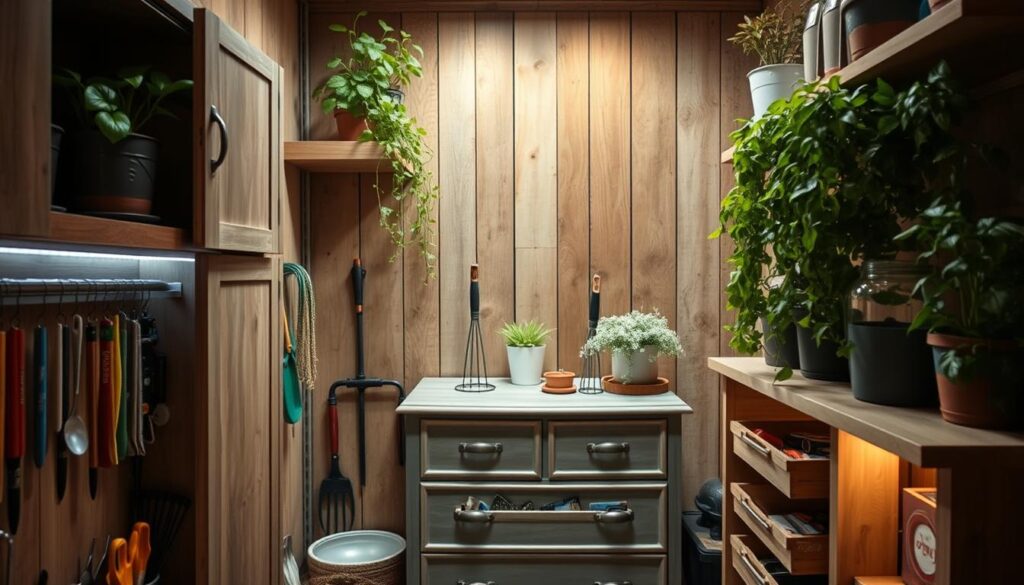
Lift-top benches and ottomans hide gloves, twine, and potting mats. Add shallow trays for smaller items so nothing sinks to the bottom.
Convert narrow cabinets into pull-out towers with full-extension slides to reach back corners easily.
Do foldable workstations make sense in shared spaces?
Foldable workstations give you a sturdy surface for a quick project and fold flat when done. Keep a grab-and-go caddy by the door for balcony tasks.
- Bold takeaway: Hide bulk without losing speed. Under-furniture bins, dual-purpose benches/ottomans, and fold-away stations add stealth storage solutions that keeps tools handy while keeping your home calm.
- Mount shallow behind-door racks for spray bottles and slim hand tools.
- Add a labeled “returns” bin to help keep stray items corralled until your weekly reset.
| Option | Best for | Key benefit | Quick tip |
|---|---|---|---|
| Under-sofa bins | Power tools, totes | Stashes bulky gear out of sight | Label fronts and measure clearance |
| Lift-top bench | Gloves, twine, mats | Seating plus hidden storage | Add shallow trays for smaller items |
| Foldable workstation | Short projects | Sturdy surface that disappears | Mount to wall or use folding legs |
Compact Tool Storage Units for Tight Apartments
Compact units give you clear, mobile places to keep everyday gear. Pick boxes and cabinets that fit your closet or slide under a bench so items stay visible and easily accessible.
Compact storage units let you tuck a full kit into a closet or under a bench. A lightweight tool box works for balcony basics. Use a rolling chest when you need extra capacity and mobility.
How do stackable bins and cabinets help?
Stackable bins grow with your collection. Sort by task—potting, irrigation, hanging planters—so related tools accessories travel together. Choose clear bodies or label fronts and tops so contents show at a glance.
What about small parts and fasteners?
Multi-drawer cabinets keep nails, screws, and anchors separated. Dedicate shallow drawers to screws and washers and deep drawers to scoops or hose nozzles. Tape an index card to the inside door to map contents quickly.
“It’s easier to start a project when the right item is visible and in reach.”
- Bold takeaway: Choose compact units that scale with your space. Toolboxes, stackable bins, and small cabinets keep smaller items visible and neatly sorted so you keep tools ready to go.
- Add a narrow magnetic strips rail inside a closet to park loose driver bits near clear boxes.
| Unit | Best for | Quick tip |
|---|---|---|
| Toolbox | Daily balcony kit | Lightweight and portable |
| Stackable bins | Task-based storage | Label fronts and stack by size |
| Multi-drawer cabinet | Small parts | Use shallow drawers for hardware |
DIY Builds: Budget-Friendly Tool Storage Ideas You Can Make This Weekend
Want quick, low-cost projects that free counters and keep gear ready? These builds use common supplies and basic skills to create tailored storage that fits tight urban space.
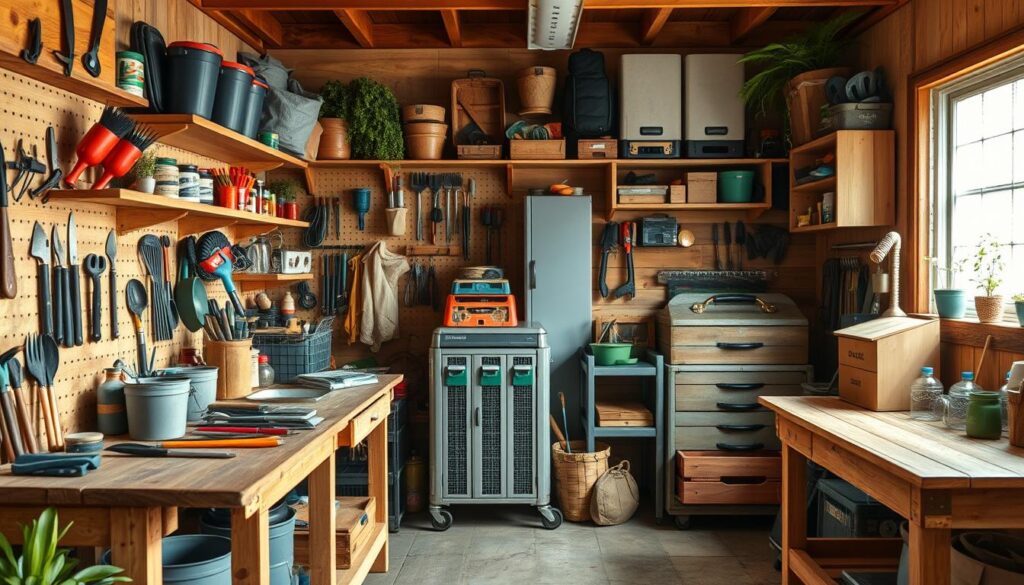
Floating shelves with magnetic strips secure metal tools and free your work surface. Choose a stud or use heavy anchors, add a concealed cleat for strength, then screw strong magnetic strips to the shelf face at varied heights.
How do mason jars help with small parts?
Screw mason jar lids under shelves to hold nails, anchors, and smaller items. Twist jars on to see contents and grab what you need without opening a drawer.
Can PVC pipe organize drivers and chisels?
Cut short PVC lengths and screw them to a backer board to holster screwdrivers and chisels upright. Label each tube so every tool returns to its spot.
What about mobile storage from upcycled crates?
Divide reclaimed crates, mount swivel casters, and slide the cart under a bench. This rolling unit becomes a handy, out-of-the-way tool storage cart.
- Bold takeaway: With basic supplies and an afternoon, you can build custom storage that fits your space. Floating shelves with magnetic strips, jar rails, PVC racks, and rolling crates keep tools visible, sorted, and off counters.
Move with Your Project: Portable and On-the-Go Storage
Take your kit where the work is—mobility saves time and keeps projects moving. This section shows compact carry options that keep essentials ready and easily accessible.
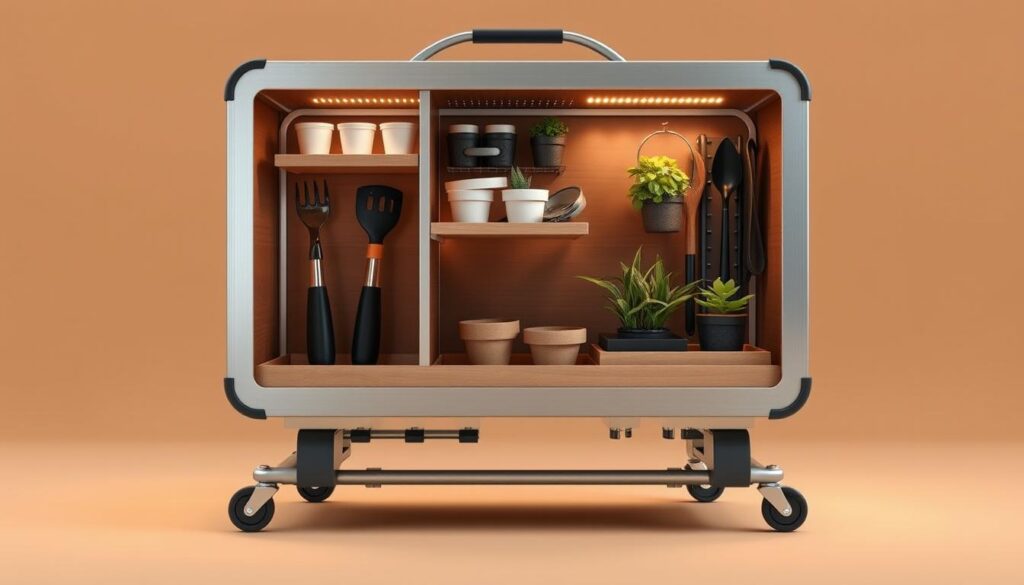
What makes roll-up bags and pouches useful?
Roll-up bags lay flat so every item is visible. Roll them for compact storage and quick grab-and-go use.
Pack pruners, snips, plant ties, and a tape measure. A bucket with an organizer or a small pouch carries supplies for balcony fixes.
When should you pick a cart or chest?
Three-tier carts sort by task: planting up top, fasteners in the middle, cleanup below. Removable trays travel upstairs with you.
A small rolling chest adds capacity and locks casters for a steady work surface. Add a charging station so batteries stay ready.
Bold takeaway:
Choose portable storage that moves with you. Roll-ups, pouches, carts, and chests keep tools and items together, easily accessible, and ready to get started wherever your projects take you.
| Option | Best for | Key feature |
|---|---|---|
| Roll-up bag | Daily hand kit | Flat visibility, compact roll |
| Three-tier cart | Task-based flow | Removable trays, mobile tiers |
| Small rolling chest | Large kits | High capacity, lockable casters |
Essential Multipurpose Tools for Every DIY Project in Small Spaces
Pick a few high-impact items and your small space will handle surprisingly big projects. A compact kit of core gear saves trips and keeps work tidy. Focus on quality over quantity to prevent clutter and speed tasks.
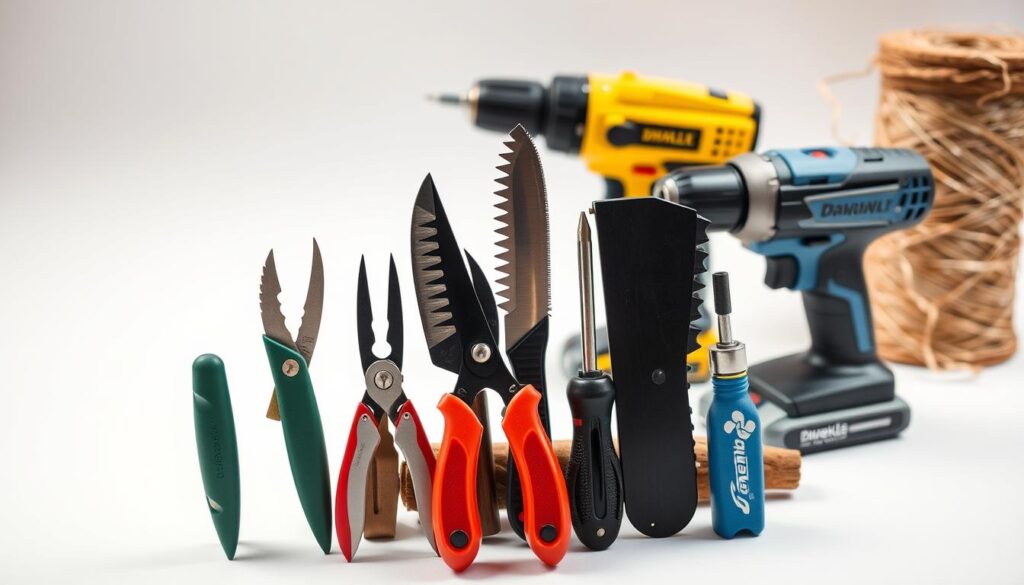
Which drill, bits, and levels should you prioritize?
Start with a cordless drill and a full set of driver bits. Add masonry and brad-point bits for brick or trim. Carry a mixed set of screwdrivers and both a standard 24–48″ level plus a compact laser level for fast, accurate installs.
What finishing items make shelves and cabinets look sharp?
A random orbital sander with grits from 80–220 smooths cuts quickly. Pair it with a drip-resistant caulk gun that has an integrated cutter for clean seams on shelves and cabinets.
When do you add saws and nailers to your kit?
A compact miter saw handles trim and planter frames. A cordless finish nailer speeds assembly without a compressor. Keep chargers in one labeled bin so batteries and power tools are ready.
“A compact, multipurpose kit does the heavy lifting.”
- Bold takeaway: Prioritize a drill with quality drill bits, core hand items, accurate level options, and a couple of smart power tools to cover most projects at home.
no room tools guide multipurpose diy solutions: Organize Tools Now, Garden More Later
Want faster projects and calmer weekends? A clear system saves gardening time and stress.
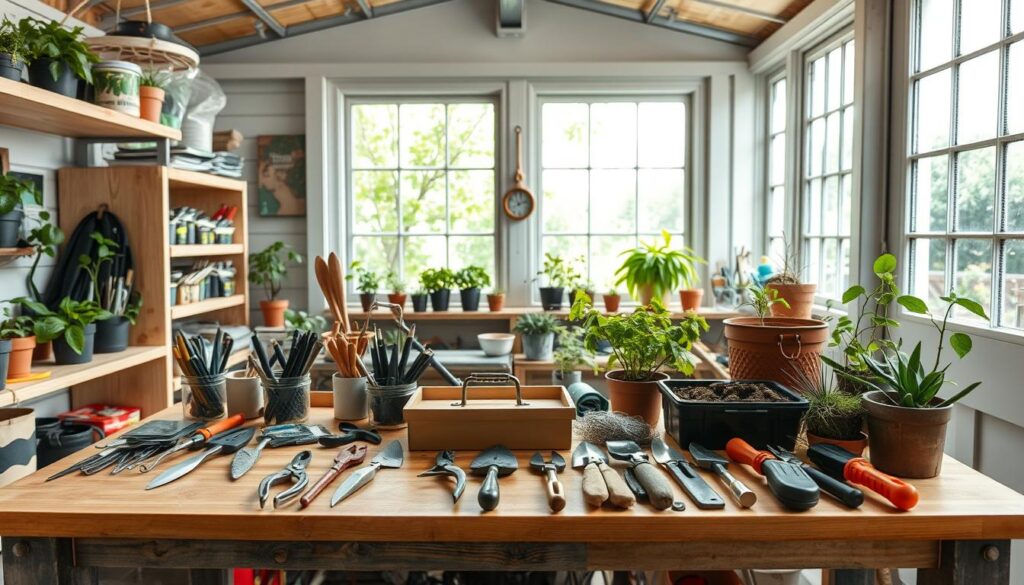
Set small habits that protect gear and speed work. Label bins, return each item after use, and schedule a 15-minute weekly reset. Those short routines keep your storage tidy and cut future search time.
Pair wall-mounted racks and compact drawers with a portable pouch or roll-up bag. That lets top tools accessories travel to the plants, not you. Mobile kits and carts make short jobs feel effortless.
“A clear system pays you back in gardening time.”
- Bold takeaway: A clear system pays you back in gardening time. Combine vertical racks, compact drawers, and mobile kits to organize tools fast—then lock in habits that keep tools organized through busy seasons.
- Create a 15-minute weekly reset to return each tool to its labeled home; small routines multiply saved time.
- Pair wall tool storage with a portable pouch so top tools accessories travel to the plants instead of you.
- Use a simple audit checklist each month; archive or donate duplicates to free space.
- Keep a fastener index in your small parts cabinet; update it after each project.
| Action | What to do | Why it helps |
|---|---|---|
| Weekly reset | 15 minutes: return items, wipe surfaces | Prevents clutter buildup and saves time on future tasks |
| Mobile kit | Portable pouch or tray with daily items | Makes short jobs quick and keeps floors clear |
| Quarterly upgrade | Add one new tool storage ideas piece | Improves function gradually without big cost |
| Monthly audit | Check labels, archive duplicates | Frees space and keeps inventory accurate |
For fresh ideas and clever shelving tweaks, check this short list of organization tips: garden organization ideas. Blend those with simple builds like pegboards and magnetic rails to match your budget and footprint.
Conclusion
Choose one compact improvement today and your future projects will feel easier.
This short system mixes vertical shelves, slim cabinets, and a compact storage solution so frequently used items stay visible and ready.
Start with a clear zone: park the most frequently used gear at eye level for an easy grab and an easy find. Add a labeled drawer or a narrow shelf and keep smaller items in clear boxes.
Keep a core kit—a drill, a level, and a couple of light power tools—so you save time when a project calls. Mix simple storage ideas and a weekly reset to organize tools as you go.
Bold takeaway: Clear zones, sturdy shelves, and steady habits free space and protect your time. Whether you’re a renter or owner, these steps keeps tools tidy, easily accessible, and ready for the next season—whatever your type of garden.