
What if your greenhouse could cut work, recycle waste, and give steady harvests with less input? That question guides this practical guide.
Here you’ll find a clear way to shape a living space that borrows from permaculture and smart greenhouse practices. Small tricks like vertical racks, companion planting, and simple compost layers make big differences.
Think in terms of flows: channel rainwater, trap heat from compost, and stack plants so each spot does more than one job. These moves save time and build soil so your environment supports plants year-round.
The promise: a greenhouse designed to recycle resources and reduce labor while producing steady yields. You’ll learn how to plan, place, and maintain the key parts to make that happen.
Key Takeaways
- Stack functions with verticals, companions, and polycultures to use space well.
- Turn waste into resources via compost and simple animal integration.
- Save water with rain capture, drip lines, ollas, and mulch.
- Balance heat and air to stabilize conditions through seasons.
- Focus on practical steps that cut labor and boost plant health.
Understand Permaculture for Greenhouses in the United States Today
Begin with quiet observation: note sun angles, drafts, and soil warmth from dawn to dusk. That simple step shows where to place beds, water tanks, and compost so each element supports the rest.
Permaculture is a practical design approach that models small spaces on natural ecosystems. Each part should help others, so plants, microbes, water, and people all contribute to lasting fertility and lower inputs.
Core principles for enclosed growing environments
- Observe and interact: watch microclimates before altering them.
- Catch and store energy: use rain capture, compost heat, and thermal mass.
- Integrate rather than segregate: place worm bins and chicken runs to recycle nutrients.

Why a mini-ecosystem reduces inputs and boosts resilience
Soil health improves with compost, mulch, and continuous roots. That feeds plants and cuts fertilizer needs.
“A diverse, linked set of practices turns waste into resources and steady yields.”
| Feature | Indoor tactic | Primary benefit |
|---|---|---|
| Water capture | Rain barrels & drip lines | Lower mains use, steady moisture |
| Biomass heat | Compost piles near beds | Extended season, CO2 boost |
| Biodiversity | Polycultures & companions | Fewer pests, better pollination |
Plan Your System: Observe Site, Map Zones, and Design for Flow
Start by learning how light, wind, and water behave on your plot. Good observation cuts wasted effort and helps you place beds, barrels, and benches where they serve best.
First, learn your site: note where morning warmth rises, where winds sweep, and where water pools.
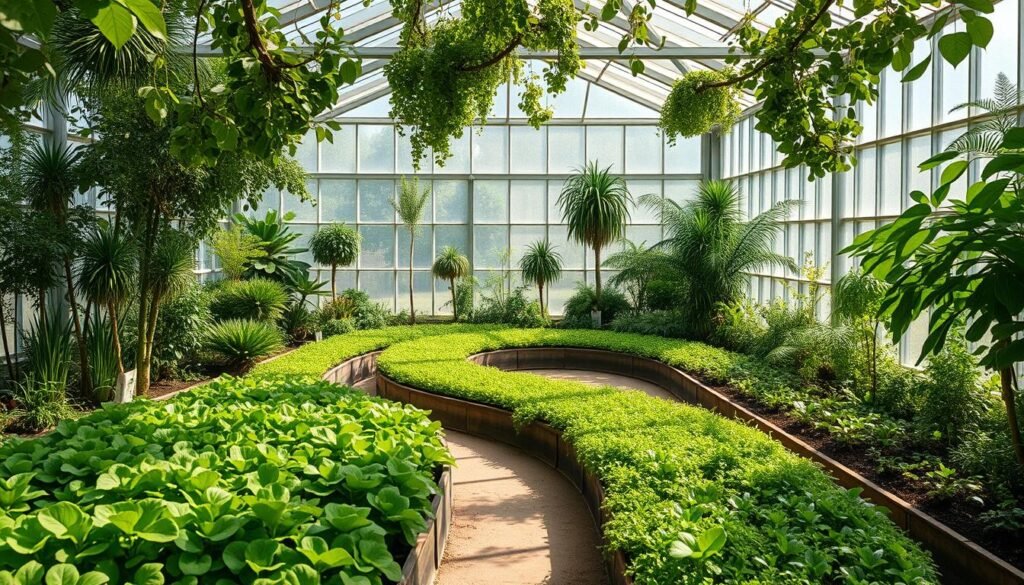
Sun, wind, and water flow: reading your microclimate
Keep a simple site notebook. Sketch sun paths, shade lines, and water flow to see daily patterns. Morning sun warms seedlings; afternoon shade shields tender plants. Watch prevailing winds to decide vent and door placement so air moves naturally through the space.
Greenhouse zoning: from high-touch beds to semi-wild edges
Arrange zones by use: put daily herbs and propagation benches near the door. Place rain barrels upslope of beds so gravity feeds drip lines and saves pumps. Cluster compost, worm bins, and potting benches together for quick access.
| Action | Placement | Benefit |
|---|---|---|
| Rain barrels upslope | Above main beds | Gravity-fed water flow, less energy |
| Work bench by entry | Near door | Faster tasks, more frequent care |
| Trellis on north side | Back wall | Prevents shading and saves space |
Water Strategy: Harvest, Store, and Deliver Moisture Efficiently
Smart water handling starts at the roof and ends at the roots. Catch roof runoff and move it slowly to beds using simple, low-energy methods. Pair delivery tactics so plants stay steady when weather changes.
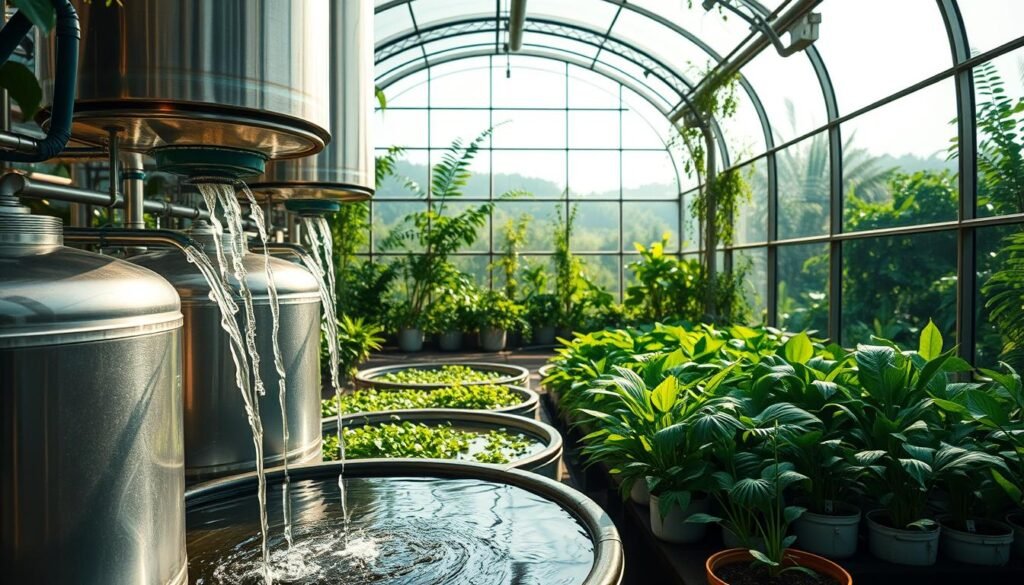
Begin with gutters that feed covered barrels. Gravity-fed lines cut pumps and keep steady water flow to beds. Add a screened inlet and secure lids to keep water clean and mosquitoes out.
How can you capture and reuse household water?
Run a small greywater line from a sink through a basic filter into a drip zone. Use only biodegradable soaps. This extends stored resources while protecting plants and soil.
What delivery methods save time and keep roots happy?
- Drip headers and in-line emitters target roots and reduce wet foliage, lowering disease risk.
- Ollas (buried clay pots) release moisture slowly and cut daily watering chores.
- Mulch deeply with shredded leaves or straw to lock in moisture and protect soil life.
Why shape the land around the structure?
Gentle swales or contour berms slow runoff and help infiltration near the beds. Pair drip with ollas for redundancy during heat spells or vacations.
“A simple moisture check—squeeze a handful of soil—tells you more than a clock.”
| Action | Tool | Benefit |
|---|---|---|
| Roof capture | Gutters & covered barrels | Gravity-fed irrigation, low energy |
| Greywater reuse | Filter & soft line | Extends stored water, saves mains use |
| Targeted delivery | Drip + ollas | Consistent soil wetting, less labor |
| Surface shaping | Swales/berms | More infiltration, reduced erosion |
For more detailed setups and tips, see smart water solutions.
Energy and Climate: Passive Solar, Thermal Mass, and Compost Heat
Let the sun do the heavy lifting: orient, insulate, and store heat where it matters most. This section explains simple actions to hold daytime energy and use compost as a gentle heater so plants can thrive in cold months.
How can glazing and orientation stabilize interior temperatures?
Orient the long side toward winter sun and pick insulated glazing like twin-wall polycarbonate. Insulated panels keep greenhouse temperatures steadier without constant fuel.
How does thermal mass help overnight warmth?
Add water barrels along the north wall and place stone or masonry under benches. These elements absorb heat by day and release it at night.
Can compost sensibly add heat and CO2?
Keep a managed compost bay inside or just outside the structure. A working pile adds mild heat and CO2 when balanced and turned regularly.
“Layer passive solar, thermal mass, and compost to smooth swings and support year-long production.”
| Measure | Example | Benefit |
|---|---|---|
| Glazing choice | Twin-wall polycarbonate | Insulation + UV protection, stable temperatures |
| Thermal mass | Water barrels & stone | Stores daytime heat, warms nights |
| Compost heat | Managed active pile | Supplemental warmth and extra CO2 |
| Monitoring | Max/min & soil thermometers | Fine-tune vents and placement |
Practical tips: seal low drafts, allow high vents that you can control, and vent on sunny winter days to avoid overheating. Track temperatures with simple tools to tune your approach in this living ecosystem.
Nutrient Loop: Composting, Worms, and Soil Health
Turn kitchen scraps and yard trimmings into steady soil fuel with a few simple piles and bins. Closed nutrient loops save time and build long-term fertility for beds and containers.
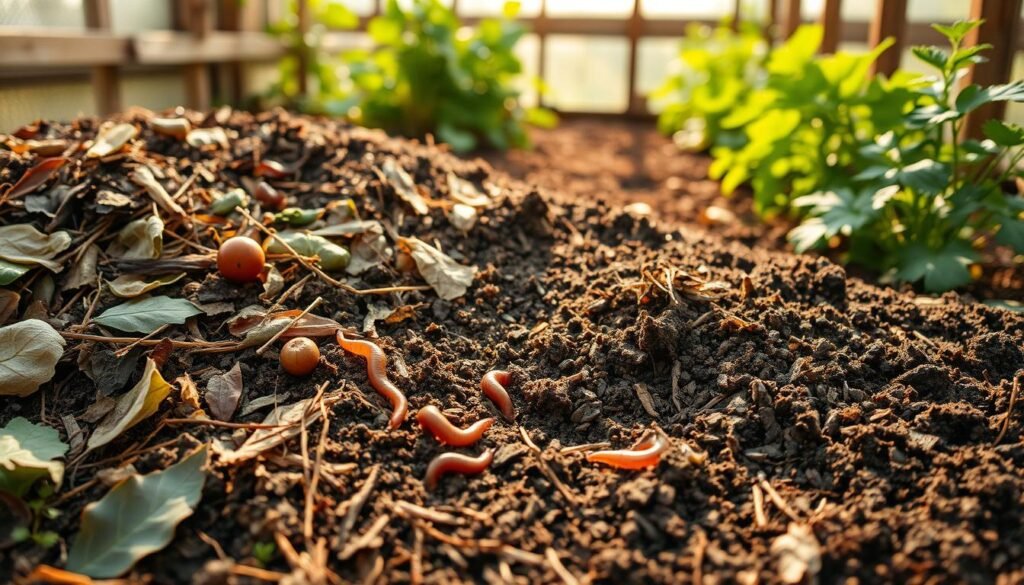
Build fertility by feeding soil life, not just plants. Layer fresh greens like clippings and kitchen scraps with browns such as dried leaves and cardboard. Keep the pile damp like a wrung-out sponge and turn when hot to speed breakdown.
How do you make reliable hot compost?
Alternate green and brown matter in a 3x3x3-foot bin to heat well. Add water until the mass feels moist, then turn weekly to keep oxygen flowing and temperatures even.
Why add worms and vermicompost?
Red wigglers in a compact bin convert scraps into rich castings. Use those castings in seed mixes and as a top-dress to deliver gentle nutrients that improve soil health and structure.
Can chickens help close the loop?
Chickens eat many plant scraps and produce manure that becomes strong fertilizer after full composting. Collect bedding and manure, compost until cured, then return it to beds.
- Build hot compost: alternate greens and browns, water to wrung-out sponge, turn weekly.
- Start a worm bin: red wigglers, chopped scraps, shredded leaves for steady castings.
- Age manure: compost chicken bedding fully before soil application.
- Test soil annually: target missing nutrients and avoid over-application.
- Mulch after feeding: protect biology and conserve moisture.
“Route plant trimmings and kitchen waste into compost, then feed the beds so organic matter keeps building.”
For practical tools and a compact approach to compost inputs and outputs, see how it works.
Planting Systems: Polycultures, Companion Planting, and Vertical Space
Use planting guilds that pair helpful plants and multiply benefits. Place basil next to tomatoes to deter pests and sweeten fruit. Set beans near cucumbers so legumes add nitrogen to the soil while vines share trellis space.
Polycultures stack functions. Try a greenhouse-friendly three sisters example: compact corn for support, pole beans to fix nitrogen, and small-leaf squash as a living mulch to shade soil and suppress weeds.
Mix fast and slow crops. Interplant radishes with cabbage so you harvest early while larger plants establish. This keeps roots working and soil covered between main crops.
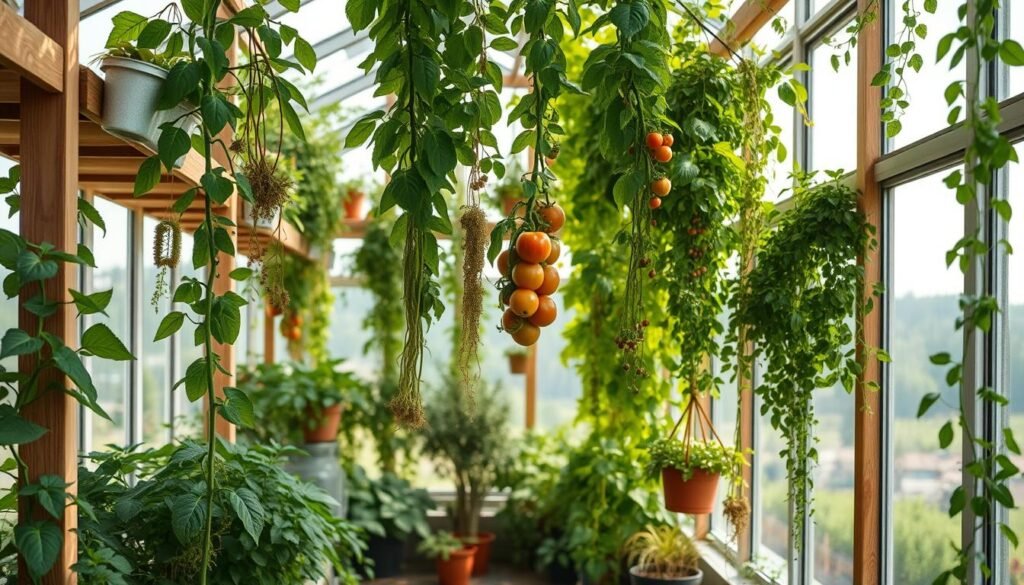
What vertical methods expand growing space and airflow?
Install sturdy trellises for cucumbers and peas. Add tiered shelves for herbs and seedlings to multiply growing space and improve light access.
- Match habits: pair plants by height and light needs so no species overwhelms another.
- Rotate families: move plant groups seasonally to break pest cycles and keep fertility balanced.
- Prune and train: routine shaping improves light and harvest ease and reduces disease pressure.
“Record which combinations shine in your permaculture greenhouse, then reuse those patterns next season.”
Pest Control the Permaculture Way
Let diversity do the heavy lifting: invite helpful insects, birds, and plants so pest control becomes mostly preventive.
Build an integrated approach that uses habitat, companions, and simple barriers before turning to sprays.
Integrate, don’t segregate: biodiversity for balance
Design your beds and edges to host pollinators and predators. Flowering strips and small insect hotels bring ladybugs, lacewings, and parasitic wasps that eat common pests.
Place compost piles and outdoor chicken runs nearby to interrupt life cycles. Chickens reduce fly larvae in compost and cut a major source of greenhouse pests.
Which plants help repel pests naturally?
Plant borders with marigolds and tuck basil near tomatoes; these plants like warm, sunny spots and can repel pests or mask host scents.
Use mixed plantings so pests struggle to find their target and natural enemies find steady food.
- Sanitation: remove diseased leaves and manage humidity to lower pest outbreaks.
- Barriers: fine mesh on vents and row covers block entry while keeping airflow.
- Rotate crops: break pest life cycles with varied planting schedules.
- Spot-treat: try insecticidal soap first; keep stronger options as last resort.
- Observe: daily checks catch issues early and keep interventions small.
- Track results: record what works so your pest control approach stays simple and local.
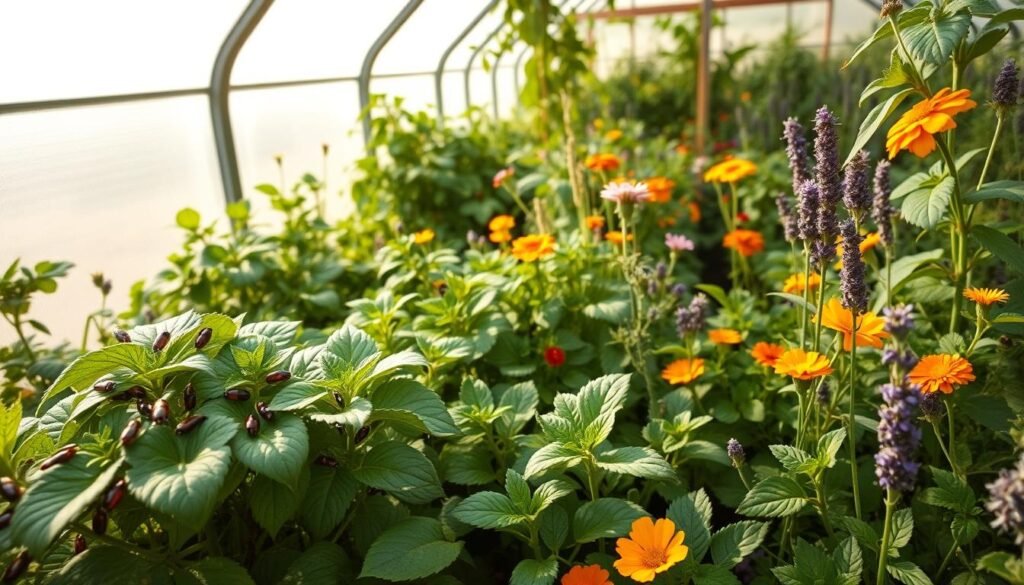
“A small, diverse habitat reduces outbreaks and keeps yields steady with less chemical input.”
| Action | Tool or plant | Benefit |
|---|---|---|
| Border planting | Marigolds & basil | Deters nematodes and some insects; masks crop scents |
| Habitat addition | Insect hotels & flowering strips | Supports predators and pollinators |
| Sanitation & barriers | Remove infected foliage; fine mesh vents | Reduces disease and blocks pest entry |
| Integrated practice | Chickens near compost | Reduces fly larvae and lowers pest pressure |
For companion planting ideas and herb layout, see raised herb garden tips for practical examples that fit this approach.
How-To: permaculture greenhouses designing self-sustaining grow system
Sketch a clear layout, then add simple water and compost elements so daily care stays easy. Work in small steps and expand as the approach proves itself.
Start by sketching a simple map that shows beds, water points, and access paths so movement feels natural.
Step-by-step setup: layout, irrigation, compost, and bed prep
- Map the layout first: place beds, trellises, and shelves to maximize light and movement.
- Install rain barrels and a drip header or ollas for low-labor irrigation.
- Build a 3x3x3 compost bin; layer greens and browns, keep the pile like a wrung-out sponge, and plan weekly turns.
- Set a worm bin with red wigglers under a bench for steady castings.
- Prep beds with finished compost and mulch to protect soil and kick-start biology.

Resource checklist: tools, materials, and renewable inputs
Keep essentials near the door so maintenance feels effortless. Track inputs and harvests to refine the method.
| Item | Purpose | Example |
|---|---|---|
| Barrels & gutters | Capture water | Gravity-fed drip |
| Compost bin | Make compost | 3x3x3 hot pile |
| Worm bin | Produce castings | Red wigglers under bench |
“Example workflow: collect trimmings, feed worms, bulk to compost, water from barrels, and record inputs for steady improvement.”
Sizing, Yields, and Year-Round Production
Decide how many meals you want covered, then map the bed space and rotation to meet that goal. This makes food security practical: pick target harvests, size beds, and set seeding dates so supply matches demand.
How much area and compost will you need?
Begin with a list of desired crops and weekly harvest targets. Estimate square feet per crop and build a simple calendar for succession planting.
Plan compost around steady inputs: at least one active 3x3x3 bin and a curing bay for a small setup. That volume returns enough organic matter to feed beds and keep soil healthy.
How do you manage heat, moisture, and animals for four seasons?
Balance a few chickens to process scraps and supply manure but always compost manure before adding to beds. Use drip irrigation or ollas plus mulch to cut water use and steady moisture.
Layer energy strategies—passive solar gains, thermal mass, and compost heat—to stabilize greenhouse temperatures and protect tender plants through the year.
“Record pounds per square foot and compost volume so you can scale predictably.”
| Item | Recommendation | Benefit |
|---|---|---|
| Bed area | Size by weekly harvest targets | Matches output to food security goals |
| Compost | 1 active 3x3x3 + curing bay | Steady soil inputs, pathogen-free manure |
| Water storage | Barrels for 2 dry weeks | Reduces pumps, maintains moisture |
| Energy mix | Passive solar + thermal mass + compost | Smooths temperature swings, extends season |
Conclusion
Treat beds, barrels, and benches as parts of one working whole rather than separate chores. When elements link, energy and water move where plants need them and daily work shrinks.
Observe first and design for steady flow: capture heat and water, feed soil with regular compost and worm castings, and place tools so maintenance stays easy.
Balance passive energy, thermal mass, and a warm compost bay so temperatures hold without complex gear. Pair drip irrigation with mulch to protect moisture and save time across your growing space.
Diversify plantings—add beans and flowering edges—to build a resilient ecosystem that repels pests naturally and boosts nutrient cycles.
Start small, tune by observation, and scale what works. For practical principles and examples, see permaculture ideals to help plan your next steps with confidence.