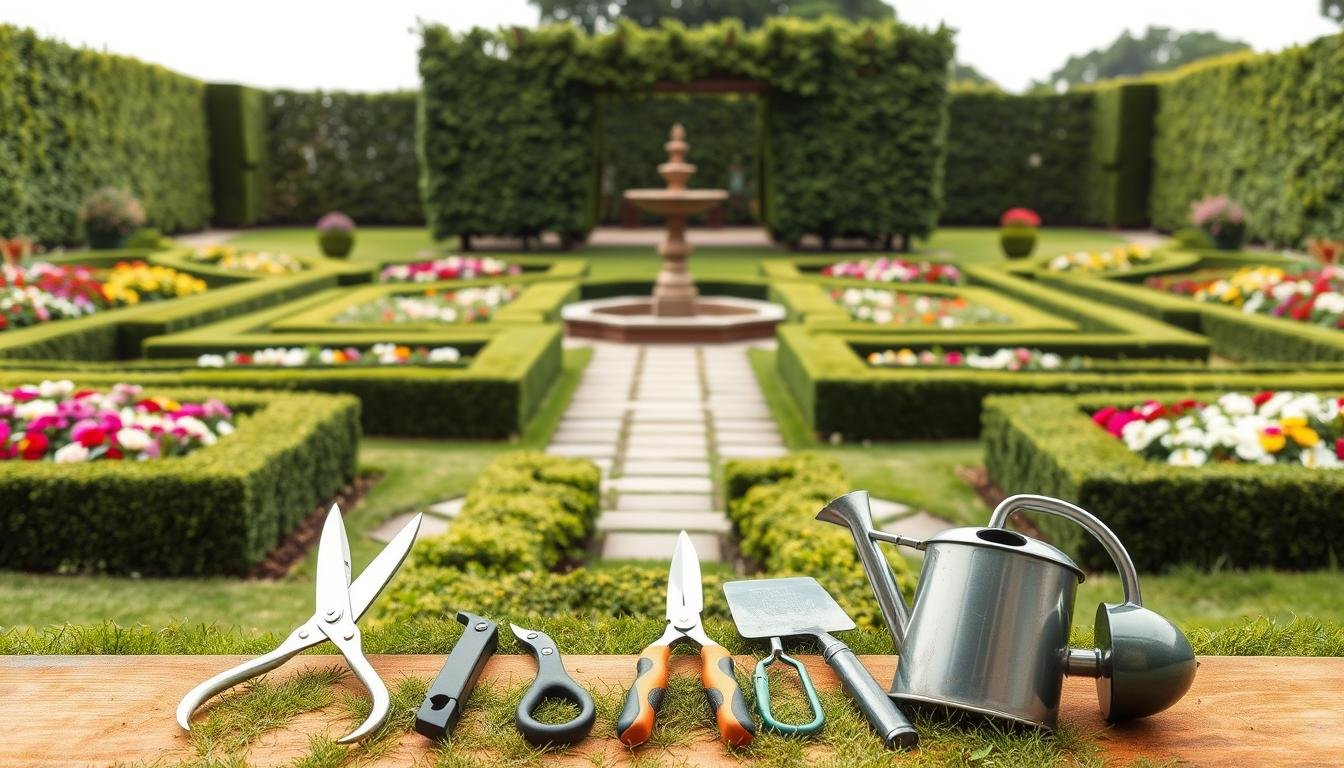
Which single choice changes a chore into a pleasure: the right hand, the right blade, or the right design? That question guides every pick I make for two very different spaces.
The crisp beds in a formal plot ask for precise, balanced implements. A wild meadow prefers forgiving, lighter gear that meets seasonal flow. Matching each job to one proper instrument saves time and yields cleaner results.
Prioritize metal that lasts — hardened, stainless, or carbon steel — and look for cushioned, ergonomic handles that reduce fatigue. Keep each cutting edge sharp and sterilized; a clean blade protects plants and speeds work.
Start with long-handled and hand versions of core categories, invest once, and maintain often. Oil moving parts and hold on to receipts and warranties so quality gear pays back over seasons.
Key Takeaways
- Match the implement to the space: precision for beds, flexibility for meadows.
- Choose durable metals and cushioned grips for comfort and long life.
- Sharpen and sterilize blades after cuts to protect plants and ensure clean cuts.
- Keep both long-handled and hand-held versions to cover all tasks.
- Maintain gear, oil mechanisms, and keep receipts to avoid buyer’s remorse.
Why Formal Gardens and Wild Meadows Need Different Tools
Design intent shapes every choice. Clean geometry calls for precise cuts and tight edges, while naturalized areas need sweeping actions and reach. Match the implement to how you want plants to look and thrive.
A clipped, geometric bed asks for instruments that make crisp, repeatable cuts. Tight spacing favors compact heads that protect nearby plants and keep lines sharp.
How does design guide selection?
Clean-lined designs need a tool that tracks straight along the ground and holds an edge. Think bypass pruners, hedge shears, and edging spades for visible borders.
How do plant density and surface affect the choice?
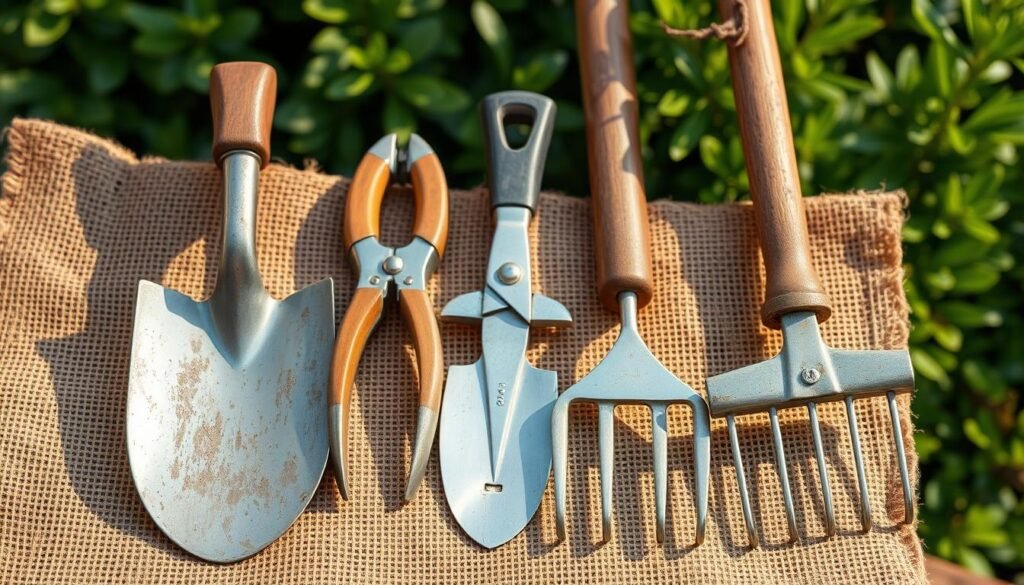
Dense meadows benefit from long-handled hoes, wire weeders, and scythes or battery trimmers that sweep under seedlings and cut back tall stems.
| Area | Best action | Example implements |
|---|---|---|
| Formal beds | Precision cuts, straight edges | Bypass pruners, hedge shears, edging spade |
| Wild meadows | Sweeping cuts, reach | Stirrup hoes, wire weeders, scythes/trimmers |
| Watering notes | Flow vs length | 1/2″ ≈ 9 gpm; 5/8″ ≈ 15 gpm; 3/4″ ≈ 25 gpm (longer hose lowers pressure) |
Match choices to soil, stem thickness, and surface friction to protect plants and preserve the look you want.
Tools I Use Neat-and-Tidy Formal Garden Are
Formal beds stay sharp with bypass pruners, hedge shears, and edging spades. Pair them with flat-blade shovels for cleanup, shrub/leaf rakes for detail, and a rain wand for precise watering.
For crisp beds, pick implements that deliver clean lines and steady control.

Bypass pruners and hedge shears for crisp, clean cuts
Bypass pruners make scissor-like pruning on live wood up to 1/2–1 1/2 inch. Choose hardened or stainless steel blades with a cushioned handle. Keep the pivot oiled so cuts stay true and the sharp blade lasts.
Edging spades and flat-blade shovels for straight borders
An edging spade with a firm head registers a straight line along beds. Follow with a flat-blade shovel to lift strips and move soil. The shovel’s scoop head is great for cleanup, not deep digging.
Shrub/leaf rakes for debris-free surfaces
Compact shrub rakes reach tight corners without scratching mulch or paving. Their adjustable handles and light head keep motion steady during fine cleanup.
Watering wands and hose/nozzle control for precision
A watering wand threads under foliage and gives a gentle shower to reduce leaf splash. Balanced handles cut wrist strain and help you aim flow where beds need it most.
Tools I Reach For in a Wild Meadow
Open, grassy stands call for long reach and flowing strokes rather than tight edges. Pick gear that moves through stems and lifts seedlings with low soil disturbance. This keeps the meadow lively and low-maintenance.

Which long-handled implements glide under surface roots?
Long-handled hoes, especially stirrup (oscillating) hoes, score a push-pull action that slices top growth just below the surface. Wire weeders pull threadlike seedlings with minimal disruption and work well around irrigation lines.
What speeds seasonal cutting of grasses and perennials?
For large swaths, a scythe or a battery hedge trimmer speeds up cutting back without cords or fumes. Batteries make tall stems quick work and reduce fatigue during long sessions.
How do you work clumps, roots, and rocky soil?
Keep a digging spade with a solid collar and a comfortable handle to divide clumps or open pockets in stony soil. A garden fork with square tines has the strength to pry and loosen compacted ground while protecting desired roots.
- In meadows, long-handled hoes and wire weeders work with sweeping action under the surface. Use scythes or battery trimmers for seasonal cutting, and rely on digging spades and forks for clumps and rocky soil.
- Choose a stirrup hoe for an efficient push-pull motion while you stand upright.
- Wire weeders lift seedlings with little soil disturbance, keeping the seed bank calmer.
- When saplings appear near trees, a clean base stroke prevents repeat work.
| Implement | Best use | Key feature |
|---|---|---|
| Stirrup (oscillating) hoe | Top-growth undercutting | Push-pull action, ergonomic reach |
| Wire weeder | Seedling removal | Minimal soil disturbance, safe near irrigation |
| Battery trimmer / scythe | Seasonal cutting | Cordless speed, low fumes |
| Digging spade & garden fork | Dividing clumps, loosen compacted soil | Kick plate, solid collar, square tines for strength |
Pruning Gear: Anvil vs Bypass, Loppers, and Pole Saws
Pruning choices shape plant health and save effort. Use the right head for the wood, keep a sharp blade, and protect your eyes and head when working above you.
Pruning choices change how a shrub heals and how much effort a session takes.
Which cutter is best for live stems or dead wood?
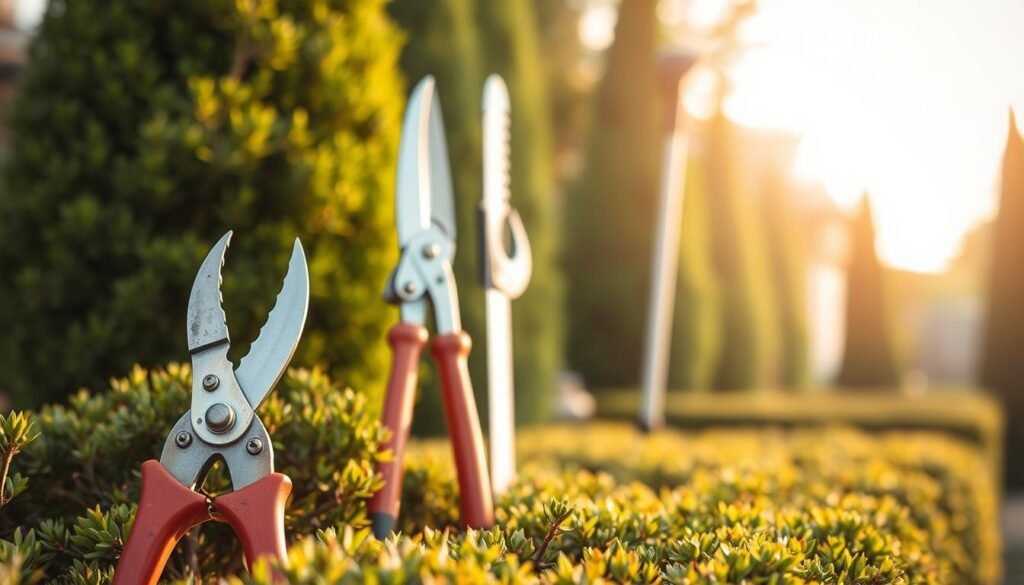
Pick bypass pruners for live green wood; they slice cleanly so wounds heal well. Reserve an anvil for dry or hard branches up to about 3/4 inch, where crushing is less harmful.
When do loppers and telescopic handles pay off?
Ratcheting loppers multiply force so your hands tire less on thicker branches. Telescopic models extend reach and let you make controlled cuts deeper in shrubs without stepping into beds.
How should you approach overhead work on trees?
Pole pruners and saws handle larger limbs (roughly 2–9 inch). Plan each cut, wear head and eye protection, and watch falling debris.
How do you keep blades sharp and sanitized?
A sharp blade makes neater cuts and lowers effort. Wipe sap, oil pivots with WD-40, and disinfect between plants with a 1:9 bleach mix or 70% isopropyl alcohol.
“Choose the right head for the job and respect safety—clean, sharp blades protect plants and people.”
- Use bypass for live plants and anvil for dead wood. Add ratcheting loppers for thicker cuts, and a pole saw for overhead branches—always with head/eye protection and a sharp blade.
- For more on selection and care, see this must-have pruning gear.
Weed Control: Hoes, Knives, and Stand-Up Pullers
Weed control works best when you match motion to the job. Choose fast, sweeping cuts for surface seedlings and precise blades for buried roots. This keeps soil disturbance low and helps desirable plants thrive.

How does an action hoe speed surface clearing?
Stirrup or oscillating hoes cut just below the surface with a push-pull action. Use them when the ground is dry to slice seedlings before they anchor.
They clear small weeds quickly across beds and paths. Short passes save time and reduce back strain.
When should you reach for a Hori Hori or soil knife?
Multi-purpose Hori Hori knives slice fibrous roots and lift seedlings from crowded edges. The sharp knife lets you dig a small plug without upsetting nearby plants.
Choose a stout steel blade and a solid handle. Lightly sharpen and oil the edge after work for safer, easier cuts.
What pulls taproots with the least disturbance?
Dandelion weeders, fishtail heads, and leveraged stand-up pullers reach deep to pop crowns free. They remove taproots cleanly while keeping the soil surface mostly intact.
Where do wire weeders fit in the plan?
Wire weeders lift tiny seedlings with minimal fuss. They work well around drip lines and emitters, protecting irrigation while clearing seedlings from the planting surface.
- Match the weeder to the job: action hoes for speed, soil knives for precision, and stand-up pullers for deep taproots. Disturb less soil to prevent new weeds.
- Keep a small hand tool on your belt for spot-weeding as you move.
Soil and Digging Tools: Shovels, Spades, Forks, and Sporks
Choose the right head for the job: rounded spades dig and flat scoops move material. A clear match between blade shape and task saves effort and protects plant roots.

When should you pick a rounded digging spade or a flat scoop?
A rounded digging spade penetrates compact soil and opens planting holes with less side damage. It works well for planting and lifting root balls.
Flat scoops excel at shifting mulch, gravel, or compost. They carry material quickly but do not pry into dense soil.
Why choose a garden fork with square tines?
Square tines lift and aerate heavy clay while turning compost cleanly. They resist bending in rocky ground and keep soil structure intact.
Which shovels make clean edges and drainage runs?
An edging shovel cuts straight borders. A trench shovel makes narrow channels for irrigation and drainage with minimal disturbance.
- Choose rounded blades for digging and flat scoops for moving material. Use forks with square tines to loosen compacted soil and turn compost cleanly.
- A rounded digging spade with a supportive handle and kick plate opens planting holes without cracking nearby soil.
- Flat scoops shine when shifting mulch or gravel; they’re not meant for prying into dense soil.
- Garden forks with square tines lift and aerate compacted or clay soil and mix in compost without smearing layers.
- A spork-style implement blends fork tines and a spade body to cut friction in heavy soils and protect adjacent roots.
- Prefer stainless or tempered steel heads and a secure collar on a sturdy handle. Keep a trowel and soil knife for fine edge shaping and to slice circling roots before planting.
Rakes and Cleanup: Iron, Leaf, Thatch, and Hand Rakes
Which rake fits each cleanup chore? A rigid iron rake levels, a flexible leaf rake sweeps wide, and a thatch rake lifts dead turf so air and water reach roots.
A solid rake can change a rough bed into a smooth, walkable surface in a few firm passes.
Steel-tine iron rakes have stiff tines that move mulch and gravel and help aerate compact soil. The heavy metal head pulls evenly across the surface without chatter.
Adjustable leaf rakes shift head width and handle length so you can work narrow areas then expand for broad sweeps. Steel models beat plastic when you need strength, but take care on tender turf.
Thatch rakes have sharpened teeth to cut through dead layers. A small hand rake reaches under shrubs to clear debris at the end of branches without tearing foliage.
- Use iron rakes with steel tines for heavy material and adjustable leaf rakes for fast clearance; add a thatch rake when turf needs renewal.
- Mind head angle to reduce wrist strain on long passes.
- Keep a compact trowel nearby to scoop piles into bags or bins as you work.
Watering and Hauling: Hoses, Wands, Cans, and Wheelbarrows
Match flow and reach to the task, and let hauling gear protect your back. A right-sized hose keeps water where it belongs and a balanced barrow saves effort when moving soil or compost.
How does hose diameter and length affect flow?
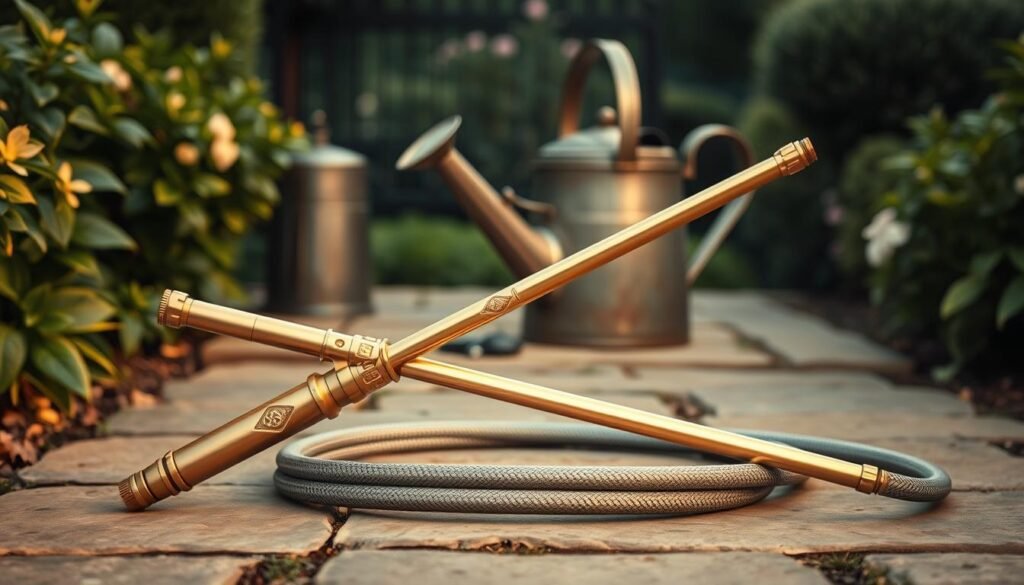
Pick diameter for flow: 1/2″ ≈ 9 gpm, 5/8″ ≈ 15 gpm, and 3/4″ up to 25 gpm. Remember: longer length lowers pressure at the nozzle.
Tip: Choose the shortest hose length that covers your beds to preserve pressure. Store hoses coiled, out of sun, and without kinks to extend life.
When should you reach for a rain wand or a watering can?
Rain wands (10–48″) give a gentle shower and often include thumb valves for flow control. They reach deep beds and protect blooms and soil structure.
Watering cans come in plastic (lighter) and galvanized metal (longer lasting). Pick a capacity that fits your strength—each gallon adds over eight pounds to carry.
What hauling gear saves strain during planting and compost runs?
Two-wheel wheelbarrows balance better on uneven ground. Keep tires inflated and handles grippy to reduce rolling resistance and conserve strength.
Hand trucks move heavy pots and bags with less strain; secure loads with bungees and padding for safe transport.
- Match hose diameter and length to your garden’s reach and flow needs. Use rain wands for gentle watering under foliage, and move heavy loads with wheelbarrows or hand trucks to protect your back.
- Pick hose diameter for flow and choose the shortest length that covers your area to preserve nozzle pressure.
- An adjustable nozzle lets your hands fine-tune spray patterns for seedlings, shrubs, and cleanup.
- Store hoses neatly coiled and out of direct sun to reduce cracks and kinks over time.
For a reliable mid-length option, consider a quality 50-ft garden hose like the 50-ft garden hose when your beds sit within a typical yard reach.
Safety and Comfort: Gloves, Handles, and Ergonomics
Wear the right protection and pick grips that match your reach to work longer with less strain.
Comfort and safety shape what you wear and grip before every planting or prune.
Choose durable gloves that fit snugly. A nitrile-coated pair gives fine dexterity for pruning and planting while keeping your hands clean. Swap to leather when tackling roses or woody debris to prevent punctures and scrapes.
Match handle materials to the job. Ash absorbs shock and keeps vibration low. Aluminum or carbon-composite parts cut overall weight and help preserve your strength across long sessions. Set tool length to suit your height to protect your back and keep posture neutral.
- Wear nitrile-coated gloves for fine control and leather for thorny jobs. Choose handles and length that fit your reach, and gear up with eye protection, hats, and stable footwear.
- Add a kneeling pad or bench to ease pressure on knees and allow gentle movements.
| Item | Best for | Key benefit |
|---|---|---|
| Nitrile-coated gloves | Pruning, planting | Dexterity, breathability |
| Leather gloves | Thorns, woody debris | Puncture resistance |
| Ash handles | Shovels, forks | Shock absorption |
| Aluminum / carbon-composite | Long-handled gear | Lightweight, lower fatigue |
“Small choices in fit and grip protect your body and keep gardening sessions joyful.”
Keeping Tools Clean, Sharp, and Sanitized
Clean, sharpen, and sanitize after each session to extend tool life and protect plants. A small routine saves time and keeps steel edges and wooden handles in top condition for every season.
A short ritual prevents rust and disease. First, brush off loose soil and debris with a stiff brush.
Scrape dried mud with a putty knife or a sturdy hand scraper before proceeding.
How can oiled sand and stones help blades?
Plunge dirty blades into a bucket of clean sand mixed with oil to scrub and coat the edge. Follow with a file or a wet stone to touch up the blade. Sharp edges cut cleaner and save your time.
When should you sanitize between cuts?
Disinfect between plants to curb disease. Use a 1:9 bleach solution or 70% isopropyl alcohol on the cutting surfaces. Wipe dry and add a thin film of oil to metal parts.
What prevents rust and protects wood?
Keep steel heads oiled, spray pivots with WD-40, and rub paste wax into wooden handles every few years. Store items off the floor in a dry, ventilated spot away from damp debris.
- Clean, sharpen, and sanitize after each session to extend tool life and protect plants. Oil steel parts, wax wooden handles, and store everything dry.
- Brush off soil, then plunge blades into an oiled sand bucket to clean and lightly coat the edge and head.
- Touch up the blade on files or wet stones; sharp steel cuts straighter and saves you time with less effort.
- Disinfect blades and knives between plants using a 1:9 bleach solution or 70% isopropyl alcohol to reduce disease spread.
- Wipe off moisture and sap so metal parts don’t corrode; a thin oil film protects edges and pivots.
- Recondition wood with paste wax; it seals out moisture and keeps the grip smooth.
- Store tools off the floor in a dry, ventilated place; blades and heads last longer when they don’t sit in damp debris.
- Schedule quick hand checks mid-season to keep favorite garden implements working like new.
“A clean edge is a kind, lasting cut—treat maintenance as part of planting care.”
How to Choose Quality Tools That Last
Pick hardened, stainless, or carbon steel heads, paired with solid collars and reinforced kick plates, to get gear that stands up to real work. Invest in balanced, ergonomic pieces that fit your reach and strength, then maintain them so they keep returning value.
What matters in steel, blades, and fastenings?
Prefer hardened or stainless steel for heads and blades. Look for through-forged joints, solid collars, and reinforced kick plates where the shaft meets the head.
Confirm that tines and blades are fastened tight; any flex shortens life and adds effort.
How should a tool fit your size and strength?
Test balance in hand. A well-balanced piece tracks straight and reduces fatigue over long sessions.
Choose handle shapes that fit your grip and a length that spares your back when digging or pruning near trees.
How do you avoid gimmicks and protect your investment?
Skip flashy extras. Pick the basics built for work, then keep receipts and warranties. Regular cleaning, sharpening, and storage repay every dollar and save you time.
- Choose hardened steel, solid collars, and reinforced kick plates. Fit gear to your size and strength, skip gimmicks, and maintain it to outlast trends.
- Pick a trusty trowel and soil knife with durable edges for daily digging and planting.
- For pruning selection and care, see this pruning equipment guide and a comfy kneeler review at knee comfort roundup.
“Buy for real strength, then protect what you buy with simple maintenance.”
Conclusion
Good gear, kept sharp and stored dry, turns weekend chores into calm, focused work. Match motion to task and you’ll save time while protecting plants and soil.
Formal beds and wild meadows thrive when you match a tool to the job. Buy quality pruners like Okatsune or Felco, an all-steel spade such as King of Spades, and Showa Atlas nitrile gloves for dexterity and durability.
Keep a core set—pruners, a trowel, a soil knife, fork, and dependable spade—ready and clean. Sharpen blades, plunge heads into oiled sand, disinfect with alcohol or a 1:9 bleach mix, and rub wax into wooden handles. Telescoping pruners cut ladder time and battery trimmers speed seasonal cutting. Attack weeds early, tend soil gently, and store gear dry. Small routines save time next weekend and help your garden look its best, season after season.
FAQ
Why do formal gardens and wild meadows require different gear?
Design intent drives the choice of equipment. Formal gardens need precise, clean cuts and straight edges, so you reach for hedge shears, edging spades, and bypass pruners. Wild meadows demand tools that handle dense stems, roots, and uneven ground—long-handled hoes, scythes, and digging spades work better there. Choosing the right implement preserves plant form and saves time.
How does plant density and surface condition affect blade and handle selection?
Denser planting and rough surfaces call for longer handles and sturdier blades. Thick stems and tangled roots need ratcheting loppers or a digging fork with strong tines. Shallow, delicate surfaces benefit from flat-blade shovels or a hori hori soil knife for precision. Match blade toughness and handle length to the job to reduce strain and protect roots.
Which cutting tools are best for crisp, formal shapes?
Use bypass pruners for clean live-wood cuts and hedge shears for uniform faces. For larger branches, choose ratcheting or telescopic loppers and, when needed, a pole saw for high limbs. Keep blades sharp and clean so cuts heal quickly and edges stay crisp.
What tools give the sharpest, straight borders?
Edging spades and flat-blade shovels deliver tight, straight borders. A half-moon edging tool or a trenching spade lets you slice neat lines. Maintain a sharp edge on the spade and remove soil regularly to keep borders defined.
Which implements help keep formal areas debris-free?
Shrub and leaf rakes clear surfaces without tearing plants. Steel-tine iron rakes level gravel and firm soil. For tight spaces, use hand rakes and a trowel to lift stuck debris gently.
What watering gear offers the best precision?
Watering wands and adjustable hose nozzles give control for base watering and delicate foliage. A rain wand provides gentle flow under canopies. Choose appropriate hose diameter and length to maintain pressure without kinks.
What tools are most useful in a wild meadow for root work?
Long-handled hoes, wire weeders, and digging spades are ideal for cutting under roots and lifting clumps. Garden forks with square tines help pry apart compacted or clay soil. A scythe or battery hedge trimmer speeds seasonal cutbacks.
When should I use anvil versus bypass pruners?
Use bypass pruners for live stems— they make clean, healing cuts. Anvil pruners are better for dead wood or very tough stems where a single straight press is sufficient. Overusing an anvil on green growth can crush tissue.
How do ratcheting and telescopic loppers differ in use?
Ratcheting loppers reduce hand fatigue on thick branches by increasing cutting power in stages. Telescopic loppers extend reach for high or awkward spots. Choose based on branch diameter and how far you need to reach.
What safety gear is essential for pole pruning and saw work?
Wear eye protection, a hard hat for falling debris, and sturdy gloves—leather for thorny or woody work. Use non-slip footwear and stand clear of the fall zone. A stable stance and careful cutting reduce accidents.
How do I keep blades sharp and sanitary between cuts?
Regularly file or stone blades and oil pivot points with light machine oil. Wipe blades with 70% isopropyl alcohol or a diluted bleach solution between infected cuts to prevent disease spread. Store dry to prevent rust.
Which hoes work best for fast top-growth removal?
Action hoes—stirrup or oscillating types—slice just below the surface for quick removal of young growth. They minimize soil disturbance and are fast for large areas of shallow weeds.
What makes a hori hori useful in the garden?
The hori hori is a multipurpose soil knife for slicing roots, digging small holes, and planting bulbs. Its sharp, serrated edge lets you cut tough roots cleanly in tight spaces.
How do I remove taproots like dandelions effectively?
Use dandelion weeders, fishtail tools, or leveraged pullers designed to pry long taproots out with minimal soil disruption. Work when soil is moist to ease extraction and reduce root breakage.
When should I choose a rounded digging shovel over a flat scoop?
Rounded digging shovels are best for breaking ground and moving loose soil. Flat scoops and trench shovels excel at clean edges, transplanting, and moving material on flat surfaces. Pick the shape that matches the task.
What fork tine shape works for compacted or clay soil?
Square tines penetrate and lift compacted or clay soils more effectively than rounded ones. They help break clumps and improve aeration without excessive effort.
Which rakes should I use for leveling versus leaf cleanup?
Choose steel-tine iron rakes for leveling soil, gravel, and thatch. Use adjustable leaf rakes for sweeping leaves across wide areas or narrowing to reach tight paths.
How do hose diameter and length affect watering efficiency?
Larger diameter hoses hold more water and maintain pressure over distance; shorter runs keep pressure higher. Match hose size to your spigot pressure and watering needs to avoid weak flow at the wand.
When should I use a wheelbarrow or hand truck?
Use a wheelbarrow for moving heavy loads like soil, compost, or pavers. A hand truck is ideal for stacked pots or bags. Both protect your back and speed up material handling.
What glove types suit different gardening tasks?
Nitrile-coated gloves offer dexterity for planting and seed work. Leather gloves protect against thorns and woody debris. Choose fit and protection level for the task to keep hands safe and agile.
How do handle materials affect comfort and durability?
Ash handles absorb shock and feel warm, aluminum is lightweight and rust-resistant, and carbon composites reduce weight while staying strong. Choose length and material to match your strength and the task’s leverage needs.
What basic steps prevent rust and extend tool life?
Wipe tools dry after use, apply a light layer of oil or WD-40 to metal, and rub paste wax on wooden handles. Store gear in a dry shed or cabinet to prevent corrosion and preserve edges.
How should I choose quality gardening implements that last?
Look for high-grade steel blades, solid collars where metal meets handle, and reinforced kick plates on shovels. Prioritize ergonomic grips and proper weight balance for your strength. Invest in reputable brands and keep receipts for warranties.