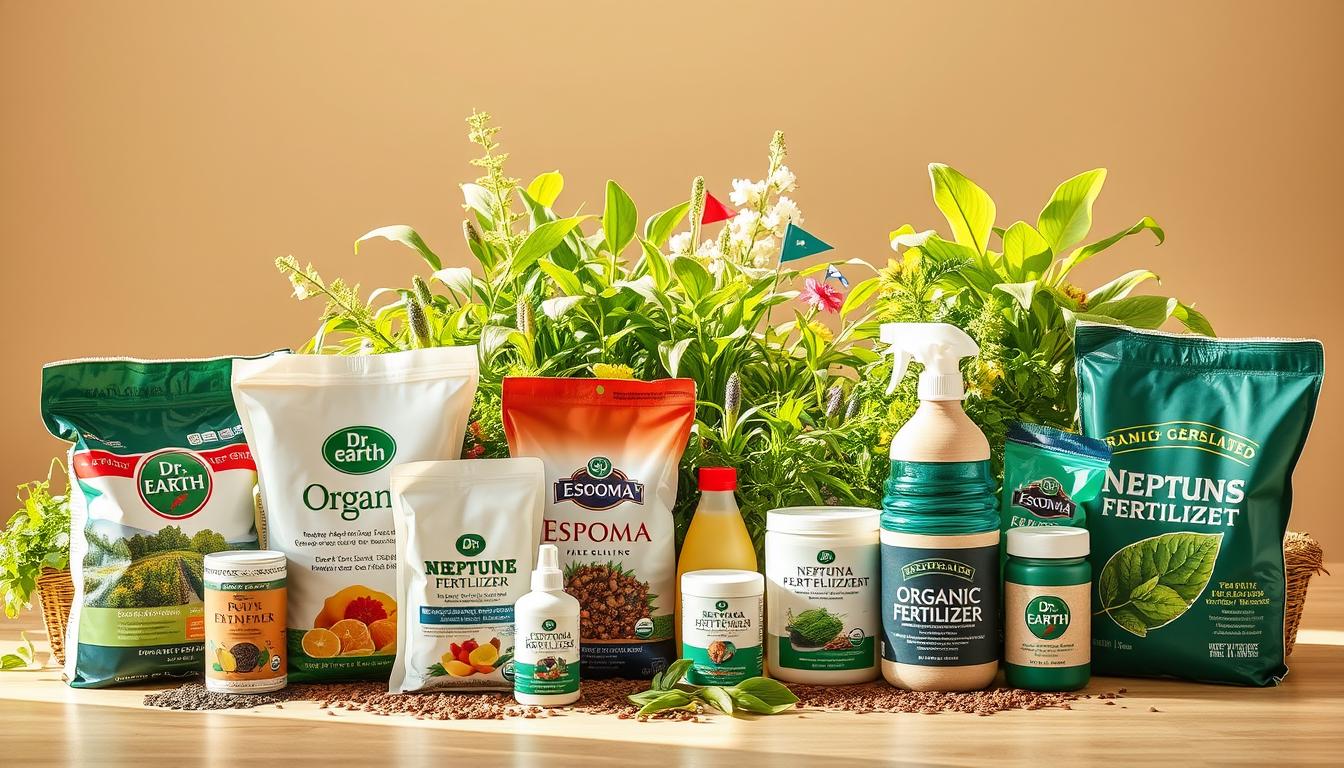
Can a single choice of plant food really change your soil and boost blooms without burning roots?
Gardeners often wonder which products feed plants best while building living soil. This guide lines up popular options and shows how they feed steadily, add organic matter, and support microbes.
We focus on three makers whose mixes and liquids fit different needs: slow-release granules, direct root spikes, and liquid food that blends with regular water. You’ll see practical notes on NPK basics, ingredient clarity, and how castings or sphagnum moss in a mix help moisture and biology.
Expect clear tips on application timing, cost per use, and labels so you pick a product that matches your plant goals—whether blooms, yield, or root health.
For a deeper look at tested options and ingredient breakdowns, check this helpful roundup: best organic fertilizers.
Key Takeaways
- Organic fertilizers build living soil and lower burn risk compared with synthetics.
- Choose granules for slow feed, liquids for quick boosts, and spikes for root delivery.
- Look for products with clear ingredients like kelp, bone meal, or castings to match plant needs.
- Timing and proper water-in application improve nutrient uptake and reduce waste.
- Compare cost-per-application and months of feeding when deciding what to buy for your home garden.
Why Organic Fertilizers Matter Right Now for the Home Garden
Organic feeding builds living soil that holds water, supports microbes, and keeps plants steady through heat and drought.
Healthy soil is the secret ingredient behind every reliable home garden harvest. Adding organic matter improves soil aggregation. That makes beds spongy so water soaks in and drains as needed.
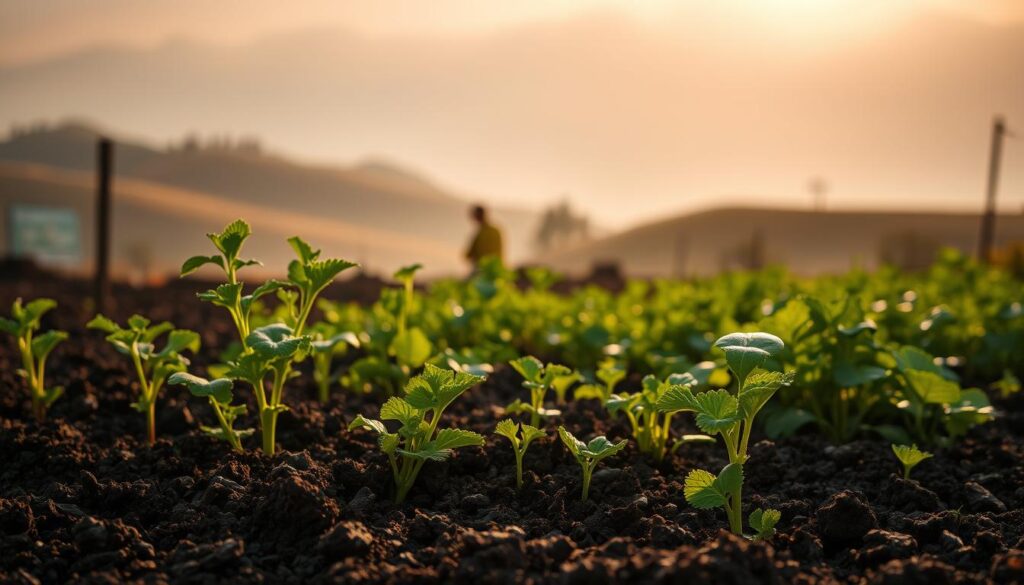
Soil structure, organic matter, and microbes: the foundation
Organic fertilizers feed microbes. Those microbes break down matter and cycle nutrients to roots. Good structure supports deep roots and steady moisture, which reduces stress on plants.
Slow-release nutrition without risk of chemical burn
Many products release nutrients slowly, so fertilizers release nutrients over time instead of dumping salts near roots. That gives nutrition without risk of chemical scorch and lowers runoff into local waterways.
“Gardens fed with living soil tend to show steadier growth, stronger stems, and better flavor in vegetables.”
- Improved resilience: microbes and mycorrhizae expand nutrient access during weather swings.
- Long-term payoff: each application builds matter and improves soil season after season.
How We Evaluated Brands and Products for a Product Roundup
We looked beyond marketing claims to measure what each product truly adds to soil and plants. Our process blends label analysis, sourcing checks, and practical cost testing so you can make purchase decisions with confidence.

NPK ratios and nutrient fit — which mix suits your garden?
We match NPK to goals: higher nitrogen for leafy greens, extra phosphorus for roots and blooms. Tomatoes often do best on mid-range formulas like 3-4-6.
We also check secondary elements—calcium and magnesium—because they keep fruit firm and prevent blossom issues.
Ingredient sourcing and label transparency
Brands that list micronutrients and clear inputs score higher. We favor composted manures, sustainably harvested seaweed, bone meal, and fish-based cues.
OMRI or USDA listings act as quick compliance checks, and California OIM notes help screen heavy metals.
Value, format, and real-world application
We calculate cost per application and months of feeding. Concentrated liquids or bulk granules often offer better long-term value than single-use spikes.
Format matters: granules suit beds, liquids speed uptake, and spikes add convenience (Jobe Organics is a good example of spikes for ease).
- Score factors: nutrient profile, sourcing, certification, cost-per-application, and format practicalities.
Dr. Earth: TruBiotic microbes, plant-specific formulas, and soil health
Choosing a microbe-rich formula gives your soil new life and steadier yields. These mixes focus on living biology to help plants access nutrients and hold moisture better.
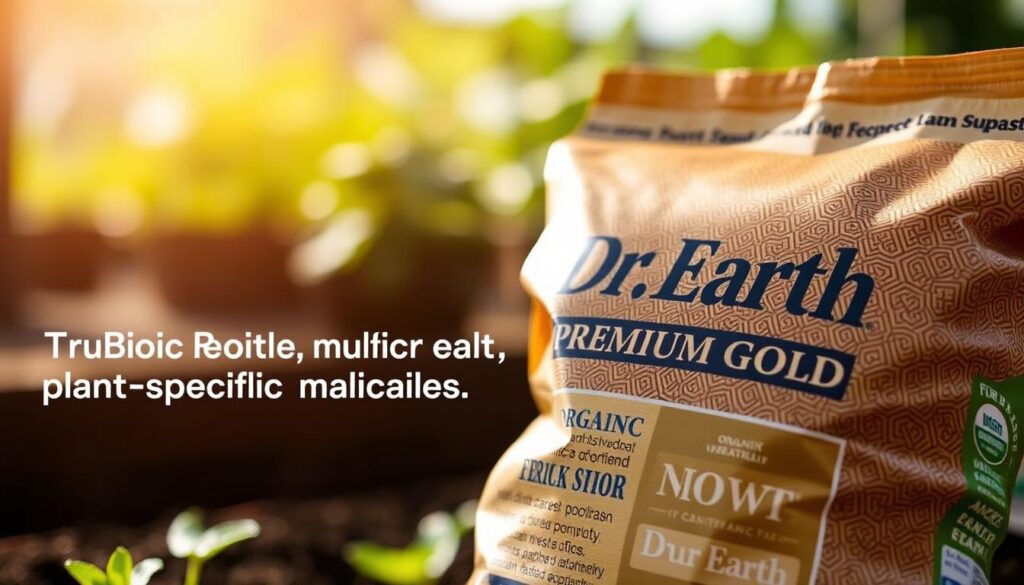
How TruBiotic helps soil and roots: the TruBiotic approach adds diverse microbes and mycorrhizae that speed nutrient cycling and improve soil structure. That means plants pull phosphorus and micronutrients faster and build stronger roots.
Which formula fits vegetables, tomatoes, and herbs?
Premium Gold serves heavy feeders and long-season vegetables. Use it when you need steady, balanced release for growth and yield.
Organic 5 targets tomatoes, vegetables, and herbs with a focused nutrient mix and added biology for flavor and vigor. New gardeners appreciate clear plant-specific guidance.
| Feature | Premium Gold | Organic 5 | Best Use |
|---|---|---|---|
| NPK style | Balanced slow-release | Tomato/vegetable-focused | General beds vs fruiting plants |
| Key ingredients | Alfalfa, bone meal, microbes | Fish bone meal, kelp, mycorrhizae | Root development and blooms |
| Application | Pre-plant blend or top-dress | Top-dress, soil mix, or tea | Containers, beds, and side-dress |
Why fish bone meal, kelp, and mycorrhizae matter
Fish bone meal supplies phosphorus and micronutrients that favor root development. Kelp adds trace elements and natural hormones that boost stress tolerance. Mycorrhizae extend root reach so plants enhance nutrient uptake.
How to use the granules and compost tea
Work the slightly coarse granules into soil before planting or sprinkle as a light top-dress and water in to activate biology around roots. The texture spreads easily and breaks down in warm, moist beds.
For a fast biological lift, brew a compost tea: mix about 2 lb in 5 gal water for 24 hours, then strain and apply. For heavy feeders, plan a second application midseason to sustain vigor and yields.
- Seedlings/early growth: pre-plant blend or light top-dress.
- Midseason: compost tea or another top-dress for heavy feeders.
- Late season: light maintenance feeding if growth slows.
Explore a plant-specific formula that highlights microbial support and targeted nutrients for blooms and fruit.
Espoma: Bio-tone biology, Garden-tone, and indoor liquid plant food
Espoma’s soil-first approach brings biology and steady feeding to everyday gardens. Bio-tone adds helpful microbes so roots access nutrients more easily and soil stays active between feeds.
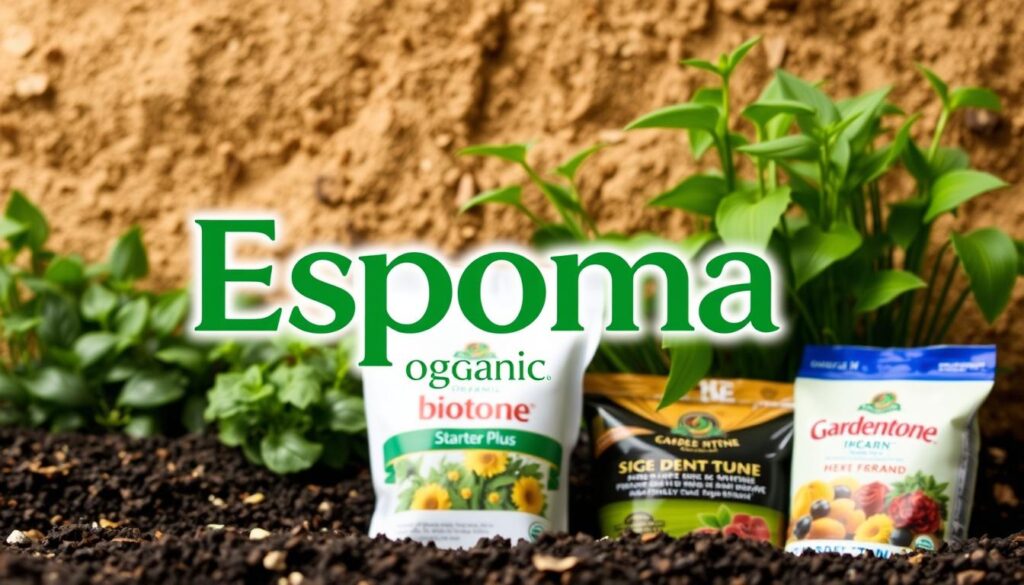
Bone meal, poultry manure, and alfalfa meal for balanced nutrition
Garden-Tone blends bone meal, poultry manure, and alfalfa meal for a steady NPK profile that suits beds and containers.
These ingredients supply nitrogen, phosphorus, and slow-release carbon that builds soil matter over weeks to months. Look for fish bone meal cues on labels when extra phosphorus is needed for strong stems and fruit set.
Which mixes work for acid-loving shrubs and houseplants?
Holly-Tone supports blueberries, azaleas, and hollies with an acid-friendly balance. Apply in spring and water in to move nutrients into the root zone.
For indoor care, Espoma Organic Indoor Liquid Plant Food uses kelp and humic acids to give a quick, gentle boost. Use it as a routine add-in when houseplants need a mid-season lift.
- Label tip: Match NPK and ingredient cues to plant type and feeding cadence.
- Timing: Slow-release products feed for weeks to months; plan fewer, predictable applications.
- Water: Keep soil moist after application to activate microbes and move nutrients to roots.
| Product | Key ingredients | Best use | Feeding duration |
|---|---|---|---|
| Bio-tone | 15+ microbial strains, humates | Root health, general beds | Weeks to months |
| Garden-Tone | Bone meal, poultry manure, alfalfa meal | Vegetables, mixed beds | 6–12 weeks |
| Holly-Tone | Acid amendments, balanced NPK | Blueberries, azaleas, hollies | Monthly to seasonal |
| Indoor Liquid | Kelp extract, humic acids | Houseplants, quick boosts | Immediate to weeks |
Neptune’s Harvest: Fish & seaweed liquids for fast uptake and resilient growth
Use a concentrated sea-and-fish blend to give plants a rapid, gentle boost between granular feeds. This liquid slips into regular watering and feeds growth while supporting soil life.
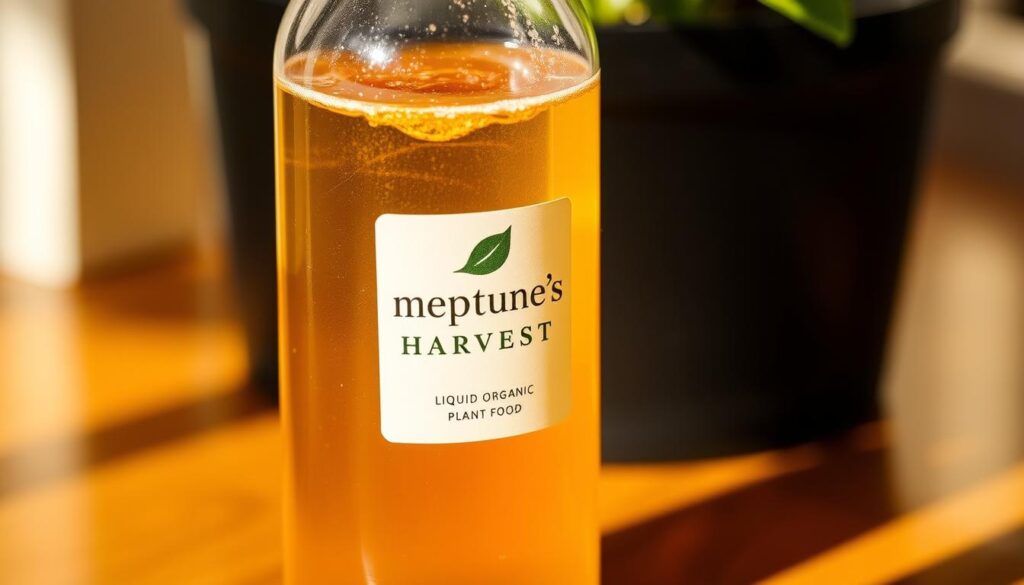
How does a liquid feed fit into my watering routine?
Neptune’s Harvest Fish & Seaweed 2-3-1 mixes quick-release nitrogen with cold-processed seaweed hormones. Mix about 2 tablespoons per gallon and add to your water. Apply biweekly during active growth for steady results.
How should I pair liquids with granular bases?
Top-dress beds with a granular base for long-term nutrition, then use the liquid for fast uptake. That staged approach gives immediate food while granules feed over weeks and months.
Can liquids build disease resistance and soil life?
Cold processing preserves natural hormones and micronutrients. Gardeners report sturdier stems, denser foliage, and fewer disease issues with regular use. Liquids also feed microbes when applied to living soil, not just foliage.
“Use liquids before heat waves or after pruning to help plants recover faster and keep growth balanced.”
| Feature | Mix rate | Cadence | Best pairing |
|---|---|---|---|
| Fish & Seaweed 2-3-1 | 2 tbsp / gal | Biweekly during growth | Granular base (long-term) |
| Benefits | Fast N boost | Immediate to weeks | Supports root development |
| Guardrails | Measure carefully | Adjust if foliage is too lush | Use before stress events |
How do these options differ and when should you use each?
Choose feeds that match your plants and schedule.Your choice of feeding style—granular, liquid, or spikes—sets the rhythm of plant growth and soil life.
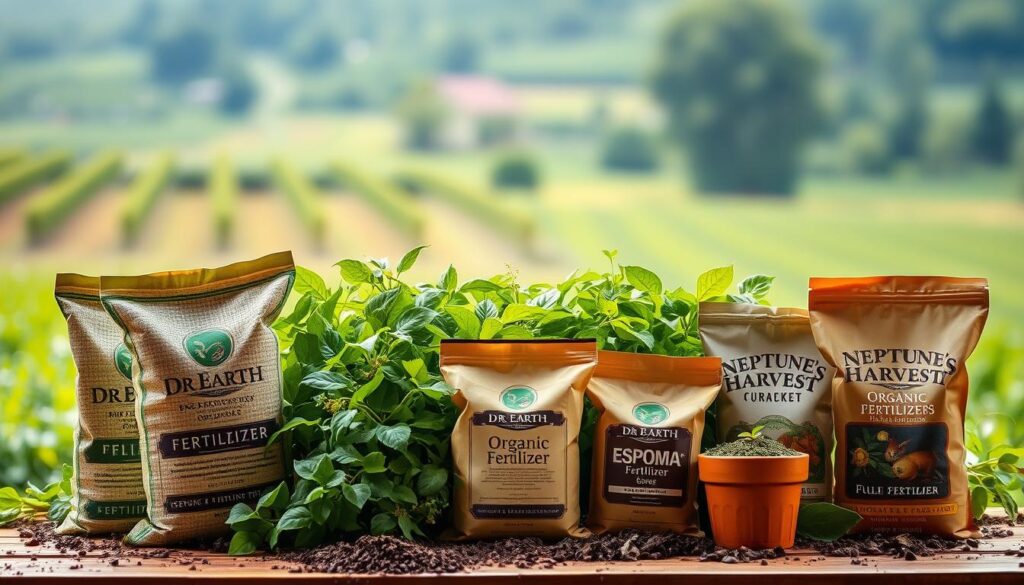
Core differences: granular vs liquid, microbes, and feeding duration
Granular formulas like Premium Gold build soil biology and feed for weeks to months. They add carbon and steady nutrients to the root zone.
Liquids such as Neptune’s Harvest act fast. Use them biweekly during growth surges or blossom set for an instant lift.
Spikes (Jobe Organics) give tidy, root-zone dosing with low fuss.
How do microbe systems and product roles compare?
TruBiotic (from dr. earth) delivers a broad microbial mix that speeds nutrient cycling. It favors long-term soil life and steady uptake.
Bio-tone (espoma organic) focuses on root health and balanced biology. It fits gardeners who want a simple granular baseline with consistent results.
“Pair a microbial granular base with occasional liquid plant food during fruit set to support both soil and fast growth.”
Use cases: tomatoes and vegetables, flowering, and containers
- Tomatoes & vegetables: start with a microbe-rich granular base, add light liquids at bloom and fruit set.
- Flowering: choose phosphorus-forward granulars for blooms and seaweed liquids for color and stress resilience.
- Containers: blend a slow-release base into potting mix, then give short, measured liquid applications to avoid salt buildup.
| Aspect | Granules (Premium Gold) | Liquids (Neptune’s Harvest) | Spikes (Jobe Organics) |
|---|---|---|---|
| Primary role | Build soil, long feed | Quick uptake, hormones | Root-zone convenience |
| Feeding cadence | Weeks to months | Biweekly during growth | Single-application duration varies |
| Best for | Beds, heavy feeders | Growth surges, foliar boost | Pots, low-maintenance plots |
| Microbe support | Yes — TruBiotic | Supports microbes via soil feed | Minimal biology; targeted dosing |
Choosing the right organic fertilizer for vegetables, flowers, lawns, and containers
A concise plan makes it easy to match a feed to each planting situation.Use a base amendment before planting, add targeted boosts during key growth phases, and always water in to move nutrients to roots.
Tomatoes and heavy feeders: timing, amendments, and watering in
Ahead of planting, work a microbial granular like Premium Gold or Organic 5 into the bed 2–3 weeks early. This gives biology time to settle and improves root development.
Give a midseason top-dress or a compost tea when fruits set. Water in after every feeding so nutrients reach the root zone and microbes activate.
Flowering plants: phosphorus, fish bone meal, and bloom support
For blooms, choose a formula with higher phosphorus and add fish bone meal or kelp at planting or pre-bloom. These amendments encourage stronger blossoms and better fruit set.
Apply seaweed or fish liquids in short cycles through hot spells to sustain color and stress tolerance.
Lawns and turf: slow-release nitrogen and thatch-friendly biology
Use a slow-release, low-salt lawn food to thicken turf without burning. Products that support microbial breakdown of thatch improve soil structure over time.
Feed in spring and fall, and avoid heavy applications in heat to reduce stress on grass.
Containers: peat moss mixes, castings, and liquid feed schedules
Mix quality potting media with peat moss and a handful of worm castings. That base holds moisture and supplies steady nutrients for potted plants.
Top with half-strength liquid feed every two weeks. For balconies, consider Jobe Organics spikes for tidy, low-fuss dosing.
- Label check: pick higher P for flowers, higher N for leafy greens, balanced for mixed beds.
- Observe: reduce rates if foliage grows at the expense of blooms or fruit.
- Water: always water after applying amendments to improve uptake and improve soil activity.
Application methods that work: granular, spikes, liquids, and teas
How you apply plant food often matters more than which label you pick. The right application makes nutrients available faster or stretches them out, depending on your goal.
What are broadcasting, side-dressing, and top-dressing?
Broadcasting spreads granules over beds. Use about 3–4 lb per 100 sq ft for established plots and keep product 2 inches from stems. Water thoroughly after spreading to move nutrients into the root zone.
Side-dressing places material in rows beside vegetables during growth. Top-dressing
adds a light layer around perennials and containers for steady feeding without disturbing roots.
When do spikes, granules, or liquids shine?
Spikes (like Jobe Organics) deliver tidy, slow-release dosing right at roots. They work well on patios and balconies where neatness matters.
Granules build soil biology and last longer. Use them as a baseline amendment for beds and large plantings.
Liquids (Neptune’s Harvest at 2 tbsp/gal) act fast. Apply biweekly in season for quick uptake and to support bloom or recovery after stress.
Why water after you apply and when to plan a second application?
You must water after any application. Water moves nutrients to roots and wakes up soil microbes so they can release food to plants.
For heavy feeders, plan a second application midseason. That keeps growth steady and avoids late-season slumps.
Quick-start compost tea and container tips
Make a compost tea by steeping 2 lb of dry amendments in 5 gal water for 24 hours, then strain and apply. This gives a fast biological boost without overcomplicating a routine.
For containers, keep even moisture, use mixes with peat moss and a bit of castings, and avoid piling granules against stems to prevent burn.
- Safeguard: stick to label rates and watch leaf color to avoid over-application.
- Choose: pick Jobe Organics spikes when root-zone feeding and tidy dosing matter most.
Price, packaging, and certifications: making a confident purchase
Look beyond the sticker price to find the product that gives months of reliable feeding. Choose items that balance clear labels, protective packaging, and verified claims so your soil and plants truly benefit.
How do I spot trustworthy labels and claims?
Check for OMRI listing or USDA marks and a full ingredient list. Labels that show coverage charts and feeding intervals help you plan each application and estimate months of feeding.
What really determines value: bag price or cost-per-application?
Compare cost-per-application, not just bag price. Concentrated liquids and dense granules often cost more up front but lower the cost over time. Miracle-Gro Performance Organics, for example, lists feeding windows that simplify math and timing.
Which packaging and product choices save time and keep quality?
- Choose sealed bags or jars that keep products dry and simple to measure.
- Pick the right size for your beds so materials stay fresh and easy to handle.
- Look for product ecosystems like espoma organic) or jobe organics fertilizer that let you mix formats across the yard.
Keep a simple feeding log to track what you applied and when. The best ones blend transparency, performance, and long-term value — not just a low sticker price.
Conclusion
A simple feeding plan lets soil improve year after year without extra fuss.
Choose the right mix for your beds and schedule. Match steady granules for baseline care with occasional liquids for timely lifts. That blend helps plants access nutrients and keeps growth balanced.
Point your shopping toward microbe-rich granules like premium gold from dr. earth, balanced mixes from Espoma, and quick fish-and-seaweed liquids from Neptune’s Harvest. Add bone meal, fish bone meal, or kelp when blooms, roots, or tomatoes are priorities.
Focus on soil structure and simple habits: water in after every application, schedule a second application for heavy feeders, and consider jobe organics spikes for tidy pots.
With the right organic fertilizer, you’ll feed plants safely, Improve soil, and enjoy nutrition without risk.