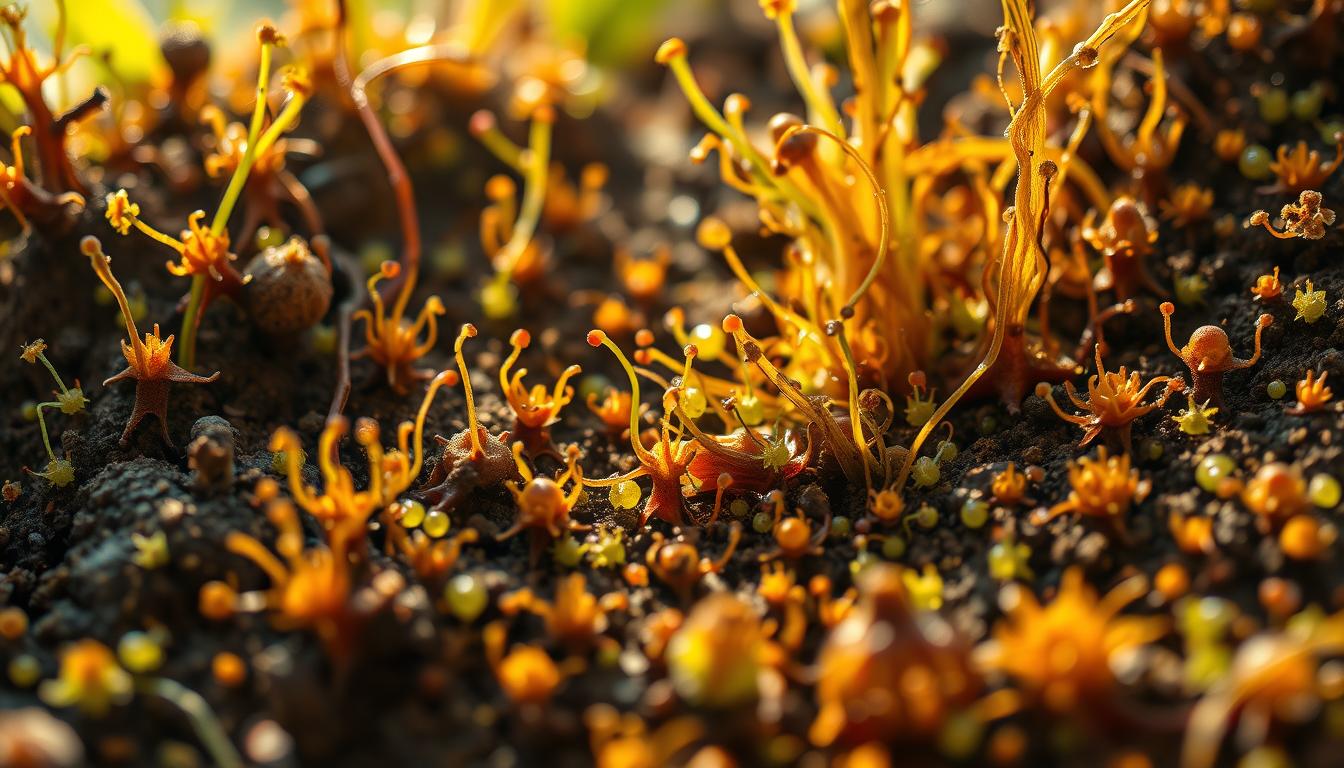
Can the quick green burst from a blue crystal feed plants while quietly weakening the life beneath?
This post explores how popular, easy-to-use fertilizers can shift the living balance in soil and why that matters for garden health, plant resilience, and local waterways over time. Blue, water-soluble granules give fast results above ground but can stress fungi, bacteria, and worms below.
Think of high-salt formulas and copper compounds like a short-term boost that acts like steroids for growth: showy foliage may come with weaker defenses and more pest pressure. Excess nitrogen can leach into streams and harm downstream ecosystems.
We preview practical alternatives—compost, leaf mulch, compost teas, and trusted organic products—that build living soil slowly and sustainably. This post aims to empower gardeners of all levels with clear, time-smart steps to grow healthier plants and protect community water quality.
Key Takeaways
- Fast-release products can give quick results but may damage beneficial soil life over time.
- Copper and high salts in some blue fertilizers can harm fungi, bacteria, and worms.
- Slow, biological approaches improve plant health, nutrient density, and resilience.
- Simple swaps like compost and organic brands support living soil without extra work.
- Your garden choices affect local waterways—small changes add up.
Why this matters now: the present-day impact of synthetic fertilizers on U.S. gardens
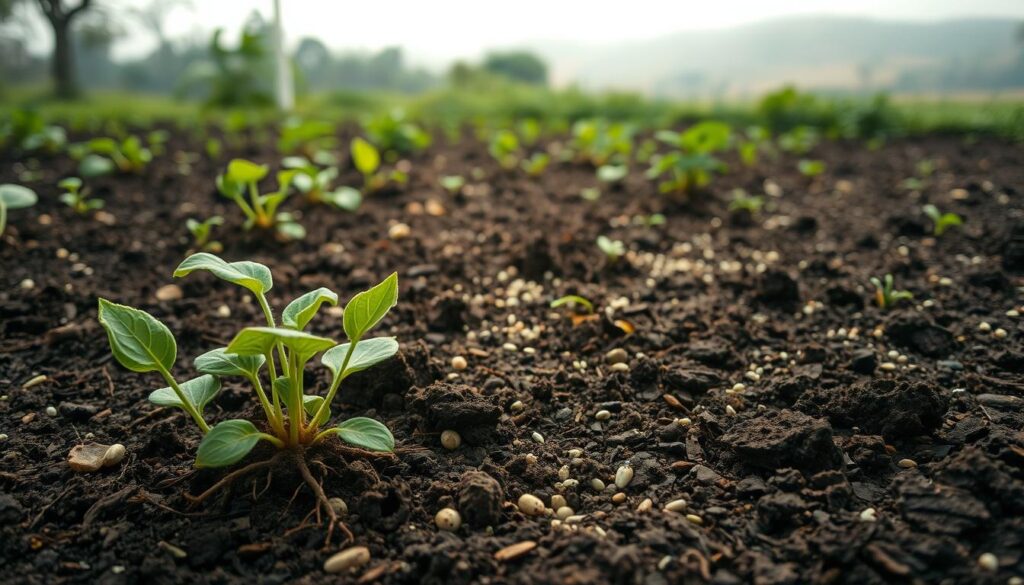
Fast-release garden feeds give an instant green show, but that quick gain can hide slower losses below ground. Synthetic fertilizers deliver fast growth while straining soil life and raising runoff risks; gardeners can pivot to healthier practices this season.
Many U.S. gardeners see striking results when using miracle-gro: leaves swell, blooms pop, and beds look spectacular. Yet this quick boost often means plants grow fast and then need repeat feedings because the living soil isn’t rebuilt.
High-solubility fertilizers create nutrient spikes that move with rain. What sits in a garden can wash into local streams, rivers, and lakes, fueling algal blooms and, at large scale, seasonal dead zones downstream of the Mississippi.
The same chemistry that speeds top growth can overwhelm beneficial fungi and bacteria. Over months and years, that makes plants more reliant on external fertilizers and less able to self-regulate pests and drought.
Seasonal pattern and community impacts
- Early spring: quick feedings prompt a flush of growth.
- Midsummer: pest pressure and disease often rise as soil life wanes.
- Fall: soils can feel tired without organic matter returned.
Intent: Read this post to understand effects first, then choose a better way to grow that fits your garden size, climate, and schedule. Modest changes made now can improve soil structure, stabilize nutrients, and cut the need for frequent applications within a single season.
| Issue | Short-term effect | Seasonal or regional outcome |
|---|---|---|
| Water-soluble salts | Rapid leaf growth | Runoff to rivers and lakes; algal blooms |
| Loss of soil biology | Reduced nutrient cycling | More pests; repeated applications |
| Nutrient spikes | Easy visible results | Long-term dependence on fertilizers |
What miracle-gro really doing your soil’s microbiome
The soil microbiome thrives on steady, biology-mediated nutrition; chemical spikes from fertilizers like Miracle-Gro can destabilize that living system. Short bursts of soluble salts give fast green results above ground but erode diversity and function below.
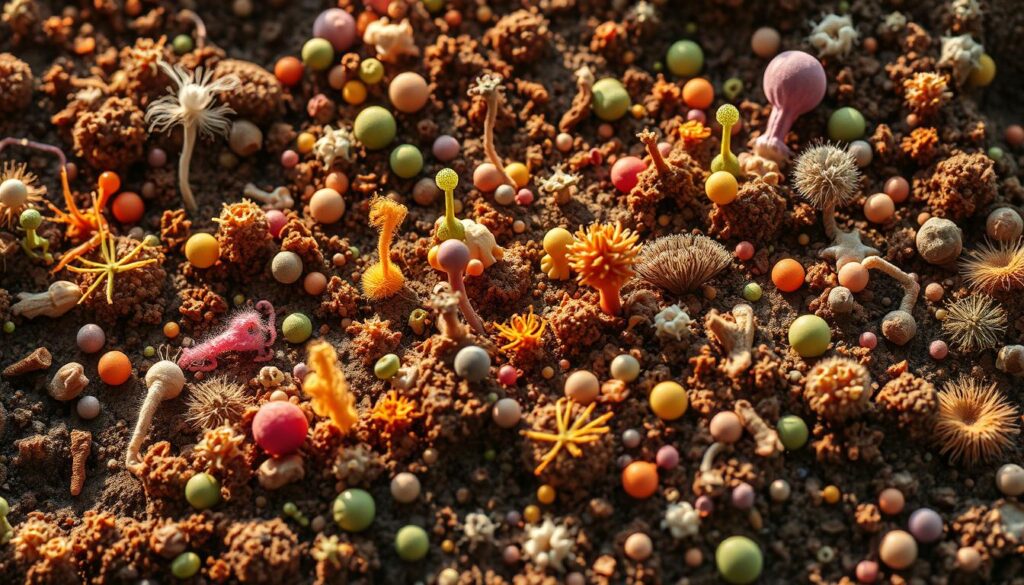
In healthy soil, tiny organisms break down organic matter and meter out nutrient supply at the root zone. A water-soluble feed supplies ammonium and nitrate that plants can grab immediately, bypassing that natural food web.
Repeated chemical inputs shift root behavior. Plants form fewer partnerships with fungi and bacteria when easy salts are nearby. That change lowers biological exchange and reduces long-term fertility.
Copper sulfate in the blue granules acts as a fungicide and bactericide. It can control pathogens, but it also damages beneficial fungi and microbes that move phosphorus and other nutrients to roots.
- Practical signs: beds dry faster, need more watering, and plants stall without steady feeding.
- Soil effects: altered pH microzones, osmotic stress near roots, thinner microbial guilds, and weaker structure.
These shifts create dependence on external feeds. Later sections show how to rebuild biology with inoculants, compost, and low-salt inputs. For hands-on guidance on reversing chemical harm, see fix soil after chemical fertilizers.
Soil microbiome 101: how microbes, fungi, and worms feed your plants
A teaspoon of healthy garden soil is a bustling city of life that feeds roots, holds water, and meters nutrients so plants stay strong. This living system builds structure, stores moisture, and keeps beds resilient through heat and rain.
The soil food web: bacteria, fungi, mycorrhizae, and nutrient cycling
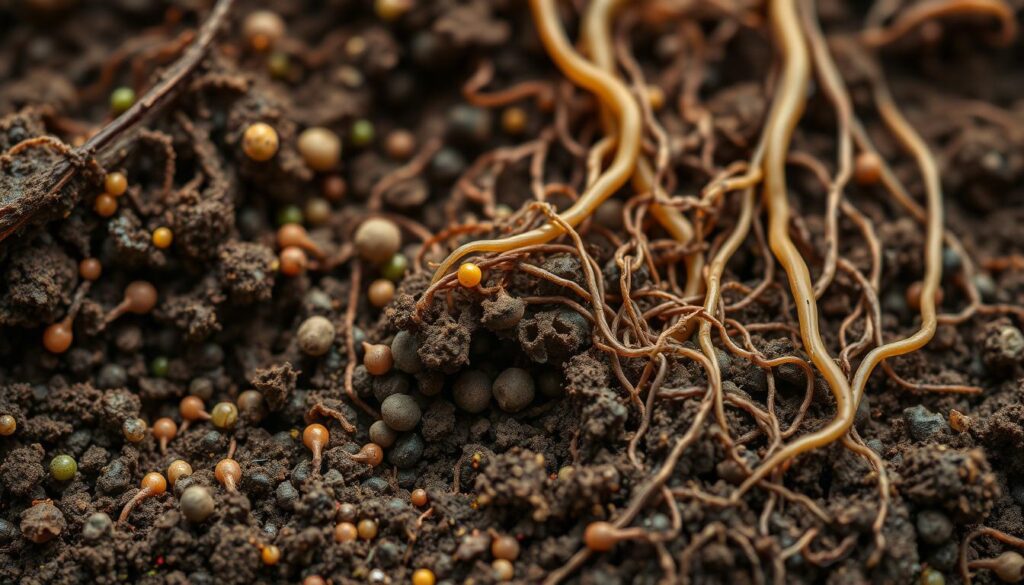
Bacteria and fungi break down leaves and compost into usable food. Protozoa and nematodes graze them, and nutrients release right at the roots where plants can use them.
Slow, steady nutrient release vs. chemical spikes
Mycorrhizal fungi form living bridges to roots, moving water and phosphorus in exchange for sugars. Earthworms and tiny arthropods shred residues and build crumbly aggregates that improve aeration and drainage.
Biological cycling meters out nutrients at a pace plants can handle and protects roots from salt stress. Living systems also buffer drought and heavy rain by improving infiltration and holding moisture.
Practical plan: feed the system with regular compost and gentle inputs to keep microbes active all season. A later checklist will help you spot signs of active garden soil—earthworms, crumb structure, sweet earthy smell, and easy root penetration.
How synthetic fertilizers like Miracle-Gro disrupt living soil systems
Rapid, salt-rich feeds can make beds look lush fast while quietly stripping away the living checks that keep soil stable. These products trade long-term resilience for instant size, and that trade shows up around roots first.
Water-soluble salts, ammonium, and nitrate: fast growth, fragile biology
Water-soluble salts move with water and can concentrate near roots. High levels draw moisture from fine root hairs and raise the chance of leaf and root burn.
Ammonium and nitrate drive quick green growth. Without microbes to mediate nutrient flow, plants often grow faster than their root systems can support, leaving stems and leaves softer and more pest-prone.
The blue crystals and copper sulfate: fungicidal and bactericidal fallout
Copper compounds in the blue granules act like broad fungicides. They suppress pathogens but also cut beneficial fungi and bacteria that shuttle phosphorus and other nutrient to roots.
Nutrient burn and root stress: why “steroid” growth weakens defenses
Too much fertilizer at the wrong amount or timing scorches tissue and stresses microbes. Shallow roots, fewer exudates, and a thinner microbial community create a cycle of dependence on repeat feedings.
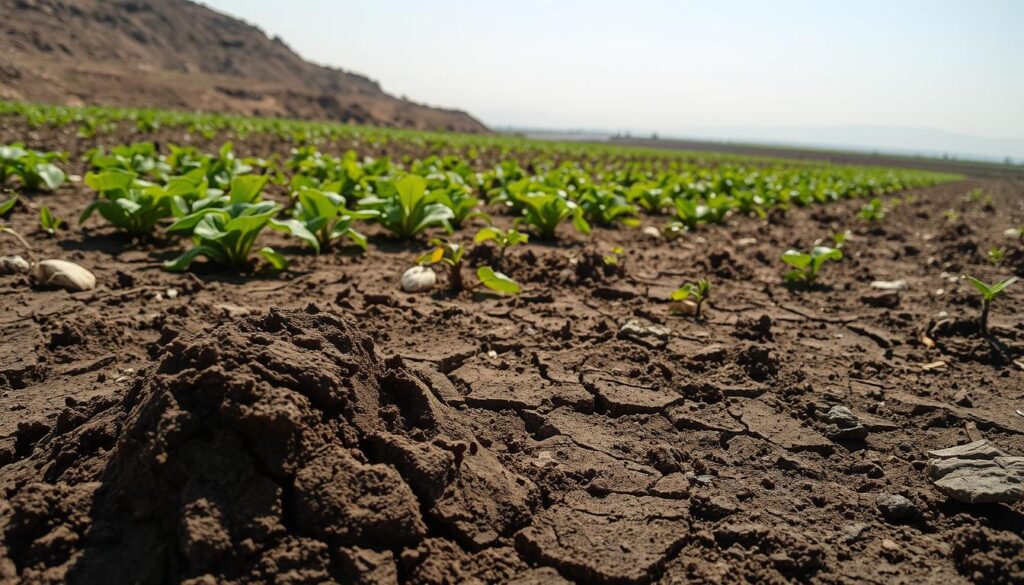
- Signs to watch: crusted surface, fewer earthworms, faster drying, and plants that flag without frequent feedings.
- Long term: reduced microbial diversity and slower biological nutrient cycling lead gardeners to apply more fertilizers to maintain color.
For a focused look at fertilizer impacts on beneficial soil life, see this research note on how fertilizing affects soil bacteria: does fertilizer kill soil bacteria?
From plant health to planet health: the cascade of negative impacts
Quick green responses from soluble feeds can start a chain reaction that ends in weaker plants and fouled waterways. When root defenses erode, small losses of nutrients leave gardens and join larger flows that harm creeks, lakes, and coasts.

More pests and disease, fewer natural defenses at the roots
Repeated soluble inputs reduce beneficial organisms that shield roots. Plants lose natural allies and show more pest and disease pressure. That often leads gardeners to add more pesticides and fertilizers, which only deepens the cycle.
Groundwater leaching and nutrient spikes in rivers, lakes, and oceans
Rain does the rest: highly soluble synthetic fertilizers wash from beds into storm drains and groundwater. Those nutrient spikes travel to streams and rivers, where they feed algal blooms in lakes and estuaries.
Eutrophication and dead zones downstream of the Mississippi
The cumulative runoff from farms, lawns, and gardens reaches the Mississippi and flows to the Gulf. Excess nutrients drive seasonal hypoxia—dead zones where marine life cannot survive. This is a clear example of a local action producing a large-scale negative impact on the environment and agriculture alike.
| Scale | Local effect | Downstream outcome | Practical fix |
|---|---|---|---|
| Plant | Weakened root defenses, more pests | Higher chemical use | Reduce soluble fertilizer amount; boost compost |
| Yard | Runoff after storms | Nutrient spikes in nearby rivers | Time applications away from rain; increase mulch |
| Watershed | Elevated nutrient load | Algal blooms in lakes; coastal dead zones in oceans | Adopt biology-based systems to hold nutrients |
Small changes add up. Better soil structure improves infiltration and keeps nutrients where plants can use them. The next section offers hands-on, regenerative steps to support plant and planet health together.
Better ways to feed plants: organic gardening and regenerative agriculture
Organic gardening and regenerative agriculture feed biology first, building lasting fertility and resilience in garden soil. These approaches give plants steady nutrients by supporting the living community below. They cut reliance on quick salt-based feeds and help gardens retain water and nutrients over the season.
Build garden soil with compost, leaf mulch, and compost tea
Compost adds diverse microbes and stable organic matter that improves structure and holds moisture.
Spread a thin layer in spring and topdress beds through the season. Leaf mulch is free food for worms and micro-arthropods that aerate and enrich soil.
Compost tea can jump-start microbial activity when brewed properly and applied to roots or foliage as a supplement.
Biology-first inputs and inoculation
Use kelp meal for trace minerals and growth cofactors, alfalfa meal for mild nitrogen, and rock phosphate for slow-release phosphorus near roots.
Inoculate seeds and transplants with mycorrhizal fungi to expand root reach, improve water uptake, and boost nutrient exchange.
Trusted products gardeners can find
Products that support living soil include Dr. Earth organic blends, Down to Earth kelp and rock phosphate, Neptune’s Harvest fish and kelp, and Plant Success Organics mycorrhizae.
These amendments work with soil organisms to provide a steady nutrient trickle so plants grow sturdier without salt surges.
| Amendment | Benefit | When to apply |
|---|---|---|
| Compost | Builds organic matter, microbes, water retention | Spring and fall; topdress annually |
| Leaf mulch | Feeds worms, prevents erosion, moderates temp | All season; add in fall for winter cover |
| Kelp / Alfalfa / Rock phosphate | Trace minerals, mild N, slow P release | At planting and as a seasonal side-dress |
| Mycorrhizal inoculant | Expanded root access, better drought tolerance | At sowing or transplanting |
Choose seeds and starts suited to local climate and soil type so varieties thrive with biological support rather than constant feeding. For deeper reading on how organic practices protect soil life, see this study on soil health in organic systems: value of soil life in organic.
Seasonal plan preview: spring layer compost, summer mulch and light inputs, fall cover crops and long-term rock phosphate to keep improving soil across the year.
Practical next steps for gardeners using Miracle-Gro today
Cut back on quick feeds and start rebuilding life in the bed with steady organic inputs. Work in compost, add gentle amendments, and change watering and timing to protect microbes and reduce runoff.
Start with small changes you can keep up all season.
Transition plan: taper synthetics and add organic amendments
Week 1–2: halve your usual fertilizer rate and stretch feed intervals. Add 1–2 inches of compost to beds and a thin top-dress around containers.
Week 3–4: apply a light kelp or alfalfa meal, water in with compost tea, and inoculate transplants with mycorrhizae to support roots.
Water wisely and time applications to reduce runoff risk
Switch to soil-level watering with drip or a low-flow wand. Avoid feeding within 24–48 hours of rain to keep nutrients in the garden and out of drains.
Choose seeds and plants suited to local conditions
Select regionally adapted seeds and robust starts so plants need fewer boosts. Use low-salt organic products and spot-feed only where plants show real need.
- Ongoing: mulch with leaves, track earthworms and crumbly soil, and expect noticeable improvement within a season.
These steps are practical for busy people and will help plants grow stronger while improving soil health and protecting local waterways.
Conclusion
Feeding the soil first is the surest way to grow strong plants and curb the negative impact of fast-acting products on living systems. Slow, biology-led methods build resilience in the garden and help protect rivers and oceans over the years.
Synthetic fertilizers and quick salt spikes trade lasting soil function for instant color. That often leads to more inputs and weaker roots. Choose compost, leaf mulch, mycorrhizae, and gentle organic fertilizers to restore garden soil and let plants grow sturdier.
Small, steady changes make a big difference. When neighbors join in and people adopt regenerative agriculture habits, benefits scale up across watersheds and food systems.
Quick checklist: top-dress compost, add mulch, pick one biological input, and time feeds to avoid runoff. Revisit this post after a season and share what improved in your beds and fruit trees.